Reviewed · TSUKIJI MARKET TOURS
【Spanish/ English】Tsukiji Matcha at a 100-Year old Japanese shop
A century-old tea shop is the star here, not a crowded food crawl. You begin at Tsukiji Hongwan-ji Temple, then settle into a private tasting of four cold-brewed matchas, each paired with a seasonal Japanese sweet and explained by a certified tea master.
In This Article
- Key points to know before booking
- Why this matcha experience feels different in Tsukiji
- Stop one: 30 minutes at Tsukiji Hongwan-ji Temple
- Stop two: Four matchas at a nearly 100-year-old shop
- Seasonal wagashi make the tasting feel complete
- What the private format adds
- Is $65.04 good value?
- Who will enjoy this most?
- Practical timing for your Tsukiji day
- What you take home
- Booking and cancellation details
- Should you book this Tsukiji matcha tasting?
- FAQ
- Where does the experience begin?
- Where does the experience end?
- How long does the experience last?
- How many types of matcha are included?
- Is the experience private?
- Can I cancel for a full refund?
I like the calm pace and the clear focus on flavor, cultivation, and Japanese aesthetics. I also like the choice of cold matcha served in wine glasses, which makes it easier to compare the teas without needing prior tea knowledge.
The main consideration is price: at about $65 per person for roughly 90 minutes, this is not a bargain snack stop. You are paying for a focused cultural session, a private setting, a guide, and four premium tastings rather than a full meal.
Key points to know before booking
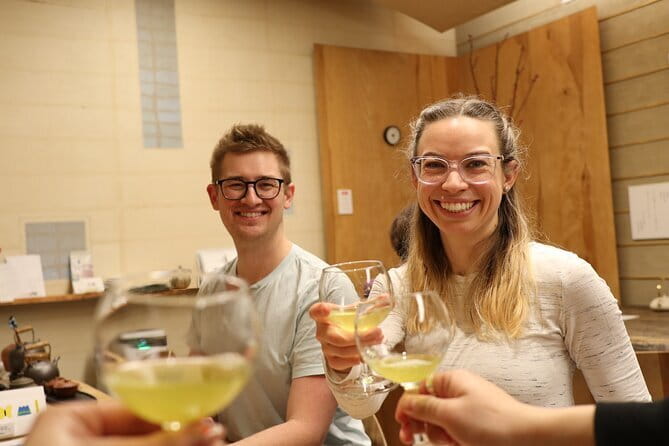
- Four cold premium matchas: Taste different varieties side by side and learn how growing regions and cultivation styles affect flavor.
- A century-old Tsukiji tea shop: The tasting takes place in a traditional shop with nearly 100 years of tea-making history.
- Private and beginner-friendly: Only your group participates, so you can ask questions without keeping up with a large tour.
- Tsukiji Hongwan-ji Temple first: The experience opens with about 30 minutes at one of Tokyo’s major temples.
- Spanish or English support: A local Japanese guide leads the experience in Spanish or English, with a certified tea master guiding the matcha session.
- Wagashi and a small souvenir: Seasonal traditional sweets accompany the tea, and you receive a small item to take home.
Why this matcha experience feels different in Tsukiji
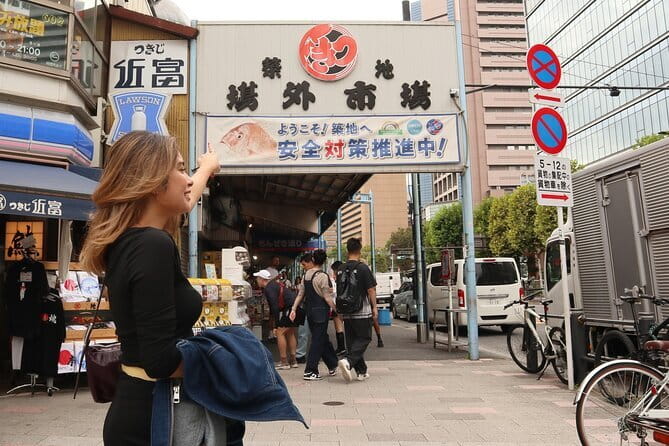
Tsukiji is best known for its market, seafood, and packed lanes, yet this experience takes a quieter route through the neighborhood. You start with a temple visit, then move into a reservation-only tea session where matcha receives your full attention.
That change of pace matters. A market visit can be exciting, but it can also leave you trying to eat, navigate, and listen at the same time. Here, the tea tasting is the point. You have time to notice color, aroma, bitterness, sweetness, and the way each tea finishes.
I also like that the experience presents Japanese aesthetics through taste and presentation rather than only through architecture or museum displays. The tea arrives in wine glasses, an unusual but practical choice. You can see the color clearly, hold the glass comfortably, and compare four servings without the ceremony feeling too formal.
This is not presented as a full traditional tea ceremony. It is a guided tasting and workshop, designed to help you understand what is in the glass. That makes it more approachable if you enjoy matcha but do not know the difference between growing regions, cultivation methods, or flavor profiles.
A few more Tokyo tours and experiences worth a look



Stop one: 30 minutes at Tsukiji Hongwan-ji Temple
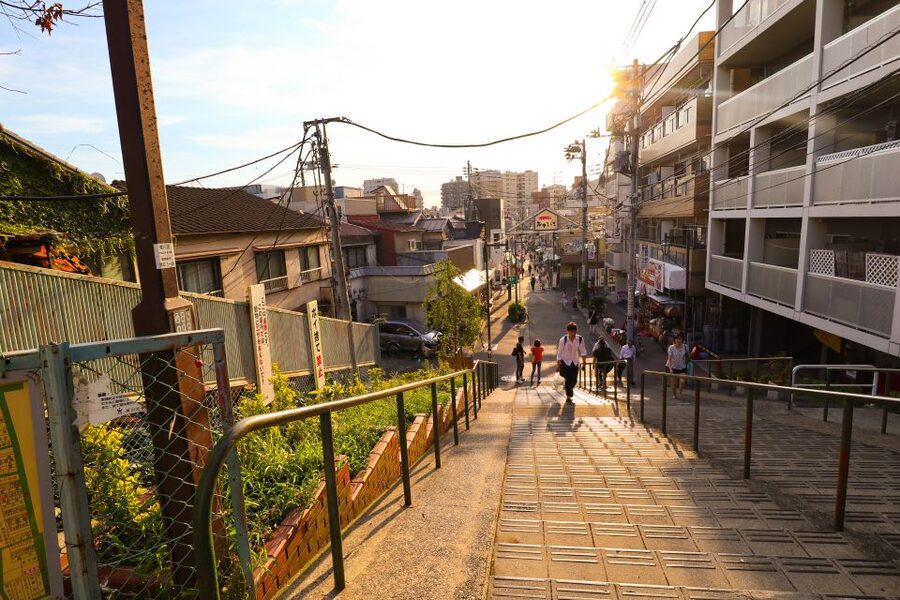
The meeting point is Tsukiji Hongwan-ji Temple at 3-chōme-15-1 Tsukiji. The first stop lasts about 30 minutes, and admission is included at no extra charge.
The temple is described as one of Tokyo’s biggest and most impressive. Even with only half an hour, it gives the outing a cultural beginning instead of sending you straight into a tasting room. Your guide can provide context before the food and tea portion begins, and the temple offers a useful visual introduction to the area.
You should think of this as an orientation stop, not a long temple tour. Thirty minutes is enough to see the site and hear an introduction, but not enough for a slow architectural study. If you want extended time inside the temple or a detailed religious tour, you will need to return on your own.
The location is convenient for public transportation, and the start time listed for this experience is Monday from noon to 3 p.m. The exact meeting arrangement is worth checking carefully when you book, since you need to arrive at the temple rather than directly at the tea shop.
Stop two: Four matchas at a nearly 100-year-old shop
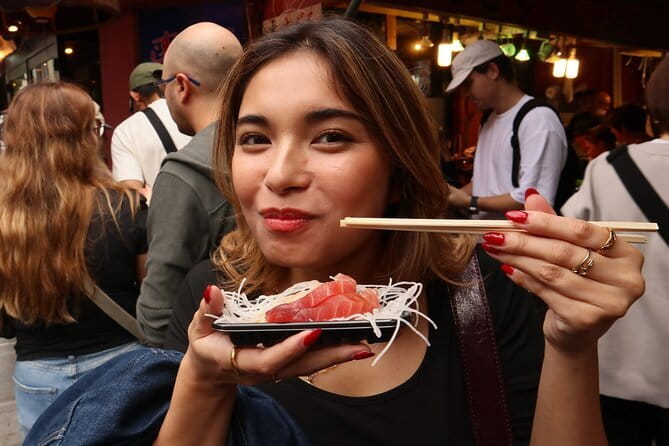
The tea portion lasts about one hour. You visit a traditional Japanese tea shop with nearly a century of history and taste four premium matchas served cold in wine glasses.
Cold matcha may surprise you. Many people first picture a hot, foamy bowl of bitter green tea. A cold preparation can make the tasting feel cleaner and more focused, especially when four styles are served in succession. You can compare one sample with the next without the heat becoming the main sensation.
The important detail is that the teas are not treated as interchangeable green drinks. You learn where their flavors come from, including the tea-growing regions and cultivation styles behind them. That information gives you something useful to remember when you see matcha on a menu or shop for tea later.
The session is beginner-friendly, so you do not need to arrive with a vocabulary for tea tasting. You can simply notice what you like. One tea may seem softer, another more bitter, another more aromatic or lingering. The guide’s job is to connect those impressions with how the tea was grown and prepared.
A certified tea master leads the matcha tasting, while a local Japanese guide provides Spanish or English support. No individual guide names are provided, but the language choice is clear at booking. If you prefer Spanish for cultural explanations or food vocabulary, this is a useful option in Tokyo, where many small specialty experiences operate only in English or Japanese.
Seasonal wagashi make the tasting feel complete

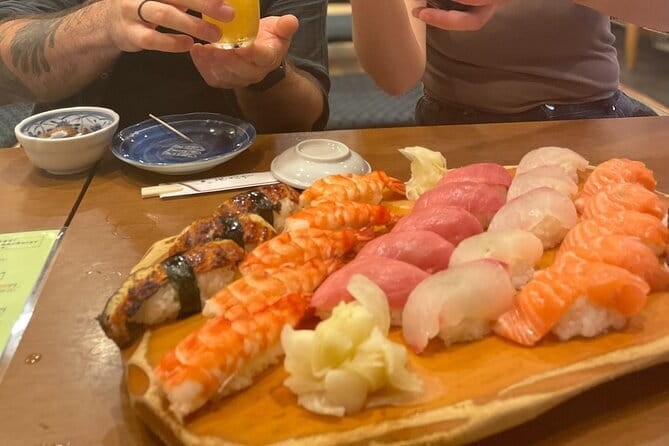
Each matcha is paired with seasonal wagashi, traditional Japanese sweets. This is more than a snack on the side. Wagashi are often made to balance tea, and the pairing gives you a way to judge how sweetness changes the taste of matcha.
A bitter tea may seem smoother after a bite of wagashi. A delicate tea may lose some of its character if the sweet is too strong. The exact sweets are seasonal, so the selection can change. That uncertainty is part of the appeal, though you should not book expecting one particular dessert.
The included food is enough to support the tasting, but it is not lunch. The tour specifically excludes lunch, and the one-hour tea visit should not replace a full meal. Since the experience ends at Tsukiji Outer Market, you can plan a separate meal or snack afterward.
That ending is useful. You finish near the Tsukiji Outer Market, where you can continue exploring on your own. The tour itself does not include private transportation or lunch, so you will need to handle the short movement through the neighborhood and any later food plans independently.
What the private format adds
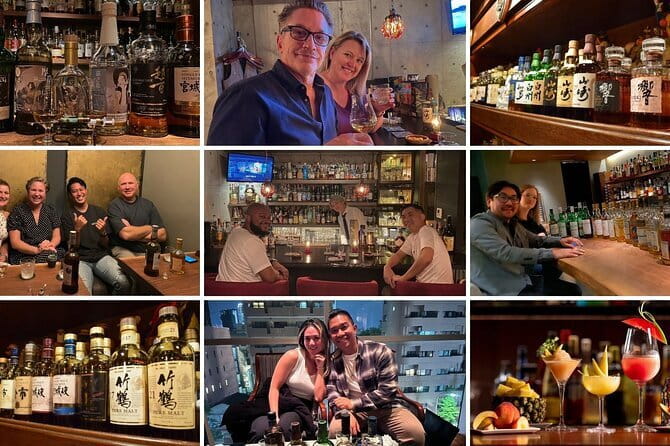
Only your group participates in this private activity. That is one of the strongest reasons to choose it over a standard tasting in a busy market.
A private setting gives you room to ask basic questions. You can ask why one tea tastes different, how matcha is cultivated, or what to look for when buying it. You also avoid the awkwardness of trying to hear a guide while other groups move through a crowded food area.
The format should suit couples, families, and small groups with different levels of interest. A dedicated matcha drinker can focus on cultivation and flavor, while a first-time taster can simply learn the basics.
The private setup does not mean the experience is long. At 90 minutes, it is compact. I see that as an advantage if you have a busy Tokyo schedule, but a limitation if you want a full tea lesson or a longer cultural workshop.
A few more Tokyo tours and experiences worth a look



Is $65.04 good value?
The listed price is about $65.04 per person. That is a fairly high cost for four small drinks and sweets, so the value depends on what you want from the outing.
If you measure value by quantity, this will not win. You are not getting a large meal, several market tastings, or transportation around Tokyo. The admission to the temple is free, and lunch is not included.
If you measure value by access and attention, the price makes more sense. You receive a private session at a nearly 100-year-old shop, four premium matchas, seasonal wagashi, instruction from a certified tea master, help from a Spanish or English-speaking local guide, photos taken by the guide, and a small souvenir.
I would choose this for someone who wants to understand matcha rather than simply drink it. The experience also works well for a repeat visitor who has already seen Tokyo’s major sights and wants a calmer activity in Tsukiji.
For a first-time visitor on a tight budget, I would compare it with a simple tea stop or a free market walk. You may prefer to spend $65 on a larger meal. For someone who values small cultural encounters and wants a quiet break from sightseeing, the focused format is easier to justify.
The booking pattern also tells you something practical. It is booked around 11 days ahead on average, so I would not leave it until the last morning of your trip, especially if Monday afternoon is your only workable time.
Who will enjoy this most?
I think this experience suits you if you:
- Like tea, Japanese sweets, or food traditions
- Want an introduction that does not assume prior matcha knowledge
- Prefer a private session to a large group
- Need a Spanish or English-speaking guide
- Want to combine a temple visit with a food-focused activity
- Appreciate a slower, quieter stop in the Tsukiji area
- Have about 90 minutes available on a Monday afternoon
It may not suit you if you want a substantial meal, a long market tour, or a formal tea ceremony with extensive ritual. It is also not the best pick if you dislike bitter flavors or have no interest in comparing several versions of the same drink.
The experience is accessible to most people, and service animals are allowed. It is near public transportation. The provided details do not describe the exact route between the temple and shop, so if mobility is a concern, ask the provider for that information before booking.
Practical timing for your Tsukiji day
The meeting point is Tsukiji Hongwan-ji Temple, and the end point is Tsukiji Outer Market near Tsukiji 4-chōme. This makes the experience easy to combine with independent time in the market before or after the tour.
Because the tour begins at noon, you could visit the market earlier, meet the guide at the temple, and return to the Outer Market after the tea session. Or you could make the temple and tea the main activity, then eat afterward.
I would avoid scheduling a tight appointment immediately after the listed 90 minutes. The tea session has an approximate duration, and you may want a little time to walk, ask final questions, or browse the market at the end.
The experience takes place Monday during the listed operating period of November 5, 2024, through February 17, 2027. Confirm the date and start time at booking, since the schedule shown is limited.
What you take home
The guide takes photos during the experience, which is useful if you want a record of the tasting without constantly reaching for your own phone. A small souvenir is also included.
Do not expect a large tea purchase or a full gift package unless the provider says otherwise. The souvenir is described only as small. Its value is mainly personal: a reminder of the tasting rather than a major part of the package.
The better takeaway is the ability to compare matcha with more confidence. Once you understand that flavor can reflect growing areas and cultivation styles, a cup of matcha becomes easier to assess. You may still prefer a sweetened café version, but you will know what you are tasting.
Booking and cancellation details
Confirmation is received when you book, and mobile tickets are available. Group discounts may also apply, which is worth checking if you are booking for several people.
You can cancel for a full refund up to 24 hours before the experience begins. Changes or cancellations made less than 24 hours before the start time are not accepted for a refund. The cut-off follows Tokyo local time, so keep that in mind if you are booking from another time zone.
The provider is Shibuya Exclusive Local Tours. The experience is private, but the published price is per person, so check how the total changes for your group size and any available discount.
Should you book this Tsukiji matcha tasting?
Book it if you want a polished introduction to matcha, care about the story behind flavor, and prefer a calm private session to a crowded food stop. The combination of Tsukiji Hongwan-ji Temple, four cold premium teas, seasonal wagashi, and a century-old shop gives the outing a clear sense of place.
Skip it if your main goal is a filling lunch or a broad tour of Tsukiji. At $65.04, the experience asks you to value guidance, access, and comparison more than quantity.
For the right person, this is a smart 90-minute addition to a Tokyo itinerary. It gives you a quiet pause, a better understanding of matcha, and a reason to look at the tea in your cup with a little more care.
FAQ
Where does the experience begin?
It begins at Tsukiji Hongwan-ji Temple, located at 3-chōme-15-1 Tsukiji, Chuo City, Tokyo 104-8435, Japan.
Where does the experience end?
It ends at Tsukiji Outer Market in Tokyo, near Tsukiji 4-chōme and 6-chōme.
How long does the experience last?
The total duration is approximately 1 hour and 30 minutes. The temple visit takes about 30 minutes, followed by about one hour at the tea shop.
How many types of matcha are included?
You taste four types of premium cold-brewed matcha, served in wine glasses.
Is the experience private?
Yes. Only your group participates in the private activity.
Can I cancel for a full refund?
Yes. You can cancel at least 24 hours before the start time for a full refund. Cancellations or changes made less than 24 hours before the experience are not refunded.
More Tea Ceremony & Matcha in Tokyo
More Tsukiji Market Tours in Tokyo


More tours in Tokyo we've reviewed












Tsukiji Market Tours, compared.
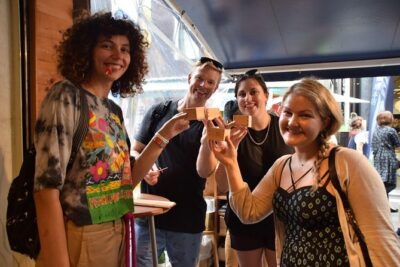 ★ 5.0Tokyo Tsukiji Fish Market Food and Culture Walking TourFrom $99
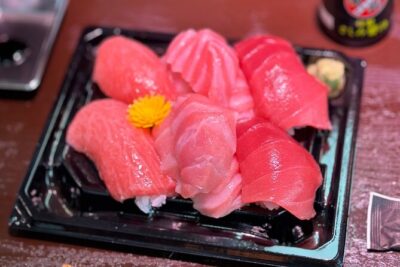 ★ 5.0Tokyo: Tsukiji Fish Market Food and Walking tourFrom $30
 ★ 4.9Tokyo: Tsukiji Fish Market Guided Walking TourFrom $222 hours
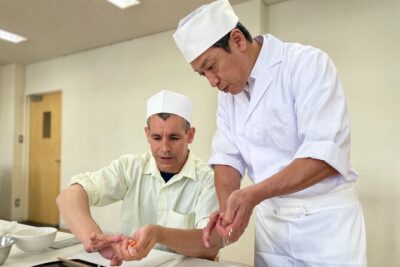 ★ 5.0Tokyo Sushi Making Class in Tsukiji with Professional ChefFrom $49
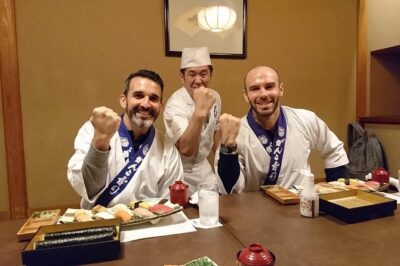 ★ 5.0Tsukiji Fish Market Guided Tour and Sushi Making with Pro ChefFrom $104
★ 4.7Tokyo: Tsukiji Fish Market Food and Culture Walking TourFrom $963 hours