Reviewed · TOKYO FOOD TOURS
Tokyo Street Food Tour – 7 Japanese Foods
Tokyo’s best food discoveries are often found away from the famous sushi counters. This two-hour walk leads you through Musashi Koyama and Togoshi Ginza, where small shops serve fried chicken, charcoal-grilled skewers, handmade rice balls, curry bread, pudding, and other local bites.
In This Article
- Key points at a glance
- Starting among the shops at Musashi Koyama
- The seven-stop tasting, from karaage to pudding
- Walking toward Togoshi Ginza
- Togoshi Ginza, the main food stretch
- What the guides add to the walk
- Is $91.45 a fair price?
- Who should book this food walk?
- Timing, tickets, and practical details
- Should you book the Togoshi Ginza food tour?
- FAQ
- How long does the Tokyo Street Food Tour last?
- How much does the tour cost?
- How many people can join the tour?
- Where does the tour begin?
- Where does the tour end?
- What food is included?
- Is a drink included?
- Is hotel pickup included?
- Is the tour suitable for someone with limited mobility?
- Can I cancel for a refund?
I like the small maximum group of eight, which keeps the walk friendly and makes it easier to ask questions. I also like the mix of food and neighborhood life: you are not simply moving from one restaurant to another, but walking through old shopping streets and learning how these everyday foods fit into Tokyo’s culinary past.
The main caution is the pace and amount of food. Seven samples can add up quickly, and one family found the portions generous enough that pacing was important. The route also requires a moderate level of fitness, with roughly an hour and a half of walking and grazing.
Key points at a glance
- Seven Japanese foods in about two hours: Expect a varied tasting rather than one large meal, with savory snacks and sweets.
- Two local shopping streets: The route begins near Musashi Koyama Shopping Street Palm and ends at Togoshi Ginza Shopping Street.
- A small group of up to eight: The setting is suited to questions, conversation, and a more personal guide experience.
- Food with local context: Guides explain the background of the dishes and the shops that make them.
- Guides named in past departures: Makayla, Sahori, Frank, and Bunga have led tours, depending on the date.
- A practical Tokyo food introduction: This is a good first-day choice if you want to go beyond sushi and ramen.
Starting among the shops at Musashi Koyama
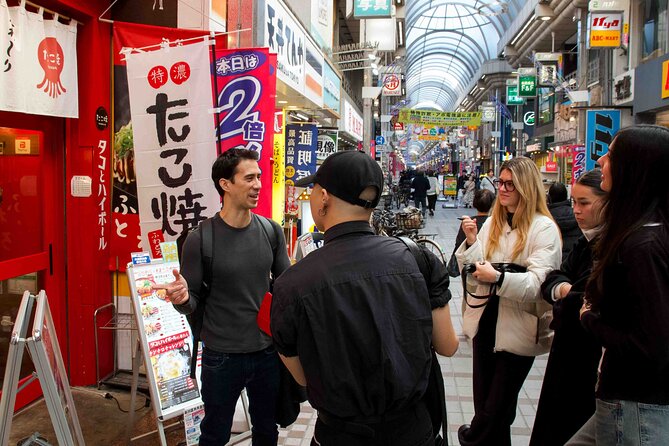
The tour begins at Park City Musashikoyama THE MALL, at 3-chōme-15-1 Koyama in Shinagawa City. From there, you make your way toward the first shopping arcade and begin tasting almost at once.
That opening matters. You do not spend the first part of the tour listening to a long introduction in a quiet meeting room. You start walking through a working neighborhood, with food shops and covered arcades providing the setting.
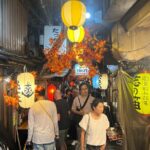
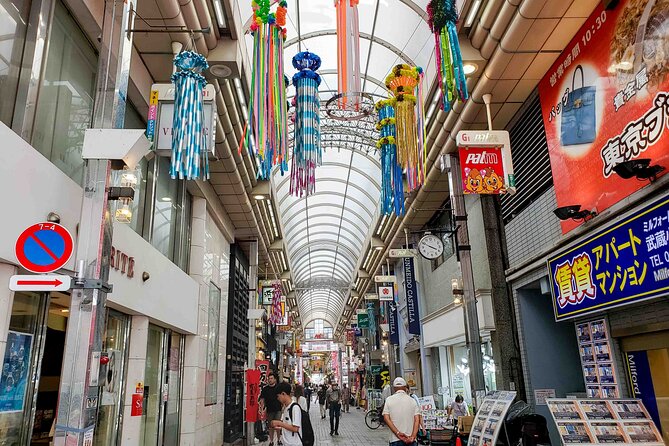
Musashi Koyama Shopping Street Palm is a decades-old covered arcade. It is not presented as the main attraction, but it gives you a useful look at the sort of local commercial street that is easy to miss when you stay around Shibuya, Shinjuku, or Asakusa.
Your guide chooses the first food stops. The exact order can vary, but the planned samples include several familiar Japanese foods in especially local forms. You may begin with something hot and savory, then move through grilled food, rice, bread, and sweets.
A few more Tokyo tours and experiences worth a look
The seven-stop tasting, from karaage to pudding
The food is the heart of this walk, and the selection has been arranged to show range. You are not eating seven versions of the same snack. Instead, the stops cover different textures, cooking methods, and flavor profiles.
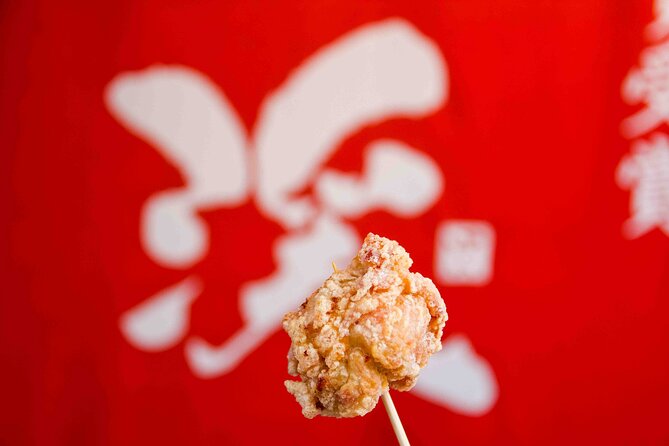
Karaage is Japanese fried chicken, usually prized for a crisp coating and juicy meat. Here, it comes from an award-winning vendor, giving you a strong opening bite and a chance to compare Japanese fried chicken with versions you may know from home.
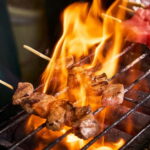
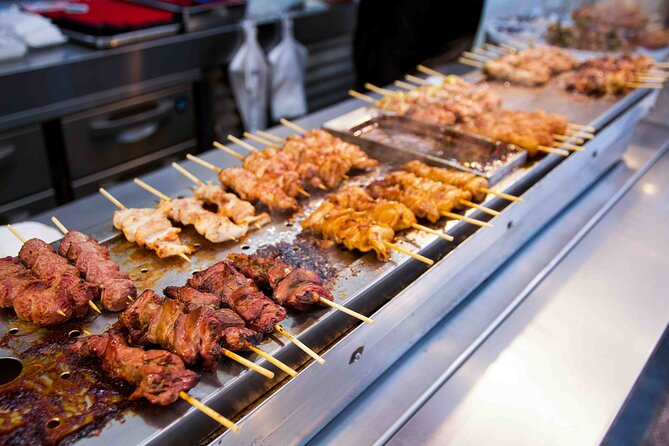
Next comes yakitori, chicken cooked on skewers over charcoal. The stop is a restaurant that has been operating since 1926, which gives the tasting a clear link to long-running neighborhood food culture. Yakitori is simple food, but charcoal and seasoning matter, and it is best eaten soon after cooking.
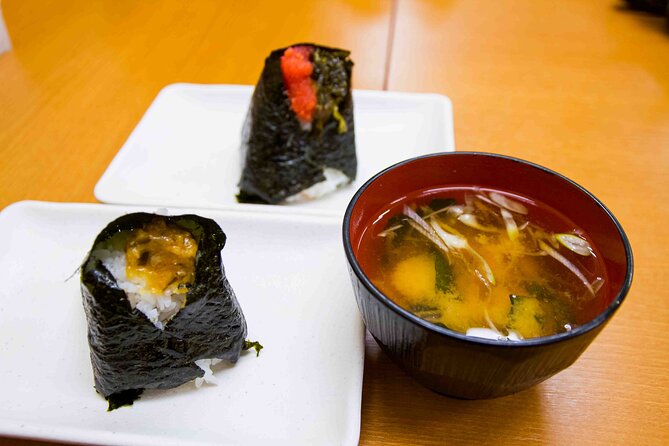
Onigiri brings a different texture. These handmade rice balls can be filled with far more than the familiar salted salmon. The shop offers more than 40 filling choices, including spicy tuna, bacon, and cream cheese. That range says a lot about onigiri today: it remains a traditional portable food, but the fillings can be playful and modern.
The curry bread is another useful contrast. It is fresh-baked bread filled with Japanese beef curry, combining a crisp or soft bread shell with a warm, savory center. It is filling, so you may want to avoid treating the first few stops as full meals.
A very different bite is Japanese pudding. The tour describes it as super creamy, and it gives the route a soft, sweet finish among the early tastings. Japanese pudding is usually smoother and more custard-like than many packaged puddings in Western supermarkets.
The remaining foods are found around Togoshi Ginza, where the guide continues the snack crawl. Dango is mentioned as a favorite final stop on one departure, so you may have a chewy rice-flour sweet near the end, though the precise food order can change.
Since the tour promises seven types of food but gives only the main examples rather than a fixed complete menu, anyone with strict dietary needs should ask before booking. The supplied details do not list vegetarian, vegan, halal, allergy, or gluten-free options.
Walking toward Togoshi Ginza
After the first group of samples, the route continues on foot to Togoshi Ginza Shopping Street. The walk is part of the point, not dead time between food stops.
You get to see how the area changes as you move between the two arcades. The tour combines eating with a look at local Tokyo, which makes it more useful than a simple food pickup route. Your guide can explain the history of the dishes and the role of the shops along the way.
The walking distance is also the reason to wear comfortable shoes. One account described about an hour and a half of walking while grazing, even though the advertised duration is approximately two hours. That difference may reflect the pace of a particular group, but you should plan for steady movement rather than a seated lunch.
The route ends at Togoshi Ginza Shopping Street, not back at the starting point. The endpoint is listed at the Togoshi Ginza Shopping Street Association building in Togoshi, Shinagawa City. This is helpful if you want to continue exploring the area afterward, but you should plan your next train or activity from the end location.
Togoshi Ginza, the main food stretch
Togoshi Ginza is the tour’s main food area. The street has many small, independent shops, and the guide selects places where you can try local delicacies without having to work out the ordering system yourself.
That guidance is valuable in Tokyo. Small food shops can have limited English, unfamiliar menus, or ordering customs that take a moment to understand. A good guide turns those stops into easy, relaxed tastings and adds the story behind each dish.
The setting also helps you see everyday Tokyo rather than a staged food district. You are walking through a neighborhood shopping street, stopping at storefronts, and eating as you go. It is a more grounded introduction to Japanese food than a tour built only around famous restaurants.
The downside is that street food is not always eaten at a table. If you prefer a long, seated meal with time to rest between courses, this may feel hurried. If you enjoy small portions, movement, and variety, the format works much better.
What the guides add to the walk
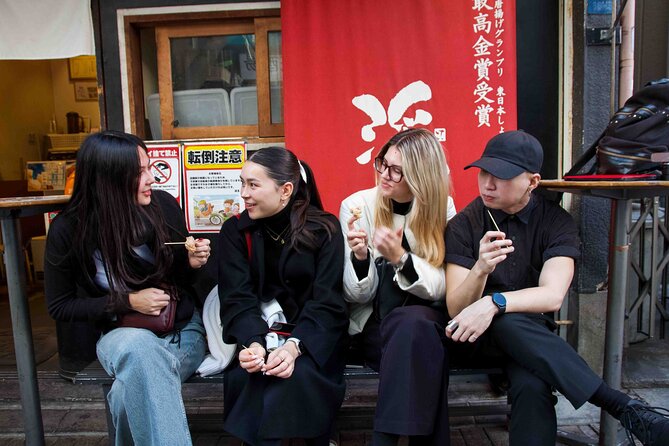
The guide can make or break a food tour, and the named guides connected with this experience include Makayla, Sahori, Frank, and Bunga. The feedback is especially strong on their warmth, food choices, and ability to explain the history of the dishes.
Makayla is described as personable and fun to talk with, while Sahori led a small group through a less touristy part of Tokyo and adjusted when someone did not want to try a particular food. Frank is associated with clear explanations of the food and venues, and Bunga is credited with choosing a varied selection for a first Tokyo visit.
You should not assume a specific guide unless your booking confirms one. Still, the pattern is useful: this tour depends heavily on a host who can explain, pace, and adapt. With a maximum of eight people, the group is small enough for conversation rather than a guide speaking to a crowd.
The tour also works well for solo visitors. A small group gives you company without the feel of a large bus excursion. Families can enjoy it too, though children with small appetites may need to share or pace themselves.
A few more Tokyo tours and experiences worth a look

Is $91.45 a fair price?
At $91.45 per person, this is not a cheap way to grab snacks in Tokyo. You could spend less by visiting a shopping street on your own, especially if you already know what you want and can manage Japanese menus.
The value comes from the structure. You receive seven food tastings, one free soft drink, a guided walk, help choosing shops, and explanations of the area and dishes. You also avoid spending your limited vacation time researching which stalls are worth finding.
The food is described as lunch, but I would treat it as a substantial tasting meal rather than a conventional restaurant lunch. The portions can be generous, and the fried chicken, yakitori, rice ball, and curry bread can fill you before the sweets arrive.
For a first visit to Tokyo, the price makes more sense if you value access and interpretation, not just calories. It is also a good way to learn what you like before ordering similar foods on your own later in the trip.
Who should book this food walk?
I would recommend it to food-focused visitors who want to move beyond sushi and ramen. It is especially useful if you are curious about everyday Japanese snacks, local shopping streets, and the food traditions behind ordinary storefronts.
It suits solo visitors, couples, and families who like to walk. The small group size and relaxed guide style should appeal to anyone who prefers conversation and questions over a scripted sightseeing tour.
It may not suit you if you need a fully seated meal, dislike eating while moving between shops, or have significant food restrictions. The tour details do not promise substitutions or a specific allergy policy, so ask before booking if that affects your decision.
I would also think twice if you have a packed Tokyo schedule on the same day. The tour starts in Musashi Koyama and ends in Togoshi Ginza, so you need to allow time to reach the meeting point and continue from the endpoint.
Timing, tickets, and practical details
The duration is approximately two hours, and the activity is available with a mobile ticket. Confirmation is sent at booking, and the tour operates near public transportation.
The meeting point is Park City Musashikoyama THE MALL in Koyama, Shinagawa City. The end point is Togoshi Ginza Shopping Street, so do not expect a return transfer or hotel drop-off. Hotel pickup and drop-off are not included.
A moderate level of physical fitness is required. You will walk between food stops, stand at storefronts, and keep moving through the shopping streets. Comfortable shoes and a lighter appetite at the start of the day are sensible choices.
Service animals are allowed. The group has a maximum of eight people, although a smaller departure is possible. One Sunday departure had only two participants, creating an almost private feel.
Free cancellation is available if you cancel at least 24 hours before the local start time. Cancellations or changes made inside that window are not accepted for a refund.
Should you book the Togoshi Ginza food tour?
Book it if you want a friendly introduction to local Tokyo food culture, especially if you are willing to trade famous sights for a neighborhood walk. The best reasons are the varied seven-food format, the small groups, and the chance to taste dishes such as karaage, yakitori, onigiri, curry bread, pudding, and possibly dango in the places that serve them every day.
Skip it if you want a formal restaurant lunch, a fixed menu with every dish confirmed in advance, or a short route with little walking. At $91.45, it earns its price through the guide, the shop selection, and the context, not through food alone.
For most food lovers, I would schedule it early in a Tokyo visit. You will get your bearings in a less visited part of Shinagawa, learn several useful Japanese foods, and leave with a better sense of what to look for at the next shopping street you find.
FAQ
How long does the Tokyo Street Food Tour last?
The tour lasts approximately two hours.
How much does the tour cost?
The listed price is $91.45 per person.
How many people can join the tour?
The maximum group size is eight travelers.
Where does the tour begin?
It begins at Park City Musashikoyama THE MALL, 3-chōme-15-1 Koyama, Shinagawa City, Tokyo 142-0062, Japan.
Where does the tour end?
It ends at Togoshi Ginza Shopping Street in Togoshi, Shinagawa City, Tokyo.
What food is included?
The tour includes seven types of Japanese street food. Listed examples include karaage, yakitori, handmade onigiri, curry bread, Japanese pudding, and dango.
Is a drink included?
Yes. One free soda or soft drink is included.
Is hotel pickup included?
No. Hotel pickup and drop-off are not included.
Is the tour suitable for someone with limited mobility?
The tour requires a moderate level of physical fitness and includes walking between shopping streets and food stops.
Can I cancel for a refund?
Yes, you can receive a full refund by canceling at least 24 hours before the experience start time. Changes or cancellations inside 24 hours are not accepted for a refund.
More Food Experiences in Tokyo
More Tokyo Food Tours in Tokyo
More tours in Tokyo we've reviewed


Tokyo Food Tours, compared.
 ★ 5.0Tokyo: Shinjuku Food Tour (13 Dishes at 4 Local Eateries)From $86
 ★ 4.9Tokyo: Shinjuku Food Tour (13 Dishes and 4 Eateries)From $97
 ★ 5.0Tokyo Night Foodie Tour in Shinjuku – Seasonal Sushi, Wagyu BeefFrom $111
 ★ 5.0Eat and Drink Like a Local: Tokyo Ueno Food Tour-Taverns&RamenFrom $95
 ★ 5.0Tokyo: Shibuya Food Tour (13 dishes and 4 Eateries)From $77
Tokyo: Shinjuku Food Tour – 15 Dishes, 3 Drinks, 4 EateriesFrom $723 hours
★ 5.0Tokyo: Shibuya Food Tour (13 dishes and 4 Eateries)From $77
Tokyo: Shinjuku Food Tour – 15 Dishes, 3 Drinks, 4 EateriesFrom $723 hours