Reviewed · HALF-DAY
Half-Day Local Tokyo Tour in Adachi Market and Shibamata
Adachi Fish Market gives you a side of Tokyo that most visitors miss. You can watch the city’s only specialized marine-products market come to life, then ride the train to Shibamata, a quieter old Tokyo district with temple carvings, sweets shops, and a famous movie character. I like the small group of no more than eight and the way the tour links food, local rail travel, religion, and popular culture in one morning. I also like that guides such as Kaori, Mutsuko, Megumi, Mana, Masayo, and Yumi have been praised for clear explanations and warm conversation.
In This Article
- Key points at a glance
- Why Adachi and Shibamata make a smart Tokyo pairing
- Starting early at Adachi Fish Market
- Riding from Senju-Ohashi to Shibamata
- Shibamata and the statue of Futen No Tora
- Walking the 200 meters of Taishakuten-Sando
- Taishakuten’s carvings and garden
- Yamamototei and the meeting of Japanese and Western design
- What the guide adds to the morning
- Timing, group size, and practical value
- Who should book this Tokyo morning
- Should you book the Adachi and Shibamata tour?
- FAQ
- How long does the tour last?
- What time does the tour begin?
- Where does the tour start?
- Where does the tour end?
- Is train transportation included?
- Are food and drinks included?
- How many people can join the group?
- Can I cancel for a full refund?
The main consideration is the early 8 a.m. start and the fixed pace. You have about 4.5 hours, so this is a guided introduction rather than a long market breakfast or a slow museum visit. Food and drinks are not included, and the starting point at Senju-Ohashi Station is not in central Tokyo’s best-known sightseeing zone.
Key points at a glance
- Adachi Fish Market before the crowds: See a working marine-products market without making Tsukiji the center of your morning.
- A useful Tokyo train ride: One-way rail fare from Senju-Ohashi to Shibamata is included, turning local transportation into part of the outing.
- Shibamata’s 200-meter temple street: Browse a traditional approach lined with Japanese sweets shops and soba restaurants.
- Taishakuten’s detailed wood carvings: Spend time examining carvings based on the Lotus Sutra around the temple’s main hall.
- A compact group: The tour accepts between two and eight people, making questions and conversation easier.
- A strong guide element: English-speaking guides including Kaori, Mutsuko, Megumi, Mana, Masayo, and Yumi have been singled out for clear, personal explanations.
Why Adachi and Shibamata make a smart Tokyo pairing
Tokyo can feel like a collection of famous districts competing for your attention. This tour takes a different route. It begins in Adachi with the practical, working side of the city, then moves to Shibamata, where the pace slows around a temple, a traditional shopping street, and the Edogawa River area.
I like this pairing because the two places do not feel interchangeable. Adachi is about seafood trade and the morning rhythm of a market. Shibamata is about memory, religion, local food, and an older image of Tokyo. You get a more varied morning than you would from visiting another major shopping district.
The price is $91.96 per person. That is not the cheapest way to see a market and temple, especially since meals are extra, but the value improves if you want an English-speaking guide and do not want to plan the rail route yourself. Local taxes, professional guiding, the small-group walk, and the one-way train fare are included. The group limit matters too. With a maximum of eight people, the guide can usually answer questions without the outing turning into a large parade.
Other shopping tours in Tokyo


Starting early at Adachi Fish Market
Meet at 8 a.m. at Senju-Ohashi Station in Adachi City. Check the meeting point carefully before setting out, since this is not a hotel pickup, and the tour does not include transportation from your accommodation.
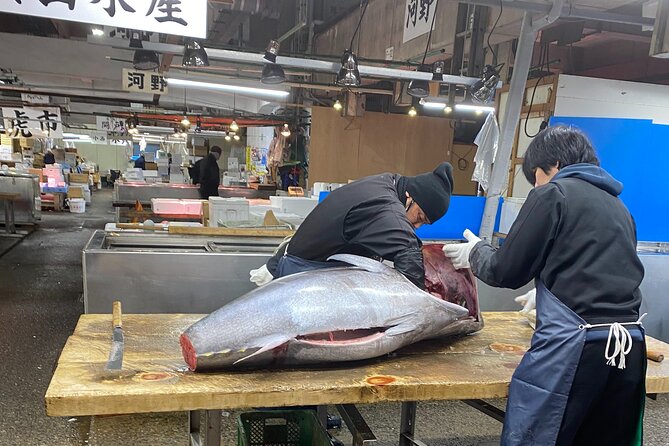
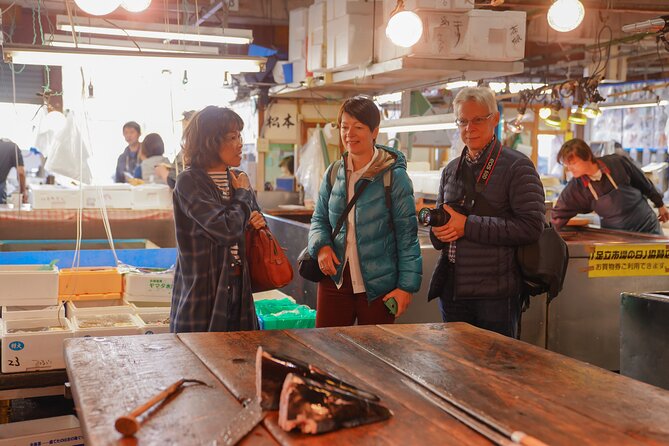
The first stop is Central Market Adachi Shijo, also called Adachi Fish Market. It is described as Tokyo’s only specialized marine-products market, giving the visit a different character from the city’s better-known fish destinations. The market portion lasts about one hour, with admission listed as free.
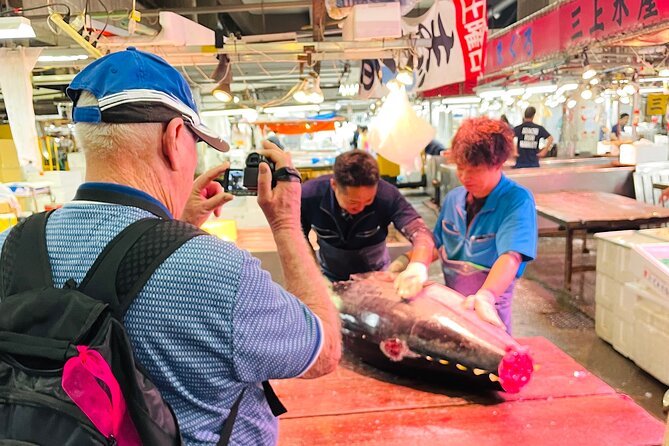
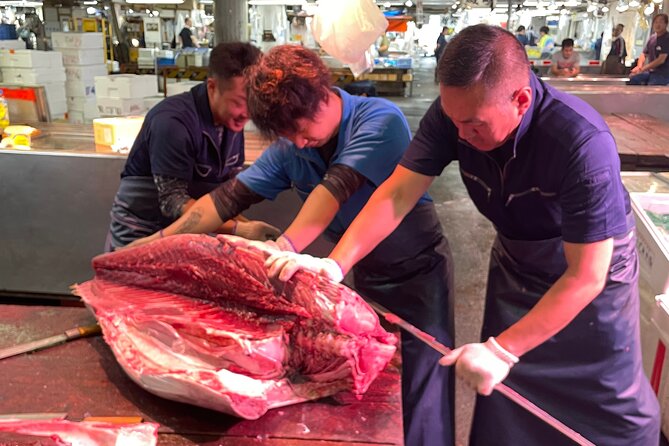
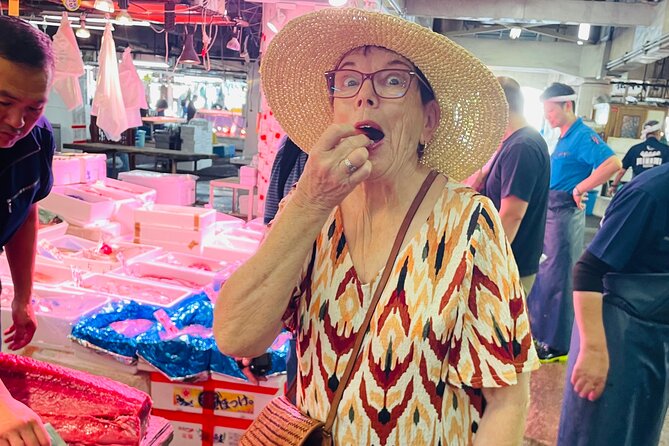
Expect stalls with fresh seafood, sashimi, and sushi-related products. The appeal is less about checking off a famous sight and more about seeing a working food market with fewer sightseeing crowds. The setting gives your guide room to explain what you are seeing, how seafood fits into Japanese food culture, and what makes this market different from Tsukiji.
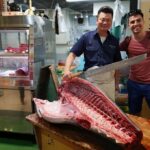
The reviews give useful clues about the strongest part of this stop. The enormous tuna and broad variety of seafood made a clear impression, and the market was repeatedly described as a highlight. If you enjoy food, markets, or ordinary city life, this is likely to be the most memorable section.
There are limits. Food and drinks are not included, so you should not assume the tour price covers tastings or breakfast. The supplied details also do not promise a formal meal, a cooking lesson, or guaranteed purchases. Think of this as a guided look at the market first, with eating opportunities dependent on what is available and how the morning proceeds.
Riding from Senju-Ohashi to Shibamata
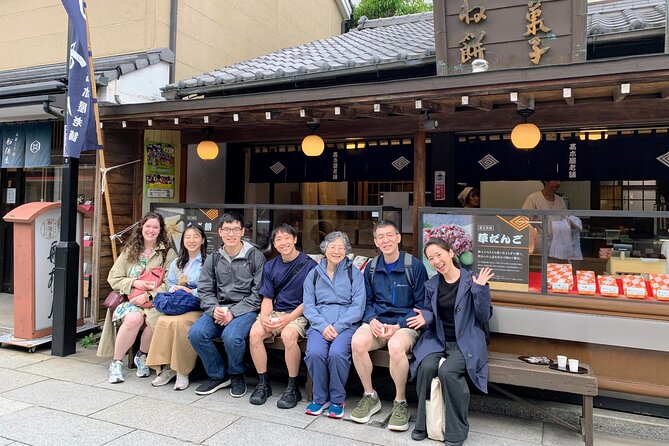
The tour includes one-way train fare from Senju-Ohashi Station to Shibamata Station. This is a small but useful feature. You do not have to work out the fare during a guided morning, and you get to see how two less central Tokyo districts connect by rail.
The included fare is one-way only. The tour ends at Shibamata Station, so your return trip and any onward transportation are your responsibility. That ending can be convenient if Shibamata fits your plans for the rest of the day, but it is worth checking your route before booking.
The rail transfer also gives the morning a local feel. Instead of staying inside a sightseeing bubble, you move from one part of Tokyo to another as residents do. The guide remains part of the experience, helping the transition feel purposeful rather than like a gap between attractions.
Shibamata and the statue of Futen No Tora
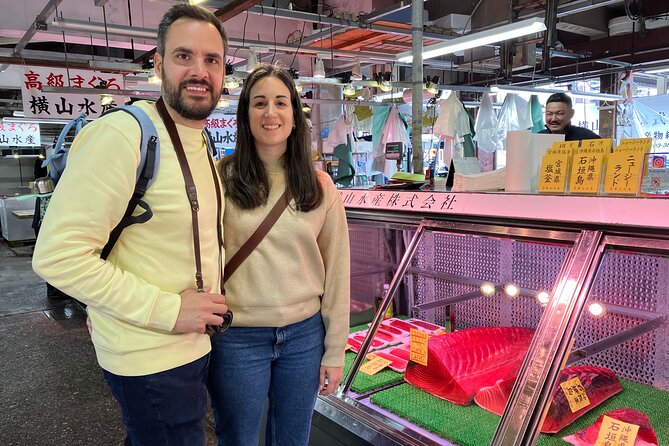
Shibamata is an old-style town beside the Edogawa River in northeastern Tokyo. The tour allows about 30 minutes to explore the area before a brief five-minute stop at the bronze statue of Futen No Tora outside Shibamata Station.
Tora is the fictional central character of the long-running Otoko wa Tsuraiyo movie series. In the films, Shibamata is his home, so the statue is more than a photo stop. It connects the neighborhood to a piece of Japanese popular culture that many local people know well.
Five minutes is enough to see the statue and hear its background, but not enough for a long look at the wider station area. If you already know the film series, the stop may carry extra meaning. If you do not, your guide’s explanation should help you understand why a fictional wandering salesman has such a strong connection to this neighborhood.
This is one reason the tour works well for visitors who want context, not just buildings. A temple tells one story about Shibamata. Tora tells another, more modern story about how the district lives in Japan’s popular imagination.
Walking the 200 meters of Taishakuten-Sando
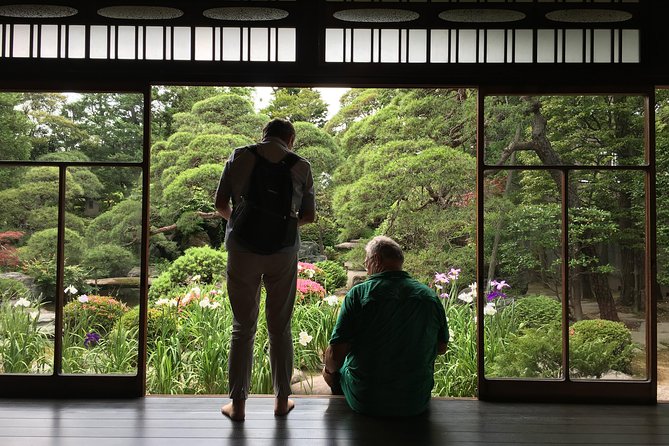
From the station, you follow Taishakuten-Sando for roughly 200 meters toward the temple. The street is lined with Japanese sweets shops, soba restaurants, and other traditional-looking businesses. The walking distance is short, but it is one of the most atmospheric parts of the route.
This is a good place to pay attention to small details: shop fronts, food displays, signs, and the way the street leads you toward the temple. The tour gives you about 20 minutes here, so you will have time to look around, though not necessarily enough for a leisurely meal or extensive shopping.
I like that the street comes before the temple. It creates a gradual change in mood. You move from the station and its statue into a pedestrian-friendly approach where food, local customs, and temple life overlap.
Keep your expectations practical. The tour does not include food, and the schedule is too short to treat the street as a full restaurant crawl. If a particular sweet or noodle shop catches your eye, ask your guide about it, then return later if your plans allow. Since the tour ends at Shibamata Station, you can continue exploring after the official portion.
A few more Tokyo tours and experiences worth a look



Taishakuten’s carvings and garden
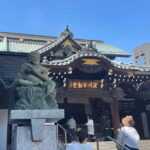
Shibamata Taishakuten, also known as Taishakuten Daikyoji Temple, receives about 40 minutes. The main attraction is its intricate wood carving, described as scenes connected with the Lotus Sutra installed around the main hall.
This is the stop where a guide adds real value. Detailed temple carvings can be difficult to interpret on your own, especially when you are unfamiliar with the stories and religious ideas behind them. A guide can point out what deserves your attention and explain the setting in clear English.
The carvings are not presented as broad, empty wall panels. They are tightly placed around the main hall, so you will want to look closely at the workmanship. Give your eyes time to adjust to the detail rather than rushing through for a single photograph.
The temple grounds also include a garden associated with ikebana, the Japanese art of flower arranging. The information provided does not promise a particular seasonal display, so treat the garden as a quiet visual counterpoint to the carved wood. Forty minutes is enough for a meaningful visit, but this is not a full temple study session.
Admission to the temple itself is listed as free in the stop details, while the overall package includes admission to Yamamototei. That distinction is useful when judging the price. The fee is paying mainly for the guide, structure, and small group, not a long list of costly entry tickets.
Yamamototei and the meeting of Japanese and Western design
The last listed stop is Yamamototei, with about 30 minutes and admission included. It is a two-story building that combines Japanese and Western architectural elements. The Nagayamon gate is noted for its especially unusual Western-style features.
This visit adds another layer to Shibamata. After the temple’s religious carvings and the shopping street’s traditional atmosphere, Yamamototei shows how Japanese design absorbed Western influences without simply abandoning older forms. The result is a building that rewards a slower look at structure, rooms, and decorative choices.
Thirty minutes is a sensible amount of time here. You can see the main features without turning the morning into an architecture seminar. If buildings and design interest you, this may be more than a quick add-on. If your main goal is seafood, you may find the market more immediately exciting.
The tour ends at Shibamata Station, listed at 4 Chome-8 Shibamata. That makes Yamamototei the final planned attraction rather than a return trip to Adachi. You finish with a clear rail connection for the next part of your day.
What the guide adds to the morning
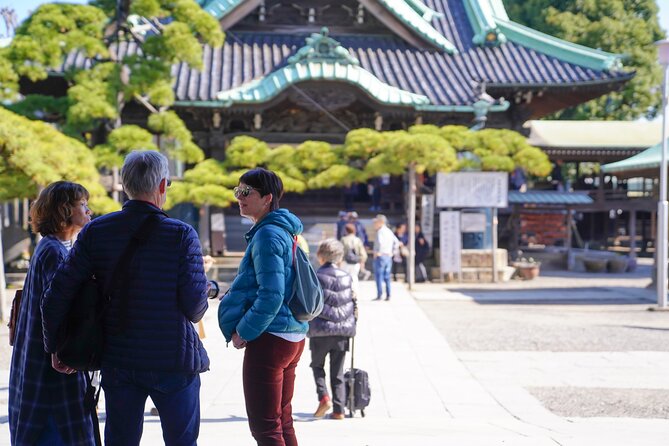
The guide is central to this experience. Several guides have led the route, including Kaori, Mutsuko, Megumi, Mana, Masayo, Yumi, Yoshimi, Fumiko, and Rie. The strongest recurring praise has focused on clear English, local culture, useful explanations, and a friendly manner.
One especially practical strength is the guide’s ability to answer questions as the setting changes. At the market, you may want help understanding seafood displays. In Shibamata, you may want cultural background on Tora, temple customs, or the carvings. The tour’s small size makes that kind of conversation more realistic than it would be in a large group.
The exact guide is not guaranteed in the supplied details, so book this for the route and format rather than one named person. Still, the pattern of guide names and positive comments suggests that the human element is a major part of what you are paying for.
Timing, group size, and practical value
The experience lasts approximately 4 hours and 30 minutes and begins at 8 a.m. The early start suits the fish market, but it may be a poor match if you prefer slow mornings or are dealing with jet lag. You will also spend much of the outing on foot, with the train ride between the two districts.
A minimum of two people is required per booking, and the maximum is eight. That makes this a shared small-group tour, not a private experience. Group discounts are available, though the supplied information does not state the discount amount.
For $91.96, I would book this when you value explanation and local orientation. You are paying for the guide’s time, the planned sequence, the train fare, and the ease of moving between two areas that many first-time visitors would not connect on their own. If you only want to see a fish market and temple as cheaply as possible, you can likely spend less by arranging your own route.
Free cancellation is available up to 24 hours before the start time for a full refund. Cancellations or changes made less than 24 hours before the start are not refunded or accepted. Confirmation is sent within 48 hours of booking, subject to availability.
Who should book this Tokyo morning
I would recommend this tour to you if you want:
- A quieter alternative to Tokyo’s best-known fish-market stops
- A small group where you can ask questions
- A morning focused on food culture, local rail travel, temple art, and neighborhood life
- A guide to explain customs and historical context in English
- A finished activity that leaves the rest of your day open in Tokyo
It suits families and mixed-interest groups particularly well. The market can catch the attention of food lovers, while the statue, temple, garden, and architecture give the rest of the group more to enjoy. One group of six found the combination worked well for every member, which is a useful sign for families or friends traveling together.
I would hesitate if you need hotel pickup, private transport, a guaranteed meal, or a long unhurried visit at each attraction. Taxi, private car, or bus transport is available for an extra fee, but it is not part of the standard package. You should also be comfortable meeting at Senju-Ohashi and finding your own way home from Shibamata.
Should you book the Adachi and Shibamata tour?
Book it if you want Tokyo beyond the usual central districts and prefer a guide to turn unfamiliar places into a coherent story. The market’s tuna and seafood displays, Shibamata’s Tora connection, the 200-meter temple street, Taishakuten’s wood carvings, and Yamamototei create a varied half-day with little wasted time.
Skip it if your priority is a full seafood meal, private sightseeing, or an all-day tour with hotel transport. For everyone else, the small group, included one-way train fare, and repeated praise for guides such as Kaori, Mutsuko, Megumi, Mana, Masayo, and Yumi make the $91.96 price reasonable. You finish at Shibamata Station with a less familiar, more local-feeling Tokyo morning behind you.
FAQ
How long does the tour last?
The tour lasts approximately 4 hours and 30 minutes.
What time does the tour begin?
It begins at 8 a.m.
Where does the tour start?
The meeting point is Senju-Ohashi Station, at Senjuohashidocho in Adachi City, Tokyo.
Where does the tour end?
The tour ends at Shibamata Station, at 4 Chome-8 Shibamata in Katsushika City, Tokyo.
Is train transportation included?
One-way train fare from Senju-Ohashi Station to Shibamata Station is included. Return transportation after the tour is not included.
Are food and drinks included?
No. Food and drinks are not included in the tour price.
How many people can join the group?
A minimum of two people is required per booking, and the maximum group size is eight people.
Can I cancel for a full refund?
Yes. You can cancel at least 24 hours before the local start time for a full refund. Cancellations or changes made less than 24 hours before the start are not accepted or refunded.
More Half-Day in Tokyo


More Markets in Tokyo
More Shopping Tours in Tokyo
More tours in Tokyo we've reviewed




Half-Day, compared.
 ★ 4.0Half-day Tokyo Afternoon Tour by Hato BusFrom $41
 ★ 4.6Tokyo: A Half-Day Trip Bus Tour in the MorningFrom $404 hours - 270 minutes
 ★ 4.0Half-day Tokyo Morning Tour by Hato BusFrom $41
 ★ 5.0Tokyo Private Half-Day Tour with a Local – Secrets & HighlightsFrom $143
 ★ 4.9Old and Nostalgic Tokyo: Half-Day Yanaka Walking TourFrom $833h 30m
 ★ 5.0Tokyo Half-Day Canyoning AdventureFrom $60