Reviewed · JDM & CAR CULTURE
DAIKOKU excursion by car DRIFT automobile encounter
Daikoku Parking Area is one of Tokyo’s best-known meeting places for Japanese car culture, yet getting there without a car is difficult. This private outing puts you in a JZX drift car with guide and drift pilot Clément, then takes you toward Daikoku and other spots connected to the local car scene.
In This Article
- Key points to know before booking
- Why Daikoku is worth the special trip
- Riding in Clément’s JZX
- The ride toward Daikoku Parking Area
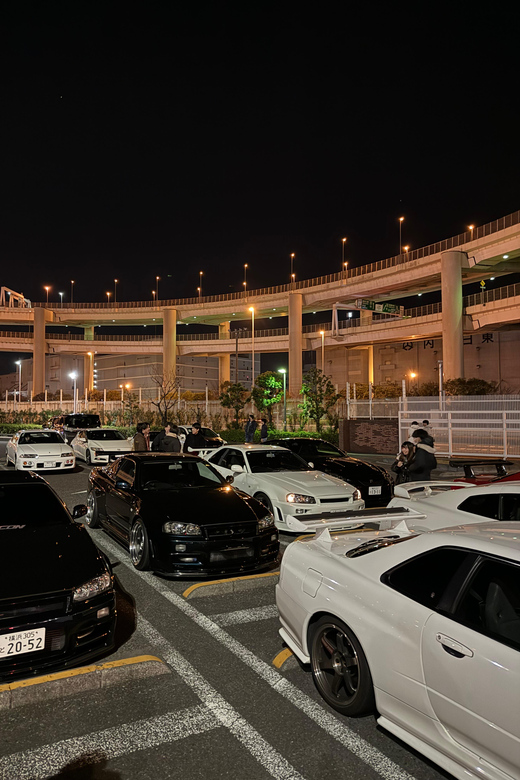
- Seeing the car gathering at Daikoku
- Secret spots and the value of a local guide
- What the price includes, and what it does not
- Who will enjoy this most
- Weather, closures, and the need for a backup mindset
- How this compares with exploring alone
- Should you book the Daikoku drift car outing?
- FAQ
- How long does the Daikoku drift car experience last?
- Where does the activity start and finish?
- Is transportation included?
- Is Daikoku Parking Area accessible by train or bus?
- What happens if bad weather cancels the tour?
- Can I cancel for a full refund?
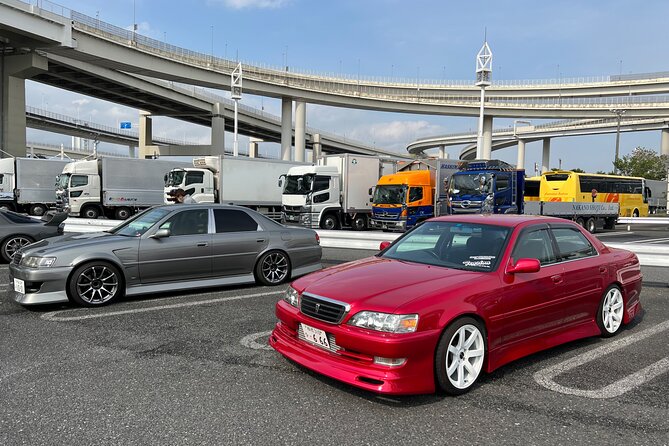
I like two things right away: you get a personal guide rather than a large bus tour, and the ride itself is part of the experience. Clément’s stories about Japan, drifting, and JDM cars add context, while parking beside other cars at Daikoku can feel far more real than simply taking a photo from a roadside lookout.
The main caution is that Daikoku is not guaranteed to be open to visitors on every outing. Police may close the area, and one excursion ended with only a partial refund after access was blocked. You should book this for the car-culture experience as a whole, not as a guaranteed car rally.
Key points to know before booking
- A private four-hour ride: Your group travels with its own guide and private transportation, rather than joining a large tour.
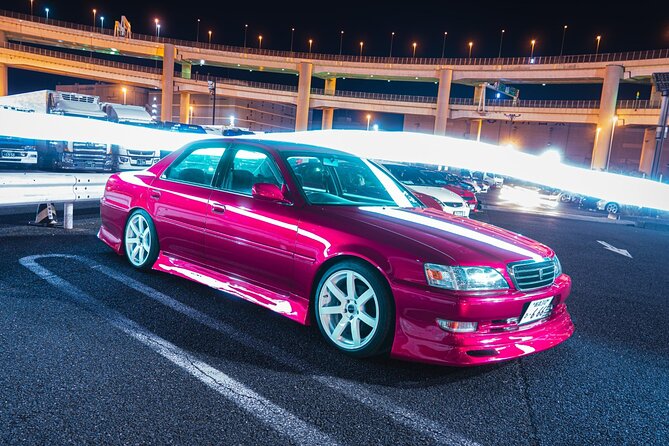
- Clément and the JDM scene: Clément drives a JZX and shares stories about Japanese cars, drifting, and local car culture.
- Daikoku is hard to reach independently: The parking area is not practical to reach by train, on foot, or by bus.
- The car rally can change: Police closures may prevent access, so the evening depends on conditions at Daikoku.
- Parking fees are covered: Private transportation and parking are included, but dinner, snacks, and onboard WiFi are not.
- A strong fit for car fans: The experience suits people who care about Japanese cars, drifting, and the social side of the JDM scene more than standard Tokyo sightseeing.
Why Daikoku is worth the special trip
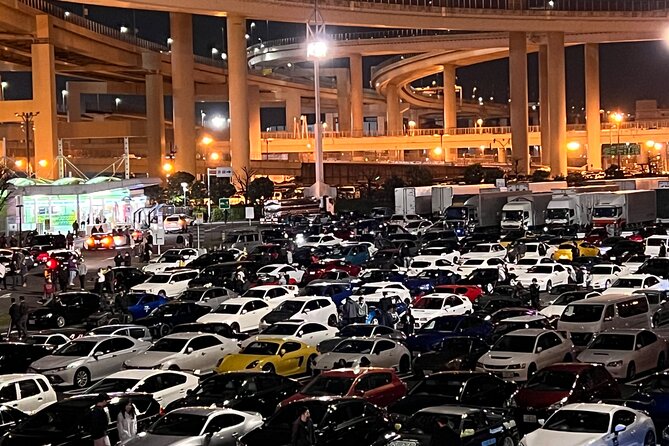
Daikoku Parking Area is not a classic Tokyo sightseeing stop. You will not find a shrine, museum collection, or famous city view here. Its appeal comes from the cars that gather there and the chance to see Japanese car culture in a working public place rather than behind glass.
That distinction matters. You are not simply being shown a sports car for a quick photograph. You travel in a car tied to the drift scene, head toward a place where car enthusiasts meet, and learn how the local scene fits into life in Japan.
Daikoku is also awkward to reach on your own. It is inaccessible by train, on foot, or by bus, which makes private transport the practical answer. The tour handles the driving and parking, so you can focus on the cars and the stories instead of trying to work out an inconvenient route across Tokyo and Yokohama Bay.
I would not treat the outing as a standard sightseeing tour. The value is strongest if you already know the difference between JDM cars, drift cars, and the wider Japanese performance-car scene, or if you are eager to learn.
A few more Tokyo tours and experiences worth a look

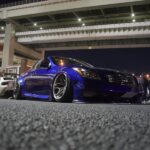
Riding in Clément’s JZX
The vehicle is a major part of the appeal. Clément’s JZX gives the ride a clear connection to Japanese drift culture, and you are not merely traveling in an anonymous taxi or minivan.
The supplied details do not promise a driving lesson or a drift demonstration, so you should not book expecting to take the wheel or experience high-speed slides. Think of it as a private car encounter and guided ride. The car creates the setting, while Clément provides the explanation and local perspective.
Several parts of the experience work because of this close format. Clément can talk with your group during the journey, answer questions, and explain the cars and places you see. One especially useful detail is that the drive includes anecdotes about Japan and his passion for drifting, so the time between stops is not dead time.
The private format also lets you set the tone more easily than on a large group outing. If your group wants to talk about a particular car, ask about Japanese drift culture, or simply enjoy the ride, you are not competing with a coach full of strangers for the guide’s attention.
The tradeoff is price. At $216.95 per person, this is expensive for a four-hour activity if you measure value only by time or transport. It makes more sense for a small group that wants a specialist experience, since private transportation, parking, and a dedicated guide are included.
The ride toward Daikoku Parking Area
The stated plan begins with pickup in Tokyo and a drive toward Daikoku, though the exact meeting arrangement should be checked when you book. One account describes meeting Clément at a station, while the tour details also describe hotel pickup. That difference may reflect the booking arrangement or the day’s meeting plan, so do not assume your hotel door is the final pickup point without confirming it.
Once on the road, the route is part of the story. Clément uses the journey to talk about Japan, his drift background, and the car scene. This is where the experience gains much of its personality. A simple transfer to Daikoku becomes a moving introduction to the culture you are about to see.
You should also plan around the four-hour duration. That is enough time for a focused evening or half-day outing, but it is not a full tour of Tokyo’s car scene. The advertised program centers on Daikoku and additional secret spots, with the guide choosing places connected to car gatherings and local interest.
The phrase secret spots should be read sensibly. It does not mean a guaranteed list of private locations or a fixed set of famous photo stops. It means the guide knows places that are difficult for an independent visitor to find. The exact stops can depend on access, timing, and what is happening that day.
Seeing the car gathering at Daikoku
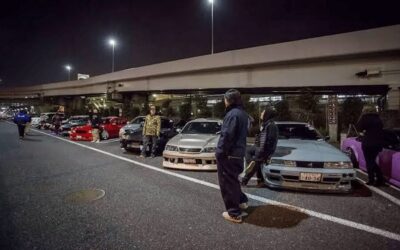
At Daikoku, the goal is to see the place where cars gather and to understand the social side of the scene. The experience is less about a formal attraction and more about being present at the right kind of public meeting point.
That can be memorable because you arrive in a car that belongs in this setting. One particularly strong account describes arriving in the JZX and parking up with the other cars. That detail captures the difference between arriving as a spectator in a tour vehicle and arriving in a car that fits the culture you came to see.
Still, Daikoku has a serious uncertainty: police closures. The area may be closed off, and one outing was unable to reach the car gathering because of police action. The tour provided only part of the planned experience and a partial refund in that case, but the incident shows why you should keep your expectations flexible.
This is not necessarily a fault the guide can solve. Daikoku is a public place, and access can change. Yet a strong operator should have alternate plans, and the available information does not clearly promise a complete backup route for every closure. Ask what happens if Daikoku is shut on your date, especially if the parking area is your main reason for booking.
Secret spots and the value of a local guide
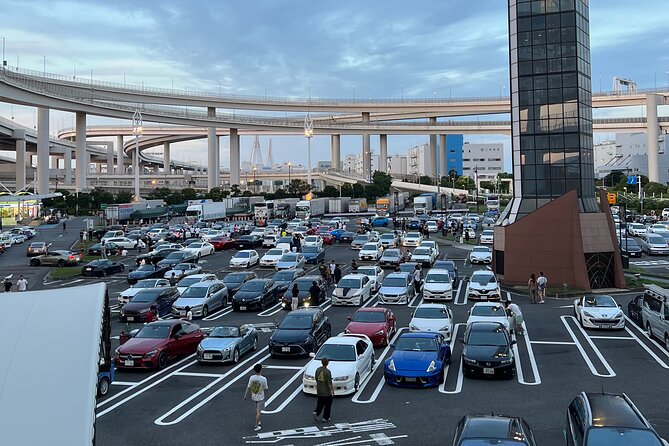
The additional stops may be the part you cannot copy easily with a guidebook. Daikoku itself is well known among car fans, but finding other places connected to rallies and local gatherings requires someone who knows the area and understands when those spots are worth visiting.
Clément’s role is not only to drive. He explains Japanese car culture, points out places connected to the scene, and gives you background on drifting and the cars themselves. For a first visit to Tokyo, that personal connection can make the outing feel less like a transfer and more like time spent with someone who has a genuine interest in the subject.
I especially like this approach for people who do not want a polished, generic city tour. The experience is built around a narrow interest, and that focus is its strength. You are not stopping at ten unrelated attractions. You are following one thread through Tokyo: the cars, the roads, the gathering places, and the people who care about them.
The guide’s personality matters here. Most of the positive feedback centers on the personal and educational side of the outing, with Clément described as easygoing and pleasant. That is useful information for you because a four-hour private ride depends heavily on the guide’s communication style.
There is also a practical downside to a private car setting. A poor match in personality can affect the whole evening, and one very negative account raised concerns about the guide’s personal presentation and the vehicle environment. I would not ignore that possibility. If you are sensitive to enclosed spaces, vehicle odors, or long stretches in a car, consider the nature of the activity before paying the premium.
What the price includes, and what it does not
The $216.95 price covers private transportation and parking fees. Those inclusions matter because Daikoku is difficult to reach by normal public transport, and parking costs could otherwise become an unpleasant extra.
The price does not include dinner, snacks, or WiFi onboard. Four hours is long enough that you may want to eat beforehand, especially since there is no meal included. Do not count on using the car’s internet connection during the ride.
For one person, the cost is high. For a private group splitting the experience among several people, the value improves, especially if everyone cares about Japanese cars. You are paying for access by car, a specialist guide, and a private outing rather than a basic ride to a parking area.
I would compare it with the cost of arranging private transport independently. You would still need to know where to go, understand the car scene, and find alternate places if Daikoku is closed. The tour’s advantage is the guide’s connection to the subject and the convenience of having transport and parking handled together.
The value drops if you mainly want a guaranteed view of a large car rally. Since access can be blocked, you are paying for an informed outing with an uncertain centerpiece. That is fair for an enthusiast, but less appealing to a casual sightseer.
Who will enjoy this most
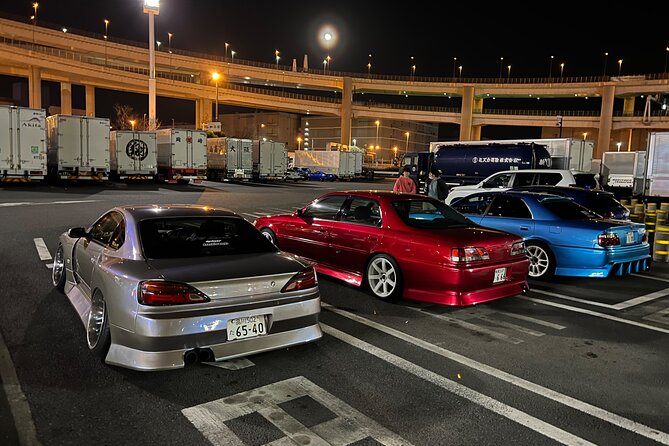
This outing suits you if Japanese performance cars are a major reason you came to Tokyo. It is also a good choice if you want to see a side of the city that is difficult to reach without local transport and a guide with a personal connection to drifting.
You will likely get the most from it if you:
- Enjoy JDM cars and drift culture
- Want to ask questions during a private ride
- Prefer a small-group experience to a standard sightseeing tour
- Are comfortable with a flexible plan
- See the car and the journey as part of the attraction
It is less suitable if you want a broad introduction to Tokyo. You will not visit a long list of famous city sights, and the experience is not designed around food, shopping, temples, or museums.
It may also disappoint you if you need a guaranteed schedule. Police activity can affect Daikoku, and the exact secret spots are not listed in advance. A flexible attitude is important.
Most travelers can participate, and the activity is private, meaning only your group joins. The details also describe it as near public transportation, although the specific meeting point should be confirmed because the experience itself depends on private vehicle access.
Weather, closures, and the need for a backup mindset
The tour requires good weather. If poor weather forces a cancellation, you are offered another date or a full refund. The same applies if the minimum number of participants is not met, with the option of another date, another experience, or a full refund.
That policy protects you from a complete weather-related loss, but it does not remove the uncertainty of Daikoku access during a running tour. Good weather does not guarantee that police will allow cars to gather.
I suggest treating the outing as a four-hour exploration of Tokyo’s car culture, with Daikoku as the hoped-for highlight. If access is open and the gathering is active, the evening can be special. If it is closed, the quality of the alternate stops and Clément’s guidance becomes much more important.
You can cancel for a full refund up to 24 hours before the start time. Cancellations or changes made within 24 hours are not refunded or accepted, and the cut-off follows local Tokyo time.
How this compares with exploring alone
An independent visit sounds simple until you consider the location. Daikoku is not accessible by train, walking, or bus, so you would need a car or private transport. You would also need to know where to go, manage parking, and accept that police may close the area.
The tour removes those problems. You travel with a guide who knows the car scene, get transport and parking, and have someone to explain what you are seeing. That convenience is the main reason to pay more than the cost of a normal Tokyo attraction.
Going alone could be better if you already have a rental car, understand the area, and prefer to set your own schedule. But a rental car will not automatically give you the same connection to the drift scene, and the supplied details do not promise that independent visitors can enter Daikoku during a closure.
For most first-time visitors interested in Japanese cars, the guided option is the more practical choice. Just remember that the guide can improve access and context, not control public authorities.
Should you book the Daikoku drift car outing?
Book it if you want a focused, personal look at Japanese car culture and you are happy for the ride itself to be part of the adventure. Clément’s JZX, his stories about drifting and Japan, private transportation, and the chance to park with other cars give the experience a clear identity.
I would skip it if you need a guaranteed car rally, a low-cost activity, or a broad Tokyo sightseeing program. The $216.95 price is reasonable for a private specialist outing, but only when your group genuinely values the subject.
Before booking, confirm the pickup point and ask what the plan is if Daikoku is closed. If you can accept that uncertainty, this is one of the more direct ways to reach a part of Tokyo that ordinary sightseeing leaves out.
FAQ
How long does the Daikoku drift car experience last?
The experience lasts approximately four hours.
Where does the activity start and finish?
It starts in Tokyo and ends back at the meeting point. The details describe hotel pickup, while one account describes meeting at a station, so confirm the exact pickup arrangement when booking.
Is transportation included?
Yes. Private transportation and parking fees are included.
Is Daikoku Parking Area accessible by train or bus?
The activity details state that Daikoku is inaccessible by train, on foot, or by bus. The tour uses private transportation to reach the area.
What happens if bad weather cancels the tour?
You will be offered a different date or a full refund if the experience is canceled because of poor weather.
Can I cancel for a full refund?
Yes. You can cancel at least 24 hours before the experience start time for a full refund. Cancellations or changes made less than 24 hours before the start time are not accepted for a refund.
More JDM & Car Culture in Tokyo

More tours in Tokyo we've reviewed












JDM & Car Culture, compared.
 ★ 4.8Tokyo: Fast & Furious Tokyo Drift 3 Experience (Kaila Yu SP)From $157
 ★ 4.8Tokyo: FAST&FURIOUS EXPERIENCE Daikoku Tokyo Car ClubFrom $157
 ★ 4.8Tokyo Drift: GT-R Car Club R35 Liberty Walk Daikoku meetingFrom $240
 ★ 4.8Tokyo: Daikoku JDM Fast Furious Drift Style Car ExperienceFrom $123
 ★ 4.8Tokyo Drift: GO Daikoku Car Meet R34 Skyline Car ClubFrom $246
 ★ 4.7Tokyo Drift: Daikoku PA Supreme Car Experience 大黒PAFrom $583 hours