Reviewed · WORKSHOPS
Manga lesson by acitive pro-Manga artists (Tokyo/Ikebukuro)
The best part of this two-hour manga workshop is that you do not just watch an artist draw. You learn how Japanese manga is made, then use professional tools yourself to build characters and a short four-frame story. The class is led by an active professional artist, with English interpretation available.
In This Article
- Key points at a glance
- What happens during the two-hour lesson
- Drawing with a G pen and manga ink
- Meeting Kazuo Maekawa and the English interpreter
- Why the small group matters
- Finding the studio near Ikebukuro Station
- The value of $278 for up to two people
- Who will enjoy this manga experience
- Accessibility and practical limits
- Is this the right Tokyo activity for you?
- FAQ
- Where does the manga lesson take place?
- How long does the activity last?
- How much does the experience cost?
- Is English interpretation included?
- Who teaches the class?
- What will I learn?
- Do I need previous drawing experience?
- Are children allowed to participate?
- Are drawing materials included?
- Is wheelchair access available?
I like the mix of cultural background and hands-on work, which gives the lesson more purpose than a simple drawing class. I also like the small group size, limited to eight people, and the fact that equipment, ink, manga paper, and a small artist’s gift are included.
The main consideration is the price: $278 per group of up to two people is a serious spend for two hours. Also, the accessibility information is inconsistent, with the activity described as wheelchair accessible in one place and unsuitable for wheelchair users elsewhere, so you should confirm this before booking.
Key points at a glance
- Learn from a working manga artist: Kazuo Maekawa provides the drawing instruction, with an English interpreter helping you follow the lesson.
- Use traditional manga tools: The workshop supplies equipment such as a G pen, ink, and manga paper.
- Build a story, not just a sketch: You can create original characters and work on a four-frame manga.
- Get culture along with technique: The class includes an introduction to manga history and its place in Japanese pop culture.
- Easy Ikebukuro location: The meeting point is a six-minute walk from Ikebukuro Station’s East Exit.
- Designed for beginners: No previous drawing experience is required, but children must be at least 10 years old.
What happens during the two-hour lesson
This is a compact introduction to manga, not a full professional course. In two hours, you get a taste of the creative process, a bit of cultural context, and time to draw with tools used in traditional manga production.
The exact balance can change according to the level of the group. That matters if you are booking with children, complete beginners, or people who already draw. The instructor can adjust the material rather than forcing everyone through the same rigid lesson.
The class begins with an explanation of manga’s history and cultural role in Japan. This gives you a useful frame for the practical work. Manga is not simply a drawing style, and the lesson treats it as a form of storytelling and a major part of Japanese popular culture.
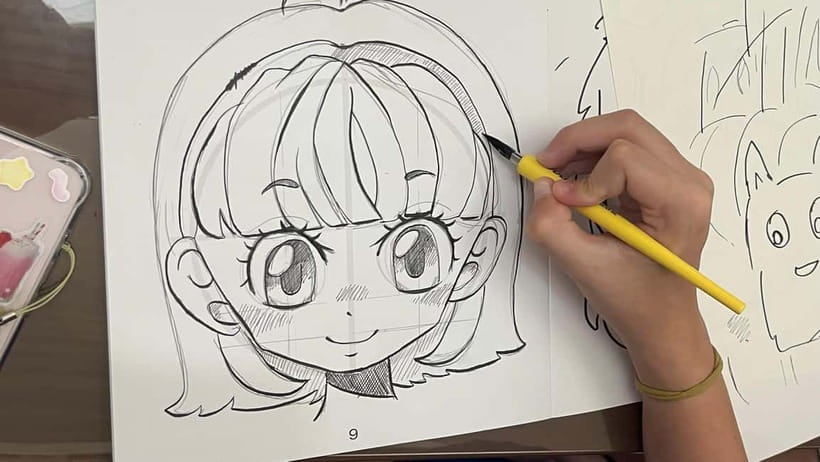
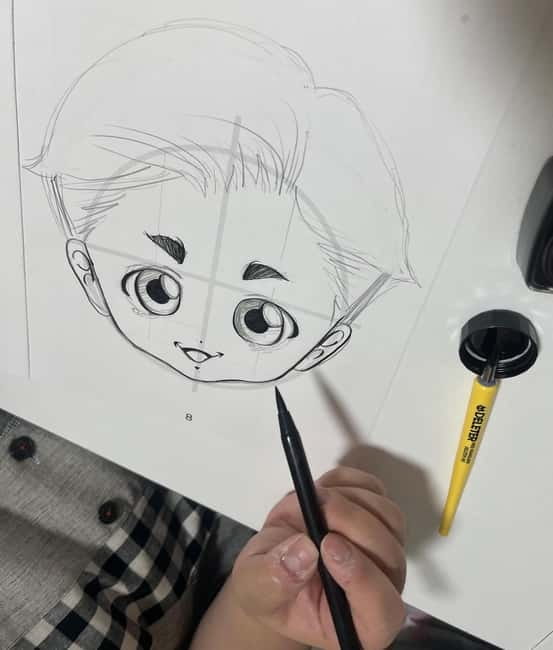
The instruction then turns toward character creation and drawing techniques. You can work on your own original characters, learning how a simple design can communicate personality and action. The information does not promise a finished professional comic, so it is best to arrive expecting a guided first step rather than a polished publication.
A group activity adds another layer. You can create a four-frame manga together, which makes the class suitable for families, friends, and small teams. Four-frame storytelling is a smart format for a short workshop because it gives you a clear limit. You must think about setup, action, and payoff without facing a blank page that feels too large.
A few more Tokyo tours and experiences worth a look


Drawing with a G pen and manga ink
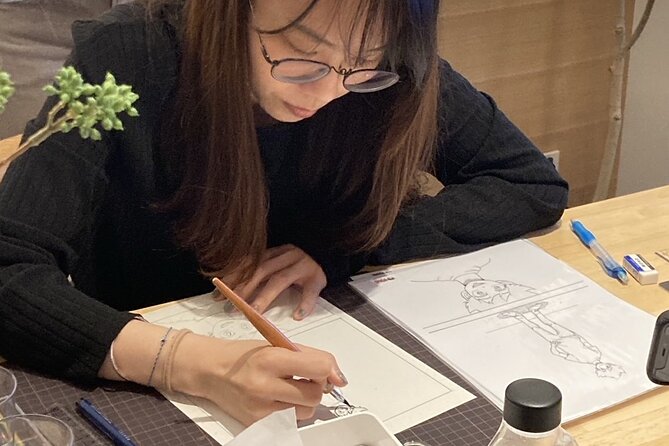
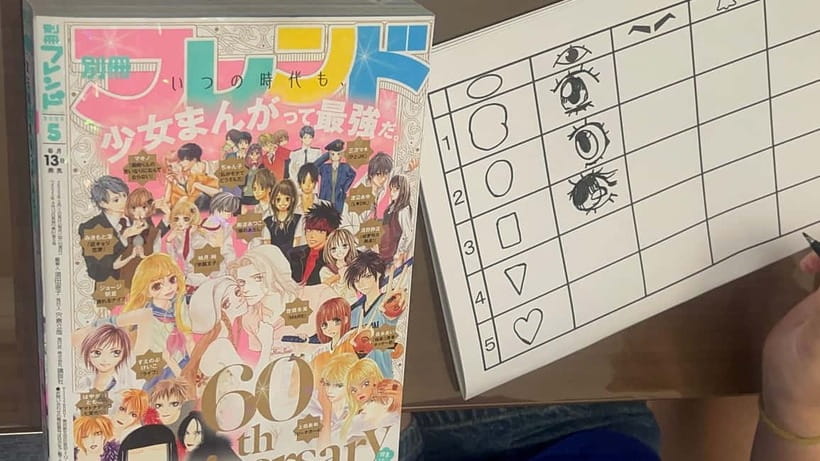
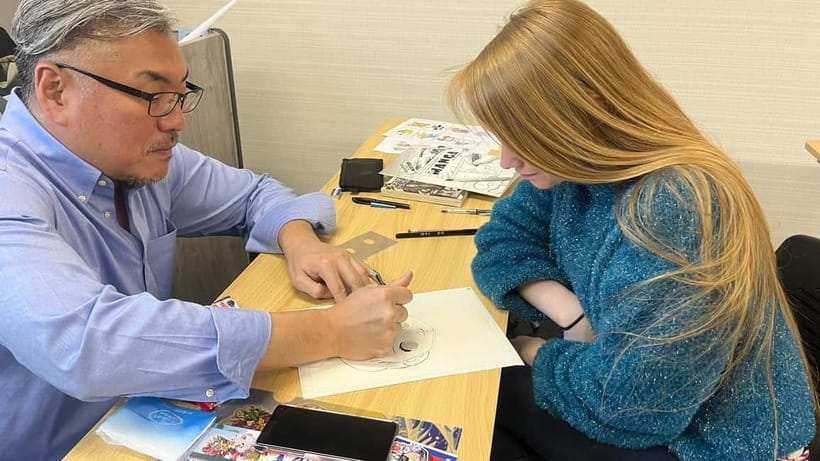
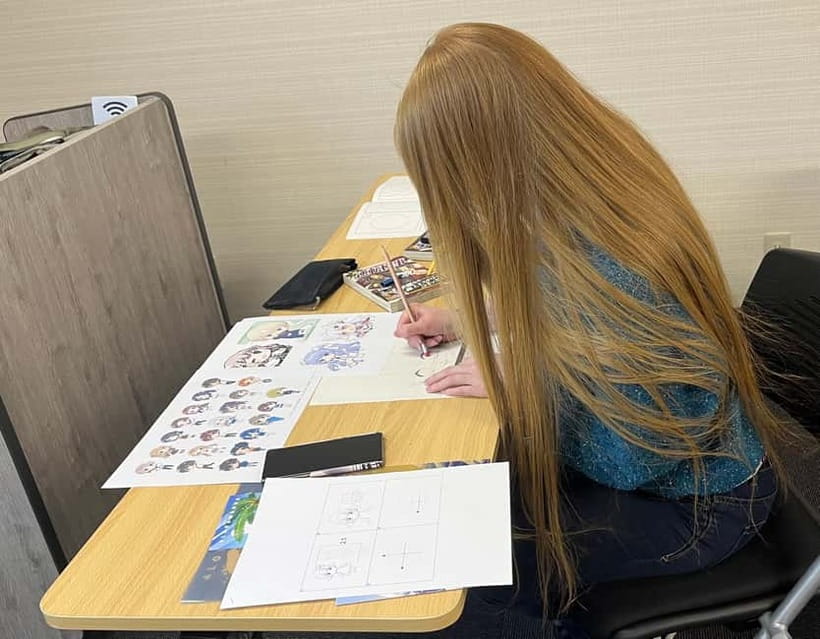
One of the most useful features is access to traditional manga equipment. The workshop provides drawing tools, including a G pen, ink, and manga paper. You do not need to arrive with a carefully packed art kit or buy supplies in Tokyo before class.
For a beginner, the tools may be as interesting as the lesson itself. A G pen does not behave like an ordinary ballpoint or pencil, so the experience gives you a better sense of how manga line work is produced. Ink also makes every mark feel more deliberate. You may find that this changes how you approach the drawing, even if your final character looks more playful than professional.
The point is not to judge your work against a published manga. The value comes from trying the process under the guidance of someone who works in the field. You get a practical connection to the craft that you cannot get from browsing manga shops or looking at finished pages.
All drawing equipment is included, and you also receive a small gift from a manga artist. Food and drinks are not included, so plan those separately before or after the lesson.
Meeting Kazuo Maekawa and the English interpreter
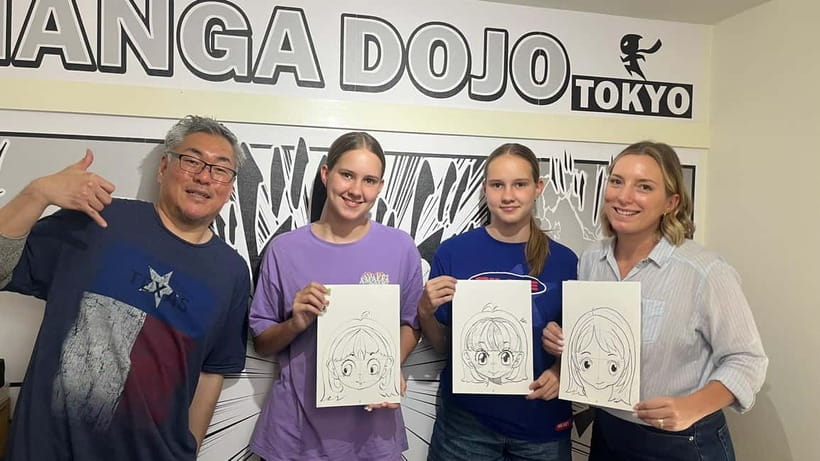
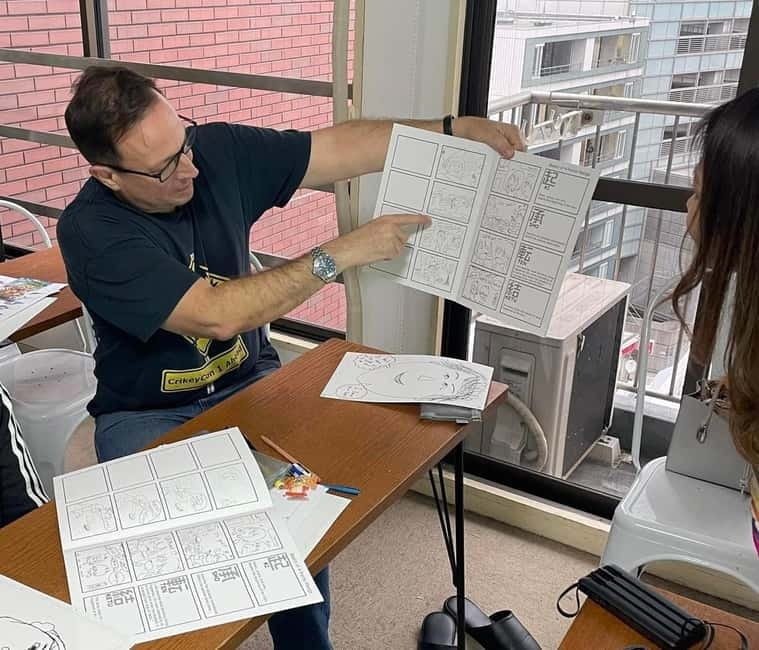
The drawing instruction is provided by professional manga artist Kazuo Maekawa. The class also has an English interpreter, which makes the experience open to people who do not speak Japanese.
The interpreter is an important part of the booking, not a minor extra. Manga drawing depends on visual detail, pacing, and precise instruction, so simply watching a demonstration without understanding the explanation would limit the experience. The English support lets you follow the cultural presentation and ask questions during the practical work.
Akari is identified as the interpreter for the session, and the available feedback gives her a specific role in making the class easy to follow. Her presence should be especially useful if you are bringing children or adults who are curious about manga but not confident with art instruction in another language.
The instructors are listed as speaking English and Japanese. Still, the experience is clearly designed around interpretation, so do not assume that every part of the lesson will be delivered directly in English by the artist.
Why the small group matters
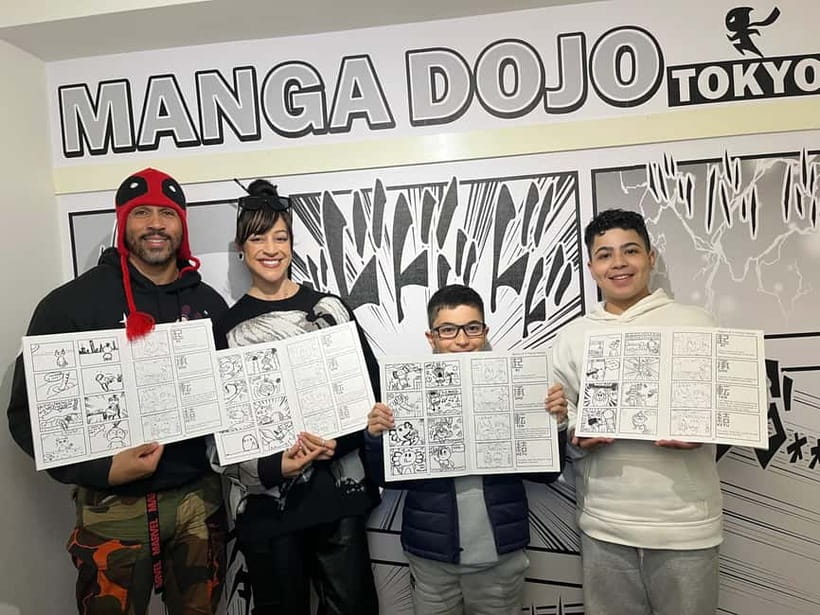
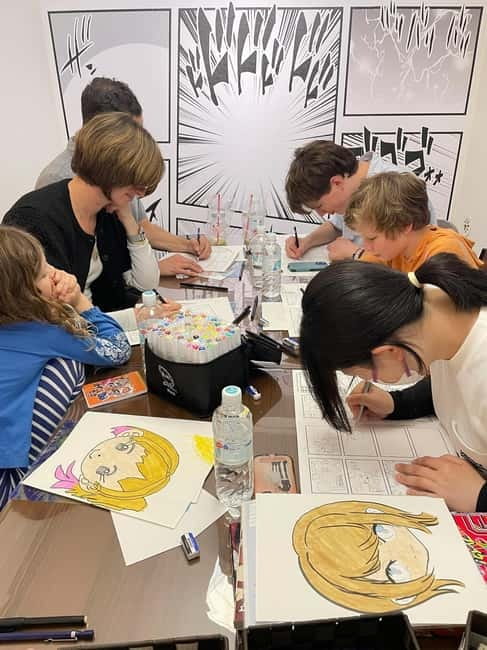
The maximum group size is eight participants. That is still a group lesson, but it is small enough to feel more personal than a large studio activity.
A small group works well for drawing because everyone needs some attention. You may need help holding the pen, controlling ink, shaping a character, or turning an idea into four panels. With eight or fewer people, the instructor and interpreter have a better chance of seeing what you are doing and offering direction.
The group format also supports the team-building side of the experience. You can work with family or friends on a shared manga instead of drawing alone. This makes the activity more social and gives non-artists a role in the story, character ideas, or panel planning.
That said, a group activity means you will not receive two hours of private coaching. If your main goal is intensive improvement in anatomy, perspective, or professional comic production, this lesson may feel introductory. It is better suited to trying the craft, sharing a creative project, and learning how manga is made.
Finding the studio near Ikebukuro Station
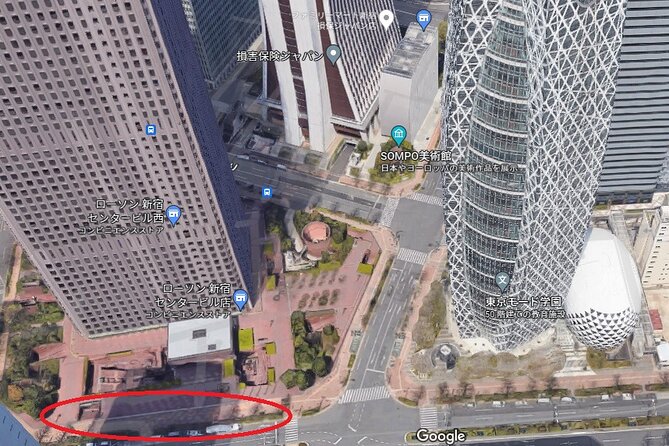
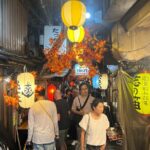
The meeting point is about a six-minute walk from Ikebukuro Station’s East Exit. Once you arrive, take the elevator to the sixth floor and go to room 602.
This is a practical location for a Tokyo day because Ikebukuro is well connected and has plenty of places to eat before or after the lesson. The activity itself does not include food or drinks, so you have flexibility to make your own plans around the two-hour session.
Give yourself enough time to find the building and reach the correct room. The instructions are specific, but a station area can still take longer than expected if you leave the exit late or have luggage. The lesson ends back at the same meeting point, so there is no second drop-off to arrange.
The activity is held at a venue near Ikebukuro rather than at a famous sightseeing site. That is part of its appeal and part of its limitation. You are going to a working lesson in a local studio setting, not touring a manga museum or an animation company.





The value of $278 for up to two people
The listed price is $278 per group of up to two people. You should read that as a private booking price for one or two participants, not as a low-cost ticket for each individual.
For two people, the cost works out to $139 each. That is easier to justify if you value the professional instruction, English interpretation, included tools, small gift, and small group setting. You also avoid buying supplies for a one-time activity.
For one person, the price is harder to defend. You are paying the same group rate without a second person to share it. The experience may still be worthwhile if manga is a major interest or if you want a structured creative activity in Tokyo, but casual visitors should compare it with other workshops before committing.
The strongest value comes from the combination of access and guidance. You are not only sketching a cartoon character with a generic craft kit. You are learning traditional manga production from a professional artist, hearing about the form’s history, and creating a short piece with supplied equipment.
The price does not include meals, and the workshop lasts only two hours. Keep those limits in mind. This is a focused cultural activity, not a full-day course or a professional qualification.
Who will enjoy this manga experience
This workshop is a good match for several kinds of visitors:
- You like manga or Japanese pop culture and want to understand how the work is made.
- You are a beginner who wants instruction rather than an unstructured art table.
- You are visiting with a friend, partner, or family member and want a shared project.
- You are looking for an indoor activity near a major Tokyo station.
- You want to try traditional tools without buying a full set of supplies.
- You are comfortable with a short, introductory lesson rather than advanced training.
Children can take part from age 10. The activity is intended for both children and adults, but the exact lesson may change with the group’s skill level. That makes it suitable for mixed-age groups, though younger children may need help staying focused through the history and technique sections.
You should be less interested if you want a tour of manga landmarks, a visit to a publishing house, or a long studio session focused only on your own drawing. None of those are promised here.
Accessibility and practical limits
The supplied activity details contain a conflict about wheelchair access. One section says the experience is wheelchair accessible, while another says it is not suitable for wheelchair users. Do not rely on either line alone. Contact the provider and confirm the building entrance, elevator, studio doorway, seating, and restroom arrangements before booking.
The lesson is offered in English and Japanese, with English interpretation included. Cancellation is free up to 14 days before the activity for a full refund. Starting times are not fixed in the information provided, so you need to check availability for the date you want.
The activity ends at the same room where it begins. There is no food or drink included, and the duration is two hours.
Is this the right Tokyo activity for you?
I would book this if you want a direct, creative connection with Japanese manga and like the idea of making something yourself. The class has a sensible structure: cultural background first, practical drawing next, and a short story project to give your work a purpose.
I would also consider it for a pair of friends or family members. The group price makes more sense for two people, and the shared four-frame manga gives you something to work on together. The English interpreter, especially Akari, is another strong reason for non-Japanese speakers to choose this class.
I would hesitate if you are mainly looking for a cheap souvenir activity or if you expect to leave with professional-level drawing skills. At $278 per group, the workshop needs to be a real interest, not a last-minute filler between major Tokyo sights.
For manga fans, curious beginners, and creative pairs, this is a focused way to spend two hours near Ikebukuro. Confirm the accessibility details and starting time before paying, then arrive ready to make a few imperfect lines. That is part of learning the craft.
FAQ
Where does the manga lesson take place?
It takes place at a venue about a six-minute walk from Ikebukuro Station’s East Exit. Take the elevator to the sixth floor and proceed to room 602.
How long does the activity last?
The lesson lasts two hours. Starting times vary, so check availability for your preferred date.
How much does the experience cost?
The price is $278 per group of up to two people.
Is English interpretation included?
Yes. English interpretation is provided during the class, and the listed instructor languages are English and Japanese.
Who teaches the class?
The lesson is led by an active professional manga artist. Kazuo Maekawa is identified as the artist providing expert instruction.
What will I learn?
You can learn about manga history and culture, character creation, manga drawing techniques, and traditional manga production. You can also create original characters and a four-frame manga.
Do I need previous drawing experience?
No. The activity is designed for beginners, and no experience is required.
Are children allowed to participate?
Yes, children and adults can take part, but the activity is not suitable for children under 10 years old.
Are drawing materials included?
Yes. Drawing equipment is included, including professional tools such as a G pen, ink, and manga paper. A small gift from a manga artist is also included.
Is wheelchair access available?
The activity information gives conflicting details, with one section describing it as wheelchair accessible and another saying it is not suitable for wheelchair users. Confirm access arrangements directly with the provider before booking.
More Workshops & Classes in Tokyo


More tours in Tokyo we've reviewed












Workshops, compared.
 ★ 5.0Sushi Making Tokyo Roll and Authentic Japanese Sushi ClassFrom $59
 ★ 4.9Tokyo: Roll and Authentic Sushi Making Class in AsakusaFrom $581h 40m
 ★ 4.9Tokyo: Sushi Making Class in a Happi Coat near a Famous SpotFrom $421h 30m
 ★ 4.8Chopstick Making Workshop in GinzaFrom $251 hour
 ★ 5.0Tokyo Sushi Making Class in Tsukiji with Professional ChefFrom $49
 ★ 5.0Ramen & Gyoza Cooking Class in Tokyo with Local Supermarket VisitFrom $122