Reviewed · MT FUJI DAY TRIPS
Mount Fuji – Hakone & Onsen Full Day Private Tour
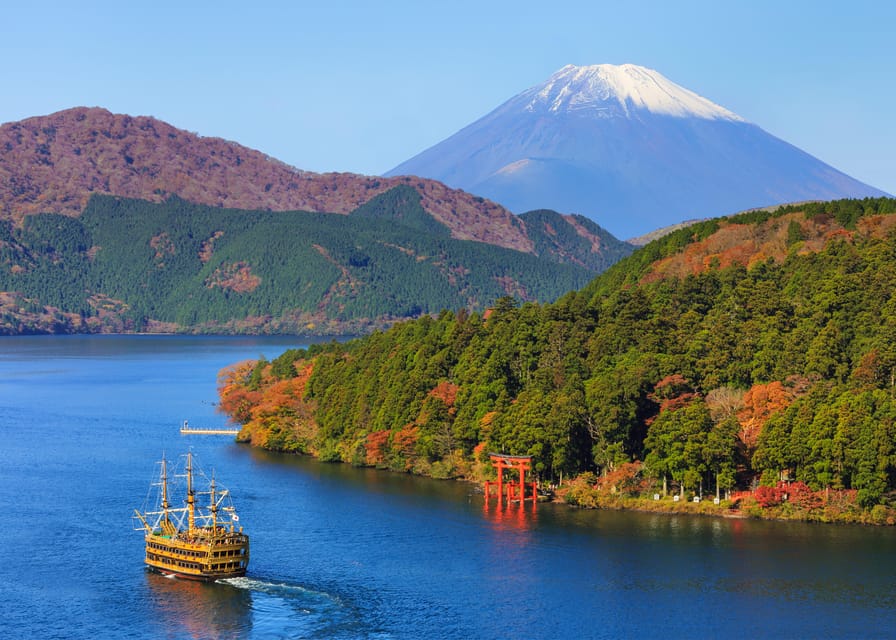
Hakone packs shrines, steaming volcanic vents, a pirate-style boat, hot springs, and Mount Fuji views into one long day. This private 10-hour tour lets your group of up to five move between them in a luxury car rather than managing several trains and buses.
In This Article
- Key points to know before booking
- Hakone in one long day from Tokyo
- Hakone Shrine and the red torii gate
- Lake Ashi aboard the pirate-style boat
- Riding the Hakone Ropeway over volcanic ground
- Owakudani and the famous black eggs
- One hour at Fuji Yurari Hot Spring
- Art in the open air
- Gotemba Premium Outlets as the final stop
- What the private format really gives you
- Price, extra charges, and the value question
- Weather, transport, and the serious caution
- Who should book this Hakone day
- Should you book it?
- FAQ
- How long does the private Hakone tour last?
- How many people can join the private tour?
- Where can pickup and drop-off take place?
- Are entrance tickets and the onsen included?
- Is Mount Fuji guaranteed to be visible?
- Can children use the tour?
I like the freedom to adjust the pace, and I like the mix of outdoor sights with the Hakone Open-Air Museum. An English-speaking driver can also make the long ride from Tokyo more pleasant. The main caution is that this is primarily a driver-led outing, not always a full guiding service, and the day can feel rushed when queues and traffic build.
I also like that the route includes an onsen and the black eggs at Owakudani, two distinctly Japanese experiences. Still, Mount Fuji is weather-dependent, and one serious report describes a lost driver, a police stop, and a very long return to Tokyo, so I would confirm your driver and route before setting off.
Key points to know before booking
- A private car for up to five people gives you control over stops, timing, and the day’s rhythm.
- Lake Ashi, Hakone Shrine, and the red torii gate provide the classic Hakone views, though the best Fuji sightlines depend on weather.
- Owakudani’s black eggs are a fun local specialty, cooked in sulfurous hot springs.
- Fuji Yurari Hot Spring adds genuine relaxation, but the onsen fee is not included.
- The English-speaking driver may be a guide or mainly a chauffeur, so expectations matter.
- Entrance fees, food, parking, and extra hours cost more, which can change the final price.
Hakone in one long day from Tokyo
Hakone is close enough to visit from Tokyo, but far enough that transport can eat up much of your day. A private vehicle solves one problem: you do not need to piece together rail connections, local buses, ropeway tickets, and boat departures on your own.
You receive pickup within Tokyo’s 23 wards or at Haneda International Airport. The vehicle returns you to the same general area, and a group of five can share the cost. At $432 per group, the base rate works out to about $86 per person for five people, before admissions and meals. For two people, the same price feels much steeper.
The driver speaks English, Hindi, or Japanese, depending on the person assigned. Past bookings praise a driver identified as Mas, with the name also written as Maz or Raz, for explaining Japanese culture, giving clear instructions, and driving well. But another booking found the service closer to a shuttle than a guided tour. I would ask in advance whether your driver will accompany you at the sights or simply drop you at each entrance.
The schedule lists roughly one hour at the onsen, Lake Ashi, the ropeway, the Open-Air Museum, and Gotemba Premium Outlets. Hakone Shrine and Owakudani receive about 30 minutes each. That is enough for a taste of each place, but not enough for long walks, a leisurely lunch, or every shrine trail.
A few more Tokyo tours and experiences worth a look
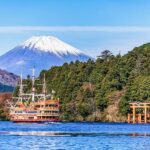
Hakone Shrine and the red torii gate
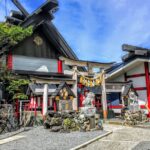
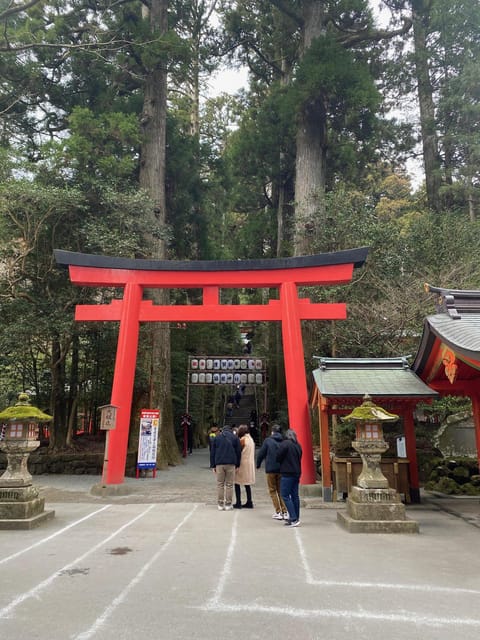
Hakone Shrine gives the day a spiritual opening. The shrine is associated with purification, good fortune, safe travel, childbirth, and financial luck, and it has drawn worshippers for more than 1,200 years. You will have time for a photo stop, a short visit, a walk, and perhaps some shopping.
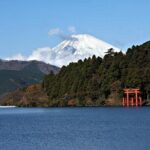
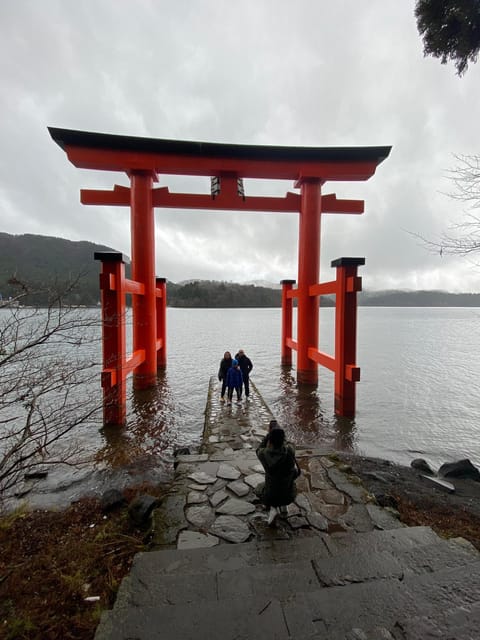
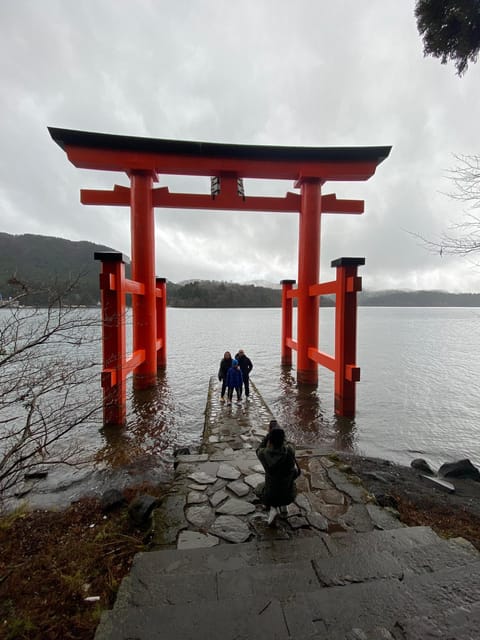
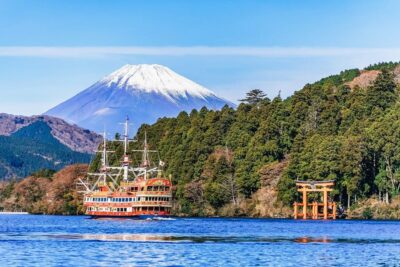
The famous red torii gate sits at the edge of Lake Ashi. From the water, it creates one of Hakone’s most recognizable scenes. On land, you may find a line for the popular photo angle, so a 30-minute stop can disappear quickly.
The visit is best for a quick sense of place rather than a full shrine experience. If you want quiet prayer, a longer forest walk, or time at nearby Kuzuryu Shrine Shingu, ask the driver to protect extra time here. The listed visit combines Hakone Shrine and Kuzuryu Shrine Shingu, but the exact time at each is not specified.
Lake Ashi aboard the pirate-style boat
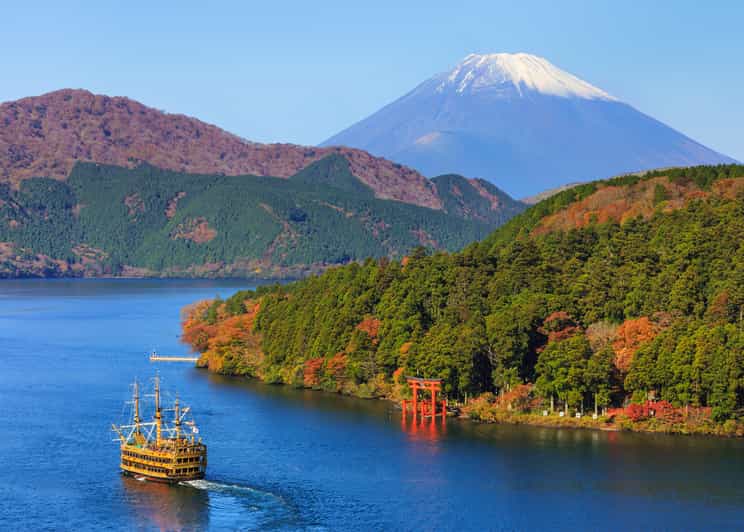
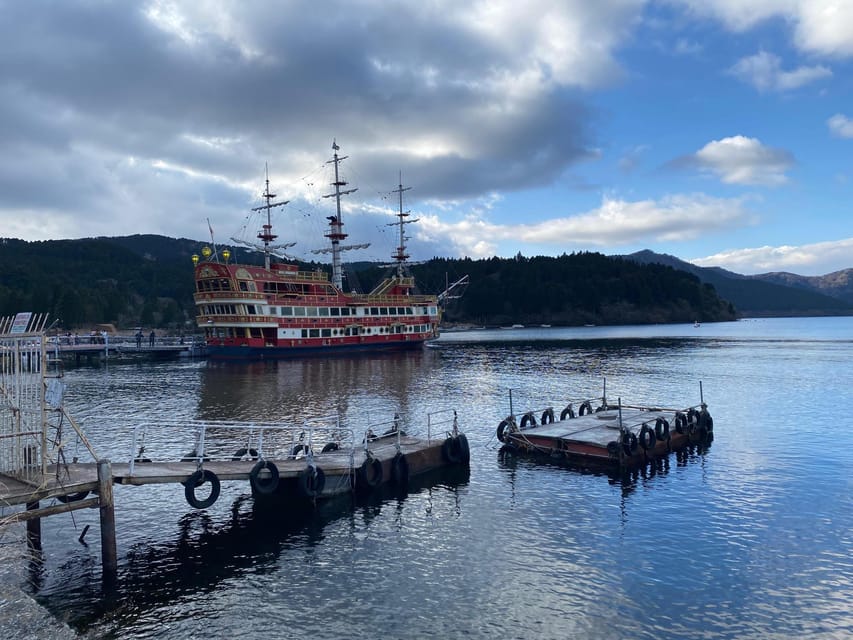
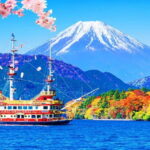
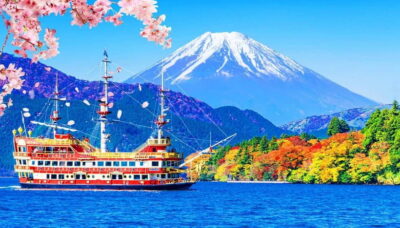
The Lake Ashi cruise is one of the day’s most enjoyable changes of pace. You board a sightseeing vessel designed in a pirate-ship style and cross the lake while mountains, forest, shrine buildings, and the red torii gate frame the view.
On a clear day, Mount Fuji may appear beyond the lake. That view is never guaranteed. Fuji was barely visible during one March visit, which is a useful reminder not to judge the whole day by one mountain photograph.
The scheduled hour includes the cruise and surrounding sightseeing. Confirm where you board and how the private car handles the transfer, since the cruise operates on its own schedule. If you are hungry, plan ahead. Food is not included, and time lost in ticket lines can leave little room for a proper meal.
Riding the Hakone Ropeway over volcanic ground
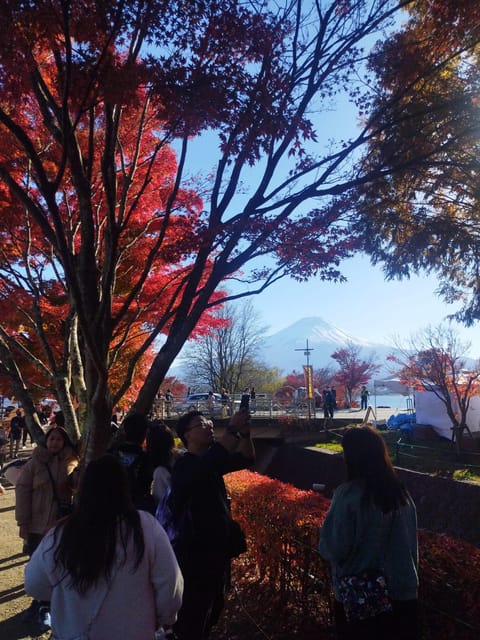
The ropeway provides the broadest views of the day. From the gondola, you can look across Lake Ashi and toward Mount Fuji while crossing the volcanic area around Owakudani. The ride offers a useful change from road travel and gives you a better sense of Hakone’s geography.
The route description refers to views toward Mount Komagatake, Lake Ashi, Owakudani, and Mount Fuji. The gondola ride itself is listed at about one hour, but that time may include waiting, boarding, and walking between stations.
Ticket queues are an important practical issue. Admission is not included, and one booking found the ticket machines difficult to manage without Japanese. Your English-speaking driver may explain the general plan, but the service does not promise translation or hands-on help at every machine.
Ask about ticket costs and the exact ropeway operating route before paying. Volcanic conditions, weather, or transport operations can affect what you see. The private car gives you flexibility on the road, but it cannot make the ropeway move faster.
Owakudani and the famous black eggs
Owakudani is a volcanic valley with sulfur vents, hot springs, and a strong smell of minerals in the air. It is one of Hakone’s most unusual stops because the ground itself feels active. You can buy the famous black eggs, boiled in the hot spring water until their shells darken from iron and sulfur.
The stop is listed at 30 minutes. That allows time for photos, a short look around, and the eggs, but not a slow exploration. Bring a little patience for crowds and keep the timing in mind if you plan to eat there.
The black eggs are a small purchase, not a full meal. Since lunch is not included, do not count on them to replace lunch on a busy day. If you want time for a proper meal, tell the driver early and consider dropping the outlet stop or shortening another visit.
A few more Tokyo tours and experiences worth a look
One hour at Fuji Yurari Hot Spring
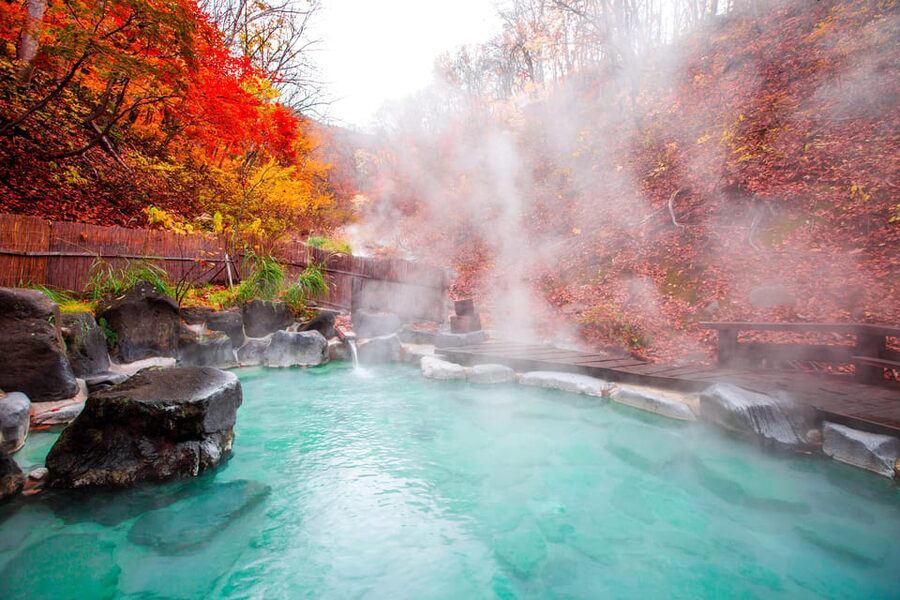
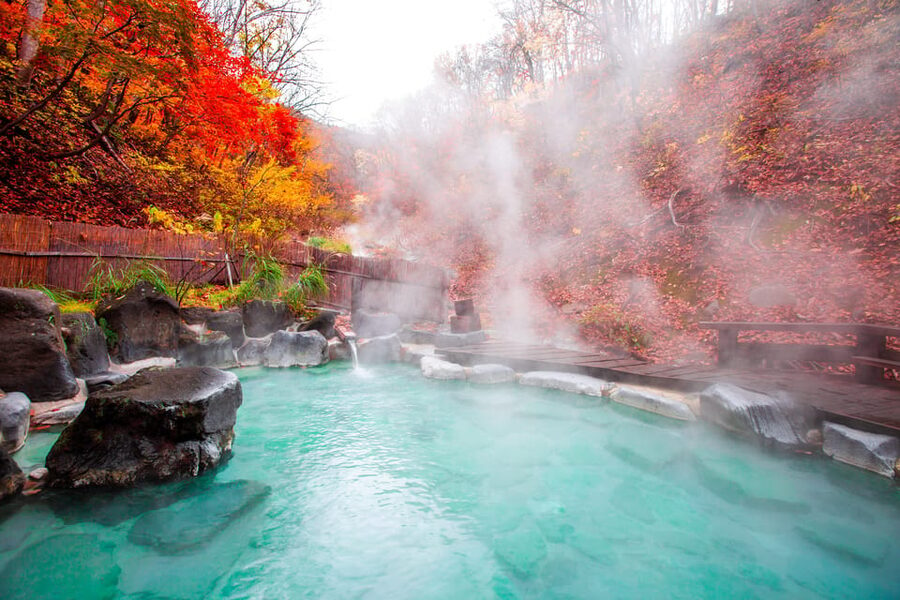
The onsen stop is a strong feature for anyone who wants more than a sightseeing checklist. At Fuji Yurari Hot Spring, you have about an hour to soak in natural mineral water and rest after the morning’s road travel.
An onsen is not simply a warm swimming pool. You should expect Japanese bathing customs, including washing before entering the shared baths. The supplied details do not specify private bathing facilities, swimsuit rules, towel rental, or whether tattoos are accepted, so ask the operator before departure if any of these points matter to you.
The onsen charge is extra. That matters because the tour price already excludes attraction admissions, food, drinks, and parking. A one-hour soak can be worthwhile, but only if your group is comfortable paying separately and changing quickly.
The original description also refers to scenic views from the hot springs. Treat that as a possible bonus rather than a promise of a Mount Fuji panorama. Weather and the exact bathing area will shape what you see.
Art in the open air
The Hakone Open-Air Museum is probably the most rewarding stop for visitors who enjoy art, gardens, and fresh air. Established in 1969, it displays major modern sculptures outdoors, using the surrounding setting as part of the experience.
You can walk between sculptures, pause for photos, and take in the contrast between large modern works and Hakone’s natural setting. The one-hour allocation gives you a good introduction, but not enough time for every collection or a slow museum visit.
There is also an outdoor foot bath where you can soak your feet in warm mineral water scented with floating oranges and lemons. Raised river pebbles massage the soles as you walk or stand. This small detail makes the museum more than a standard gallery stop, especially if your group includes people who do not want another indoor museum.
Wear shoes that are easy to remove if you want to use the foot bath. The museum admission is not included, so confirm the current charge before the day.
Gotemba Premium Outlets as the final stop
Gotemba Premium Outlets adds shopping to a day otherwise built around nature, culture, and art. The schedule allows about an hour for browsing, food tasting, and free time.
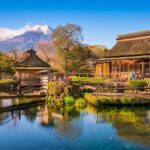
The outlet is also tied to the region’s Mount Fuji appeal, though the mountain may be hidden by cloud. An hour is enough to look around or buy a few items, but it is not enough for serious shopping across a large complex.
This is the easiest stop to sacrifice if your priorities are Hakone Shrine, the ropeway, or the onsen. It can be useful for a family or group with different interests, since some people can shop while others rest and eat. If you are visiting Japan for shrines, scenery, and hot springs, you may prefer to use this hour elsewhere.
What the private format really gives you
The biggest benefit is control. You can ask for more time at the Open-Air Museum, shorten shopping, pause for food, or adjust the order when traffic changes. Only your group rides in the vehicle, so you do not wait for strangers at every stop.
That flexibility has real value in Hakone, where roads can be slow and several attractions require timed transport or ticket queues. A private driver also means no changing trains with luggage and no guessing which local bus will get you to the next sight.
The private format does not guarantee a private guide. The description calls the driver English-speaking and says a tour guide can be requested for an added fee. That wording is important. If you want detailed explanations inside the shrine, help with ticket machines, translation, or guidance through the onsen, request a guide and ask about the additional charge.
One booking praised the driver for explaining Japanese culture during the drive. Another found the English level insufficient for translation and felt the day was mostly transport between crowded sites. Both outcomes are possible enough that I would set expectations clearly before pickup.
Price, extra charges, and the value question
The $432 price covers a private luxury car for up to five people, hotel or airport pickup and drop-off, an English-speaking driver, fuel, tolls, and passenger insurance. Parking, attraction admissions, food, drinks, the onsen, and any requested tour guide cost extra. Additional time is charged at 5,000 Japanese yen per hour.
For five people, the base cost is reasonable for a full private day from Tokyo. You are paying for door-to-door transport, group privacy, and the ability to adjust the plan. For a couple, the price is harder to justify unless avoiding public transport is a major priority.
The extra fees can add up. You may pay for the boat, ropeway, shrine or museum access where applicable, the onsen, food, and parking. Ask for an estimate of these costs before booking, and keep enough time for the return drive.
The 10-hour limit is firm in practice. Traffic, queues, or a late start can create pressure. Drivers wait no more than 15 minutes after the scheduled pickup, so be in the hotel lobby 10 minutes early. If you are arriving at Haneda, allow enough time to clear the airport and reach the agreed meeting point.
Weather, transport, and the serious caution
Mount Fuji views are the day’s great bonus, not a sure thing. Clouds can block the mountain from Lake Ashi, the ropeway, and Gotemba. Hakone still offers shrines, volcanic scenery, an onsen, and art when Fuji disappears, but you should book this day for the whole region rather than for one photograph.
The most serious concern is driver reliability. One booking describes a driver getting lost, giving incorrect information about Hakone, missing a chance to see Fuji, being stopped by police, and taking four hours to return to Tokyo. The same account says the driver later sought payment for three extra hours. This is a severe complaint, not a small scheduling issue.
I would confirm the driver’s name, mobile number, vehicle details, pickup time, and exact inclusions before departure. Keep WhatsApp, email, Line, or another contact method available, since the operator asks for those details in advance. If traffic or an unexpected delay threatens the 10-hour limit, agree on the plan and any extra charge before continuing.
The tour is not suitable for wheelchair users. Children under six require a child or booster seat, and you must request it when booking.
Who should book this Hakone day
I would consider this tour for a group of four or five that values a private vehicle, wants several Hakone highlights in one day, and does not want to manage regional transport. It also suits families who need a custom pace, provided the child-seat requirement is handled in advance.
It is less suitable for a couple on a tight budget, a visitor seeking a deeply explained cultural tour, or anyone who wants a slow visit at each stop. Independent visitors comfortable with Japanese trains and buses may spend less and choose their own timing.
The tour received a mixed overall score of 3.8 from six bookings. Several bookings gave top marks for the driver’s explanations, clear activity instructions, safe driving, and freedom to manage time. The low ratings focus on the difference between a driver and a guide, ticket queues, limited translation help, and one very serious navigation and delay problem.
Should you book it?
Book it if your group can share the $432 base cost and you value a private car more than a fully guided experience. The combination of Lake Ashi, Hakone Shrine, Owakudani, an onsen, and the Open-Air Museum gives you a broad taste of the area in one day.
Before paying, confirm whether your assigned driver will guide or only drive, ask for the expected admission costs, and decide how important Gotemba Outlets is to your group. If your top goal is Mount Fuji, choose a clear-weather date when possible, but keep your expectations flexible.
FAQ
How long does the private Hakone tour last?
The tour lasts 10 hours, including pickup from Tokyo or Haneda Airport and return drop-off.
How many people can join the private tour?
The price covers one private group of up to five people. Only your group rides in the luxury vehicle.
Where can pickup and drop-off take place?
Pickup and drop-off are available within Tokyo’s 23 wards and at Haneda International Airport. Pickup outside Tokyo’s 23 wards may require an extra charge.
Are entrance tickets and the onsen included?
No. Attraction entrance fees, the Fuji Yurari Hot Spring charge, food, drinks, and parking are not included. A tour guide can also cost extra if requested.
Is Mount Fuji guaranteed to be visible?
No. Fuji views depend on weather and visibility. The route includes several places with possible views, including Lake Ashi, the Hakone Ropeway, Owakudani, and Gotemba.
Can children use the tour?
Children under six must have a child or booster seat. You need to request the seat when booking. The activity is not suitable for wheelchair users.
More Private Tours in Tokyo


More Hakone Day Trips in Tokyo
More Mt Fuji Day Trips in Tokyo

More tours in Tokyo we've reviewed












Mt Fuji Day Trips, compared.
 ★ 5.0Mt Fuji and Hakone 1-Day Bus Tour Return by Bullet TrainFrom $163
 ★ 4.0Mt Fuji & Hakone Cruise, Drum Show Bullet Train 1 Day from TokyoFrom $149
 ★ 4.4Tokyo Mt Fuji 5th St & Hakone Cruise Bus Tour w/Bullet TrainFrom $15410 hours
 ★ 4.5From Tokyo: Mount Fuji Full-Day Sightseeing TripFrom $6810 hours
 ★ 4.7Tokyo: Mt. Fuji Tour, Hakone Ropeway, Owakudani, Lake AshiFrom $5410 hours
 ★ 4.4Tokyo:Mt.Fuji,Kawaguchiko Oishi Park,Arakurayama Sengen ParkFrom $5410 hours