Reviewed · TOKYO PREFECTURE
Little Adventure with Cycling in Tokyo No. 1 Crystal Clear River
Tokyo has a wild side, and this six-hour outing takes you there by electric bicycle. In the Akigawa Valley, you ride beside clear water, pass old temples and mountain villages, then put on waterproof gear for a walk through the river to a waterfall. It feels far removed from central Tokyo, yet the train ride to the start takes about an hour.
In This Article
- Key details at a glance
- Why this Akigawa Valley trip feels different from Tokyo
- Starting at Tokyo Urayama Base in Akiruno
- Kotokuji Temple and its thatched gate
- Kurochaya and the first electric-bike ride
- Riverside lunch with a Cuba sandwich
- Walking through the river to a waterfall
- The second ride, suspension bridge, and footbath
- What the $143.34 price includes in practical terms
- Who should book this experience
- Timing, weather, and what to keep in mind
- My call: book it for the river, not just the bike ride
- FAQ
- Where does the tour start and end?
- What time does the experience begin?
- How long does the tour last?
- How many people can join?
- What kind of bicycle do I use?
- Is lunch included?
- Do I need to bring equipment for the river walk?
- What happens if the weather is poor?
I especially like the small group of no more than six people, which makes the cycling pace and river walk easier to manage. I also like the unusual mix of experiences: a thatched temple gate, a Cuba sandwich eaten beside the river, and a hot-spring footbath at the end. The main consideration is weather. Rain can change the river portion, and the activity is not a good fit if you want a dry, easy sightseeing day.
Key details at a glance
- A short trip from Tokyo: Meet at Tokyo Urayama Base in Akiruno at 10:00 am, close to public transportation and roughly an hour by train from central Tokyo.
- Electric bikes do the hard work: You cover more ground than on foot while still moving at a pleasant pace through the Akigawa Valley.
- A real river walk: Waterproof equipment lets you walk through the water toward a secluded waterfall.
- Small-group attention: The maximum group size is six, useful when riding, changing gear, and adjusting plans for weather.
- Three kinds of local flavor: Visit Kotokuji Temple, eat a special Cuba sandwich lunch outdoors, and finish with a hot-spring footbath.
- A full half-day outing: The tour lasts about six hours and returns to its starting point.
Why this Akigawa Valley trip feels different from Tokyo
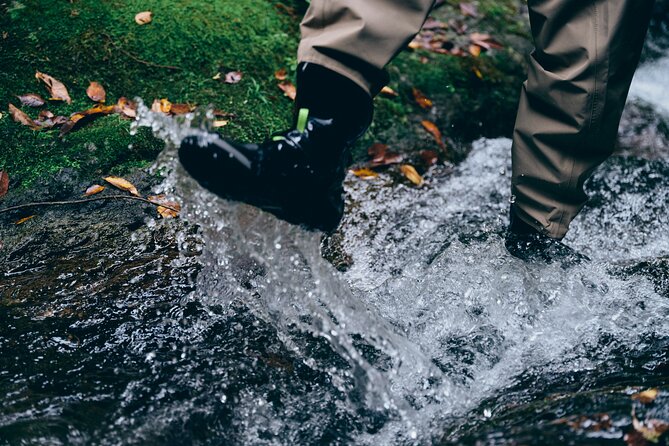
Most first visits to Tokyo stay within the city’s dense center, where trains, towers, department stores, and crowded shopping streets fill the day. This experience takes you into Tokyo Prefecture’s western countryside, where the Tama and Akigawa Rivers tell a quieter story.
The valley is tied to the old Edo economy. Forestry and charcoal burning helped supply the historic city, and the surrounding mountains supported villages and temples long before Tokyo became a modern capital. You will not get a long museum lecture about this past. Instead, the guide explains the setting as you move through it, giving the rural scenery a useful connection to Tokyo’s story.
That change of pace is the real point. You are not simply looking at a pretty river from a coach window. You ride beside it, stop at bridges and temples, eat near the water, and eventually step into the river itself. The day has enough structure to feel easy, but it does not feel like a standard city excursion.
Other cycling tours in Tokyo Prefecture
Starting at Tokyo Urayama Base in Akiruno
The meeting point is Tokyo Urayama Base, at 219-7 Tateya in Akiruno, Tokyo. The start time is 10:00 am, and the activity ends back at the same place. Since the tour is near public transportation, you can reach it without arranging a private transfer, though you should allow time to make the train connection from central Tokyo.
The base acts as the gateway to the Akigawa Valley. Here, you prepare for the ride and receive an electric bicycle. A small group helps at this stage because the guide can spend time making sure each person is comfortable with the bike before setting off.
You should expect an active day rather than a sightseeing bus trip. The e-bikes reduce the strain, but you still ride, walk, cross a suspension bridge, and move through shallow river water in waterproof gear. The activity is suitable for most people according to the supplied tour information, but you should be comfortable with basic physical activity and changing conditions underfoot.
Kotokuji Temple and its thatched gate
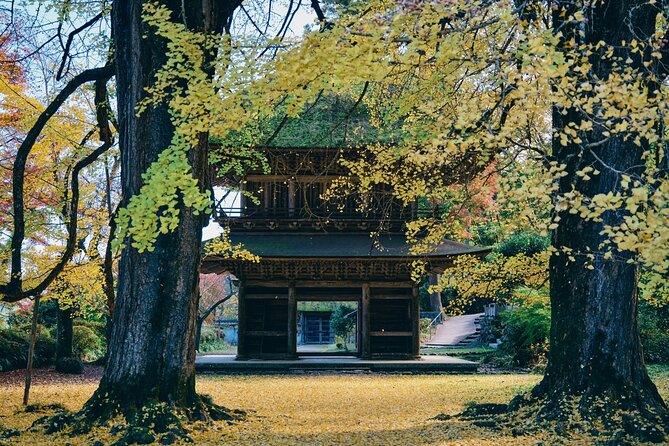
The first stop is Kotokuji Temple, where you pass through a striking thatched gate and see a giant ginkgo tree. The stop lasts about 30 minutes, with free admission.
This is a good opening stop because it gives you a sense of place before the cycling begins in earnest. The gate and tree offer a distinctly rural Japanese scene, and the guide explains the temple’s history as you look around. You get context without spending half the day indoors.
The temple visit is also a useful reminder that this outing is not only about outdoor recreation. The Akigawa area connects nature, village life, religious sites, and older industries. If you are hoping for a string of major architectural monuments, this will feel modest. If you prefer small local places with a direct connection to their surroundings, it sets the right tone.
Kurochaya and the first electric-bike ride
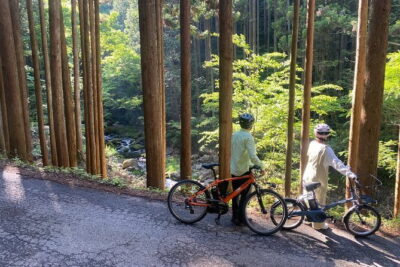
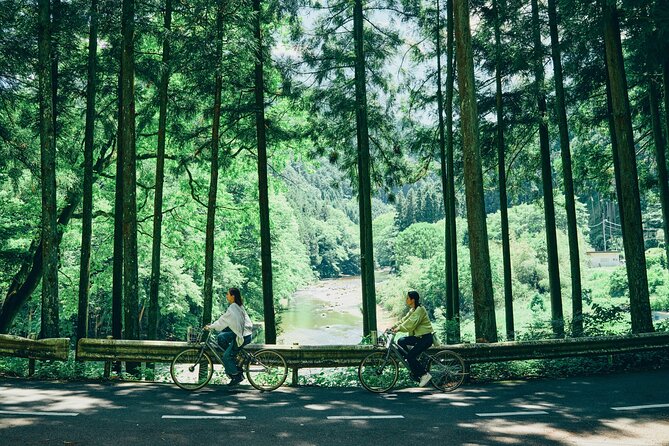
At Kurochaya, you prepare to leave on the electric bicycles. The first half of the ride includes scenic bridges, old temples, Japanese gardens, and cafes with terraces overlooking the valley. This section lasts about an hour.
An electric bicycle is a smart choice here. You can cover several points of interest without spending all your energy before the river walk, and the motor makes the ride more approachable for people who are not regular cyclists. You still get the freedom and fresh air of a bike outing, rather than the sealed-in feeling of a vehicle.
The guide leads the way, and the small group size should make it easier to stop at scenic places without creating a traffic jam of bicycles. The route is not described as a race, and the point is to notice the bridges, gardens, temples, and water rather than chase a mileage goal.
Guide Kenji is specifically noted for being kind and accommodating, with easy communication. That matters on a day involving bikes, weather, changing clothes, and a river crossing. If rain or another condition affects the route, the guide may adjust the plan while keeping the day moving.
Riverside lunch with a Cuba sandwich
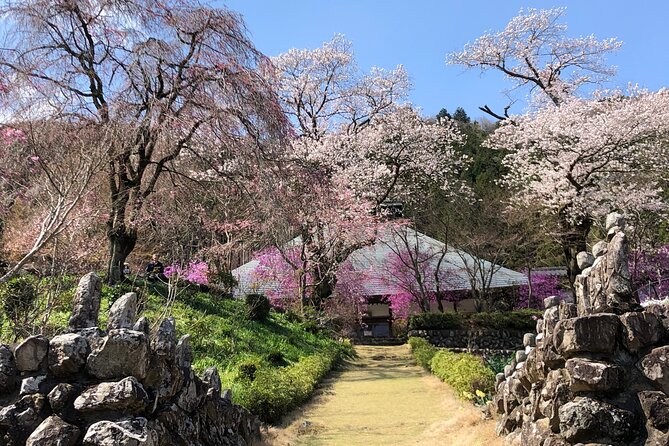
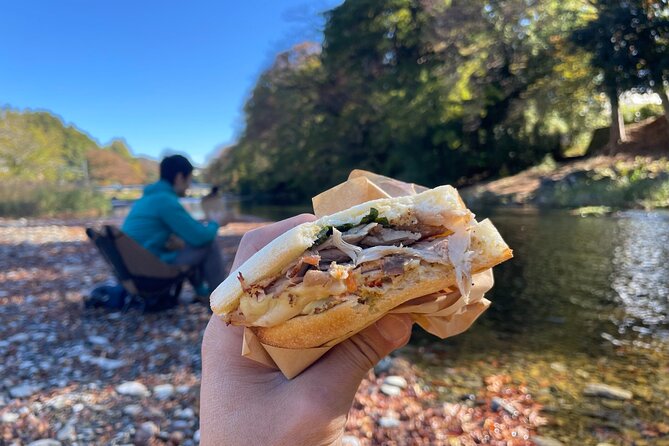
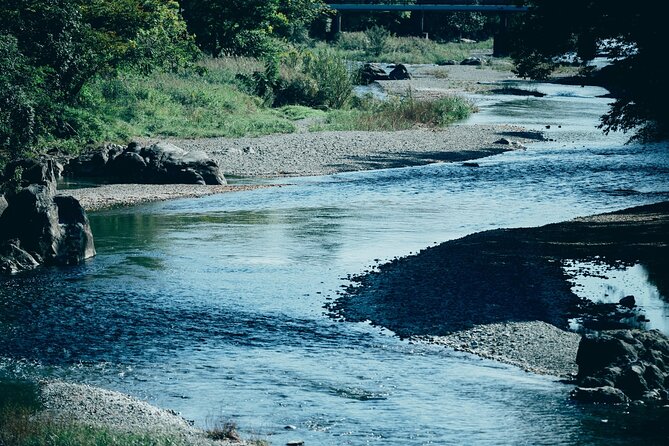
Around noon, you stop in the Akigawa Valley for lunch. The tour sets up outdoor chairs at a special riverside spot, and lunch is a Cuba sandwich lunchbox. The meal break runs from 12:00 to 1:00 pm.
This is one of the outing’s more memorable details. You are not eating at a generic restaurant between scheduled attractions. You sit outdoors beside the river, with the sound and scenery becoming part of the meal. The Cuba sandwich gives the lunch a playful twist while keeping it practical for a day on the move.
A riverside meal does come with tradeoffs. Outdoor seating depends on the weather, and the setting is more relaxed than polished. You should book this experience for the setting and the overall rhythm, not for a formal dining experience or a long menu.
The hour-long lunch break also gives you time to rest before the most unusual part of the day. Since the river walk follows immediately afterward, you will appreciate not having to rush through the meal.



Walking through the river to a waterfall
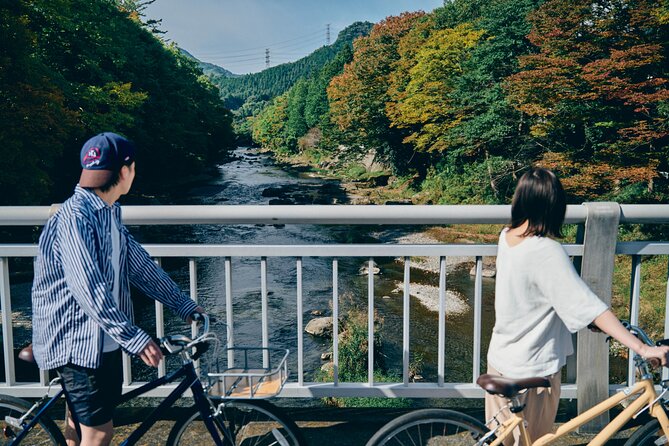
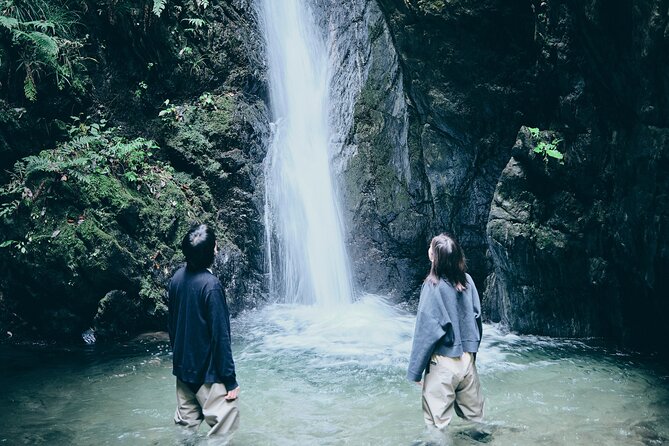
From 1:00 to 2:00 pm, you take part in the river trekking section. The tour provides waterproof gear, allowing you to walk through the river toward a secluded waterfall.
This is the heart of the experience. A standard cycling tour might show you the Akigawa Valley from roads and bridges. Here, you get into the water and see the valley from ground level. The activity offers a much stronger sense of the river’s shape, sound, and changing surface than a quick photo stop.
The word trekking should be taken seriously, though the supplied information does not give a precise distance or difficulty rating. You should be ready for wet conditions and uneven footing. Waterproof clothing protects you from the water, but it does not turn the walk into a fully effortless activity.
Weather plays a major role. The outing requires good weather, and rain can lead to a changed itinerary. One previous outing had its plan adjusted because of rain, yet the mountain village atmosphere still became part of the day. If you need every advertised activity to run exactly as written, this is a point to consider. If you can accept a flexible outdoor plan, the weather may simply give you a different version of the valley.
The second ride, suspension bridge, and footbath
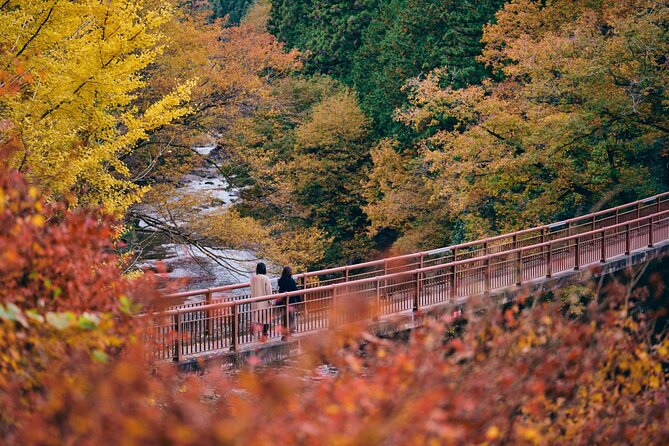
After the river section, you ride the electric bikes again from about 2:00 to 2:40 pm. The final portion includes a suspension bridge, a hot-spring footbath, and time for souvenir shopping. This stage lasts until roughly 3:30 pm, bringing the total outing to about six hours.
The suspension bridge adds a little height and movement after the river walk. It is another way to see the valley, but you should be comfortable crossing a bridge that may sway. The tour combines several types of activity in a single day, so the changing pace keeps the experience from becoming repetitive.
The footbath at the hot spring, 秋川溪谷瀬音の湯, is a sensible finish. After cycling and walking through water, sitting down and soaking your feet gives the day a calmer final note. It is not presented as a full hot-spring bathing session. You should think of it as a footbath stop, with time for souvenirs as well.
This ending also makes the tour feel more connected to local leisure. Hot springs are part of everyday Japanese travel and relaxation, and even a short foot soak offers a taste of that custom without requiring a separate bathing visit.
What the $143.34 price includes in practical terms
At $143.34 per person, this is not the cheapest way to see the outskirts of Tokyo. The value comes from the amount packed into a small-group day: guided e-bike use, several cultural and scenic stops, riverside lunch, waterproof equipment for the river walk, and the hot-spring footbath stop.
You are also paying for access to a route that would be awkward to arrange alone in one day. Reaching the valley by train is manageable, but combining Kotokuji Temple, multiple cycling sections, a riverside meal, a waterfall walk, a suspension bridge, and the hot spring would require careful local planning. The guide provides the structure and adjusts the day when conditions call for it.
The price makes the most sense if you value personal attention and unusual activities over a long list of famous attractions. It makes less sense if your priority is central Tokyo sightseeing, shopping, or a low-cost outdoor stroll.
The maximum of six people is important to the value. You are not paying for a large coach excursion. A small group can make the ride feel more personal, help the guide respond to different comfort levels, and reduce waiting while everyone changes into waterproof equipment.
Who should book this experience
I would point this tour toward you if you want to see a quieter side of Tokyo Prefecture and are willing to trade famous city sights for trees, water, temples, and village scenery. It suits couples, friends, and solo visitors who enjoy active days and prefer a local setting to a packed urban schedule.
It is also a good choice if you have already spent time in central Tokyo and want a sharp contrast. The ride from the city is short enough to make this a practical day trip, while the valley feels far removed from the capital’s dense core.
Families and mixed-ability groups should consider the physical parts carefully. The electric bikes help, but the tour still includes cycling, a river walk, a suspension bridge, and changing outdoor conditions. The information says most people can participate, though it does not provide a detailed accessibility assessment or a minimum cycling skill level.
This may not be the right choice for you if you dislike getting wet, need a fixed indoor schedule, or want a tour built around major museums and historic monuments. The temple stop is intimate rather than grand, and the main attraction is the experience of moving through the valley.
Timing, weather, and what to keep in mind
The tour begins at 10:00 am and returns to the meeting point around 3:30 pm. The schedule gives you a clear six-hour window, but outdoor activities rarely run with the precision of a subway timetable. Allow extra time around your wider travel plans.
Good weather is required. If poor weather cancels the outing, you are offered another date or a full refund. If the minimum number of participants is not met, you are offered another date or experience, or a full refund.
You can cancel for a full refund up to 24 hours before the local start time. Changes or cancellations made less than 24 hours before the start are not accepted for a refund.
The activity uses a mobile ticket, and confirmation is provided when you book. Because the start point is in Akiruno rather than central Tokyo, check the train route carefully before the morning of the tour. The meeting point is near public transportation, but the day still depends on reaching the correct base on time.
My call: book it for the river, not just the bike ride
I would book this experience if you want one day that combines rural Tokyo, active exploration, and small-group guiding. The e-bike makes the valley accessible, while the river walk gives the outing its real character. Add the temple, riverside Cuba sandwich, suspension bridge, and footbath, and you get a varied day rather than a single scenic ride.
The strongest reason to choose it is the contrast. In one morning, you can leave Tokyo’s urban center, learn about the countryside that once supplied Edo, ride beside the Akigawa River, and finish with your feet in hot-spring water.
Skip it if you want a guaranteed dry-weather plan or a gentle sightseeing outing with no physical demands. For the right person, though, this is a memorable way to see a side of Tokyo that many visitors never reach.
FAQ
Where does the tour start and end?
It starts and ends at Tokyo Urayama Base, 219-7 Tateya, Akiruno, Tokyo 190-0163, Japan.
What time does the experience begin?
The tour starts at 10:00 am.
How long does the tour last?
The experience lasts approximately six hours and returns to the starting point.
How many people can join?
The activity has a maximum group size of six people.
What kind of bicycle do I use?
You ride an electric bicycle during both the first and second parts of the cycling route.
Is lunch included?
The schedule includes a special Cuba sandwich lunchbox eaten outdoors beside the river.
Do I need to bring equipment for the river walk?
Waterproof gear is provided for the river trekking section.
What happens if the weather is poor?
The experience requires good weather. If it is canceled because of poor weather, you are offered another date or a full refund.