Reviewed · ASAKUSA TOURS
Asakusa Traditional Experience
Asakusa Traditional Experience turns a morning in old Tokyo into something you can take home. You begin at Senso-ji, Tokyo’s oldest temple, walk through the souvenir stalls of Nakamise-dori, then try Edo Kiriko, a traditional cut-glass craft, in a hands-on session.
In This Article
- Key points to know before booking
- Why Asakusa makes a good first cultural stop
- Senso-ji and the story of old Tokyo
- Nakamise-dori, where shopping becomes part of the culture
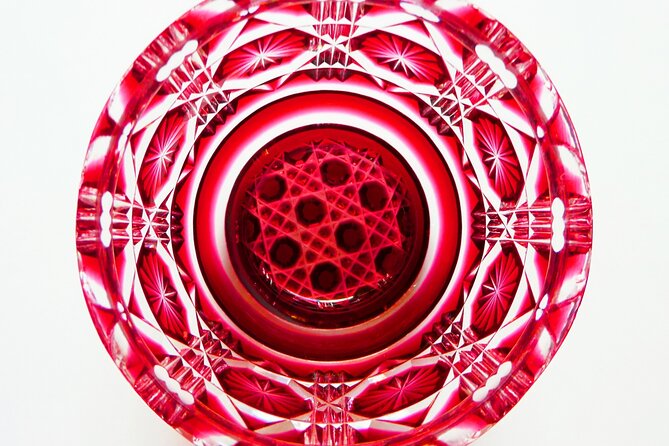
- Making your own Edo Kiriko glass
- What the $142.84 group price really covers
- Private touring and the pace of the morning
- How the tour compares with exploring Asakusa alone
- Who will get the most from this experience
- Booking details worth keeping in mind
- Should you book the Asakusa Traditional Experience?
- FAQ
- How long does the Asakusa Traditional Experience last?
- What time does the tour start?
- Where does the tour begin?
- Where does the activity end?
- Is this a private tour?
- Is admission to Senso-ji included?
- Is the Edo Kiriko workshop included?
- Are snacks at Nakamise-dori included?
- Can I cancel for a full refund?
I like the private format for up to five people and the way the tour joins famous sights with a real local craft. I also like that the guide explains the architecture and customs instead of simply pointing out photo stops. The main catch is cost: the listed $142.84 covers the guide for the group, but snacks and the 4,950-yen glass workshop are extra.
Key points to know before booking
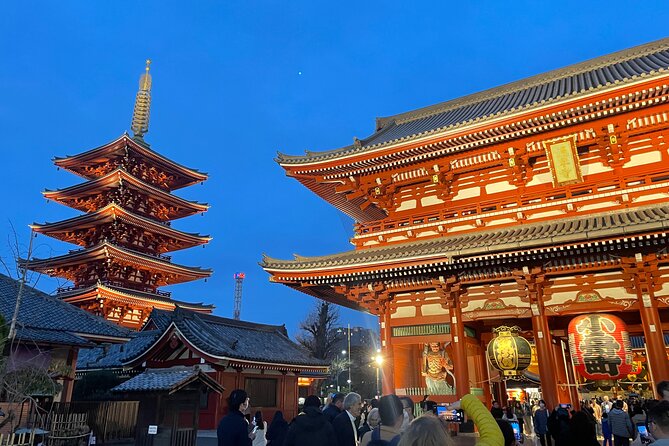
- Senso-ji dates to 645: You get a guided introduction to Tokyo’s oldest temple and the Asakusa area around it.
- Nakamise-dori is over 200 meters long: It is a handy place for traditional snacks, folding fans, yukata, and other souvenirs.
- Edo Kiriko is hands-on: You design a pattern and cut it into glass during a session lasting about 90 minutes.
- The group is private: Your party alone takes part, with a maximum of five people.
- The tour lasts about four hours: That total includes travel time between the stops.
- The listed price is not all-inclusive: Snacks, the Kiriko workshop, and a possible wagashi activity cost extra.
Why Asakusa makes a good first cultural stop
Asakusa gives you a clear introduction to traditional Tokyo without sending you far across the city. Senso-ji, Nakamise-dori, and the craft workshop all sit within an area where the old Edo-era character is still easy to see.
That matters because Tokyo can feel enormous and modern. In Asakusa, the scale changes. Temple grounds, bright decorations, local food stalls, and old-style crafts create a compact morning with a strong sense of place.
The tour begins at Kaminari Mon, at 2-chome 3-1 Asakusa, at 10:00 am. This is a practical start time. You have enough morning left afterward for another part of Tokyo, yet you are not being asked to meet at dawn.
Your guide is there to explain what you are seeing, not just lead you from one address to the next. The supplied comments repeatedly praise the guide’s friendly manner, clear explanations, and ability to point out details in the architecture. No guide name is provided, so you should not expect a named host in advance.
A few more Tokyo tours and experiences worth a look



Senso-ji and the story of old Tokyo
Plan on about one hour at Senso-ji. Admission is free, which keeps this part of the outing easy and accessible.
Senso-ji was completed in 645, making it Tokyo’s oldest temple. The age alone is interesting, but the real value comes from having a guide explain how the temple fits into Asakusa and the Edo period, the era when Tokyo was known as Edo.
I like this stop because it gives your day a cultural base. Instead of treating the temple as a quick picture stop, you can ask about the buildings, decorations, and customs you encounter. Direct comments about the tour praise detailed explanations of the architecture and lesser-known facts, which is exactly the kind of help that makes a familiar landmark more rewarding.
Allow time to look around rather than rushing straight toward the shopping street. The temple is one of Tokyo’s most popular, so you should expect a public setting rather than a quiet private monument. That popularity is part of the experience, but it also means the temple will not feel secluded.
The free admission is useful, though the tour price is paying for the guide’s time and structure rather than entry tickets. If you already know Senso-ji well, the added value depends on how much you want local context and a guided walk.
Nakamise-dori, where shopping becomes part of the culture
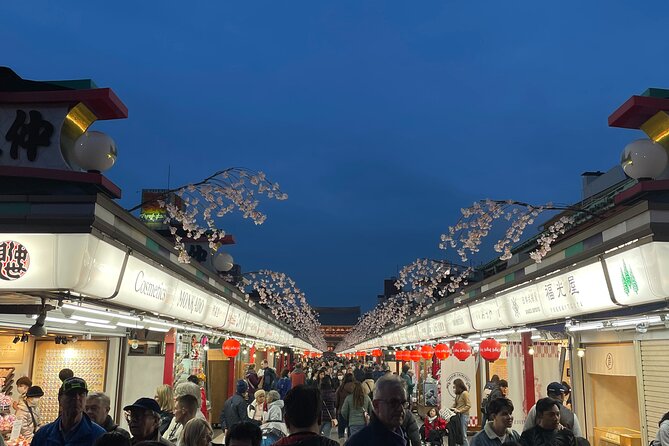
The second stop takes about an hour on Nakamise-dori, the shopping street belonging to Senso-ji. It stretches for more than 200 meters between the temple area and Kaminarimon.
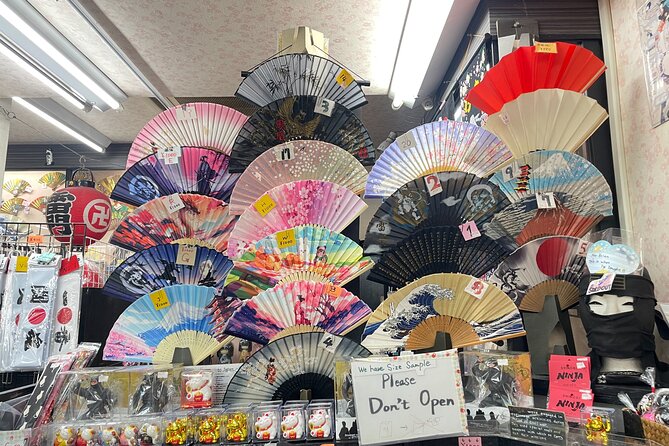
This is not simply a modern shopping arcade. The stalls focus on traditional Japanese snacks and souvenirs, including yukata and folding fans. You might find this the best place in the tour to browse for a small, easy-to-pack reminder of Tokyo.
I like having a full hour here instead of being given five minutes to buy something and move on. You can compare items, ask the guide what is traditional, and decide for yourself what feels worth buying. The guide can also help connect the objects on sale with the customs and visual style of Asakusa.
Food is not included. Snacks at Nakamise-dori are your responsibility, so bring some spending money if tasting local treats is part of your plan. The tour does not specify which snacks you will try, and the guide’s role is not described as a dedicated food tour.
Nakamise-dori can also test your patience if you prefer quiet sightseeing. It is a popular shopping street, and an hour may feel long if you have no interest in souvenirs. For shoppers and first-time visitors, though, the stop provides a useful bridge between temple culture and everyday Japanese goods.
Making your own Edo Kiriko glass
The most unusual part of the morning is the Edo Kiriko session at Sumida Edokirikokan, or a nearby location if the workshop site changes. Edo Kiriko is a traditional cut-glass craft that began in Edo.
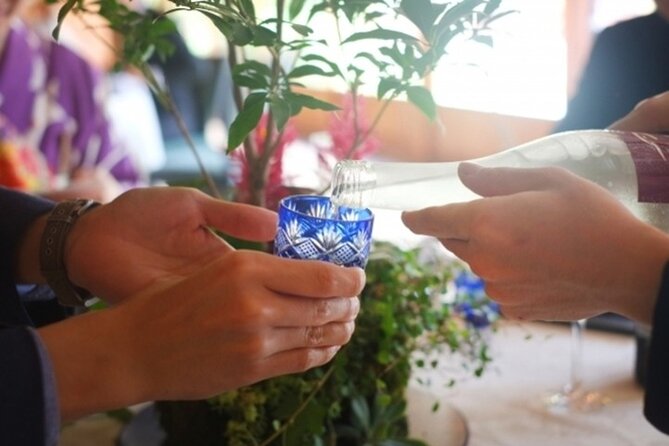
The activity lasts about 90 minutes. You first design your own pattern, then cut it into a glass piece. That sequence gives the workshop more substance than a quick souvenir-making demonstration. You are not merely watching a craftsperson work. You are making a personal object and taking it home.
This is the part that gives the tour its lasting quality. A photo of Senso-ji is easy to take, but a glass piece marked by your own design carries a different memory. You can also see why traditional craft takes care and control, even in a short introductory session.
The workshop fee is 4,950 yen and is not included in the tour price. Check the final meeting instructions because the location may change. The supplied details describe the workshop as the concluding activity, but they do not specify the exact glass item, color choices, tools, or level of assistance.
You should also understand that the four-hour total includes travel time. The stated stop times add up to three and a half hours, leaving roughly 30 minutes for movement and transitions. That is a sensible schedule, but it does not leave much room for a long lunch or extended shopping.
What the $142.84 group price really covers
The listed price is $142.84 per group of up to five people. That is an important distinction. You are not paying that amount per person, so a full group can find the cost quite reasonable, while a solo participant pays a much higher effective rate.
The included item is the tour guide. Temple admission is free, and the shopping street itself has no admission charge. The main additional expense is the Edo Kiriko workshop at 4,950 yen per person, assuming each participant joins the activity.
Snacks at Nakamise-dori are also extra. Wagashi making is listed at 1,800 yen, but the supplied details do not clearly state whether it replaces the Kiriko workshop, is an optional addition, or is available under certain arrangements. Ask the provider before booking if wagashi is important to your plans.
I see the value in the price when you have three to five people who want a private guide and a craft activity. The guide can shape explanations around your group, and you avoid being placed with strangers. For one or two people, the fixed group price deserves closer comparison with other private Asakusa walks.
The experience provider is Life Journey Nipon. Booking confirmation is sent within 48 hours, subject to availability. That timing is worth noting if your Tokyo schedule is tight.

Private touring and the pace of the morning
A private group changes the feel of the outing. Your party, and nobody else, takes part. That is useful if you are traveling with family or friends who want to move at the same pace.
You can spend more time on temple architecture if that interests you, or keep the shopping portion focused. The information does not promise a fully customized itinerary, so I would not assume every timing change is possible. Still, a private format generally gives you more room to ask questions than a large group tour.
Most people can participate, and the meeting point is near public transportation. The tour returns to the same meeting point at the end. Since the total duration includes travel time, wear comfortable shoes and keep your schedule after the tour reasonably flexible.
The start time is fixed at 10:00 am. The supplied details do not give a hotel pickup service, so you should plan to reach Kaminari Mon independently.
How the tour compares with exploring Asakusa alone
You can visit Senso-ji and Nakamise-dori without a ticketed tour. Admission to the temple is free, and the shopping street is open to the public. If you enjoy researching sites in advance and are mainly interested in taking pictures, a self-guided visit will cost less.
The private tour earns its keep through interpretation and the Kiriko workshop. A guide can explain architectural details and the place of Asakusa in old Tokyo, while the craft session gives you a planned activity beyond sightseeing.
The structure also helps first-time visitors use their time well. In four hours, you see the area’s major cultural stop, have time for shopping, and try a traditional craft. You do not need to arrange separate transport between each part.
The tradeoff is that you surrender some freedom. You cannot linger all afternoon at the temple or replace the workshop with a long meal unless the provider agrees. This is a focused introduction, not an open-ended day in Asakusa.
Who will get the most from this experience
I would recommend this tour to a small group that wants more than a standard city walk. Families may like the combination of a famous temple, shopping, and making something by hand. Friends sharing the fixed group price can also get good value from the private setup.
It suits first-time visitors especially well because the guide gives you a framework for understanding Asakusa. The positive feedback consistently highlights friendly service, strong explanations, and enjoyable guiding. Those are the qualities to look for if you want cultural background rather than a simple route between sights.
The tour is less suitable if you want a food-focused outing, extensive shopping time, or a quiet temple visit. Snacks are not included, and the shopping stop is one hour rather than a full afternoon. The craft fee also raises the final cost.
If you are traveling alone, calculate the price carefully. The $142.84 charge applies to the group, not each person, but a solo booking does not spread that cost across several participants.
Booking details worth keeping in mind
You receive confirmation within 48 hours, subject to availability. For a short Tokyo visit, book early enough to allow for that response period.
Free cancellation is available if you cancel at least 24 hours before the local start time. Cancellations or changes made less than 24 hours before the start are not accepted for a refund.
The activity uses a mobile ticket. Keep the booking information available on your phone, and arrive at the stated meeting point before 10:00 am.
Because the workshop location may change, check the final instructions carefully. The activity ends back at the starting meeting point, which makes it easier to continue sightseeing in Asakusa or use nearby public transportation afterward.
Should you book the Asakusa Traditional Experience?
Book it if you want a compact, private introduction to Asakusa that combines history, shopping, and a hands-on Japanese craft. The strongest reasons are the local guide, the detailed attention to temple architecture, and the chance to take home your own Edo Kiriko piece.
Skip it if you are mainly looking for the cheapest way to see Senso-ji, or if you would rather set your own pace. Remember to add the 4,950-yen workshop fee, food purchases, and possibly the 1,800-yen wagashi activity before judging the final cost.
For a group of friends or family members who can share the fixed price, this is a well-shaped four-hour cultural outing. It gives you a clear look at Asakusa and leaves you with more than a camera roll.
FAQ
How long does the Asakusa Traditional Experience last?
The experience lasts approximately four hours, including travel time between stops.
What time does the tour start?
The tour starts at 10:00 am.
Where does the tour begin?
The meeting point is Kaminari Mon, 2-chome 3-1 Asakusa, Taito City, Tokyo 111-0032, Japan.
Where does the activity end?
The activity ends back at the meeting point.
Is this a private tour?
Yes. Only your group participates, with a maximum of five people.
Is admission to Senso-ji included?
Senso-ji admission is free. The guide cost is included in the listed price.
Is the Edo Kiriko workshop included?
No. The Edo Kiriko workshop costs 4,950 yen and is not included.
Are snacks at Nakamise-dori included?
No. Snacks purchased at Nakamise-dori are not included.
Can I cancel for a full refund?
Yes, if you cancel at least 24 hours before the experience start time. Cancellations made less than 24 hours before the start time are not refunded.
More Asakusa Tours in Tokyo

More tours in Tokyo we've reviewed












Asakusa Tours, compared.
 ★ 4.8Tokyo: Japanese Dance Cabaret Theater Asakusa-Kaguwa TicketFrom $492 hours
 ★ 4.7Tokyo: Meiji Shrine, Asakusa, Skytree Bus Tour and CruiseFrom $12210 hours
 ★ 4.9Tokyo: Roll and Authentic Sushi Making Class in AsakusaFrom $581h 40m
 ★ 4.8Tokyo: Asakusa Walking Tour with Sensoji Temple VisitFrom $222 hours
 ★ 5.0Tokyo Asakusa Rickshaw TourFrom $42
 ★ 4.5Tokyo Panoramic 1 Day: Meiji Shrine, Asakusa, Odaiba and SKYTREE®From $85