Reviewed · TSUKIJI MARKET TOURS
Tokyo: Guided Walking Tour of Tsukiji Market with Breakfast
Tsukiji is best understood through your stomach. This 150-minute walk takes you from the striking exterior of Tsukiji Hongwanji Temple into the crowded lanes of the Outer Market, where wholesalers, cooks, and food sellers get on with the morning trade. Along the way, you taste seven Japanese specialties rather than simply watching other people eat.
In This Article
- Key points to know before you book
- Starting at Tsukiji Hongwanji Temple
- Entering the Tsukiji Outer Market
- Seven tastes that make up breakfast
- How the guide changes the experience
- What the group size feels like
- Is $85 a fair price?
- Timing, comfort, and accessibility
- Who will enjoy this Tsukiji walk?
- Should you book the Tsukiji breakfast tour?
- FAQ
- Where does the Tsukiji market tour meet?
- How long does the guided walk last?
- What food is included?
- Is the tour conducted in English?
- How many people can join the tour?
- Is the activity wheelchair accessible?
- Can I cancel for a refund?
I like the way the tour joins food with Japanese religious and cultural traditions, instead of treating the market as one long snack stop. I also like the small-group limit of 10, since guides can translate, adjust tastings, and help you choose extra foods. The main caution is that the market can be noisy, packed, and difficult to follow if your guide’s English is not easy for you to understand.
Key points to know before you book

- Seven tastings make this a full breakfast: Expect grilled seafood or wagyu beef, Japanese omelette, a tuna sandwich, fish-paste skewers, a drink, Japanese tea, and dashi soup stock.
- The tour begins beside Tsukiji Hongwanji Temple: You see its unusual Indian-inspired Buddhist exterior before entering the market.
- Small groups make a real difference: With no more than 10 people, guides can help with translation, food choices, and purchases.
- The market is still a working place: You will see expert wholesalers, shopkeepers, restaurants, and stalls operating around you.
- Guides can tailor the food: Past departures with Yumi, Nori, Minoko, Rico, and other guides included substitutions for picky eaters and people who did not want to try every item.
- The $85 price buys structure and food: You are paying for an English-speaking guide, seven tastings, and help making sense of a market that can be hard to navigate alone.
Starting at Tsukiji Hongwanji Temple
Meet in front of Tsukiji Hongwanji Temple, one of the easiest meeting points in this part of Tokyo. From Tsukiji Station on the Hibiya Line, use Exit A1, turn left, and walk about 50 meters to the temple entrance.
The temple is worth a close look before the food begins. Its exterior has an unusual Indian-inspired Buddhist design, a sharp contrast to the more familiar Japanese temple style you may have seen elsewhere in Tokyo. The tour only covers the outside, but the stop gives your guide a useful opening to explain how religion connects with food, offerings, customs, and daily life in Japan.
I like beginning here because it gives the market some context. Tsukiji is not only a place to buy seafood. It is part of a neighborhood with religious sites, food traditions, and working businesses. You will get more from the next two hours if you pay attention to those links.
The meeting point also removes one common Tokyo worry: finding a small tour group in a maze of shops. Still, arrive with time to spare. One person missed the tour after arriving late, so do not treat the short walk from the station as a reason to cut things close.
A few more Tokyo tours and experiences worth a look


Entering the Tsukiji Outer Market
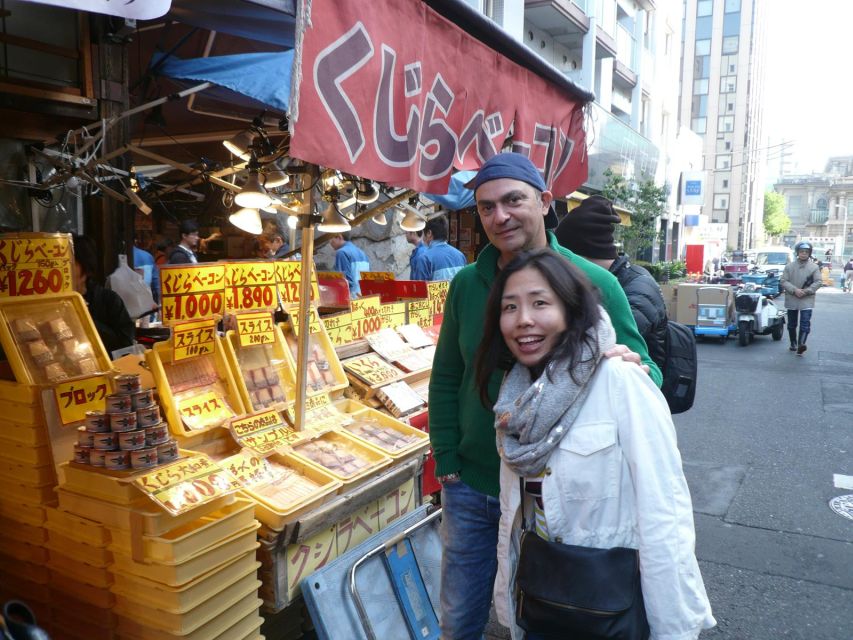
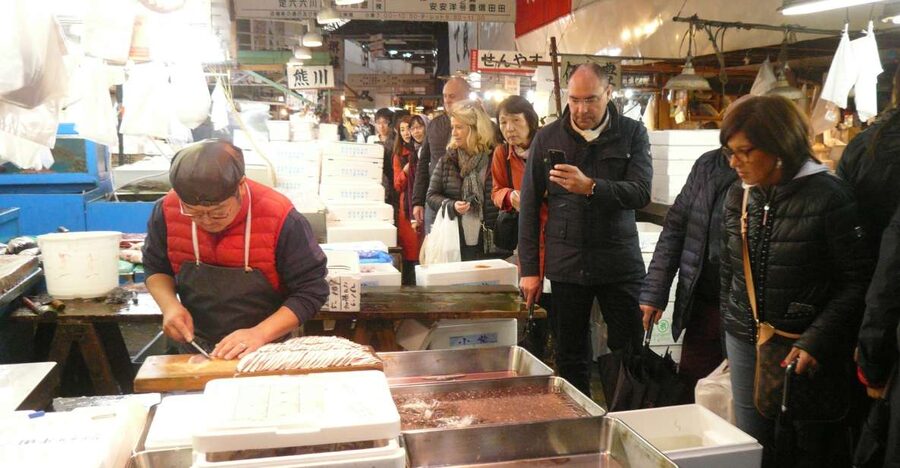
The tour then moves into Tsukiji Outer Market, a dense food district lined with restaurants, specialist shops, stalls, and businesses serving both local cooks and curious visitors. The former inner wholesale market moved away years ago, but the Outer Market remains an important food center and a popular stop for anyone interested in Japanese cooking.
Your guide’s main value appears here. The lanes can feel confusing, especially when pedestrians, workers, deliveries, and customers all share the same space. A guide helps you keep moving, points out unusual products, and explains what you are seeing instead of leaving you to guess.
You may see wholesalers working with speed and purpose. That working-market feel is part of the appeal, but it also means this is not a quiet museum visit. Keep your feet out of the way, follow your guide, and avoid stopping in the middle of a narrow lane for photographs.
The market’s personality comes from its people and products. You might pass seafood you do not recognize, prepared foods you have never tried, and shop counters aimed at professional cooks. The tour gives you a safe way to look closely without needing to understand every sign or know which stall is worth your time.
Seven tastes that make up breakfast
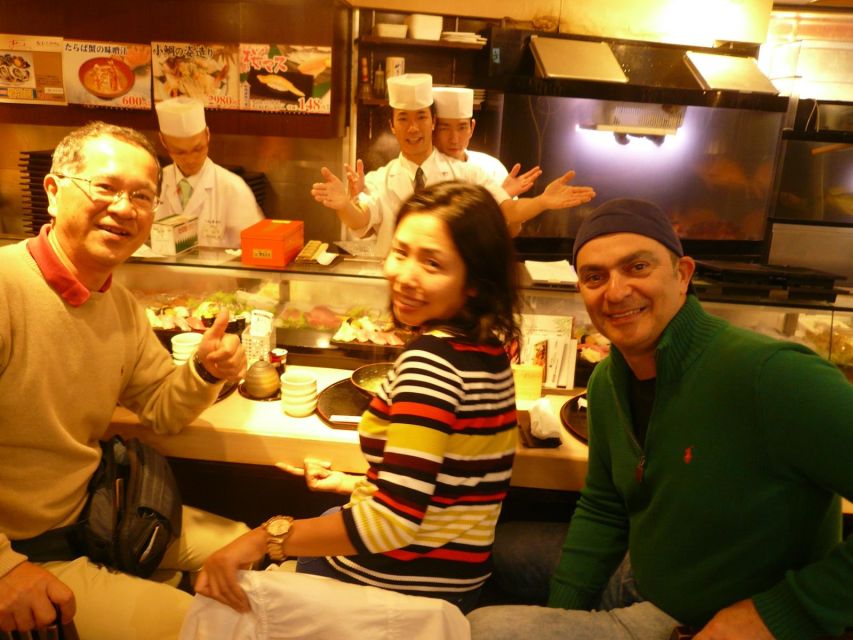
The included food is the heart of the experience. You receive seven local tastings, with the exact presentation depending on what is available and how the group’s preferences are handled.
The selection includes:
- Grilled seafood or beef skewers, which may include wagyu
- A Japanese-style omelette
- A tuna sandwich
- Fried fish-paste skewers
- A drink
- Japanese tea
- Dashi soup stock
This is more substantial than a token sample. Plan to arrive hungry. Several people found there was a lot of food, and the combination of meat, seafood, eggs, bread, soup stock, and drinks can add up quickly during a morning walk.
The dashi tasting is especially useful for understanding Japanese cooking. Dashi is a basic soup stock used in many dishes, and tasting it on its own helps you notice the savory foundation that can otherwise disappear inside noodles, soups, or sauces.
The Japanese omelette offers another useful comparison. Market foods can look familiar at first glance, but the texture, seasoning, and preparation may be different from the egg dishes you know at home. The same is true of fish-paste skewers, a practical way to try a common Japanese food without committing to a full meal.
The tuna sandwich may sound less traditional than the other items, but that is part of the point. Tsukiji is not a staged display of old Japan. It is a working food district where classic ingredients appear in modern, convenient forms.
You may also try mochi or onigiri depending on the guide’s choices and market conditions. Those items were enjoyed on past departures, but they are not part of the stated seven-tasting list, so do not book expecting them every time.
How the guide changes the experience
A market tour rises or falls on the guide. Here, the small group format gives the guide room to do more than recite facts.
Guides have helped visitors explain dietary preferences, arrange alternatives, speak with vendors, and translate what they are buying. One family with a picky teenager found this flexibility especially useful. Another participant did not want to eat everything but could still watch, choose preferred items, and receive adjustments.
That matters because a tasting tour should not turn into a test of bravery. You are not required to force down every unfamiliar food. Tell the guide clearly what you like, what you avoid, and what you cannot eat. The experience can then focus on discovery rather than pressure.
The guides also offer practical help beyond the seven included tastings. Past tours included advice on later food stops, help buying market products, and assistance finding a next tour or returning toward a hotel. These extras are not guaranteed, but they show why a local guide can be worth paying for in a place where translation and vendor etiquette may slow you down.
English ability can vary by guide. Most people found communication workable, and guides were repeatedly praised for being friendly and helpful. One person found the English difficult to understand at times. If detailed historical explanations are important to you, listen carefully and ask the guide to repeat anything unclear.
Guides named in past experiences include Yumi, Nori, Minoko, and Rico. The person leading your tour may be different, so book the experience for its format rather than expecting a specific guide.
What the group size feels like
The maximum group size is 10, and some departures have been much smaller. One family of four had the guides to themselves, while another tour became a private walk for two people. That is not promised, but a small group is still a useful advantage.
With fewer people, the guide can spend more time translating signs, answering questions, and helping you decide what to taste. It also makes it easier to stay together in narrow market lanes.
The trade-off is that a small group does not make Tsukiji feel private. The market remains a busy public place, and you will share it with shoppers, workers, and other tour groups. If you want a calm, sit-down breakfast, this is the wrong choice. If you like watching a food district at work, the movement adds to the experience.
Other walking tours we've reviewed in Tokyo



Is $85 a fair price?

At $85 per person, this is not the cheapest way to eat breakfast in Tokyo. You could buy individual snacks in the market for less, especially if you already know what you want and can manage the language on your own.
The value comes from the combination of food and guidance. Your fee covers 150 minutes with an English-speaking guide and seven tastings. You are also paying for a route through a crowded market, help choosing food, translation at stalls, and cultural explanations that are easy to miss when walking alone.
I would see the price as reasonable for a first visit to Tsukiji, especially if you are uncertain about Japanese food or traveling with family members who need alternatives. It is less compelling for an experienced Tokyo food explorer who already knows the market and prefers to choose every bite independently.
Bring some extra spending money if you want to buy food or products beyond the included tastings. The guides can help with those purchases, but additional items are separate from the tour.
Timing, comfort, and accessibility
The tour lasts two and a half hours, long enough for a proper introduction without using your entire day. The finish is early enough for you to keep exploring Tsukiji afterward, which is useful because the market deserves more time if you enjoy browsing.
Wear comfortable shoes. You will be walking through crowded streets and stopping at several food businesses, so practical footwear matters more than looking dressed up.
The activity is listed as wheelchair accessible. Even so, the market’s narrow and busy passages can make movement less simple than a standard sidewalk route. If you use a wheelchair, contact the provider before booking to confirm the conditions for your chosen start time and route.
Cancellation is free up to 24 hours before the activity for a full refund, and you can reserve now and pay later. Those terms help if your Tokyo schedule is still changing, but they do not solve the main practical issue: arriving on time at the temple.
Who will enjoy this Tsukiji walk?
I would recommend it most strongly for first-time visitors to Tokyo who want food, local context, and a clear introduction to Tsukiji in one morning.
It also suits:
- Families with teenagers or selective eaters, since the guide can adjust some tastings
- Visitors who want help ordering and shopping in Japanese
- Food lovers who prefer several small tastes to one long restaurant meal
- People who want to continue exploring the market after the guided portion
- Anyone interested in how religion, ingredients, and everyday eating connect in Japan
I would be more cautious if you dislike seafood, cannot eat several of the listed foods, or want a quiet breakfast. You can ask for alternatives, but the experience is built around tasting market food. It is also not ideal if you want to spend the whole morning at one stall or restaurant.
The activity has a current rating of 4.4 out of 5 from 134 ratings, which fits the overall picture: strong satisfaction with the food, guides, and market access, with some variation in communication and the usual risks of a crowded public setting.
Should you book the Tsukiji breakfast tour?
Book it if you want a guided first look at Tsukiji and would rather taste seven foods with help than wander without a plan. The best parts are the market access, the generous breakfast, and the guides’ willingness to adapt the food and help with translation.
Skip it if you already know Tsukiji well, want complete control over what you eat, or prefer a leisurely restaurant breakfast. For most first-time visitors, though, $85 buys a useful introduction, not just a plate of samples. Arrive hungry, wear good shoes, and leave room in your schedule to keep exploring once the tour ends.
FAQ
Where does the Tsukiji market tour meet?
Meet in front of Tsukiji Hongwanji Temple. From Tsukiji Station on the Hibiya Line, take Exit A1, turn left, and walk about 50 meters to the temple entrance.
How long does the guided walk last?
The tour lasts 150 minutes, or two and a half hours.
What food is included?
The seven tastings include grilled seafood or beef skewers, a Japanese-style omelette, a tuna sandwich, fried fish-paste skewers, a drink, Japanese tea, and dashi soup stock.
Is the tour conducted in English?
Yes. The live guide speaks English, and English is the listed tour language.
How many people can join the tour?
The group is limited to 10 participants. Some departures may be smaller, but a private tour is not guaranteed.
Is the activity wheelchair accessible?
Yes, the activity is listed as wheelchair accessible. You should still confirm route conditions with the provider if you need specific accessibility arrangements in the market.
Can I cancel for a refund?
You can cancel up to 24 hours before the activity for a full refund. The booking also offers a reserve-now, pay-later option.
More Guided Tours in Tokyo


More Walking Tours in Tokyo
More Tsukiji Market Tours in Tokyo
More tours in Tokyo we've reviewed












Tsukiji Market Tours, compared.
 ★ 5.0Tokyo Tsukiji Fish Market Food and Culture Walking TourFrom $99
 ★ 5.0Tokyo: Tsukiji Fish Market Food and Walking tourFrom $30
 ★ 4.9Tokyo: Tsukiji Fish Market Guided Walking TourFrom $222 hours
 ★ 5.0Tokyo Sushi Making Class in Tsukiji with Professional ChefFrom $49
 ★ 5.0Tsukiji Fish Market Guided Tour and Sushi Making with Pro ChefFrom $104
★ 4.7Tokyo: Tsukiji Fish Market Food and Culture Walking TourFrom $963 hours
★ 5.0Tsukiji Fish Market Guided Tour and Sushi Making with Pro ChefFrom $104
★ 4.7Tokyo: Tsukiji Fish Market Food and Culture Walking TourFrom $963 hours