Reviewed · TOURS
Half Day Sightseeing Tour in Tokyo
Tokyo can take days to understand, but this three to four-hour coach tour gives you a quick first look at its landmarks. You visit Meiji Jingu, pause near the Imperial Palace, and finish in Asakusa, where matcha and Senso-ji offer a taste of old Tokyo.
In This Article
- Key points at a glance
- A fast morning tour with a useful Tokyo orientation
- Starting at LOVE and crossing Tokyo by coach
- Meiji Jingu: the strongest stop of the morning
- The Imperial Palace area and the most important expectation
- Asakusa, matcha, and the finish at Senso-ji
- What the guide adds, and where the format falls short
- Who should book this Tokyo half-day tour?
- My practical verdict on the $94.84 price
- Should you book it?
- FAQ
- How long does the Tokyo sightseeing tour last?
- Where does the tour start?
- Where does the tour end?
- Is Senso-ji Temple included?
- Does the tour enter the Imperial Palace?
- Is matcha included?
- Is the tour conducted in English?
- Does the bus have Wi-Fi and air conditioning?
- Can I cancel the booking for a full refund?
I like the easy transport and the helpful guides. Aiko, Yuki, Mao, Hiro, Lisa, and Tsubasa are among the guides praised for clear English, humor, and good group care. I also like the finish in Asakusa, since you can keep exploring after the bus tour ends.
The main drawback is that this is a large-group overview, with up to 43 people. You may spend more time on the bus or being counted than hearing detailed commentary, and the Imperial Palace stop can mean only a bridge and moat view, not a long garden visit.
Key points at a glance
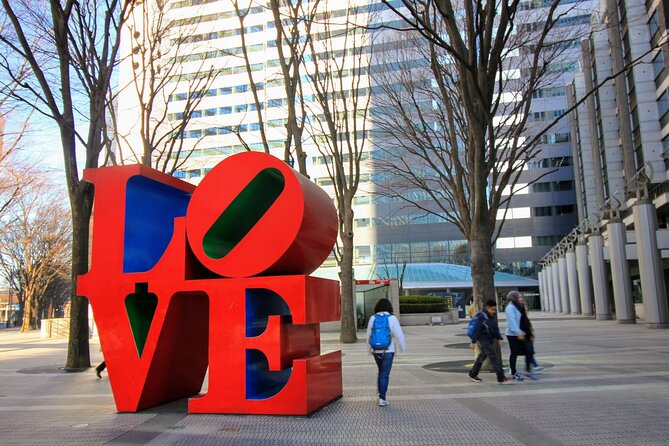
- Starts early from Ginza or Shinjuku: Meet at Matsuya Ginza at 7:20 a.m. or the Robert Indiana LOVE sculpture in Shinjuku at 7:50 a.m.
- Meiji Shrine gets the best walking time: Plan on about 50 minutes among forested paths, sake barrels, and shrine buildings.
- The Imperial Palace visit is limited: The tour allows about 50 minutes, but access may be restricted to the outer bridge area or an available garden.
- Asakusa is the cultural finish: You receive matcha or matcha gelato and end near Senso-ji Temple and Nakamise shopping street.
- The bus does much of the sightseeing: You pass Harajuku, Akihabara, Ueno, the National Diet Building, and other districts without stopping at each one.
- The tour does not return to the starting point: You finish in Asakusa and must make your own way back.
A fast morning tour with a useful Tokyo orientation
This experience is built for a simple purpose: show you several major Tokyo sights without making you change trains across the city. You board a deluxe, air-conditioned coach, listen to an English-speaking guide or multilingual audio commentary, and move from west Tokyo to the Imperial Palace area before ending in the old-town district of Asakusa.
That route gives you a helpful contrast. Meiji Shrine sits in a calm wooded setting beside Harajuku, while Asakusa feels more traditional, with temple gates, incense, souvenir stalls, and matcha. In between, you see modern Tokyo from the bus, including Akihabara’s anime and game culture, Ueno Park, and the National Diet Building.
I see this as an orientation tour rather than a deep visit to every attraction. If you have only one morning, dislike figuring out Tokyo’s rail system, or want a guide to explain basic Japanese customs, it can make sense. If you prefer slow walks and detailed museum-style commentary, the fixed schedule may feel thin.
The listed price is $94.84 per person. That is not cheap for three to four hours, especially because the main attractions do not require an admission ticket. You are paying for the vehicle, driver, guide, coordination, audio support, Wi-Fi, and the convenience of covering a wide area quickly. The value improves if you would otherwise spend time arranging several train rides and navigating unfamiliar neighborhoods.
If you're still narrowing it down, here are other tours in Tokyo we've reviewed.

Starting at LOVE and crossing Tokyo by coach
You can begin at Matsuya Ginza at 7:20 a.m. or at the LOVE sculpture near Shinjuku at 7:50 a.m. The sculpture is a practical meeting marker, but check your confirmation carefully so you go to the correct departure point. The tour is strict about timing, and joining midway is not allowed if you arrive late.
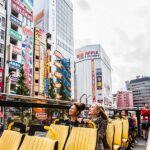
Once aboard, the bus passes several districts that are important to Tokyo’s identity. Harajuku represents youth fashion and Japanese pop culture. Akihabara is associated with anime, games, electronics, and maid cafes. Ueno combines a major park with the Ameyoko market area, while Kappabashi is known for kitchen goods, Japanese dishes, knives, and remarkably lifelike plastic food displays.
These places are drive-by sights, not full stops. That distinction matters. You can look through the windows and hear an explanation, but you will not have time to browse Ameyoko, shop for a chef’s knife, or explore Akihabara on foot during this half-day outing.
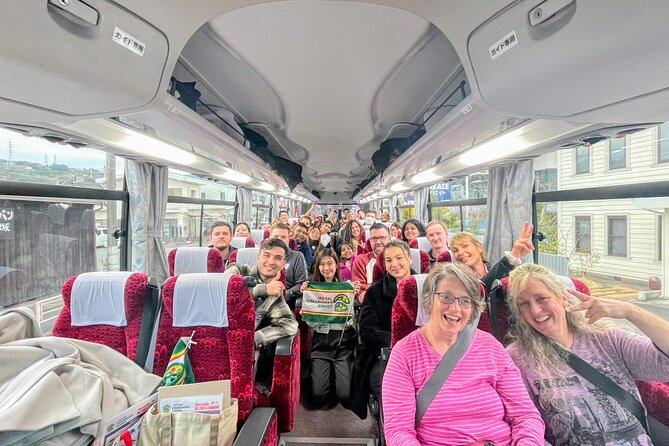
The coach includes free Wi-Fi and air conditioning, both useful in Tokyo’s heat or rain. The bus also saves your legs during a morning that still includes shrine and temple walking. The group may be as large as 43 people, though, so a seat near the front can make it easier to hear the guide and see any pictures being shown.
The audio system is available in English, French, Italian, Spanish, German, Portuguese, and Ukrainian. English-speaking guides lead the tour, while the recordings provide extra language support. Several guides have earned especially warm praise for their approach. Yuki is described as calm and attentive, Mao as entertaining and well informed, and Hiro as both funny and careful with a participant who had trouble walking. Guides such as Aiko, Ayaka, Tsubasa, Elven, Lisa, and Yume have also been singled out for clear explanations and friendly service.
The quality of a group tour depends heavily on the guide assigned that morning. Some guides give lively cultural notes and useful stories. Others may spend more time checking head counts and announcing the next stop. I would book this for the structure and transport first, with the guide’s personality as a welcome bonus.
Meiji Jingu: the strongest stop of the morning
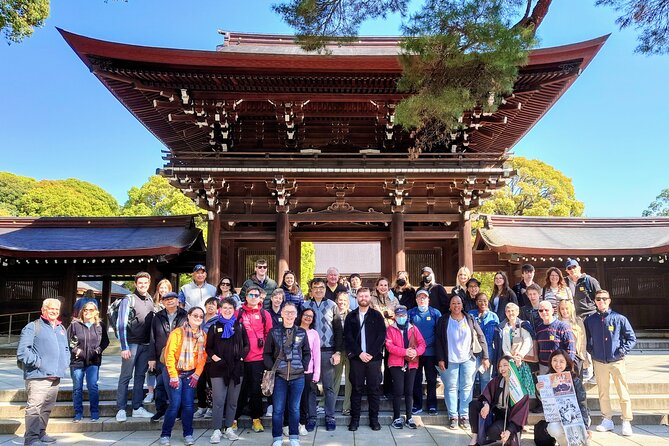
Meiji Jingu is the most satisfying part of the route for many people, and I can see why. The shrine was built in 1920 for Emperor Meiji and is surrounded by a large wooded area that feels far removed from nearby Harajuku.
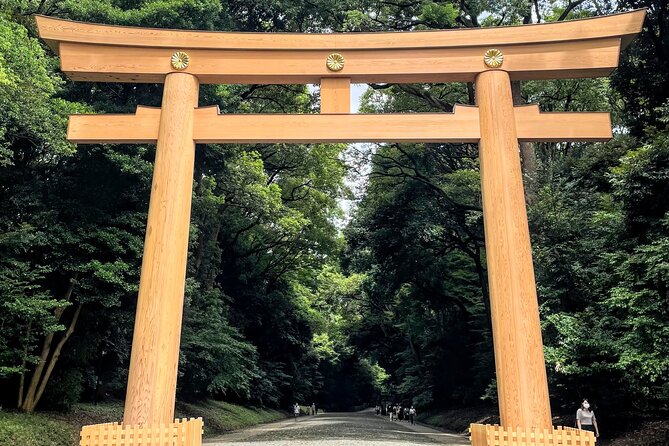
The walk begins with a broad approach through trees. Along the way, you may see rows of sake barrels and wine barrels offered to the shrine, as well as the large torii gate. Aiko has explained details such as the torii being a gift from Taiwan, which gives the walk a useful human and cultural layer instead of making it just a photo stop.
You have about 50 minutes here. That is enough to reach the main shrine area, observe the ritual customs, and take photographs, but it is not enough for a leisurely exploration of every path. You can watch people purify themselves, make a prayer, and take in the clean, restrained design of a Shinto shrine.
This stop also gives you a basic distinction that helps throughout Japan: Meiji Jingu is a Shinto shrine, while Senso-ji is a Buddhist temple. One guide, Elven, was specifically praised for explaining that difference clearly. A good guide can turn simple actions, such as washing your hands or bowing, into useful context for the rest of your trip.
Wear comfortable shoes. The walk is not presented as difficult, but the tour specifically warns that it is not suited to people who cannot walk long distances. Summer heat can add to the effort, even though the bus is air-conditioned.
The Imperial Palace area and the most important expectation
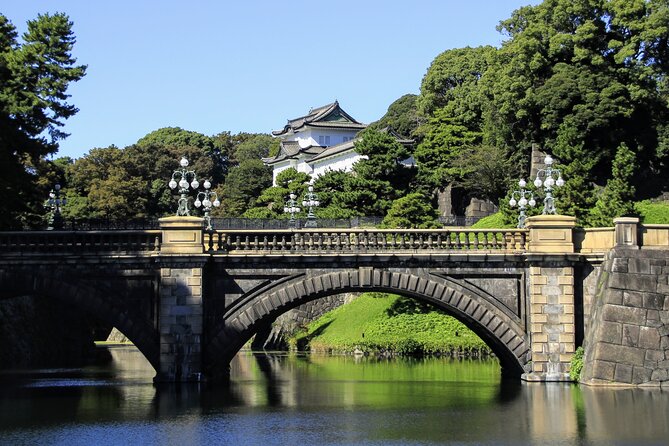
The Imperial Palace stop is where you need to keep your expectations in check. The palace occupies the former site of Edo Castle and remains the residence of Japan’s Imperial family. Its grounds include traditional gardens, seasonal flowers, moats, bridges, and historic structures.
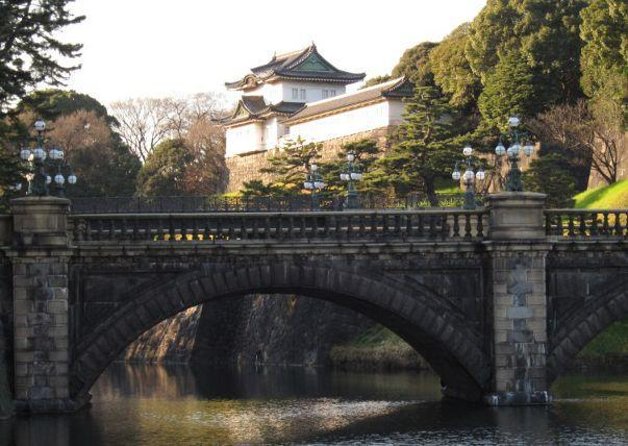
The scheduled stop lasts about 50 minutes, and the plan may include the East Garden or another available area. In practice, access can change because of closures, weather, operations, or traffic. Several accounts describe seeing the outer bridge, gate, moat, and a nearby samurai statue rather than walking through the open palace gardens.
That can still be pleasant, especially if you want a photograph of the stonework and water in front of the palace. One interesting detail explained by Aiko concerns the position of the horse in a samurai statue: a raised leg indicates that the samurai lost the battle but survived. Small points like this are exactly what make a guided stop worthwhile.
Still, I would not book this tour expecting a full Imperial Palace visit. You cannot assume that you will enter the gardens, and the stop may feel short if the area is closed. The operator says an alternative place may be used when a site is unavailable, and changes caused by weather, traffic, or suspended operations do not qualify for a refund.
The wording about a stroll at the palace can sound broader than the actual experience. Think of this as a brief Imperial Palace area visit, not a dedicated palace tour. If the palace gardens are your priority, plan a separate visit on another day.
Asakusa, matcha, and the finish at Senso-ji
The tour then heads east to Asakusa, Tokyo’s best stop for a traditional atmosphere. Here you receive a matcha drink or matcha gelato made with first-flush tea from Uji, Kyoto. The advertised aim is a smooth, less bitter matcha experience, which may appeal if you find ordinary green tea too sharp.
The matcha portion lasts about 30 minutes. It is a tasting and shopping stop, not a tea ceremony. You can sample the drink or gelato and see a range of matcha products. On May 9, the matcha shop is closed, and the operator substitutes matcha souvenirs.
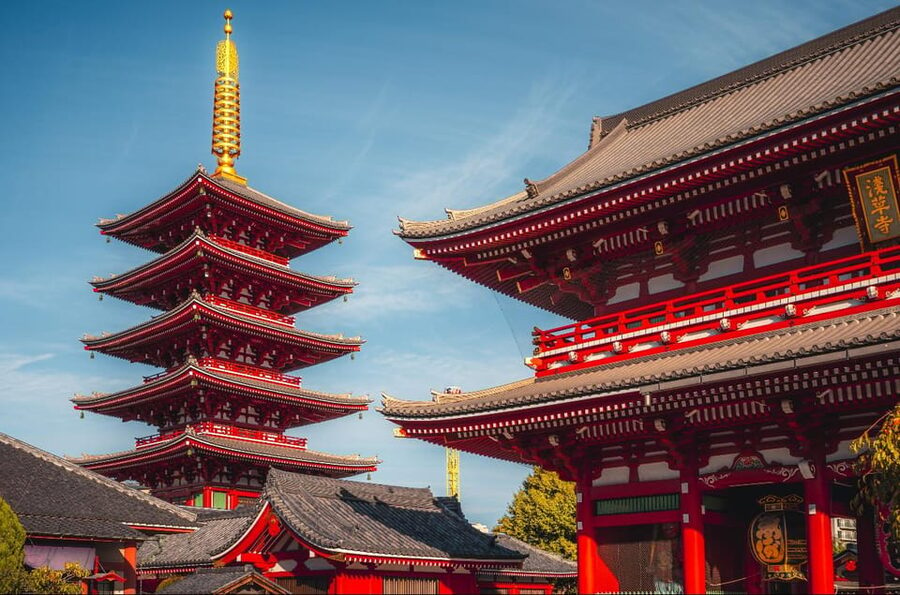
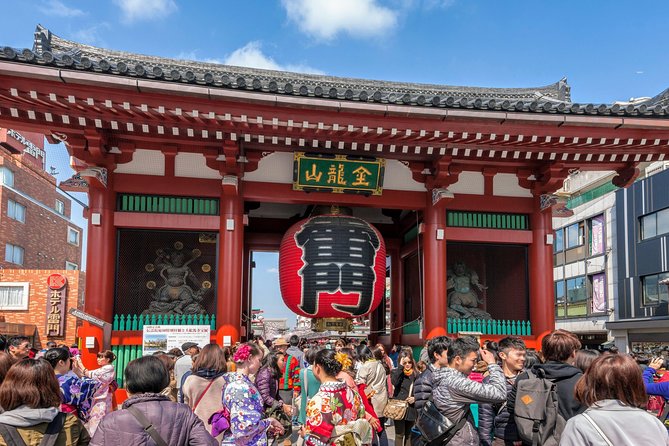
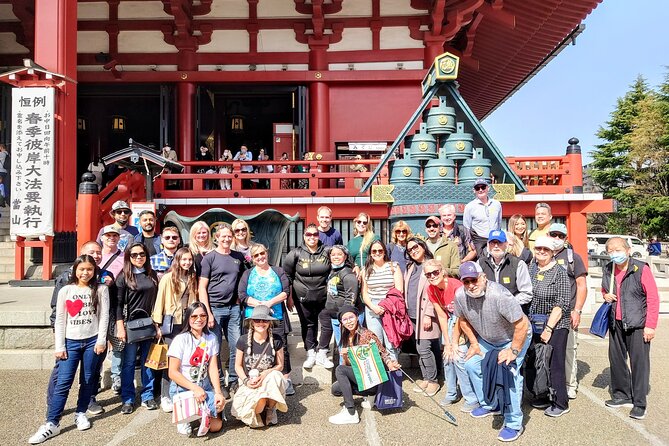
From the matcha stop, you are near Senso-ji Temple. This is one of Tokyo’s most recognizable sights, with the red Kaminari-mon Gate, the long Nakamise shopping avenue, and the temple precinct beyond. The formal tour stop is listed as about 10 minutes, but the important point is that the organized tour ends in Asakusa. You can stay on your own at Senso-ji, shop along Nakamise, pray, purify yourself, or collect a goshuin if that is part of your Japan visit.
This finish is a smart feature for an early tour. You are not rushed back to Ginza or Shinjuku, and you can turn the rest of your morning into your own Asakusa visit. Allow extra time if you want to enter the temple grounds properly. Ten minutes is enough for a quick look and photographs, not a full exploration.
The tour does not provide hotel drop-off or a return to the original meeting point. This has caused real confusion, so treat the ending as a firm part of the plan: you finish in Asakusa and arrange your own onward transport. The district is near public transportation, but the exact route back to your hotel is your responsibility.


What the guide adds, and where the format falls short
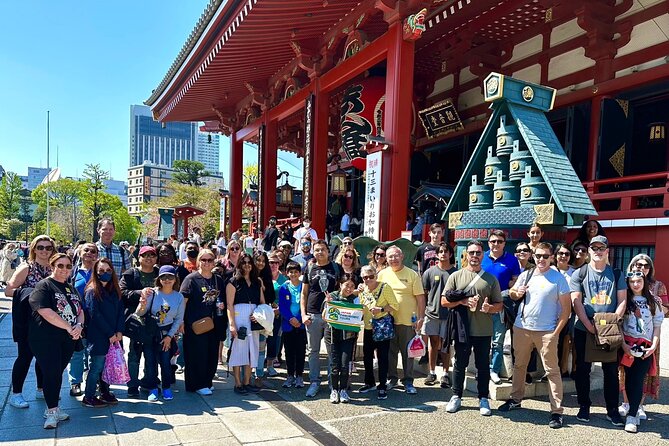
The strongest human feature is the guide. This is not simply a silent bus ride. Guides have explained shrine customs, Japanese history, the meaning of statues, and local districts, often with humor and personal warmth. Lisa was praised for staying organized while handling a large group, and Hiro for looking after someone who needed extra help walking.
At the same time, group size affects the experience. A guide must keep up to 43 people together, confirm that nobody is missing, coordinate matcha orders, and get everyone back to the bus. That practical work can crowd out longer explanations.
Some people find the commentary too light, especially during the drive-by sections. Others appreciate the chance to see much of Tokyo without doing the navigation themselves. I would sit toward the front if possible, since one account found the guide hard to hear from the back and could not see the displayed pictures clearly.
The multilingual audio is a useful backup, but it will not replace a guide who can answer a question or point out something unexpected. If cultural explanation is your main reason for booking, the experience may depend on the guide assigned that day.
Who should book this Tokyo half-day tour?
I would recommend it for a first visit when you want a broad sample of Tokyo and have limited time. It suits you if you prefer an air-conditioned coach, want to avoid several train transfers, and like having someone organize the morning. It also works well if you want to continue independently in Asakusa after the scheduled program.
The tour is less suitable if you already know Tokyo, want long visits at each site, or can comfortably plan your own route. You can reach Meiji Shrine, the Imperial Palace area, and Asakusa by public transportation, and independent visits give you more control over timing.
I would also think twice if you have difficulty walking. The shrine and temple areas involve walking, and the operator specifically says the tour is not recommended for people who cannot walk long distances. A stroller or mobility concern is not addressed in the supplied details, so you should confirm directly before booking rather than assume.
Free cancellation is available up to 24 hours before the start time. Changes or cancellations made less than 24 hours before departure are not refunded. That is a useful safety net, but it does not cover disappointment caused by traffic, weather, closures, or a shortened stop.
My practical verdict on the $94.84 price
At $94.84, this is a convenience purchase, not an admission bargain. The shrine, palace area, and Senso-ji do not carry a listed entry fee here, so the price rests on the coach, guide, audio options, Wi-Fi, and the amount of ground covered.
I think the price is reasonable for someone who values a managed introduction to Tokyo and would otherwise feel uneasy arranging the route. I think it is high for someone who wants only the shrine and Senso-ji, since both can be visited independently and the palace stop may be brief.
The half-day label is accurate, but some people finish feeling that the outing is closer to three hours than four. That is enough for a taste of the city, not a full day of sightseeing. If you want lunch, more palace time, or longer walks in Akihabara and Ueno, choose a longer tour or build your own day.
Should you book it?
Book this tour if you want an efficient first look at Tokyo, value a comfortable bus, and like ending in Asakusa with the rest of the day free. The guides can add real value, especially when they explain shrine customs and local stories.
Skip it if the Imperial Palace gardens are your main goal, if you dislike large groups, or if you expect detailed visits at every district listed. My best advice is to treat the bus sights as an introduction, enjoy Meiji Shrine as the main stop, and plan to spend your own time at Senso-ji after the tour ends.
FAQ
How long does the Tokyo sightseeing tour last?
The tour lasts approximately three to four hours.
Where does the tour start?
You can meet at Matsuya Ginza at 7:20 a.m. or at the Robert Indiana LOVE sculpture in Shinjuku at 7:50 a.m.
Where does the tour end?
The tour ends in Asakusa, near Senso-ji Temple. There is no extra drop-off service to the original starting point or to your hotel.
Is Senso-ji Temple included?
The tour visits Asakusa and ends near Senso-ji. The organized stop is listed as about 10 minutes, and you can continue exploring the temple and Nakamise Avenue independently after the tour ends.
Does the tour enter the Imperial Palace?
The tour visits the Imperial Palace area, but access can vary. You may visit the East Garden or another available area, while closures may limit the stop to the bridge, gate, moat, or nearby views.
Is matcha included?
Yes. Matcha drink or matcha gelato is included. The experience uses first-flush tea from Uji, Kyoto. On May 9, the shop is closed and matcha souvenirs are provided instead.
Is the tour conducted in English?
A professional English-speaking guide attends the tour. Multilingual audio guidance is also available in English, French, Italian, Spanish, German, Portuguese, and Ukrainian.
Does the bus have Wi-Fi and air conditioning?
Yes. The vehicle is air-conditioned, and free Wi-Fi is available on the bus.
Can I cancel the booking for a full refund?
You can cancel up to 24 hours before the experience start time for a full refund. Cancellations or changes made less than 24 hours before the start time are not refunded or accepted.
More tours in Tokyo we've reviewed












Tours, compared.
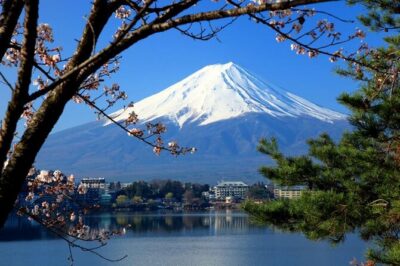 ★ 5.0Mt Fuji and Hakone 1-Day Bus Tour Return by Bullet TrainFrom $163
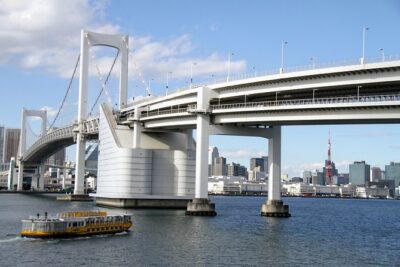 ★ 5.01-Day Tokyo Bus TourFrom $129
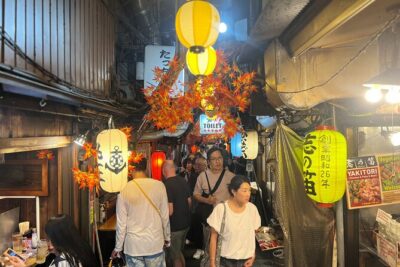 ★ 5.0Tokyo: Shinjuku Food Tour (13 Dishes at 4 Local Eateries)From $86
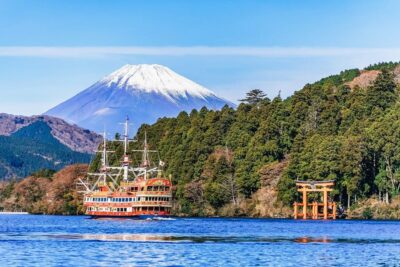 ★ 4.4Tokyo Mt Fuji 5th St & Hakone Cruise Bus Tour w/Bullet TrainFrom $15410 hours
 ★ 5.0Flagship 2-Hours Official Street Go-Kart Tour – Tokyo Bay ShopFrom $642 hours to 2 hours 30 minutes (approx.)
 ★ 4.7Tokyo: Mt. Fuji Tour, Hakone Ropeway, Owakudani, Lake AshiFrom $5410 hours