Reviewed · MT FUJI DAY TRIPS
Mt Fuji Exploration Tour with Free Japanese Kusa Mochi from Tokyo
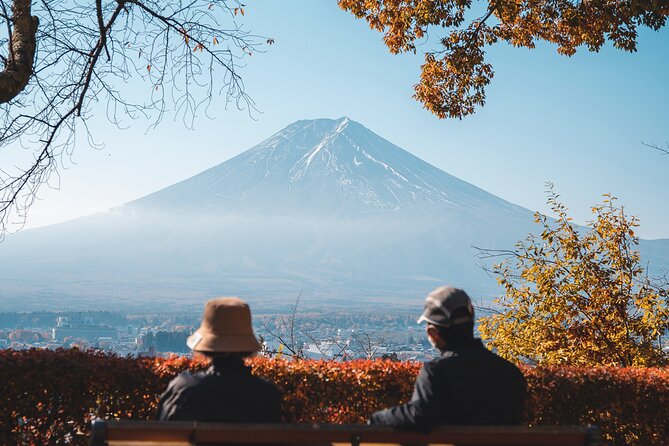
Mount Fuji is the star, but the best part of this day is seeing it from several very different angles. You’ll climb toward the famous Chureito Pagoda at Arakurayama Sengen Park, peer into the clear spring pools of Oshino Hakkai, and look across Lake Kawaguchi from Oishi Park.
In This Article
- Key points to know before you book
- Why this Mount Fuji day trip works from Tokyo
- Arakurayama Sengen Park and the famous Fuji view
- Oshino Hakkai and water from Mount Fuji
- Oishi Park beside Lake Kawaguchi
- Saiko Iyashi-no-Sato Nenba’s thatched-roof village
- The ride, group size, and guide service
- What is included, and what is not
- The best seasons for this Fuji outing
- Who should book this tour
- Should you book the Mount Fuji Exploration Tour?
- FAQ
- How long does the Mount Fuji Exploration Tour last?
- What places are visited during the tour?
- How long is the visit at Arakurayama Sengen Park?
- What is special about Oshino Hakkai?
- Does the tour visit Oishi Park all year?
- Is a guide included?
- Is food included in the price?
- How many people can join the tour?
- What happens if bad weather cancels the experience?
I like the variety of scenery and the fact that transportation connects four widely scattered sights. I also like the small Kusa mochi gift, a simple Japanese sweet that gives the day a local touch. Guide Sia has been praised for her kindness and clear explanations.
The catch is time. This is a full 8 to 9-hour outing, and roughly two hours can be spent on the bus each way. The schedule may also be shortened to keep the vehicle within Japan’s 10-hour legal limit, so you should expect a busy day rather than a slow country ramble.
Key points to know before you book
- Four distinct Mount Fuji stops: See Arakurayama Sengen Park, Oshino Hakkai, Oishi Park, and Saiko Iyashi-no-Sato Nenba in one day.
- The best photo opportunity comes early: Arakurayama combines Mount Fuji, the pagoda, and a classic Japanese view, though reaching the lookout requires a scenic uphill walk.
- Oshino Hakkai adds more than a Fuji photo: Its eight spring pools show how snowmelt from Mount Fuji becomes clear mountain water.
- Seasonal stops change the mood: Oishi Park is used during the off-season, while the Maple Corridor and Cherry Blossom Festival have set visiting dates.
- Sia has earned warm praise: Her kindness and explanations helped make the day more enjoyable for at least one group.
- The $82 price is mainly about convenience: You pay for a full day of transport and coordination, not luxury or a small private group.
Why this Mount Fuji day trip works from Tokyo
Seeing Mount Fuji independently can take careful planning. The mountain is outside central Tokyo, and its best viewpoints are spread around the Fuji Five Lakes area. This experience handles the long transfer and links several major sights without requiring you to manage local buses or work out separate admission arrangements.
At $82 per person, the value is strongest if you want a simple day away from Tokyo and would rather not rent a car. You get an 8 to 9-hour outing, a guide who can speak Chinese, English, or Japanese, access to the listed sights, and a Kusa mochi gift.
This is not a luxury tour. The group can reach up to 48 people, so the ride may feel more like a large coach excursion than a personal guide service. Still, for a day that covers several places around Mount Fuji, the price is reasonable if saving planning time matters to you.
The tour requires good weather. That is important here because Mount Fuji often hides behind cloud, and the whole point of many stops is the view. If poor weather forces cancellation, you can choose another date or receive a full refund.
A few more Tokyo tours and experiences worth a look
Arakurayama Sengen Park and the famous Fuji view
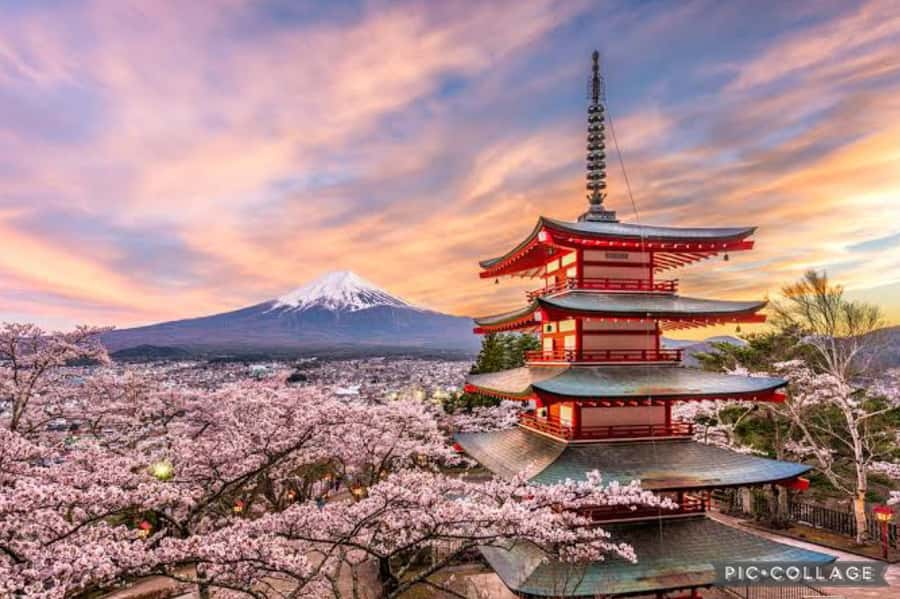
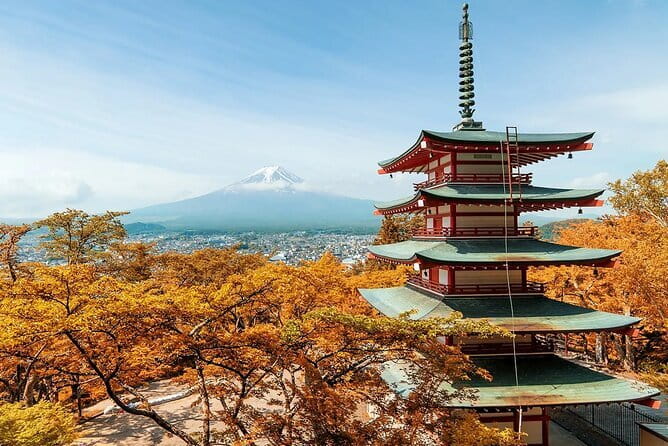
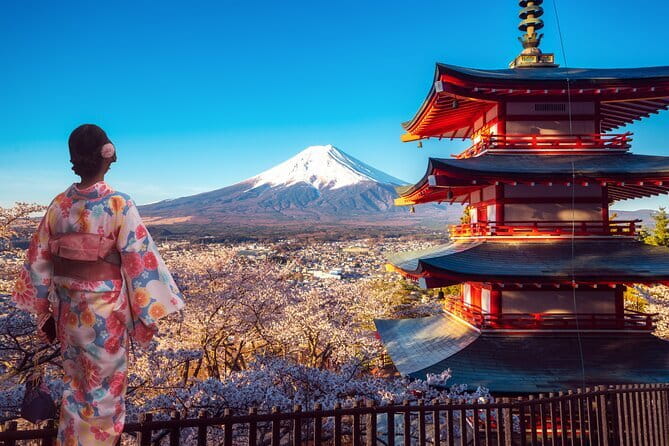
Arakurayama Sengen Park is the visual high point of the day. You walk uphill to reach the well-known observation area, where a five-story pagoda and Mount Fuji can appear together in one frame. It is one of the most recognizable views in Japan, which also means it is the place where many people want to spend their photo time.
The scheduled visit lasts about 1 hour and 20 minutes. That gives you time to make the climb, take photographs, and pause at the lookout, but it is not an open-ended visit. Wear shoes that are comfortable for an uphill walk and keep your pace sensible, especially if you want time at the top.
This stop is most rewarding on a clear day. If clouds cover Mount Fuji, the pagoda and surrounding scenery are still attractive, but the signature composition may not come together. Your guide can help you find the best viewing point, one of the stated benefits of joining rather than arriving without local direction.
I would treat Arakurayama as the reason to keep your camera ready from the start. The view is more than a mountain portrait. It brings together a pagoda, wooded slopes, and the broad form of Fuji in a single Japanese scene.
Oshino Hakkai and water from Mount Fuji
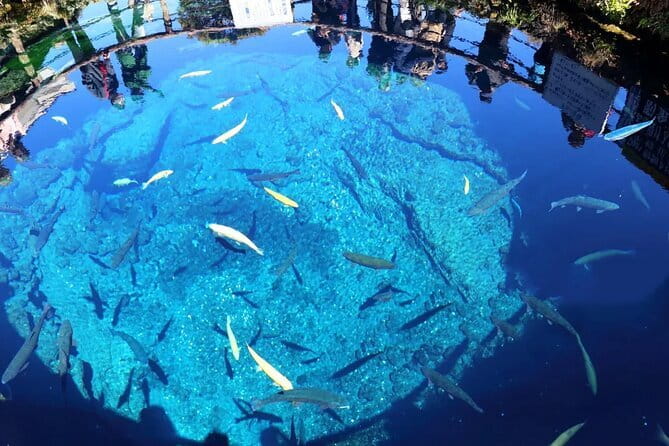
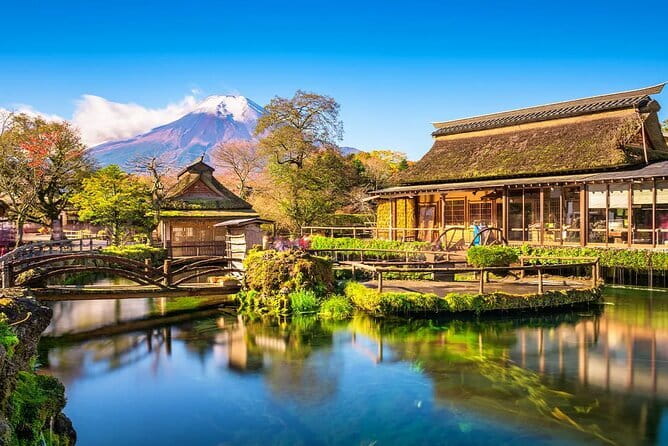
Oshino Hakkai changes the pace. Instead of looking up at Mount Fuji from a high viewpoint, you spend time near eight clear spring pools formed by snowmelt from the mountain. The water, reflections, and underwater life give you plenty to photograph even when the summit is partly hidden.
You have about 1 hour and 20 minutes here. That is enough for a steady walk along the paths and time to inspect the pools, but you should not expect to linger at every corner. The area has a rural feel, with traditional-style surroundings and a quieter rhythm than a city attraction.
The value of Oshino Hakkai is its connection to the mountain. You are not only seeing Mount Fuji as a distant peak. You are seeing one result of its snow and water. That small piece of natural context makes the stop more meaningful than another roadside viewpoint.
The pools are also useful for photographers who want variety. Clear water, reflections, wooden buildings, and mountain views give you different subjects without requiring a long walk. Keep your expectations realistic, though. The tour covers several stops, so this is a guided visit with a fixed time rather than a full afternoon in the village.
Oishi Park beside Lake Kawaguchi
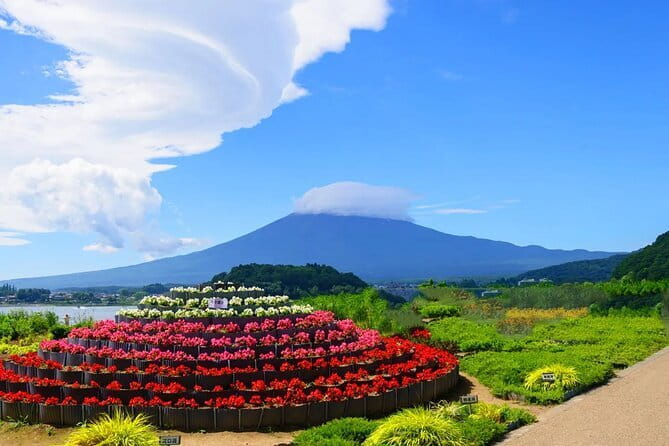
Oishi Park offers a broad view across Lake Kawaguchi toward Mount Fuji. The visit lasts about 40 minutes, making it the shortest main stop, but it can be one of the most peaceful if the weather is good and the area is quiet.
The timing changes by season. During the off-season, the tour visits Oishi Park. From October 20 through November 23, the schedule includes the Kawaguchiko Maple Corridor instead. From April 5 through April 14, it includes the Kawaguchiko Cherry Blossom Festival.
That seasonal planning is useful because the same area looks and feels different throughout the year. Autumn brings a dedicated maple viewing period, while the spring dates focus on cherry blossoms. Outside those windows, the park provides the lake and Fuji view without promising a particular display of seasonal color.
Forty minutes goes quickly. You will have time for photos and a short look around, but this is not the place to settle in for a long lakeside walk. I would have your camera or phone ready before you leave the vehicle, and I would not count on browsing every part of the park.
Saiko Iyashi-no-Sato Nenba’s thatched-roof village
Saiko Iyashi-no-Sato Nenba gives the day a cultural turn. The village has thatched-roof houses and rural views beside Lake Saiko, creating a different setting from the spring pools and lakefront park.
You spend about one hour here. The listed inclusion specifically covers admission to the West Lake Healing Reagan Field, which refers to this traditional village area. The included entry matters because you can explore the site without treating admission as a separate cost during the day.
This stop helps prevent the experience from becoming a sequence of mountain photographs. The houses and village setting show an older side of rural Japan, while the surrounding area keeps Mount Fuji country in view. You can expect time to walk through the village and take photographs, though the exact amount of free exploration depends on the day’s traffic and timing.
If your main goal is only the most famous Fuji image, this may feel less essential than Arakurayama. If you want a fuller picture of the region, it earns its place. The combination of architecture, countryside, and local setting gives the day more substance.



The ride, group size, and guide service
The total duration includes transportation. The long ride from Tokyo is the tradeoff for reaching four places that are not close together. One detailed account described the excursion as worth the roughly two-hour bus ride, but also suggested that more spoken explanation during the journey would have improved it.
That is useful advice. You should expect the guide’s strongest commentary at the stops, while the amount of narration on the road may vary. Sia received especially warm praise for being kind and explaining each location, so guide quality can make a real difference to how the day feels.
The vehicle may carry as many as 48 people. A group this size can keep the price down, but it also means slower boarding, less flexibility, and a greater need to return on time. Late arrivals and no-shows cannot be refunded, so you should arrive early and treat the meeting time as firm.
Japanese law limits vehicle use to 10 hours. If traffic, weather, or delays threaten that limit, the guide may cut part of the schedule. This is not a minor technical note. Mount Fuji roads can make a packed day even tighter, and one stop may receive less time than planned.
What is included, and what is not
The price includes a Chinese, English, or Japanese-speaking guide. Admission to the West Lake Healing Reagan Field is included, along with the Japanese Kusa mochi gift.
Kusa mochi is a Japanese confection made with mugwort-flavored mochi. The gift is not a meal, but it is a pleasant local detail and an easy way to try a traditional sweet without adding another purchase to the day.
Personal expenses are not included. The stated inclusions do not promise meals, drinks, shopping, or extra admissions beyond the specified entry. A lunch buffet was described as good but not exceptional on one outing, so do not book this experience on the assumption that a memorable meal is part of the package. Confirm the food arrangement for your date if lunch matters to you.
The tour is near public transportation, and most people can participate. The supplied information does not give a detailed accessibility description, so anyone needing specific mobility support should ask the provider before booking.
The best seasons for this Fuji outing
Clear weather is the biggest factor, not simply the month on the calendar. A sunny winter day can produce a sharp Fuji view, while a summer or autumn day can be cloudy. Since the tour may be canceled for poor weather, flexibility is useful.
The seasonal schedule gives you a few special targets:
- October 20 to November 23: Kawaguchiko Maple Corridor
- April 5 to April 14: Kawaguchiko Cherry Blossom Festival
- Off-season: Oishi Park
These dates are narrow. If you book outside them, do not expect the maple corridor or cherry blossom festival to be included. You will visit Oishi Park during the off-season period instead.
For photographers, seasonal timing can shape the whole experience. Arakurayama is strongest for the classic Fuji and pagoda image. Oshino Hakkai offers water and reflections. Oishi Park gives you the lake. Saiko Iyashi-no-Sato Nenba supplies traditional buildings. Together, they provide more variety than a single observation deck.
Who should book this tour
I would recommend it to you if you have limited time in Japan and want one organized day devoted to Mount Fuji. It suits first-time visitors who would rather leave the transport to someone else, as well as photographers who want several established viewpoints in one outing.
It also works well for people who want more than a single mountain photo. Oshino Hakkai and Saiko Iyashi-no-Sato Nenba add nature and culture, while the seasonal stops can bring autumn leaves or spring blossoms into the plan.
I would hesitate if you dislike long coach rides, fixed schedules, or large groups. The 48-person maximum is significant, and the legal vehicle limit means the guide may trim a stop if the day runs late. You should also avoid booking it as your only chance to see Fuji if your schedule has no room for a weather-related change.
The tour has an average rating of 4.7 from three ratings, with praise focused on the scenery, the convenient Tokyo departure, the guide’s kindness, and strong photographs. Those strengths match the design of the day: easy transport, famous views, and several stops that keep the scenery from becoming repetitive.
Should you book the Mount Fuji Exploration Tour?
Book it if you want good-value transport from Tokyo, several well-known Fuji-area sights, and a guide who can explain the places in Chinese, English, or Japanese. At $82, it is a practical choice for a full day outside the city, especially if you are not comfortable arranging regional buses yourself.
Skip it if you want a private outing, a leisurely pace, or guaranteed clear views. The group can be large, the bus ride is long, and weather or traffic can shorten the schedule. Leave at least 24 hours before the start time if you need to cancel for a full refund. For a first Fuji visit with limited time, though, this tour gives you a sensible spread of viewpoints, spring water, lake scenery, and traditional village architecture in one day.
FAQ
How long does the Mount Fuji Exploration Tour last?
The experience lasts approximately 8 to 9 hours, including transportation time.
What places are visited during the tour?
The scheduled stops are Arakurayama Sengen Park, Oshino Hakkai, Oishi Park, and Saiko Iyashi-no-Sato Nenba.
How long is the visit at Arakurayama Sengen Park?
The scheduled visit lasts about 1 hour and 20 minutes. It includes a scenic walk to the park’s famous observation area.
What is special about Oshino Hakkai?
Oshino Hakkai has eight clear spring pools formed from Mount Fuji’s melted snow. The pools provide views of reflections and underwater life.
Does the tour visit Oishi Park all year?
The seasonal schedule changes. Oishi Park is visited during the off-season, while the Kawaguchiko Maple Corridor is included from October 20 to November 23, and the Kawaguchiko Cherry Blossom Festival is included from April 5 to April 14.
Is a guide included?
Yes. A Chinese, English, or Japanese-speaking guide is included. Guide Sia has been specifically praised for kindness and explanations at each location.
Is food included in the price?
Personal expenses are not included, and the stated inclusions do not list a meal. The experience does include a special gift of Japanese Kusa mochi.
How many people can join the tour?
The maximum group size is 48 people.
What happens if bad weather cancels the experience?
Because the experience requires good weather, a cancellation caused by poor weather offers you a different date or a full refund. You can also cancel at least 24 hours before the start time for a full refund.
More Mt Fuji Day Trips in Tokyo
More tours in Tokyo we've reviewed

Mt Fuji Day Trips, compared.
 ★ 5.0Mt Fuji and Hakone 1-Day Bus Tour Return by Bullet TrainFrom $163
 ★ 4.0Mt Fuji & Hakone Cruise, Drum Show Bullet Train 1 Day from TokyoFrom $149
 ★ 4.4Tokyo Mt Fuji 5th St & Hakone Cruise Bus Tour w/Bullet TrainFrom $15410 hours
 ★ 4.5From Tokyo: Mount Fuji Full-Day Sightseeing TripFrom $6810 hours
 ★ 4.7Tokyo: Mt. Fuji Tour, Hakone Ropeway, Owakudani, Lake AshiFrom $5410 hours
 ★ 4.4Tokyo:Mt.Fuji,Kawaguchiko Oishi Park,Arakurayama Sengen ParkFrom $5410 hours