Reviewed · GINZA TOURS
Small-Group Architecture Tour in Ginza, Tokyo
Tokyo’s Ginza is more than polished department stores and luxury brands. On this three-and-a-half-hour architecture walk, you’ll study facades, enter selected buildings, and learn how Japan’s Shogun-era planning and repeated natural disasters shaped the city you see today. The small group, capped at six, gives you room to stop, ask questions, and take photos without being hurried along.
In This Article
- Key points at a glance
- Why Ginza rewards an architecture walk
- Starting at Tsukiji and walking toward Ginza
- Tsukiji Hongwanji Temple brings an older note
- Kabukiza Theater mixes performance and design
- Nicolas G. Hayek Center shows Ginza’s commercial side
- Toyoiwa Inari Shrine offers a small-scale contrast
- Maison Hermès is a highlight for glass and light
- Mikimoto and Uniqlo show two faces of Ginza retail
- Wako Ginza anchors the district’s famous crossroads
- Okuno Building closes the route with older character
- The guides are a major part of the value
- Is $84.70 a fair price?
- Who should book this Ginza tour?
- Should you book it?
- FAQ
- How long is the Ginza architecture tour?
- What time does the tour begin?
- Where does the tour meet?
- Where does the tour finish?
- How large is the group?
- Is hotel pickup included?
- Does the tour include drinks?
- What is the cancellation policy?
I like the access to building interiors, including Kabukiza Theater, Nicolas G. Hayek Center, Maison Hermès, and Okuno Building. I also like the range of places covered: a Buddhist temple, a tiny Inari shrine, major retail buildings, and famous Ginza landmarks all fit into one walk. Guides Hal and Taka bring useful professional experience, with Taka described as a former urban planner and architect.
The main consideration is pace. You’ll be on foot for much of the morning, with about 40 minutes of walking between sites and several short stops. The tour requires moderate fitness, and some visits, such as Mikimoto Boutique Ginza 2chome, depend on having enough time.
Key points at a glance
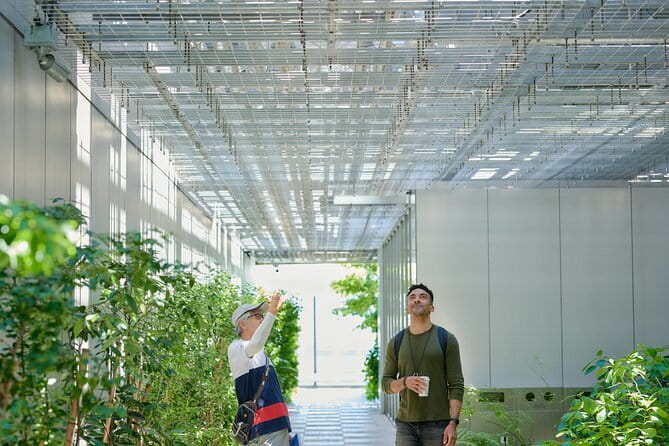
- Six-person maximum: You get a more personal guide-to-visitor ratio than on a large city tour.
- Professional architectural insight: Taka brings experience as a former urban planner and architect, while Hal is noted for strong technical explanations and lively energy.
- A useful mix of old and new: Tsukiji Hongwanji Temple and Toyoiwa Inari Shrine sit alongside Ginza’s glass, steel, stone, and illuminated retail buildings.
- Several interior visits: Kabukiza Theater, Nicolas G. Hayek Center, Maison Hermès, and Okuno Building are included as interior stops.
- A walking rather than driving tour: You can pause for photographs and inspect small design details at street level.
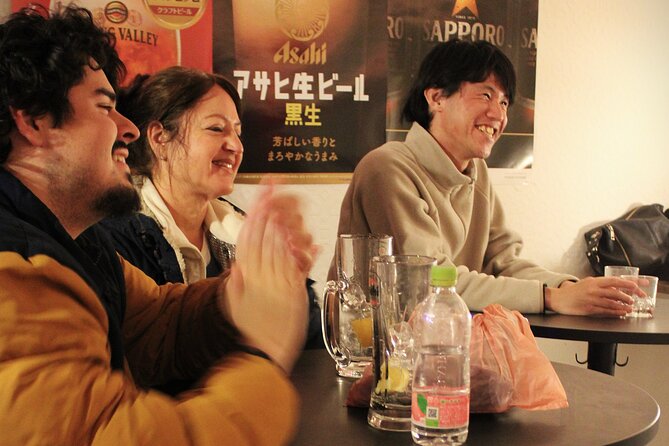
- A built-in drink break: A cozy pause with drinks is included, giving your feet and your attention a short rest.
Why Ginza rewards an architecture walk
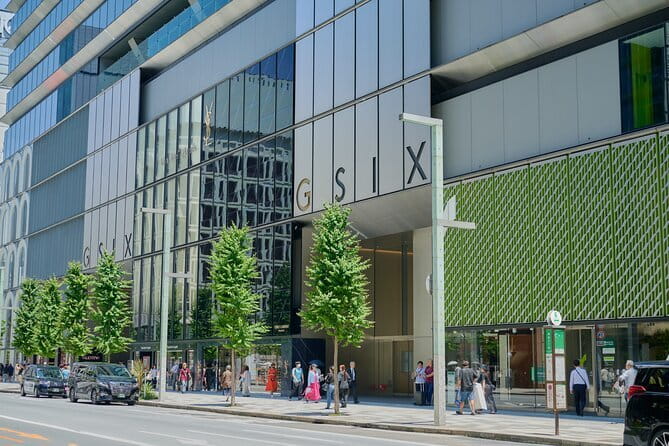
Ginza can look simple at first glance: broad streets, expensive shops, bright signs, and neatly finished buildings. The interesting part is found in the details. A building may use glass to make a luxury store appear weightless, while another uses a rigid grid or heavy stone to suggest permanence.
That is where a guide helps. Instead of simply pointing out famous storefronts, you can ask why a project looks the way it does and how its setting affected the design. The tour also connects Ginza’s current architecture with older forces, including the Shogun era and the natural disasters that repeatedly changed Tokyo.
I appreciate that this is not only a parade of commercial buildings. The route includes places of worship and smaller structures that are easy to miss when you are focused on Ginza’s major crossroads. You get a better sense of the district as a working part of Tokyo, not just a luxury shopping zone.
The group limit matters here. Architecture tours work best when you can stop in front of a facade, point to a detail, and ask a question without interrupting a crowd. With no more than six people, the guide can adjust the explanation to the group’s interests.
A few more Tokyo tours and experiences worth a look


Starting at Tsukiji and walking toward Ginza
The meeting point is near Tsukiji Station Exit 1, at 3-chome 15-1 Tsukiji in Chuo City. The start time is 10:00 in the morning. Since the tour does not include hotel pickup, you’ll need to reach the meeting point on your own, but the location is near public transportation.
The opening Ginza segment involves about 40 minutes of walking between sites in total. That figure is spread across the route rather than being one long march, but comfortable shoes still matter. You will be moving through city streets, stopping for explanations and photographs, then continuing to the next building.
This format suits you if you like to look up, slow down, and compare structures side by side. It suits you less if you prefer to cover Tokyo by vehicle or spend most of your time inside one major attraction. The point is not speed. It is learning to notice what you might otherwise walk past.
Tsukiji Hongwanji Temple brings an older note
The first listed stop is Tsukiji Hongwanji Temple, where you go inside for about 10 minutes. Its inclusion gives the morning a needed change of tone before the modern Ginza buildings take over.
The temple stop also helps frame the rest of the tour. You are not looking at contemporary architecture in isolation. The route asks you to consider how Japanese architectural ideas, religious buildings, urban planning, and modern commercial design sit beside one another.
Ten minutes is brief, so expect an introduction rather than a long temple visit. If you want extended time for prayer, quiet observation, or detailed photography, you may need to return later on your own. As part of a compact architecture route, though, it is a useful opening stop.
Kabukiza Theater mixes performance and design
At Kabukiza Theater, the group goes inside for about 20 minutes to enjoy its features. The building is one of the tour’s more appealing stops because it connects architecture with a distinct Japanese performance tradition.
Your guide can help you read the building as more than a theater facade. Look for the way cultural identity is presented through form and decoration, then compare it with the polished international style of Ginza’s luxury retailers later in the morning.
Twenty minutes allows enough time for a focused visit, though it is not a full theater tour. The value comes from seeing the building in context and comparing it with the very different structures around it.
Nicolas G. Hayek Center shows Ginza’s commercial side
The Nicolas G. Hayek Center is another interior stop, scheduled for about 15 minutes. It is especially useful for readers who want to understand how a high-end commercial building uses architecture to create a brand identity.
The stop is not just about shopping. You can study how the building presents watches and luxury goods through its interior and exterior design. One strong reason to book this tour is that your guide can explain the architectural choices rather than leaving you to guess at them.
The visit is short, so pay attention as soon as you enter. This is a place where small details may matter more than a long walk through the building.



Toyoiwa Inari Shrine offers a small-scale contrast
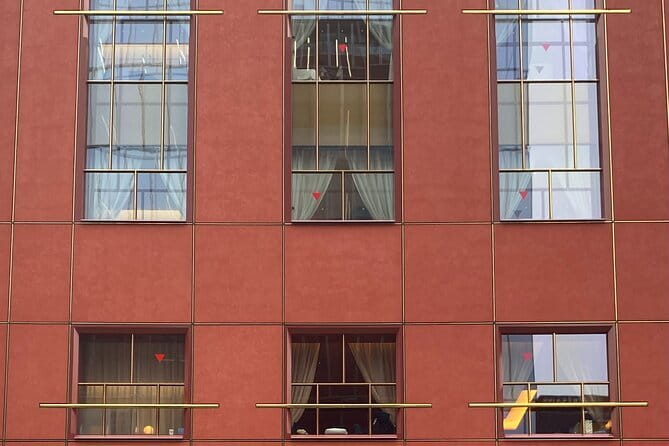
Toyoiwa Inari Shrine receives only about five minutes, but its size is part of its appeal. After the larger temple and commercial structures, this brief stop reminds you that Ginza contains compact sacred spaces tucked into a dense urban setting.
Do not expect a long shrine visit. Instead, treat it as a quick look at how a small religious site fits into a district known for large stores and major architectural projects. The contrast is one of the route’s strengths.
Maison Hermès is a highlight for glass and light
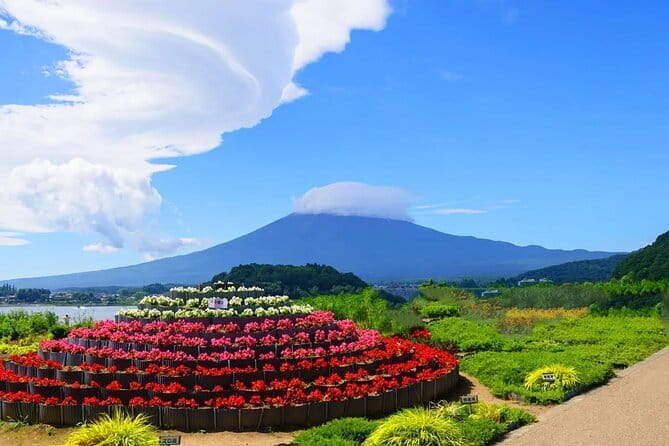
At Ginza Maison Hermès Le Forum, you go inside for around 15 minutes. This is one of the tour’s most recognizable architectural stops, and it gives you a chance to examine a luxury retail building from within rather than merely photographing it from the pavement.
The building is useful for understanding how materials, light, and brand presentation work together. You may find that the guide’s explanation changes the way you look at what first appears to be a simple store frontage.
Because the stop is short, this is another place where you should stay close to the group and use the time well. If you are mainly interested in shopping, the tour’s architectural focus may feel more important than the retail experience itself.
Mikimoto and Uniqlo show two faces of Ginza retail
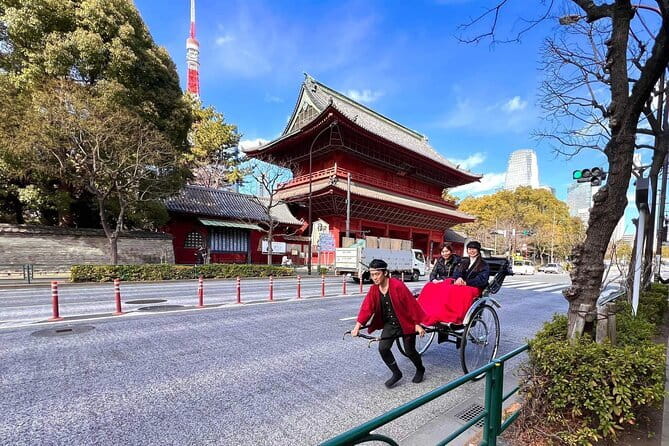
Mikimoto Boutique Ginza 2chome is planned as a five-minute interior visit if time allows. That wording matters. It is not guaranteed, so you should see it as a bonus rather than a reason to book the tour by itself.
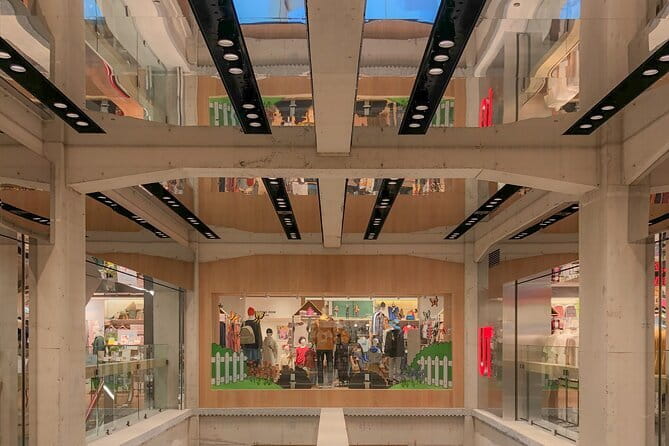
The group then views UNIQLO Tokyo from outside for about 10 minutes. This gives you a chance to compare a widely known modern retail brand with the more specialized luxury buildings on the route. The guide can direct your attention to the exterior details, proportions, and relationship to the street.
Mikimoto Ginza 4chome Honten is also viewed from outside for about five minutes. You will not get an interior visit there, but the exterior stop helps build a visual comparison across Ginza’s major commercial buildings.
Wako Ginza anchors the district’s famous crossroads
Wako Ginza is another exterior stop, with about 10 minutes set aside. This is a familiar Ginza landmark, so it may be the point where the district’s image matches what you expected before arriving.
The benefit of seeing it with an architecture guide is the chance to place the building within the wider route. You can compare its character with UNIQLO, Mikimoto, Maison Hermès, and the other projects you have already examined. The tour encourages you to see Ginza as a collection of different design statements rather than one uniform shopping street.
Since the stop is outside, weather affects your comfort here. The tour requires good weather, and poor conditions may lead to a different date or a full refund.
Okuno Building closes the route with older character
The final listed stop is Okuno Building, where you go inside for about 10 minutes. This gives the route a useful closing note, since the building offers a contrast to newer, highly polished commercial projects.
By this stage, you will have looked at temples, shrines, theaters, watch retail, fashion stores, department-store architecture, and compact urban structures. Okuno Building helps complete that comparison. Its inclusion keeps the tour from becoming a simple list of famous luxury facades.
The tour finishes at the Ginza 4-chome intersection, in front of Mitsukoshi department store. That is a practical end point. You are already in central Ginza, so you can continue shopping, eat lunch, explore nearby streets, or use public transportation for your next stop.
The guides are a major part of the value
The strongest praise for this tour centers on the guides’ architectural ability and energy. Hal has been noted for technical knowledge about how projects become distinctive and memorable. Taka brings a background as a former urban planner and architect, giving him a useful professional base for explaining modern buildings.
That does not mean every tour will have the same guide, so you should treat Hal and Taka as examples of the provider’s guiding style rather than a guaranteed assignment. Still, the guide is the reason to choose this experience over a self-guided walk.
I would ask questions. Which design choices respond to the street? How did disaster concerns influence the building? What makes one commercial project feel open while another feels enclosed? The small group makes those questions easier to ask.
Is $84.70 a fair price?
At $84.70 per person, this is not a cheap orientation walk. It lasts about three and a half hours, includes a local licensed guide, offers a small group of no more than six, and includes drinks during a short pause.
The value depends on your interest. If you only want photographs of Ginza’s best-known buildings, you can see many exteriors without paying for a tour. If you want access to selected interiors, professional architectural context, and a route that connects old and new Tokyo, the fee is easier to justify.
No separate admission charges are listed for the stops, which keeps the cost straightforward. The tour also saves you the work of researching which buildings to visit and how to connect them on foot. I would book it early if the date matters, since it is often reserved about 31 days ahead.
Who should book this Ginza tour?
You should consider this walk if you enjoy modern architecture, urban planning, photography, design, or the way cities change over time. It also suits repeat visitors to Tokyo who have already seen the major temples and want a more focused look at Ginza.
It may appeal to architecture students and professionals, but you do not need technical training. A curious eye is enough. The guide’s role is to point out patterns and explain why they matter.
You should think twice if you dislike walking, prefer a relaxed café-based morning, or want long visits at each attraction. The route includes many stops, but some last only five or 10 minutes. This is a broad survey with professional commentary, not an in-depth visit to one building.
Booking is flexible with free cancellation up to 24 hours before the start time. Changes made less than 24 hours ahead are not accepted, and late cancellations are not refunded. Since the tour depends on good weather, a cancellation for poor conditions brings the choice of another date or a full refund.
Should you book it?
I would book this tour if Ginza’s buildings interest you beyond their brand names. The combination of a six-person maximum, interior access, a temple and shrine, and guides with architectural backgrounds gives you a sharper view of central Tokyo than a standard shopping walk.
The best reason to go is the chance to learn how to read Ginza. The main drawback is the quick pace and the need to stay on foot for most of the morning. Wear comfortable shoes, arrive near Tsukiji Station Exit 1 before 10:00, and choose this experience when you want ideas and context, not just a checklist of sights.
FAQ
How long is the Ginza architecture tour?
The tour lasts approximately three hours and 30 minutes.
What time does the tour begin?
The start time is 10:00 in the morning.
Where does the tour meet?
The meeting point is near Tsukiji Station Exit 1, at 3-chome 15-1 Tsukiji, Chuo City, Tokyo.
Where does the tour finish?
The tour ends at the Ginza 4-chome intersection, in front of Mitsukoshi department store.
How large is the group?
The maximum group size is six travelers.
Is hotel pickup included?
No. Hotel pickup and drop-off are not included.
Does the tour include drinks?
Yes. A cozy pause with drinks along the way is included.
What is the cancellation policy?
You can cancel up to 24 hours before the experience for a full refund. Cancellations or changes made less than 24 hours before the start time are not accepted for a refund. If poor weather causes the tour to be canceled, you can choose another date or receive a full refund.
More Ginza Tours in Tokyo


More tours in Tokyo we've reviewed







Ginza Tours, compared.
 ★ 4.8Chopstick Making Workshop in GinzaFrom $251 hour
 ★ 4.5Tokyo: Art Aquarium Museum GINZA Entry TicketFrom $171 day
 ★ 5.0Tokyo: Best Ginza Food Tour at 3 Local EateriesFrom $150
 ★ 4.5Official Japan Go-Kart Through Tokyo Bay / Ginza (IDP Required)From $85
 ★ 5.0Private Ginza Architecture Walking TourFrom $132
 ★ 4.8Tokyo GINZA: KONPARU Japanese Cabaret Show with DrinkFrom $502 hours