Reviewed · TEMPLES & MEDITATION
Tokyo: Meiji Jingu Shrine & Inner Garden Guided Tour (2h)
Meiji Jingu feels remarkably quiet for a shrine in central Tokyo. This two-hour walk takes you beneath the Eternal Forest, past sake barrels and the grand torii, then into Shinen Garden for its South Pond and Kiyomasa’s Well. I like the handwashing and prayer lesson, and I like that the garden entrance, omikuji, and other activity fees are covered. The main catch is time: two hours can feel short if you want a slow garden stroll.
In This Article
- Why Meiji Jingu Works Best With a Guide
- Starting at the First Torii
- The Sake Barrels and the Eternal Forest
- Washing Your Hands at the Grand Torii
- Learning How to Pray at Meiji Jingu
- Omikuji, Fortune-Telling, and Protective Charms
- A Quieter Hour in Shinen Garden
- What the Guides Add
- Is $48 a Fair Price?
- Timing, Flexibility, and Practical Details
- Who Should Book This Meiji Jingu Walk?
- Should You Book It?
- FAQ
- How long does the Meiji Jingu guided tour last?
- Where does the tour meet?
- Where does the tour finish?
- Is an English-speaking guide available?
- Is the Meiji Jingu Garden entrance fee included?
- Is the omikuji included?
- Is transportation included?
- Can I cancel the tour for a refund?
The guides are the heart of this experience. Minoru, Kai, Kyo, and Takashi are specifically praised for clear explanations, warmth, humor, cultural context, and useful anecdotes. I would choose this tour if you want more than a photo stop, but remember that the route is shared or small-group unless you book a private option.
- Walk through the Eternal Forest: Learn why the wooded approach matters before reaching the shrine buildings.
- Practice shrine etiquette: Wash your hands at the purification fountain and learn the proper way to pray.
- See the sake barrel offering: Stop for photos while your guide explains this distinctive part of Meiji Jingu.
- Try an omikuji: The fortune-telling experience is included, with a protective charm available if you want one.
- Visit Shinen Garden: Walk around the South Pond and possibly see Kiyomasa’s Well.
- Meet at the first torii: Look for the guide holding a yellow DeepExperience sign.
Why Meiji Jingu Works Best With a Guide
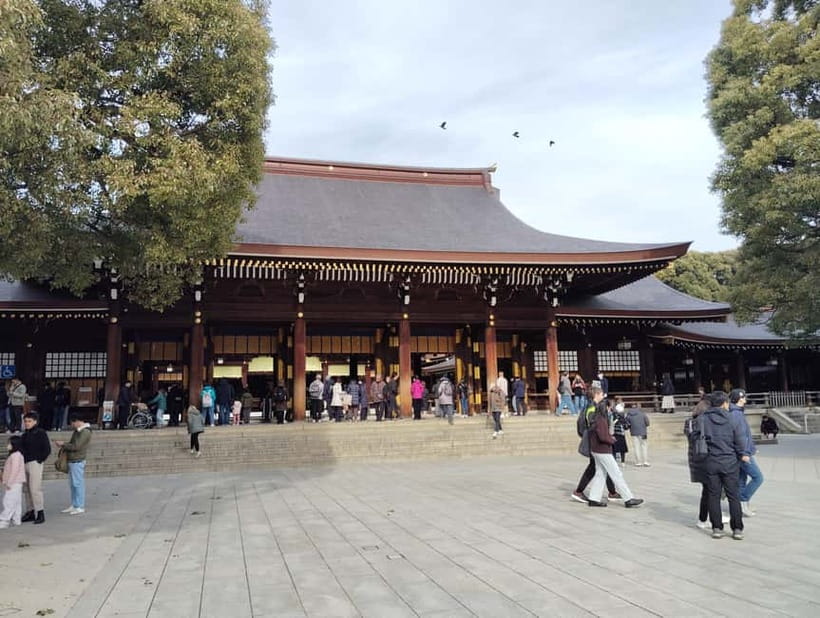
Meiji Jingu is easy to reach, but the meaning of its rituals is less obvious. A casual visit can become a quick walk under tall trees, a few photographs, and a glance at the shrine buildings. A guide gives you the small instructions that turn the visit into a cultural experience.
You learn when to bow, how to use the water at the purification fountain, and how to approach prayer. These are simple actions, but learning them beforehand helps you take part with respect instead of copying the nearest person and hoping for the best.
The guides also add a human touch. Minoru is praised for detailed explanations and personal anecdotes. Kai brings in wider Japanese cultural ideas, while Kyo is described as easygoing, funny, and willing to explain modern life as well as religious practice. Takashi focuses on historical background and brings clear enthusiasm to the shrine.
That variety matters because Meiji Jingu is not just a sequence of monuments. Your guide can connect the forest, the sake barrels, the rituals, and the garden into one two-hour story.
Starting at the First Torii
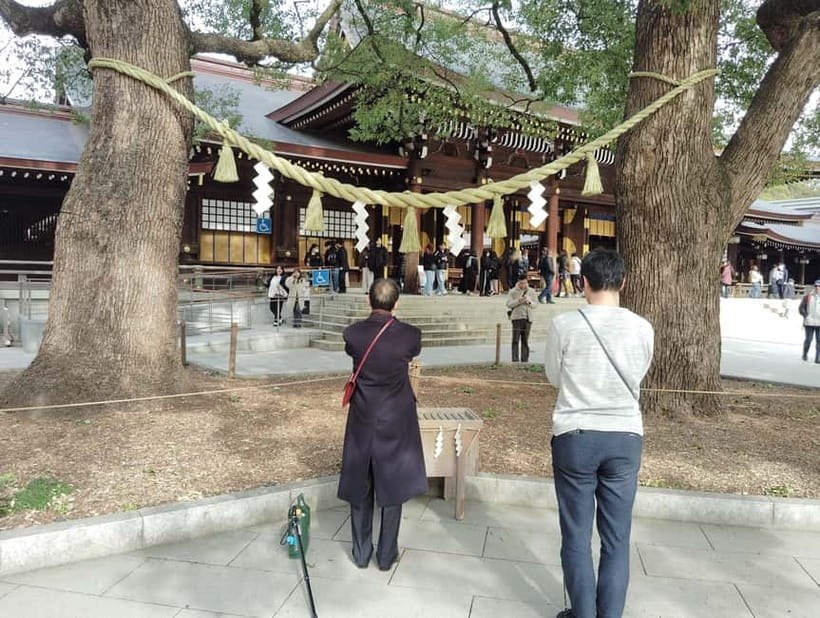
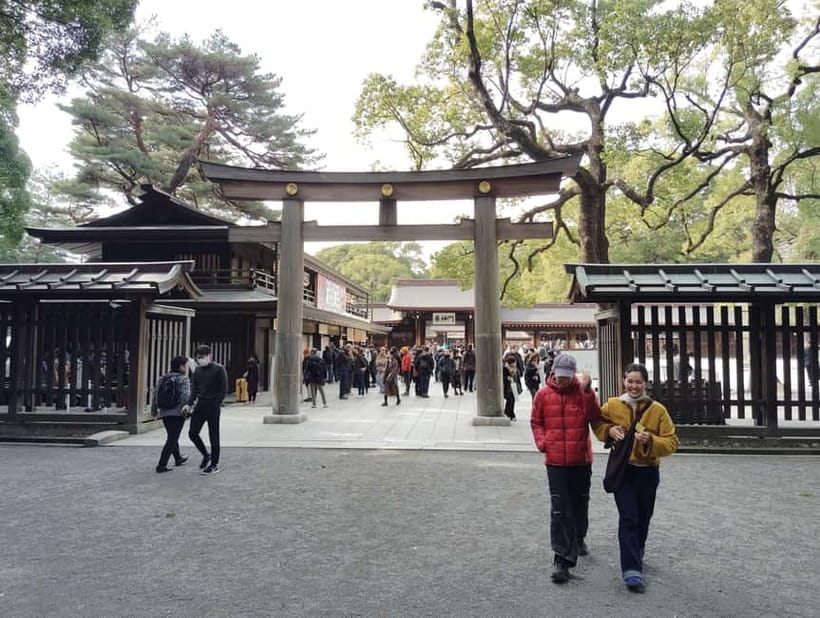
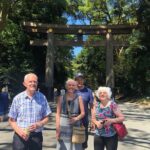
The meeting point is in front of Meiji Jingu’s first torii, written as 明治神宮 一の鳥居. Look for the guide holding a yellow sign with the DeepExperience logo.
This is a useful place to begin. You start outside the main shrine area, so the guide can explain the shape of the visit before the walk gets underway. The opening introduction also gives you a chance to understand the order of the stops: first the forest approach and sake barrels, then the grand torii and shrine, followed by the garden.
The first torii marks a change in mood. Tokyo can feel fast and crowded, but the walk toward the shrine brings a calmer rhythm. Sunlight filters through the trees, and the forest gives the route a sense of distance even though the city is nearby.
You should wear comfortable shoes. The tour lasts two hours and includes walking through the shrine grounds and garden. The description does not give a full accessibility breakdown, so anyone needing specific support should confirm the route before booking.
A few more Tokyo tours and experiences worth a look


The Sake Barrels and the Eternal Forest
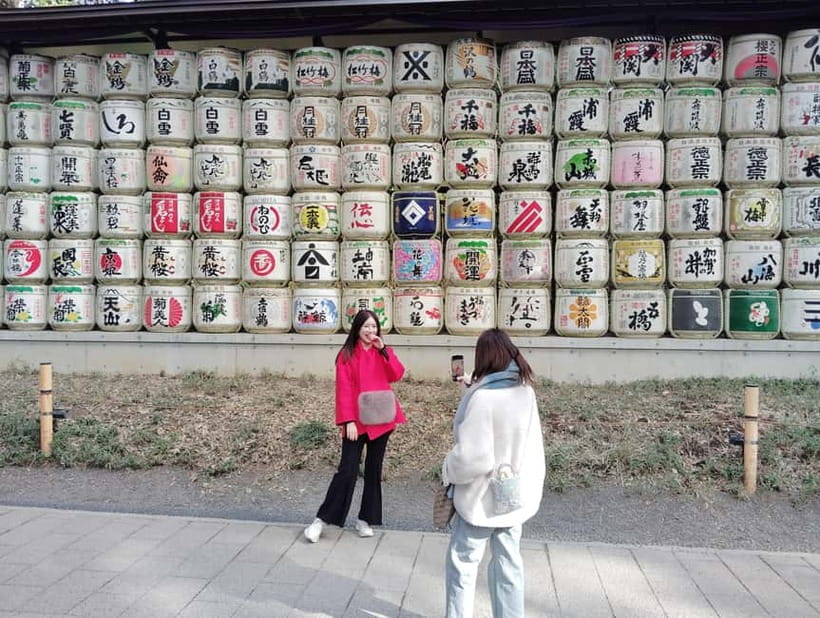
One of the first notable stops is the sake barrel offering area. Rows of barrels make a strong photograph, but the guide’s explanation is more useful than the picture alone.
You learn about the relationship between sake offerings and shrine customs, as well as the idea of Meiji Jingu’s Eternal Forest. The forest is not treated as mere decoration. It forms the setting for the whole visit, softening the city and giving the approach a calm, enclosed feeling.
This stop also helps you read the site before arriving at the main buildings. Instead of rushing straight to the shrine, you pause to understand how offerings and the surrounding woods fit into the visit.
There is time for photographs here. Still, I would keep your camera ready without letting it take over. The point of the stop is not only to collect an image of the barrels, but to understand why they are part of the shrine setting.
Washing Your Hands at the Grand Torii
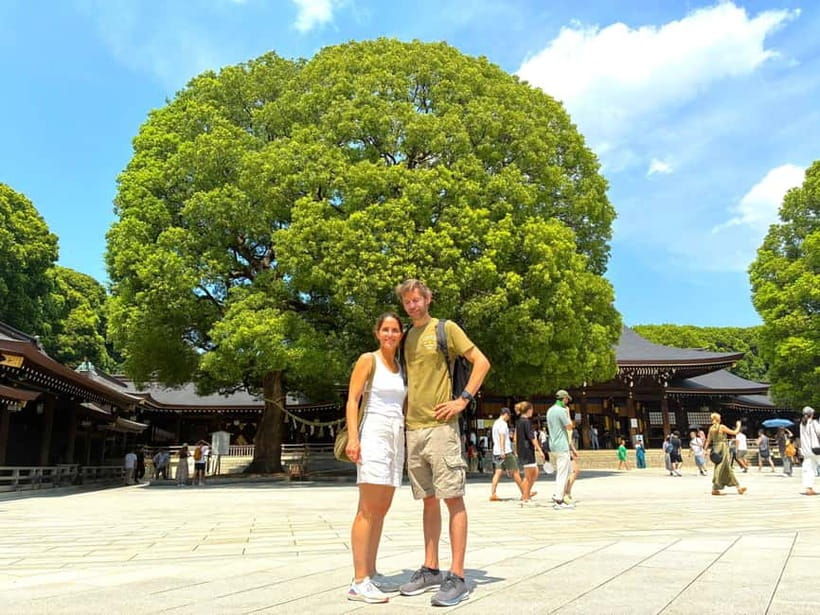
The walk continues to the grand torii. Here, your guide introduces the handwashing ritual used before approaching the shrine.
You are shown how to use the water properly. This is one of the best reasons to take the guided option. The ritual is easy to follow once explained, yet unfamiliar visitors may otherwise treat the fountain as a decorative feature or miss the correct sequence.
The lesson is short and practical. You do not need prior knowledge of Japanese customs, and you are not expected to perform anything elaborate. You simply learn the purpose of purification and take part in a respectful way.
The grand torii also creates a natural transition. The walk shifts from sightseeing to participation. I like that the tour does not leave cultural etiquette as an afterthought. It places the lesson before the prayer, where it belongs.
Learning How to Pray at Meiji Jingu
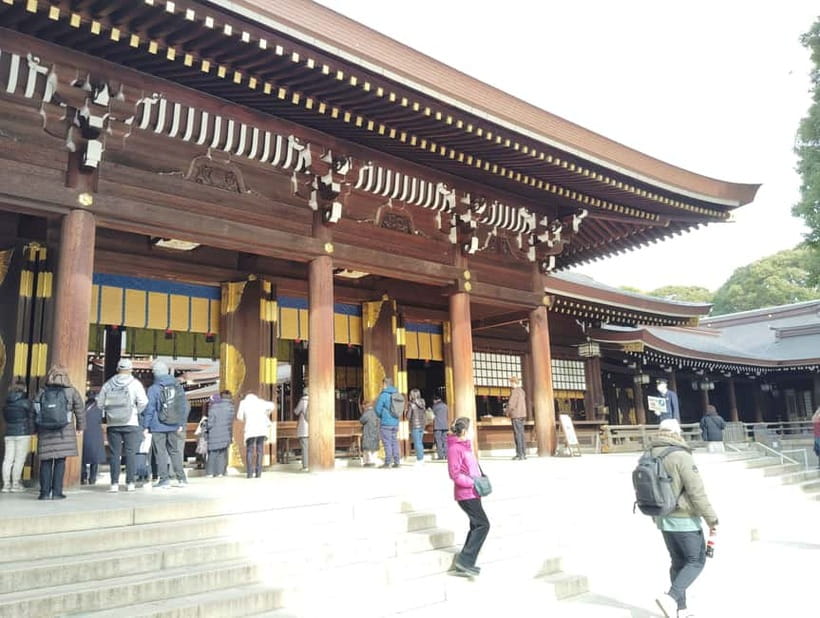
At Meiji Jingu, the guide explains how to pray. You have time to follow the steps and then pause for personal reflection.
That combination is important. A guide can explain the outward form, but the moment itself remains your own. You can pray, reflect, or simply observe the atmosphere without feeling pushed into a performance.
The shrine visit lasts about one hour within the stated itinerary. That gives the guide room to explain the setting, answer questions, and point out details. The exact balance depends on the group and the pace of the day.
The strongest part of the experience is the context. The guides are praised for explaining not only the shrine but also Japanese culture and religious practice. Kyo, in particular, is described as helping connect traditional customs with contemporary Japan. That kind of explanation can make the visit easier to understand for a first-time visitor.
You should expect a respectful visit rather than a theatrical demonstration. The atmosphere is calm, and the tour asks you to slow down.
Omikuji, Fortune-Telling, and Protective Charms
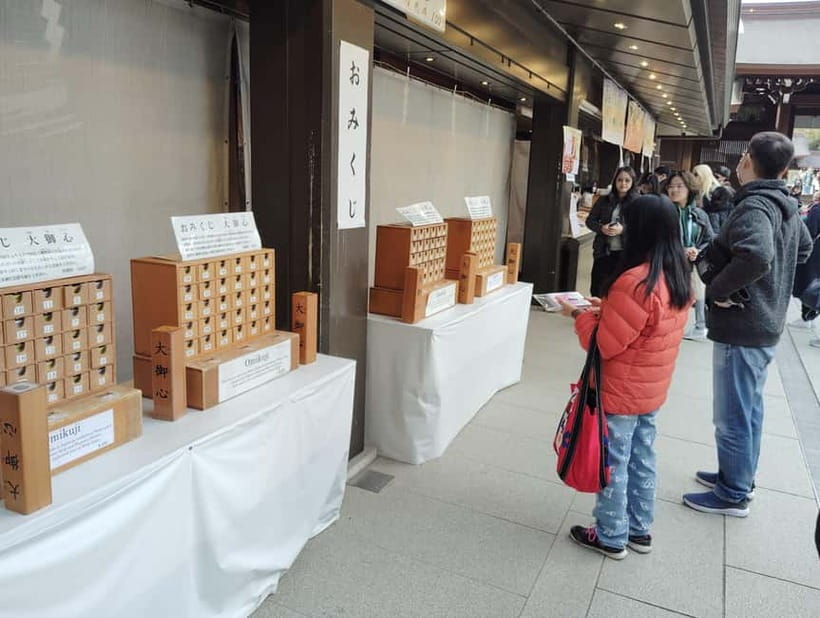
After the prayer lesson, you can try an omikuji, a Japanese fortune-telling experience. The omikuji fee is included, so you do not need to budget an additional charge for this part.
This adds a lighter note after the more formal shrine visit. You receive a fortune and can consider what it says as part of the cultural experience. If you would like, you can also receive a protective charm.
The charm is optional. You can enjoy the explanation and fortune without buying or taking anything extra, which keeps the choice simple.
I like this stop because it gives you a small, personal souvenir of the visit without turning the tour into a shopping trip. It also offers a chance to ask questions about how these items are used and understood.
Other guided tours in Tokyo




A Quieter Hour in Shinen Garden
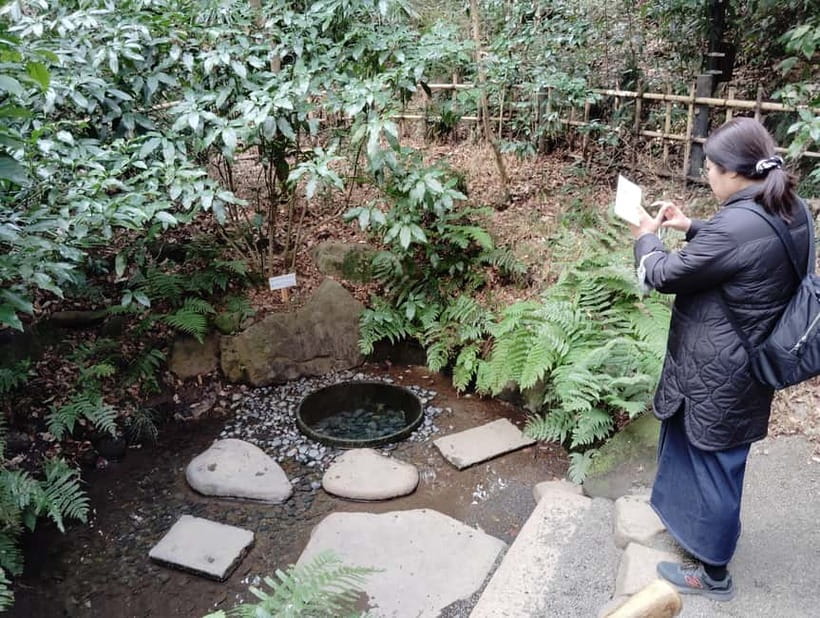
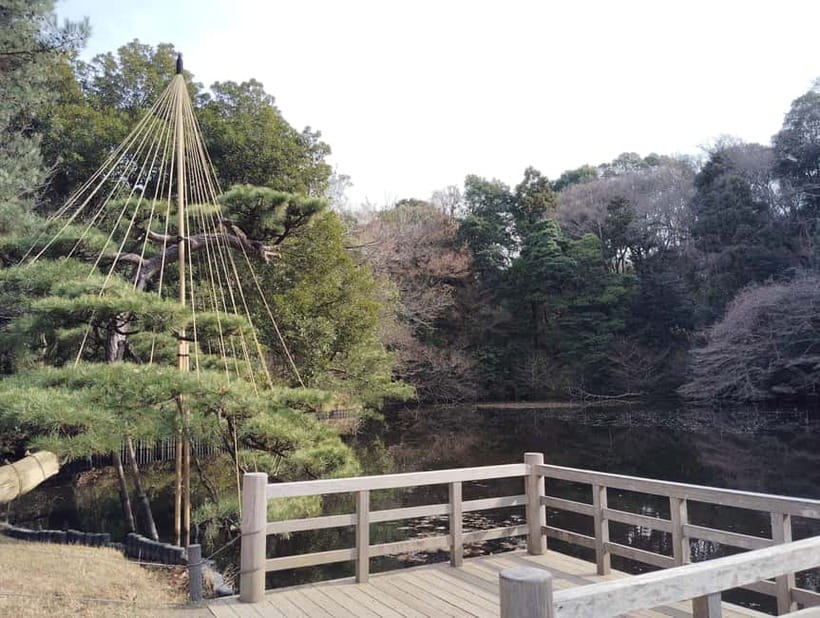
The final major part of the route is Meiji Jingu Garden, also called Shinen Garden. The entrance fee is included, and the walk focuses on the South Pond area.
The garden changes the pace again. The shrine approach is a broad cultural introduction, while the garden offers time to notice water, trees, and smaller details. You get a more peaceful stretch of the visit after the formal instruction at the shrine.
The South Pond is the main garden focus. If time allows, the group may also visit Kiyomasa’s Well. That wording matters: the well is not guaranteed on every departure. The visit depends on how much time remains after the shrine and how quickly the group moves.
This is the tour’s main drawback for garden lovers. Two hours covers both Meiji Jingu and Shinen Garden, but it does not promise a leisurely exploration of every corner. If you want long pauses for photographs or quiet personal time, you may find the schedule brisk.
I would treat the garden as a peaceful final chapter rather than a separate full garden tour. The guide’s explanations give the pond and well more meaning, while the walk lets you enjoy the calm atmosphere before returning to the first torii.
What the Guides Add
The strongest pattern in the guide feedback is clear communication paired with a friendly manner. Minoru is praised for kindness, detail, and anecdotes. Kai is noted for explaining both the shrine and Japanese culture. Kyo brings humor and modern context, and Takashi is described as passionate and strong on historical background.
Those details help set realistic expectations. You are not simply being led from one landmark to the next. You can ask questions and expect the guide to explain how the customs fit into daily life and Japanese culture.
The guide may also adjust the emphasis to the group. The activity is available as a private or small-group tour, so you may have more room for questions than on a large coach outing. The exact group size is not stated, so check the available option when booking.
The language information lists English and Japanese in-person guides, while the activity details specify a live English guide. If you need a particular language or guide, confirm it at booking rather than assuming every departure offers the same arrangement.
Is $48 a Fair Price?
At $48 per person, this is not the cheapest way to walk through Meiji Jingu. You can visit the shrine grounds independently, take photographs, and enjoy the forest without paying for a guide.
The value comes from what is included beyond entry. You receive two hours with an in-person guide, the Meiji Jingu Garden entrance fee, the omikuji, and the other stated experience fees. You also get direct instruction in handwashing and prayer, which is difficult to gain from a sign or guidebook alone.
For a first visit to Japan, I think the price is reasonable if you care about cultural context and want a guided introduction. It is less compelling for someone who prefers to wander silently, already understands shrine etiquette, or mainly wants a short photo stop.
The private or small-group choice can also change the value. A private booking may suit families or couples who want to ask many questions. A small group may offer a better price while still providing the structure and explanations that make the tour useful.
Food, drinks, and private transportation are not included. That is easy to manage because the meeting point and return point are both at the first torii, but you should plan your own transport to and from the shrine.
Timing, Flexibility, and Practical Details
The tour runs for two hours, with starting times available according to the date you select. The route begins and ends at the first torii, so you do not need to arrange a separate ride between the shrine and garden.
The activity allows free cancellation up to 24 hours before the start for a full refund. You can also reserve now and pay later, which helps if your Tokyo plans are still shifting.
Because the garden visit and Kiyomasa’s Well depend on time, arriving promptly matters. A late start can reduce the time available for the final walk. I would also avoid scheduling a major attraction immediately after the tour, especially if you want to linger for photographs or ask extra questions.
The route is best for someone comfortable with a two-hour walking visit. The supplied information does not specify accessibility features, step-free access, or restroom details, so ask the provider directly if any of those points affect your plans.
Who Should Book This Meiji Jingu Walk?
I would recommend this experience to first-time visitors who want a clear introduction to shrine customs. It is also a good fit if you enjoy asking questions, want help with respectful behavior, or prefer a guide who can explain both traditional practice and modern Japanese culture.
Families may appreciate the mix of formal ritual, fortune-telling, photographs, and garden scenery. The omikuji gives younger participants something active to do, while the forest and pond keep the walk from feeling like a lecture.
It suits culture-focused visitors more than people seeking a fast sightseeing checklist. The value is in the explanations, the correct handwashing and prayer steps, and the calm pace through the woods.
I would think twice if your priority is a long garden visit. The two-hour schedule gives you a good introduction, but the South Pond and possible stop at Kiyomasa’s Well are part of a broader route, not the whole purpose of the outing.
Should You Book It?
Book this tour if you want Meiji Jingu to make sense, not just appear in your camera roll. The included garden entry and omikuji improve the value, while the handwashing, prayer lesson, and guide commentary give the visit a clear purpose.
The strongest reason to choose it is the guide quality. Minoru, Kai, Kyo, and Takashi are praised for warmth, cultural explanation, humor, anecdotes, and historical context. The main compromise is time, since two hours must cover the forest, shrine, fortune-telling, and garden.
For a first visit, I think it is a practical and well-focused choice. For repeat visitors or independent walkers, a self-guided visit may be enough.
FAQ
How long does the Meiji Jingu guided tour last?
The tour lasts two hours.
Where does the tour meet?
The meeting point is in front of the first torii of Meiji Jingu, marked as 明治神宮 一の鳥居. The guide will hold a yellow sign with the DeepExperience logo.
Where does the tour finish?
The tour finishes back at the first torii of Meiji Jingu.
Is an English-speaking guide available?
Yes. The activity details specify a live English-speaking guide. The included information also lists English and Japanese in-person guides.
Is the Meiji Jingu Garden entrance fee included?
Yes. The entrance fee to Meiji Jingu Garden is included.
Is the omikuji included?
Yes. The omikuji and other stated experience fees are included.
Is transportation included?
No. Private transportation is not included. Food and drinks are also not included.
Can I cancel the tour for a refund?
Yes. You can cancel up to 24 hours in advance for a full refund. You can also reserve now and pay later.
More 2-Hour Experiences in Tokyo



More Guided Tours in Tokyo
More Temples & Meditation in Tokyo



More tours in Tokyo we've reviewed












Temples & Meditation, compared.
 ★ 4.7Tokyo: Meiji Shrine, Asakusa, Skytree Bus Tour and CruiseFrom $12210 hours
 ★ 4.8Tokyo: Asakusa Walking Tour with Sensoji Temple VisitFrom $222 hours
 ★ 4.5Tokyo: Kamakura & Enoshima Day Trip including Temple TicketsFrom $589 hours - 570 minutes
 ★ 4.5Tokyo: Nikko Toshogu Shrine and Kegon Waterfall TourFrom $8410h 30m
 ★ 4.5Tokyo Panoramic 1 Day: Meiji Shrine, Asakusa, Odaiba and SKYTREE®From $85
 ★ 5.0Asakusa Senso-ji Temple and Old Tokyo Walking TourFrom $20