Reviewed · SHIBUYA TOURS
Harajuku and Shibuya Evening Walking Tour
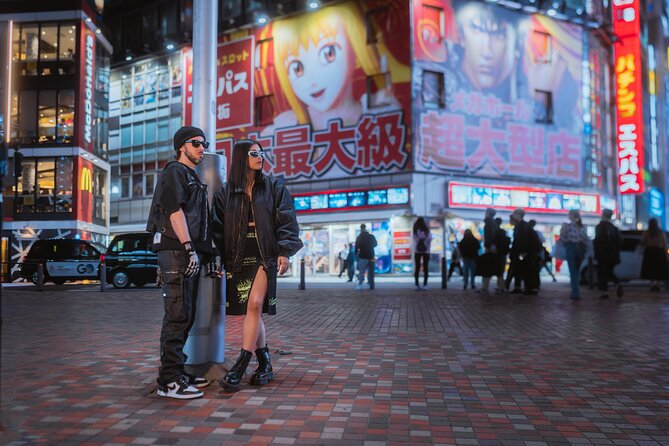
Harajuku and Shibuya make the most sense on foot, when the shop lights come on and the streets fill with fashion, food, and people heading out for the evening. This private walk connects Takeshita Street, Omotesando, Cat Street, and Shibuya Crossing without asking you to puzzle out the route yourself.
In This Article
- Key points to know before booking
- Starting at Harajuku after 5 p.m.
- Takeshita Street and Harajuku style
- Omotesando brings a different mood
- Cat Street and Harajuku’s fashion story
- The backstreet route toward Shibuya
- Seeing Shibuya Crossing from above
- Dinner in an izakaya-style setting
- Who will get the most from this walk?
- Timing, transport, and the end of the route
- Should you book the Harajuku and Shibuya evening walk?
- FAQ
- Where does the tour begin?
- Where does the tour end?
- How long does the experience last?
- Is this a private tour?
- Is food included in the price?
- Is a vegetarian option available?
- What should I wear?
- Can I cancel for a full refund?
I like the private format for up to six people, since your guide can adjust the pace and answer the questions that matter to you. I also like the built-in photo stop above Shibuya Crossing, followed by a Japanese-style dinner stop where you can try local dishes.
The main caution is that food and drinks are not included in the $476.73 group price. The quality of the experience also depends heavily on how much your guide explains, so ask for stories and local context rather than simply following along.
Key points to know before booking
- The walk begins at 5 p.m. near JR Harajuku Station, giving you an evening route through two of Tokyo’s best-known style districts.
- The route links Takeshita Street, Omotesando, and Cat Street, showing several different sides of Harajuku fashion.
- A backstreet stop offers a broad view of Shibuya Crossing, Shinjuku, and nearby areas before you enter the famous intersection.
- The tour is private for your group only, with a maximum of six people.
- Dinner is part of the plan, but not part of the price, so budget separately for food and drinks.
- The walk ends around Shibuya Crossing, with help finding a station or returning toward the starting area.
Starting at Harajuku after 5 p.m.
Your meeting time is 5 p.m. at the Harajuku starting point listed as WITH HARAJUKU, at 1-14-30 Jingumae in Shibuya. Check the exact meeting instructions before you leave your hotel, since Harajuku has several busy station exits and large commercial buildings.
Starting here is practical. Harajuku is easy to reach by train, and the opening section puts you right in the middle of Tokyo’s youth fashion scene. The tour description also identifies JR Harajuku Station as the gathering point, so allow a little extra time to orient yourself before meeting the guide.
The timing matters. At 5 p.m., you are not seeing Harajuku as a quiet daytime shopping district. You are entering the evening period, when stores, cafés, and sidewalks begin to take on a different feel. The route then gradually moves toward Shibuya, making the tour feel like a connected neighborhood walk rather than two separate sightseeing stops.
This is a walking experience, not a vehicle tour. You should wear comfortable shoes and be ready for a moderate amount of walking. The pace may be manageable for most people, but the tour is only about two and a half hours, so it is designed to keep moving.
A few more Tokyo tours and experiences worth a look


Takeshita Street and Harajuku style
The first major area is Takeshita Street, one of Harajuku’s best-known shopping lanes. It is associated with youth fashion, unusual clothing, accessories, and the distinctive styles that have made Harajuku famous around the world.
A guide can add value here by explaining how the street fits into Tokyo’s fashion culture rather than treating it as a simple shopping stop. Harajuku has even given its name to a fashion style associated with extravagant clothing and hairstyles. If that part of Japanese popular culture interests you, ask your guide to point out what is especially local or unusual.
The drawback is that Takeshita Street can feel more commercial than intimate. You will find plenty of shops, but not every storefront will offer a meaningful cultural lesson. The best use of this section is to observe how people dress, how the shops present fashion, and how Harajuku’s playful style differs from the more polished streets that follow.
If you want time to shop, say so early. A two-and-a-half-hour tour has to balance walking, explanation, photos, and dinner. The private format helps, but it does not create unlimited time.
Omotesando brings a different mood
From Takeshita Street, the route continues toward Omotesando. This shift is one of the most useful parts of the walk because it shows how quickly Harajuku changes character.
Omotesando is known for fashionable stores and a more refined shopping setting. It is still part of Harajuku, but it does not have the same youthful feel as Takeshita Street. I like this contrast because you get more than a single version of the district. One street focuses on expressive youth style, while the next presents high-end design and polished retail.
Your guide may help you notice the difference in architecture, shop design, and street feel. Since no fixed list of stores is promised, think of this section as a guided introduction rather than a shopping package. You may pass stores that interest you, but the tour does not promise entry into every shop.
This is also a useful place to tell the guide what you want from the evening. Previous customers had guides who adapted the route to personal requests, including a stop at a store one couple specifically wanted to see. That kind of flexibility is one of the strongest reasons to book a private walk instead of a large group outing.
Cat Street and Harajuku’s fashion story
The walk then reaches Cat Street, described as an important part of Tokyo’s fashion history. This section helps connect Harajuku’s current retail scene with the area’s longer role in shaping style and youth culture.
Cat Street is a good fit for people who prefer smaller-scale streets to major shopping avenues. You might find independent-feeling shops, specialist clothing stores, and a less monumental setting than Omotesando. The tour information does not promise particular shops or brands, so I would not book this expecting a fixed boutique crawl.
Instead, use the walk to ask questions. What styles are especially associated with Harajuku? How has the area changed? Which streets do local shoppers favor? One of the stronger experiences reported from this tour came from an English-speaking guide who explained Japanese culture and adjusted the walk to the couple’s interests.
That point is worth taking seriously. A private guide is most useful when you speak up. If you want fashion context, ask for it. If you care more about daily life, food, or neighborhood change, say so. The experience can be personalized, but the guide needs to know what you want to hear.
The backstreet route toward Shibuya
After Harajuku, the tour heads toward Shibuya. Rather than staying only on the main roads, the route includes a backstreet alley. This is a welcome change of pace after the major shopping areas.
The details of the alley are not specified, so I would avoid expecting a secret attraction or a particular landmark. Its value is in the transition. You move away from the best-known commercial streets and get a sense of how Tokyo’s neighborhoods connect behind their headline destinations.
This portion also gives the guide room to explain the area in a more personal way. A strong guide can use an ordinary side street to talk about local routines, the contrast between major avenues and small lanes, or how people move between Harajuku and Shibuya. If the commentary feels thin, ask direct questions. One account of the tour described a lack of unsolicited information, so this is not the right booking if you want every minute filled with narration without prompting.
That concern should not be ignored. The tour has received both very strong praise for its personal approach and one sharply negative account focused on limited explanation. The fair reading is that guide performance matters here. You should be comfortable taking an active role in the conversation.
Other walking tours we've reviewed in Tokyo



Seeing Shibuya Crossing from above
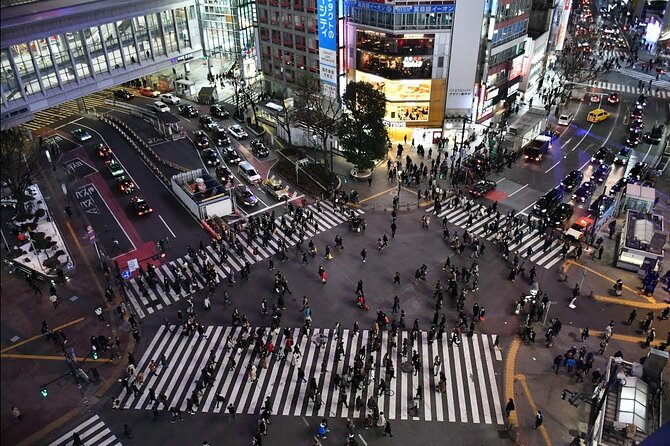
Before reaching the intersection, the tour stops at an observation point with a wider view of Shibuya Crossing, Shinjuku, and other parts of Tokyo. This is one of the most useful photo moments of the evening.
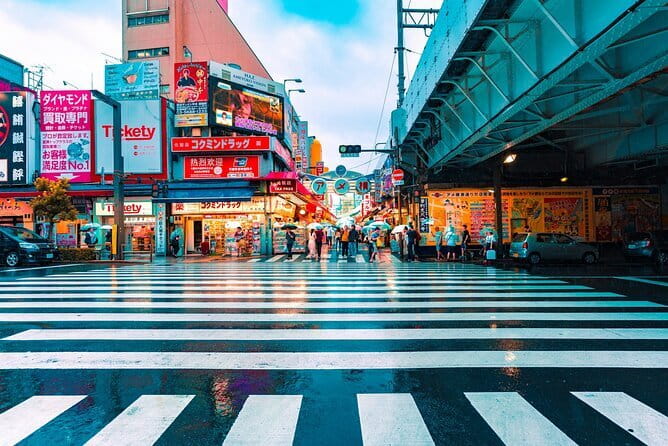
At street level, Shibuya Crossing is a wall of people and signals. From a higher viewpoint, you can understand its shape and scale. You have time to take in the crossing before joining it, rather than arriving with no sense of where to look.
The exact observation location is not named, so access and views may vary. Still, the plan gives you two perspectives: a broad view from above and the full experience of stepping into the intersection.
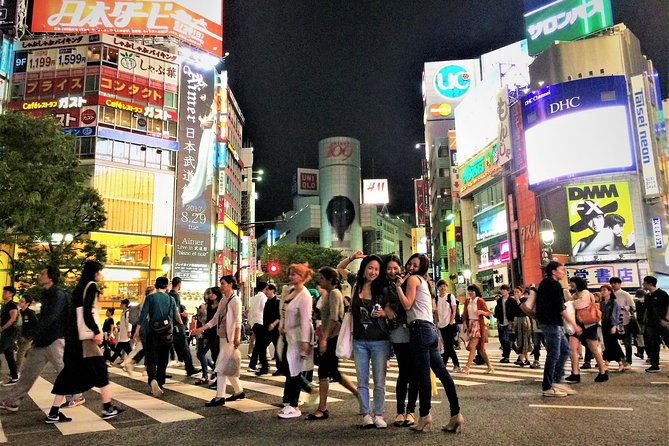
Your group also gets a photo at Shibuya Crossing. For many people, this will be the visual prize of the tour. The crossing is famous, but the guide helps turn it from a quick stop into a shared moment with a picture to keep.
The crossing itself is not a long attraction. You will not spend hours there, and the tour does not promise professional photography. Think of the stop as a well-timed introduction, a group photo, and a chance to watch one of Tokyo’s most recognizable scenes in motion.
Dinner in an izakaya-style setting
After the crossing, the guide takes you for dinner at an izakaya or another Japanese-style restaurant. The aim is to introduce local dishes and the food culture of Tokyo.
This is a useful addition because the tour does not end with sightseeing alone. An izakaya-style meal can give you a chance to try small dishes, Japanese preparation styles, and the social side of eating out. The exact restaurant and menu are not specified, so you should treat this as a dinner stop rather than a formal food tasting with a set menu.
The cost needs careful attention. Food and drinks are specifically excluded, even though dinner is part of the route. At $476.73 per group of up to six, the base price works out to about $79.46 per person if you fill all six places. For two people, the same tour costs about $238.37 each before dinner, so the value is much better for a full private group.
That price is not mainly buying a meal. It is buying a private English-speaking guide, a planned evening route, personal attention, and help moving between Harajuku and Shibuya. If you want a low-cost introduction to these areas, a free map and your own restaurant choice will cost much less. If you want a private guide for a small group, the price becomes easier to justify.
Vegetarian food is available if you request it when booking. You should not wait until the evening to mention dietary needs.
Who will get the most from this walk?
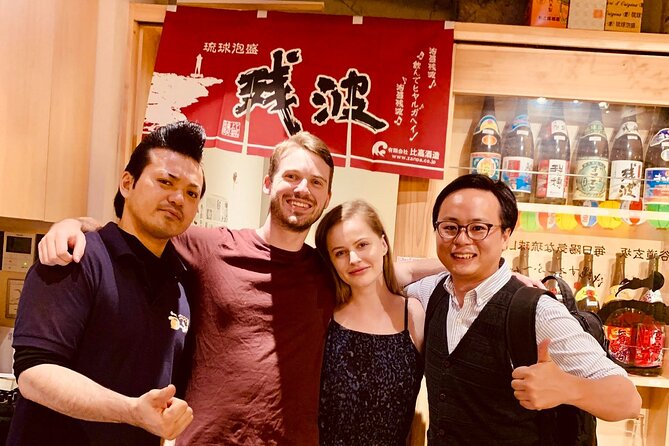
I would recommend this experience to first-time visitors who want an organized introduction to Harajuku and Shibuya but do not want a large group. It also suits families with older children, couples, and friends who want a private evening with photos and dinner.
The minimum age is 12. That makes the tour a better fit for teenagers and adults than for families with young children. The private setup may help if someone in your group needs a slower pace or has a particular shop or interest in mind, though a moderate amount of walking is still involved.
This is also a good choice if you care about fashion and city culture. Takeshita Street, Omotesando, and Cat Street are not interchangeable, and walking between them helps you see their differences.
I would be more cautious if you want a food tour with all costs included, a fixed restaurant menu, or detailed commentary at every step. You should also consider another option if you dislike asking questions. The strongest use of this tour is interactive: tell the guide what interests you and make the private format work for you.
Timing, transport, and the end of the route
The total duration is about two hours and thirty minutes. The tour begins at 5 p.m. and finishes around Shibuya Crossing. The listed information also gives Shibuya Parco as an end location, while the stated return point is the Shibuya Big Crossing, so confirm the final meeting and drop-off details before the date.
Hotel pickup and drop-off are not included. You must make your own way to Harajuku, and transportation between the attractions is not included because this is a walking tour. At the end, the guide can help you find the nearest station or give directions back toward the starting area.
The activity is offered as a mobile ticket, and booking confirmation is provided at the time of booking. It requires good weather. If poor weather causes cancellation, you are offered another date or a full refund.
You can cancel for a full refund up to three full days before the start time. Changes or cancellations inside that window are not accepted for a refund, so keep that rule in mind when arranging a tightly packed Tokyo schedule.
Should you book the Harajuku and Shibuya evening walk?
Book it if you want a private introduction to Tokyo’s fashion districts, a planned walk to Shibuya Crossing, and a guide who can shape the evening around your interests. It is especially appealing for a group of four to six, when the price is shared.
Skip it if you are mainly looking for a cheap route, a fully paid dinner, or a tightly scripted lecture. The dinner bill is extra, the restaurant is not fixed in advance, and the amount of commentary may depend on how actively you engage the guide.
My practical advice is to send your interests when booking. Ask for fashion context, Japanese culture, a particular store, vegetarian food, or more explanation along the route. With that preparation, the tour gives you a convenient evening bridge from Harajuku’s youthful style to Shibuya’s famous crossing.
FAQ
Where does the tour begin?
The meeting time is 5 p.m. at the Harajuku starting point listed as WITH HARAJUKU, 1-14-30 Jingumae, Shibuya, Tokyo. The gathering information also identifies JR Harajuku Station as the meeting area.
Where does the tour end?
The stated return point is the Shibuya Big Crossing. Shibuya Parco is also listed as an end location, so confirm the exact final point before the tour.
How long does the experience last?
The walking tour lasts approximately two hours and thirty minutes.
Is this a private tour?
Yes. Only your group participates, with a maximum of six people.
Is food included in the price?
No. The guide takes you to an izakaya or another Japanese-style restaurant, but food and drinks are not included in the tour price.
Is a vegetarian option available?
Yes. You must advise the provider when booking if you need vegetarian food.
What should I wear?
A moderate amount of walking is involved, so comfortable walking shoes are recommended.
Can I cancel for a full refund?
Yes, if you cancel at least three full days before the experience start time. Cancellations or changes made less than three full days in advance are not refunded, and poor-weather cancellations offer either another date or a full refund.
More Evening Experiences in Tokyo




More Walking Tours in Tokyo
More Shibuya Tours in Tokyo


More tours in Tokyo we've reviewed




Shibuya Tours, compared.
 ★ 5.0Official Street Go-Kart in ShibuyaFrom $76
 ★ 5.0Shibuya Meltdown Nightlife Tour: All-You-Can-Drink Bar HoppingFrom $106
 ★ 4.9Tokyo: Street Kart Experience in ShibuyaFrom $99
 ★ 5.0Shibuya Official Street Go-Kart in Shibuya AnnexFrom $69
 ★ 5.0Tokyo: Shibuya Food Tour (13 dishes and 4 Eateries)From $77
 ★ 5.0Best of Shibuya Food TourFrom $217