Reviewed · TSUKIJI MARKET TOURS
Morning Market Adventure: Toyosu & Tsukiji with Tuna Auction
The tuna auction begins before most of Tokyo wakes up. At Toyosu, huge bluefin tuna move through a serious wholesale operation, while you watch from the visitor viewing area and learn how the trade works. Then you head to Tsukiji Outer Market, where the mood changes from quiet observation to food, shops, and conversation.
In This Article
- Key points to know before booking
- Why the 5:00 am start is worth considering
- Toyosu Market and the bluefin auction
- The private guide makes the difference
- From Toyosu to Tsukiji
- Tsukiji Outer Market: food, knives, and local color
- What the $154.60 price really buys
- Who should book this market morning
- Practical details that matter
- Should you book the Toyosu and Tsukiji tour?
- FAQ
- What time does the tour start?
- Where does the tour begin?
- Does the tour offer hotel pickup?
- How long does the experience last?
- Is the tour private?
- Is breakfast included?
- Are transportation costs included?
- Can I visit the tuna auction floor?
- Can I cancel for a full refund?
I like two things here: you get both Toyosu and Tsukiji in one morning, and a private guide can shape the pace around your interests. Guides such as Sachiyo, Nobby, Mayumi, Yumi, and Tomoko have helped visitors understand auction customs, fish seasons, sourcing, knives, tea, and Japanese food culture.
The catch is the 5:00 am start. The $154.60 price also excludes breakfast, the taxi to the market, and the bus between Toyosu and Tsukiji. Still, for seafood fans who want context rather than a quick look through a window, this can be money well spent.
Key points to know before booking
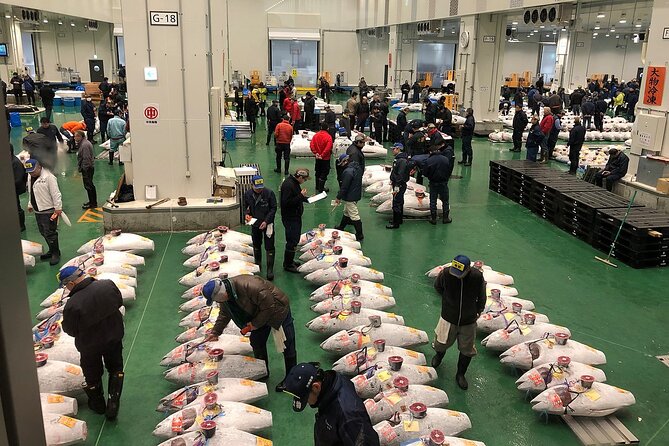
- The tuna auction comes first: You watch the action at Toyosu, Tokyo’s modern wholesale market, from a special visitor viewing area.
- Toyosu and Tsukiji feel very different: Toyosu is spacious, controlled, and work-focused. Tsukiji is an open market made for browsing, tasting, and shopping.
- Private guiding is the main value: Your guide can explain the auction, answer questions, suggest food, and adjust the morning to suit your group.
- Plan for an early start: The meeting time is 5:00 am at Shijo-mae Station, though some guides have arranged hotel pickups with guests.
- Food is extra: Breakfast and market snacks are not included, so bring room in your budget for sushi or other seafood.
- The auction floor is not guaranteed: The visitor view is available, but access to the working floor requires a separate lottery, with only 50 people selected each day according to the information provided.
Why the 5:00 am start is worth considering
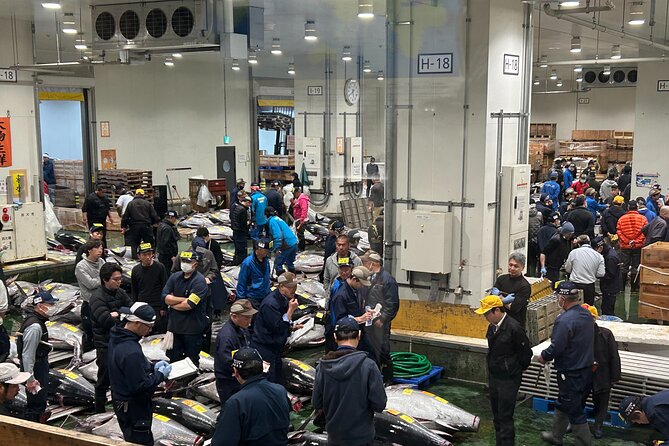
This is not a late breakfast stroll. You meet at 5:00 am, when Toyosu is already operating as a wholesale market. That early hour is the point: you see the market during its working day, not after the main action has finished.
I would book this near the start of a Tokyo trip if you are dealing with jet lag. A pre-dawn start can turn an inconvenient body clock into an advantage. If you are traveling with young children, dislike early mornings, or have packed evening plans, think carefully before committing.
The advertised meeting point is Shijo-mae Station, at 6 Chome-3 Toyosu. Pickup is offered, and several guides have met groups at their hotels and traveled with them by taxi. Because the formal meeting information lists the station, confirm the exact pickup plan before the morning of your tour.
Wear comfortable shoes and keep your hands free. Toyosu is a working food market, not a staged attraction, and your guide will need to move you through the right areas at the right time. The private format helps here, since you do not need to keep pace with a large group.
A few more Tokyo tours and experiences worth a look
Toyosu Market and the bluefin auction
Toyosu Ichiba is Tokyo’s newest and largest wholesale market. It took over the role once associated with Tsukiji’s inner market, and its design feels modern, organized, and purpose-built.
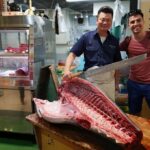
The visitor experience centers on a glass-walled observation area. From there, you can watch the tuna auction without entering the working floor. That view gives you a broad sense of the operation, including the scale of the tuna and the way buyers and sellers handle the sale.
Do not expect a theatrical performance. The auction is business, and the people on the floor are working. That is part of its appeal. You see a real food supply chain in motion, with a guide explaining what you are looking at instead of leaving you to guess.
A strong guide can turn a short viewing period into a lesson about the tuna trade. You might learn how fishing areas affect quality, how the auction process works, how tuna reaches wholesalers and restaurants, and why certain fish command higher prices. Mayumi, Tomoko, Sachiyo, and other guides have explained details ranging from fishing methods and seasons to the role of tuna in top restaurants.
The information is especially useful because the auction itself can be hard to read. You may see workers inspecting fish or buyers signaling, but without context the process remains a blur of movement and specialized customs. Your guide fills in the meaning.
The viewing area also has a practical limitation. You are not guaranteed access to the auction floor. The supplied information says that only 50 people a day are selected for floor access through a lottery, and you need to apply months ahead if that experience is important to you.
For many people, the second-floor view will be enough. It offers a wider look at the system and keeps you out of the way of workers. The working floor is noisy and crowded, and it is not designed for sightseeing. Treat the market with respect, stay alert, and follow your guide’s instructions.
Toyosu also handles fruit, vegetables, and other fresh food. The market’s famous sushi is another reason to come, though your breakfast is not included in the tour price. Your guide can help you decide where to eat after the auction, which is far more useful than wandering hungry through a large market on your own.
The private guide makes the difference
The tour is sold as a private experience, so only your group participates. That matters most at Toyosu, where timing and orientation can be confusing. It also matters later, when you decide how much time to spend eating, shopping, or asking questions.
The guides named in the supplied material receive especially strong praise for their personal approach. Sachiyo has been described as communicative before the tour, using WhatsApp to explain the meeting plan and the auction lottery. Nobby is known for guiding groups through the market maze and offering food suggestions. Mayumi has explained everything from fish sourcing and knife-making to the difference between Shinto and Buddhism.
That range gives you an idea of what the private format can offer. You can keep the focus on tuna, ask about Japanese cooking, look for a chef’s knife, or spend more time on seafood. One guide helped arrange a custom chef’s knife for shipping to the United States. Another took guests to a shrine and helped them navigate the subway at the end.
This does not mean every group will receive the same route or the same extra stops. The tour is about Toyosu and Tsukiji, and the formal itinerary allots about 90 minutes to each. But a private guide can respond to your questions and interests in a way a standard group tour cannot.
English ability is also important for a tour built around explanation. The named guides are repeatedly described as clear and easy to talk with. That is useful when you want to ask about a complicated auction process, compare fish, or understand why the markets moved from Tsukiji to Toyosu.
From Toyosu to Tsukiji
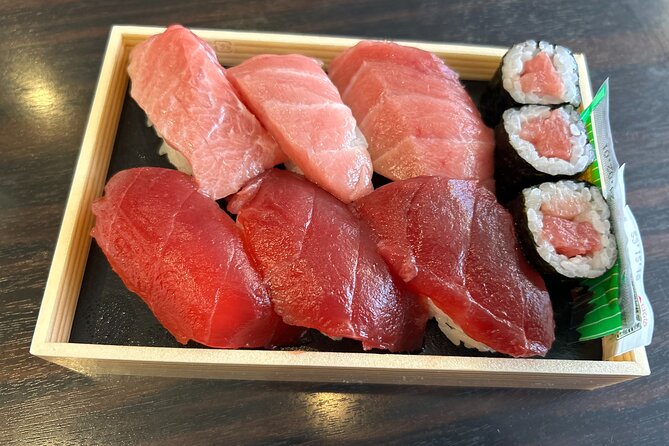
The advertised tour does not include the bus fare from Toyosu to Tsukiji. Plan for that additional cost, and allow enough time for the transfer. The guides may help you with the route, but transportation between the two markets is your responsibility unless a different arrangement is confirmed.
The move between markets is worthwhile because the two places serve different purposes. Toyosu is the wholesale center, with a modern visitor area and a market built around large-scale distribution. Tsukiji Outer Market is where you get closer to retail food culture.
That contrast is one of the best reasons to visit both in one morning. Seeing only Toyosu can leave you with an impressive but distant view of the seafood business. Seeing only Tsukiji can give you tasty samples without showing where the wider trade takes place.
Tsukiji Outer Market: food, knives, and local color
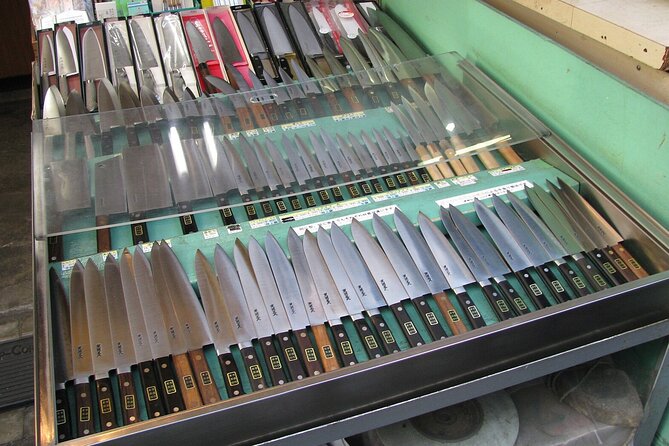
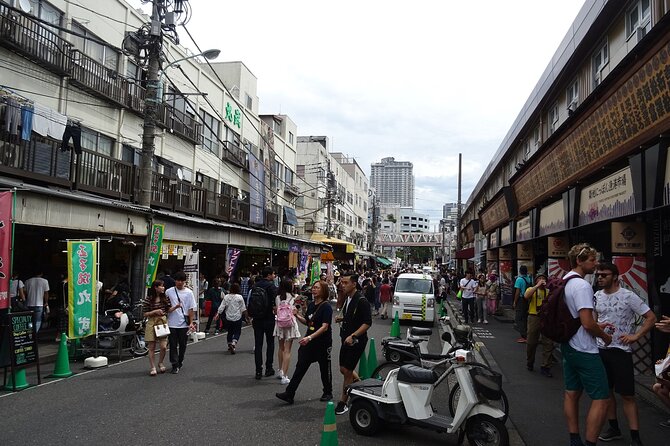
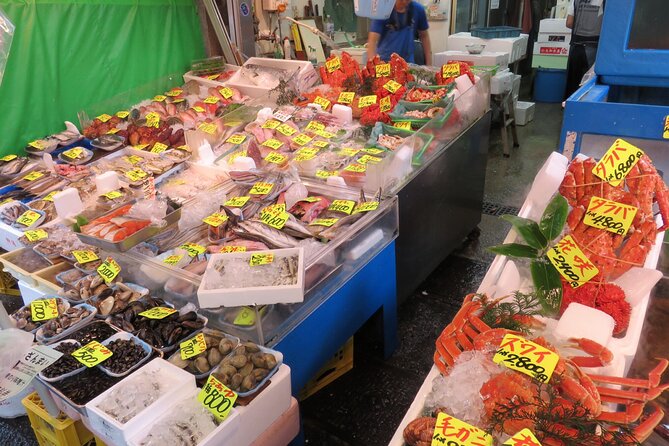
Tsukiji Outer Market is more intimate and hands-on than Toyosu. Its streets and shops offer seafood, sushi, sashimi, Japanese ingredients, kitchen tools, tea, and small souvenirs.
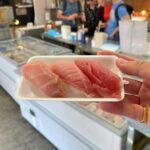
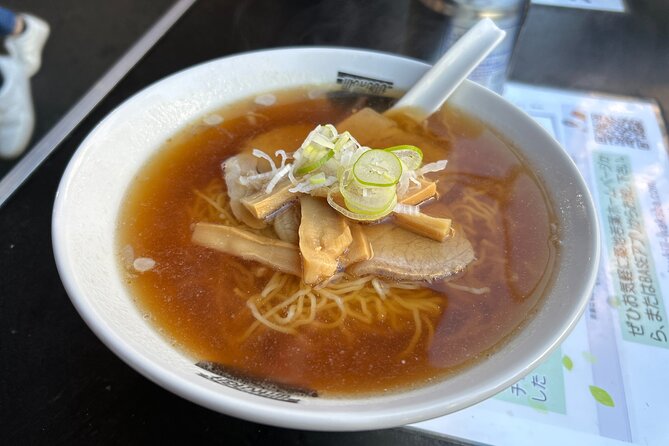
This is where you can stop for breakfast or snacks. The tour does not pay for food, so you choose what to order and how much to spend. That flexibility is a real benefit of a private morning. You can pause for sushi, move on if you are full, or ask your guide for options that fit your budget.
Several guides have taken groups to well-priced food stalls or restaurants known to people who work in the market. That kind of advice is valuable because the most visible option is not always the best match for your appetite or wallet. One account describes an omakase sushi breakfast as one of the best meals of the trip, while another points to an inexpensive sushi meal near Toyosu.
Keep your expectations sensible. Tsukiji is a popular destination, and some food stalls may be busy. The experience is not a quiet museum visit. You are moving through a food market where vendors are selling, preparing, and serving food. Watch your footing, avoid blocking shop entrances, and be ready to eat standing up if needed.
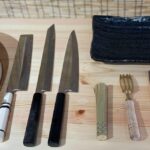
Shopping can be as interesting as eating. You might find Japanese knives, tea, seafood products, cooking tools, or small gifts. If you want a knife, tell your guide early. The private setting gives you time to compare items and ask about use, care, and shipping, though the purchase itself is not included.
The market also offers a useful look at everyday food culture. Your guide may explain fish seasons, regional sourcing, preparation methods, or how Japanese cooks choose ingredients. These details help you understand what you are tasting instead of treating the market as a row of photo stops.
Other shopping tours in Tokyo
What the $154.60 price really buys
At $154.60 per person, this is not a cheap way to see a free market. Admission to both market areas is free, and you still pay for transportation and breakfast separately.
The price makes more sense if you value private attention and interpretation. You are paying for an English-speaking guide, help with the early-morning logistics, an explanation of the tuna trade, and a food-focused route through two large and very different places.
For a solo visitor, couple, or small family with a strong interest in seafood, that can be a fair trade. A guide can save you from missing the viewing area, wasting time in the wrong corridors, or choosing a disappointing meal. The value rises if you want to ask many questions or shop for specialized kitchenware.
The calculation is less favorable if you only want a quick look at tuna. Since the auction viewing is free and the floor lottery is separate, an independent visitor could spend far less. You also need to handle the taxi to Toyosu and the bus to Tsukiji. Group discounts may improve the per-person cost for larger parties, so check the current rate for your group size.
The 4.9 rating from 87 reviews and 98 percent recommendation suggest a strong record, but the right question is not simply if it is popular. Ask yourself if you want a guide-led food and culture morning, or only a market photograph. The former fits this tour. The latter may not justify the price.
Who should book this market morning
I would recommend it most strongly to seafood lovers, first-time Tokyo visitors, and anyone who wants a local explanation of Japanese food systems. It also suits people who prefer a private guide and want to stop for a good breakfast without following a fixed large-group route.
It is a good choice for families with older children or adult children. One group used the tour with children aged 18 and 20, and the auction plus market walk gave them a shared activity with plenty to discuss. Service animals are allowed, and most people can participate.
You should think twice if you need a late start, want a low-cost activity, or dislike food markets at their busiest working hours. The tour is also less suitable if you want guaranteed floor access. The visitor viewing area is the reliable part, while the floor depends on the separate lottery.
Practical details that matter
The tour lasts about three hours, with roughly 90 minutes at Toyosu and 90 minutes at Tsukiji. That is enough time for a focused visit, but not enough for a slow, all-day shopping trip.
The experience includes an English-speaking guide and private guiding. It does not include breakfast, the taxi from your hotel to the market, or the bus from Toyosu to Tsukiji. Mobile tickets are available, pickup is offered, and group discounts may be available.
Confirmation is provided at booking. The cancellation policy allows a full refund if you cancel at least 24 hours before the 5:00 am start. Changes or cancellations inside that window are not accepted, so be certain about your plans before the cutoff.
Ask your guide in advance about the meeting point, pickup, the auction viewing plan, and the best way to handle the transfer to Tsukiji. Sachiyo’s advance messages and other guides’ early instructions show why this contact matters. A few minutes of planning can make a major difference at such an early hour.
Should you book the Toyosu and Tsukiji tour?
Book it if you want to understand the tuna auction, eat well afterward, and see both the modern wholesale market and the older market district in one morning. The strongest part is the private guide, especially if you are lucky enough to work with someone like Sachiyo, Nobby, Mayumi, Yumi, Tomoko, or another guide who can explain the trade clearly and tailor the route.
Skip it if you only want to see the auction from a window and are happy to organize transport and food yourself. The markets are free, the floor is not guaranteed, and the early start is demanding.
For a seafood-focused visitor, though, this is a thoughtful way to spend an unusual morning in Tokyo. You leave with more than a glimpse of tuna. You understand how the auction connects to sushi counters, wholesalers, restaurants, cooks, and the food on your plate.
FAQ
What time does the tour start?
The stated start time is 5:00 am.
Where does the tour begin?
The listed meeting point is Shijo-mae Station at 6 Chome-3 Toyosu, Koto City, Tokyo.
Does the tour offer hotel pickup?
Pickup is offered, and some guides have met guests at their hotels. Confirm the exact pickup arrangement because the listed meeting point is Shijo-mae Station.
How long does the experience last?
The tour lasts approximately three hours. The planned itinerary gives about 90 minutes to Toyosu and 90 minutes to Tsukiji Outer Market.
Is the tour private?
Yes. Only your group participates, with an English-speaking guide.
Is breakfast included?
No. Breakfast is not included, and you pay separately for sushi, snacks, or other food at the markets.
Are transportation costs included?
No. The taxi fare from your hotel to the market and the bus fare from Toyosu to Tsukiji are not included.
Can I visit the tuna auction floor?
Floor access is not guaranteed. The information provided says that access requires a separate lottery, with 50 people selected each day. The tour includes viewing the auction from the visitor area.
Can I cancel for a full refund?
Yes, if you cancel at least 24 hours before the experience start time. Cancellations or changes made less than 24 hours before the start are not refunded or accepted.
More Markets in Tokyo
More Shopping Tours in Tokyo
More Tsukiji Market Tours in Tokyo
More tours in Tokyo we've reviewed












Tsukiji Market Tours, compared.
 ★ 5.0Tokyo Tsukiji Fish Market Food and Culture Walking TourFrom $99
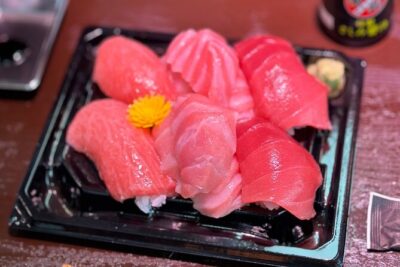 ★ 5.0Tokyo: Tsukiji Fish Market Food and Walking tourFrom $30
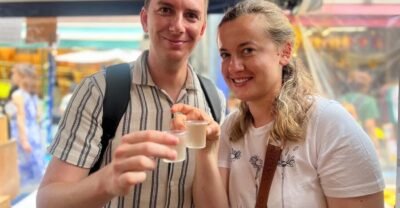 ★ 4.9Tokyo: Tsukiji Fish Market Guided Walking TourFrom $222 hours
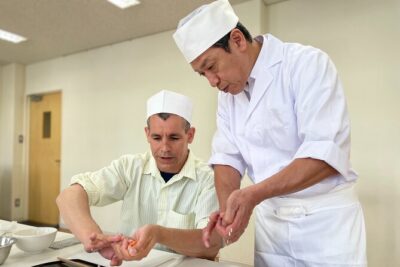 ★ 5.0Tokyo Sushi Making Class in Tsukiji with Professional ChefFrom $49
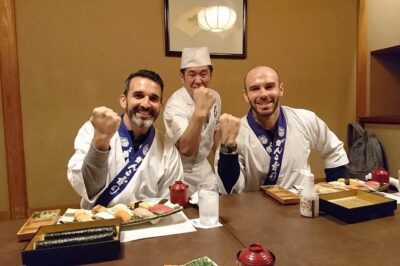 ★ 5.0Tsukiji Fish Market Guided Tour and Sushi Making with Pro ChefFrom $104
★ 4.7Tokyo: Tsukiji Fish Market Food and Culture Walking TourFrom $963 hours
★ 5.0Tsukiji Fish Market Guided Tour and Sushi Making with Pro ChefFrom $104
★ 4.7Tokyo: Tsukiji Fish Market Food and Culture Walking TourFrom $963 hours