Reviewed · SUSHI MAKING CLASSES
Tokyo: Sushi Cooking Class with Sake Tasting
Tokyo: Sushi Cooking Class with Sake Tasting
In This Article
- Key points at a glance
- Start at Iriya Station, not Asakusa
- The supermarket stop gives the class a local angle
- Learn the basics in a professional kitchen
- Sushi is only one part of the meal
- Four sake pairings make lunch more than a tasting
- The small group changes the feel of the lesson
- Who will get the most from this class
- Dietary needs require an honest check first
- Is $112 a fair price?
- Final call: book it for skills, not just lunch
- FAQ
- Where does the Tokyo sushi cooking class begin?
- Where does the activity end?
- How long does the experience last?
- What language is the class conducted in?
- How many people can join?
- What dishes will I prepare?
- Is lunch included?
- How many types of sake are included?
- Can children join the class?
- Can vegan and vegetarian participants attend?
- Is the experience wheelchair and stroller accessible?
- What happens if I arrive late?
The best part of this four-hour Tokyo experience happens before the knives come out. You shop with a local guide in a Japanese supermarket, learning how to choose fish, vegetables, seasonings, and other everyday ingredients. Then you take those ingredients to a professional kitchen and turn them into lunch.
I like the small group of up to seven, which gives you a real chance to ask questions and handle the food yourself. I also like the mix of sushi and home cooking: miso soup, eggplant dengaku, and dashimaki tamago show you more about Japanese food than a sushi-only lesson would. The main catch is that the meeting point requires care, and the tour cannot wait for late arrivals.
Key points at a glance
- Shop before you cook: Visit a local supermarket and learn how Japanese shoppers select ingredients.
- Make a full Japanese meal: Prepare sushi rolls, sushi rice, miso soup, eggplant dengaku, and rolled egg.
- Taste four kinds of sake: Pair several sake styles with sushi and traditional dishes during lunch.
- Learn practical kitchen skills: Practice knife handling, dashi, vinegar-seasoned rice, and basic home cooking.
- Keep it personal: The English-language group is limited to seven participants.
- Bring the family: All ages can join, and a kids playroom is provided for little ones to enjoy.
Start at Iriya Station, not Asakusa

The class begins in front of the FamilyMart beside the Gindako takoyaki shop at Exit 2 of Iriya Station. This detail matters because there are two FamilyMart shops at the station. Look for the one next to both Gindako and Doutor Coffee, rather than simply walking to the first convenience store you see.
Arrive early. The group starts on time, and you cannot join later, reschedule, or receive a refund if you miss the departure. The activity returns to the same meeting point after four hours.
The class takes place near Asakusa and Kappabashi, Tokyo districts well suited to a food-focused morning or afternoon. Kappabashi is known for restaurant supplies, so you can continue browsing knives, dishes, pans, and other kitchen goods after class. The activity itself ends back at Iriya Station, but the location gives you a useful base for continuing into Asakusa for sightseeing and shopping.
A few more Tokyo tours and experiences worth a look
The supermarket stop gives the class a local angle

Many cooking classes begin with ingredients already laid out on a table. This one starts with a supermarket visit, which gives you a better look at ordinary Japanese food shopping.
Your guide helps you identify fresh ingredients and explains the seasonings and products that may be unfamiliar. Japanese supermarkets carry much more than the basics: fish, meat, vegetables, prepared foods, sauces, and regional ingredients can all appear in one place. You are not only collecting supplies for lunch. You are learning how Japanese home cooks put a meal together.
This part is especially useful if you plan to cook Japanese food after returning home. You can ask why one vegetable is selected over another, how ingredients are packaged, and which seasonings are central to the dishes you will prepare. Guides such as Mihori and Sho have been praised for making this shopping stop clear and useful, with plenty of time for questions.
The supermarket also gives you a better sense of the difference between restaurant sushi and home-style Japanese cooking. The class does not treat sushi as the entire food culture. Instead, it places sushi beside soup, vegetables, and egg, creating a meal that feels closer to what you might prepare in a Japanese kitchen.
Learn the basics in a professional kitchen
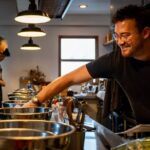
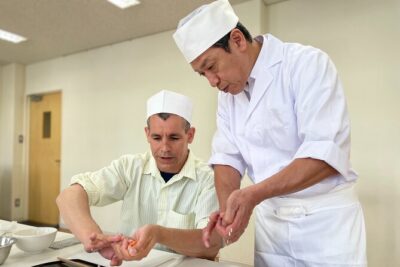
After shopping, you move to a professional kitchen studio for hands-on instruction. The class starts at a beginner level, including how to hold a Japanese kitchen knife properly. That makes the experience suitable for someone who rarely cooks, while still leaving room for more confident home cooks to sharpen familiar skills.
The guide demonstrates each stage, then gives you time to try it yourself. This slower rhythm is important. Japanese cooking often depends on small details, such as cutting technique, the balance of vinegar in sushi rice, or the order in which ingredients go into soup. A rushed class might produce lunch, but it would not give you much to take home.
The English-language guides bring different personalities to the kitchen. Tiger, Suzy, Takahito, Mahori, Fuji, Taka, Mihori, and Sho are among the names connected with past sessions. The teaching style has been described as patient, friendly, funny, and clear, with special care given to making sure children and first-time cooks can participate.
Sushi is only one part of the meal

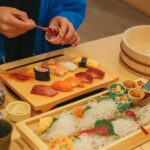
You prepare sushi rolls and season rice with vinegar, two skills that many people want from a Japanese cooking class. The useful part is that the sushi sits within a larger meal rather than taking over the whole lesson.
You also learn how to prepare dashi for miso soup. Dashi is a basic Japanese stock, and learning its role helps explain why many Japanese dishes taste light but full. You then make miso soup, a familiar dish that becomes easier to repeat at home once you understand its foundation.
Eggplant dengaku adds a sweet-savory vegetable dish to the table. The menu also includes dashimaki tamago, the softly rolled Japanese egg dish that looks simple until you try to shape it. These recipes give you a good spread of techniques: knife work, stock making, rice seasoning, grilling or cooking vegetables, and rolling eggs.
The food is prepared and eaten as lunch. That included meal adds real value to the $112 price, particularly because the ingredients, tea, photographs, and four sake tastings are also covered. You are paying for instruction and a full food experience, not just a demonstration.
Four sake pairings make lunch more than a tasting

Sake tasting is built into the meal, with four kinds of premium sake available to sample. The point is not simply to drink four glasses. You pair the sake with sushi and traditional Japanese dishes, noticing how different flavors work with rice, soup, vegetables, and egg.
This is a useful addition for anyone who finds sake menus difficult to understand. Instead of choosing a bottle at random, you can compare several varieties in a guided setting. The class connects the drink to the food, which makes the tasting easier to remember.
You should still treat this as a cooking class with sake, not a dedicated sake seminar. The main focus remains the food and the techniques. The sake adds a cultural and social layer to lunch, but the four-hour schedule has to cover shopping, cooking, eating, and instruction.
Tea is also included, which helps keep the meal balanced. If you do not drink alcohol, check the arrangements before booking, since the supplied details confirm the tasting but do not explain a nonalcoholic replacement.
Other cooking classes in Tokyo

The small group changes the feel of the lesson

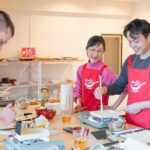
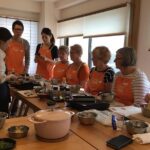
With a maximum of seven participants, this is much more personal than a large demonstration. You can see the guide’s technique, ask for help, and get corrections while using the knife, shaping sushi, or rolling the egg.
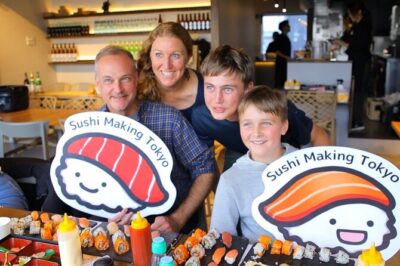
That size also works well for families. Children can participate in the cooking, and the class includes a kids playroom for little ones to enjoy. Mahori and Fuji have been specifically praised for being patient with younger participants, including a young son and two boys. Still, all children are different, so parents should consider how well their child will manage a four-hour food activity.
The group may include other participants, so you should not expect a private lesson unless your booking confirms one. The upside is the shared lunch and the chance to cook alongside people from different places. The tradeoff is that the pace and menu are set for the group.
Who will get the most from this class

I would choose this experience if you want a practical introduction to Japanese food rather than a quick photo opportunity. It suits first-time cooks, curious eaters, families, and people who want recipes they can repeat at home.
It is also a good choice for travelers who have already seen the major Tokyo sights and want an activity with more local routine. The supermarket visit gives you something you cannot get from a restaurant meal: a look at how ingredients are selected and used in ordinary cooking.
You may also like it if you are interested in Kappabashi and Asakusa. After the class, you can continue looking at kitchen tools and restaurant supplies, then explore one of Tokyo’s best-known sightseeing areas. The activity does not include a guided Asakusa tour, so plan that portion yourself.
This is less suitable if you want an advanced chef’s course, a private class, or a dedicated raw-fish lesson. The instruction begins with basic knife handling and covers several approachable dishes. That is a strength for beginners, but an experienced cook may find the pace gentle.
Dietary needs require an honest check first

Vegan and vegetarian participants are welcome, and the organizers can arrange ingredients and the cooking process for those diets. You should state your needs when booking so the class can prepare properly.
Allergy-free cooking is not guaranteed. The food is prepared in kitchens that do not belong to MagicalTrip, and substitutions may not always be possible at every stop. The organizers will try to compensate at other parts of the meal, but anyone with a serious allergy should contact the provider before paying.
The same caution applies to other strict dietary restrictions. A flexible vegetarian menu may be possible, while a complex set of exclusions may be harder to manage. Ask specific questions rather than assuming that every ingredient can be replaced.
Some parts of the route are not accessible to wheelchairs or strollers. Summer adds another practical concern: Tokyo can be very hot and humid, so bring water and wear a hat to reduce the risk of heat exhaustion.
Is $112 a fair price?

At $112 per person, the class is not a budget meal, but the package covers four hours of active instruction. You receive a supermarket visit with a guide, ingredients, cooking tuition, lunch, tea, photos, and four sake tastings.
The small group is the key value point. You are not simply watching a chef work from the back of a crowded room. You handle the ingredients and receive help with techniques that are difficult to learn from a recipe alone, such as rolled egg and sushi shaping.
The included recipes add value after the class ends. You can use them to recreate the meal at home, host a Japanese-themed dinner, and remember which steps mattered. If you only want to eat sushi, a restaurant will cost less. If you want food, instruction, cultural context, and a drink pairing in one session, the price is easier to justify.
Free cancellation is available up to 24 hours before the start time, and you can reserve now and pay later. Those options help if your Tokyo schedule is still changing, but they do not protect you from arriving late on the day.
Final call: book it for skills, not just lunch

I would book this class if you want to understand Japanese cooking from the inside out. The supermarket visit, basic knife lesson, home-style menu, and sake pairing create a fuller experience than a standard sushi workshop.
The strongest reason to choose it is the teaching. Guides such as Suzy, Takahito, Mahori, Fuji, and Mihori have been praised for patience, clear explanations, and making children feel included. The biggest cautions are the strict start time, limited access for wheelchairs and strollers, and the lack of a full allergy guarantee.
Book it when you can spare four unhurried hours and arrive early at the correct FamilyMart near Iriya Station. You will leave with lunch in you, recipes in hand, and a better idea of how Japanese meals are built.
FAQ
Where does the Tokyo sushi cooking class begin?
It begins in front of the FamilyMart next to the Gindako takoyaki shop at Iriya Station Exit 2. Use the FamilyMart beside both Gindako and Doutor Coffee because there are two FamilyMart shops at Iriya Station.
Where does the activity end?
The activity ends back at the same meeting point near Iriya Station.
How long does the experience last?
The experience lasts four hours. Starting times vary, so check availability when booking.
What language is the class conducted in?
The live tour guide speaks English.
How many people can join?
The group is limited to seven participants, although other participants may join your session.
What dishes will I prepare?
You will prepare sushi rolls, sushi rice seasoned with vinegar, miso soup, eggplant dengaku, and dashimaki tamago, a Japanese rolled egg dish.
Is lunch included?
Yes. The cooking experience includes lunch made during the class, along with tea.
How many types of sake are included?
The sake tasting includes four kinds of sake, paired with sushi and Japanese cuisine.
Can children join the class?
Yes. All ages can join, and a kids playroom is available for little ones. Children can also take part in the cooking activities.
Can vegan and vegetarian participants attend?
Yes. Vegan and vegetarian participants are welcome, and ingredients and the cooking process can be arranged for those diets. Allergy-free cooking and every dietary substitution cannot be guaranteed.
Is the experience wheelchair and stroller accessible?
Some locations included in the activity are not accessible to wheelchairs or strollers.
What happens if I arrive late?
The class starts on time. If you are late and miss the group, you cannot join the activity, receive a refund, or reschedule.
More Cooking Classes in Tokyo
More Cooking Classes in Tokyo
More Sushi Making Classes in Tokyo
More tours in Tokyo we've reviewed












Sushi Making Classes, compared.
 ★ 5.0Sushi Making Tokyo Roll and Authentic Japanese Sushi ClassFrom $59
 ★ 4.9Tokyo: Roll and Authentic Sushi Making Class in AsakusaFrom $581h 40m
 ★ 4.9Tokyo: Sushi Making Class in a Happi Coat near a Famous SpotFrom $421h 30m
 ★ 5.0Sushi Making Tokyo! Popular Maki Sushi & Japanese Sushi(+Recipe!)From $63
 ★ 5.0Tokyo Sushi Making Class in Tsukiji with Professional ChefFrom $49
 ★ 5.0Tokyo Night Foodie Tour in Shinjuku – Seasonal Sushi, Wagyu BeefFrom $111