Reviewed · DINING EXPERIENCES
Professional Ramen & Gyoza with Ramen Chef in a restaurant!
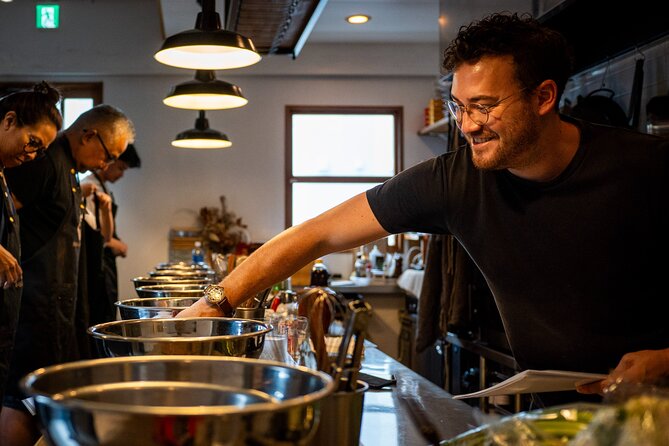
Making ramen from scratch is a very different lesson from stirring instant noodles into hot water. At Baba Ramen in Meguro, you work through the process with restaurant equipment and bilingual chefs, making noodles, broth, ramen components, and gyoza. The small group, capped at six, gives you room to ask questions and get useful corrections.
In This Article
- Key details before you book
- A real restaurant kitchen in Meguro
- What happens during the four-hour class
- Fresh noodles are the star
- Broth and the five parts of the bowl
- Gyoza adds a second skill
- The chefs and the feel of the lesson
- Is $159.18 good value?
- Dietary needs and practical limits
- What to bring and how to prepare
- Who will enjoy Baba Ramen most?
- Booking, cancellation, and the final meal
- Should you book this ramen class?
- FAQ
- Where does the ramen and gyoza class take place?
- What time does the class start?
- How long does the experience last?
- How many people can join the class?
- Is the class taught in English?
- Do I make ramen noodles from scratch?
- Is gyoza included?
- Can I request a special diet?
- Can I cancel for a full refund?
I like the hands-on pace and the fact that you eat what you make at the end. I also like the practical follow-up: a cooking e-book and recipes help you repeat the work at home. The main drawback is the price, $159.18 per person, and this is not a light demonstration. You should expect hot pans, oils, rolling, mixing, and real kitchen work.
Key details before you book
- You make fresh ramen noodles from scratch, not just toppings or broth.
- Gyoza is part of the class, giving you a second Japanese dish to prepare and eat.
- The group has a maximum of six people, so the chefs can give more individual help.
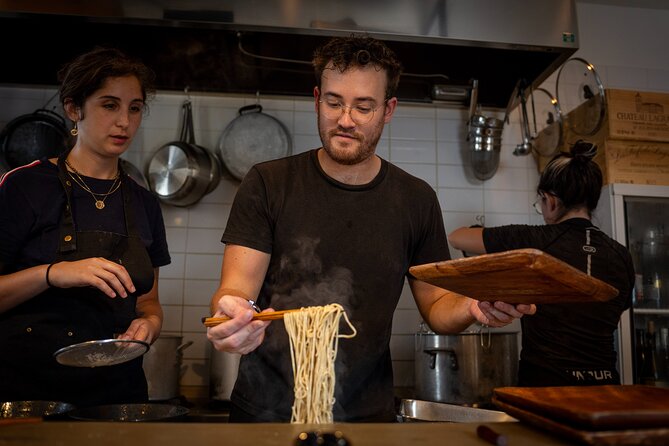
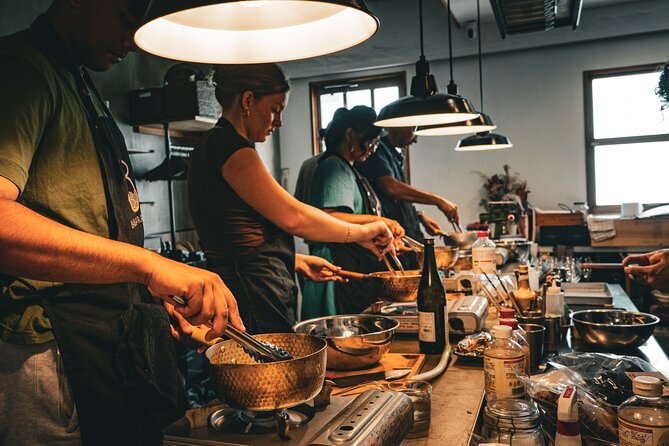
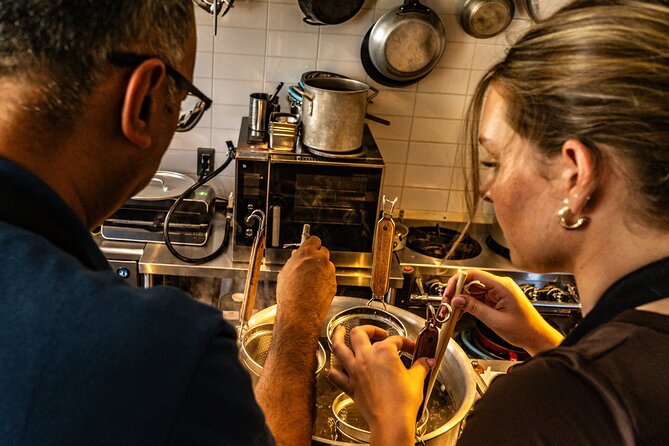
- The class takes place in a working restaurant, with professional kitchen-grade equipment.
- Two broth choices are available, with vegetarian, vegan, gluten-free, and pork-free options possible if requested in advance.
- The four-hour morning class starts at 9:00 a.m. at Baba Ramen Cooking Meguro in Tokyo’s Meguro City.
A real restaurant kitchen in Meguro
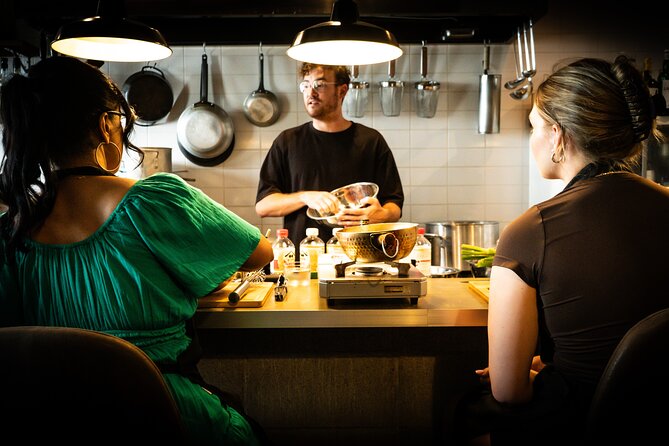
The class meets at Baba Ramen Cooking Meguro, at 3-chōme-7-32 Shimomeguro, Meguro City. It is near public transportation, and the activity returns to this same location. The morning start is early enough to leave the rest of your day open, but you should plan your route carefully and arrive ready to begin at 9:00 a.m.
The restaurant setting changes the feel of the class. You are not simply watching someone cook in a home kitchen. You use commercial equipment and handle ingredients in a space designed for food service. That gives the lesson a more workmanlike quality, which is useful if you want to understand how ramen is actually produced rather than only learn a simplified home recipe.
The room is also described as a small restaurant that becomes an Italian spot at night. That detail gives you a sense of the setting: compact, flexible, and built for serious cooking rather than a polished show kitchen. You may find the atmosphere less spacious than a large cooking school, but the trade-off is closer contact with the chefs.
Other cooking classes in Tokyo

What happens during the four-hour class
The exact order can vary, but the class takes you through the main parts of a bowl of ramen. The focus is not one quick recipe. You work on the noodles, broth, seasonings, toppings, and final assembly, along with gyoza.
You begin with the foundations of ramen. The chefs explain the process, the different varieties of ramen, and the role of each part of the bowl. They also cover Japanese food etiquette, so the lesson has a cultural side as well as a technical one.
The work can be more demanding than the word class suggests. One family described handling hot pans and oils, breaking down chicken bones, and rolling noodles. That is useful preparation for your expectations: you are involved in the cooking, but you also need to pay attention around heat and equipment.
Fresh noodles are the star
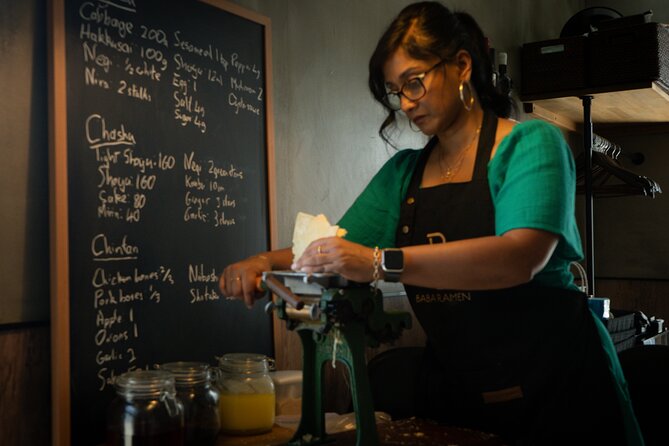
Making noodles from scratch is one of the most distinctive parts of this experience. You learn how dough becomes the springy noodles associated with ramen, rather than treating noodles as a ready-made ingredient.
The process gives you a better feel for the labor behind a bowl served in a Tokyo shop. You may leave with greater respect for the time, repetition, and precision involved. The class also includes shortcuts that reduce cooking time with limited compromise, which is helpful if you plan to recreate the dishes in a normal home kitchen.
Do not expect the shortcuts to make ramen effortless. The lesson makes clear that fresh ingredients, time, and hard work still matter. That is a useful lesson to take home, especially if you have assumed that a restaurant-style bowl can be assembled in a few minutes.
Broth and the five parts of the bowl
The class covers five layers of the ramen-making process, including the noodles. You work with fresh ingredients and learn how the parts come together instead of treating the broth as a single mysterious mixture.
There are two broth options, so you can choose based on taste. The supplied information does not specify the exact broth varieties, so you should ask the provider what will be offered on your date if that choice matters to you.
The chefs also explain the range of ramen styles and the purpose of the seasonings. This is valuable because ramen is not one fixed dish. Small changes in broth, tare, noodles, and toppings can produce a very different bowl.
At the end, you eat the ramen you helped prepare. That meal is more than a reward. It lets you judge the texture of your noodles, the balance of the broth, and the results of your work while the lesson is still fresh.
Gyoza adds a second skill
Gyoza keeps the class from becoming a single-dish exercise. You prepare the dumplings as part of the session, then eat them with the ramen.
The gyoza lesson also adds a social and tactile part to the morning. You handle the filling and wrappers, and the final meal gives you two familiar Japanese foods made by your own group. If you like cooking classes that keep your hands busy, this is a strong reason to choose this one.
The available information does not give a full step-by-step gyoza recipe or specify the filling. If you have dietary restrictions, mention them when you book and confirm what can be provided.
Other cooking classes in Tokyo



The chefs and the feel of the lesson
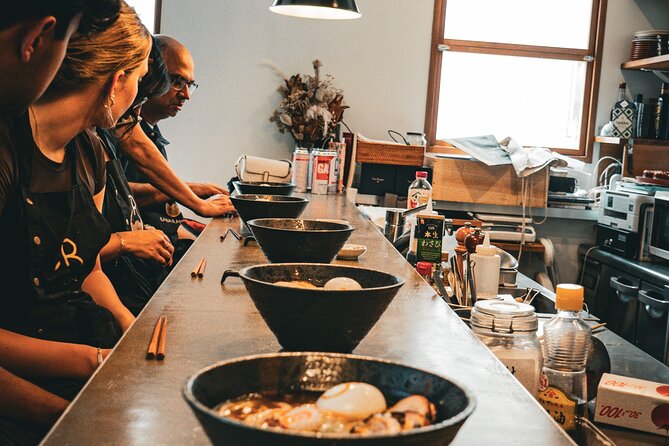
Baba Ramen uses bilingual local chefs who teach in English and Japanese. Andrew is named as part of the hosting team, and Eric, Jae, and Leo are also named in class feedback. Staff are described as organized, friendly, patient, and good at keeping the class moving.
That matters in a small kitchen. A four-hour cooking session can drag if instructions are unclear or if one person takes over. Here, the format calls for everyone to take part in the different stages, so you should expect regular guidance rather than a passive show.
The class also seems suited to mixed-age groups. One family noted that the chefs accommodated a 1.5-year-old. That does not mean the class is designed specifically for very young children, and hot pans and oil still require care, but it suggests a welcoming approach to families.
You should also be ready to work with the other people in your group. With a maximum of six, the social atmosphere may be a benefit if you enjoy meeting people over food. It could feel less comfortable if you prefer to cook alone or want a quiet, private lesson.
Is $159.18 good value?
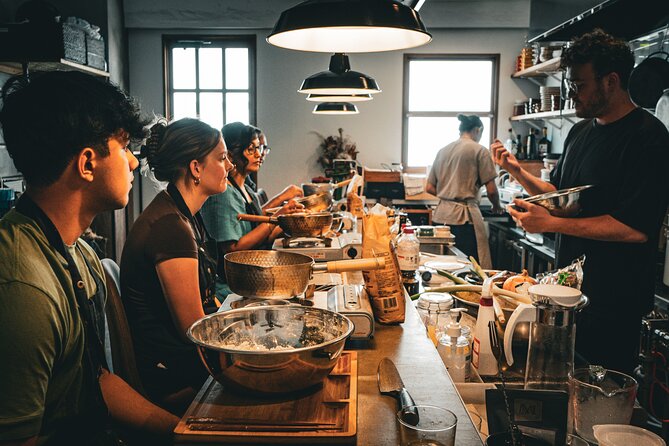
At $159.18 per person, this is a major cooking activity rather than a cheap lunch with a short demonstration. The price includes about four hours of instruction, ingredients, ramen, gyoza, restaurant use, and an e-book with recipes for home cooking.
I would judge the value by how much participation you want. If you only want to taste ramen, the price is hard to justify. Tokyo has far cheaper bowls. If you want to learn a process, ask questions, use professional equipment, and leave with recipes, the cost makes more sense.
The class also gives you an experience that is difficult to copy at home. Working through fresh noodles, broth, and gyoza in a restaurant setting lets you see the stages clearly. You are paying for instruction and access to the working kitchen, not just the finished meal.
The small group helps support that price. A six-person limit means the chefs have a better chance to see your technique and help when you need it. The value is strongest for people who cook at home, collect recipes, or regularly choose food classes while abroad.
Dietary needs and practical limits
Vegetarian and vegan versions are available, subject to availability. Gluten-free and pork-free options are also possible, but you need to comment on your request in advance. Do not wait until the morning of the class, especially if you have a serious allergy or need strict ingredient control.
One solo participant with several food allergies found the team communicative and willing to discuss alternatives. That is encouraging, but you should still state every restriction clearly at booking and confirm the arrangement before you go.
Service animals are allowed, and the meeting point is near public transportation. No separate accessibility details are provided, so contact Baba Ramen directly if you need information about kitchen access, seating, or movement around the cooking area.
The activity is listed as requiring good weather. That may seem unusual for an indoor restaurant class, but the cancellation terms say poor weather can lead to a new date or a full refund. The class also requires a minimum number of participants, so the same options apply if that minimum is not reached.
What to bring and how to prepare
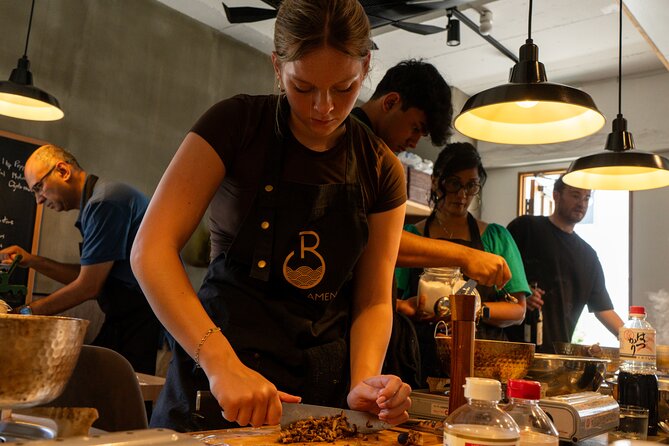
Wear clothes you can work in and shoes suited to a kitchen. The class involves hot pans, oils, dough, and active preparation, so this is not the morning for delicate clothing or shoes that make you feel unsteady.
Arrive with a good appetite, but do not expect to sit down for the entire morning. The class keeps you involved, and you may be working through several stages before the final meal. People who want an easy, low-effort activity should choose a ramen tasting instead.
It is also worth leaving space in your schedule afterward. The class ends back at the meeting point after roughly four hours, so a 9:00 a.m. start will take up most of the morning. You can then continue exploring Meguro or plan another Tokyo activity, but avoid booking something that requires you to leave at a precise time.
Who will enjoy Baba Ramen most?
I would recommend this class to home cooks, food-focused visitors, families with older children, and anyone who wants a practical memory from Tokyo rather than another sightseeing stop. It is especially good for people who enjoy understanding how a familiar dish is built.
It also works well for a solo participant. The six-person format gives you a built-in group, and the chefs keep the session social and active. English-speaking visitors should find the bilingual instruction useful.
You may want to skip it if you have limited time, dislike group activities, or want a simple meal. Four hours is a serious commitment, and the work can include hot equipment, dough preparation, and other kitchen tasks. The class is fun, but it is not effortless.
Booking, cancellation, and the final meal
Confirmation is provided at booking, and the experience ends at the original meeting point. You can cancel for a full refund up to 24 hours before the local start time. Changes or cancellations inside that window are not accepted for a refund.
If Baba Ramen cancels because of weather or because the minimum group size is not met, you are offered another date or experience, or a full refund. Check your booking details carefully, especially if you have dietary needs or a tight Tokyo schedule.
The final meal is the payoff, but the better souvenir is the method. You receive an e-book and recipes, and one participant had already begun making shoyu tare at home. That is a good sign for anyone who wants the class to continue after Japan.
Should you book this ramen class?
Book it if you want to make the food, not just eat it. The strongest features are the six-person limit, the restaurant kitchen, the fresh noodles, the gyoza, and the chefs’ effort to explain both technique and Japanese food culture.
At $159.18, it is expensive compared with a restaurant meal. It becomes fair value when you count the four hours of instruction, the meal, professional equipment, dietary planning, and recipes for home use. I would book it early if you have a fixed Tokyo itinerary, then send dietary requests well ahead of time.
Skip it if your schedule is tight or you prefer a relaxed tasting experience. For everyone else, Baba Ramen offers a useful, filling way to understand why a good bowl of ramen takes far more work than it seems.
FAQ
Where does the ramen and gyoza class take place?
The class starts and ends at Baba Ramen Cooking Meguro, 3-chōme-7-32 Shimomeguro, Meguro City, Tokyo 153-0064, Japan.
What time does the class start?
The listed start time is 9:00 a.m.
How long does the experience last?
The activity lasts approximately four hours.
How many people can join the class?
The maximum group size is six participants.
Is the class taught in English?
The local chefs teach in both English and Japanese.
Do I make ramen noodles from scratch?
Yes. The experience includes making authentic, restaurant-quality ramen noodles from scratch.
Is gyoza included?
Yes. You prepare gyoza as part of the cooking session and eat it with the ramen.
Can I request a special diet?
Vegetarian, vegan, gluten-free, and pork-free options may be available, subject to availability. You should state your needs in the booking request in advance.
Can I cancel for a full refund?
Yes, if you cancel at least 24 hours before the experience start time. Cancellations or changes made less than 24 hours before the start are not refunded.
More Dining Experiences in Tokyo
More Cooking Classes in Tokyo
More Cooking Classes in Tokyo
More tours in Tokyo we've reviewed












Dining Experiences, compared.
 ★ 5.0Tokyo Bar Hopping Tour in Shinjuku (All-You-Can-Drink + Dinner)From $106
 ★ 4.8Tokyo: Sumo Show and Dining ExperienceFrom $7990 minutes - 2 hours
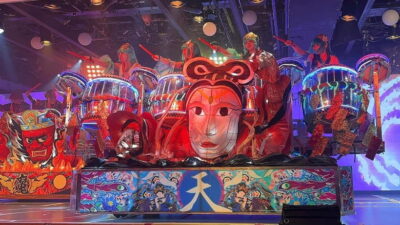 ★ 4.5Tokyo: Samurai Restaurant Show Ticket with 2 DrinksFrom $551h 30m
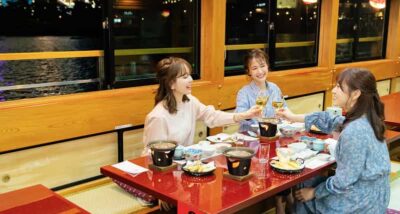 ★ 4.6Sumida River: Japanese Traditional Yakatabune Dinner CruiseFrom $1032h 30m
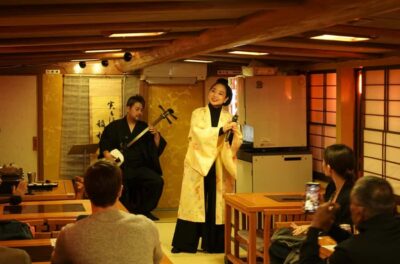 ★ 4.7Tokyo: Yakatabune Dinner Cruise with Japanese Show & DrinksFrom $104
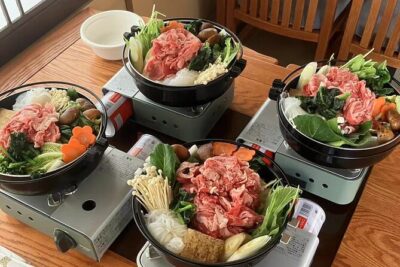 ★ 4.5Tokyo Bay Yakatabune Dinner/Day Cruise with Japan Show and DrinksFrom $65