Reviewed · MT FUJI DAY TRIPS
Mt.Fuji Private SightSeeing Day Tour (From Tokyo)
Mount Fuji is the star, but this private day tour gives you much more than a quick photo stop. In roughly 10 hours, you can reach the 5th Station, walk through Oshino Hakkai, visit forest shrines, and take in the mountain from Lake Kawaguchiko.
In This Article
- Key points to know before booking
- Why a private Mount Fuji day makes sense
- Mount Fuji 5th Station at 2,300 meters
- Oshino Hakkai and its clear spring ponds
- Kitaguchi Hongu Fuji Sengen Shrine under the cedars
- Arakura Fuji Sengen Shrine and the Chureito Pagoda view
- Lake Kawaguchiko and the north-shore views
- Oishi Park’s flowers and Fuji-shaped snacks
- Saiko Iyashi no Sato Nenba and the rural side of the region
- Fugaku Wind Cave in the Aokigahara forest
- A long day with a practical rhythm
- Lunch, entry fees, and what the price covers
- Who should book this Mount Fuji tour
- Should you book it?
- FAQ
- How long does the Mount Fuji private tour last?
- How many people can join the private tour?
- Is pickup offered in Tokyo?
- Is lunch included?
- Are attraction admission fees included?
- What transportation is provided?
- Can I cancel for a full refund?
- Does the tour visit both the Wind Cave and Ice Cave?
I like the comfort of a private car and the chance to adjust the day around your interests. I also like the mix of sacred sites, village life, spring-fed ponds, gardens, and volcanic caves. The main drawback is distance: with Tokyo traffic and many stops, several visits last only 30 minutes, and clear views of Fuji are never guaranteed.
Key points to know before booking
- Private vehicle for up to six people: The $564.68 group price makes the strongest value case for families and small groups.
- A full Fuji Five Lakes sampler: You see shrines, Oshino Hakkai, Kawaguchiko, Oishi Park, and a lava cave in one day.
- Guides named Moon and Imran: Past guest feedback gives special praise to their flexibility, cultural explanations, comfort, and help with timing.
- Travel time is part of the 10-hour day: Tokyo to the Fuji area can take a large share of your schedule, especially in traffic.
- Lunch and attraction entry fees are extra: Bring room in the budget for food and paid cave admission.
- Check the cave plan before departure: The tour description names both Wind Cave and Ice Cave, but the timed route specifically lists Fugaku Wind Cave.
Why a private Mount Fuji day makes sense
Mount Fuji is not a quick hop from central Tokyo. A private vehicle changes the feel of the outing. You are not working around a large group, waiting for a coach, or trying to connect several regional buses. You can also ask for help with photographs, adjust the pace, and spend more time at the stops that appeal to you.
The vehicle includes air-conditioning, WiFi, bottled water, parking fees, fuel surcharge, highways, and tolls. Those inclusions matter on a long day. You are paying for convenience as much as sightseeing, and the arrangement works best when you can fill most of the six seats.
At the full six-person capacity, the price comes to about $94 per person. For two people, it is a much more expensive day than a public bus or shared excursion. For a family or group of friends, though, the private setup can be reasonable, especially if comfort and control are high priorities.
The tour has been led by guides named Moon and Imran. Moon received particular praise for adapting the route to personal preferences and sharing observations about Japanese life and culture. Imran was praised for explaining the stops clearly, keeping the car comfortable, helping with Fuji photographs, and watching traffic for a traveler with an appointment afterward. Your assigned guide may differ, but those comments show the kind of service this format can provide.
A few more Tokyo tours and experiences worth a look
Mount Fuji 5th Station at 2,300 meters
The 5th Station is the highest point on this route, at about 2,300 meters above sea level. It is a popular stopping point for people who want a mountain view without climbing Fuji. The elevated position gives you broad views toward Fujiyoshida City, the Fuji Five Lakes area, and Lake Yamanaka.
You have about 30 minutes here, so keep your visit focused. The Komitake Shrine observation point, behind the shops, is noted for unobstructed views. If Fuji is hidden by cloud, the stop still offers a sense of the mountain’s scale, but the payoff depends heavily on weather.
The short visit is practical rather than leisurely. You may have time for the viewpoint, a quick look around the shops, and photographs. If you want a slower mountain experience, ask your guide early in the day whether the schedule allows extra time here.
Oshino Hakkai and its clear spring ponds
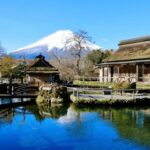
Oshino Hakkai gives the day a gentler change of pace. The village is known for eight ponds fed by snowmelt from Mount Fuji. The water filters through porous volcanic layers for more than 80 years before reaching the springs, which explains its striking clarity and local importance.
You have one hour to walk around. Traditional houses, water, and views toward Fuji make this one of the more scenic stops, but it is also a busy tourist area. Go expecting a popular attraction, not a quiet rural village untouched by tourism.
This is also one of the suggested places for lunch. Food is not included, so the one-hour stop may be your most convenient chance to eat. If you want to linger over the ponds and houses, keep lunch simple and watch the clock.
Kitaguchi Hongu Fuji Sengen Shrine under the cedars
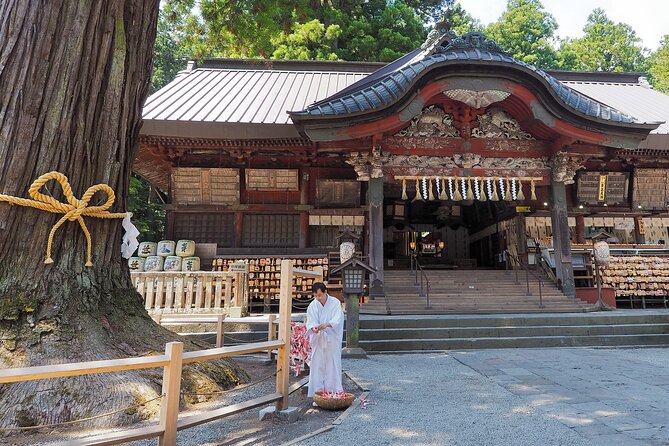
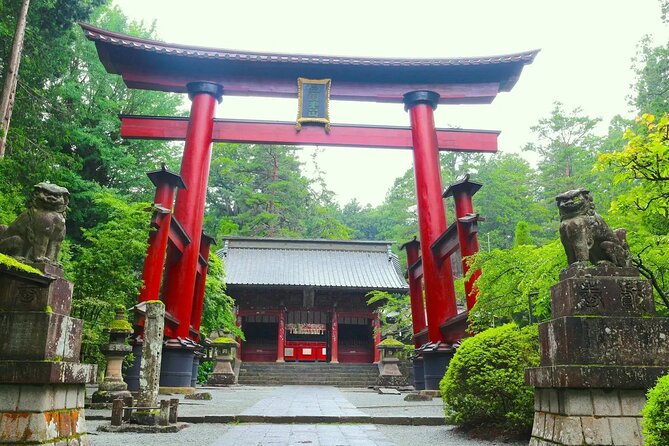
Kitaguchi Hongu Fuji Sengen Shrine offers a stronger sense of place than a standard viewpoint. It was once a common starting point for climbing Mount Fuji from the north. A long approach leads from the road through tall cedar trees and stone lanterns.
The red-painted buildings include a main hall dating from 1615, a dancing stage, and smaller buildings. You have about 30 minutes, enough to walk the approach, see the main structures, and pause in the forest.
This stop is valuable because it connects the mountain to Japanese religious practice. Fuji is not only a scenic subject. It has long been treated as a sacred peak, and this shrine helps you understand that connection without requiring a long museum visit or a strenuous walk.
Arakura Fuji Sengen Shrine and the Chureito Pagoda view
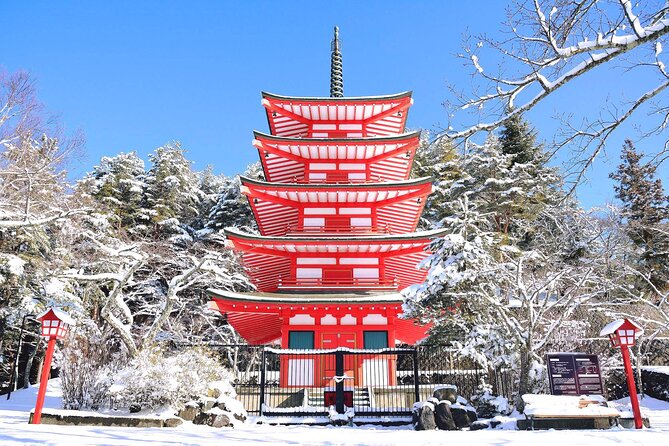
Arakura Fuji Sengen Shrine dates from 705 and sits at the foot of Mount Fuji. Its grounds include about 650 cherry trees, and the nearby park is famous for the classic view of Mount Fuji, the five-story Chureito Pagoda, and, in spring, cherry blossoms.
The route allows 30 minutes here. That is enough for a focused visit, but you should know that the well-known pagoda view usually involves an uphill approach and stairs. The exact time available can affect how far you get, so ask your guide about the best photo point when you arrive.
Spring is the famous season for the Fuji, pagoda, and blossoms combination. At other times, you still get the shrine, pagoda, and mountain setting, but the flowers will not provide the same color.
Other private tours in Tokyo


Lake Kawaguchiko and the north-shore views
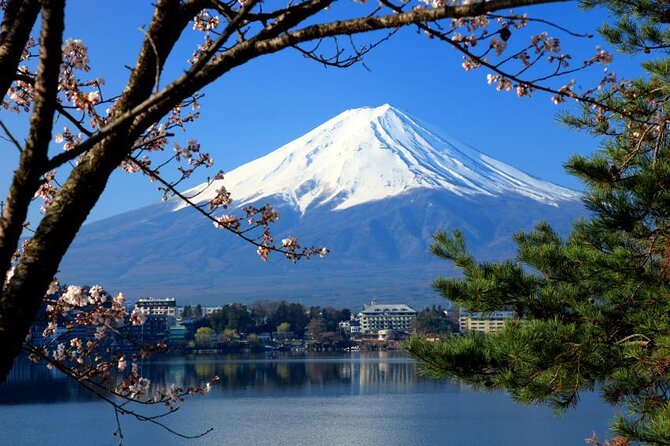
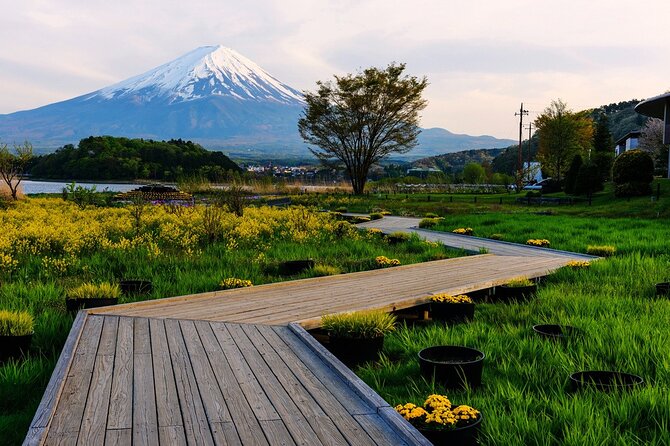
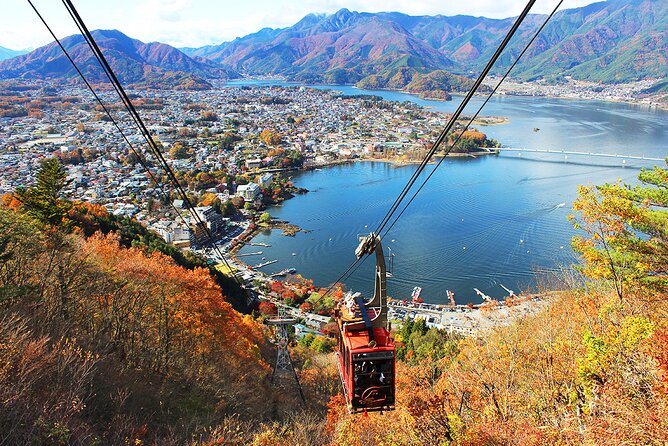
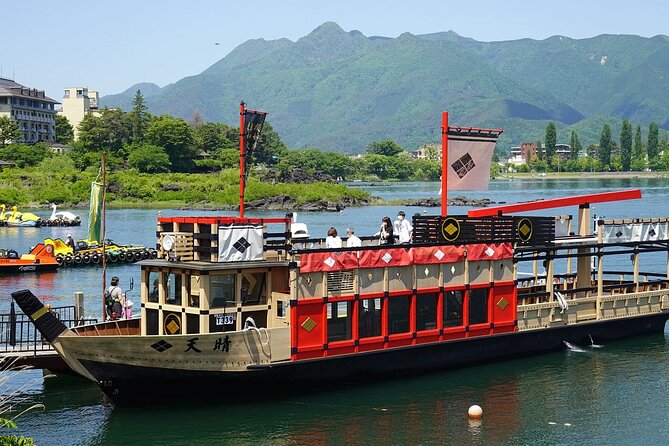
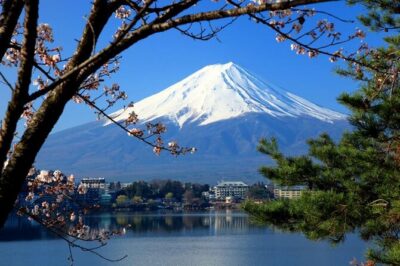
Lake Kawaguchiko is one of the tour’s main scenic pauses. The best views of Fuji are found along the northern shore, where the mountain can reflect across the water when conditions cooperate.
You have about an hour at the lake. That gives you time to enjoy the shoreline and take photographs without treating the stop as a rushed roadside break. The lake also provides a useful contrast to the higher 5th Station. At the station, you look across the region from above. Here, you see Fuji framed by water and nearby shorelines.
Weather remains the deciding factor. Cloud can cover the summit even when the lake and surrounding area are pleasant. A private guide can help you make the most of changing conditions by adjusting the order of scenic stops, though no schedule can guarantee a clear mountain.
Oishi Park’s flowers and Fuji-shaped snacks
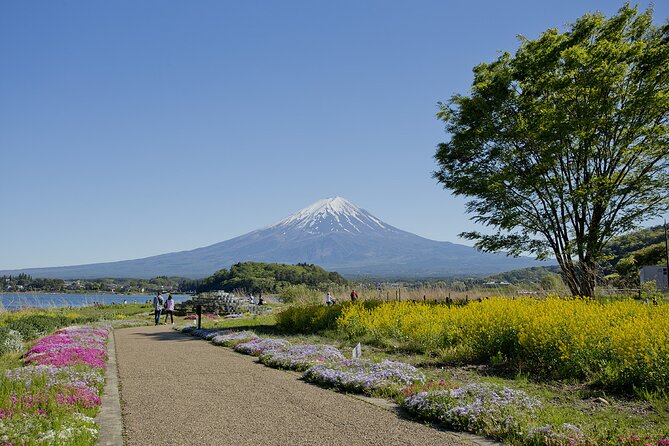
Oishi Park sits on the north shore of Lake Kawaguchiko and combines lake views with a planted promenade. Flowers change with the season, so the appearance of the park depends on when you visit.
The park is allotted 30 minutes. It is a good place for a quick walk, a clear view toward Fuji, and a snack. The park is known for charcoal cone soft-serve ice cream and a small Mount Fuji replica made from 256 volcanic rocks.
I like this stop because it is easy to enjoy without a major climb or a long museum visit. The limitation is time. If the flowers are at their best, half an hour may feel short, particularly if you also want the ice cream and photographs.
Saiko Iyashi no Sato Nenba and the rural side of the region
The tour overview includes Saiko Iyashi no Sato Nenba, a restored village that presents traditional rural life and crafts. This adds a cultural stop to a route otherwise heavy on scenery.
The timed stop list does not assign a separate duration to the village, so you should confirm whether it is included on your day and how it fits with the other visits. That matters because the schedule already includes seven timed stops, plus Tokyo driving, lunch, and possible traffic delays.
If the village is part of your final route, it may be especially appealing if you want more than viewpoints. The restored setting offers a look at traditional buildings and crafts, giving the day a human scale after the broad views from Fuji and the lakes.
Fugaku Wind Cave in the Aokigahara forest
Fugaku Wind Cave is a natural lava tube formed by Mount Fuji’s volcanic activity. It lies in the Aokigahara forest and has an average temperature of about 3 degrees Celsius, making it cool even during summer.
Inside, you can see lava shelves, rope-like lava formations, and ice pillars that can remain even in warm months. The scheduled visit lasts about 30 minutes, which is enough for a short cave experience rather than a long underground exploration.
Admission is not included. Wear shoes suitable for an uneven natural site, and consider bringing a light layer because the cave is cold. The cave adds variety to the day, but it is not the best choice for anyone who dislikes confined spaces or uneven ground.
The overview also names an Ice Cave. The detailed stop schedule specifically lists Fugaku Wind Cave and does not give a separate duration or admission price for an Ice Cave. Confirm the final cave arrangement before booking, especially if seeing both caves is important to you.
A long day with a practical rhythm
The schedule adds up quickly:
- 30 minutes at the 5th Station
- 1 hour at Oshino Hakkai
- 30 minutes at Kitaguchi Hongu Fuji Sengen Shrine
- 30 minutes at Arakura Fuji Sengen Shrine
- 1 hour at Lake Kawaguchiko
- 30 minutes at Oishi Park
- 30 minutes at Fugaku Wind Cave
That is five hours of listed sightseeing, leaving roughly five hours within the 10-hour day for driving, lunch, parking, and schedule changes. Tokyo traffic can use much of that margin.
You should treat this as a broad introduction to the Mount Fuji region, not a slow retreat in one lakeside town. The reward is range. In one day, you can see a sacred forest, clear spring ponds, a lake, a pagoda view, high mountain scenery, and volcanic formations.
The cost of that range is time at each place. If you want long walks, extended meals, or detailed visits inside every shrine and village, this route may feel hurried. If you want to see the area’s main sights without managing regional transport, its pace is sensible.
Lunch, entry fees, and what the price covers
Lunch is not included. The suggested food options include Renge Ramen, described as a leading ramen shop, or meals around Lake Kawaguchiko and Oshino Hakkai. Your guide can help fit lunch into the day, but the exact meal and cost are yours to arrange.
Attraction entry fees are also excluded. The Fugaku Wind Cave specifically lists an admission charge, while the shrine, lake, park, and Oshino Hakkai stops are shown without admission charges. Set aside extra money for the cave and any food or snacks.
The $564.68 price covers the whole group, up to six people. It also includes the vehicle, water, onboard WiFi, parking, fuel surcharge, highways, and tolls. I see the value most clearly for groups that would otherwise need several train or bus connections and want a private schedule.
Pickup and return are in Tokyo, and the tour is private, so only your group participates. Confirmation is provided at booking, and free cancellation is available until 24 hours before the start time. Changes or cancellations inside that 24-hour window are not accepted for a refund.
Who should book this Mount Fuji tour
I would consider this tour for a family, a group of friends, or anyone on a short Tokyo visit who wants a wide survey of the Fuji area in one day. It is also a good fit if you value a clean, comfortable private car and want a guide who can help with photographs, cultural context, and traffic timing.
The tour is less suitable if you are watching every dollar, prefer public transportation, or want a quiet day with only one or two stops. It may also disappoint you if your main goal is a guaranteed view of the summit. Fuji weather changes quickly, and the route cannot control clouds.
The 92-day advance booking average suggests that this experience is often planned well ahead. If your Tokyo dates are fixed, reserve early, then check the weather and route details as the day approaches.
Should you book it?
Book this private Mount Fuji tour if you want comfort, flexibility, and many different sights in a single day. The strongest reasons are the private vehicle, the broad route, and the ability of guides such as Moon and Imran to adjust the experience and help manage timing.
Skip it if you want a cheap, slow-paced outing or if you would rather spend the whole day at one lake. For six people sharing the cost, it can be a practical buy. For one or two people, compare the price carefully with public options before committing. Also confirm whether Saiko Iyashi no Sato Nenba and the Ice Cave are included in your final route, since the detailed timing names only Fugaku Wind Cave.
FAQ
How long does the Mount Fuji private tour last?
The tour lasts approximately 10 hours, including travel time between Tokyo and the Mount Fuji area.
How many people can join the private tour?
The price covers one private group of up to six people. Only your group participates.
Is pickup offered in Tokyo?
Yes. Pickup is offered, with the tour starting and ending in Tokyo, Japan.
Is lunch included?
No. Lunch is not included. Suggested meal locations include Renge Ramen, Lake Kawaguchiko, and Oshino Hakkai.
Are attraction admission fees included?
No. Attraction entry fees are not included. Fugaku Wind Cave specifically lists admission as extra.
What transportation is provided?
Transportation is in an air-conditioned private vehicle. Bottled water and WiFi onboard are included, along with parking fees, fuel surcharge, highways, and tolls.
Can I cancel for a full refund?
Yes. You can cancel at least 24 hours before the experience start time for a full refund. Cancellations or changes made less than 24 hours before the start time are not accepted for a refund.
Does the tour visit both the Wind Cave and Ice Cave?
The tour overview names both caves, but the detailed timed route lists Fugaku Wind Cave only. Confirm the final cave schedule with the provider before booking if both are important to you.
More Private Tours in Tokyo
More Mt Fuji Day Trips in Tokyo

More tours in Tokyo we've reviewed



Mt Fuji Day Trips, compared.
 ★ 5.0Mt Fuji and Hakone 1-Day Bus Tour Return by Bullet TrainFrom $163
 ★ 4.0Mt Fuji & Hakone Cruise, Drum Show Bullet Train 1 Day from TokyoFrom $149
 ★ 4.4Tokyo Mt Fuji 5th St & Hakone Cruise Bus Tour w/Bullet TrainFrom $15410 hours
 ★ 4.5From Tokyo: Mount Fuji Full-Day Sightseeing TripFrom $6810 hours
 ★ 4.7Tokyo: Mt. Fuji Tour, Hakone Ropeway, Owakudani, Lake AshiFrom $5410 hours
 ★ 4.4Tokyo:Mt.Fuji,Kawaguchiko Oishi Park,Arakurayama Sengen ParkFrom $5410 hours