Reviewed · GUIDED
Tokyo Small Group Tour with Guide
Tokyo is easiest to understand when someone helps connect its distant pieces. This 7 to 8-hour walking tour takes you from the Imperial Palace area to Asakusa, Harajuku, Meiji Jingu, and Shibuya Crossing, giving you a useful first look at both old and modern Tokyo.
In This Article
- Key points at a glance
- Why this route works for a first Tokyo day
- Starting beside the Imperial Palace
- Three hours around Asakusa and Senso-ji
- Harajuku brings a different side of Tokyo
- Meiji Jingu offers a quieter pause
- Ending at Shibuya Crossing
- What the guides add to the day
- Is $99 a fair price?
- Walking, weather, and practical planning
- Who should book this Tokyo tour?
- FAQ
- How long does the Tokyo Small Group Tour with Guide last?
- What time does the tour begin?
- Where does the tour meet?
- Where does the tour end?
- What sights are included?
- How many people can join the group?
- Are admission tickets included?
- Is food included?
- How much walking is involved?
- Can I cancel for a refund?
I like the small group limit of 15 people, which should make it easier to hear the guide and ask questions. I also like the route itself: you check off major sights without spending your first day studying train maps and timetables.
The tradeoff is simple: this is a long, active day. One participant counted more than 20,000 steps, so comfortable shoes and a reasonable level of fitness are essential.
Key points at a glance
- A full Tokyo sampler: See the Imperial Palace gardens, Senso-ji Temple, Harajuku, Meiji Jingu Shrine, and Shibuya Crossing in one day.
- A small group of up to 15: The size offers a more personal setting than a large coach tour.
- Strong guide element: Guides including Mary, Suzana, Daniel, Coral, and Tomas have been praised for explaining history, customs, culture, and modern Tokyo.
- Free-entry sights: The listed stops do not require an admission charge, so most of the $99 price pays for guiding and route planning.
- A demanding walking schedule: Plan for many hours on your feet, with more than 20,000 steps possible.
- Convenient one-way route: Meet at Starbucks Coffee in Kokyo Gaien Wadakura Fountain Park at 9 a.m. and finish near Shibuya Station.
Why this route works for a first Tokyo day

Tokyo can feel like several cities stitched together. The Imperial Palace area is formal and central, Asakusa preserves older religious and shopping traditions, Harajuku brings youth culture into the picture, and Shibuya shows the city at full modern speed.
This tour gives you that contrast in a single day. You do not simply visit temples or take photos at a famous crossing. You move through different parts of Tokyo while a guide explains how the city’s customs, beliefs, neighborhoods, and transport systems fit together.
That context is the main reason to consider paying $99. You can reach each sight on your own, but planning the route takes time. A guide also gives you the chance to ask why a place matters, how to behave at a shrine, or what you are looking at beyond the obvious photo opportunity.
The group limit of 15 is useful here. Tokyo’s busiest areas can be confusing, and a small party is easier to keep together than a large group. It also gives the guide a better chance to respond to questions.
The tour begins at 9 a.m., which is a sensible start for a long day. You finish at Shibuya Station, so the route does not return you to the starting point. That is convenient if you want to continue exploring Shibuya afterward, but remember to collect anything you need before setting out.
Other guided tours in Tokyo
Starting beside the Imperial Palace
The meeting point is Starbucks Coffee at Kokyo Gaien Wadakura Fountain Park, at 3-1 Kōkyogaien in Chiyoda City. You will want to arrive with enough time to find the café and identify your guide before the 9 a.m. start.
Your first major stop is the East Gardens of the Imperial Palace, including the remains of Edo Castle. The gardens offer a calm opening to the day, with open space and traces of the former castle complex. This is a good place for your guide to explain Tokyo’s political past before the route moves into more crowded districts.
The itinerary allows about an hour here. You will also see Nijubashi Bridge, one of the best-known views connected with the Imperial Palace. It is a worthwhile photo stop, though the palace grounds are not a traditional indoor palace tour. You are visiting gardens and castle remains rather than touring royal rooms.
Admission is listed as free. That helps the value of the tour, since you are not paying a separate entrance fee at the first stop.
Three hours around Asakusa and Senso-ji

Asakusa receives the longest block of time, about three hours, and that makes sense. It is the part of the route where you can slow down and look closely rather than simply take a picture and move on.
You walk along Nakamise-dori, a famous approach lined with shops and food stalls, toward Senso-ji Temple. The street is one of Tokyo’s most active historic approaches, and it gives you a clear sense of how religious sites and everyday commerce share the same space.
Senso-ji is Tokyo’s oldest Buddhist site. Even if you have visited major temples elsewhere in Japan, this stop gives you an important point of reference for Tokyo. Your guide can add meaning to the gates, temple grounds, customs, and visual details that are easy to miss when you are moving alone.
Three hours is generous compared with many city tours. That is good news if you want time for photos and questions. It can also make the day feel long, especially if you are not used to walking on hard city streets for hours at a time.
The supplied information does not promise a meal break or a dedicated shopping period, so plan your expectations carefully. You may find food along Nakamise-dori, but the tour should be treated first as a guided sightseeing day, not a food tour or shopping excursion.
Harajuku brings a different side of Tokyo
The route then shifts to Harajuku, with about 90 minutes near Harajuku Station. This is a sharp change from the palace grounds and Asakusa’s Buddhist setting.
Harajuku is known for its colorful youth style and busy commercial energy. You get a chance to see the district as part of Tokyo’s modern identity, rather than treating the city as only temples and imperial landmarks.
The timing here is long enough for a proper neighborhood walk and some photos. It is not presented as a specialist fashion or food tour, so the value depends on what you want from Harajuku. If you want a quick introduction and a guide’s explanation of the area, it fits well. If you want to browse every shop at your own pace, the group schedule will limit you.
This is one reason I would use the tour as a first-day orientation rather than your only Tokyo experience. After learning the basic layout, you can return to Harajuku later and explore independently.
Meiji Jingu offers a quieter pause

Meiji Jingu Shrine receives another 90-minute visit. It is described as Tokyo’s most famous Shinto shrine, and it adds an important cultural counterpoint to Senso-ji.
At Senso-ji, you are visiting a Buddhist temple. At Meiji Jingu, you encounter Shinto traditions. Having both on the same route gives you a clearer view of Japan’s religious life and the different customs connected with major sacred places.
Your guide is especially useful here. The tour is designed to explain customs and beliefs, not just point out buildings. Mary, one of the named guides, was praised for giving background on Japanese culture, history, and local customs. Coral was also singled out for making the city’s history and culture engaging. Guides can vary by date, so you should not book expecting a specific person unless the provider confirms it.
The shrine stop also helps break up the city streets. You will still be walking, but the setting offers a different pace from the commercial districts. As always, behave respectfully at religious sites and follow your guide’s instructions.

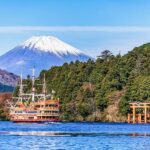
Ending at Shibuya Crossing

The final stop is Shibuya Crossing, with about 30 minutes set aside for the experience. This is the tour’s most recognizable modern photo stop, and it provides a lively finish after the palace, temple, shrine, and neighborhood walks.
You watch the crossing in action and end near Shibuya Station. The half-hour window is enough to see the intersection and take photos, but not enough for a full visit to Shibuya’s shops, cafés, or department stores.
That is not a flaw if you use the ending well. You can treat the guided portion as your introduction, then remain in Shibuya after the tour if you want more time. Since the endpoint is Shibuya Station, continuing on your own is straightforward in principle, though the tour information does not specify a particular onward route.
What the guides add to the day

The guide is the heart of this experience. The sights themselves are free, and you could reach them independently, so the tour earns its price through explanation, navigation, and pacing.
The named guides in the feedback include Mary, Suzana, Daniel, Coral, and Tomas. The strongest praise centers on their ability to explain more than dates and names. You can expect the guide to discuss Japanese culture, customs, beliefs, history, and the contrast between traditional and modern Tokyo.
One especially useful detail is the attention to Tokyo’s railway lines. Suzana helped connect the city’s sights with its transport network, which matters because rail travel is central to getting around Tokyo. Even if the tour does not promise a formal train lesson, that kind of explanation can help you make sense of the city after the tour ends.
Tomas was praised for clearly explaining the sights, with the practical warning that his group walked more than 20,000 steps. Daniel was described as offering a great deal of information while keeping the day fun. Those details point to a tour that depends on the individual guide, but the overall guide approach appears to be a major strength.
Is $99 a fair price?

At $99 per person, this is not the cheapest way to see Tokyo’s famous landmarks. The listed stops do not charge an admission fee, and you could visit many of them by using Tokyo’s public transport and a guidebook.
Still, the comparison is not simply $99 versus free. You are paying for a full-day route, a guide, group coordination, historical and cultural explanation, and the time saved by not planning the sequence yourself.
I think the price is reasonable for a first visit if you value structure and interpretation. It is less compelling for an experienced Tokyo visitor who already knows the neighborhoods and enjoys making an independent route.
The small-group cap improves the value. A group of 15 is not private, but it is more manageable than a large sightseeing bus. You should also remember that personal travel insurance is not included, and meals or personal purchases are not listed as inclusions.
Walking, weather, and practical planning

The physical demand deserves serious attention. This is described as a walking tour, and the stops cover a large portion of Tokyo. Wear shoes you can use comfortably for a full day, and avoid planning a demanding evening immediately afterward.
A moderate level of physical fitness is advised. The exact step count will vary, but the reported 20,000-plus steps give you a useful warning. If you have mobility concerns, contact the provider before booking rather than assuming the route can be shortened.
The experience requires good weather. If poor weather causes cancellation, you will be offered another date or a full refund. Otherwise, you can cancel for a full refund up to 24 hours before the start time. Changes or cancellations made inside that window are not accepted for a refund.
The tour is near public transportation, begins at 9 a.m., and ends at Shibuya Station. Service animals are allowed. You receive confirmation when booking, and the mobile ticket makes it easy to keep the booking details with you.
Who should book this Tokyo tour?
I would recommend it most strongly to first-time visitors who want a clear overview before exploring Tokyo on their own. It is also a good fit if you have only one open day and want to see several major districts without handling the planning yourself.
You should book if you like asking questions, learning cultural context, and moving at a steady group pace. The guides are the main reason to choose this option over an independent day.
I would be cautious if you dislike long walks, want lots of free time at each sight, or prefer to focus on one neighborhood. The route covers a great deal, but that means the day is scheduled and physically demanding.
The 95 percent recommendation rate and 4.7 rating from 38 reviews support the tour’s strong reputation, especially for guide quality and first-visit value. Those numbers cannot guarantee which guide you will have or how your particular day will unfold, but they fit the experience described here: an efficient, informative introduction with a lot of pavement underfoot.
FAQ
How long does the Tokyo Small Group Tour with Guide last?
The tour lasts approximately 7 to 8 hours.
What time does the tour begin?
The tour starts at 9 a.m.
Where does the tour meet?
You meet at Starbucks Coffee in Kokyo Gaien Wadakura Fountain Park, 3-1 Kōkyogaien, Chiyoda City, Tokyo 100-0002, Japan.
Where does the tour end?
The tour ends at Shibuya Station, near the famous Shibuya Crossing.
What sights are included?
The route includes the East Gardens of the Imperial Palace and Edo Castle ruins, Nijubashi Bridge, Asakusa, Nakamise-dori, Senso-ji Temple, Harajuku, Shibuya Crossing, and Meiji Jingu Shrine.
How many people can join the group?
The maximum group size is 15 people.
Are admission tickets included?
The listed admission tickets for the stops are free. The experience includes a hand-picked expert tour guide.
Is food included?
Food is not listed as an inclusion. Personal purchases are also not specified as included.
How much walking is involved?
There is a considerable amount of walking, and a moderate level of physical fitness is recommended. Comfortable walking shoes are important. One reported tour involved more than 20,000 steps.
Can I cancel for a refund?
You can cancel up to 24 hours before the start time for a full refund. Cancellations or changes made less than 24 hours before the experience are not refunded or accepted. If poor weather causes the tour to be canceled, you will be offered another date or a full refund.
More Guided Tours in Tokyo



More tours in Tokyo we've reviewed












Guided, compared.
 ★ 5.0Tokyo 6hr Private Tour with Government-Licensed GuideFrom $155
 ★ 4.9Tokyo: Shinjuku Local Bar and Izakaya Guided Walking TourFrom $343 hours
 ★ 4.8Tokyo: Private City Highlights Tour with Local GuideFrom $1064 - 8 hours
 ★ 4.9Tokyo: Tsukiji Fish Market Guided Walking TourFrom $222 hours
 ★ 5.0Tokyo 4hr Private Tour with Government-Licensed GuideFrom $109
 ★ 5.0Tokyo Guided Small-Group Biking TourFrom $106