Reviewed · TOKYO FOOD TOURS
Hidden Bites of Shinjuku A Foodie Walk Tour With A Local Expert
Shinjuku’s best food experiences often hide behind narrow doors and lantern-lit alleys. This four-hour walk takes you through Golden Gai, Kabukicho, Omoide Yokocho, and nearby sights while a local guide chooses the dishes and explains the area. Guides such as Naoto, Chisato, and Kato have been praised for their patience, food knowledge, and local stories.
In This Article
- Key points at a glance
- Why Shinjuku works so well for a food walk
- Starting near Shinjuku Station
- Golden Gai: tiny bars and a look at old Shinjuku
- Kabukicho and the neon side of Tokyo
- Hanazono Shrine: a quiet pause beside the alleys
- Omoide Yokocho and simple food-stall fare
- Don Quijote and everyday Shinjuku
- Godzilla Road and the famous Godzilla Head
- What you actually eat and drink
- The guide makes the difference
- Is $190 a fair price?
- Who should book this walk?
- Booking, cancellation, and practical details
- Should you book Hidden Bites of Shinjuku?
- FAQ
- Where does the tour start?
- Where does the tour end?
- How long does the tour last?
- How many people can join?
- How many restaurants does the tour visit?
- What food is included?
- Are drinks included?
- Is hotel pickup included?
- Which Shinjuku sights are included?
- Can I cancel for a refund?
I like the small group of eight or fewer, which gives you a better chance to ask questions and keep the pace personal. I also like the broad mix of stops: you get food, sweets, drinks, Shinto culture, nightlife districts, and famous Shinjuku landmarks in one outing. The main drawback is the $190 price, especially since alcoholic drinks cost extra and hotel pickup is not included.
Key points at a glance
- Up to four restaurants: Taste several local dishes rather than committing to one long meal.
- A small group of eight: The size suits questions, conversation, and walking through tight alleys.
- Food plus Shinjuku landmarks: See Golden Gai, Kabukicho, Hanazono Shrine, Omoide Yokocho, Don Quijote, and Godzilla Head.
- Soft drinks, water, and desserts included: Alcohol is available to buy separately.
- Guides with a personal touch: Naoto, Chisato, and Kato are noted for helping with directions and explaining food and local history.
- Four hours on foot: Wear comfortable shoes and expect an urban walk between tasting stops.
Why Shinjuku works so well for a food walk
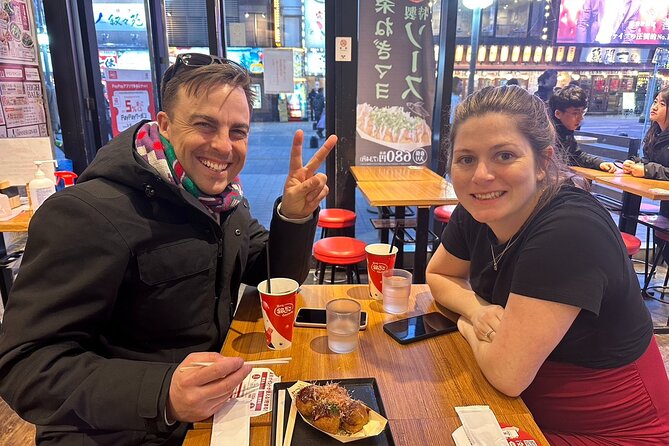
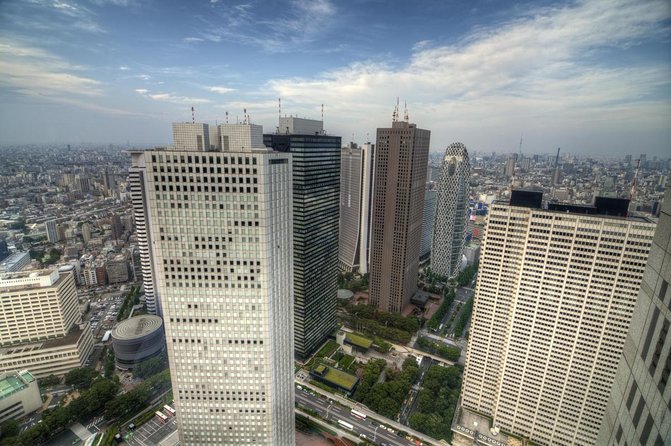
Shinjuku is known for shopping, neon, and late-night entertainment, but food gives you a more useful way to read the district. A restaurant doorway, a tiny bar, a shrine tucked beside narrow lanes, and a row of food stalls can tell you more about local life than a quick pass through the big commercial streets.
This tour keeps the focus on places that are popular with locals rather than only the most obvious sights. You still see famous landmarks, but the meal is spread across several stops. That matters in Japan, where a small serving at one restaurant can be followed by a different dish somewhere else, then a sweet or drink later.
You should expect a walking experience, not a formal sit-down meal with a fixed menu. The guide selects local dishes at three or four restaurants, with soft drinks and water included. The exact foods are not specified in advance, so this suits you if you enjoy trying unfamiliar items and letting the guide shape the meal.
The group limit of eight is one of the tour’s practical strengths. Shinjuku’s old alleys can be cramped, and a large group would make conversation and restaurant entry harder. With fewer people, you can ask about ingredients, customs, or the history of an area without having to compete with a crowd.
A few more Tokyo tours and experiences worth a look
Starting near Shinjuku Station
The meeting point is at Shinjuku Station, at 3-chōme-38-1 Shinjuku. This is a sensible starting point for a walking tour, since the station is close to several of the central sights and the tour ends back at the meeting point.
Give yourself time to find the exact exit. One useful detail from the guide experience is that Naoto helped a late-arriving participant reach the right place by sending photos and identifying the southeast exit, known locally as Tounan Guchi. If you are delayed, the practical lesson is simple: contact the operator and be ready to show a taxi driver the Japanese station exit name.
Hotel pickup and drop-off are not included. You handle your own way to and from the station, but the meeting point is near public transportation.
Golden Gai: tiny bars and a look at old Shinjuku
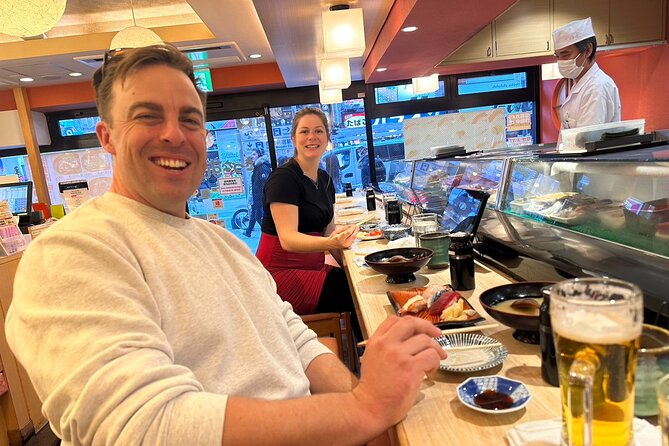
Golden Gai is only a short walk from the East Exit of Shinjuku Station, between the Shinjuku City Office and Hanazono Shrine. Its narrow lanes are packed with small buildings and even smaller drinking places. The area offers a sharp contrast to Shinjuku’s broad commercial streets and giant signs.
The tour allows about 30 minutes here. That is enough time to look closely, hear the guide explain the district, and get a feel for its unusual layout without treating it as a stand-alone bar crawl.
Golden Gai is especially valuable early in the walk because it gives context to the food and nightlife that follow. You see how much of Shinjuku’s character comes from compact, independent spaces rather than only large restaurants and department stores.
Do not expect every tiny bar to be part of the meal. The point is to see the district and understand its place in Shinjuku. Some lanes can feel tight, and the nightlife setting may not appeal to everyone, particularly if you prefer quiet streets or open spaces.
Kabukicho and the neon side of Tokyo
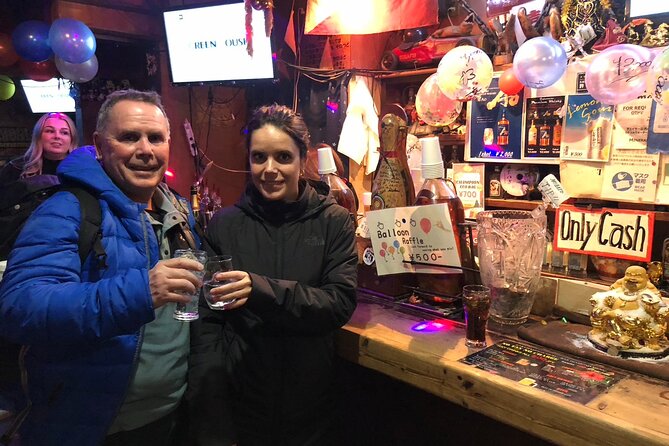
The next major area is Kabukicho, Shinjuku’s famous entertainment district. The tour spends about 45 minutes here, giving you time to see its lantern-lit alleys, clubs, pubs, restaurants, and late-night businesses.
Kabukicho is best approached with a guide because the district has many layers. It is a major nightlife center, but the walk is not presented as an adult entertainment outing. Instead, you get an introduction to one of Tokyo’s most recognizable urban districts while moving between food stops and landmarks.
The guide can also help separate what is worth seeing from what is simply designed to attract attention. That is useful around large signs and themed attractions, where it is easy to spend time without learning much about the neighborhood.
This is one reason the tour fits first-time visitors well. You get the spectacle of Kabukicho, but you are not left to work out the district’s layout or meaning on your own.
Hanazono Shrine: a quiet pause beside the alleys
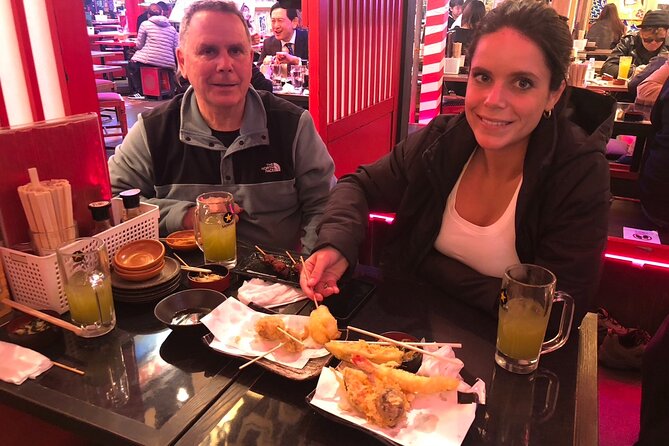
Hanazono Shrine is described as the most important Shinto shrine near Shinjuku Station. It sits beside Golden Gai, making it one of the tour’s most interesting contrasts.
Allow about 30 minutes here. After the tight lanes and entertainment signs, a shrine visit gives the walk a slower rhythm. You can see how a place of worship remains close to one of Tokyo’s most active nightlife areas.
The stop also adds cultural balance. Without it, the tour could feel like a simple food and bar district walk. With the shrine, you get a reminder that Shinjuku is not only about restaurants, shopping, and late-night activity.
The shrine is a sightseeing stop rather than a separate meal. Your guide’s explanation matters here, since a short visit becomes more useful when you understand why the shrine is important and how it fits into the surrounding neighborhood.
A few more Tokyo tours and experiences worth a look


Omoide Yokocho and simple food-stall fare
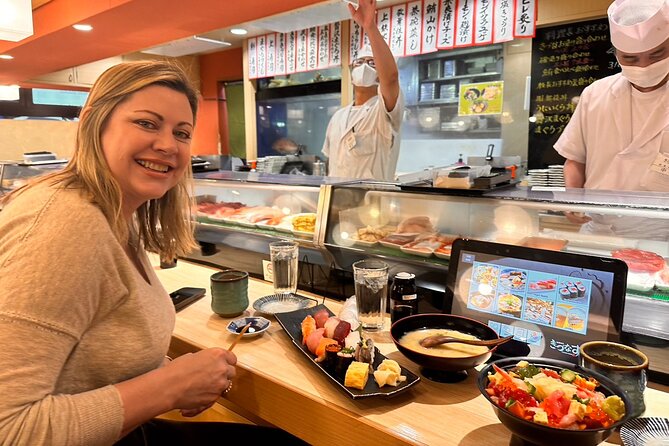
Omoide Yokocho, also called Memory Lane, is a landmark alley lined with food stalls serving simple dishes and alcoholic drinks. The tour allows roughly 30 minutes in this area.
The appeal is its directness. You are not looking for polished dining rooms or elaborate presentation. This is the sort of place where the setting, the small scale, and the food-stall atmosphere are part of the experience.
Because the tour visits several restaurants, Omoide Yokocho works well as one piece of the larger meal rather than the only destination. You can compare the feel of this alley with Golden Gai and Kabukicho, each of which has a different character despite being close together.
Alcoholic drinks are not included in the tour price, so you should budget extra if you want beer, sake, or another drink at a stop. Soft drinks and water are included.
Don Quijote and everyday Shinjuku
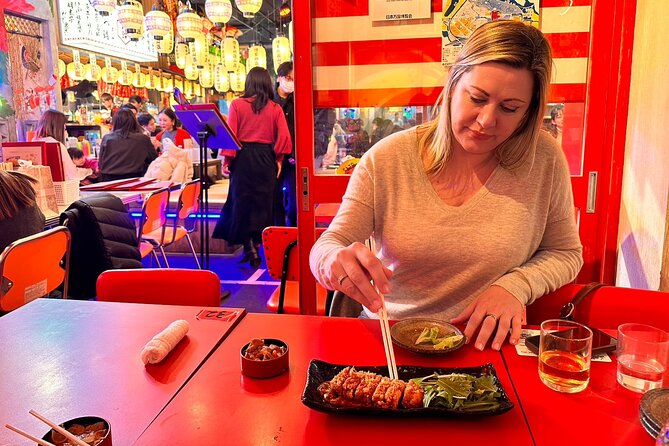
The walk also includes Don Quijote Shinjuku Kabukicho, located at the entrance to Kabukicho. This store sells groceries, toys, footwear, and other goods, making it a useful stop for seeing the everyday retail side of the district.
A visit here breaks up the restaurant stops and shows a different part of Japanese city life. Don Quijote stores are known for packed shelves and a wide range of products, so this is not a quiet shopping experience. You may find it amusing, overwhelming, or both.
The tour gives this stop about 30 minutes. That is enough for an introduction and perhaps a quick look around, but it is not designed as a dedicated shopping trip. If you want souvenirs, snacks, or odd practical items, you may find ideas here, but shopping is not the main purpose of the experience.
Godzilla Road and the famous Godzilla Head
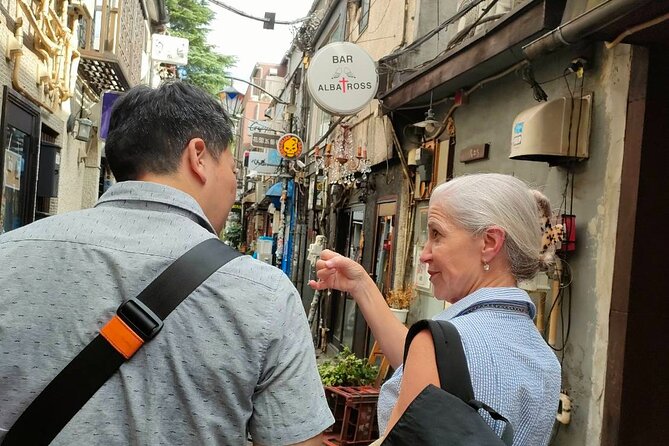
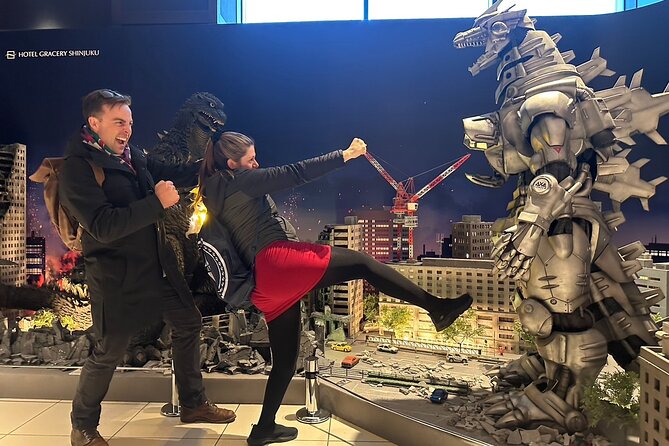
The final major sightseeing section includes Godzilla Road and Godzilla Head. The sculpture is attached to the Shinjuku Toho Building and can be seen from Hotel Gracery Shinjuku’s Godzilla Terrace.
The tour allows around 45 minutes for this area. Godzilla Head is an easy landmark to recognize and a fun finish to a walk through Shinjuku’s more serious cultural and historic spaces.
This stop also reinforces the tour’s variety. In four hours, you move from a Shinto shrine to old drinking alleys, from food stalls to a giant movie monster. That mix is very much the appeal of Shinjuku. The area does not fit one tidy description, and the walk lets you see several versions of it.
You should keep expectations realistic. Godzilla Head is a landmark and photo stop, not a full attraction with a long indoor visit included in the tour.
What you actually eat and drink
The tour includes local dishes selected by the guide, food at three or four restaurants, desserts, soft drinks, and water. The wording does not provide a fixed menu, so you should not book expecting a particular dish.
That flexibility can be a benefit. A guide can choose food suited to the route and explain what you are eating as the evening develops. It also means you can experience several smaller tastes instead of spending the entire tour on one meal.
The food is likely to be the main reason you book, so it is worth understanding the format. This is not simply a restaurant reservation with a guide attached. The meal is tied to the walk, the neighborhoods, and the guide’s choices.
Alcohol is excluded but available for purchase. If drinks are important to you, add that cost to the $190 price. Soft drinks and water are already covered, which keeps the basic arrangement clear.
The dessert course is another useful detail. A savory food walk can become heavy, while a sweet finish gives the meal a more complete shape. The exact dessert is not listed, so again, you need to be comfortable with some surprise.
The guide makes the difference
The strongest personal element of this experience is the guide. Naoto has been singled out for helping someone who was running late and needed clear directions to the meeting point. That kind of practical help matters in a station as large and confusing as Shinjuku.
Chisato is noted for explaining both the food and the surrounding area, including the history of Golden Gai. Kato is praised for patience and for answering questions about local food and the history of the places along the route.
You should not assume you will receive a specific guide, but these names show the style of hosting available. The guide is expected to do more than lead you from restaurant to restaurant. You can ask questions, learn about the districts, and get help understanding unfamiliar dishes.
That personal exchange is a major part of the value. If you already know Shinjuku well and only want a cheap meal, $190 may feel high. If you want a local person to connect the food, streets, and customs, the cost makes more sense.
Is $190 a fair price?
At $190 per person, this is not a budget food walk. You are paying for a four-hour guided experience, food at up to four restaurants, desserts, soft drinks, water, neighborhood sightseeing, and a group capped at eight people.
The price is easier to justify if you value convenience and personal attention. You do not need to research which restaurants to choose, work out how the districts connect, or guess what to order at every stop. The small group also gives you a more direct relationship with the guide than a large bus or group meal would.
The value is weaker if your main goal is simply to eat as much as possible. Alcohol costs extra, hotel transportation is not included, and the precise menu is not promised. You might spend less by choosing restaurants yourself, though you would lose the guide’s local explanations and the structured route.
I would compare this tour with the cost of a private meal, several small restaurant visits, and the time needed to plan them. For first-time visitors who want food and orientation in one evening, the price can be reasonable. For experienced Tokyo visitors on a tight budget, it deserves more thought.
Who should book this walk?
I would recommend it to food-focused visitors who want more than a list of restaurants. It is also a good fit if you are visiting Tokyo for the first time and want an introduction to Shinjuku’s nightlife districts without spending the whole evening figuring out where to go.
The tour suits couples, solo visitors, and small groups who enjoy asking questions. The eight-person maximum is especially useful if you want a social experience without being surrounded by a large crowd.
You should think twice if you dislike unfamiliar food, prefer a fixed menu, or want a calm sightseeing walk away from nightlife. The route includes Kabukicho, Golden Gai, and Omoide Yokocho, so the atmosphere can be lively and visually intense.
Comfortable shoes are sensible. The experience lasts about four hours and includes several walking sections between restaurants and sights.
Booking, cancellation, and practical details
Confirmation is provided at booking. The meeting point is near public transportation, and most people can participate.
Free cancellation is available up to 24 hours before the start time for a full refund. Canceling or changing the booking within 24 hours is not accepted for a refund, and the cutoff follows Tokyo local time.
The tour ends back at the starting meeting point. Since hotel pickup and drop-off are not included, plan your route before the start and allow enough time to find the correct station exit.
Should you book Hidden Bites of Shinjuku?
Book this tour if you want Shinjuku explained through food, alleys, shrines, shopping, and nightlife rather than through a checklist of landmarks. The combination of three or four restaurants, desserts, included soft drinks, and a small group gives you a well-rounded introduction to the district.
I would not book it only for the lowest possible meal price. At $190, it is a guided cultural food experience, and alcohol is extra. But if you want a local host, a planned route, and the confidence to enter places you might otherwise miss, it offers a practical way to spend four hours in Shinjuku.
FAQ
Where does the tour start?
The tour starts at Shinjuku Station, at 3-chōme-38-1 Shinjuku, Shinjuku City, Tokyo 160-0022, Japan.
Where does the tour end?
The experience ends back at the meeting point.
How long does the tour last?
The walking tour lasts approximately four hours.
How many people can join?
The tour has a maximum of eight travelers.
How many restaurants does the tour visit?
The experience visits three to four restaurants, with up to four restaurants listed as part of the food route.
What food is included?
The guide selects different local dishes, and the tour also includes local desserts.
Are drinks included?
Soft drinks and water are included. Alcoholic drinks are available to purchase separately.
Is hotel pickup included?
No. Hotel pickup and drop-off are not included.
Which Shinjuku sights are included?
The route includes Shinjuku Golden Gai, Kabukicho, Hanazono Shrine, Omoide Yokocho, Don Quijote Shinjuku Kabukicho, and Godzilla Road and Head.
Can I cancel for a refund?
Yes. You can cancel at least 24 hours before the start time for a full refund. Cancellations or changes made within 24 hours are not accepted for a refund.
More Walking Tours in Tokyo
More Tokyo Food Tours in Tokyo
More Shinjuku Tours in Tokyo
More tours in Tokyo we've reviewed












Tokyo Food Tours, compared.
 ★ 5.0Tokyo: Shinjuku Food Tour (13 Dishes at 4 Local Eateries)From $86
 ★ 4.9Tokyo: Shinjuku Food Tour (13 Dishes and 4 Eateries)From $97
 ★ 5.0Tokyo Night Foodie Tour in Shinjuku – Seasonal Sushi, Wagyu BeefFrom $111
 ★ 5.0Eat and Drink Like a Local: Tokyo Ueno Food Tour-Taverns&RamenFrom $95
 ★ 5.0Tokyo: Shibuya Food Tour (13 dishes and 4 Eateries)From $77
Tokyo: Shinjuku Food Tour – 15 Dishes, 3 Drinks, 4 EateriesFrom $723 hours