Reviewed · MT FUJI DAY TRIPS
Full Day Private Tour of Mt Fuji
Mt Fuji is the star here, but the real appeal is seeing how the mountain fits into Japan’s daily life. In one long day, you can visit lakes, shrines, spring-fed ponds, a craft village, a pagoda, and the 5th Station at 2,300 meters. The views depend heavily on weather, so the mountain may play hide-and-seek.
In This Article
- Key points at a glance
- Why a private Mt Fuji day from Tokyo makes sense
- Lake Kawaguchiko gives you the first big Fuji view
- Oshino Hakkai connects Fuji water with local belief
- Oshino Hakkai Sengen Shrine adds an older religious layer
- Saiko Iyashi no Sato Nemba preserves an old village style
- The 5th Station puts you high on the mountain
- Oishi Park pairs lake and mountain in one frame
- Chureito Pagoda is the postcard stop
- Fuji-Q Highland changes the mood
- The schedule offers breadth, but not much slack
- What is included, and what will cost extra
- Who will get the most from this tour
- Should you book the Mt Fuji private tour?
- FAQ
- How long does the private Mt Fuji tour last?
- How many people can join the private tour?
- Is hotel pickup and drop-off included?
- Are admission fees included?
- Can I cancel for a full refund?
- What happens if the weather is poor?
I like the private vehicle and hotel pickup, especially for a group that wants to avoid train changes and crowded buses. I also like the flexibility of having a driver who can offer suggestions. Ali, named in one booking comment, was praised for being flexible and helpful with recommendations. The main drawback is the schedule: nine listed stops in 9 to 10 hours makes this a sightseeing sampler, not a leisurely day at every location.
Key points at a glance
- Private transport for up to seven people: Your group gets the vehicle, driver, and route to itself.
- A full Fuji Five Lakes day: Lake Kawaguchiko, Oishi Park, Oshino Hakkai, and Saiko are all included.
- Excellent photo stops: Chureito Pagoda, Oishi Park, and the 5th Station each offer a different view of Mt Fuji.
- An English-speaking driver: The driver handles transport and can help shape the day with practical suggestions.
- Extra costs matter: The 5th Station, Saiko Iyashi no Sato Nemba, Fuji-Q Highland, lunch, and optional rentals are not included.
- Weather can change the plan: Poor weather may lead to a new date or a full refund.
Why a private Mt Fuji day from Tokyo makes sense
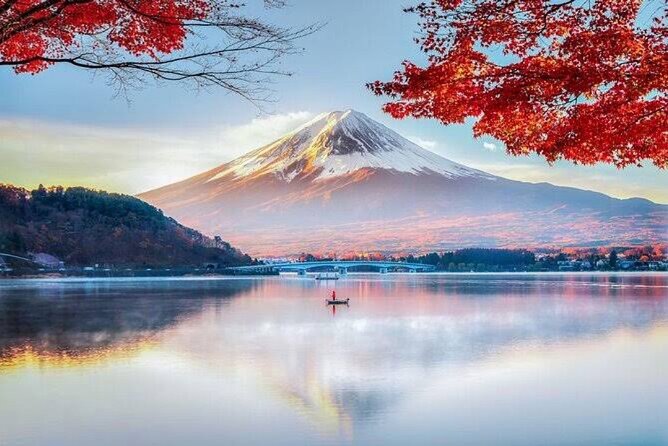
Mt Fuji is close enough to visit from Tokyo, but the sightseeing area is spread across Yamanashi Prefecture. The lakes, shrines, ponds, pagoda, and mountain stations do not sit beside one another, so a private car saves you from stitching together several transport legs.
This tour lasts about 9 to 10 hours and includes pickup and drop-off at your hotel or lodging. That matters because your day begins and ends at your own accommodation rather than at a fixed station. The vehicle has air-conditioning, Wi-Fi, tissues, and drinking water, with petrol, highway tolls, and private transport covered.
The booking price is $429.31 per group of up to seven people. Split between seven, that is about $61 per person before admission fees and lunch. For two people, the price feels much higher, but the value improves for a larger group that wants a dedicated car and a direct round trip from Tokyo.
The vehicle is described as accommodating seven to 13 passengers, while the booking limit is up to seven people per group. I would treat this as a private group tour for a maximum of seven and confirm the vehicle arrangement when booking if you need extra room for luggage or equipment.
A few more Tokyo tours and experiences worth a look

Lake Kawaguchiko gives you the first big Fuji view
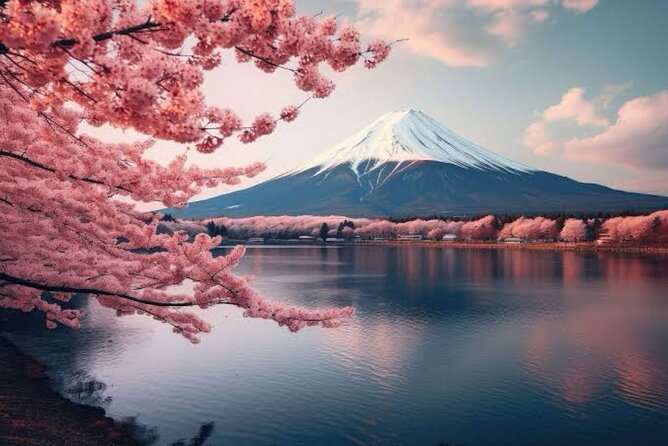
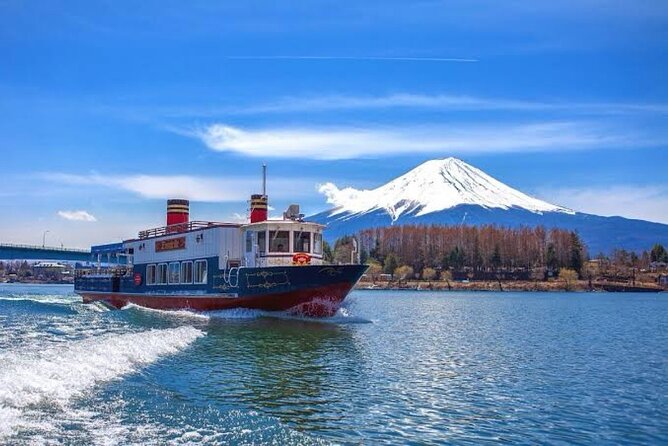
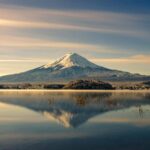
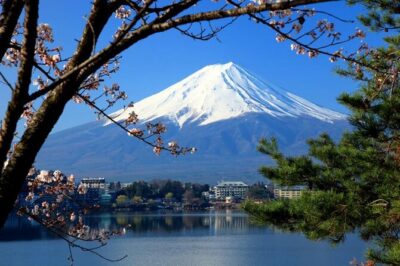
Lake Kawaguchiko is one of the best-known places in the Fuji Five Lakes area, and it makes a sensible early stop. The lake sits at roughly 830 meters above sea level, which helps explain its cooler summers and icy winters.
You get about an hour here, with time to look across the water, take photographs, and choose lunch from the many restaurants around the lake. Lunch is not included, so this is the natural place to buy a meal if the timing works.
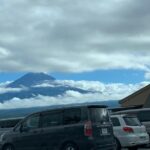
The lake is valuable because it gives you a wide, open view of Mt Fuji. The mountain rises beyond the water rather than appearing as a distant peak from a city street. Still, keep your expectations flexible. Clouds and rain can block the summit, and the tour itself warns that a clear view depends on weather.
Oshino Hakkai connects Fuji water with local belief
Oshino Hakkai is a small village known for eight clear ponds fed by snowmelt from Mt Fuji. The water filters through layers of volcanic lava for more than 80 years before reaching the ponds, and local people hold it in high regard.
This is a good stop if you want more than a photograph of the mountain. The ponds give you a physical sense of Fuji’s role in the area, from snow and lava to drinking water and religious respect. You may also get a close view of the mountain when the sky is clear.
The setting is touristy, so it is not a quiet rural escape. You should see it as a compact cultural and scenic stop, with about an hour to look around. There are two separate entries for Oshino Hakkai in the planned route, along with Oshino Hakkai Sengen Shrine. That may mean the schedule treats the ponds and shrine as different visits, but I would confirm the exact order with the driver.
Oshino Hakkai Sengen Shrine adds an older religious layer
The Sengen Shrine in the Oshikusa district dates to 807 AD. Its main building has a cypress-bark roof and a Sangensha Nagarezukuri design, details that give the stop more substance than a quick roadside photo break.
Sengen shrines are associated with worship of Mt Fuji, so this visit helps explain why the mountain has long been more than a scenic landmark. You can look at the building, grounds, and relationship between shrine and mountain before moving on.
The scheduled time is one hour, and admission is listed as free. If you are especially interested in Japanese architecture or religious sites, this may be one of the more meaningful parts of the day. If your priority is only the mountain view, you may find the pagoda and lake stops more immediately rewarding.
Saiko Iyashi no Sato Nemba preserves an old village style
At Saiko Iyashi no Sato Nemba, old Japanese houses with thick straw roofs create a picture-friendly village setting beside Lake Saiko. The site also gives you a view toward Mt Fuji when conditions cooperate.
You can meet local artists and see crafts, and rental kimonos and samurai armor are available for photographs. The rentals cost about ¥2,000 per person, while entry to the site is approximately ¥500 per person. Neither cost is included in the tour price.
I like this stop for families and groups who want something hands-on and visual. It offers more variety than another lake lookout. The tradeoff is time. An hour is enough for a walk and a few photographs, but not for a slow visit to every house or a long craft session.
Other private tours in Tokyo


The 5th Station puts you high on the mountain
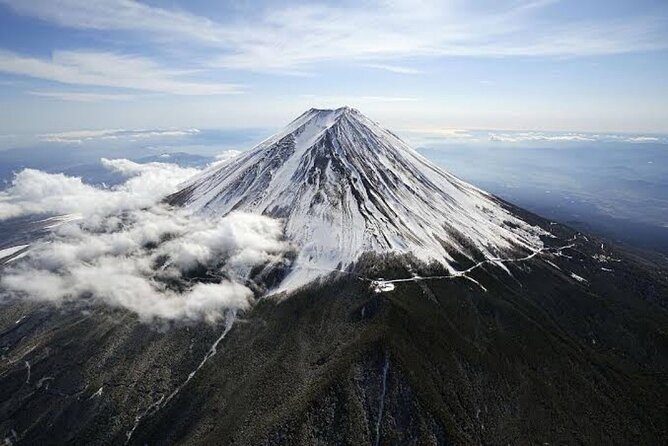
The Fuji Subaru Line 5th Station sits at about 2,300 meters above sea level. It is the highest point on this route and gives you a commanding view over the Fuji Five Lakes area when the weather is clear.
You do not need to be a serious climber to enjoy this stop. The 5th Station is popular with people who simply want to experience the mountain at altitude and look out over the area below. The entrance fee is ¥2,100 per group, and it is not included.
Weather is especially important here. Clouds, rain, or poor visibility can erase the very view you came for. The mountain’s conditions may differ from Tokyo’s, so a sunny morning in the city does not guarantee a clear summit.
The schedule also includes a trekking section from the 5th Station toward the Yoshida Trail and up to the 7th Station at about 2,700 meters. The planned trekking time is one hour, and it is described as easy. Even so, you should regard it as a short mountain walk, not a full Fuji climb. Wear shoes suitable for walking and tell the driver if altitude or uneven ground may be difficult for you.
Oishi Park pairs lake and mountain in one frame
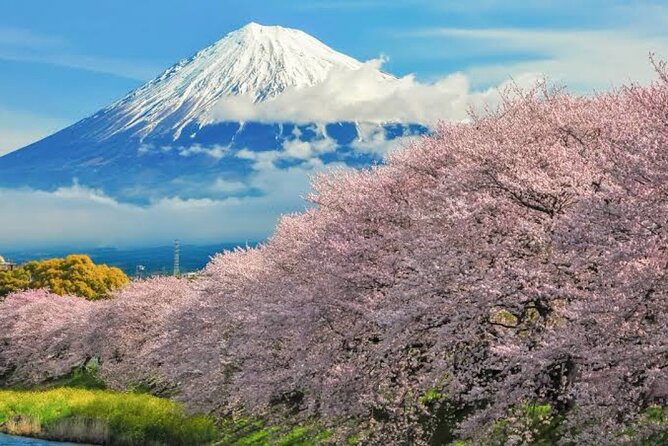
Oishi Park sits on the northern shore of Lake Kawaguchiko and is known for its combined view of the lake and Mt Fuji. It is the kind of stop that works well when you want one clean photograph showing water, shoreline, and mountain together.
Admission is free, and the planned visit lasts one hour. You can use this time to slow down after the busier village and shrine stops. The park is also useful as a second chance for a Fuji view if clouds covered the mountain earlier.
The obvious limitation is the same as at Kawaguchiko: the view depends on visibility. If Mt Fuji is hidden, the park remains a lakeside stop, but it will not deliver the classic composition that makes it famous.
Chureito Pagoda is the postcard stop
Chureito Pagoda sits on the mountainside above Fujiyoshida City, with Mt Fuji in the distance. The five-story pagoda belongs to Arakura Sengen Shrine and was built as a peace memorial in 1963.
Reaching it requires nearly 400 steps from the shrine’s main buildings. The climb is free, but it is not a flat, effortless photo stop. Give yourself time, take the stairs at your own pace, and remember that the one-hour schedule includes both the climb and the view.
This is likely to be one of the most memorable locations on the route because it combines three strong Japanese images: a red-and-white pagoda, wooded hillside, and Mt Fuji. It is also one of the places where clouds can make the difference between an ordinary visit and a superb photograph.
Fuji-Q Highland changes the mood
Fuji-Q Highland is an amusement park near the base of Mt Fuji, operated by Fuji Kyuko. It opened in 1968 and is known as a major attraction in the area.
The tour includes a visit, but admission is not covered. The estimated entry cost is ¥5,000 per person. That is a significant extra, especially for a family or group of seven, and you should budget for it before booking.
There is also a practical question of time. With only about an hour scheduled here and many other stops on the route, you will not have time for a full theme-park day. I would see this as an optional taste of the park rather than a replacement for a dedicated Fuji-Q visit. If thrill rides are your main reason for coming to the Fuji area, you may prefer a separate day.
The schedule offers breadth, but not much slack
The route lists nine stops, each with about an hour. It also includes the drive from Tokyo, travel between the Fuji-area sights, lunch, and the mountain walk. That is a lot for a 9 to 10-hour day.
The strength of this plan is variety. You can see a lake, shrine, traditional houses, spring ponds, mountain viewpoints, a pagoda, a trail, and an amusement park without organizing each piece yourself. The weakness is that you may need to keep moving, especially if traffic slows the return to Tokyo.
This is where the private format helps. An English-speaking driver can offer recommendations and may be able to adjust the order or emphasis. Ali was specifically praised for flexibility and for helping make the day more special with useful suggestions. I would discuss your priorities at pickup. If you care most about photographs, ask to protect time at Chureito, Oishi Park, Kawaguchiko, and the 5th Station. If you care more about culture, give the shrine and traditional village more attention.
What is included, and what will cost extra
The tour covers private transportation, petrol, highway tolls, an air-conditioned vehicle, an English-speaking driver, hotel pickup and drop-off, Wi-Fi hotspot access, tissues, and water. Those inclusions remove several small costs that can add up on a long day.
You should still plan for these expenses:
- Mt Fuji 5th Station: ¥2,100 per group
- Lunch: not included
- Fuji-Q Highland: estimated at ¥5,000 per person
- Saiko Iyashi no Sato Nemba: about ¥500 per person
- Kimono or samurai armor rental: about ¥2,000 per person
- Any other Fuji-Q or site charges listed at the entrance
For a group of seven that skips Fuji-Q and costume rental, the additional sightseeing costs can remain modest. Add lunch and the 5th Station fee, and the total is still easier to manage than the full theme-park option. If everyone enters Fuji-Q, the cost rises quickly.
Who will get the most from this tour
I would recommend this experience to a group of friends or family members who want a private day without handling regional transport. It also suits first-time visitors who want to see many famous Fuji-area sights in one outing.
It is a good match for you if:
- You value hotel pickup and drop-off.
- You want an English-speaking driver rather than a large group guide.
- You prefer a broad first look at the Fuji region.
- You are comfortable with a busy schedule.
- You want the option to spend more time at selected stops through private coordination.
I would be more cautious if you want a slow, deeply guided cultural tour, a full day at Fuji-Q Highland, or a serious mountain climb. This experience provides transport and sightseeing support, but the supplied details do not promise a dedicated historian or mountain-climbing guide. The driver’s role is the practical heart of the day.
Booking is confirmed at the time of purchase, and most people can participate. Service animals are allowed, and the activity is near public transportation, though the main benefit is the private vehicle. Free cancellation is available up to 24 hours before the start time. Poor weather may lead to a different date or a full refund, which is useful for a mountain outing where visibility matters so much.
Should you book the Mt Fuji private tour?
Book it if you want maximum sightseeing variety with minimum transport planning, especially with a group of four to seven. The private car, pickup, tolls, water, and flexible driver make the $429.31 group price easier to justify when divided among several people.
Before booking, accept two facts: Mt Fuji may be hidden by weather, and the itinerary is ambitious. I would also decide in advance if Fuji-Q Highland is worth its separate ¥5,000-per-person cost. For a first look at the mountain and its surrounding culture, this is a practical and well-packed day. For a relaxed visit, choose fewer stops and spend longer in each place.
FAQ
How long does the private Mt Fuji tour last?
The tour lasts approximately 9 to 10 hours, including pickup and drop-off from your hotel or place of stay.
How many people can join the private tour?
The booking price is for one private group of up to seven people. The vehicle is described as accommodating seven to 13 passengers.
Is hotel pickup and drop-off included?
Yes. Pickup and drop-off from your hotel or accommodation are included in the tour.
Are admission fees included?
No. The Mt Fuji 5th Station fee, Saiko Iyashi no Sato Nemba admission, Fuji-Q Highland admission, lunch, and optional kimono or samurai armor rentals are not included.
Can I cancel for a full refund?
Yes, you can cancel up to 24 hours before the experience start time for a full refund. Changes or cancellations made less than 24 hours before the start time are not accepted for a refund.
What happens if the weather is poor?
The experience requires good weather. If it is canceled because of poor weather, you will be offered a different date or a full refund.
More Full-Day in Tokyo

More Private Tours in Tokyo
More Mt Fuji Day Trips in Tokyo
More tours in Tokyo we've reviewed


Mt Fuji Day Trips, compared.
 ★ 5.0Mt Fuji and Hakone 1-Day Bus Tour Return by Bullet TrainFrom $163
 ★ 4.0Mt Fuji & Hakone Cruise, Drum Show Bullet Train 1 Day from TokyoFrom $149
 ★ 4.4Tokyo Mt Fuji 5th St & Hakone Cruise Bus Tour w/Bullet TrainFrom $15410 hours
 ★ 4.5From Tokyo: Mount Fuji Full-Day Sightseeing TripFrom $6810 hours
 ★ 4.7Tokyo: Mt. Fuji Tour, Hakone Ropeway, Owakudani, Lake AshiFrom $5410 hours
 ★ 4.4Tokyo:Mt.Fuji,Kawaguchiko Oishi Park,Arakurayama Sengen ParkFrom $5410 hours