Reviewed · IMPERIAL PALACE & SHOGUN TOURS
Tokyo: Pvt. Tour – Edo Castle & Imperial Palace East Gardens
Tokyo’s Imperial Palace East Gardens give you a rare quiet pause in the middle of the capital, but the real interest lies below the clipped trees and open lawns. You are walking across the former grounds of Edo Castle, once the seat of Japan’s shoguns and one of the largest fortified sites in the country. The stone walls, moats, gates, and castle ruins make the past easy to picture.
In This Article
- Key points at a glance
- Why Edo Castle matters more than the palace name suggests
- Meeting at Wadakura Fountain Park
- The main gate and the first shift from modern Tokyo
- Edo Castle ruins and the scale of shogun power
- Ninomaru Garden and the changing seasons
- What the guide adds to a two-hour walk
- Is $63 good value for two hours?
- Who should book this private garden tour?
- Booking flexibility and practical details
- Should you book it?
- FAQ
- Does the tour enter the Imperial Palace?
- How long does the tour last?
- What language is the tour conducted in?
- Where do I meet the guide?
- How close is the meeting point to public transportation?
- Can I bring a Japanese knife purchased earlier in the day?
I like two things here. First, a private guide can explain details you would likely walk past, from the garden’s design to the people who lived and worked around the palace. Second, the two-hour length is tidy and useful, especially if you want history without giving up half a day. The main consideration is simple: you do not enter the palace where the Emperor resides, and spring flowers may not be fully open when you visit.
Key points at a glance
- Walk through former shogun territory: See massive stonework, moats, guardhouses, and the remains of Edo Castle.
- Private English-speaking guide: The pace can suit your group, with guides including Yoshi, Yuji, Mari, Naoko, and Masahito praised for clear explanations and friendly help.
- Ninomaru Garden changes with the seasons: Expect cherry blossoms in spring, irises in summer, and autumn leaves later in the year.
- A calm break from central Tokyo: The gardens offer trees, water, flowers, and open space close to Tokyo Station and Otemachi.
- Two hours is enough for a focused visit: You get an organized walk without committing to a long palace-area excursion.
- Plan around the security check: Bags are inspected at the entrance, and knives or similar purchases must be stored before the meeting.
Why Edo Castle matters more than the palace name suggests

The name Imperial Palace can create the wrong picture. This tour does not take you inside the Emperor’s residence. Instead, it focuses on the East Gardens, a public section of the former Edo Castle grounds.
That distinction matters because the most visible story here is the story of the shoguns. Edo Castle was the political center of feudal Japan, and its scale still shows in the thick walls, broad moats, stone foundations, and formal approach routes. You are not simply walking through a pretty city park. You are following the footprint of a power center that shaped Japan for centuries.
A guide helps connect the pieces. Without context, a stone wall may look like an attractive old structure. With an explanation, its size and placement begin to show how carefully the castle was defended and organized. The tour also links Japanese culture and garden design with the country’s imperial past, giving you more than a parade of dates.
A few more Tokyo tours and experiences worth a look


Meeting at Wadakura Fountain Park

The meeting point is in front of Starbucks in Wadakura Fountain Park. Look for the guide holding a sign marked gotcha. That unusual sign should make the meeting fairly easy, but give yourself enough time to find the park and orient yourself.
The location is practical. It is about a three-minute walk from Tokyo Metro Otemachi Station exit D2 and about ten minutes from Tokyo Station’s Marunouchi central exit. If you are arriving through Tokyo Station, the walk is manageable, though the station itself can be confusing. Build in extra time if you are unfamiliar with Tokyo’s underground passages and large station buildings.
This is a private group, not a shared walk with strangers. That changes the feel of the visit. You can ask more questions, pause for photographs, and tell the guide if your family needs a slower pace. Several guides, including Yuji and Mari, have been praised for keeping a comfortable walking speed, while Masahito adjusted the route to suit the group.
The main gate and the first shift from modern Tokyo
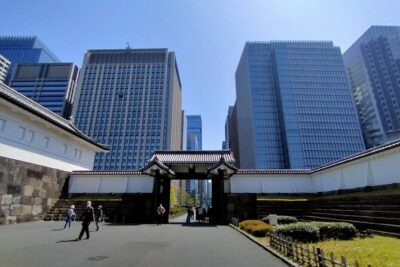
The tour begins around the historic Main Gate, where traditional features meet modern security. The guardhouse helps set the tone. It is a small but useful reminder that this was once a controlled entrance to a fortified compound, not an open public garden.
The modern security process is part of the visit too. You should expect a baggage inspection when entering the Imperial Palace grounds. This is worth knowing before you arrive, especially if you are carrying shopping from elsewhere in Tokyo.
The operator gives a specific warning about Japanese knives and other objects that could be treated as weapons. If you bought knives at Tsukiji, Asakusa, or another shopping area, leave them in a coin locker or similar storage before meeting the guide. Do not assume a wrapped purchase will pass inspection simply because it is a souvenir.
Edo Castle ruins and the scale of shogun power

The castle ruins are the strongest historical part of the walk. Ancient stone walls, moats, and the remains of the massive keep show how much territory the castle once covered. You will not see a complete castle building, so set your expectations accordingly. The appeal comes from reading the site through its foundations and defensive structures.
This is where a private guide earns the fee. The route is easy enough to follow alone, but the meaning of the ruins is less obvious without explanation. A guide can point out how the walls were built, explain the role of the castle, and describe the transition from shogun rule to the imperial era.
The tour’s history is presented during a leisurely walk rather than as a formal lecture. That balance works well. You can look at the stonework, gardens, and gates while hearing how the site changed over time. Guides such as Yoshi and Ishida have been praised for clear English and for explaining both the buildings and the garden in a way that makes sense to first-time visitors.
Ninomaru Garden and the changing seasons

Ninomaru Garden gives the visit its softer side. This traditional Japanese garden includes seasonal flowers, ponds, carefully arranged plantings, and the quiet visual balance associated with Japanese garden design.
The timing of your visit will shape what you see. Cherry blossoms are the big spring draw, but they are not guaranteed to be at full bloom. One April visit found that the flowers and blossoms had not really opened yet, so you should avoid booking solely for peak cherry blossom scenery unless your dates are flexible.
The garden also has something to offer outside spring. Irises are highlighted for summer, and autumn brings changing leaves. The planting is part of the garden’s appeal, but the layout remains worthwhile even between major seasonal displays. You might find the calm paths and traditional design more memorable than a single week of flowers.
Naoko received special praise for explaining the buildings, past and present residents, the garden, and its unusual koi. That range is useful because Ninomaru is not just a place to admire. It is a place where design, nature, court life, and Japanese custom meet.





What the guide adds to a two-hour walk

A self-guided visit is possible, but it may leave you with attractive photographs and only a loose idea of what you saw. The guide supplies the missing links. You hear stories about Japan’s imperial past, learn how the gardens relate to Edo Castle, and get help identifying structures that might otherwise blend into the scenery.
The strongest part of the guiding style appears to be flexibility. Yuji was praised for adapting to a family’s pace and offering suggestions for what to do next. Another guide even helped with directions toward the next location and the station after the walk. That kind of practical help is valuable when you are still finding your way around Tokyo.
Masahito also showed a useful habit: when he did not immediately know an answer, he contacted another guide to check it. You should not expect every guide to answer every niche question on the spot, but a willingness to verify details is a good sign.
English ability is another important factor. Yoshi, Yuji, Ishida, Mari, David, Chichiro, and other named guides have been singled out for friendly service, clear English, and good organization. The exact guide is not guaranteed, but the repeated praise suggests that the operator places real weight on communication.
Is $63 good value for two hours?

At $63 per person, this is not the cheapest way to enter a public garden. The East Gardens themselves are not being sold as a major admission attraction here. You are paying for the private format, the English-speaking guide, the organized route, and the explanations that give the site meaning.
The value improves if you are new to Japanese history, traveling with family, or prefer asking questions as you go. It also makes sense if your Tokyo schedule is tight. Two hours gives you a focused visit, and the central location lets you continue to Tokyo Station, Marunouchi, Otemachi, or another nearby area afterward.
The value is weaker if you mainly want to stroll alone, take photographs, or visit during a very specific flower period. You may prefer an independent visit if you do not need historical background or if paying for a private guide feels unnecessary for a public garden.
For families, the private format is especially helpful. The tour can move at a comfortable pace, and the guide can adjust explanations for adults and children. Alexander described it as a strong guided experience for the whole family, while Sarah found the pace comfortable for hers.
Who should book this private garden tour?

I would recommend it to first-time Tokyo visitors who want a clear introduction to the city’s political and imperial past. It is also a good fit for anyone who likes gardens but wants more than pretty scenery.
Families, older relatives, and small groups benefit from the private setup because the guide can respond to the group rather than follow a fixed shared pace. History fans will appreciate the Edo Castle remains, while casual sightseers can enjoy the open garden and central location without taking on a full-day museum visit.
You may want to skip it if your top priority is entering the Imperial Palace itself. That is not part of the experience. You should also think twice if your schedule is built around cherry blossoms, since bloom timing can disappoint even in a good spring season.
Wear comfortable walking shoes and bring water according to the season. The tour lasts two hours, and the experience is outdoors in a garden and castle site. Keep your bags simple, and store any knife or similar item before you arrive.
Booking flexibility and practical details

The tour costs $63 per person and lasts two hours. It is conducted in English by a live guide and is limited to your private group.
You can cancel up to 24 hours before the start time for a full refund. The reserve-now, pay-later option also helps if you are still arranging a complicated Tokyo itinerary. Starting times vary, so check availability for your chosen date.
The walk begins at Wadakura Fountain Park, not inside the palace compound. Use Tokyo Metro Otemachi exit D2 or Tokyo Station’s Marunouchi central exit as your navigation points. Once inside the grounds, expect a baggage inspection.
The most important limitation remains the palace interior. You will visit the East Gardens and former Edo Castle grounds, but you will not enter the Inner Palace or the building where the Emperor resides.
Should you book it?

Book this tour if you want the East Gardens to make historical sense, not simply look attractive. The combination of private pacing, strong English communication, Edo Castle ruins, and Ninomaru Garden gives you a useful two-hour introduction to an important part of Tokyo.
I especially like it for families and first-time visitors, since guides such as Yuji, Mari, Yoshi, Naoko, and Masahito have shown the kind of patience and local help that can make a short outing run smoothly. If you want the palace interior or guaranteed peak blossoms, choose another plan. If you want an easy, well-explained walk through former shogun territory, $63 is a fair price for the time and guidance.
FAQ
Does the tour enter the Imperial Palace?
No. The tour visits the Imperial Palace East Gardens and the former Edo Castle grounds, but it does not enter the Inner Palace or the residence of the Emperor.
How long does the tour last?
The guided walking tour lasts two hours.
What language is the tour conducted in?
The tour is conducted in English by a live English-speaking guide.
Where do I meet the guide?
Meet in front of Starbucks in Wadakura Fountain Park. Look for a guide holding a sign marked gotcha.
How close is the meeting point to public transportation?
The meeting point is about a three-minute walk from Tokyo Metro Otemachi Station exit D2 and about a ten-minute walk from Tokyo Station’s Marunouchi central exit.
Can I bring a Japanese knife purchased earlier in the day?
The grounds are subject to baggage inspection. If you purchased a Japanese knife or another item that could be used as a weapon, leave it in a coin locker or similar storage before the meeting.
More Imperial Palace & Shogun Tours in Tokyo



More tours in Tokyo we've reviewed












Imperial Palace & Shogun Tours, compared.
 ★ 4.9Tokyo: Imperial Palace Japanese History Walking TourFrom $32
 ★ 4.9Tokyo: Imperial Palace and Shogun Walking TourFrom $162 hours
 ★ 5.0Imperial Palace East Garden and Edo Castle Walking Tour in TokyoFrom $25
 ★ 4.8Tokyo: Imperial Palace East Gardens Walking TourFrom $192h 30m
 ★ 4.5Tokyo: Imperial Palace, Sensō-ji Temple, & Tokyo Tower TourFrom $404 hours
 ★ 5.0Tokyo Castle, Imperial Palace, Shogun & Garden Walking TourFrom $31