Reviewed · TOKYO FOOD TOURS
Tokyo: Ramen Tasting Tour with 6 Mini Bowls of Ramen
Tokyo ramen is not one dish. It is a whole family of meals, shaped by region, broth, noodles, toppings, and the cook’s imagination. This tour lets you taste six mini bowls at three different shops, so you can compare styles without committing to six full servings.
In This Article
- Key points at a glance
- Why six mini bowls work better than one full bowl
- Three shops, three different ramen lessons
- The Shibuya route: from Hokkaido to curry
- The Shinjuku route: classic Tokyo and chicken-based ramen
- The Ueno route: Kyushu, tsukemen, and modern Tokyo
- What the guide adds beyond the food
- Walking through Tokyo between bowls
- Broth restrictions are important
- Is $122 fair for a ramen tour?
- Who will enjoy this most?
- Practical details before you book
- Should you book this ramen tasting?
- FAQ
- How many ramen bowls are included?
- Can I choose which ramen I taste?
- Which Tokyo neighborhoods does the tour visit?
- Are train tickets included?
- Is the tour suitable for vegetarians or vegans?
- How much walking is involved?
I like the smart portion size and the chance to choose your own six bowls from 11 or 12 options. I also like the teaching: guides such as Sahori, Bunga, Makayla, Daisy, and others use slides or a tablet to explain ramen’s origins and preparation. The catch is simple: $122 is a serious price for noodles, and you will walk about 3 kilometers while eating a surprisingly large amount of food.
Key points at a glance
- Six bowls, three shops: Each mini serving is about one-quarter the size of a normal bowl, making comparison possible.
- Choose your own tasting: Pick six ramen styles from a selection of roughly 11 to 12 choices.
- Three Tokyo routes: Depending on your booking, you may visit Shibuya, Shinjuku, and Ebisu areas, or take the Ueno route.
- A real lesson in ramen: Use the visual presentation to understand regional styles, broth, noodles, and preparation.
- Small groups matter: With no more than eight people, you can ask questions and hear practical Tokyo tips.
- Plan around a full stomach: Several people found the meal substantial, so a light or skipped lunch makes sense.
Why six mini bowls work better than one full bowl
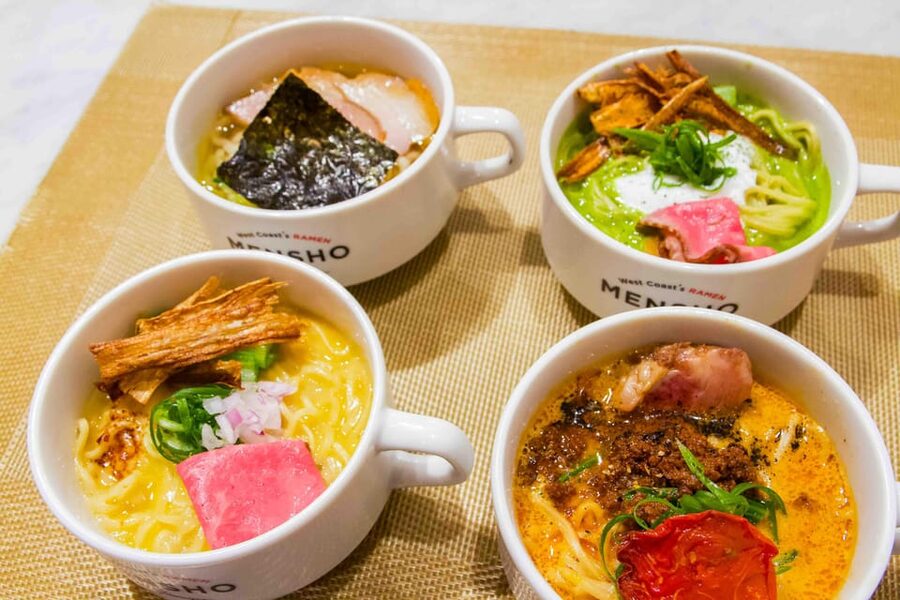
A normal ramen meal is filling. Six normal bowls would be absurd unless you had the appetite of a sumo wrestler and no plans for the rest of the day. The mini bowls solve that problem.
Each serving is about one-quarter the size of a standard bowl. You usually choose two styles at each of the three stops, giving you a chance to compare broth and noodle types while your palate is still fresh. The portions are small enough to make the format possible, but not so tiny that you only get a spoonful.
You still need to arrive hungry. The walking between shops helps, but this is not a light snack tour. One useful tip is to skip lunch or eat very lightly beforehand. By the final stop, you may be happy to see the last bowl, but you may not have room to finish every drop.
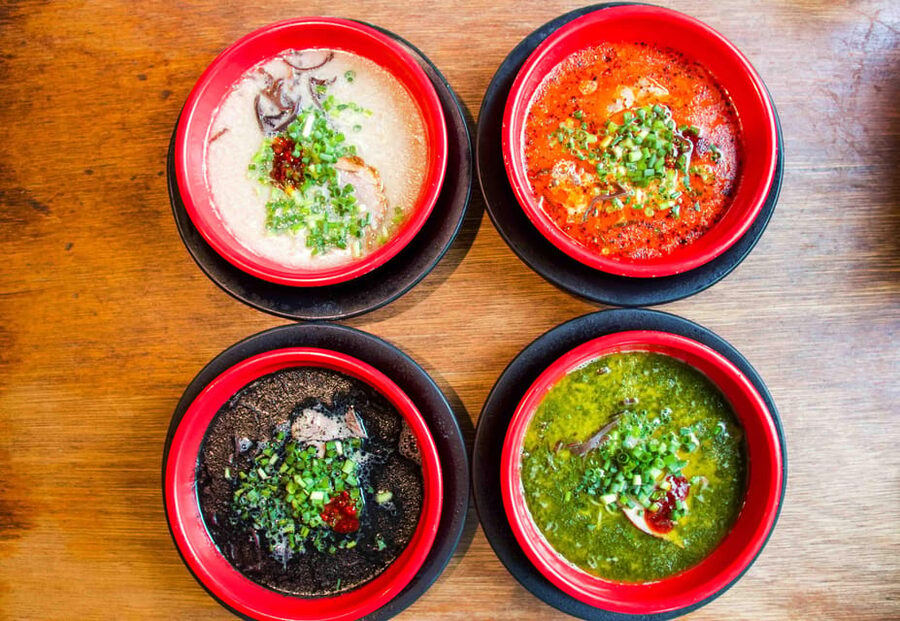
The choice of bowls is part of the fun. You might select familiar tonkotsu or miso, then take a chance on curry, squid ink, pesto, tsukemen, or another style you would not have ordered alone. The exact menu depends on the route and shop lineup, so think of the list as a broad range rather than a guaranteed menu.
A few more Tokyo tours and experiences worth a look

Three shops, three different ramen lessons
The tour’s main strength is the order of the stops. You are not simply eating the same dish three times in different restaurants. Each shop presents its own style, and the contrast gives the meal structure.
At each stop, your guide explains the two bowls you select. Pay attention to the details that are easy to miss when ordering on your own: the base of the soup, the noodle shape, the level of richness, and how toppings change the balance. A good guide turns a bowl from just tasty into something you can describe and recognize later.
The shops are described as award-winning, but the more useful point is that the route is built around ramen variety rather than convenience. The restaurants are reached by foot and, when needed, train. That adds time and effort, yet it also means the tour is not limited to a single station area.
The Shibuya route: from Hokkaido to curry
The Shibuya option begins with classic Hokkaido ramen. Hokkaido is strongly associated with miso ramen, though the precise bowl offered can vary. This first stop gives you a useful reference point: a regional style with its own noodle and broth traditions.
The second shop serves fusion tonkotsu, or pork-bone ramen. Tonkotsu is usually recognized for a substantial pork-based soup, and the fusion approach makes this stop different from a strictly traditional bowl. Your guide can explain what comes from the pork-bone base and what makes the shop’s version more modern.
The final Shibuya stop is savory curry ramen. This is the kind of choice that shows how far ramen can move from the standard shoyu, miso, or tonkotsu categories. If you normally order the safest option, this is a good place to use one of your selections on something unexpected.
This route also gives you time in Shibuya itself. One stop may be in a quieter side street or a less obvious neighborhood setting, while the walk between restaurants lets you see a different side of the district than the usual major crossings and shopping streets. The tour starts in Shibuya and ends in Ebisu, according to the day and route details, so do not assume you will finish where you began.
The Shinjuku route: classic Tokyo and chicken-based ramen
The Shinjuku route opens with classic Tokyo ramen. Tokyo-style ramen commonly points toward a soy-based soup, though the exact preparation depends on the shop. This is a good starting bowl because it helps you understand the traditional Tokyo profile before moving into newer variations.
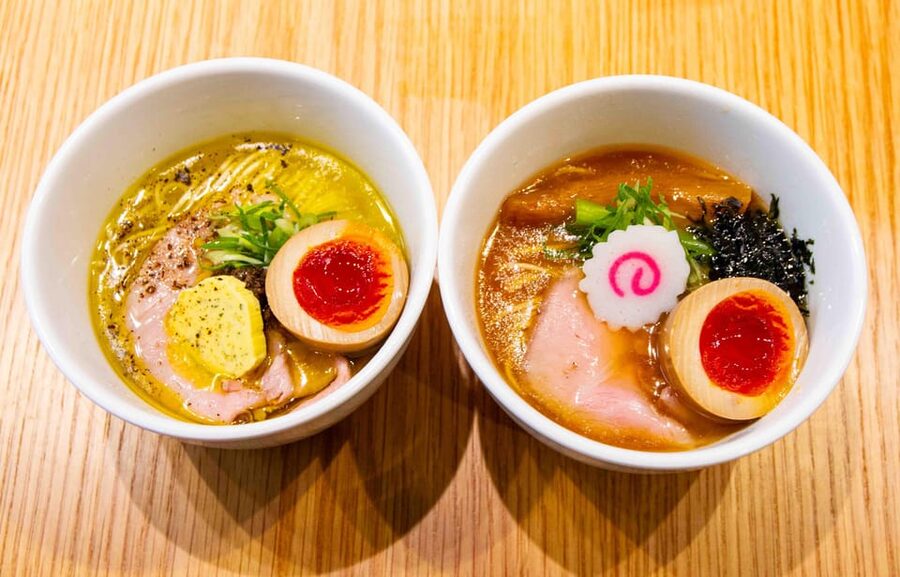
Next comes modern tori paitan, a creamy chicken ramen. This is not tonkotsu, even though both can have a thick, smooth appearance. The difference in the main protein gives the soup a separate character, and it is a useful reminder that ramen does not have to rely on pork to feel substantial.
The third stop offers luxurious chicken or fish ramen. The specific choice may differ, but this stop continues the lesson in broth construction. Chicken and fish can produce very different flavors, and tasting them after the first two bowls helps you notice the distinctions.
The Shinjuku route is a good fit if you want to combine ramen education with one of Tokyo’s best-known entertainment districts. It may also finish in Shinjuku rather than Ebisu, depending on the day. Check the meeting and ending details for your selected option, especially if you are arranging an evening activity afterward.
The Ueno route: Kyushu, tsukemen, and modern Tokyo
The Ueno route starts with classic Kyushu ramen. Kyushu is closely linked with tonkotsu styles, often paired with thinner noodles, but the bowl served on the tour is the authority. Your guide will explain what to notice rather than asking you to rely on a regional label alone.
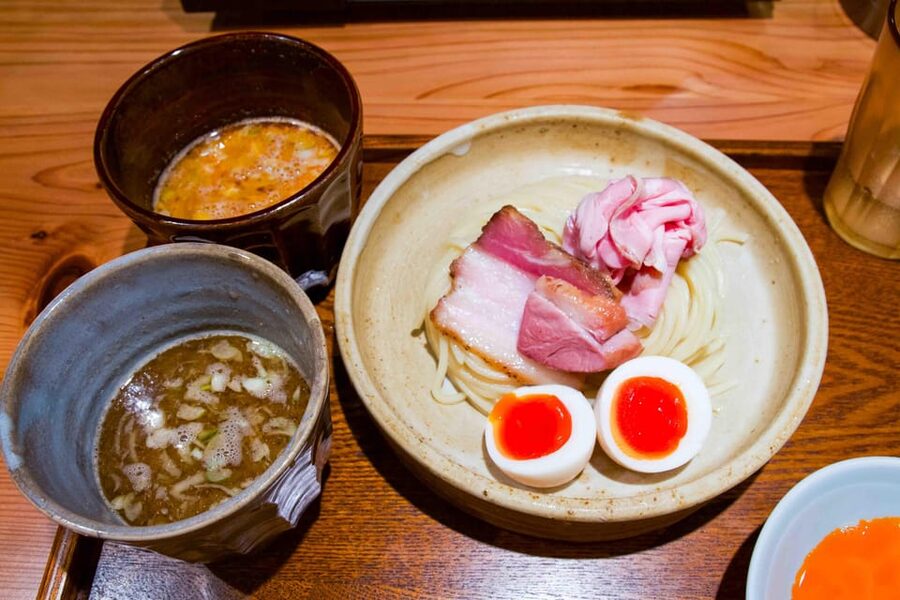
The second shop features contemporary tsukemen. Instead of noodles sitting in a bowl of soup, you dip them into a concentrated broth. It is a different way to eat ramen, and it changes the rhythm of the meal. You control how much soup reaches the noodles with each bite.
The last stop serves modern Tokyo ramen. This brings the tasting back to the capital while showing how much room there is for variation within one city. If the first bowl felt classic, the final one may show how Tokyo cooks update familiar ideas.
The Ueno option is especially useful if you are already spending time in that part of Tokyo. It also offers the clearest format change through tsukemen. Since route details vary, confirm the meeting point before setting out. A train ticket may be needed and is not included in the price.






What the guide adds beyond the food
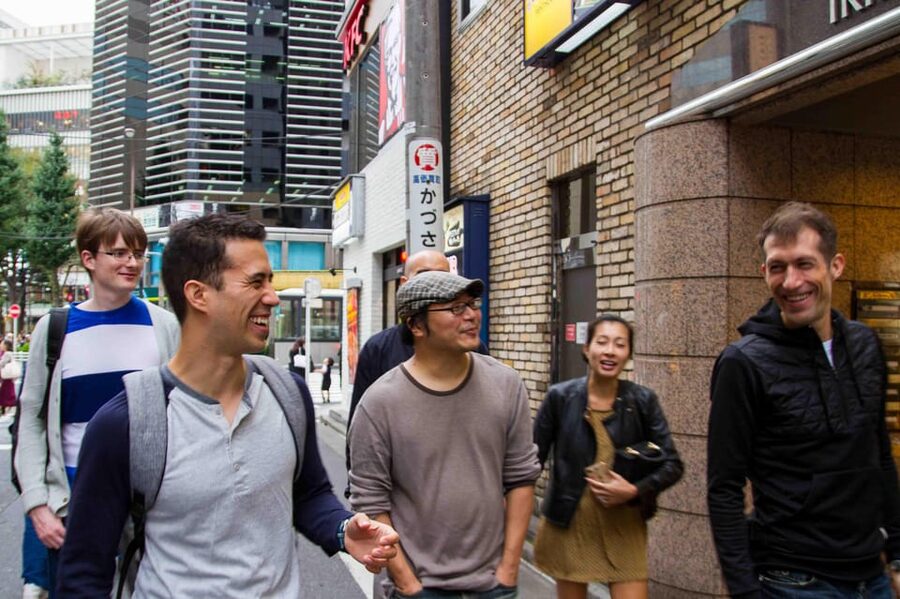
You could eat ramen alone for far less money. The reason to book this experience is the guide.
The English-speaking guide uses colorful slides and handouts, or sometimes a tablet, to show how ramen developed in Japan and how its main styles differ. This visual approach helps because ramen vocabulary can become a blur after the third bowl. Seeing the information while tasting it makes the lesson easier to remember.
The strongest guides bring personality as well as facts. Sahori is praised for clear English and an easy way with questions. Bunga is known for his enthusiasm and for explaining regional styles with energy. Makayla, Daisy, Michaela, Manny, Brian, and other guides are assigned on different dates, so you cannot count on one particular person unless the booking page identifies them.
The guides also tend to help with more than ramen. Several have offered practical Tokyo suggestions, neighborhood context, and general Japan tips. Daisy even helped one group handle a difficult anime activity reservation. That kind of assistance is not the formal product, so do not book expecting a personal trip planner, but it can make the afternoon more useful.
The group limit is eight people. That is small enough for a personal question about broth or ordering etiquette, and it avoids the feel of a large food procession. The tradeoff is that the pace depends on the group. You may have to wait while everyone selects bowls or finishes eating.
Walking through Tokyo between bowls
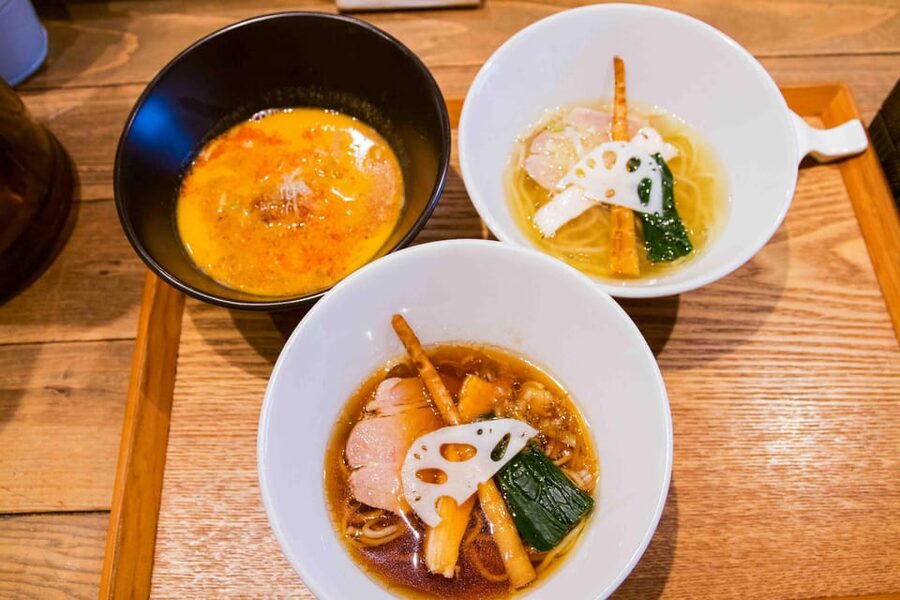
The walking is not filler. Moving between shops gives your stomach time to settle and places the food in a neighborhood setting rather than a string of isolated restaurants.
Plan on roughly 3 kilometers, or 1.86 miles, with train travel possibly added. Comfortable shoes are more important than stylish ones. The route is not recommended for anyone with low fitness, and rainy weather can make the transitions less pleasant. On one rainy outing, the guide arranged a taxi for the final leg, but you should not assume that will always happen.
The exact scenery depends on the route. Shibuya offers a useful mix of major Tokyo energy and local streets, while Shinjuku gives you the city’s dense entertainment-center atmosphere. Ueno provides another urban setting and a different sequence of ramen styles.
The walking also creates a natural break between bowls. Without it, six tastings might feel like one long meal. Even so, the food remains the main physical challenge, not the distance.
Broth restrictions are important
This is not a vegetarian-friendly tasting. Every ramen broth on this tour contains chicken, pork, and fish. The description makes this especially clear: even bowls that sound chicken-based or seafood-focused may include a combination of proteins.
If you are vegan or vegetarian, book the separate vegan and vegetarian ramen tasting tour instead. Do not rely on choosing toppings or skipping the meat, because the issue is in the soup itself.
For other dietary concerns, the available information does not promise substitutions. Ask before booking if you have an allergy or strict restriction. The 11 to 12 bowl choices give you plenty of variety for many adventurous eaters, but they do not remove the need to check ingredients.
Is $122 fair for a ramen tour?
At $122 per person, this is not a bargain meal. You receive six mini bowls and one beverage, but train tickets, when required, are extra. If you only want to eat ramen, you can spend much less by visiting one or two shops on your own.
The value comes from the tasting design and the guidance. You get access to mini portions that are made specifically for the tour, a planned route through three shops, an English explanation of styles and preparation, and help choosing among unfamiliar bowls. You also avoid ordering a full bowl and discovering that it is not to your taste.
I would consider the price easier to justify early in a Tokyo trip. The guide can introduce you to regional categories and unusual versions, giving you a better sense of what to order later. If you already have strong ramen knowledge and are comfortable navigating Japanese menus, the educational part may be less valuable.
The tour earns its cost most clearly for people who want both food and context. It is not the right choice if your goal is simply the cheapest, biggest bowl.
Who will enjoy this most?
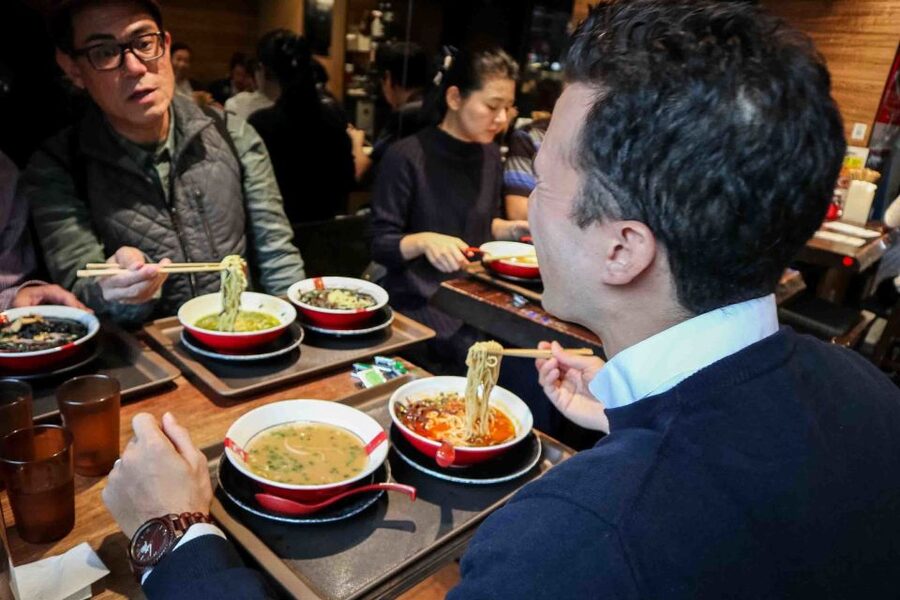
I would recommend this tour to anyone who already likes ramen but has only tried the familiar styles. It is also a good choice for first-time visitors who want a structured food experience and do not want to guess their way through Tokyo’s enormous selection.
Families can enjoy it, provided everyone can manage the walking and the amount of food. A nine-year-old has taken part successfully, and the small bowls make the tasting more manageable for younger eaters. Still, six portions can be a lot for children, so do not plan another major meal immediately afterward.
It suits solo visitors particularly well because the small group creates an easy social setting. Couples and friends will appreciate being able to choose different bowls and compare notes. If you dislike pork, chicken, or fish, choose another experience.
I would also recommend booking it near the start of your stay rather than on your final day. You will leave with ideas for future meals, and the guide may offer useful advice for the rest of your time in Tokyo.
Practical details before you book
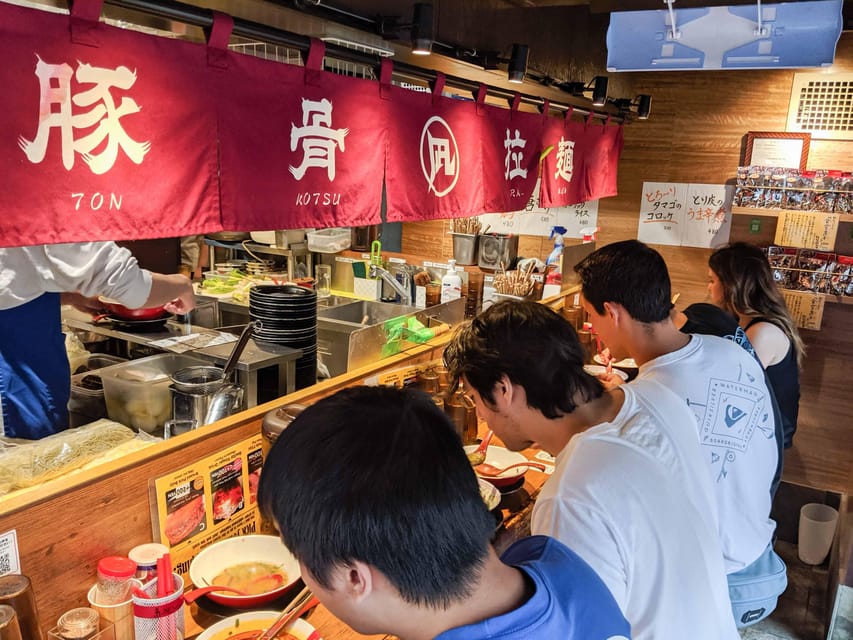
The experience lasts three hours and is conducted in English. The meeting point changes by option, and the route may begin in Shibuya, Shinjuku, or Ueno. The stated Shibuya route starts in Shibuya and ends in Ebisu, while the Shinjuku route can end in Shinjuku, so check both ends before planning your evening.
The tour includes six mini ramen bowls and one beverage. Train fare is not included if public transport is needed. Wear comfortable shoes, leave room in your schedule, and arrive ready to eat.
You can cancel up to 24 hours before the start time for a full refund, and the reserve-now, pay-later option helps if your Tokyo plans are still changing. These policies are useful, but the more important planning point is the route. A meeting point in one district and an ending point in another can affect your next reservation.
Should you book this ramen tasting?
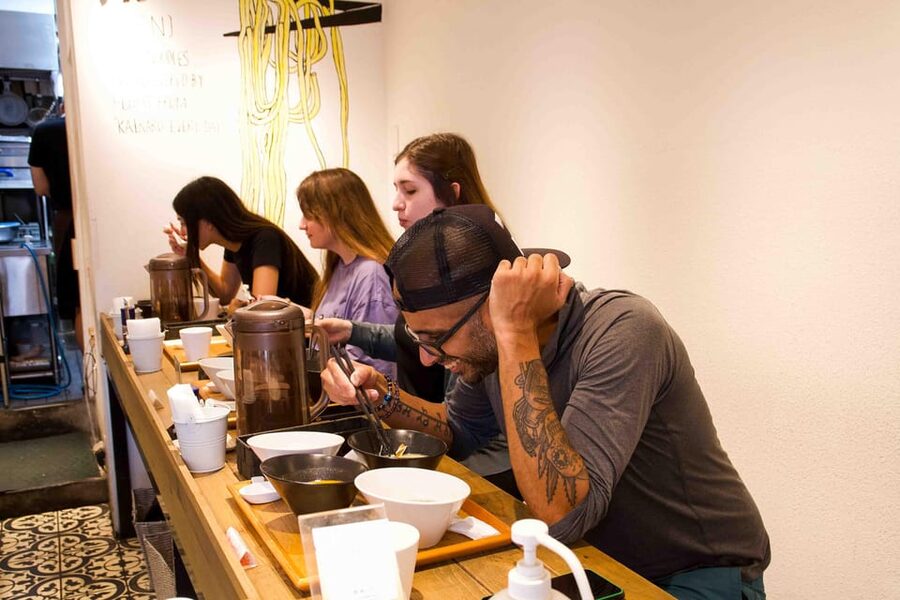
Book it if you want to understand why ramen varies so much across Japan, not just collect another bowl of noodles. The six-choice format, three distinct shops, visual lesson, and small group make this a strong introduction to the subject.
Skip it if $122 feels too high for a meal, if you prefer to explore restaurants independently, or if the 3-kilometer walk and six tastings sound tiring. Vegetarians and vegans should choose the separate plant-based tour.
For most ramen fans, I would book it early in a Tokyo visit, eat lightly beforehand, and treat the experience as both lunch or dinner and a practical lesson for the rest of your trip.
FAQ
How many ramen bowls are included?
You receive six mini bowls of ramen. Each bowl is about one-quarter the size of a regular ramen serving.
Can I choose which ramen I taste?
Yes. You choose six ramen styles from a selection of approximately 11 to 12 options, subject to the route and available choices.
Which Tokyo neighborhoods does the tour visit?
The route may use Shibuya, Shinjuku, or Ueno. The Shibuya route starts in Shibuya and ends in Ebisu or another stated endpoint depending on the day. The Shinjuku route may end in Shinjuku.
Are train tickets included?
No. Train tickets are not included if public transportation is required between locations.
Is the tour suitable for vegetarians or vegans?
No. All ramen broths contain chicken, pork, and fish. Vegans and vegetarians should book the separate vegan and vegetarian ramen tasting tour.
How much walking is involved?
The tour includes approximately 3 kilometers, or 1.86 miles, of walking. It is not recommended for people with a low level of fitness.
More Tokyo Food Tours in Tokyo


More tours in Tokyo we've reviewed












Tokyo Food Tours, compared.
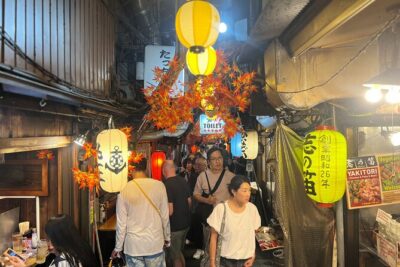 ★ 5.0Tokyo: Shinjuku Food Tour (13 Dishes at 4 Local Eateries)From $86
 ★ 4.9Tokyo: Shinjuku Food Tour (13 Dishes and 4 Eateries)From $97
 ★ 5.0Tokyo Night Foodie Tour in Shinjuku – Seasonal Sushi, Wagyu BeefFrom $111
 ★ 5.0Eat and Drink Like a Local: Tokyo Ueno Food Tour-Taverns&RamenFrom $95
 ★ 5.0Tokyo: Shibuya Food Tour (13 dishes and 4 Eateries)From $77
Tokyo: Shinjuku Food Tour – 15 Dishes, 3 Drinks, 4 EateriesFrom $723 hours
★ 5.0Tokyo: Shibuya Food Tour (13 dishes and 4 Eateries)From $77
Tokyo: Shinjuku Food Tour – 15 Dishes, 3 Drinks, 4 EateriesFrom $723 hours