Reviewed · SUSHI MAKING CLASSES
Sushi Making Experience in Shinjuku【Temari】
Temari sushi turns a simple meal into a hands-on Japanese food activity. At Flower Wall Mone, a flower-filled cafe and bar in Shinjuku, you shape vinegared rice and prepared sushi toppings into small, round pieces that resemble the traditional Japanese toy called temari. You do not need sushi-making skills. The ingredients and tools are ready at your table.
In This Article
- Key points to know before booking
- What temari sushi adds to a Shinjuku afternoon
- Arriving at Flower Wall Mone in Shinjuku
- The drink and sweet included in the 90-minute session
- How the sushi-making part works
- English support and the pace at your table
- Is $71.85 good value?
- Who will enjoy this experience most
- Practical planning for your Shinjuku visit
- Should you book the temari sushi experience?
- FAQ
- How long does the temari sushi experience last?
- Where does the experience begin and end?
- What is included in the price?
- Can children participate?
- Is English instruction available?
- What is the cancellation policy?
I like the easy format and the social setting. You get to make and eat your own food without committing to a long cooking class, and the 90-minute session fits neatly into a Tokyo day. I also like that one drink and one sweet are included, with alcoholic drinks available for participants aged 20 and over. The main caution is that the staff demonstration may be brief, and some staff members use a translator machine rather than fluent English. One unhappy customer reported finishing in about 45 minutes, so book this for a relaxed introduction, not an intensive sushi lesson.
Key points to know before booking
- Round temari sushi is the focus: You shape vinegared rice and prepared toppings into cute, bite-sized balls.
- Flower Wall Mone is the meeting place: Find the lively flower-filled cafe and bar in Shinjuku, in the basement at 3-chome 5-3, Takayama Land.
- One drink and one sweet are included: Alcoholic drinks are available, but Japanese law prohibits alcohol for anyone under 20.
- The hands-on work is mostly self-guided: Staff demonstrate the method once, then you make sushi at your own pace.
- The listed duration is about 90 minutes: Allow for a shorter session if you work quickly, since one customer said the activity ended after roughly 45 minutes.
- Small groups keep it manageable: The maximum group size is 10 people, and confirmation is provided at booking.
What temari sushi adds to a Shinjuku afternoon
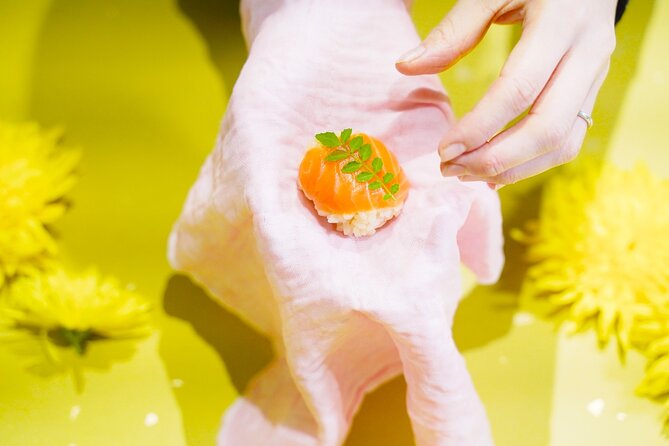
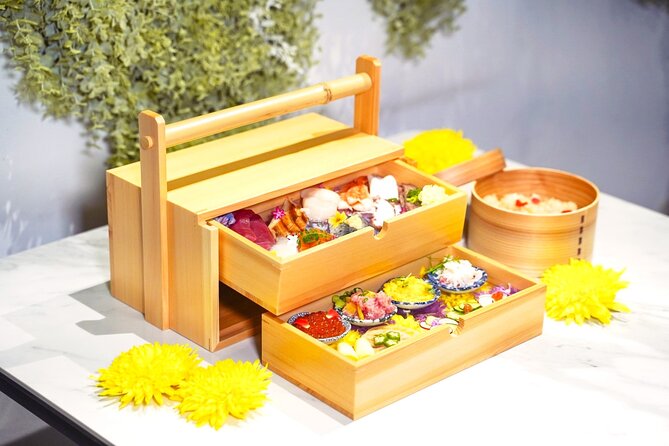
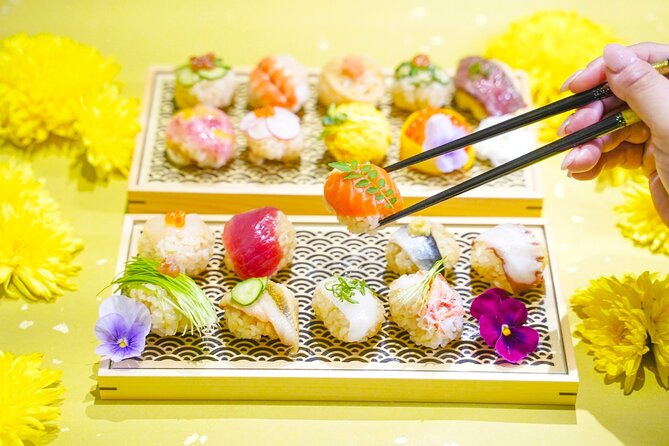
Temari sushi is named for temari, an old Japanese handball traditionally associated with its round shape and decorative look. The food follows the same idea: sushi rice and toppings are formed into small balls rather than the long rolls or hand-shaped pieces you may know from a sushi counter.
That shape makes the activity approachable. You are not expected to slice fish, cook rice, or handle specialist equipment. The sushi ingredients arrive prepared, and the utensils are supplied. Your task is to combine the pieces and form them into attractive portions.
I see the value here in the mix of food and craft. You are not simply eating a plate of sushi in a restaurant. You are handling the rice, choosing your favorite toppings, and seeing how a few prepared parts become a finished Japanese dish. The result is simple enough for first-timers but still different from an ordinary meal.
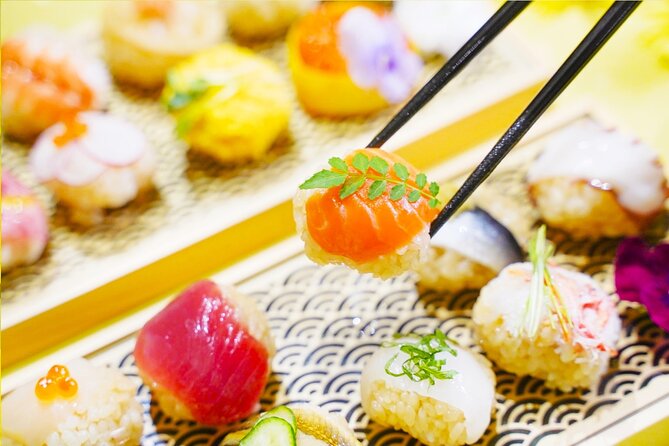
The finished sushi is bite-sized and decorative, which also makes the activity suitable for families and groups of friends. You can compare shapes, toppings, and presentation without needing to compete or follow a difficult recipe.
A few more Tokyo tours and experiences worth a look

Arriving at Flower Wall Mone in Shinjuku
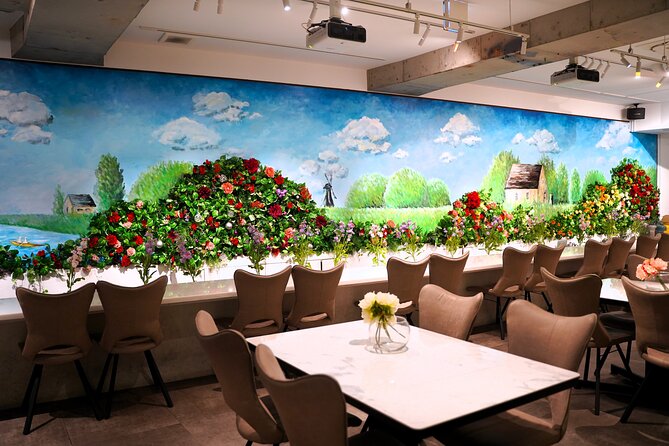
The activity begins at FLOWER WALL MONE, written in Japanese as フラワーウォール モネ. The address is in Shinjuku City at 3-chome 5-3, Takayama Land, B1F, Tokyo 160-0022. The venue is described as a lively cafe and bar surrounded by many flowers, so you are entering a prepared dining space rather than a traditional sushi shop or a formal cooking school.
When you arrive, tell the staff you have a reservation for the Temari Sushi Experience. They will take your drink order and prepare the sushi items for the number of people in your booking.
The location is near public transportation, which helps if you are fitting the session between shopping, sightseeing, or an evening meal in Shinjuku. Still, the meeting point is in a basement, so give yourself enough time to find the building and locate the entrance. Your mobile ticket is useful here. Keep the booking confirmation ready on your phone when you enter.
The flower-filled setting matters because this is as much a casual social outing as a food lesson. The venue gives the activity a playful feel, and the decorative sushi suits that setting. If you want a quiet, highly formal cooking school, this is probably not the right match. If you want a cheerful cafe experience with a Japanese food theme, the setting makes sense.
The drink and sweet included in the 90-minute session
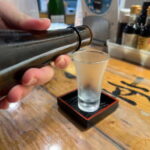
One drink and one sweet are included in the price. The drink is ordered when you arrive, before the sushi items come to your table. Alcoholic drinks are also available, but you must be at least 20 years old to drink under Japanese law.
The included drink adds value, especially because the price is listed at $71.85 per person. You are paying for a prepared food activity, a venue, the ingredients and utensils, and a small refreshment rather than only a plate of sushi. The sweet gives the session a clear finish, although the supplied details do not specify what drink or dessert choices are offered.
Bottled drinks, extra meals, and additional drinks cost extra. Keep that in mind if you arrive hungry. The included sushi and sweet may work well as a light meal or substantial snack, but the activity is not described as a full restaurant dinner.
For families, the age rule is important. Participants under 20 must be accompanied by a parent or guardian, and underage drinking is prohibited. If your group includes children or teenagers, choose nonalcoholic drinks and treat the session as a family food activity.
How the sushi-making part works
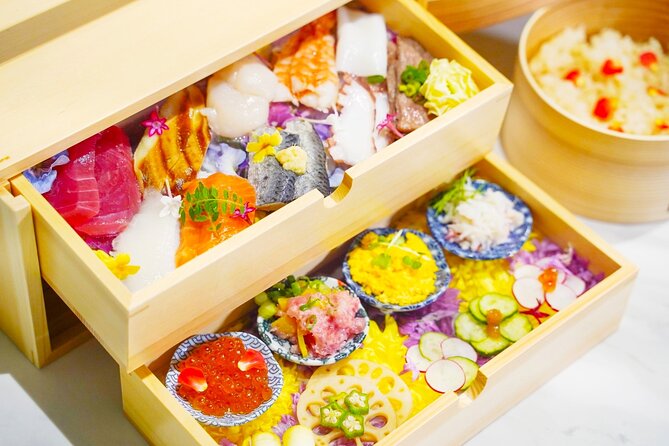
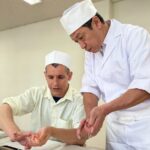
Once the sushi items reach your table, a staff member demonstrates the method once. The prepared ingredients and utensils are designed to make the process easy, even if you have never made sushi.
You then use the sushi rice and your preferred ingredients to form your own temari sushi. The supplied information does not list every topping, so do not book this expecting to select from a known menu of fish or vegetables. You can choose from the ingredients provided at your table, but the exact selection may vary.
The most important point is that this is a guided start followed by independent work. Staff are not described as remaining beside you for a detailed, step-by-step lesson. After the demonstration, you make the sushi at your own pace and contact staff if you have questions or need help.
That format has clear advantages. You can slow down if you want to make attractive pieces, or move along quickly if you are mainly interested in tasting the result. You also avoid the pressure of keeping up with a large class.
It also creates the main limitation. If you want detailed instruction about rice temperature, fish preparation, knife work, sushi technique, or Japanese culinary tradition, this session may feel too light. The fish and other sushi ingredients arrive prepared, and the activity centers on assembly and shaping.
One customer expected a two-hour sushi-making class with basic instruction but said the session ended after about 45 minutes, with the food simply provided for assembly. That is a useful warning. The official duration is approximately 90 minutes, but your actual hands-on time may be shorter if your group finishes quickly or needs little help.
English support and the pace at your table
Some staff members do not speak fluent English. A translator machine may be used, so expect communication to be practical rather than polished. The one-time demonstration is likely to carry much of the instruction, while gestures and the prepared ingredients help you understand what to do.
I would not let the language note stop you from booking if you are comfortable with a simple food activity. The process is visual, and the basic idea is easy to grasp: use rice and toppings to make round sushi pieces. Still, if you need detailed explanations about every ingredient, ask questions early and use the translation tool when needed.
The self-paced format helps here. You do not need to follow a long lecture or understand a complicated recipe. Once the demonstration is finished, you can take your time and request help if something is unclear.
Your group size may also affect the feel of the session. The maximum is 10 people, which is small enough to keep the table from becoming unwieldy. The exact group size on your date is not provided, so do not assume you will receive private instruction.
A few more Tokyo tours and experiences worth a look

Is $71.85 good value?

At $71.85 per person, this is not a bargain meal. The price makes more sense if you value the activity, the colorful venue, the included drink and sweet, and the chance to make something yourself in central Tokyo.
You are not paying for a professional sushi workshop with extensive culinary instruction. You are paying for a short, accessible food experience that combines preparation, eating, and a social cafe setting. For a first taste of Japanese food culture, that can be worthwhile, especially if you are traveling with children, friends, or a partner.
The value drops if you judge it only by the amount of sushi or the length of instruction. Prepared ingredients mean much of the difficult work has already been done. A guest who expects to learn professional techniques may feel that the price is high for placing ingredients onto rice.
The included drink and sweet soften the cost, but extra food and bottled drinks are not included. Transportation to Flower Wall Mone is also your responsibility. Since the session ends where it begins, you can plan your next Shinjuku stop without arranging a separate return transfer.
I would compare this price with your priorities. If your group wants an entertaining activity and a memorable meal, it has reasonable value. If you simply want the best sushi for your money, spend the budget at a sushi restaurant instead.
Who will enjoy this experience most
This suits first-time sushi makers who want a low-pressure activity. You receive the ingredients and tools, see a demonstration, and then work with your own hands. There is no stated requirement for previous cooking experience.
Families can also make good use of the format. Temari sushi is small, colorful, and easy to understand, and the 90-minute length is more manageable than a long cooking course. Remember that anyone under 20 must attend with a parent or guardian.
Friends and couples may enjoy the social side. You can make your sushi together, compare the finished pieces, and share the cafe setting. The activity gives you something to do while talking, instead of sitting through a formal lesson.
I would be more cautious about booking it for serious food enthusiasts. The experience does not promise knife skills, a lesson in sushi-grade fish, detailed rice preparation, or a chef-led workshop. It is an introduction to shaping prepared components.
It may also disappoint anyone who wants a guaranteed two-hour program. The official time is about 90 minutes, but the only detailed negative account described a much shorter session. Plan your day so that a quick finish will not create a problem, and consider the activity a flexible stop rather than the main event of your Tokyo visit.
Practical planning for your Shinjuku visit
The experience is booked, on average, 28 days ahead. That does not guarantee every date sells out, but it suggests you should reserve early if the session is important to your plans. Confirmation arrives at booking, and the ticket is available on your mobile device.
The activity begins and ends at Flower Wall Mone. Since no transportation is included, use the address and allow time to reach the basement venue. If you are unfamiliar with Shinjuku, avoid arriving at the last moment. Large station areas and busy streets can make a short journey take longer than expected.
The cancellation policy is simple but strict near the start time. You receive a full refund if you cancel at least 24 hours in advance. Cancellations or changes made less than 24 hours before the start time are not accepted for a refund, and cut-off times follow local Tokyo time.
Dress and equipment requirements are not specified. The supplied utensils and ingredients are provided, so you do not need to bring cooking tools. If you have food allergies or dietary restrictions, the available details do not explain how they are handled. Ask the provider before booking rather than assuming substitutions are possible.
Should you book the temari sushi experience?
Book it if you want a short, cheerful introduction to Japanese food culture in Shinjuku. The round temari style is distinctive, the ingredients and tools make the activity approachable, and the included drink and sweet give the session more than a simple tasting stop.
I would especially recommend it for families, couples, and friends who care more about making and sharing food than mastering sushi technique. The small maximum group size and self-paced format are helpful, and the flower-filled cafe gives the activity a setting you will remember.
Think twice if you expect close chef supervision, fluent English instruction, or a full two-hour class. The demonstration may be brief, staff language support can be limited, and one account describes a 45-minute finish. At $71.85, book for the social activity and the temari sushi itself, not for a large meal or professional training.
FAQ
How long does the temari sushi experience last?
The activity lasts approximately 90 minutes. The listed time includes making and eating temari sushi, one drink, and one sweet. Actual time may vary if your group finishes quickly.
Where does the experience begin and end?
It begins and ends at FLOWER WALL MONE, located in the basement of Takayama Land at 3-chome 5-3, Shinjuku, Shinjuku City, Tokyo 160-0022. Transportation to the meeting place is not included.
What is included in the price?
The price includes all fees and taxes, prepared sushi ingredients, utensils, one drink, and one sweet. Bottled drinks, extra meals, additional drinks, and transportation are not included.
Can children participate?
Participants under 20 must be accompanied by a parent or guardian. Alcohol consumption under the age of 20 is prohibited by Japanese law, so underage participants cannot drink alcohol.
Is English instruction available?
Some staff members are not fluent in English, and a translator machine may be used. Staff demonstrate the sushi-making process once and can be contacted if you need help afterward.
What is the cancellation policy?
You can cancel for a full refund up to 24 hours before the experience start time. Cancellations or changes made less than 24 hours before the start time are not accepted for a refund.
More Sushi Making Classes in Tokyo
More Shinjuku Tours in Tokyo
More tours in Tokyo we've reviewed








Sushi Making Classes, compared.
 ★ 5.0Sushi Making Tokyo Roll and Authentic Japanese Sushi ClassFrom $59
 ★ 4.9Tokyo: Roll and Authentic Sushi Making Class in AsakusaFrom $581h 40m
 ★ 4.9Tokyo: Sushi Making Class in a Happi Coat near a Famous SpotFrom $421h 30m
 ★ 5.0Sushi Making Tokyo! Popular Maki Sushi & Japanese Sushi(+Recipe!)From $63
 ★ 5.0Tokyo Sushi Making Class in Tsukiji with Professional ChefFrom $49
 ★ 5.0Tokyo Night Foodie Tour in Shinjuku – Seasonal Sushi, Wagyu BeefFrom $111