Reviewed · PRIVATE
Cherry Blossom Private Tour
Tokyo’s cherry-blossom season is short, scattered, and ruled by the weather. This private tour takes you from the Imperial Palace to Zojo-ji Temple, with quieter stops in Akasaka and Roppongi along the way. A guide handles the driving and route while you focus on flowers, photos, and Tokyo Tower views.
In This Article
- Key points to know before you book
- Why a private cherry-blossom drive works well in Tokyo
- The Imperial Palace gives you a proper first look
- Akasaka is the quiet photo stop
- Roppongi adds a hilltop view
- Zojo-ji Temple brings flowers and Tokyo Tower together
- The guide can matter as much as the flowers
- Blossom timing is the biggest variable
- Pickup, comfort, and group size
- Who will get the most from this tour
- Should you book the Cherry Blossom Private Tour?
- FAQ
- How much does the Cherry Blossom Private Tour cost?
- How long does the tour last?
- Which locations are included?
- Is hotel pickup available?
- Is this a shared group tour?
- Are admission tickets included?
- Are food and drinks provided?
- What happens if I need to cancel?
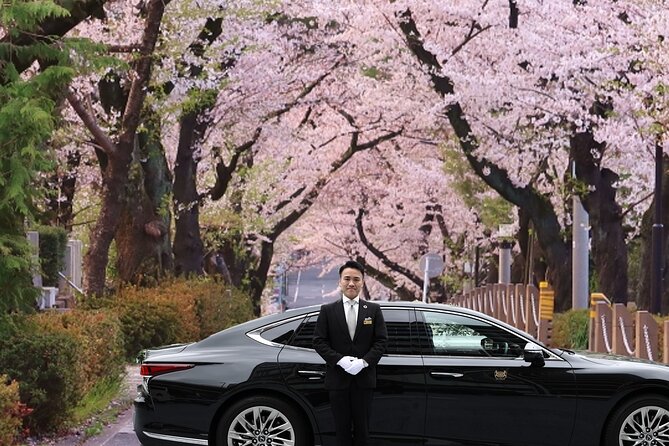
I like the hotel pickup and drop-off, especially when spring crowds make trains and busy sidewalks tiring. I also like the personal service: bottled water, snacks, and guides such as Yosuke, Riley, Miyu, and Kazu who answer questions in English. The main caution is timing. The advertised tour lasts about three to five hours, so confirm the exact duration and any extra-hour charges before you set off.
Key points to know before you book
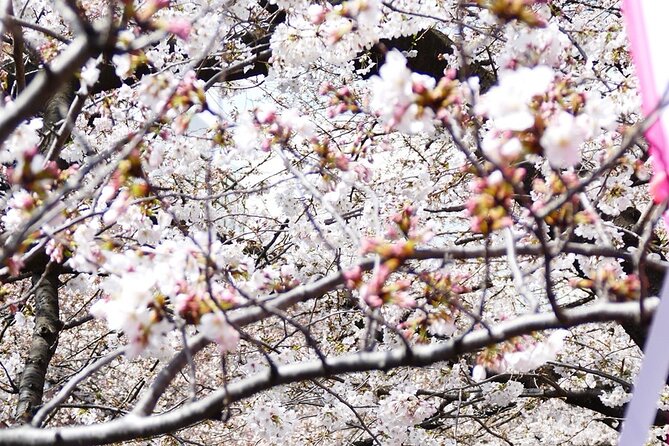
- Four very different blossom settings: You’ll see formal palace grounds, quiet Akasaka streets, a Roppongi hill, and temple gardens with Tokyo Tower.
- Private transportation for up to nine people: Your group does not share the tour with strangers, and pickup is offered.
- Good for uncertain blossom timing: Guides have adjusted routes and searched for remaining flowers when the season arrived early or late.
- Comfort touches included: Bottled water and snacks are provided, and one past booking also included Wi-Fi.
- Short photo stops: The listed sightseeing time totals about 75 minutes, with the rest of the three-to-five-hour experience used for driving and transfers.
- Clarify the price and time limit: The listed price is $559 per group, but confirm what happens if the tour runs beyond five hours.
Why a private cherry-blossom drive works well in Tokyo
Tokyo’s cherry trees do not grow in one single park. They line palace moats, temple grounds, residential streets, hills, and major avenues. That makes a private vehicle useful because you can cover several parts of the city without repeatedly finding train platforms, changing lines, or carrying tired children and older relatives through crowded stations.
The tour costs $559 per group of up to nine people. For one or two people, that is a serious price. For a larger family or group, the per-person cost becomes easier to justify, especially since the fee covers the group rather than charging separately for each participant.
I see the strongest value in the time saved. Your driver takes care of navigation, and you can ask questions as you go. You are not simply being dropped at a famous park and told to find your way back. The route links four locations with different moods, giving you a broader picture of Tokyo during sakura season.
The tradeoff is that this is not a long walking tour. The planned visits are brief, with 20 minutes at the Imperial Palace, 15 minutes in Akasaka, 20 minutes in Roppongi, and 20 minutes at Zojo-ji Temple. If you want to sit under one tree for an hour with a picnic, this is not the right format. It is a sightseeing sampler by private vehicle.
Other private tours in Tokyo

The Imperial Palace gives you a proper first look
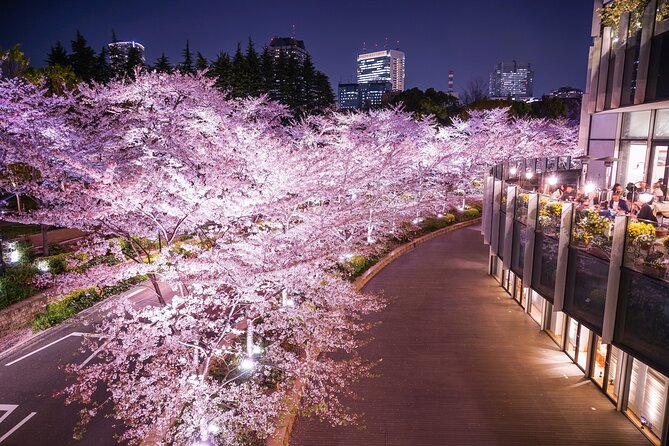
The first stop is the Imperial Palace, where the driver points out several types of cherry trees and explains their features. The stop is scheduled for about 20 minutes, and admission is free.
This is a useful opening because the palace area gives you more than one version of the blossom season. Instead of seeing a single row of identical trees, you may be shown differences in shape and type, along with details about the flowers themselves. The guide’s explanation adds context that you would miss while simply taking pictures.
The short visit also sets expectations. You will have time for photographs and a quick look around, but not an extended palace-area walk. If the blossoms are at their best, 20 minutes may feel rushed. On the other hand, a brisk opening stop lets you reach the quieter locations before spending too much of the day in one place.
Because the Imperial Palace is one of Tokyo’s best-known central sights, it can be a natural fit for a first visit. Your guide can also explain what you are seeing while keeping the stop focused on the trees rather than turning it into a broad palace tour.
Akasaka is the quiet photo stop
Akasaka is scheduled for 15 minutes and is described as quieter than the other locations, with plenty of cherry trees and fewer people in the way of your camera.
I especially like this part of the route for anyone who dislikes fighting for a clear photograph. Famous blossom spots can turn into a sea of phones and selfie sticks during peak season. A quieter Akasaka stop gives you a chance to enjoy the flowers at a calmer pace, even though the visit itself is short.
This is also where a private guide can make a real difference. You do not have to guess which street or corner is worth your time. The driver takes you to a selected viewing area, then you can step out, take pictures, and ask why the spot matters.
There is a practical limit here. The tour does not promise a long neighborhood walk or a sit-down break in Akasaka. Think of it as a carefully chosen photo stop, not a full exploration of the district. If you want more time, ask before booking if the route can be adjusted within the tour’s time limit.
Roppongi adds a hilltop view
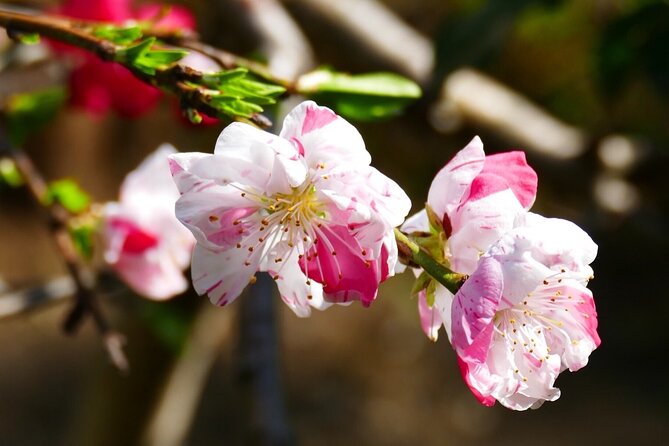
The Roppongi stop lasts about 20 minutes and centers on a hill with cherry blossoms. That change in elevation gives the route a different feel from the palace and Akasaka stops.
Roppongi is often associated with city nightlife and large commercial buildings, but this stop focuses on the seasonal trees. A hill can offer better angles for photographs, especially when you want blossoms framed against Tokyo’s buildings rather than only against a garden or moat.
The location also helps break up the tour. You move from formal grounds to a quieter urban area and then to a more elevated city view. Your driver can explain the area and answer questions about Tokyo’s people, history, culture, and cherry blossoms, as Riley did for one group.
Again, 20 minutes is enough for a look and a set of photos, but it will not satisfy anyone hoping for a slow Roppongi walk. You will get the selected viewpoint rather than a full neighborhood visit. That focused approach is useful when blossom timing is limited, but it means you should not expect every stop to become a separate outing.
Zojo-ji Temple brings flowers and Tokyo Tower together
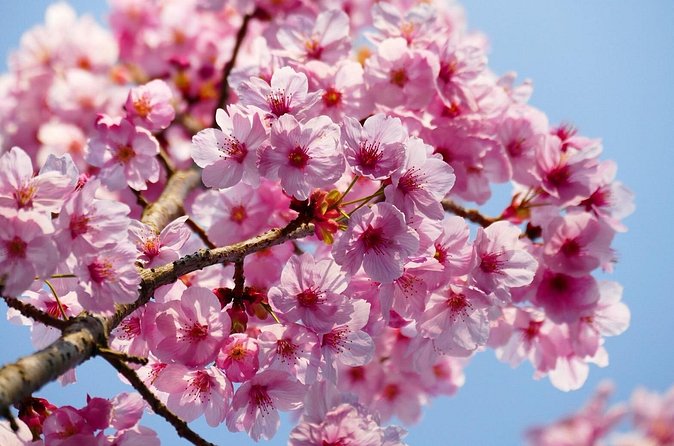
The final stop is Zojo-ji Temple, where you can see weeping cherry trees against a traditional temple setting, with Tokyo Tower nearby. The planned visit is about 20 minutes, and admission is free.
This is likely the most visually distinctive stop. The temple provides the old Tokyo atmosphere that the earlier urban locations cannot. Add the bright Tokyo Tower and the soft shape of a weeping cherry tree, and you have the kind of layered photograph many people hope to bring home from Japan.
I like ending here because the stop combines several familiar Tokyo images in one place. You get architecture, religious surroundings, seasonal flowers, and a modern landmark. It also gives the tour a stronger sense of place than a route made only of city streets.
The visit remains short, so you should not expect a full temple tour or extended time for quiet reflection. The purpose is to enjoy the grounds and the blossoms, take pictures, and appreciate the contrast between old and new Tokyo. If temple details matter most to you, ask your guide to spend some of the available time explaining what you are seeing.

The guide can matter as much as the flowers
The strongest part of this experience is the private guide service. Several guides are named in the supplied information, including Yosuke, Riley, Miyu, and Kazu. Their roles appear to combine driving, route planning, sightseeing assistance, and conversation.
Yosuke received especially warm praise for his English, clean van, and practical comforts. One booking also included Wi-Fi along with water and snacks. That matters more than it may sound. A blossom tour involves repeated short stops, and having a clean vehicle, refreshments, and a way to stay connected makes the day easier.
Riley was praised for explaining Japanese people, history, culture, and cherry blossoms in clear English. That is the kind of guide service I value. Tokyo’s streets can look like a blur when you are moving between districts, so even a few good explanations can turn a series of photo stops into a more understandable picture of the city.
Miyu was described as an efficient driver who managed a large vehicle through tight spaces and added extra sights when possible. Kazu was praised for taking a group to less crowded places and paying attention to their enjoyment throughout the outing.
Guide quality can vary because the assigned person is not guaranteed in the information provided. You can request a preferred guide, but there is no stated promise that Yosuke, Riley, Miyu, or Kazu will lead your group. I would treat the named guides as examples of the service style, not as a guaranteed lineup.
Blossom timing is the biggest variable
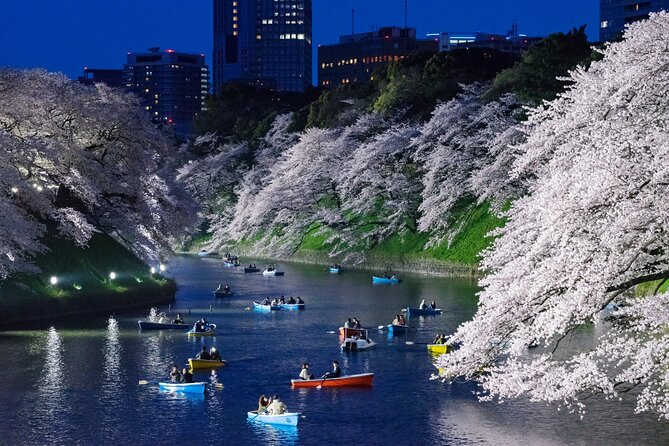
No cherry-blossom tour can promise perfect flowers on a particular date. Some groups arrived at the beginning of the season and found only a few remaining blossoms. Others were about a week too early and saw trees that had not yet opened. One guide apologized for not being able to show fully bloomed trees and said the company planned to provide newer forecasts.
This is an important point when you compare the tour with a fixed garden visit. The private format gives the guide a better chance to adjust the route, but it cannot change the weather or make unopened buds bloom. The company has worked to find the best remaining flowers when the timing was difficult, which is useful, but you should still book with flexible expectations.
If your dates are fixed, ask about the current blossom forecast before the tour. A private vehicle may allow the guide to search several districts, but the experience will still be seasonal rather than guaranteed. The best photographs and fullest trees depend on temperature, wind, and the exact week of your visit.
Pickup, comfort, and group size
Hotel pickup and drop-off remove one of the day’s biggest hassles. You do not need to reach a distant meeting point, and you can finish at your hotel after several stops. The tour is also near public transportation, although the key benefit is that you are not required to use it between locations.
The activity is private for your group, with up to nine people. That works well for families, friends, or multigenerational groups who want to stay together. It also gives you room to ask questions without competing with a busload of people.
The vehicle is an important part of the experience. A clean van, bottled water, snacks, and possibly Wi-Fi make the transfers more comfortable. These small details are most useful for families and for anyone who has already spent a full day walking around Tokyo.
The listed duration is approximately three to five hours. The four scheduled stops account for about 75 minutes, so expect a good portion of the outing to involve driving through Tokyo. That is not wasted time, since the districts are spread out, but you should choose this tour for convenient coverage rather than nonstop blossom viewing.
There is one point I would settle before departure. A past booking described a six-hour tour followed by a request for an additional 10,000 yen. The details of that dispute are not fully clear, but the lesson is simple: confirm the included maximum time, the pickup and drop-off arrangement, and any hourly surcharge in writing. The advertised price is $559 per group, and you should know exactly what that covers.
Who will get the most from this tour
I would recommend this experience to a family or group of friends who want a private day out and prefer not to manage Tokyo’s transport system during blossom season. It is also a good match for people with limited time who want to connect several central locations in one outing.
You may also like it if photography is a major goal. Akasaka is chosen for quieter photos, Roppongi offers a hill, and Zojo-ji supplies the classic temple and Tokyo Tower combination. The route gives you a range of backgrounds rather than repeating the same park view.
The tour is less suitable if you are traveling alone or as a couple on a tight budget. At $559 per group, the cost per person is much easier to justify with six to nine people. It is also not ideal for someone who wants long walks, a picnic, or detailed visits inside every location.
Most participants can take part, according to the supplied details, and the experience is near public transportation. Still, if someone in your group has specific mobility needs, ask the operator about the vehicle and the walking required at each stop before booking. The published information does not give detailed accessibility specifications.
Should you book the Cherry Blossom Private Tour?
Book it if you value comfort, flexible routing, and personal attention more than the lowest possible price. The combination of hotel pickup, a private vehicle, four different blossom settings, snacks, and a guide who can explain what you are seeing is strong for a family or larger group.
I would be cautious if you want guaranteed peak bloom or a long, leisurely stay at one site. The flowers may be early or late, and the stops are short. Before paying, confirm the exact tour length and any extra-time fees, then check the forecast for your date.
For a group of up to nine people, this is a practical way to see more of Tokyo during a narrow seasonal window. For a small party, compare the per-person price with public transport and self-guided visits. The right choice depends less on the blossoms alone than on how much you value having someone else handle the city.
FAQ
How much does the Cherry Blossom Private Tour cost?
The tour costs $559 per group of up to nine people.
How long does the tour last?
The experience lasts approximately three to five hours.
Which locations are included?
The route includes the Imperial Palace, Akasaka, the Roppongi District, and Zojo-ji Temple.
Is hotel pickup available?
Yes. Pickup and drop-off at your hotel are offered.
Is this a shared group tour?
No. This is a private activity, so only your group participates.
Are admission tickets included?
The listed admission cost is free at all four scheduled stops.
Are food and drinks provided?
Yes. Bottled water and snacks are provided during the tour.
What happens if I need to cancel?
You can cancel up to 24 hours before the experience start time for a full refund. Cancellations or changes made less than 24 hours in advance are not accepted for a refund.
More Private Tours in Tokyo

More tours in Tokyo we've reviewed



Private, compared.
 ★ 5.0Tokyo 6hr Private Tour with Government-Licensed GuideFrom $155
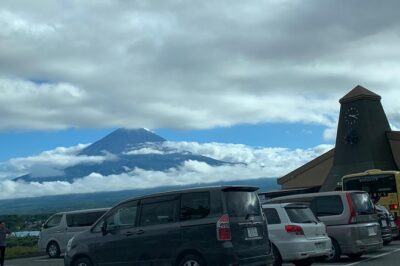 ★ 5.0Private Tour to Mt. Fuji and Hakone (Fully Licenced Operator)From $497
 ★ 5.0Tokyo Customized Private Tour (Must See Places in 1 Day)From $145
 ★ 4.8Tokyo: Private City Highlights Tour with Local GuideFrom $1064 - 8 hours
 ★ 5.0Private Custom Tour: Tokyo in a DayFrom $159
 ★ 5.0Tokyo 4hr Private Tour with Government-Licensed GuideFrom $109