Reviewed · MT FUJI DAY TRIPS
From Tokyo: Full-Day Mount Fuji Tour in English or Spanish
The best part of this Mount Fuji day trip is the variety. In one long outing, you get the famous Chureito Pagoda view, a traditional shopping street, two important Shinto shrines, flower gardens, and a cruise on Lake Kawaguchiko. It is a broad look at the Fuji area rather than a single photo stop.
In This Article
- Key points to know before booking
- What this Fuji day trip is really designed to do
- Arakurayama Sengen Park and the Chureito Pagoda view
- Walking Shimoyoshida Honcho Street beneath Fuji
- Kitaguchi Hongu Fuji Sengen Shrine and the northern pilgrimage route
- Oishi Park, seasonal flowers, and Fuji souvenirs
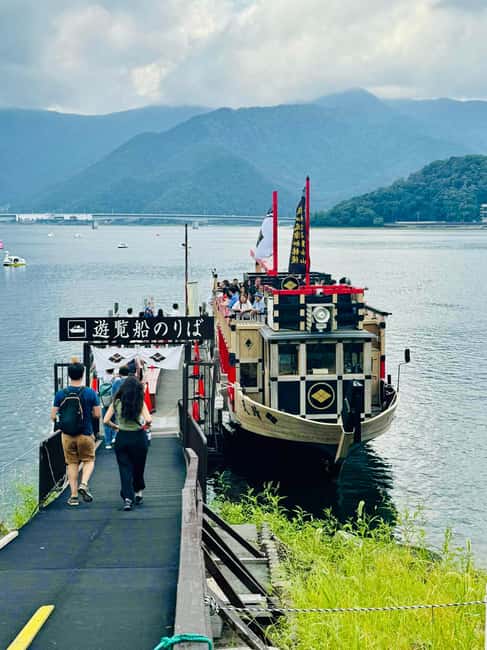
- Cruising on Lake Kawaguchiko
- The Mount Fuji fifth station question
- Transport, meeting point, and the long day
- Is $90 a fair price?
- Who should book this Mount Fuji outing?
- Should you book it?
- FAQ
- Where does the tour start?
- Where does the tour finish?
- Is the tour available in Spanish?
- How long does the tour last?
- Is the Mount Fuji fifth station included?
- How many steps lead to Chureito Pagoda?
- Are food and drinks included?
- What happens if Mount Fuji is closed?
I like the Spanish-language option, especially for a day packed with cultural details. I also like the choice between stairs and a sloped path at Arakura Sengen Park, since the pagoda view should not be reserved for people who can manage 400 steps.
The main consideration is the weather. Fuji can disappear behind cloud, and the schedule is full. Also, the advertised Mount Fuji fifth station is not shown in the detailed route supplied for this tour, so confirm that stop before booking if it is essential to you.
Key points to know before booking
- 400 steps or a gentler slope: Reach the Chureito Pagoda by climbing 400 steps, or use another path without stairs.
- Luis gets specific praise: Recent bookings repeatedly single out guide Luis for his Spanish explanations, patience, local suggestions, and careful timing.
- A full Fuji-area circuit: The route combines shrines, a pilgrimage street, gardens, mountain views, and a lake cruise.
- Good value at $90: Transport, guide service, entrance fees, and the listed visits are included, but lunch, drinks, snacks, ice cream, and personal purchases are not.
- Weather controls the day: Fuji views are never guaranteed, and access can change quickly because of conditions or official restrictions.
- Two Shinjuku locations: Meet at the Robert Indiana LOVE sculpture near 6-chōme-5-1 Nishishinjuku and finish at 1-chōme-8-8 Nishishinjuku.
What this Fuji day trip is really designed to do
This is not a quiet mountain walk or a serious climb. It is a sightseeing day that links several of the most recognizable places around Fuji, with transportation between them and a guide explaining the religious and cultural setting.
That distinction matters. If you want to hike on Mount Fuji, this is not the right product. If you want to see Fuji from several angles without working out a complicated regional route yourself, it makes good sense.
The day lasts about 10 hours, beginning and ending in the Shinjuku area. The first listed bus ride is about 30 minutes, but the full day includes several stops, walks, and transfers. You should expect a steady pace rather than lots of free time at each place.
The tour is offered in English or Spanish. For Spanish-speaking visitors, that can make the shrine visits far more useful. You are not just stopping for a photograph. You can ask questions about pilgrimage customs, local legends, and the meaning of the buildings as you go.
A few more Fujiyoshida tours and experiences worth a look


Arakurayama Sengen Park and the Chureito Pagoda view
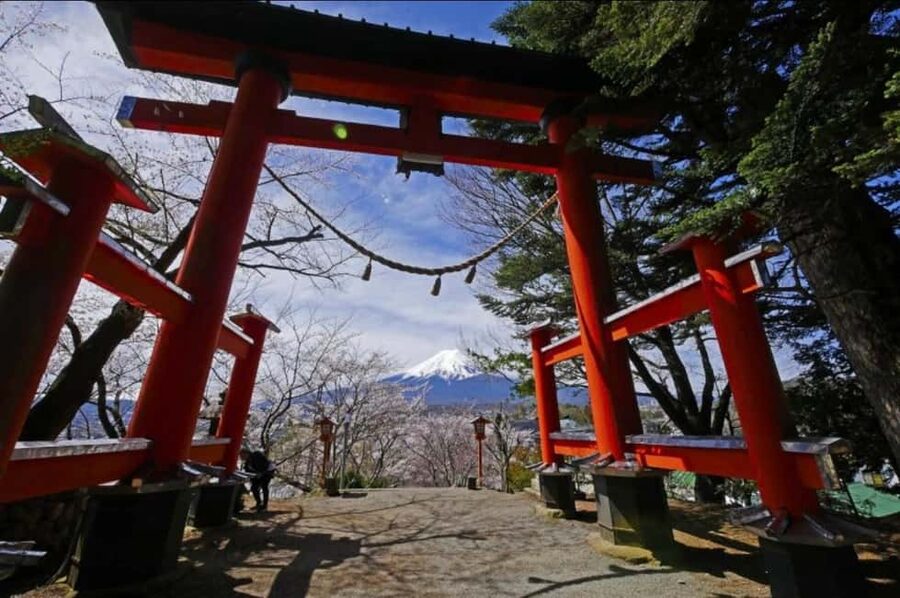
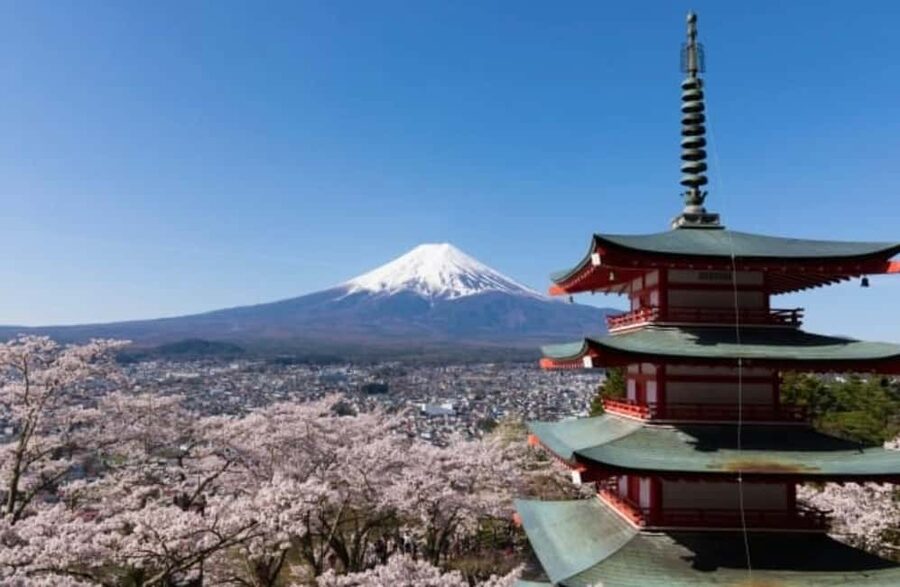
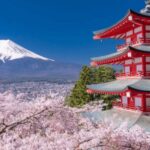
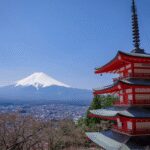
The opening stop is Arakurayama Sengen Park, one of the classic Fuji viewpoints. The usual image is familiar: Chureito Pagoda in the foreground, Mount Fuji behind it, and the town spreading below. It is one of Japan’s most recognizable views, but the weather decides how much of the picture you actually get.
The visit is scheduled for about 70 minutes, including the park observatory and the nearby shrine and pagoda. That gives you time for photographs, but not endless lingering. Keep your camera ready and wear shoes with a firm sole.
From the entrance, the uphill route has about 400 steps. The first 100 lead toward Arakura Fuji Sengen Shrine, and the remaining 300 continue to the pagoda. This is a real climb, especially early in a long day.
There is another route without stairs, using a pleasant slope. It takes you to the same area and still offers good views. The tour information does not give an exact walking time for this path, so allow yourself extra margin if you choose it.
The shrine itself is one of the oldest in the area and is linked with Takeda, the famous samurai lord of Yamanashi. This gives the stop more substance than a simple lookout. You can pause at the shrine before continuing upward, or choose the less demanding route if the steps do not suit you.
The Fuji view is the star, but do not treat it as guaranteed. Clouds can cover the summit, especially when the weather shifts. Even without a clear peak, the pagoda, wooded hillside, and town below still make this a worthwhile stop, but your expectations should stay flexible.
Walking Shimoyoshida Honcho Street beneath Fuji
After Arakurayama, the group walks along Shimoyoshida Honcho Street for about 40 minutes. This is a different kind of Fuji view. Instead of looking at the mountain from a park, you see it framed by a traditional town street, local shops, and older-style architecture.
Honcho Street developed along Fuji Michi, the route toward the sacred mountain. Its importance comes from this connection with pilgrims heading toward Fuji. That link is easy to miss if you simply take a photograph, so the guide’s explanation adds useful context.
The street also gives you a short taste of ordinary Fujiyoshida rather than a string of formal attractions. You may have time to look at shops and absorb the view, but this is still a guided walk with a fixed schedule. Do not count on a long shopping break.
Photography here can be tricky because the best mountain view depends on weather, traffic, and the exact angle from the street. Follow local directions carefully and keep the group moving. The reward is a view that feels tied to the town itself, not just placed in front of a viewing platform.
Kitaguchi Hongu Fuji Sengen Shrine and the northern pilgrimage route
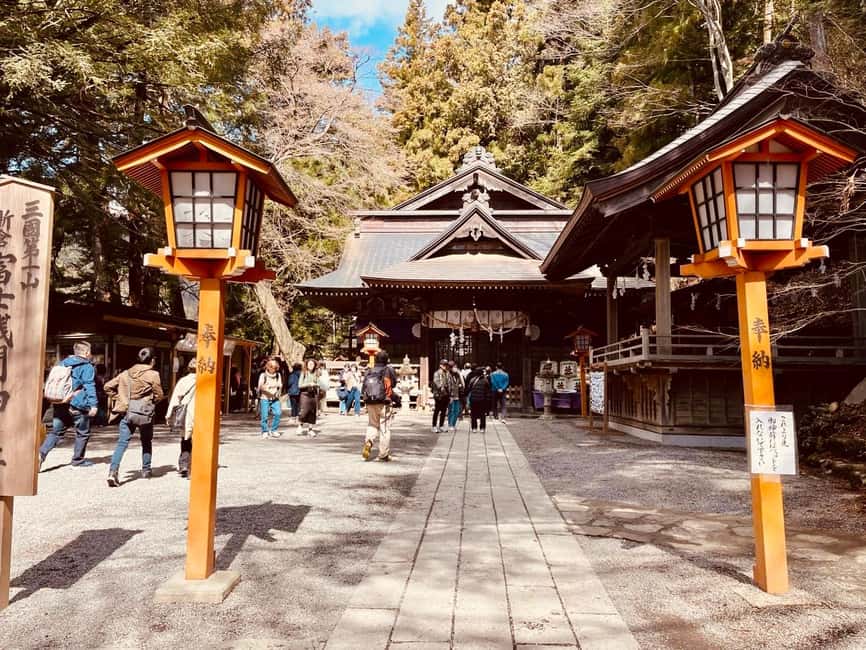
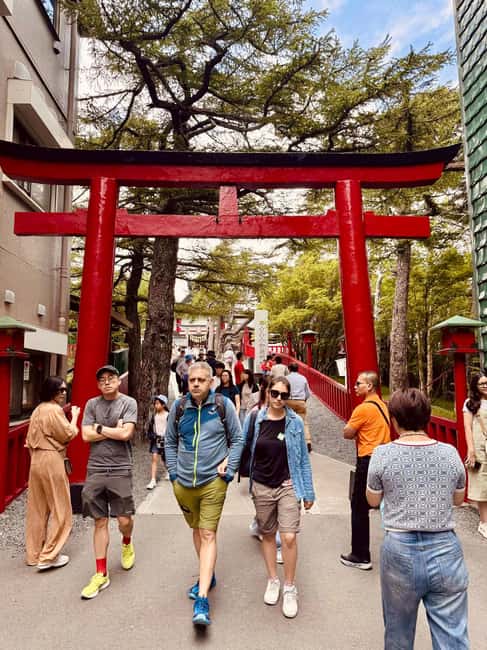
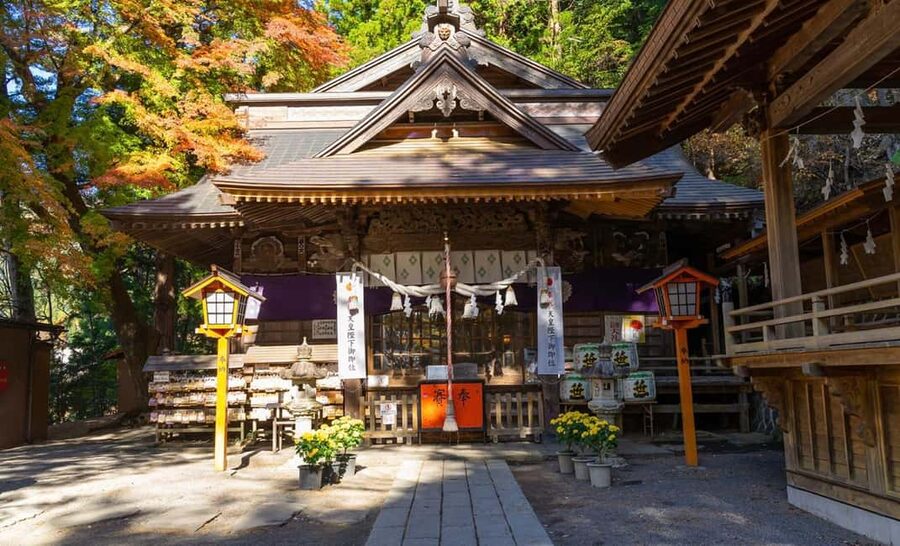
The next major stop is Kitaguchi Hongu Fuji Sengen Shrine, with about 50 minutes for sightseeing. This is one of the most meaningful parts of the day if you want to understand why Mount Fuji is more than a scenic peak.
The shrine is part of the Mount Fuji UNESCO World Cultural Heritage site, designated in 2013. It is also described as having origins reaching back roughly 1,900 years, with an early shrine linked to the legendary prince Yamato Takeru around 100 AD.
The important point for you is its role as the ancient northern entrance to Mount Fuji. Pilgrims once began their route toward the mountain here. The shrine therefore connects the religious life of the region with the physical act of climbing or approaching Fuji.
Do not expect another giant panorama like the Chureito viewpoint. This stop is about the shrine grounds, the sense of ceremony, and the old route toward the mountain. The change of pace is welcome after the first viewpoint and street walk.
The guide matters here. A good explanation can turn gates, worship spaces, and pilgrimage routes into a story you can follow. Luis is the guide most often praised by name in the recent booking feedback, particularly for explaining every stop in Spanish, answering questions patiently, and offering practical suggestions. Guide assignments can change, so treat that as useful context rather than a promise.
Oishi Park, seasonal flowers, and Fuji souvenirs
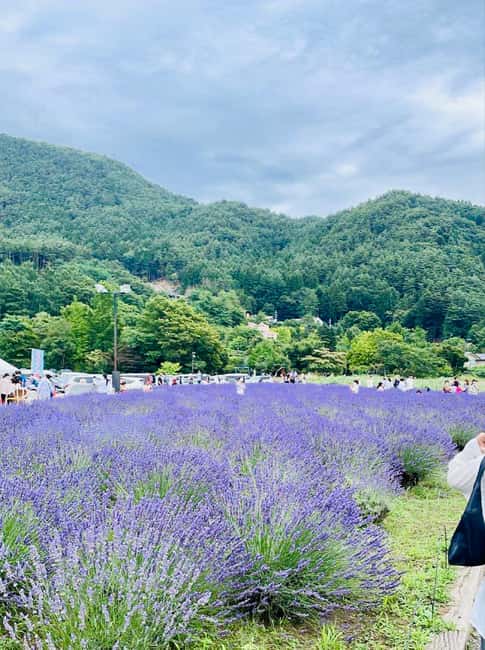
Oishi Park sits beside Lake Kawaguchiko and is scheduled for about 50 minutes. It is designed for an easy walk, with two gardens and seasonal flowers spread along the lakeside setting.
The flowers change with the time of year, so the exact appearance will depend on your departure date. This is a pleasant stop for photographs, but it is also your best chance to slow down for a few minutes after the shrine visits.
The park is described as being built with stones recovered from Mount Fuji after powerful eruptions. That detail gives the place a local connection to the mountain’s past. You can also find fruit from the area, souvenirs, and ice cream with 14 flavors.
Food purchases are not included. Lunch, snacks, drinks, and ice cream are your responsibility, so bring cash and water. The park may be a convenient place to buy something, but you should not assume that this replaces a proper lunch. The supplied schedule does not list a dedicated meal stop.
For many people, Oishi Park will be the most relaxed stop of the day. You can stroll through the gardens, take in the lake, and look for an unobstructed view of Fuji. If the summit is hidden, the gardens and water still give you something to enjoy.
A few more Fujiyoshida tours and experiences worth a look

Cruising on Lake Kawaguchiko
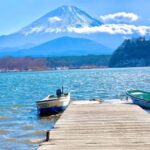
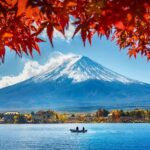
The final listed stop is a 40-minute cruise on Lake Kawaguchiko, the second largest of the lakes around Mount Fuji. After a day of walking, sitting on the boat gives you a welcome change of posture.
The value of the cruise is the wide view. From the water, you see the lake surroundings from a different angle, and clear conditions may give you another look at Fuji. The boat ride is not a substitute for the Chureito view, but it rounds out the day and prevents the itinerary from feeling like a series of roadside photo stops.
A 40-minute sailing is long enough to feel like a proper activity, yet short enough to fit into a packed schedule. Keep your camera accessible, but also take a few minutes to watch the shoreline without trying to photograph every second.
The timing at the end of the day can be useful. If Fuji was hidden earlier, the lake may offer a final chance for a clearer view. Weather can change quickly, so the best mountain photograph may come at a stop you did not expect.
The Mount Fuji fifth station question
The highlights describe a visit to Mount Fuji’s fifth station, but the detailed sequence provided for the tour lists Arakurayama, Honcho Street, Kitaguchi Hongu Fuji Sengen Shrine, Oishi Park, and Lake Kawaguchiko instead. The fifth station does not appear in that detailed schedule.
That is important because the fifth station is a different sort of stop, higher on the mountain and often used as a scenic access point. If standing at the fifth station is one of your main goals, ask JP Pacific Co, Ltd to confirm the current route before you pay.
The tour also notes that if Mount Fuji is closed or entry is not permitted for reasons beyond the operator’s control, the group will visit Kitaguchi Hongu Fuji Sengen Shrine instead. Since that shrine is already included in the listed route, the practical lesson is simple: conditions and access rules can change the exact plan.
Transport, meeting point, and the long day
The meeting point is in front of the Robert Indiana sculpture LOVE at 6-chōme-5-1 Nishishinjuku. Look for a guide holding a JP Travelers sign. For the Spanish departure, the guide will say Fuji tour in Spanish.
The tour finishes at 1-chōme-8-8 Nishishinjuku, so you return to the same general part of Tokyo, though not necessarily the exact meeting point. Check the locations carefully, especially if you have an evening reservation.
The vehicle is a key part of the value. You avoid piecing together trains, buses, and local transport around the Fuji Five Lakes area. One recent booking specifically described the vehicle as clean and comfortable, while transport receives a 92 percent perfect score. There is no stated group size, so do not assume a private or small-group departure.
Wear comfortable shoes. Even with the no-stairs option at Arakurayama, you will walk at several stops. Bring water, sunscreen, comfortable clothing, a camera, and some cash. The weather around Fuji can change fast, so a light extra layer is sensible.
The age restriction says the tour is not suitable for people over 95. No other accessibility details are provided, so anyone with mobility concerns should ask about the sloped path, walking distances, and vehicle arrangements before booking.
Is $90 a fair price?
At $90 per person, I consider this a solid package if you want a guided day from Tokyo. Bus transportation, the guide fee, entrance fees, Arakurayama Sengen Park, the shrines, Chureito Pagoda, Honcho Street, Oishi Park, and the Lake Kawaguchiko cruise are included.
The price is strongest for visitors who value convenience and explanation. Planning this route independently would require checking several connections and deciding how to move between Fujiyoshida, the lake, and the shrine areas. Here, the operator handles the movement and gives you a guide in English or Spanish.
The extra spending is easy to underestimate. Lunch, snacks, drinks, ice cream, and personal purchases are not included. Budget for food and bring water, since the schedule does not show a separate meal break.
Free cancellation up to 24 hours before departure and the option to reserve now and pay later make the booking less rigid. Still, the weather remains the biggest risk, particularly if your main reason for going is a clear Fuji photograph.
Who should book this Mount Fuji outing?
I would choose this tour if you are staying in Tokyo and want a one-day introduction to the Fuji area without arranging several transport links. It suits first-time visitors, couples, families who can manage a full day, and Spanish-speaking visitors who want cultural explanations in their own language.
It is also a good fit if you want variety. The day includes religious sites, a town street, gardens, water, and mountain viewpoints. You are not depending on one attraction to carry the whole experience.
I would hesitate if you want a slow pace, a long lunch, or a serious hike. The 10-hour schedule is full, and the 400-step route to Chureito can be demanding. You can use the slope instead, but you will still spend much of the day moving between stops.
The tour has a 4.7 rating from 101 bookings, and the strongest praise centers on the guide service. Luis is repeatedly described as patient, clear, well informed, and especially helpful for Spanish-speaking visitors. His habit of starting early to avoid crowds is also singled out, which matters at popular viewpoints.
Should you book it?
Book this tour if you want many Fuji-area highlights in one organized day, especially with an English or Spanish guide. The price includes the major transport and admission costs, and the mix of views, shrines, gardens, and a lake cruise gives you a fuller picture than a single lookout.
Before booking, confirm the fifth station issue and check the forecast. If you can accept changing views and a busy schedule, this is a practical and well-priced way to see Mount Fuji from Tokyo. If you need a guaranteed summit view or a leisurely mountain day, choose a more focused outing instead.
FAQ
Where does the tour start?
It starts in front of the Robert Indiana Sculpture LOVE at 6-chōme-5-1 Nishishinjuku. The guide will hold a JP Travelers sign.
Where does the tour finish?
The tour finishes at 1-chōme-8-8 Nishishinjuku.
Is the tour available in Spanish?
Yes. The tour is conducted in Spanish and English. For the Spanish departure, the guide will identify it as a Fuji tour in Spanish.
How long does the tour last?
The full tour lasts about 10 hours.
Is the Mount Fuji fifth station included?
The highlights mention the fifth station, but the detailed route provided does not list it. Confirm the current schedule with JP Pacific Co, Ltd if this stop is important to you.
How many steps lead to Chureito Pagoda?
The route from the entrance includes about 400 steps. The first 100 lead to Arakura Fuji Sengen Shrine, followed by about 300 more to the pagoda. A separate path without stairs is also available.
Are food and drinks included?
No. Lunch, snacks, drinks, ice cream, and personal expenses are not included.
What happens if Mount Fuji is closed?
If Mount Fuji is closed or entry is not permitted for reasons beyond the operator’s control, the tour will visit Kitaguchi Hongu Fuji Sengen Shrine instead.
More Full-Day in Fujiyoshida
More Mt Fuji Day Trips in Fujiyoshida

More tours in Fujiyoshida we've reviewed

Mt Fuji Day Trips, compared.
 ★ 5.0Mt Fuji and Hakone 1-Day Bus Tour Return by Bullet TrainFrom $163
 ★ 4.0Mt Fuji & Hakone Cruise, Drum Show Bullet Train 1 Day from TokyoFrom $149
 ★ 4.4Tokyo Mt Fuji 5th St & Hakone Cruise Bus Tour w/Bullet TrainFrom $15410 hours
 ★ 4.5From Tokyo: Mount Fuji Full-Day Sightseeing TripFrom $6810 hours
 ★ 4.7Tokyo: Mt. Fuji Tour, Hakone Ropeway, Owakudani, Lake AshiFrom $5410 hours
 ★ 4.4Tokyo:Mt.Fuji,Kawaguchiko Oishi Park,Arakurayama Sengen ParkFrom $5410 hours