Reviewed · ASAKUSA TOURS
Tokyo Morning Tour : Meiji Shrine, Asakusa and Fish Market
Tokyo mornings do not waste time. This four-hour tour moves from the quiet cedar paths of Meiji Shrine to the sushi counters and food stalls of Tsukiji, then finishes beneath the red Kaminarimon Gate in Asakusa. It gives you three very different Tokyo scenes before lunch.
In This Article
- Key points at a glance
- Why this morning route works in Tokyo
- Meiji Shrine: a quiet start beside Harajuku
- Tsukiji Outer Market: Tokyo through its food
- Asakusa and Senso-ji: the grand finish
- The guides are a major part of the value
- Is $72.67 a fair price?
- Who should book this Tokyo morning tour?
- Practical details before you go
- Should you book it?
- FAQ
- How long does the Tokyo Morning Tour last?
- What places does the tour visit?
- Does the tour include food?
- Is public transportation included?
- Where does the tour begin?
- Where does the tour end?
- How large is the group?
- Can I cancel for a full refund?
I like the small group size, capped at eight, and the food stops that turn a sightseeing walk into a tasting tour. Guides such as Shoma Sato and Yosuke are praised for clear explanations, patience, flexible pacing, and a friendly manner.
The main drawback is the tight schedule. You pay about 550 yen for public transportation, and food costs are not listed as included, so the $72.67 price is not your full out-of-pocket cost. The tour also ends at Asakusa Station, not back in Harajuku.
Key points at a glance
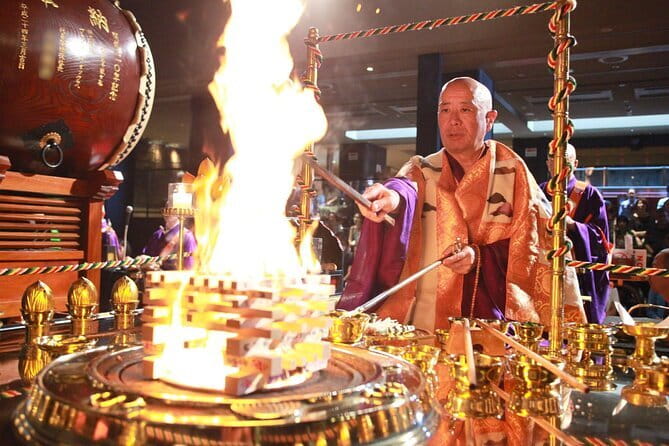
- Three major Tokyo districts in four hours: Meiji Shrine, Tsukiji Outer Market, and Asakusa fit into one morning.
- Food is part of the experience: Expect sushi or sashimi at Tsukiji, plus mochi, sweet potato, and a savory cutlet in Asakusa.
- A small group capped at eight: This makes it easier to ask questions and keep a steady pace.
- Guides add cultural context: Shoma Sato and Yosuke are noted for explaining customs, philosophy, and local history.
- Transport is not included: Set aside about 550 yen for public transportation between the stops.
- The finish is practical: You end near Asakusa Station, ready to continue sightseeing on your own.
Why this morning route works in Tokyo
Tokyo can feel scattered on a first visit. Meiji Shrine is in the Harajuku area, Tsukiji is farther east, and Asakusa is farther still. Seeing all three without planning every train connection yourself has real value, especially if you have only a short stay.
The route also has a pleasing rhythm. You begin in a forested shrine setting, shift to the smells and movement of a food market, and finish among temple buildings, souvenir shops, and traditional snacks. It is a useful introduction to both modern Tokyo and older customs.
The four-hour length matters. You get a focused morning rather than a full-day commitment. That suits you if you want an afternoon free for another neighborhood, a museum, shopping, or a rest. The tradeoff is that each stop receives about an hour, so this is an overview rather than a slow, detailed visit.
The tour uses a mobile ticket and is designed for most people who can use public transportation. The meeting point is at IKEA Swedish Cafe in Harajuku, at 1-14-29 Jingumae. Check the exact meeting instructions carefully before setting out, since the location includes a specific building and room reference.
A few more Tokyo tours and experiences worth a look
Meiji Shrine: a quiet start beside Harajuku
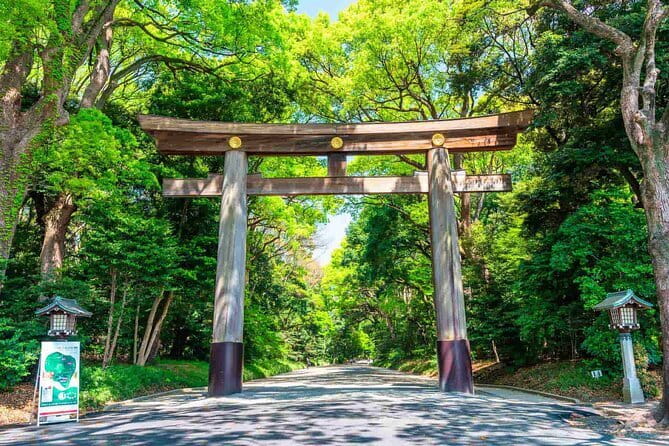
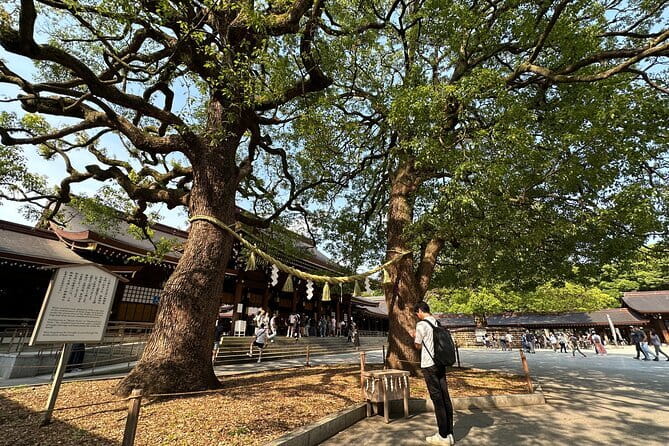
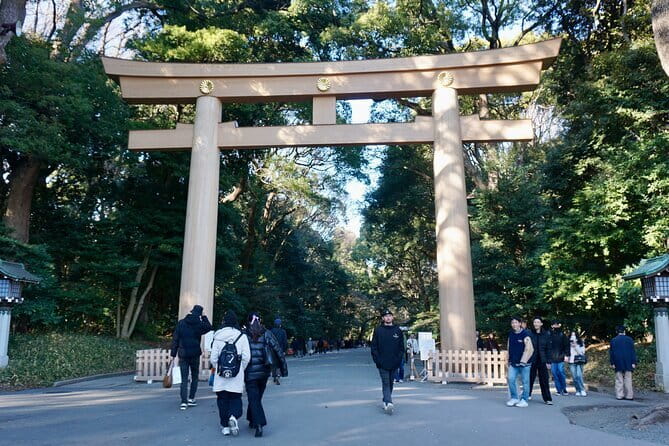
Meiji Jingu Shrine is dedicated to Emperor Meiji and Empress Shoken. The approach takes you through forested paths and beneath large torii gates, a sharp contrast to the shops and crowds associated with nearby Harajuku.
I like beginning here because the setting gives you room to slow down. The tour description emphasizes the peaceful morning hours, and that timing is important. Early visits generally make a shrine feel more reflective, while later hours can bring more people and activity.
Your guide can explain the basic Shinto customs and the role of the shrine, rather than leaving you to simply walk through a beautiful setting without context. The value is not only the gate, the trees, or the main shrine buildings. It is learning how the space is used and why visitors behave in certain ways.
Plan on roughly one hour here. That should allow time for the approach, the shrine grounds, photos, and an explanation of what you are seeing. Admission is listed as included, and the shrine itself has no separate admission charge in the tour details.
One limitation is that a one-hour stop cannot cover every corner of the grounds. If Meiji Shrine is your main reason for visiting Harajuku, you may want to return independently for a longer walk. On this tour, the shrine works best as a calm opening chapter.
Tsukiji Outer Market: Tokyo through its food
The next major stop is Tsukiji Jogai Market, the outer market that remains after the wholesale auction operation moved to Toyosu. It is the food center of the morning, with market stalls, small eateries, and products tied closely to Japanese cooking.
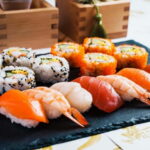
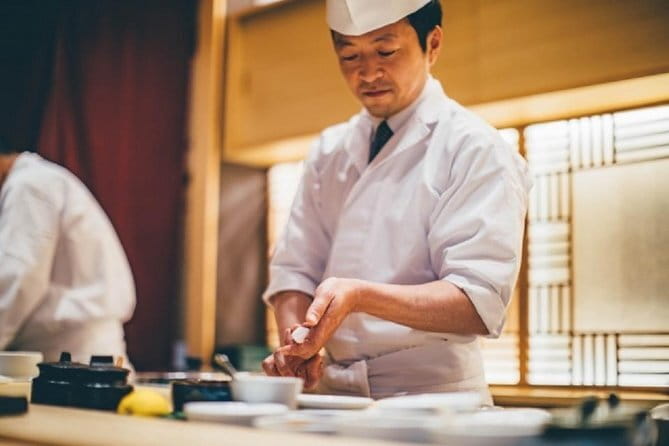
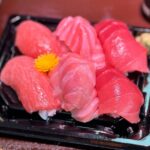
The experience includes fresh sushi and sashimi, along with local bites. That is a strong feature for anyone who wants to taste Tokyo instead of only photographing it. You may also try street foods such as sweet mochi, sweet potato, and a savory cutlet during the food portion of the tour.
Keep your expectations clear. This is not a visit to the former wholesale auction area. The inner market operation moved to Toyosu, while Tsukiji’s outer market continues as a public-facing food district. You are going for the stalls, tastes, and atmosphere, not an auction viewing.
An English-speaking guide is especially useful here. Food markets can be confusing when you do not know what a dish is, how it is served, or which items are typical. A guide can help connect the food to everyday Japanese customs and point out what you are tasting.
The tour allots about an hour at Tsukiji. That is enough for a guided introduction and several tastings, but not enough for a leisurely meal or an exhaustive tour of every lane. Since food purchases are not listed among the included items, you should carry extra yen or confirm the food arrangement before booking. The advertised fare covers the guided experience, not necessarily every bite you choose.
For many people, this will be the most memorable stop. Morning is the right time for a market, and the food gives the route a practical purpose. You are not simply passing through Tsukiji on the way to the temple. You are using it to understand Tokyo by taste.
Asakusa and Senso-ji: the grand finish
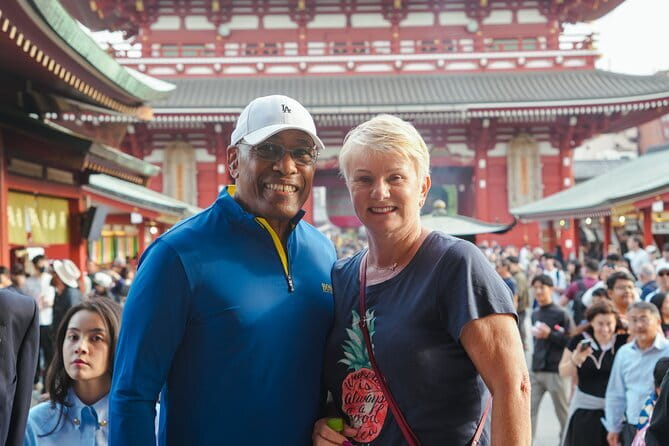
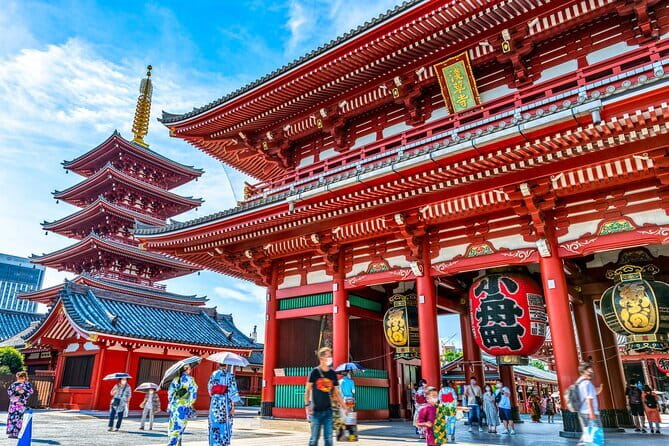
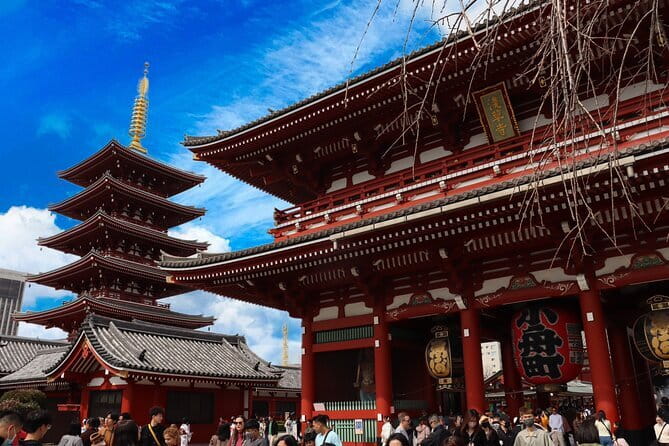
The tour ends in Asakusa, one of Tokyo’s best areas for traditional sights and shopping streets. You enter Senso-ji, Tokyo’s oldest Buddhist temple, through Kaminarimon, known as the Thunder Gate.
From there, Nakamise-dori leads toward the temple with shops selling souvenirs, snacks, and traditional sweets. This is where the tour’s food theme continues. Depending on the day and the exact route, you may sample mochi, sweet potato, or a savory cutlet while walking through the district.
Senso-ji gives the tour a strong final image. Meiji Shrine is associated with Shinto practice and a wooded approach. Senso-ji offers a Buddhist temple setting, a famous gate, and a more commercial street leading toward the main grounds. Seeing both in one morning helps you compare two important parts of Japanese religious culture.
Your guide can explain the customs and background of the temple, then help you understand the layout as you move through the gate and shopping street. The one-hour stop is enough to see the key areas and take photos. It is not enough for a slow exploration of every shop or nearby street.
The finish at Asakusa Station is useful. You can continue on your own from there instead of retracing the route to Harajuku. If you have a lunch reservation, shopping plan, or afternoon visit in eastern Tokyo, the ending point may save time. If your hotel is in western Tokyo, you will need to arrange your own return.
The guides are a major part of the value
A sightseeing route is only as good as the person explaining it. The experience uses an English-speaking guide, and the strongest praise is directed at the guides’ communication and personal attention.
Shoma Sato is specifically noted for explaining what the group saw, showing patience, and making an effort to suit different people in the group. Yosuke is described as a pleasant companion who brought in history, philosophy, and customs. Those details matter because the tour covers three very different places in a short time.
The small group limit of eight supports that style of guiding. You can ask a question without holding up a large coach group, and the guide can adjust the pace when needed. The experience also includes photos taken during the tour, a nice extra if you want pictures of your morning without asking strangers to take them.
The pace is described as flexible, with breaks scheduled and available when needed. Still, flexibility has limits when three districts must fit into four hours. If you want long photo stops, extended shopping, or a full meal at Tsukiji, a private custom tour or separate visits may suit you better.
A few more Tokyo tours and experiences worth a look

Is $72.67 a fair price?
At $72.67 per person, this is not the cheapest way to see Meiji Shrine, Tsukiji, and Senso-ji. You can reach each area by yourself with a transit card or train ticket, and admission to the listed sites is free. The tour price is paying for the guide, route planning, cultural explanation, small group setting, and photos.
The value improves if you have only a day or two in Tokyo. Planning three stops in separate districts takes time, and the food market can be harder to approach with confidence. A good guide also helps you understand what you are seeing instead of treating the morning as a series of photo stops.
Budget for about 550 yen in public transportation. Also plan for food unless the provider confirms that specific tastings are covered. Since the experience ends at Asakusa Station, you do not pay for a return trip to the starting point as part of the tour, but you may need to pay for your onward journey.
I would consider the price reasonable for a first Tokyo morning if you value explanation and convenience. It is less attractive if you already know the city, speak Japanese, or prefer to spend an hour or more at each location.
Who should book this Tokyo morning tour?
This tour fits first-time visitors who want a clear introduction without giving up a full day. It is also a good match for people with a short Tokyo stay, since you see a shrine, market, and temple before lunch.
Food-focused visitors should pay close attention to this option. Sushi, sashimi, mochi, sweet potato, and a savory cutlet give you several ways to sample local flavors. Just confirm which food costs are covered before you arrive.
The tour should also suit couples, families, and small groups who prefer a personal guide over a large bus. Most people can participate, and the group maximum is eight. You should be comfortable walking through shrine grounds, market lanes, temple approaches, and public transportation connections.
It may not suit you if you want a slow, highly specialized visit to one site. Meiji Shrine, Tsukiji, and Senso-ji each deserve more time than this route allows. The tour is best understood as a well-planned introduction, not a complete study of any one district.
Practical details before you go
The tour lasts about four hours and begins at the IKEA Swedish Cafe meeting point in Harajuku. It finishes in Asakusa at Asakusa Station, so plan your day around that eastern Tokyo ending.
Public transportation costs about 550 yen and is not included. Keep some yen available for transit and for any food you buy at Tsukiji or Asakusa. A mobile ticket is provided, and booking confirmation is received at the time of booking.
Free cancellation is available if you cancel at least 24 hours before the local start time. Cancellations or changes made within 24 hours are not refunded or accepted. The tour also requires a minimum number of participants, so a cancellation by the provider may result in another date or a full refund.
Should you book it?
Book this tour if you want a compact, food-focused introduction to Tokyo and would rather have a guide connect the dots between three districts. The small group, strong guide attention, food tastings, and practical finish at Asakusa Station make it especially useful during a short visit.
Skip it if your priority is lingering at one temple, shopping at Tsukiji for hours, or keeping the morning completely independent. At $72.67 plus transport and possible food costs, the tour earns its price through guidance and time saved, not through admission tickets. For a first morning in Tokyo, that can be a smart trade.
FAQ
How long does the Tokyo Morning Tour last?
The tour lasts approximately four hours.
What places does the tour visit?
It visits Meiji Jingu Shrine, Tsukiji Jogai Market, and Senso-ji Temple in Asakusa.
Does the tour include food?
The experience includes opportunities to try sushi and sashimi at Tsukiji, plus foods such as sweet mochi, sweet potato, and a savory cutlet. Food costs are not clearly listed among the included items, so confirm what is covered before booking.
Is public transportation included?
No. Public transportation costs about 550 yen and are not included in the tour price.
Where does the tour begin?
It begins at IKEA Swedish Cafe in Harajuku, at the listed Jingumae address in Shibuya, Tokyo.
Where does the tour end?
The tour ends in Asakusa near Asakusa Station.
How large is the group?
The tour has a maximum of eight participants.
Can I cancel for a full refund?
Yes, if you cancel at least 24 hours before the experience start time. Cancellations made less than 24 hours before the start time are not refunded.
More Shopping Tours in Tokyo
More Temples & Meditation in Tokyo
More Asakusa Tours in Tokyo
More tours in Tokyo we've reviewed












Asakusa Tours, compared.
 ★ 4.8Tokyo: Japanese Dance Cabaret Theater Asakusa-Kaguwa TicketFrom $492 hours
 ★ 4.7Tokyo: Meiji Shrine, Asakusa, Skytree Bus Tour and CruiseFrom $12210 hours
 ★ 4.9Tokyo: Roll and Authentic Sushi Making Class in AsakusaFrom $581h 40m
 ★ 4.8Tokyo: Asakusa Walking Tour with Sensoji Temple VisitFrom $222 hours
 ★ 5.0Tokyo Asakusa Rickshaw TourFrom $42
 ★ 4.5Tokyo Panoramic 1 Day: Meiji Shrine, Asakusa, Odaiba and SKYTREE®From $85