Reviewed · SUSHI MAKING CLASSES
Private Sushi Making with a Sushi Master
Tokyo gives you countless chances to eat excellent sushi. This private class lets you learn what goes into it, from handling raw fish to shaping rice and wrapping seaweed. The workshop takes place in a Michelin-starred sushi restaurant, with Chef Riku leading the practical work and Rin helping keep the session clear and friendly.
In This Article
- Key points to know before booking
- Why this Tokyo sushi class feels different
- Entering A-PULSE AZABU STUDIO in Nishiazabu
- Sushi history, a quiz, and the chef’s demonstration
- Making nigiri, the test of a light touch
- Rolling maki without crushing the filling
- Shaping gunkan, the small battleship
- Eating your own sushi with soup and green tea
- The people guiding the class
- Is $130.81 per person good value?
- Dietary needs, group size, and booking details
- Who should book this private sushi experience?
- Should you book it?
- FAQ
- Where does the sushi-making class take place?
- How long is the experience?
- What types of sushi will I make?
- Is the activity private?
- Who teaches the class?
- Is the class conducted in English?
- Will I eat the sushi I make?
- Can dietary restrictions be accommodated?
- What happens if I arrive late?
- Can I cancel for a full refund?
I like the private format, since you get direct help instead of trying to follow a chef across a crowded room. I also like the full meal at the end: you make nigiri, maki, and gunkan sushi, then eat what you prepare with soup and green tea. The main caution is timing. Arrive at least five minutes early, because no contact after the scheduled start can mean a no-show with no refund.
Key points to know before booking
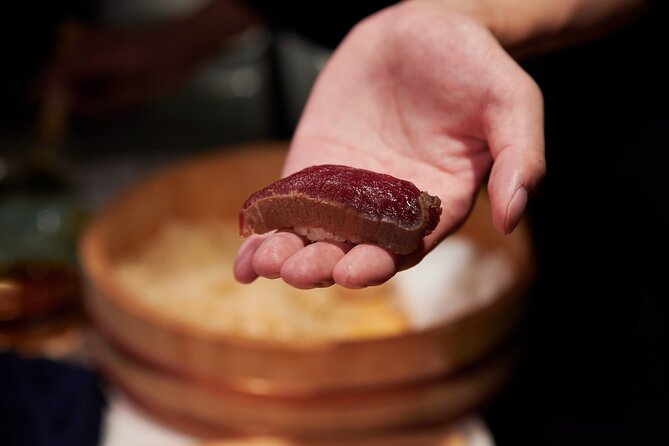
- Three sushi styles in one class: Make classic nigiri, seaweed-wrapped maki rolls, and gunkan, the battleship-style sushi topped with loose ingredients.
- Private attention from a sushi master: Your group has the chef and staff focused on your questions, technique, and pace.
- A Michelin-starred setting: The workshop takes place at A-PULSE AZABU STUDIO in Nishiazabu, Minato City.
- More than a cooking lesson: The 1-hour-45-minute session includes sushi history, a quiz, demonstrations, photographs, and a meal.
- Dietary needs can be discussed: Vegetarian, vegan, gluten-free, and other restrictions are accommodated.
- Excellent food matters here: The fish and other ingredients are selected and prepared by the sushi master, so the finished meal is not an afterthought.
Why this Tokyo sushi class feels different
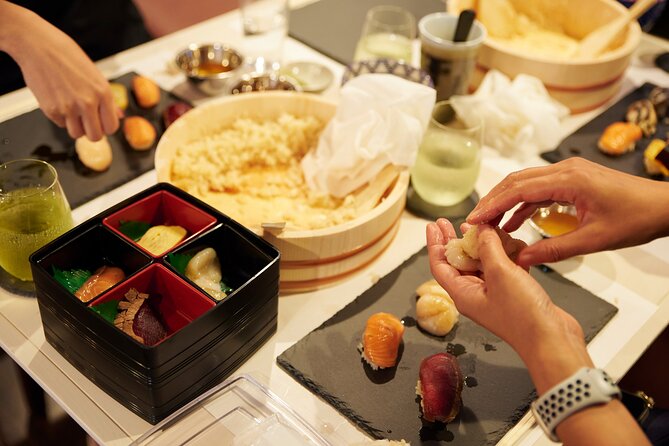
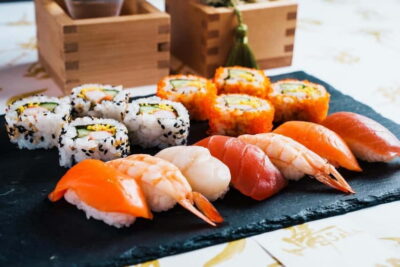
Many sushi classes focus on rolling one basic maki and sending you home with a plate of rice. This experience covers three recognizable forms, so you get a better sense of how sushi changes with shape, topping, and handling.
The lesson also begins with context. You hear about sushi history and then take a quiz, which gives the session a light, social rhythm before the knives and rice appear. I like that balance. You are not simply copying movements without knowing why the food is made that way.
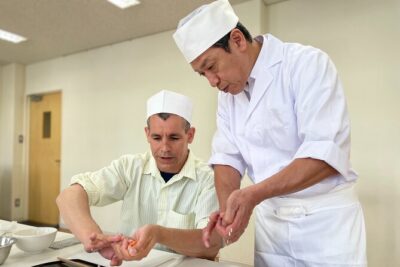
The class is private, too. That matters more than it might seem. Sushi making uses small movements: how firmly you press the rice, how you place the fish, and how tightly you roll the seaweed. With only your group participating, you can ask Chef Riku to repeat a step or correct your technique without holding up a larger class.
The setting adds weight to the lesson. This is not described as a casual kitchen in a shopping center. The workshop is held in a Michelin-starred sushi restaurant, where careful preparation and ingredient quality are part of the setting. You still get a relaxed, hands-on activity, but the food is treated seriously.
A few more Tokyo tours and experiences worth a look
Entering A-PULSE AZABU STUDIO in Nishiazabu
The meeting point is A-PULSE AZABU STUDIO, at 3-chōme-8-18 Nishiazabu, Minato City, Tokyo 106-0031. The activity begins and ends there, so you do not need to manage a second meeting point after eating.
The studio is near public transportation, but you should still allow time to find the exact entrance. Tokyo addresses can be difficult to read at street level, and this class has a strict start-time rule. If the operator does not hear from you within five minutes of the scheduled start, the booking can be treated as a no-show with no refund.
I would avoid scheduling this immediately after a long airport transfer or a timed attraction. One participant arrived late after a delayed flight and was kindly accommodated, but that was a generous exception, not something you should count on. Plan to arrive early, especially if you are coming from Narita or crossing Tokyo during a busy part of the day.
The experience lasts about one hour and 45 minutes. That is long enough for instruction, practice, photographs, and eating, but short enough to fit neatly into a Tokyo sightseeing day.
Sushi history, a quiz, and the chef’s demonstration
The first part introduces the history of sushi. This gives you useful context before you begin. Sushi is not just a collection of shapes made with vinegared rice, fish, and seaweed. The lesson helps explain how those forms relate to Japanese food culture and why preparation matters.
Next comes a quiz. Do not expect a formal exam. It is a simple way to get you involved and keep the opening section from feeling like a lecture. If you are traveling with children or friends, this part can add a bit of friendly competition.
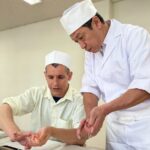
Chef Riku then demonstrates the sushi-making process. Watch closely here. The demonstration is where you see the difference between a home attempt and sushi made with professional habits. The chef shows how to handle the ingredients, shape the rice, and assemble each kind of sushi.
One of the useful points is ingredient selection. The fish and other ingredients are carefully chosen by the sushi master and prepared in pristine condition. That does not mean you will be given a lesson in every seasonal fish available in Tokyo, since the exact menu is not specified, but you will see that ingredient quality is treated as central to the meal.
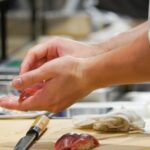
The instruction also covers slicing raw fish. This is an important part of the class, but you should pay attention to what the chef does rather than assume you will receive a full professional fish-cutting course. A separate premium fish-gutting and sushi-making course is offered for that more specialized subject.
Making nigiri, the test of a light touch
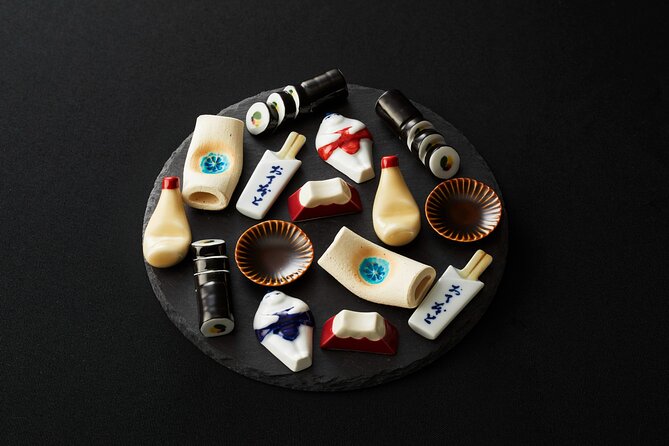
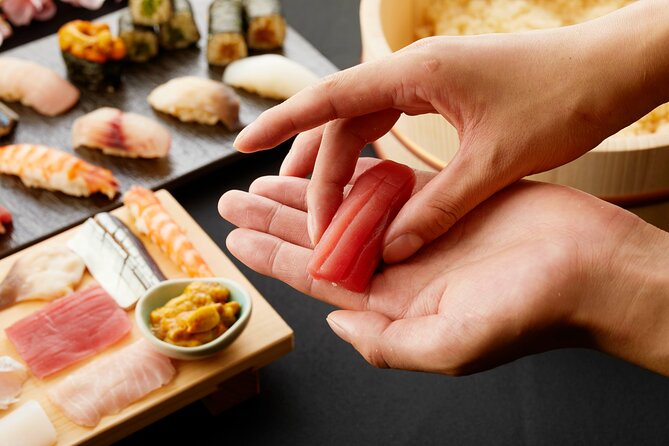
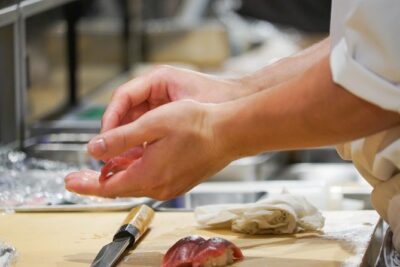
Nigiri is the classic form most people picture when they hear sushi: a slice of fish placed over a small mound of rice. It looks simple. It is not.
The rice needs to hold together without becoming dense. The fish must sit neatly on top. Press too hard and you lose the delicate texture. Press too little and the piece can fall apart before it reaches the plate.
This is where private guidance pays off. Chef Riku can show you how much pressure to use and how to keep the piece compact. You get a practical feel for proportion, which is difficult to learn from a written recipe.
Nigiri is also a good reminder that sushi making is more about control than decoration. There may be no elaborate garnish or dramatic presentation. The small details are the point. If you enjoy precise food preparation, this will likely be the most satisfying part of the class.
Rolling maki without crushing the filling
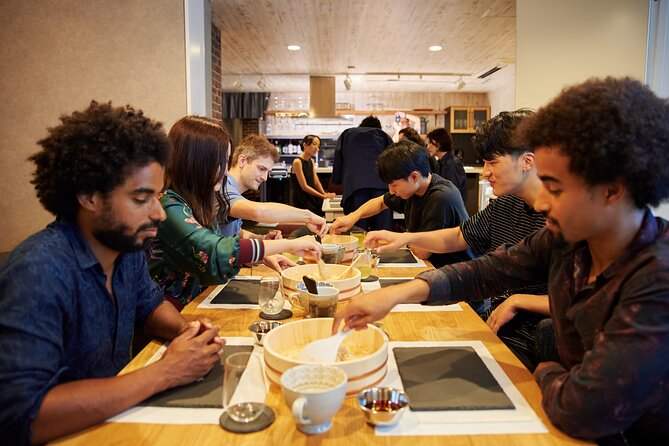
Maki is the traditional roll wrapped in seaweed. You will work with the rice and filling, then use the seaweed to form the roll.
This is often the part beginners expect to be easiest. The challenge is creating an even roll that holds together while keeping the filling in the center. Too much rice can make the roll heavy. Too much filling can make it split. Uneven pressure produces a roll that looks fine at one end and loose at the other.
The chef’s demonstration should help you see the order of the steps before you try. In a private class, you can also ask for help as you roll instead of guessing where the problem began.
Maki is the style you are most likely to repeat at home because the method is easy to understand once someone has shown you the right sequence. One participant, who cooks professionally, found the class useful for understanding not only the process but also the flavors behind it. Another participant said the lesson made sushi seem far less daunting to prepare at home.
You should still keep your home expectations realistic. Tokyo restaurant ingredients and professional knives may not be available in your kitchen. But the class can give you a workable starting point, especially for rice texture, rolling pressure, and ingredient balance.
Other private tours in Tokyo



Shaping gunkan, the small battleship
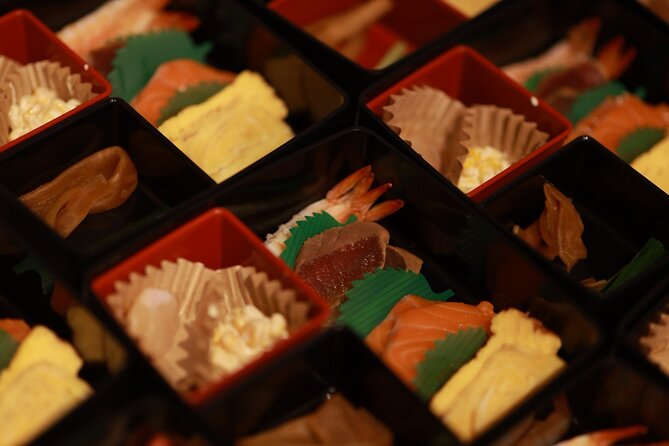
Gunkan sushi is wrapped with seaweed and topped with ingredients that would not sit neatly on ordinary nigiri. Its name refers to the battleship-like shape, with the seaweed forming a wall around the rice.
This third style adds variety to the workshop. You are not simply making the same sushi three times in different sizes. Gunkan introduces another approach to structure, topping, and presentation.
The shape can be forgiving in one way, since the seaweed wall holds the topping in place. It also calls for care, because the finished piece should look intentional rather than loosely assembled. The chef’s demonstration helps you see how tall and firm the seaweed band should be.
I like having gunkan included because it gives the class a wider range. By the end, you have made a hand-shaped piece, a roll, and a seaweed-wrapped piece with a topping. That makes the price easier to assess than a short lesson covering only one basic roll.
Eating your own sushi with soup and green tea
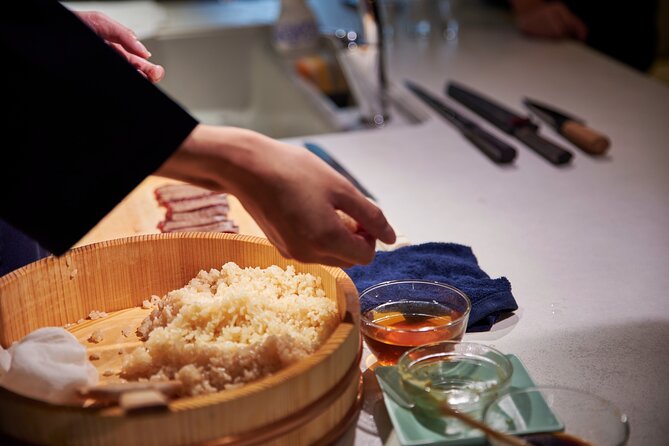
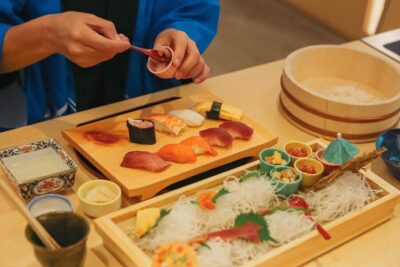
After the hands-on work, you photograph your creations and eat them. Come hungry. This is not a demonstration where the food is whisked away for someone else to serve. Your sushi becomes the meal.
The ingredients receive strong praise for quality, and the meal also includes soup and green tea. Those small additions matter. They give the class the feeling of a complete lunch or light dinner rather than a few samples at the end of a workshop.
The eating portion also lets you judge your own technique. Did the rice hold together? Was the roll balanced? Did you use too much filling? A chef can tell you what went wrong, but tasting the result makes the lesson stick.
There is also a pleasure in eating food you have just prepared. It may not look as polished as Chef Riku’s work, and that is fine. The point is not to produce Michelin-level pieces on your first attempt. The point is to understand the work behind the plate and leave with skills you can practice later.
The photo session is a fun extra, especially for a solo participant or a couple wanting a record of the activity. It also gives you a natural pause before the meal instead of rushing straight from preparation to eating.
The people guiding the class
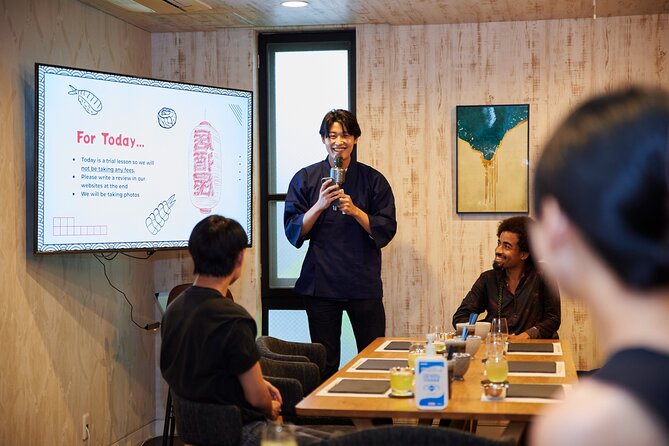
Chef Riku is the sushi chef, and Rin helps with the experience. The staff speak excellent English, which is a major practical advantage for a class involving food safety, knife work, timing, and dietary needs.
The personal tone seems important here. One solo participant who also works as a chef valued the precision and passion brought to the process. Another participant singled out Rin’s help and called Chef Riku a star. That combination suggests a useful division of roles: the chef focuses on sushi technique, while the supporting staff help explain, organize, and keep the mood easy.
You should expect a lesson rather than a silent chef demonstration. The quiz, questions, and hands-on work create room for conversation. That makes the private format especially useful if you are curious about sushi beyond simply learning how to roll it.
Is $130.81 per person good value?
At $130.81 per person, this is not a bargain activity. You can eat a good sushi meal in Tokyo for less, especially if you choose a casual restaurant. The value here comes from combining a meal with private instruction, a Michelin-starred setting, three sushi styles, history, a quiz, photographs, and staff support.
I think the price is reasonable for someone who wants an activity rather than just dinner. You are paying for access to a sushi master, the ingredients, the preparation, and the time spent guiding your group. A large public class might cost less, but it would not offer the same level of personal attention.
The value is strongest for:
- People who want to learn sushi techniques they can repeat at home
- Couples or families looking for a shared activity
- Solo participants who prefer direct instruction instead of joining a large group
- Food-focused visitors who care about ingredient quality
- Anyone who wants a Michelin-starred setting without booking a full formal sushi dinner
The value is weaker if you only want to eat top-quality sushi and have no interest in making it. In that case, a restaurant meal gives you more time to focus on the food itself. This class asks you to work for part of your meal, which is exactly why many people choose it.
Dietary needs, group size, and booking details
The activity is private, so only your group participates. That gives you more control over the pace and makes it easier to discuss food restrictions before the class.
Vegetarian, vegan, gluten-free, and other dietary needs can be accommodated. You should provide those details when booking rather than waiting until you arrive. The exact substitute ingredients are not specified, so ask the operator if you need to know the planned menu in advance.
You receive confirmation at booking in most cases. If you book within one day of the activity, confirmation comes as soon as possible and depends on availability.
The experience has a mobile ticket, and it is near public transportation. Cancellation is free up to 24 hours before the start time for a full refund. Less than 24 hours before the start, changes and refunds are not accepted.
Who should book this private sushi experience?
I would recommend it to anyone who wants a hands-on food activity with a clear beginning and end. The 1-hour-45-minute schedule fits well between sightseeing plans, and the private setting works for a couple, a family, or a solo participant.
It is also a good match for home cooks. You will not leave as a sushi master, but you will understand more about rice, fish, seaweed, filling, and pressure. The instruction can make homemade sushi feel practical rather than mysterious.
Families should consider the food preferences of younger children. The class includes raw fish and knife-related preparation, although the provided information does not specify a minimum age. Ask before booking if children will participate.
I would be more cautious about booking if your schedule is tight, your flight arrival is uncertain, or you do not want to eat raw fish. The provider has shown kindness when delays happen, but the no-show rule is firm. Build in a generous time cushion.
Should you book it?
Book this class if you want to understand sushi by making it, not just eating it. The strongest reasons are the private attention, Chef Riku’s instruction, the three distinct sushi styles, and the chance to sit down with the meal you prepared.
Skip it if your main goal is a quiet, polished sushi dinner. At $130.81, you are paying for participation and teaching as much as for food. For curious eaters, home cooks, and anyone seeking a personal Tokyo activity, that is a fair trade.
FAQ
Where does the sushi-making class take place?
The class takes place at A-PULSE AZABU STUDIO, located at 3-chōme-8-18 Nishiazabu, Minato City, Tokyo 106-0031, Japan.
How long is the experience?
The workshop lasts approximately 1 hour and 45 minutes.
What types of sushi will I make?
You will make nigiri, maki, and gunkan sushi. Nigiri has fish over rice, maki is wrapped in seaweed, and gunkan is a battleship-style piece wrapped with seaweed and topped with additional ingredients.
Is the activity private?
Yes. Only your group participates in the activity.
Who teaches the class?
Chef Riku leads the sushi instruction, with Rin helping during the experience.
Is the class conducted in English?
The staff speak excellent English, according to the provided experience details.
Will I eat the sushi I make?
Yes. The workshop ends with time to photograph and eat your handmade sushi. Soup and green tea are also included in the meal described by participants.
Can dietary restrictions be accommodated?
Yes. Vegetarian, vegan, gluten-free, and other dietary restrictions can be accommodated. Provide your requirements when booking.
What happens if I arrive late?
If the operator receives no contact from you within five minutes of the scheduled start time, the reservation may be treated as a no-show with no refund. Contact the provider as soon as possible if you are delayed.
Can I cancel for a full refund?
Yes, if you cancel at least 24 hours before the experience start time. Cancellations made less than 24 hours before the start are not refunded, and changes within that period are not accepted.
More Private Tours in Tokyo
More Sushi Making Classes in Tokyo
More tours in Tokyo we've reviewed












Sushi Making Classes, compared.
 ★ 5.0Sushi Making Tokyo Roll and Authentic Japanese Sushi ClassFrom $59
 ★ 4.9Tokyo: Roll and Authentic Sushi Making Class in AsakusaFrom $581h 40m
 ★ 4.9Tokyo: Sushi Making Class in a Happi Coat near a Famous SpotFrom $421h 30m
 ★ 5.0Sushi Making Tokyo! Popular Maki Sushi & Japanese Sushi(+Recipe!)From $63
 ★ 5.0Tokyo Sushi Making Class in Tsukiji with Professional ChefFrom $49
 ★ 5.0Tokyo Night Foodie Tour in Shinjuku – Seasonal Sushi, Wagyu BeefFrom $111