Reviewed · SUSHI MAKING CLASSES
Tokyo Walking Tour : Sumo, Sushi, Tea, Temples and Tokyo Tower
The morning begins with a rare look at real sumo training, followed by a food walk through Tsukiji Outer Market. That combination gives you both a glimpse of a disciplined Japanese tradition and a chance to taste Tokyo at street level.
In This Article
- Key points to know before booking
- Why this Tokyo route works so well
- 8:15 am at Hamacho Station
- Arashio Beya and the rules of sumo practice
- Tsukiji Outer Market for one hour and 30 minutes
- Hama Rikyu Gardens and a traditional tea house
- Zojoji Temple and the sutra-copying session
- Tokyo Tower closes the day
- What the $166.85 price really covers
- Who should book this walking tour
- My booking advice
- FAQ
- How long does the Tokyo walking tour last?
- Where does the tour start?
- Where does the tour end?
- Is transportation included?
- Is food included?
- Is sumo training guaranteed?
- What admissions and activities are included?
- How large is the group?
I like the carefully mixed route: Hama Rikyu Gardens and its tea house slow the pace after Tsukiji, while the sutra-copying session at Zojoji Temple adds a quiet, hands-on moment. The main consideration is stamina. This is an 8-hour, outdoor walking day using public transport, not a chauffeured sightseeing trip.
I also like the finish at Tokyo Tower, where the city opens out below you. One important caution: the sumo stop depends on the stable’s training schedule, and training pauses during some Grand Sumo Tournament weeks in January, May, and September.
Key points to know before booking

- Sumo training comes first: You watch at Arashio Beya, but this is working practice, not a staged show. The wrestlers cannot be disturbed.
- Tsukiji includes tasting time: You receive a guided introduction and food samples, plus free time to shop and explore at your own pace.
- Tea is served in Hama Rikyu: Garden admission and a traditional tea and sweet experience are included.
- Zojoji adds a quiet ritual: The temple visit includes a sutra-copying experience, not just sightseeing.
- Tokyo Tower is the finale: Your ticket takes you to one of the city’s best-known observation decks before the tour ends near Akabanebashi Station.
- Plan for a full day on foot: The group is capped at 15, but public transportation and several hours outdoors remain part of the deal.
Why this Tokyo route works so well
Tokyo can feel like several cities stitched together: old temple grounds beside glass towers, food stalls near calm gardens, and ancient customs continuing in modern neighborhoods. This tour makes that contrast the main point.
At $166.85 per person, it is not a budget walking tour. Still, the price includes the local English-speaking guide, the train ride from Ningyocho Station to Tsukiji Station, Hama Rikyu admission, tea and sweets, the sutra-copying fee, and the Tokyo Tower ticket.
Food at Tsukiji is not included, so you should carry some extra money for anything you want to eat or buy. The value comes from having a full day arranged around several admissions and activities, rather than simply paying for a guide to walk you through streets.
The tour is commonly booked about 81 days ahead. That suggests you should reserve early if the date matters, especially since the group is limited to 15 people. You receive confirmation at booking, and the mobile ticket is easy to keep on your phone.
A few more Tokyo tours and experiences worth a look


8:15 am at Hamacho Station

The meeting point is Hamacho Station, at 2-chome-59-3 Nihonbashihamacho in Chuo City. The start time is 8:15 am, so you need to plan your morning carefully and allow enough time to reach the station.
Starting in the morning makes sense. Sumo practice is the most schedule-sensitive part of the day, and Tsukiji is best approached early rather than late. Your guide then leads you through the rest of the route by walking and public transport.
The tour does not use a private vehicle. That matters in Tokyo, where trains are often the quickest way to cross town, but it also means you need comfortable shoes and enough energy for a long day. Transport before the tour and after it is not included.
The group can have up to 15 people. That is small enough for a guide to keep the day organized, though it is not the same as a private tour. If you want personal attention at every stop, a smaller group would be more suitable. If you prefer the social feel and lower cost of a shared tour, this size is reasonable.
Arashio Beya and the rules of sumo practice
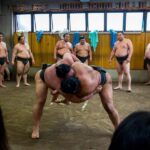
The first stop is Arashio Beya, a traditional sumo stable, or training room. You have about 1 hour and 10 minutes here, with no separate admission fee listed.
This is one of the tour’s most unusual features. You are not watching a tournament with a crowd, announcements, or ceremonial presentation. You are seeing working athletes train. The atmosphere depends on the stable’s schedule, and silence and good manners are essential because the wrestlers cannot be interrupted.
That distinction is important. You should approach this stop as an observation experience, not an entertainment show. You might see wrestlers practicing, but the schedule can change, and there are times when no training takes place.
The tour specifically warns that sumo training is closed during certain weeks of the Grand Sumo Tournaments in January, May, and September. Even outside those periods, the stable’s schedule can shift. This is the largest uncertainty in the day, so do not book the tour solely for a guaranteed sumo performance.
When training is available, this first stop gives the day a strong start. You see one of Japan’s most recognizable traditions in its everyday setting before moving into food, gardens, religion, and modern city views.
Tsukiji Outer Market for one hour and 30 minutes

Next comes Tsukiji Outer Market, with about 90 minutes devoted to a guided walk, food samples, and free time. This is the most flexible part of the day because you can follow the guide’s introduction and then explore on your own.
The guide helps you make sense of the market and points out foods available for sampling. You can also take pictures, browse shops, and buy additional food at your own cost. Since food and drink are not included in the tour price, bring spending money if you want to try more than the provided samples.
The food stop is billed around fresh sushi and Tokyo street food. That makes Tsukiji a useful place to learn how Japanese food culture works in practice, where a market visit is as much about small tastes and careful browsing as it is about sitting down for a formal meal.
You should not expect this stop to replace lunch. The time is limited, and the included portion is sampling rather than a full meal. If you usually need a substantial lunch, ask your guide about timing or plan to eat after the tour ends.
I like the free time here because it keeps the experience from feeling too tightly controlled. You get a guided introduction, but you are not required to spend every minute walking in formation. The tradeoff is that the market can tempt you to buy more food than your schedule allows.
Hama Rikyu Gardens and a traditional tea house

Hama Rikyu Gardens provides a change of pace after the market. You have about 1 hour and 20 minutes for a guided introduction, personal time in the garden, and a traditional tea and sweet experience in a tea house.
The garden is valuable here not just for its scenery, but for the pause it creates. Tokyo sightseeing can become a race between stations and landmarks. Hama Rikyu gives you room to slow down, look carefully, and understand how a garden fits into the city.
Your guide explains the garden and its background before giving you free time. That balance is useful. You receive enough context to notice more than plants and paths, but you also get a few minutes without constant commentary.
The included tea house visit adds a cultural activity without making you commit to a long formal ceremony. You have tea and a sweet in a traditional setting. It is a gentle introduction for someone who wants to try Japanese tea customs but does not want a specialized tea lesson.
Garden admission and the tea house experience are included in the price. That improves the tour’s value, since both are activities you would otherwise need to arrange and pay for separately.
A few more Tokyo tours and experiences worth a look

Zojoji Temple and the sutra-copying session

The route then moves to Zojoji Temple, where you spend about one hour. The guide introduces the temple and its history, and the visit includes a sutra-copying experience.
This stop gives the day a more reflective center. You do not need to be religious to appreciate the exercise. Copying a Buddhist sutra by hand asks you to slow down and concentrate, which feels very different from sampling food or looking across Tokyo from a tower.
The activity is also more personal than a standard temple visit. Instead of only taking photographs and hearing facts, you take part in a quiet practice. The included fee means you do not need to arrange the experience separately.
You should still treat the temple as a place of worship. Dress and behavior should be respectful, and your guide can explain the proper approach. The supplied details do not specify how much writing instruction is provided, so expect a simple cultural experience rather than a detailed calligraphy class.
I like the order of this stop. After the movement and noise of Tsukiji and the open garden space at Hama Rikyu, Zojoji offers a calm hour before the final city view.
Tokyo Tower closes the day

The final stop is Tokyo Tower, with about 1 hour and 15 minutes to enjoy the views and the tower’s retro architecture. Admission is included.
This is a familiar Tokyo landmark, but it works well at the end of this particular route. Earlier stops show you local customs and older parts of the city. Tokyo Tower gives you a broad look at the modern capital and helps you connect the places you have visited with the city around them.
The tour description emphasizes both the observation deck and the tower’s retro feel. You can expect time to take in the view and enjoy the structure itself, rather than a rushed photo stop.
Your guide does not finish at your hotel. The tour ends near Akabanebashi Station, at 1-chome-28-13 Higashiazabu in Minato City. The guide can help with questions about getting back to your hotel or continuing to your next destination, but your onward transport is not included.
That ending is practical. Akabanebashi gives you a clear rail connection point, and finishing near a station is much easier than being left at a large attraction with no direction.
What the $166.85 price really covers

The price makes the most sense if you want a full day with a guide and several included admissions. You are paying for more than transportation between sights. The package includes:
- Local English-speaking guide
- Train fare from Ningyocho Station to Tsukiji Station
- Hama Rikyu Gardens admission
- Tea and sweet experience at the garden tea house
- Sutra-copying fee at Zojoji Temple
- Tokyo Tower ticket
You still pay for trains before and after the tour, along with extra food and drinks at Tsukiji. That means your true daily budget will be higher than the headline price.
I would compare the cost with the effort of organizing the same day yourself. You would need to coordinate a sumo stable visit with an uncertain schedule, plan the market, arrange garden and tower tickets, and decide how to fit in the tea house and temple activity. The tour removes much of that planning.
The price is harder to justify if you mainly want free sightseeing, independent food shopping, or a private guide. It is easier to justify if you value a tight route, cultural explanations, and included activities that are not always obvious to arrange alone.
Who should book this walking tour
This experience suits you if you want several sides of Tokyo in one day and are comfortable staying active. It is a good fit for first-time visitors who want structure without spending the day inside a private vehicle.
You will likely enjoy it most if you are interested in Japanese culture beyond major photo stops. The sumo stable, tea house, and sutra copying all ask you to observe or participate with some respect and patience.
The tour is also useful for people who like food but do not want a formal restaurant itinerary. Tsukiji gives you a chance to sample and shop, though you should not count on it as a complete meal.
You might prefer another option if you have limited mobility, dislike public transportation, or want a relaxed pace. Most people can participate, but the day involves several hours of outdoor walking. The available details do not promise private transport or special accessibility arrangements.
The tour has a current rating of 5 out of 5 from 21 reviews, with 100 percent recommending it. One specific review praises guide Jade for combining personal anecdotes with Japanese history. If Jade is leading your departure, you can expect that blend of personal storytelling and background, but guide assignments can vary.
My booking advice
I would book this tour for a first or second Tokyo visit when you want a planned day that moves beyond the standard shopping districts. Its best feature is the variety: sumo practice, market food, a garden, tea, a Buddhist temple, and Tokyo Tower all appear in one route.
Book with realistic expectations about Arashio Beya. Sumo training is not guaranteed, and tournament weeks can close the stable. If that uncertainty would ruin the day for you, choose a tour built around a guaranteed attraction instead.
For everyone else, the mix is strong. You get authentic, small-scale cultural moments along with Tokyo’s big city view, and the included fees help explain the price. Free cancellation is available when you cancel at least 24 hours before the 8:15 am start time, which gives you some flexibility.
FAQ
How long does the Tokyo walking tour last?
The tour lasts approximately 8 hours and 15 minutes, beginning at 8:15 am.
Where does the tour start?
It starts at Hamacho Station, at 2-chome-59-3 Nihonbashihamacho, Chuo City, Tokyo 103-0007, Japan.
Where does the tour end?
The tour ends near Akabanebashi Station in Minato City. The guide can help with questions about transport to your hotel or next destination.
Is transportation included?
The train fee from Ningyocho Station to Tsukiji Station is included. Transport before and after the tour is not included, and the tour uses public transportation rather than a private vehicle.
Is food included?
Food and drink are not included. The Tsukiji stop includes food sampling, while any additional purchases are at your own cost.
Is sumo training guaranteed?
No. The Arashio Beya schedule can change, and there may be no training to watch. Training is also closed during certain weeks when Grand Sumo Tournaments take place in January, May, and September.
What admissions and activities are included?
The price includes Hama Rikyu Gardens admission, the Hama Rikyu tea house experience, the Zojoji Temple sutra-copying fee, and the Tokyo Tower ticket.
How large is the group?
The tour can have a maximum of 15 participants.
More Walking Tours in Tokyo
More Sumo Experiences in Tokyo
More Sushi Making Classes in Tokyo


More tours in Tokyo we've reviewed












Sushi Making Classes, compared.
 ★ 5.0Sushi Making Tokyo Roll and Authentic Japanese Sushi ClassFrom $59
 ★ 4.9Tokyo: Roll and Authentic Sushi Making Class in AsakusaFrom $581h 40m
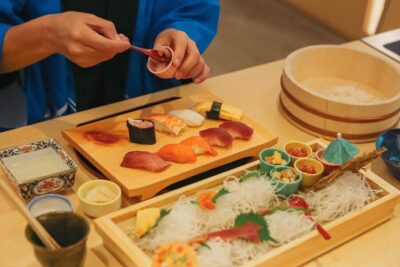 ★ 4.9Tokyo: Sushi Making Class in a Happi Coat near a Famous SpotFrom $421h 30m
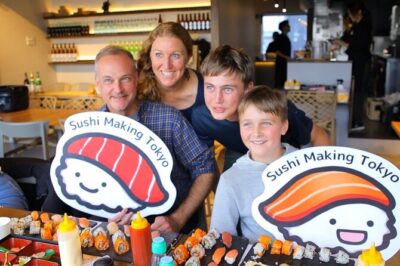 ★ 5.0Sushi Making Tokyo! Popular Maki Sushi & Japanese Sushi(+Recipe!)From $63
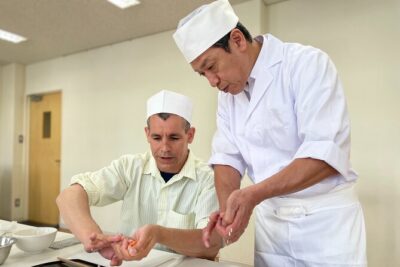 ★ 5.0Tokyo Sushi Making Class in Tsukiji with Professional ChefFrom $49
 ★ 5.0Tokyo Night Foodie Tour in Shinjuku – Seasonal Sushi, Wagyu BeefFrom $111