Reviewed · CRAFT WORKSHOPS
Tokyo: Calligraphy Experience with yukata or Samue
The best part of this Tokyo activity is that you do not simply copy a Japanese character and call it culture. You learn how brush pressure, stroke order, and the meaning behind each kanji shape the finished work. Professional calligraphers guide you from the first line to your final piece, with English or French instruction available.
In This Article
- Key points
- Why this calligraphy class feels more personal than a souvenir stop
- Starting with traditional clothing, tea, and a quiet welcome
- The first brush exercises explain the whole art
- Choosing and writing your kanji
- A 90-minute schedule with enough practice, but no wasted time
- Why the group limit of 10 is important
- The value of $64 in Tokyo
- Finding the meeting point in Tokyo
- Who should book this experience
- Booking details that affect your plans
- Should you book the Tokyo calligraphy experience?
- FAQ
- How long does the calligraphy experience last?
- How much does the activity cost?
- What languages are available?
- How many people can join the class?
- Are calligraphy materials included?
- Can I take my artwork home?
- Is Japanese tea included?
- What should I wear or bring?
- Can children and older adults join?
- Can I cancel for a refund?
- Do I need to pay when I book?
- Is transportation included?
I like two things here: you get genuine hands-on practice rather than a quick demonstration, and you leave with artwork made by you. The tea, traditional clothing, and personal touches, such as having your name written for you by the instructor, add warmth. The main consideration is the 90-minute limit. It is enough for a first lesson, but not for a full study of Japanese calligraphy.
Key points
- Wear a yukata or samue: The experience can begin with traditional Japanese clothing, adding a visual and physical connection to the lesson.
- Learn before you create: You practice lines, brush handling, and basic technique before making your final kanji artwork.
- Understand the characters: The instructors explain the spirituality, history, and meaning behind the Japanese writing.
- Small classes matter: Groups are limited to 10, allowing room for step-by-step help.
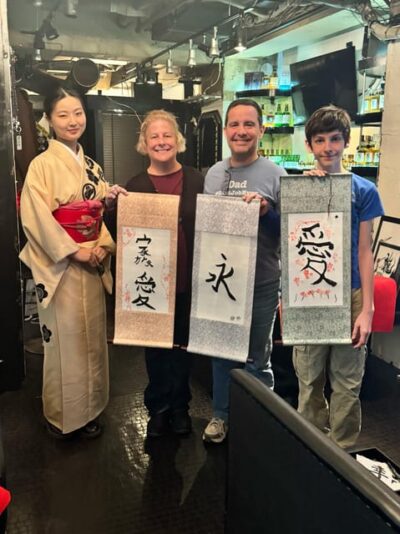
- Take home something personal: Your finished work comes with you, and an instructor may also write your name in Japanese.
- Tea slows the pace: A cup of Japanese tea, and in some sessions snacks or biscuits, gives the class a calm finish.
Why this calligraphy class feels more personal than a souvenir stop

Tokyo offers plenty of quick cultural activities. Some give you a costume, a photo, and little else. This class aims for something more useful: you learn the basic movements of the brush, then apply them to a finished piece.
That difference matters. Japanese calligraphy, or shodo, is not only handwriting with a larger brush. The order of the strokes, the amount of ink, the angle of the brush, and the strength of each movement all affect the character. Even a simple line asks you to slow down and pay attention.
The class is run by 日本書鏡院, with professional instructors and English or French guidance. Specific instructors named in the experience include Hana, Koushi, Tomo, and other teaching assistants. You may not have a particular instructor assigned in advance, but the teaching team is clearly set up to work with international visitors.
I like the balance between explanation and practice. You are not expected to know Japanese before arriving. The instructor breaks the process into manageable parts, then lets you repeat the movements until your hand feels less awkward.
A few more Tokyo tours and experiences worth a look

Starting with traditional clothing, tea, and a quiet welcome

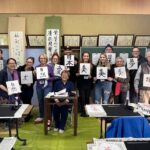
The session can begin with the chance to wear a yukata or samue. Some people describe the clothing as a highlight, especially when attending with family or marking a birthday. A yukata gives you the familiar summer-kimono look, while samue is a simpler type of traditional work clothing.
This is not just a costume change for a photograph. Wearing Japanese clothing helps set the tone before you pick up the brush. You become more aware of posture, movement, and the quiet formality of the room.
You should wear clothes that can get dirty. Ink is part of the lesson, and a careful student can still have an accident. I would avoid white sleeves, delicate fabrics, and anything you would be upset to stain.
A cup of Japanese tea helps the class begin at an unhurried pace. Tea and biscuits have also been served during some sessions. The refreshments are a small detail, but they fit the activity well. Calligraphy rewards calm attention, not rushing from one photo opportunity to the next.
The first brush exercises explain the whole art
The teaching starts with basic lines. You learn how to hold and use the brush, how to control its movement, and how to create different strokes. This early practice is useful because the brush behaves differently from a pen. It bends, spreads ink, and responds to pressure from your fingers and wrist.
You may feel clumsy at first. That is normal. The point is not to produce perfect Japanese writing immediately. The first exercises show why the final character looks the way it does, and they give you a little control before the finished work begins.
The instructors guide you step by step. The teaching style is suited to beginners, with repeated practice opportunities and close help when a line goes wrong. French-speaking visitors can request instruction in French, while English-speaking participants can follow the lesson in English.
I especially like that the class explains more than technique. The characters have spiritual and historical associations, and the instructor discusses their deeper meaning. This gives your final artwork some context. You are not simply decorating a sheet of paper with an unfamiliar symbol.
Choosing and writing your kanji

After practicing the basic strokes, you write a kanji of your own. The information provided does not promise a fixed menu of characters, so the exact choice may depend on the class and the instructor. You can expect help with the character and its meaning rather than being left to guess.
This is where the class becomes personal. A kanji can represent an idea, quality, or wish, but you should ask the instructor to explain the meaning carefully before choosing one. A character that looks attractive may not express what you think it does.
The instructor demonstrates how the character is formed, then you practice it yourself. You may produce several versions before selecting the one you want to use for your final piece. That practice is important. It takes pressure off the first attempt and lets you concentrate on improvement.
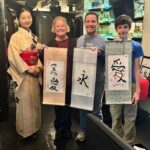
The final artwork is made on a board or card that you can take home. You may also receive your name written in Japanese by the instructor. That extra touch turns the souvenir into something more personal than a standard Tokyo purchase.
Do not judge your result by professional standards. Calligraphy masters spend years refining balance and brush control. Your finished piece is valuable because it records your first effort and the meaning you chose.
A 90-minute schedule with enough practice, but no wasted time

Ninety minutes is a sensible length for a first calligraphy session. It gives you time to settle in, learn the basic strokes, practice, and make a final piece without taking half a day from your Tokyo plans.
The session generally moves through these stages:
- Arrival, welcome, and traditional clothing if selected
- Introduction to calligraphy and the meaning of the characters
- Demonstration of brush use and basic strokes
- Practice on ordinary paper
- Creation of your final artwork
- Tea and a chance to collect your finished work
The exact order may vary. For example, clothing and tea may come before the lesson, while the final artwork may be completed toward the end.
The short format is good for families, first-time visitors, and anyone fitting several activities into one day. It is also suitable when you want a cultural activity that does not require a major physical commitment.
The limitation is clear. You will learn the foundations, not master the art. If you already practice Japanese calligraphy, this may feel introductory. For most visitors, though, the beginner level is the point. You get an accessible introduction without needing to read Japanese or own any equipment.





Why the group limit of 10 is important
The class is limited to 10 participants. That is still a small group, but it is not a private lesson. If you want one-to-one teaching for every stroke, you should keep that distinction in mind.
For a group class, the format has several advantages. You can watch how other beginners approach the brush, learn from shared demonstrations, and still receive individual correction. The teaching team includes instructors and assistants, which helps when several people are practicing at once.
The activity can work especially well for families. Children under four cannot join, but older children may find the combination of clothing, brushwork, and a take-home project engaging. One family attending for a birthday received help with a taxi and with buying a calligraphy set for a child, though those extra services should not be treated as guaranteed parts of every session.
The upper age limit is 70. That is an unusual restriction, so check it carefully before booking. The activity is calm rather than strenuous, but the provider has set this limit and may enforce it.
The value of $64 in Tokyo

At $64 per person, the price is not the cheapest way to spend 90 minutes in Tokyo. You are paying for a professional instructor, all calligraphy tools, an English or French guide, tea, traditional clothing access, and the finished artwork.
The value improves if you want a structured cultural activity. You do not need to buy brushes, ink, paper, or practice boards before arriving. The instruction also saves you from learning only the surface movements through a self-guided demonstration.
The finished artwork gives the price a practical edge. You leave with both a souvenir and a skill-based memory. If an instructor writes your name for you, that is another personal item that would be difficult to reproduce on your own.
I would compare this with the price of a short craft workshop, not with the cost of a museum ticket. The appeal is participation. If you only want a beautiful piece of Japanese calligraphy, buying one from an artist may be easier. If you want to understand the process and make an attempt yourself, $64 is reasonable.
Finding the meeting point in Tokyo

The meeting-point description identifies a location next to a nursery and beside Kaideiji Temple. That wording is important because it may be more useful as a visual landmark than as a complete street address.
Plan your route before the day of the activity. The experience does not include individual transportation, so you are responsible for getting to the meeting point. Since the supplied directions are brief, keep your booking details available and allow extra time to identify the nursery and temple.
This is the one practical area where I would like clearer advance information. Do not assume that the venue will be obvious from a major station. If you need help after the class, an assistant has helped visitors arrange a taxi, but transportation help is not listed as an included service.
Who should book this experience
This class suits you if you want:
- A gentle cultural activity in Tokyo
- A souvenir that you make yourself
- A beginner lesson with patient guidance
- English or French instruction
- A small group rather than a large workshop
- A family activity for children aged four and above
- A meaningful introduction to Japanese characters
It is a good choice for a birthday, a first trip to Japan, or a rainy day when you want more than indoor sightseeing. The lesson also works for people who are curious about Japanese spirituality and language but do not have time for a longer course.
You may want to skip it if you dislike wearing traditional clothing, have no interest in brushwork, or want a highly advanced calligraphy lesson. You should also reconsider if anyone in your group is over 70 or under four, since those age limits are stated for the activity.
Booking details that affect your plans
The experience lasts 90 minutes, with starting times available according to the schedule. Groups are limited to 10 people. Instruction is available in English and French.
The price is $64 per person. Calligraphy tools, instructor fees, tea, guidance, and your finished work are included. Individual transportation is not included, and you should bring clothes that can get dirty.
You can cancel up to 24 hours before the activity for a full refund. The reserve-now, pay-later option lets you hold a place without paying at the time of booking, which is useful when your Tokyo schedule is still changing.
Should you book the Tokyo calligraphy experience?
I would book this if you want a calm, personal cultural lesson rather than a quick photo stop. The strongest reasons are the patient instruction, the explanation of kanji meaning, the small group size, and the artwork you take home.
Set your expectations correctly. You will not become a calligraphy expert in 90 minutes, and the meeting-point directions deserve careful attention. But you will learn why the brush moves as it does, make a character with your own hand, and leave with a souvenir tied to the experience.
For most first-time visitors, that is a fair return on $64. Bring stain-safe clothing, arrive with enough time to find the venue, and let yourself make imperfect lines. That is how the lesson begins.
FAQ
How long does the calligraphy experience last?
The class lasts 90 minutes.
How much does the activity cost?
The listed price is $64 per person.
What languages are available?
Instruction is available in English and French.
How many people can join the class?
The activity is a small-group experience limited to 10 participants.
Are calligraphy materials included?
Yes. All necessary calligraphy tools are included.
Can I take my artwork home?
Yes. Your finished calligraphy work is included and can be taken home as a souvenir.
Is Japanese tea included?
Yes. Japanese tea is included.
What should I wear or bring?
Bring clothes that can get dirty. The activity may also include wearing a yukata or samue.
Can children and older adults join?
Children under four are not suitable for the activity, and people over 70 are also listed as unsuitable.
Can I cancel for a refund?
You can cancel up to 24 hours in advance for a full refund.
Do I need to pay when I book?
The reserve-now, pay-later option lets you reserve a place without paying immediately.
Is transportation included?
Individual transportation is not included. You need to make your own way to the meeting point next to a nursery and beside Kaideiji Temple.
More Craft Workshops in Tokyo

More tours in Tokyo we've reviewed












Craft Workshops, compared.
 ★ 4.8Chopstick Making Workshop in GinzaFrom $251 hour
 ★ 5.0Kintsugi Experience: Art of Golden Joinery in TokyoFrom $59
Tokyo: Shinjuku Chopstick Making ClassFrom $121 hour
★ 5.0Kintsugi Experience: Art of Golden Joinery in TokyoFrom $59
Tokyo: Shinjuku Chopstick Making ClassFrom $121 hour
 ★ 5.0Private Craft Your Own Ring Handmade Experience in Asakusa, TokyoFrom $21
 ★ 5.0Authentic Pure Gold Kintsugi Workshop with Master Taku in TokyoFrom $142
 ★ 5.0Tokyo: Calligraphy on Kanji Fan & Scroll with DrinkFrom $531h 20m