Reviewed · MT FUJI DAY TRIPS
Mt. Fuji, Oishi Park & Arakurayama Pagoda Bus Tour with Lunch
Mt. Fuji is the star here, but the clever part is how much ground you cover without wrestling with rural bus timetables. In one long day, you reach the 2,300-meter 5th Station, view the mountain from Lake Kawaguchi, and climb to the famous Chureito Pagoda.
In This Article
- Key points to know before booking
- Why this Mt. Fuji day trip works
- Mt. Fuji 5th Station at 2,300 meters
- Oishi Park and the Lake Kawaguchi view
- Lunch in Fujikawaguchiko
- Arakurayama Sengen Park and the 398 steps
- The guide adds more than directions
- Timing, traffic, and the reality of a full day
- Who gets the best value from the $99.10 price
- Who should book, and who should think twice
- Should you book this Mt. Fuji tour?
- FAQ
- Where does the tour start and end?
- Does the tour pick up from Tokyo hotels?
- How long is the tour?
- Is lunch included?
- Can I choose a vegetarian meal?
- Are special dietary meals available?
- How many steps lead to Chureito Pagoda?
- What happens if Mt. Fuji is hidden by clouds?
- What happens if the bus cannot reach the 5th Station?
- Is the tour suitable for children?
I like the included lunch and the choice between Japanese and vegetarian meals. I also like the human touch of an English-speaking guide. Past departures have featured guides such as Makoto, Atsushi, and Saiki-Sun, with guests especially enjoying their clear explanations, humor, and small Japanese language lessons. The main catch is weather: Mt. Fuji may hide completely, and there is no refund when it does.
Key points to know before booking
- Three major Fuji viewpoints in one day: Reach the 5th Station, Oishi Park, and Chureito Pagoda without arranging separate transport.
- 398 steps to the pagoda: The final climb takes about 15 minutes each way, after a 10-minute walk from Shimo-Yoshida Station.
- Lunch is included: Choose a standard Japanese meal with meat and fish, or book the separate vegetarian option.
- Central Tokyo departure: Meet near Shinjuku Station’s West Exit, with return around 5:30 PM.
- Weather controls the big view: The tour runs even if clouds cover Fuji, and the order of stops may change with traffic.
- Up to 40 people: This is an organized coach outing, not a small private tour.
Why this Mt. Fuji day trip works
At $99.10 per person, this tour is built for convenience. You get a full day of transport, lunch, and a licensed English-speaking guide, while avoiding the puzzle of linking Tokyo, Fuji’s mountain roads, Lake Kawaguchi, and the Fujikyu railway on your own.
I see the strongest value in the route rather than in any single stop. Mt. Fuji is spread across a wide area, and the places you want to see are not all beside one train station. A coach lets you cover the mountain’s upper road, lakeside scenery, a hotel meal, and the pagoda in roughly nine hours.
That convenience comes with a tradeoff. You follow a fixed schedule, and traffic can stretch the day. You also spend only 40 minutes at the 5th Station and 30 minutes at Oishi Park, so this is a highlights tour, not a slow stay around the Fuji Five Lakes.
The tour leaves from a central meeting point near Shinjuku Station and returns to the same general location, ending near the station at about 5:30 PM. Hotel pickup is not included, and drop-off is only at Shinjuku Station’s West Exit. Plan your evening with some slack, especially on a busy weekend or during a popular seasonal period.
The current rating is 4.8 from 128 ratings, with a 96 percent recommendation rate. That fits the basic appeal: the day is packed, the route is easy to understand, and the guide adds context that you would miss on a simple sightseeing bus.
A few more Tokyo tours and experiences worth a look
Mt. Fuji 5th Station at 2,300 meters
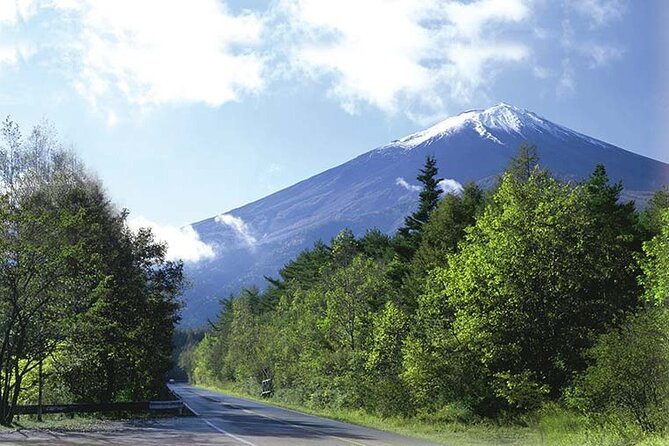
The first major stop is Mt. Fuji’s 5th Station, reached by bus along the Subaru Line. At 2,300 meters, or 7,546 feet, this is the highest point on the standard route.
The altitude gives the stop its character. You are above much of the lower mountain country, with a chance to look across the slopes and surrounding area. On a clear day, this is the most direct encounter with Fuji itself. You are standing on the mountain rather than only seeing its cone from a distance.
You get about 40 minutes here. That is enough to take photographs, look around, and enjoy the high-altitude setting, but not enough for a walk or extended exploration. Wear shoes that are comfortable on uneven ground, and bring a light layer. Conditions at the 5th Station can feel different from Tokyo, and weather changes are part of the day.
There is an important limitation. The bus may not reach the 4th or 5th Station if the road is frozen, an accident blocks the Subaru Line, or weather creates unsafe conditions. In that case, the route changes to Oshino Hakkai or the Fujisan World Heritage Center.
That backup plan matters because the tour does not promise a mountaintop visit in every season. It does promise a Fuji-area day, with the replacement chosen for practical and cultural interest. Still, if standing at the 5th Station is your main reason for booking, check the season and forecast before you commit.
Cloud can also cover the mountain. The tour continues in poor visibility, and the price is not refunded simply because Fuji disappears. I would treat the mountain view as a welcome gift, not a guarantee.
Oishi Park and the Lake Kawaguchi view
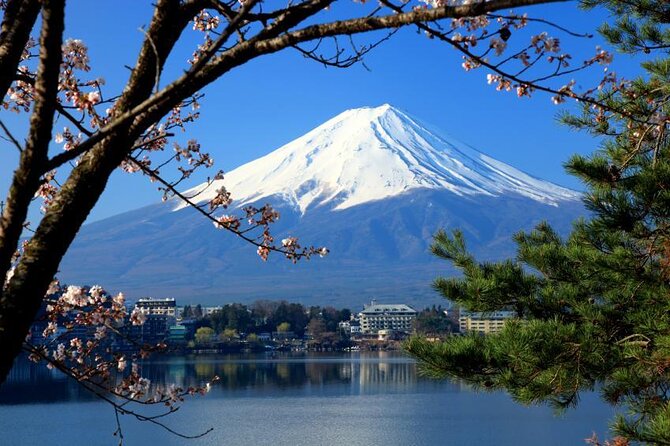
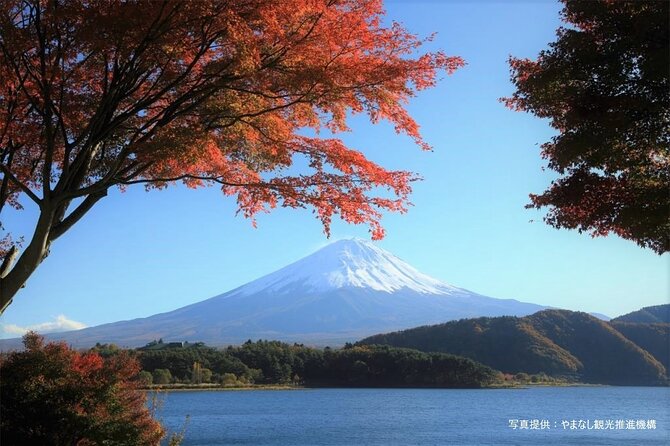
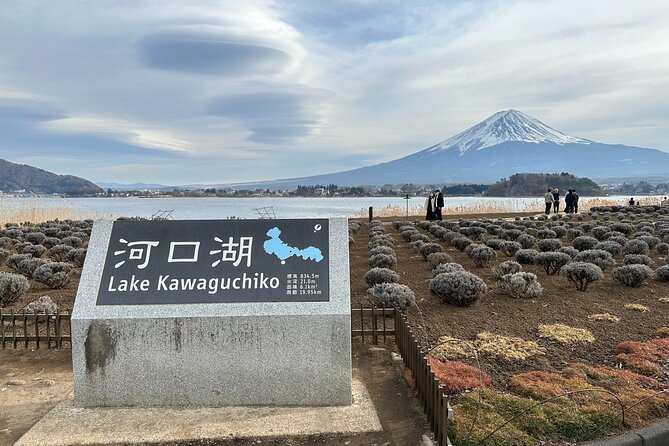
Oishi Park is a short stop, only about 30 minutes, but it may become one of your favorite photo locations. The park looks across Lake Kawaguchi toward Mt. Fuji, creating the classic composition of water in front, mountain behind, and open space between.
This stop gives you a different relationship with Fuji than the 5th Station. At the upper station, you are close to the mountain. At Oishi Park, you see its full shape from a lower, more relaxed viewpoint.
Thirty minutes passes quickly. Use the first few minutes to find the best view, then leave time for photographs and a short walk. If Fuji is hidden, the lake and park still provide a pleasant pause, but the signature image will not be there.
The tour also crosses Lake Kawaguchi Ohashi Bridge. You do not get a separate walking stop on the bridge, but you can look out from the bus windows as the coach crosses the lake. This is a small detail, yet it helps connect the stops into one geographic story rather than a string of unrelated photo calls.
Lunch in Fujikawaguchiko
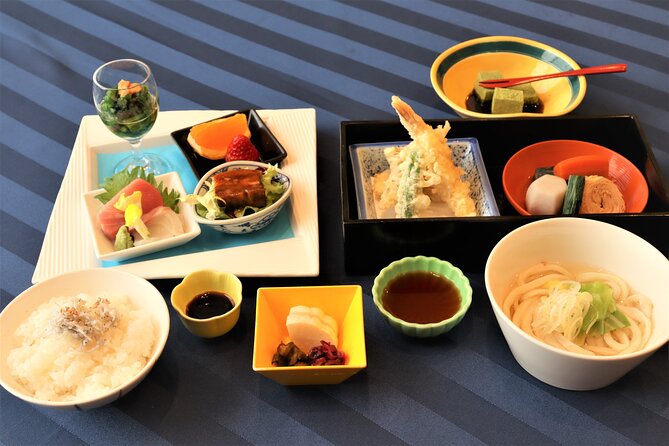
Lunch is served at either Hotel Regina Kawaguchiko or Highland Resort Hotel & Spa. The exact venue can change because of restaurant arrangements, so do not plan around one particular dining room.
The standard meal is Japanese cuisine with meat and fish. A vegetarian meal is available, but you must book the separate vegetarian tour option. You cannot switch meal types on the day.
This is a useful inclusion. A scheduled lunch means you do not lose sightseeing time searching for a restaurant, and the hotel setting gives the middle of the day a proper break. One past account singled out the traditional meal and recommended the Mt. Fuji ice cream soda drink, which may be available as an extra purchase rather than part of the included menu.
The restrictions are important. Muslim-friendly, allergy-friendly, and gluten-free meals are not available. If you have dietary needs beyond the stated vegetarian option, this is not the place to hope for a last-minute adjustment.
You have about 50 minutes for the lunch stop. That keeps the day moving, but it also means the meal is functional rather than leisurely. I would book this tour for the route and guide, with lunch as a welcome convenience.
Arakurayama Sengen Park and the 398 steps
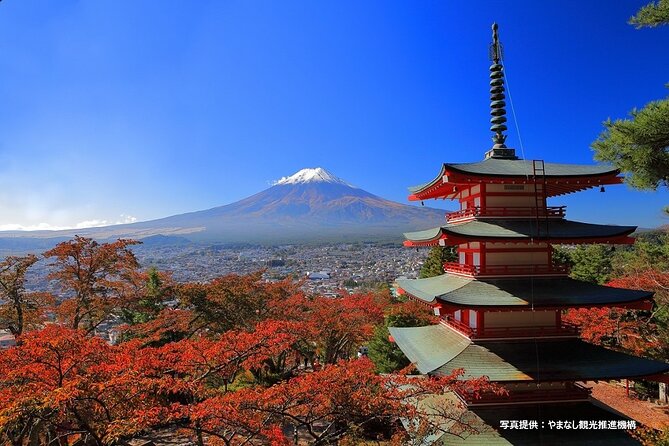
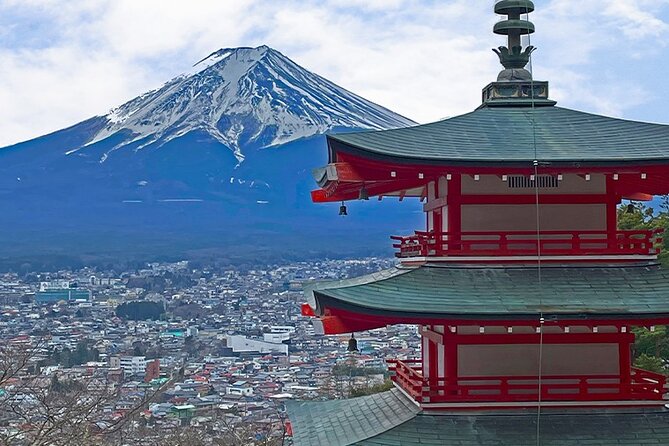
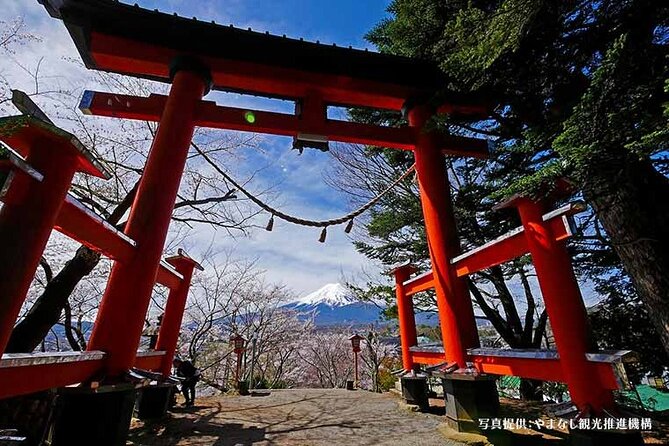
The final major stop is Arakurayama Sengen Park, home of Chureito Pagoda. This is the view that appears in countless images of Japan: the red pagoda in the foreground, Fuji behind it, and the city below.
Getting there requires effort. The bus leaves you near Shimo-Yoshida Station on the Fujikyuko Line. From there, it is about a 10-minute walk one way to Sengen Shrine. The pagoda viewpoint then requires a stairway of about 398 steps, taking around 15 minutes one way.
The climb is not a technical hike, but it is a real workout after a full day of sightseeing. Take your time. The route is not ideal for anyone who is unsure on stairs or uncomfortable with a sustained uphill climb. If you need to stop, the tour allows those who are not confident in their stamina to wait for a few minutes at Sengen Shrine.
The total visit lasts about 1 hour and 20 minutes. That is enough time for the walk, the stair climb, photographs, and a short look around, but it is not a long park visit. The reward is the famous layered view of pagoda, town, and Fuji, especially striking during cherry blossom season.
The view depends on weather here too. If clouds hide Fuji, Chureito Pagoda remains attractive, but the well-known postcard scene loses its main element. The steps and walking distance also make this stop less suitable for people who want a mostly seated sightseeing day.
A few more Tokyo tours and experiences worth a look



The guide adds more than directions
The bus transport solves the hard practical problem, but the guide can shape the quality of the day. The tour includes a National Government Licensed English Guide Interpreter, and the strongest guide experiences add cultural explanation between stops rather than simply announcing the next photograph.
Makoto has been described as thorough and informative. Atsushi was praised for a lively personality, humor, and even a bonus show during the ride. Saiki-San was remembered for explaining Fuji and Japan while teaching Japanese symbols. Guides can vary by departure, so you should not book on the assumption that one named person will lead your particular trip.
That said, the format gives the guide plenty of useful work to do. You can learn why the mountain matters, how the sites connect to Japanese culture, and what you are seeing from the bus. A coach day can otherwise become a quiet ride between photo stops. Good commentary turns the road time into part of the experience.
The group may include as many as 40 people. Odd-numbered parties may share seats with other customers, and the bus company may turn off the engine and heating or cooling while waiting as part of its effort to reduce emissions. Keep your seatbelt fastened while riding.
Timing, traffic, and the reality of a full day
Nine hours sounds generous, but the route is tightly arranged. The bus must leave central Tokyo, climb toward the mountain, move between Fuji-area stops, and return to Shinjuku. Traffic can affect every part of that plan.
The stated return is around 5:30 PM, yet arrival at individual stops can be delayed depending on the season and day of the week. The itinerary order can also change because of road conditions or other operational needs.
This is why I would avoid booking a theater ticket, dinner reservation, or airport transfer immediately after the scheduled return. Shinjuku is well connected, but a late return can make a tight plan stressful.
The fixed route is a benefit if you want to see the major sights with little planning. It is a drawback if you prefer to linger. You cannot simply skip lunch to spend longer at Oishi Park, and you cannot stay at Chureito Pagoda while the bus continues.
Who gets the best value from the $99.10 price
The price makes sense for you if you want three things: simple transport, a guide, and a packed Fuji-area route. Booking trains and local buses separately may offer more freedom, but it would require careful timing and a willingness to manage changes in rural transport.
You also get lunch and round-trip bus fare included. The 9-hour duration means the cost covers a full day rather than a short transfer with a single attraction.
I would compare the price against your priorities. If you want a quiet lakeside day, a private guide, or serious mountain walking, this is not the right format. If you want the main views, a meal, and a return to Tokyo without changing vehicles, $99.10 is a fair package price.
The value is strongest for a first Fuji visit. You see the mountain from above, across the lake, and behind Chureito Pagoda. Those viewpoints feel different, and that variety is difficult to reproduce quickly without a vehicle.
Who should book, and who should think twice
I would recommend this to first-time visitors staying in Tokyo who want to see Mt. Fuji in one day. It also suits families with older children, couples, and solo visitors who prefer a planned route and an English-speaking guide.
Most people can participate, but the pagoda stop requires walking and 398 stairs. Parents with very young children should note that children up to age five may join free without a bus seat. If you need a seat for the child, you must book the child rate.
Participants under 18 need written parental permission. Anyone under 15, or not yet enrolled in middle school, must be accompanied by a parent or guardian.
I would think twice if you have strict dietary requirements, dislike coach tours, or need guaranteed Fuji visibility. I would also skip it if you want to spend most of the day hiking rather than moving between viewpoints.
Free cancellation is available until 24 hours before the start time. Inside that window, changes and refunds are not accepted.
Should you book this Mt. Fuji tour?
Book it if your goal is to see the major Fuji sights efficiently, with lunch and transport handled for you. The 5th Station, Oishi Park, Lake Kawaguchi, and Chureito Pagoda give you a satisfying range of mountain, lake, and cultural views.
Go in with realistic expectations. This is a busy day, not a slow retreat. Fuji may be hidden, traffic may delay the return, and the 398 steps are part of the deal. But if you accept those limits, this $99.10 tour offers a practical way to make a serious Fuji visit from Tokyo without spending your vacation decoding timetables.
FAQ
Where does the tour start and end?
The meeting point is near Shinjuku Station at West 1 Chome-5 Nishishinjuku, Shinjuku City. The tour ends near Shinjuku Station at about 5:30 PM.
Does the tour pick up from Tokyo hotels?
No. Round-trip transfers are provided from the central meeting point near Shinjuku Station, not from individual hotels.
How long is the tour?
The tour lasts approximately nine hours.
Is lunch included?
Yes. Lunch is included at either Hotel Regina Kawaguchiko or Highland Resort Hotel & Spa. The venue may change.
Can I choose a vegetarian meal?
Yes, but you must book the separate tour option for a vegetarian meal. Meal changes cannot be made on the day.
Are special dietary meals available?
Muslim-friendly, allergy-friendly, and gluten-free meals are not available for this tour.
How many steps lead to Chureito Pagoda?
The stairway has about 398 steps. It takes approximately 15 minutes each way to reach the scenic viewpoint.
What happens if Mt. Fuji is hidden by clouds?
The tour continues, and no refund is given because of poor visibility. The itinerary may still include the scheduled Fuji-area stops.
What happens if the bus cannot reach the 5th Station?
The tour may visit Oshino Hakkai or the Fujisan World Heritage Center instead if the road is blocked by freezing, an accident, weather, or another operational problem.
Is the tour suitable for children?
Most people can participate. Children up to age five may join free without a bus seat, but a child-rate booking is required if they need their own seat. Participants under 18 need written parental permission, and anyone under 15 or not yet in middle school must travel with a parent or guardian.
More Lunch Experiences in Tokyo
More Mt Fuji Day Trips in Tokyo

More tours in Tokyo we've reviewed












Mt Fuji Day Trips, compared.
 ★ 5.0Mt Fuji and Hakone 1-Day Bus Tour Return by Bullet TrainFrom $163
 ★ 4.0Mt Fuji & Hakone Cruise, Drum Show Bullet Train 1 Day from TokyoFrom $149
 ★ 4.4Tokyo Mt Fuji 5th St & Hakone Cruise Bus Tour w/Bullet TrainFrom $15410 hours
 ★ 4.5From Tokyo: Mount Fuji Full-Day Sightseeing TripFrom $6810 hours
 ★ 4.7Tokyo: Mt. Fuji Tour, Hakone Ropeway, Owakudani, Lake AshiFrom $5410 hours
 ★ 4.4Tokyo:Mt.Fuji,Kawaguchiko Oishi Park,Arakurayama Sengen ParkFrom $5410 hours