Reviewed · TSUKIJI MARKET TOURS
Tokyo: Tsukiji Fish Market Tour with 6 Stops & Seafood Lunch
Tsukiji is not Tokyo’s current wholesale fish market, but it remains the city’s best place to see seafood culture at street level. This three-hour walk pairs Tsukiji Outer Market with a Buddhist temple, an Inari shrine, more than five tastings, a donburi lunch, and a high view over Tokyo and the bay. It gives you context, not just a plate of sushi.
In This Article
- Key points at a glance
- Why Tsukiji still matters after the fish market moved
- Start at Tsukiji Hongan-ji, a calm first lesson
- Eat your way through the Outer Market
- Pause at Namiyoke Inari Jinja
- Sit down for the included donburi lunch
- Finish with Tokyo from the Shiodome Media Tower
- How much value do you get for $94?
- Who will enjoy this Tsukiji tour most?
- Practical advice for a smoother morning
- Should you book it?
- FAQ
- Where does the Tsukiji tour meet?
- Is Tsukiji Station the same as Tsukijishijo Station?
- How long does the experience last?
- What language is the tour offered in?
- How many people can join the group?
- Is lunch included?
- How many food tastings are included?
- Are drinks included?
- Can people with allergies or dietary restrictions join?
I like the small group, capped at seven, and the way a guide can steer you through crowded lanes to foods you might skip on your own. I also like the temple and shrine stops, since they show how food, worship, and daily customs sit side by side in Japanese life.
The main catch is that this is an outer-market food tour, not a tour of Toyosu’s wholesale market or the old tuna auction. The market can feel tight and slow, and three hours may not leave much time for relaxed shopping or photographs. At $94 per person, the value depends on how much you want guidance, tastings, and a planned lunch.
Key points at a glance
- Five or more tastings: Sample market foods such as fresh seafood and traditional snacks, with past menus including oysters, eel, tuna sushi, rolled omelet, and custard-filled mochi.
- A cultural start: Visit Tsukiji Hongan-ji for about 20 minutes, then Namiyoke Inari Jinja for another guided look at local worship.
- Seafood donburi lunch: Finish the food portion with a rice bowl at a market restaurant, with lunch covered up to 1,500 yen.
- A city view from above: The final stop at Shiodome Media Tower can include the 46th-floor Caretta Shiodome observation deck, with views toward Tokyo Bay.
- Small English-speaking group: The group is limited to seven people, and guides have included Mai, Meg, Naoki, Kiyo, Ken, Momo, and Taka.
- Bring cash and arrive early: Extra street food and drinks cost more, and a late arrival can mean missing the group without a refund or rescheduling.
Why Tsukiji still matters after the fish market moved
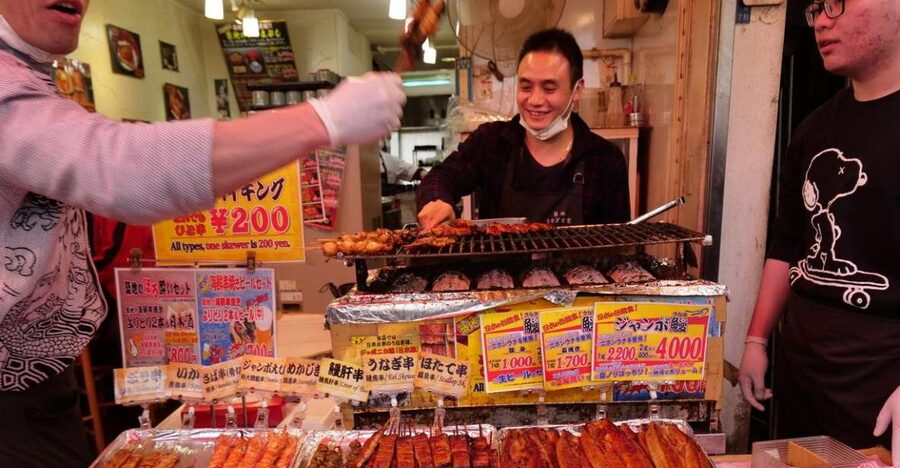
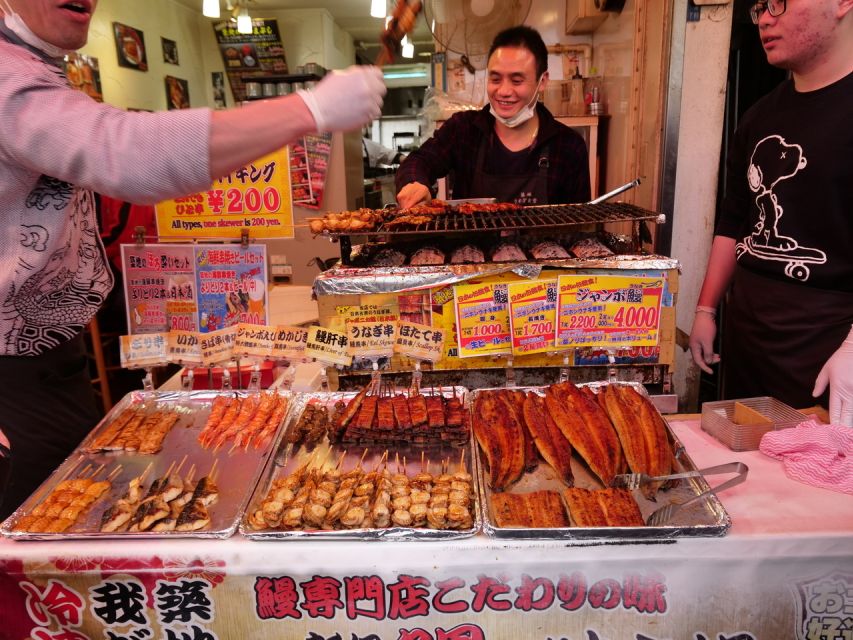
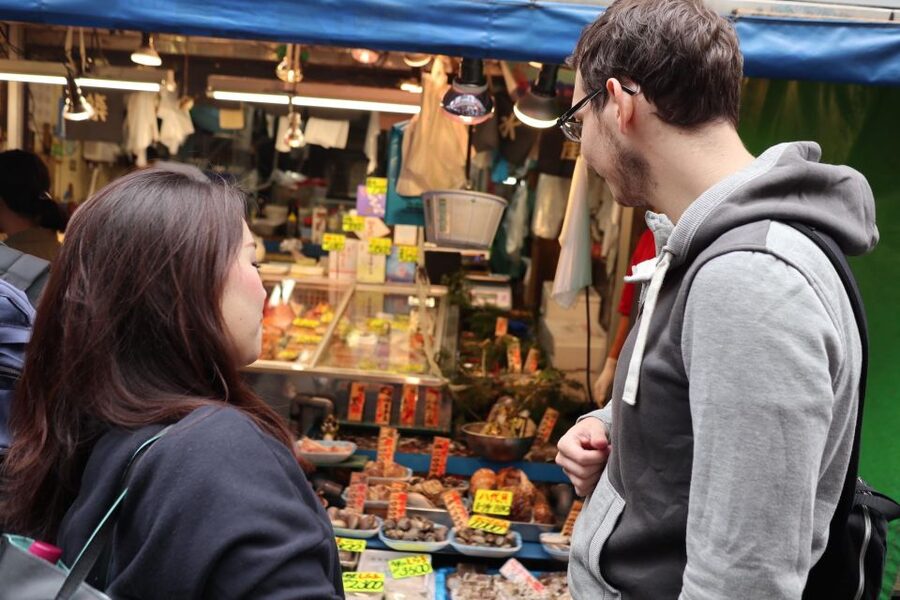
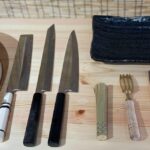
Tokyo’s main wholesale fish operation moved to Toyosu, yet Tsukiji’s Outer Market kept its web of small shops, food counters, knives, seasonings, grilled seafood, and ready-to-eat bites. That distinction matters. You are not visiting the working wholesale auction site. You are walking through the older public-facing district that grew around seafood buying and eating.
I like this setting because you can see food as part of ordinary city life. Some stalls sell ingredients for home cooks and restaurant kitchens. Others offer a quick bite to eat while standing in a narrow lane. Your guide helps explain what you are seeing and points out places where you can buy something without guessing what it is.
The market is also a working place, not a theme park arranged for easy sightseeing. The lanes may be packed, especially around late morning and on a Saturday. You will need to keep close to your guide, watch your step, and accept that a slow walk is sometimes the only practical way forward.
A few more Tokyo tours and experiences worth a look
Start at Tsukiji Hongan-ji, a calm first lesson
The meeting point is at the main gate of Tsukiji Hongan-ji, near Tsukiji Station. Look for a guide holding a red or orange MagicalTrip sign. Be careful with the station name: Tsukiji Station is different from Tsukijishijo Station.
The tour begins with about 20 minutes at Tsukiji Hongan-ji, a Buddhist temple with roughly 300 years of local history. The stop is not just a quick photo pause. Your guide explains Japanese worship customs and how to behave at a temple, giving you useful background before you visit the shrine and market.
I find this opening helpful for first-time visitors because Japanese religious sites can seem quiet and formal if you do not know what you are seeing. A short explanation of worship practices gives the rest of the walk a clearer frame. You are learning about Japanese food culture and religious culture in the same morning.
The temple also provides a welcome change of pace before the market. If your priority is only seafood, you may find 20 minutes here longer than necessary. If you want a wider introduction to Tokyo, it earns its place.
Eat your way through the Outer Market
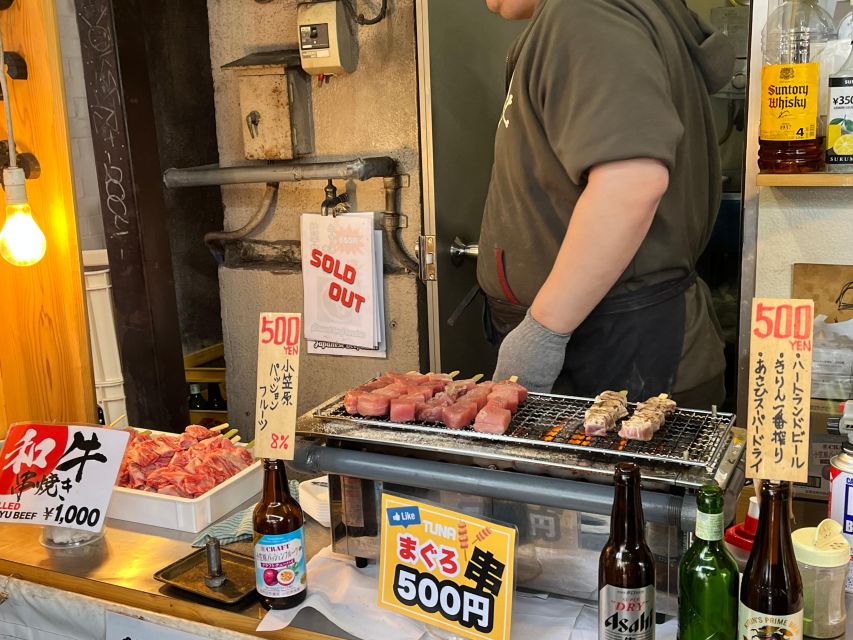
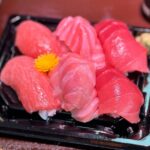
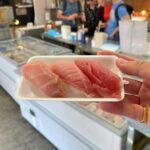
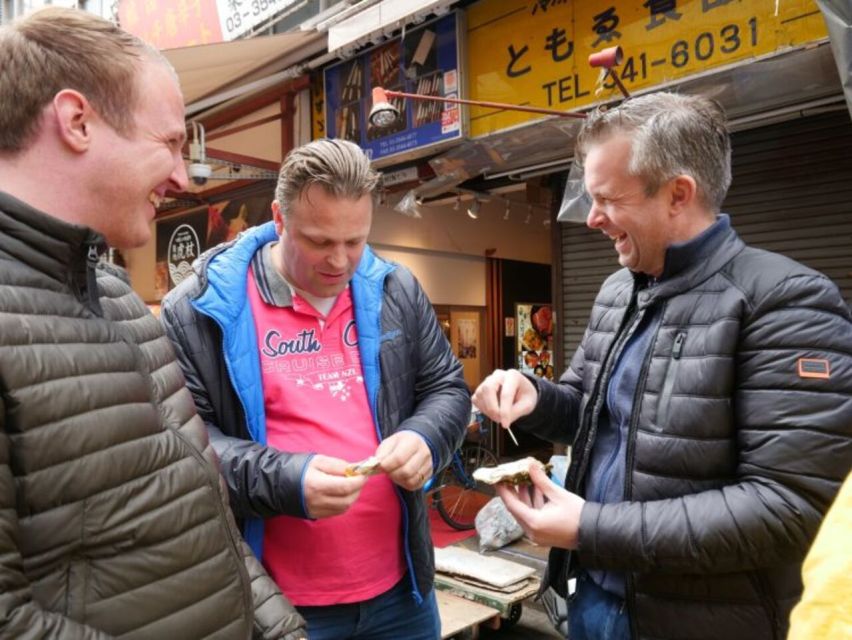
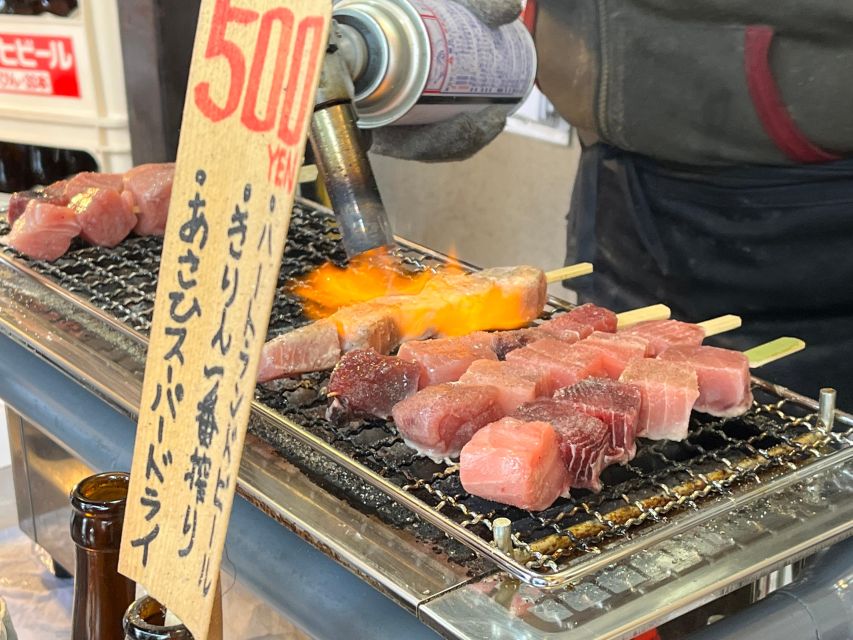
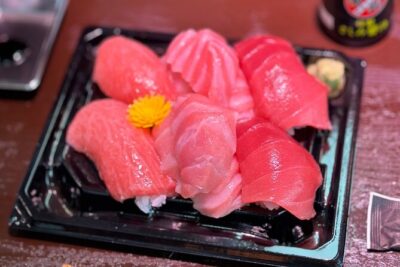
The main market walk takes about an hour and combines a guided route, shopping advice, and at least five tastings. The exact food lineup can vary, but the tour has included tuna sushi, grilled eel, oysters, rolled omelet, and a tuna-shaped taiyaki filled with sweet custard. You might also encounter other seafood or traditional market snacks depending on the day and availability.
The benefit is simple: you can try small portions before spending money on a full meal. Your guide can explain unfamiliar ingredients, suggest a stall, and help you understand how a dish is normally eaten. Several guides, including Meg, Mai, Hina, and Kiyo, have also helped people choose seasonings, flavorings, and other products to take home.
I especially like this part for visitors who feel unsure in Japanese food markets. You do not need to work out every menu by yourself, and the guide can keep the group moving through the crowded streets. The food is not presented as a formal tasting course. It feels more like a guided sampling walk through a real shopping district.
There are limits. A four-star experience described a market walk that felt rushed, with not enough time to stop for photos or browse. Another found the vendor interaction less hands-on than expected. That is fair: the tour gives you access and direction, but it cannot turn every stall into a private demonstration.
Bring cash for anything beyond the included tastings. Drinks are also extra. The description refers to Japanese beer or sake as a way to enjoy the meal, but you pay for those yourself. Do not count on alcohol being included in the $94 price.
Pause at Namiyoke Inari Jinja
The next cultural stop is Namiyoke Inari Jinja, visited with a guide for about 20 minutes. This small shrine is tied to the Tsukiji area and gives the tour another chance to explain Japanese religious customs, this time from a Shinto perspective.
The temple and shrine work well together. You are not simply ticking off two religious buildings. You are seeing different forms of worship within the same neighborhood, then returning to a market where tradition shapes food, trade, and daily routines.
I would pay attention to the explanations here rather than rushing through for pictures. The shrine stop is short, but it helps connect the market to the people and businesses that have long relied on it. If you want only a food crawl, this may feel like a detour. For a first visit to Japan, it adds useful meaning.
Sit down for the included donburi lunch
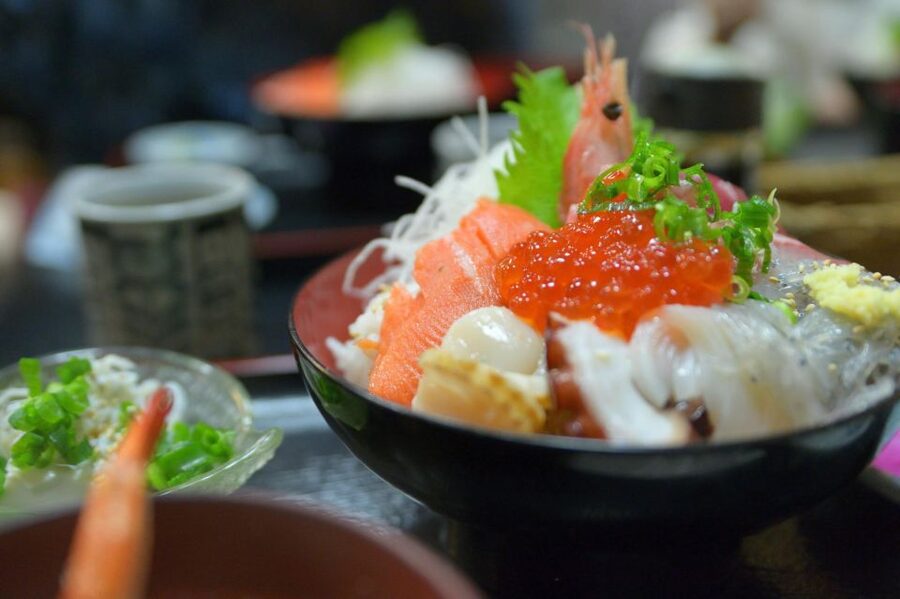
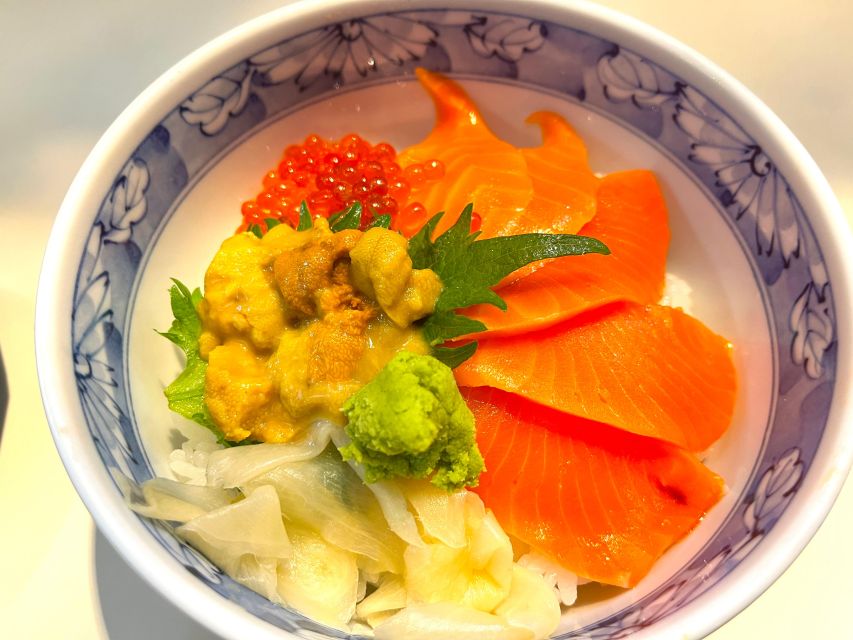
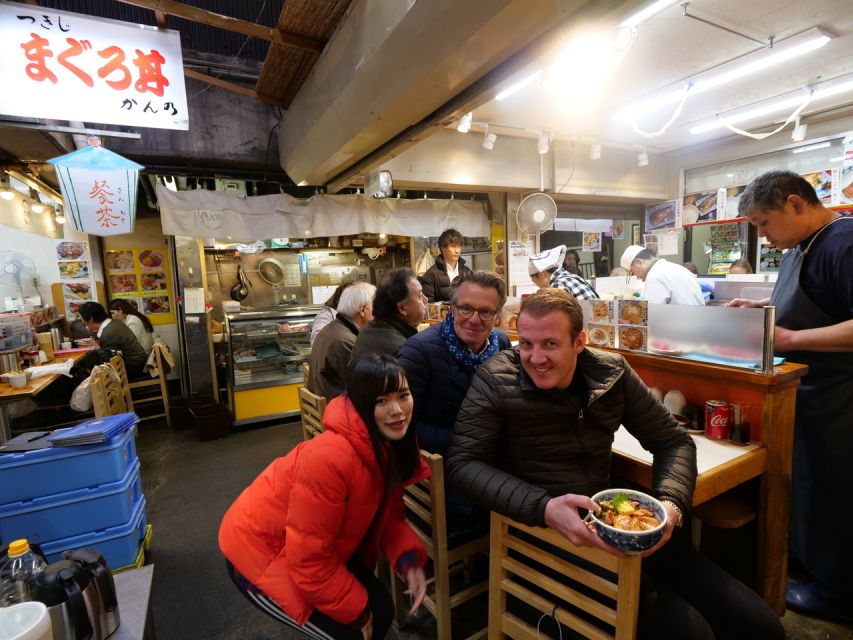
After the tastings, you stop at a seafood restaurant in the Outer Market for a donburi bowl. Donburi means a bowl of rice topped with other ingredients, and here the focus is seafood. The included lunch has a maximum value of 1,500 yen.
This sit-down meal is important after an hour in narrow, crowded lanes. You get a chance to rest, eat a proper portion, and compare the lunch with the smaller market samples. One guide, Meg, arranged a restaurant used by locals, while other visitors singled out the fresh sashimi and ikura. The exact bowl depends on the restaurant and what is available.
You can buy Japanese beer or sake with your meal, but drinks are not included. That is a useful budget detail, since the tour description may make the drink pairing sound like part of the package.
Pay close attention to the dietary wording before booking. One part of the information says the restaurant has vegetarian meals, while the important information says vegan and vegetarian options are not available. It also says the operator cannot guarantee allergy-free food, since preparation takes place in kitchens outside its control. If you have an allergy, strict restriction, or do not eat seafood, contact the operator before paying and do not assume a substitute will be available.
Other shopping tours in Tokyo
Finish with Tokyo from the Shiodome Media Tower
The last stop is Shiodome Media Tower, reached for a guided visit of about 20 minutes. Several people specifically enjoyed the view from the 46th-floor Caretta Shiodome observation deck, looking over the market and Tokyo Bay area.
This is a smart ending. The market can be hard to understand from ground level, where you see only a series of lanes and shop fronts. From above, you can place Tsukiji within the larger city and see how close it is to the waterfront and Shiodome’s towers.
The stop is brief, so treat it as a final viewpoint rather than a long observatory visit. You return to the Tsukiji Hongan-ji main gate at the end of the scheduled route, although guides have sometimes helped people continue toward a train station or find the correct route onward.
How much value do you get for $94?
At $94, this is not the cheapest way to walk through Tsukiji. You could enter the Outer Market without a ticket, buy individual snacks, and choose your own lunch. The tour price pays for more than food: it covers a certified English-speaking guide, at least five tastings, lunch up to 1,500 yen, a small group, cultural explanations, and tour photos.
I think the price is reasonable if you are visiting Tokyo for the first time and want a guided introduction without spending half a day planning every stop. The food samples alone are not enough to justify the cost for an experienced Japan visitor who is comfortable ordering and navigating alone.
The group size makes a difference. With no more than seven participants, you have a better chance of hearing explanations and asking where to buy a specific item. A few bookings have ended up as private tours when no other participants appeared, but you should not book expecting that result.
The free cancellation window is 24 hours before the start, and you can reserve now and pay later. These are useful safeguards, but the punctuality rule is strict. If you miss the group, you cannot join later, reschedule, or receive a refund.
Who will enjoy this Tsukiji tour most?
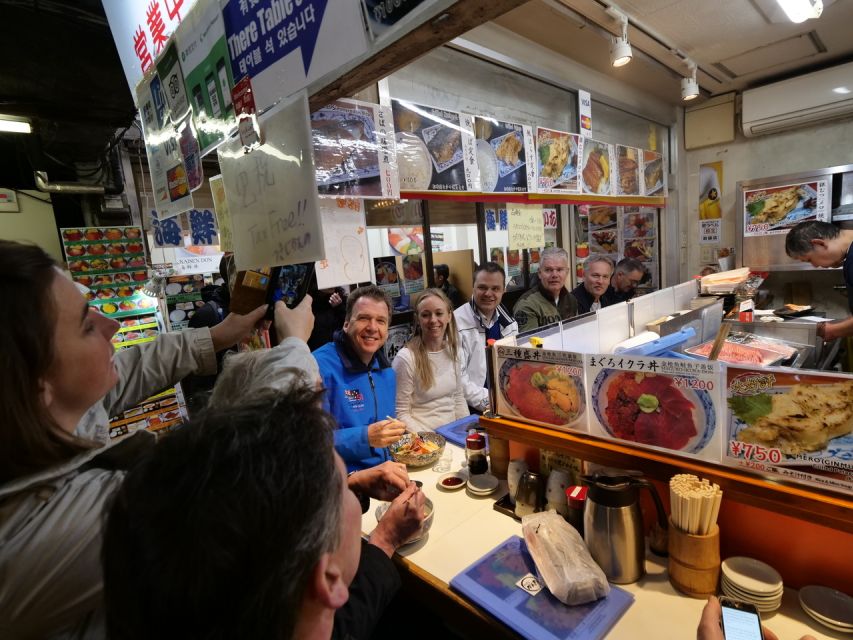
I would choose this for a first or second day in Tokyo, especially if you want food and culture together. It works well for solo visitors, couples, friends, and families, and all ages can join.
Families may appreciate the small tastings and the chance to try foods in modest portions. Children may enjoy the sweet taiyaki and grilled items, though the market’s crowds require close attention. The tour also suits people who want help with ordering, shopping, and finding the right train afterward.
Food-focused visitors should enjoy the range of samples, particularly if fresh seafood is your main reason for visiting Tsukiji. You will get more out of it if you arrive hungry but not starving, since the tastings come before lunch.
I would skip it if you want the Toyosu wholesale market, the tuna auction, a long photography session, or a slow shopping morning. It is also a poor fit for strict vegetarians, vegans, and people with serious allergies unless the operator confirms suitable arrangements in advance.
Practical advice for a smoother morning
Meet at Tsukiji Station, not Tsukijishijo Station, and allow extra time to find the main gate of Tsukiji Hongan-ji. Look for the red or orange sign and arrive before the start time.
Wear shoes suited to walking and crowded market lanes. A stroller or wheelchair may not work at every stop because parts of the route are not accessible.
Carry cash for street food, shopping, beer, or sake. Lunch is included only up to 1,500 yen, so ask your guide about any cost beyond that amount.
Keep your plans flexible after the tour. The scheduled return point is Tsukiji Hongan-ji, but the final viewpoint and crowd movement can affect the pace. The full experience lasts three hours, with roughly 20 minutes at the temple, an hour in the market, 20 minutes at the shrine, an hour for lunch, and 20 minutes at the tower.
Should you book it?
Book this tour if you want a well-organized first look at Tsukiji, enjoy trying several foods, and value a guide who can explain customs and help you move through crowded lanes. The strongest part is the combination of seafood tastings, a proper donburi lunch, and clear cultural context.
Skip it if you already know Tsukiji well or would rather set your own pace. You can visit the Outer Market independently, and the tour does not visit the Toyosu wholesale market.
For most first-time visitors who want an easy, food-centered introduction to this part of Tokyo, $94 buys useful guidance and a full morning. Just arrive on time, bring cash, and confirm dietary options before booking.
FAQ
Where does the Tsukiji tour meet?
The meeting point is at the main gate of Tsukiji Hongan-ji, near Tsukiji Station. Look for the guide holding a red or orange MagicalTrip sign.
Is Tsukiji Station the same as Tsukijishijo Station?
No. The meeting instructions specifically say to use Tsukiji Station and not Tsukijishijo Station.
How long does the experience last?
The tour lasts three hours.
What language is the tour offered in?
The live guided tour is offered in English.
How many people can join the group?
The group is limited to seven participants.
Is lunch included?
Yes. Seafood lunch is included, with a maximum covered value of 1,500 yen.
How many food tastings are included?
The tour includes five or more food tastings in the market.
Are drinks included?
No. Japanese beer and sake are available at an additional cost.
Can people with allergies or dietary restrictions join?
The operator cannot guarantee allergy-free food or accommodate every dietary restriction. The information also gives conflicting details about vegetarian availability, so you should confirm directly before booking. Vegan and vegetarian options are listed as unavailable in the important information.
More Markets in Tokyo
More Shopping Tours in Tokyo
More Tsukiji Market Tours in Tokyo
More tours in Tokyo we've reviewed












Tsukiji Market Tours, compared.
 ★ 5.0Tokyo Tsukiji Fish Market Food and Culture Walking TourFrom $99
 ★ 5.0Tokyo: Tsukiji Fish Market Food and Walking tourFrom $30
 ★ 4.9Tokyo: Tsukiji Fish Market Guided Walking TourFrom $222 hours
 ★ 5.0Tokyo Sushi Making Class in Tsukiji with Professional ChefFrom $49
 ★ 5.0Tsukiji Fish Market Guided Tour and Sushi Making with Pro ChefFrom $104
★ 4.7Tokyo: Tsukiji Fish Market Food and Culture Walking TourFrom $963 hours
★ 5.0Tsukiji Fish Market Guided Tour and Sushi Making with Pro ChefFrom $104
★ 4.7Tokyo: Tsukiji Fish Market Food and Culture Walking TourFrom $963 hours