Reviewed · WORKSHOPS
Tokyo: Manga Drawing Workshop Guided by Pro Manga Artist
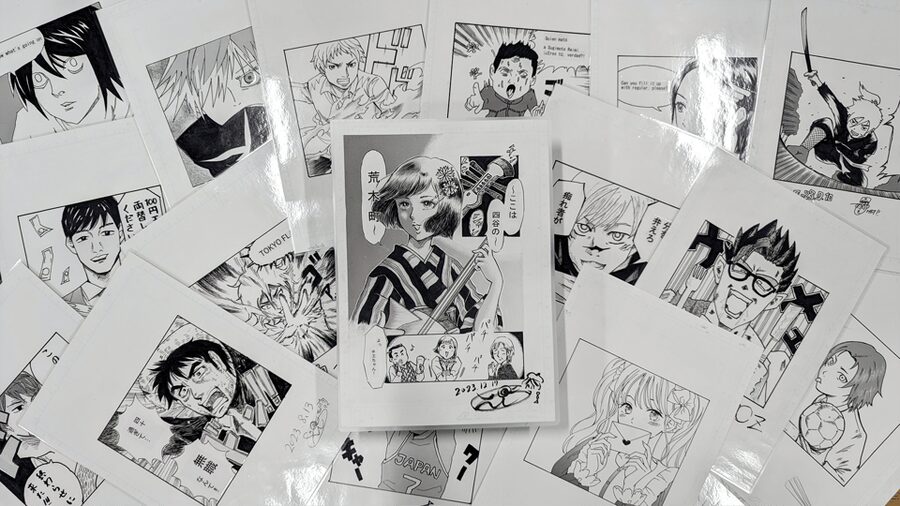
Tokyo’s Manga Drawing Workshop turns a blank sheet into a finished manga panel in about two and a half hours. A professional artist guides you through rough sketching, inking, solid blacks, screen tones, and speech bubbles, so you get a real look at how manga is made.
In This Article
- Key points to know before booking
- What this workshop really offers
- Arriving at the black building in Shibuya
- Choosing your manga idea
- Rough sketches and the artist’s quick hand
- Inking, black areas, and manga texture
- Speech bubbles and the finished panel
- The interpreter is part of the lesson
- Who will enjoy it most
- Is $129 good value?
- Timing, cancellation, and group details
- Should you book the Manga Drawing Workshop?
- FAQ
- Where does the manga drawing workshop meet?
- How long does the activity last?
- Is the workshop suitable for complete beginners?
- What languages are available?
- Are drawing materials provided?
- How many people can join the workshop?
- Is the activity wheelchair accessible?
- What happens if I need to cancel?
I especially like the small groups of up to eight, which give the artist time to help beginners and answer questions. I also like that your finished drawing is laminated, making it a useful souvenir rather than another fragile sheet in your luggage. The main consideration is that some of the work may follow the artist’s sketch closely, so confident artists seeking complete creative freedom may find it more guided than expected.
Key points to know before booking
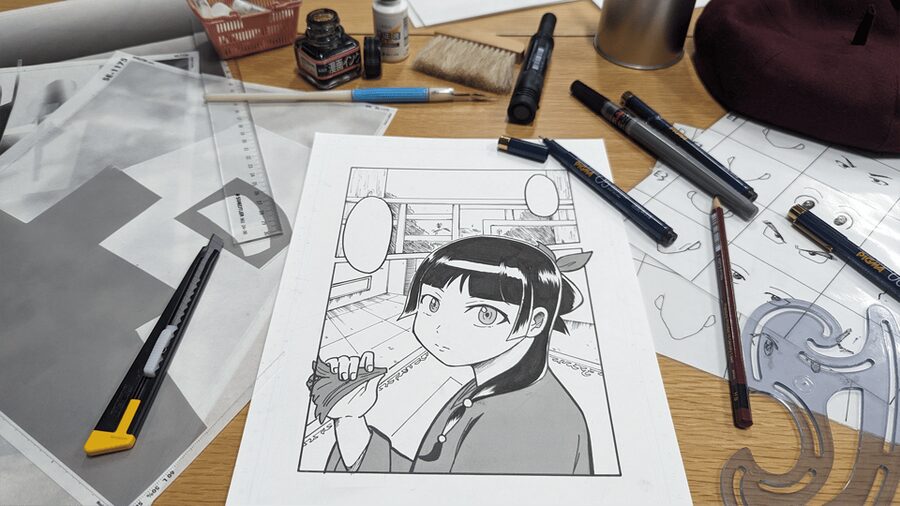
- Traditional manga tools: Use pens, brushes, ink, cutters, and screen tones rather than only drawing on a tablet.
- Suitable for beginners: The artist breaks the process into manageable stages, even if you feel you cannot draw.
- Interpreter included: English and Japanese support helps you ask about technique, careers, and manga culture.
- Small-group setting: The maximum group size is eight, though some sessions may have fewer people.
- A practical keepsake: Your completed panel is laminated and ready to carry home.
- Shibuya meeting point: Find the black, narrow Shibuya 3-chome TR Building at 3-8-11 Shibuya, then go to the sixth floor.
What this workshop really offers
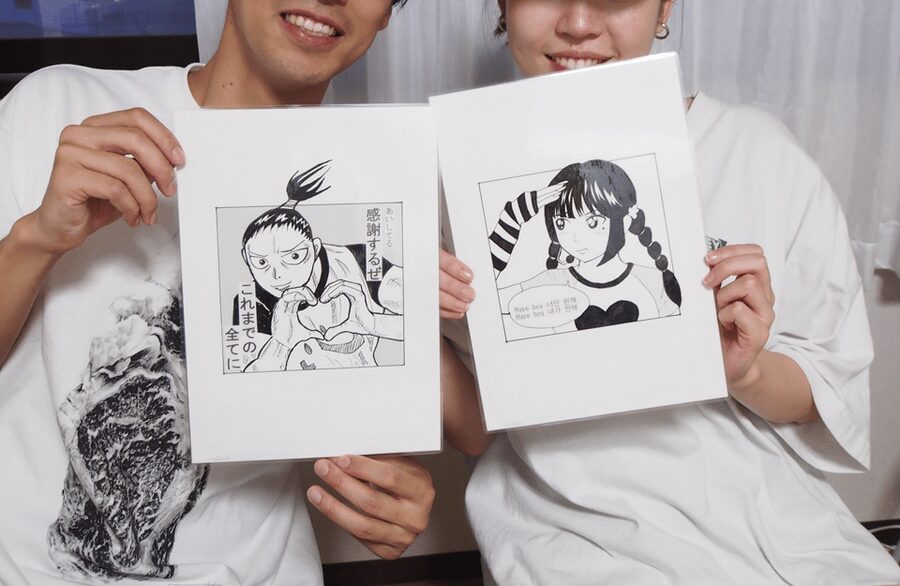
This is not a museum talk about manga. You sit down with professional materials and make a panel yourself. That difference matters.
Manga artists work through a sequence that is easy to recognize once you see it on paper: an idea becomes a rough layout, the layout becomes a drawing, and the drawing gains weight, shadow, texture, and emotion through ink and screen tones. You get to try each stage instead of simply watching someone else work.
The workshop is led by a professional manga artist with more than 20 years of experience. Different sessions may feature artists such as Shige Matsumori, Rokkaku-sensei, Kousei-sensei, Hiroshi, or Kamaya Katsuki. An English-speaking interpreter works alongside the artist, with names including Machi, Madoka, Ai, Hanae, and others depending on the session.
That changing instructor lineup is worth noting. The central format remains the same, but the exact teaching style and drawing approach can vary. Some artists may produce a quick sketch for you to refine, while others may give you more room to develop your own character or composition.
Other guided tours in Tokyo
Arriving at the black building in Shibuya
The meeting point is 6F, Shibuya 3-chome TR Building, 3-8-11 Shibuya, Shibuya-ku, Tokyo. The building is described as black and relatively narrow, which is useful because it may not look like a large public attraction.
Give yourself extra time to find it. One family had trouble locating the building during a political rally near Shibuya Crossing, and the guides helped them reach the studio. Even without a rally, Shibuya’s streets, crossings, and building entrances can slow you down.
Pickup is not included, so you make your own way there. Check the exact starting time when booking, and arrive early enough to identify the entrance without rushing. You do not need to bring drawing tools. All manga materials are supplied.
The studio setting is part of the appeal. This is a working art class in the Shibuya area, not a large attraction built for crowds. Some sessions are very small, even with a stated maximum of eight people. Solo participants have sometimes had an almost private lesson, while families and couples can work together in a friendly room.
The activity is wheelchair accessible. Food and drinks are not included, so plan those separately around the 150-minute session.
Choosing your manga idea
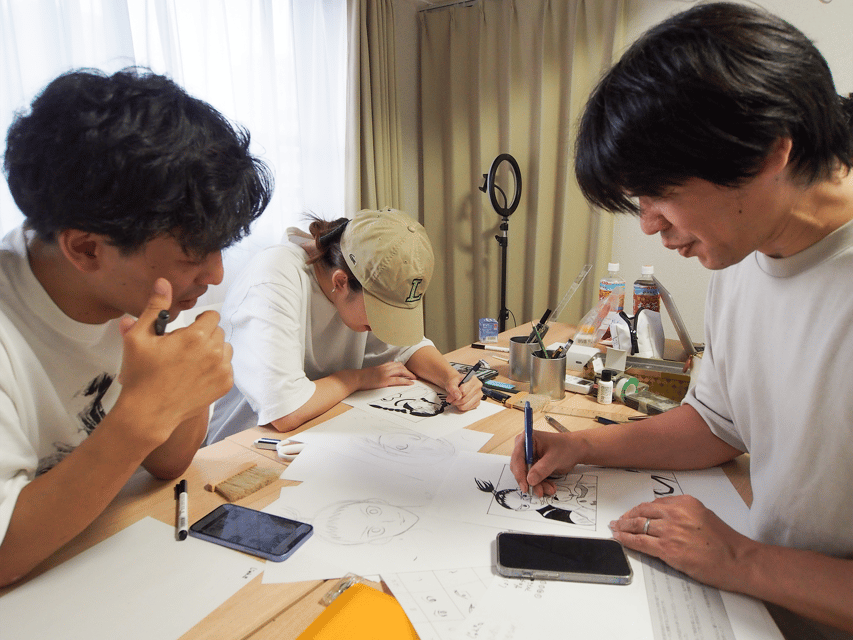
The first stage is deciding what you want to draw. You can select an image from a provided set, or bring an idea of your own. Several people have used personal characters, favorite figures, pets, or a photograph as a starting point.
This is a good moment to be realistic about complexity. A simple manga character is easier to turn into a finished panel than a highly detailed virtual avatar or an elaborate costume. One participant discovered that a virtual YouTuber design required more work than expected because of its many details.
You may also be able to combine a reference image with your own face, character, or pose. The artist can help shape the idea into something that works on a single panel. If you arrive without a plan, you should still be able to choose from examples and receive guidance.
I recommend thinking about your subject before the class. Bring a clear idea, if allowed by your booking instructions, or save a reference image on your phone. You do not need to know how to draw it. The point is to give the artist something to help you develop.
Rough sketches and the artist’s quick hand
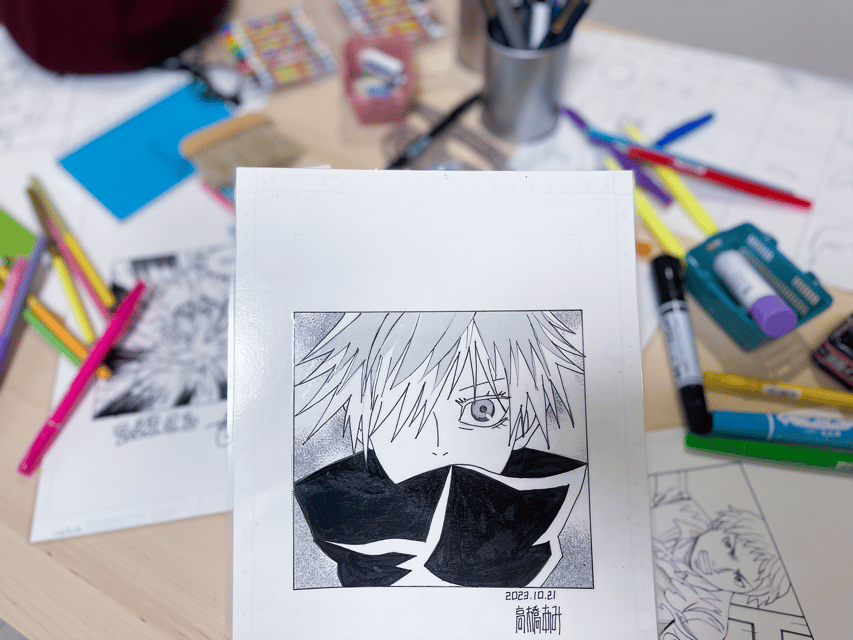
Once the idea is chosen, the artist prepares a rough outline or sketch. This is one of the most memorable parts of the class because you see an experienced hand solve problems quickly: proportion, pose, expression, framing, and the placement of the character on the page.
The artist may sketch your chosen subject for you to work over. You then use pencil to adjust or refine the drawing. This approach is helpful for beginners because you are not left staring at an empty page, wondering where to start.
It also explains one of the main limits of the workshop. If you expect a pure drawing lesson in which you invent every line from scratch, the format may feel too controlled. One participant with strong art skills felt the class offered less freedom than expected and described it as watching the artist create a manga-style version of a photo, then tracing and finishing it.
That criticism is fair. The workshop is best understood as a guided production session, not a full course in figure drawing or character design. You create the finished panel through your own choices and hands-on work, but the professional artist’s sketch provides much of the structure.
For beginners, that is often exactly why the result looks good. For an experienced illustrator, ask at the start how much freedom you can have. One digital artist used the session to return to traditional materials and learn about screen tones, while another participant created a more original piece with only limited help.
Inking, black areas, and manga texture
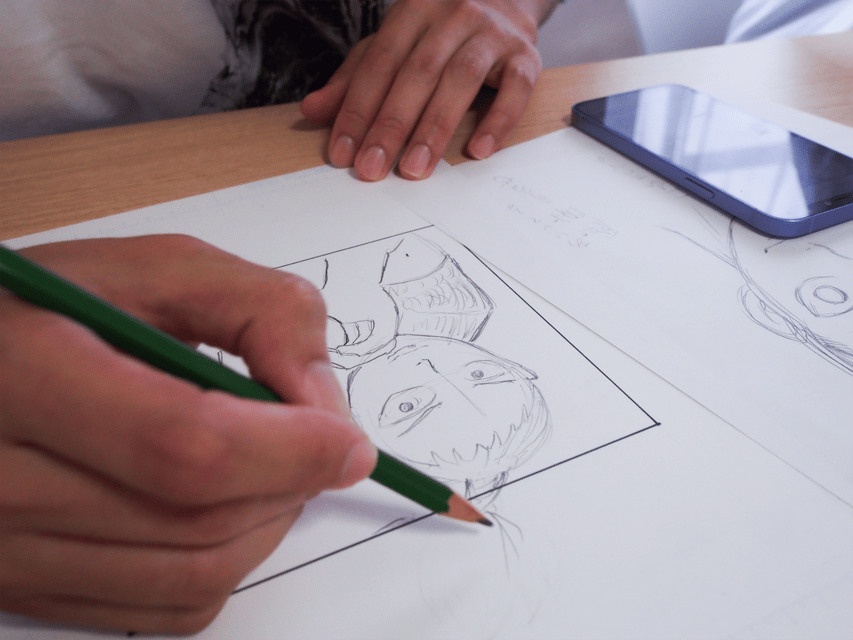
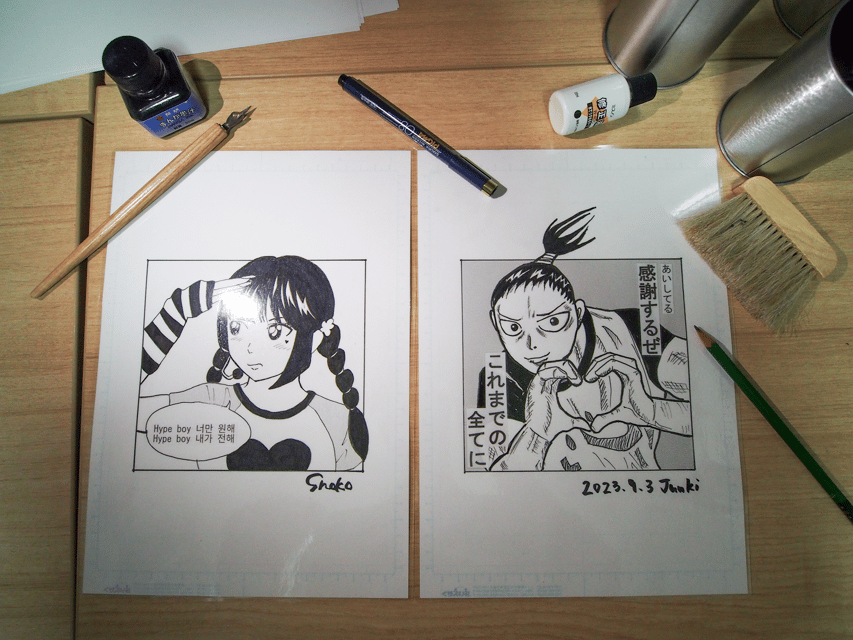
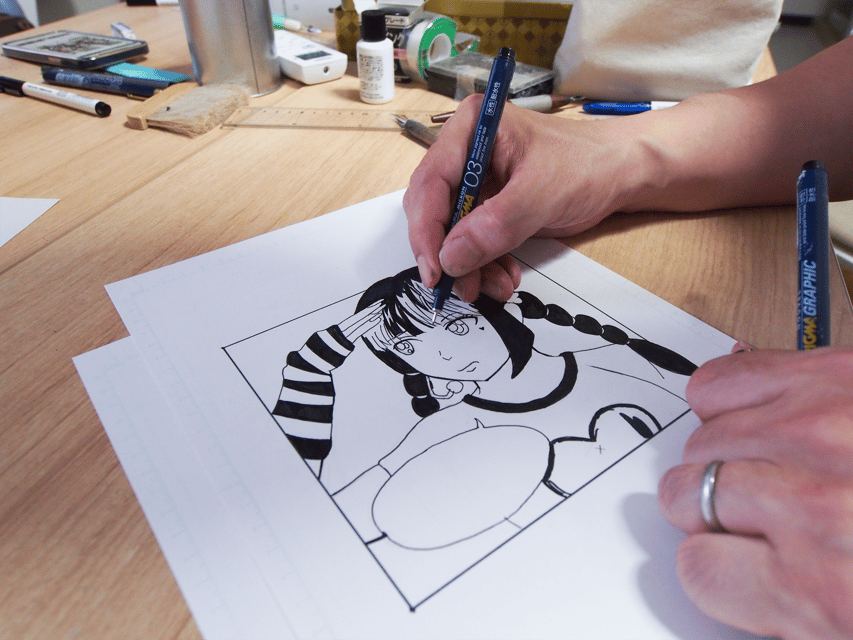
After the pencil stage, you go over the lines with ink. The process then moves into the visual tricks that give manga its punch: filling solid black areas, erasing pencil marks, and adding darker backgrounds or accents with a brush.
This part shows why professional manga is more than clean character outlines. A black shape can create focus. A brush stroke can suggest shadow or movement. The artist can explain how these choices affect the mood of the scene.
The tools make a real difference. You work with the kind of pens, brushes, paper, and other materials used in traditional manga production. If you normally draw digitally, the change can be refreshing, though it also means you cannot simply undo a mistake. The artist’s help keeps the process moving.
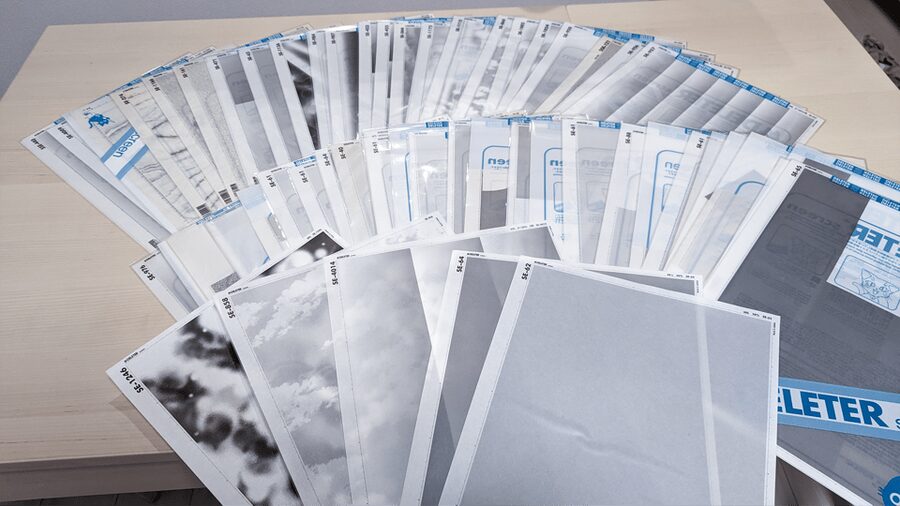
Screen tones are the most distinctive technique for many first-time participants. These gray patterned sheets are cut and applied to the page to create shading and texture. You may use a cutter to shape the tone before placing it on the drawing.
The process is tactile and precise. You can see how a flat black-and-white panel gains depth without full-color paint. One participant became interested enough in the technique to shop for traditional art supplies afterward, while another specifically praised learning how to cut and apply screen tone.
If you are bringing children, this stage needs patient supervision. The activity has worked well for children around 10 and 11, but cutters and wet ink require care. The artist and interpreter help keep the session positive, and children leave with a piece they can proudly display.
A few more Tokyo tours and experiences worth a look




Speech bubbles and the finished panel
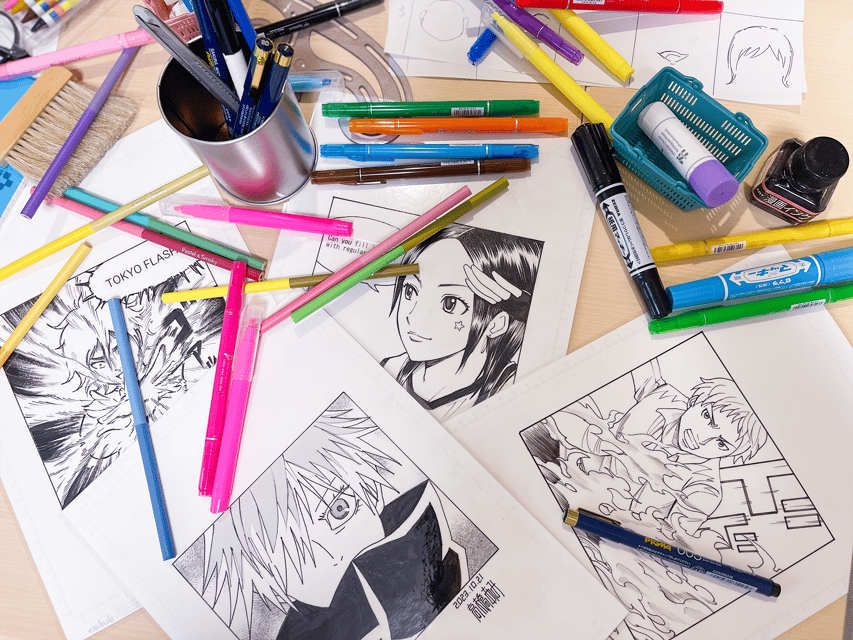
The final touches include speech bubbles and other comic-style details. These small additions make your drawing feel like a scene from a story rather than a single character portrait.
You may sign the work, and the completed panel is laminated before you leave. Lamination protects it from the ordinary punishment of a suitcase, which makes the result easier to transport than an unprotected drawing.
The finished piece is not likely to look as if you suddenly became a professional manga artist. It can, however, look far better than most beginners expect because the artist helps with the hardest structural decisions. That is the practical payoff: you learn the workflow and leave with an object that records the experience.
Some artists may also create a quick drawing for you during the session. One participant was impressed by how quickly the sensei sketched two dogs, while others enjoyed seeing their own characters transformed with manga techniques.
The interpreter is part of the lesson
The interpreter does more than translate basic instructions. With a good interpreter, you can ask why a tool is used, how the artist developed a career, and how a manga panel is built.
The strongest sessions seem to pair the artist’s technical instruction with an interpreter who keeps the room relaxed. Machi, Madoka, Ai, and Hanae are among the interpreters named in different sessions. Their role helps bridge not only language but also artistic vocabulary.
You should feel free to ask questions. The experience is designed for English and Japanese speakers, and the stated live guide languages are English and Japanese. A participant once needed Google Translate briefly for a few points, so communication may not always be perfect, but an interpreter is included and is central to the activity.
This conversation is one of the reasons the workshop feels more personal than a standard craft class. You can ask about manga creation, the artist’s career, favorite tools, and the working process. The answers add cultural context without turning the session into a lecture.
Who will enjoy it most
You do not need previous drawing skills. Beginners are a major part of the audience, and the step-by-step method is built to help you finish something in the allotted time.
I would especially recommend it for:
- Anime and manga fans who want more than a themed souvenir
- Families with children who enjoy drawing
- Couples looking for a shared activity in Tokyo
- Solo visitors who like hands-on classes
- Digital artists curious about pen, ink, and screen tones
- Adults who have always wanted to draw manga but felt intimidated
You do not have to be a serious fan, either. The process itself can be enjoyable if you like making things with your hands. The class has also suited mixed-skill pairs, including one person with professional art experience and another complete beginner.
The small-group setup helps here. An artist can spend more time fixing a beginner’s proportions, while a more experienced participant can ask about materials or make more of the creative choices. Still, the level of personal feedback depends on the number of people and the artist leading your session.
Is $129 good value?
At $129 per person, this is not a bargain craft class. You are paying for a professional manga artist, an interpreter, supplied materials, a 150-minute session, and a finished laminated artwork.
The value is strongest if you care about the process and the keepsake. A standard souvenir may be cheaper, but it will not be something you created with guidance from a working manga professional. You also get to handle traditional tools and see how screen tones, ink, and black areas change a drawing.
The price is harder to justify if you mainly want a free-form art lesson. The guided format can limit originality, especially when the artist creates the initial sketch and you follow it. An experienced artist may prefer a class that gives more time for independent work.
For a family, the cost adds up quickly, so decide if the finished panel and shared memory are worth more to you than several smaller Tokyo activities. For a dedicated manga fan, the direct contact with a professional artist makes the price easier to defend.
Timing, cancellation, and group details
The class lasts 150 minutes, which is long enough to complete the main stages without turning the activity into an all-day commitment. It fits well between other Shibuya plans, but allow time to reach the black building and the sixth-floor studio.
The maximum group size is eight. The actual group may be smaller, and solo sessions can happen when demand is low. That can give you more attention, though some people may prefer the energy of working beside family or friends.
You can reserve now and pay later, which helps if your Tokyo schedule is still shifting. Cancellation is free up to 24 hours in advance for a full refund. Check available starting times before choosing a date.
Should you book the Manga Drawing Workshop?
Book it if you want a personal, hands-on souvenir and like the idea of seeing manga made from the inside out. You will use traditional tools, ask questions through an interpreter, and leave with a laminated panel that has a story behind it.
I would book this for a first-time artist, a manga-loving child, a couple, or a solo visitor who wants a calm creative break from sightseeing. The patience of the artists and interpreters is a major strength, and the small groups make it easier to get individual help.
Think twice if you are an experienced artist seeking a completely original project. The workshop may rely heavily on a professional sketch, tracing, and guided finishing. If you still want to go, arrive with a clear character or scene and ask for more independence at the beginning.
For most visitors, especially those who worry they cannot draw, the format works well. You show up with no materials and no special skill, follow the stages, and carry home a real manga panel made in Tokyo.
FAQ
Where does the manga drawing workshop meet?
The meeting point is on the sixth floor of the Shibuya 3-chome TR Building, at 3-8-11 Shibuya, Shibuya-ku, Tokyo. The building is black and relatively narrow.
How long does the activity last?
The workshop lasts 150 minutes, or two and a half hours.
Is the workshop suitable for complete beginners?
Yes. No previous drawing skills are required, and the professional artist guides you through each stage of creating a manga panel.
What languages are available?
The live guide languages are English and Japanese. An interpreter is included to help with explanations and questions.
Are drawing materials provided?
Yes. Manga drawing materials are included, so you do not need to bring your own supplies.
How many people can join the workshop?
It is a small-group activity limited to eight participants. Some sessions may have fewer people.
Is the activity wheelchair accessible?
Yes, the activity is listed as wheelchair accessible.
What happens if I need to cancel?
You can cancel up to 24 hours in advance for a full refund. You can also reserve now and pay later, subject to the booking terms.
More Workshops & Classes in Tokyo
More Guided Tours in Tokyo



More tours in Tokyo we've reviewed












Workshops, compared.
 ★ 5.0Sushi Making Tokyo Roll and Authentic Japanese Sushi ClassFrom $59
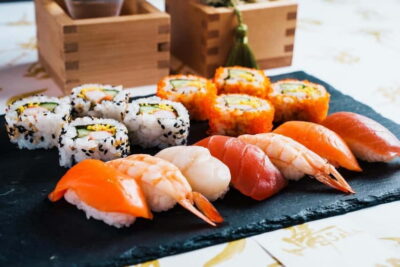 ★ 4.9Tokyo: Roll and Authentic Sushi Making Class in AsakusaFrom $581h 40m
 ★ 4.9Tokyo: Sushi Making Class in a Happi Coat near a Famous SpotFrom $421h 30m
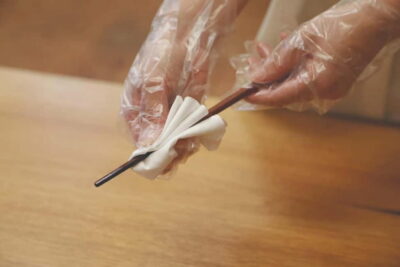 ★ 4.8Chopstick Making Workshop in GinzaFrom $251 hour
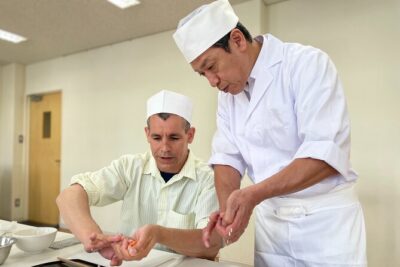 ★ 5.0Tokyo Sushi Making Class in Tsukiji with Professional ChefFrom $49
 ★ 5.0Ramen & Gyoza Cooking Class in Tokyo with Local Supermarket VisitFrom $122