Reviewed · MT FUJI DAY TRIPS
Mt Fuji Customizable Private Tour English Speaking Driver Pick-up
The best feature here is control. Instead of wrestling with trains and buses, you ride from Tokyo in a private car and shape the day around Mount Fuji. The suggested route links Oshino Hakkai’s clear ponds with the famous Chureito Pagoda, lakes, shrines, and Fuji viewpoints.
In This Article
- Key points at a glance
- Why a private car makes Fuji easier
- Building your day around Mount Fuji
- Oshino Hakkai and its eight clear ponds
- Chureito Pagoda at Arakura Fuji Sengen Shrine
- Saiko Iyashi no Sato Nenba and Lake Saiko
- Lake Yamanaka and the wider Fuji Five Lakes area
- Shiraito Falls, a major detour
- Oishi Park on Lake Kawaguchi
- Kitaguchi Hongu Fuji Sengen Jinja
- Gotemba Premium Outlets as your optional trade-off
- Price, timing, and what the day is worth
- Who should book this Fuji day trip?
- Should you book this private Mount Fuji tour?
- FAQ
- How long does the Mount Fuji private tour last?
- What time does the tour start?
- Where does the tour begin and end?
- How many people can join the private tour?
- Is pickup available?
- Is Gotemba Premium Outlets included?
- Can I cancel for a full refund?
I like the easy hotel-area pickup and the chance to adjust the plan with your driver. I also like that the guides, including Aki, Asi, Vijay, and Yannick, have been praised for smooth driving, local explanations, photography help, and quick changes when a better option appears. The main drawback is distance: trying to fit every listed stop into nine or ten hours would make the day rushed, especially if you add Shiraito Falls or Gotemba outlets.
Key points at a glance

- Private transport from Tokyo: Your group of up to four has the vehicle to itself, with pickup and drop-off included.
- A flexible Fuji route: You can follow the suggested plan or ask to focus on shrines, lakes, village scenery, shopping, or photo stops.
- Chureito Pagoda views: Arakura Fuji Sengen Shrine provides the classic five-story pagoda and Mount Fuji composition.
- Eight ponds at Oshino Hakkai: This is a calm, photogenic stop with clear water and links to local legends.
- Several guide names appear in the feedback: Aki, Asi, Vijay, and Yannick are specifically praised for courtesy, local knowledge, driving, and flexibility.
- Good for a small group: At $429.44 per group of up to four, the price becomes more reasonable when shared.
Why a private car makes Fuji easier

Mount Fuji is close enough to tempt you into a day trip from Tokyo, but the area around it is spread across several towns, lakes, shrines, and rural roads. Public transport can get you there, yet combining many sights takes careful planning and leaves you watching timetables.
This tour removes much of that work. You start at 8:00 a.m. from 2-2 Yoyogikamizonochō in Shibuya, then return to the same meeting point at the end of the day. Pickup is offered, and the experience is private, so only your group participates.
That matters most if you are a family, a group of friends, or four people who want to split the cost. You can leave the vehicle when a view catches your eye, ask for help with photos, and discuss changes without waiting for strangers.
The English-speaking driver is more than a chauffeur in the way this experience is presented. Aki has been praised for getting to sights before the crowds and for polite, smooth driving. Asi has been singled out for planning a family day. Vijay is noted for answering questions and adjusting the excursion to suit the group. Yannick is praised for making a final day in Tokyo easy and memorable.
Still, keep expectations sensible. This is not a fixed sightseeing coach with a guaranteed lecture at every stop. Your driver can explain places, offer suggestions, and help with photos, but the exact level of guiding may vary by driver.
A few more Tokyo tours and experiences worth a look
Building your day around Mount Fuji
The listed plan includes eight possible stops, each described as roughly one hour. They are spread over a wide area, and the day lasts about nine to ten hours. That means you should treat the route as a menu, not a promise that you will spend a full hour at every location.
Weather is the key factor. Fuji can disappear behind cloud, even when the rest of the day is pleasant. The tour requires good weather, and if poor conditions cause cancellation, you can choose another date or receive a full refund.
I would decide on two or three priorities before departure. If your main goal is the classic Fuji photograph, choose Chureito Pagoda and Oishi Park. If you prefer water and rural scenery, select Oshino Hakkai, Lake Yamanaka, or Lake Kawaguchi. If traditional buildings appeal to you, add Saiko Iyashi no Sato Nenba. Shopping at Gotemba Premium Outlets should be treated as a replacement for other stops, not an extra visit squeezed into the day.
Oshino Hakkai and its eight clear ponds
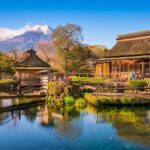
Oshino Hakkai is one of the most distinctive early stops on the suggested route. The village contains eight ponds in the Fuji Five Lakes region, between Lake Kawaguchiko and Lake Yamanakako.
The appeal is simple: clear water, a quiet village setting, and a connection to Japanese legends. This is a good place to begin because it gives you a slower introduction to the Fuji area before the busier photo sites.
The ponds are free to visit, so there is no extra admission charge listed here. Allow about an hour. You will want time for photographs and for a close look at the water and village surroundings.
This stop can feel more compact than the name suggests. It is not an all-day nature walk, and the main draw is the group of ponds rather than a long trail. Still, it offers a pleasant contrast to Tokyo and gives you the kind of rural setting that is hard to reach efficiently by public transport in one day.
Chureito Pagoda at Arakura Fuji Sengen Shrine
For many people, Arakura Fuji Sengen Shrine is the visual centerpiece. The site is home to Chureito Pagoda, a five-story structure on a mountainside with Mount Fuji behind it.
The pagoda was built in 1963 as a peace memorial. Its familiar composition combines red-and-white architecture, wooded slopes, and the mountain in the background. The setting changes with the seasons, and cherry blossoms can make the view especially striking.
Your stop is listed as about one hour, with no admission charge. The practical issue is the climb to the pagoda. The information supplied does not give a step count or accessibility details, so you should be prepared for an uphill walk and stairs rather than a flat roadside viewpoint.
This is also a place where timing matters. One driver, Aki, has been praised for reaching Fuji sights before the crowds. That early start is useful here, since the pagoda is one of the area’s best-known photo locations.
If you want the iconic image, make this a firm priority. If you are traveling with someone who has difficulty with uphill walking, ask your driver about the stop before committing the day to it.
Saiko Iyashi no Sato Nenba and Lake Saiko

Saiko Iyashi no Sato Nenba is a traditional village on the shore of Lake Saiko. It offers a different side of the Fuji area, with traditional-style buildings and views toward the mountain.
The village changes character with the seasons. Spring brings cherry blossoms, while other times of year provide their own colors and atmosphere. Admission is not included, so plan for an additional ticket if you choose this stop.
I would pick this site if you want more than repeated mountain viewpoints. It gives the day cultural texture and a chance to see a traditional village setting rather than only lakeside parks and shrines.
The trade-off is time. Since admission is extra and the route already contains several stops, this is best for people who value architecture, rural scenery, and photographs of traditional Japan. If your group mainly wants Fuji views, you may prefer to spend that hour at Oishi Park or Lake Yamanaka.
Other private tours in Tokyo


Lake Yamanaka and the wider Fuji Five Lakes area

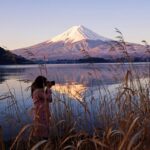
Lake Yamanaka is the largest of the Fuji Five Lakes and sits at a high elevation. It is also the closest of the five lakes to Mount Fuji, which can make it a strong choice for open mountain views.
The stop is free and planned for about an hour. Unlike a shrine or village, a lake visit gives you room to slow down. You can take photographs, enjoy the open setting, and ask your driver where the day’s clearest views are.
Mountain visibility remains weather dependent. A nearby lake does not guarantee a clear Fuji, so do not choose this stop only because you expect a perfect reflection. Its value is also the change of pace and the broad setting.
Lake Yamanaka works well for a group that wants a quieter stop. It may be less compelling if you are trying to collect famous landmarks quickly, since the experience is mainly about the setting rather than a single structure or attraction.
Shiraito Falls, a major detour
Shiraito Falls is near Fujinomiya in Shizuoka Prefecture and is described as one of Japan’s most beautiful waterfalls. The water spreads across a broad rock face, creating a strong nature stop that has little to do with the usual pagoda-and-lake photograph.
Admission is listed as free, and the suggested time is about an hour. The important practical point is location. Shiraito Falls is not simply another nearby stop around the northern Fuji lakes, so adding it can make the day much more ambitious.
Ask your driver to confirm the route if this is a priority. You may need to drop one or more other stops to avoid turning the day into a rush. I would choose Shiraito Falls if you prefer natural scenery and waterfalls over shopping or several similar viewpoints.
Oishi Park on Lake Kawaguchi
Oishi Park sits on the northern shore of Lake Kawaguchi and is known for landscaped gardens with Mount Fuji views. It is a particularly useful stop when you want photographs that include flowers or carefully arranged park scenery.
The visit is free and listed at about one hour. Because it is on Lake Kawaguchi, it also pairs naturally with a day focused on the lake district rather than the more distant southern and eastern stops.
Oishi Park may feel more developed than Oshino Hakkai or Lake Yamanaka. That is not a flaw if you want easy photographs and maintained gardens, but it is worth knowing that this is a polished viewing area rather than a secluded countryside stop.
I would place it high on the list for first-time visitors who want one dependable Fuji photo location. If clouds cover the peak, the gardens and lake still provide something to see, but the park’s main prize is clearly the mountain view.
Kitaguchi Hongu Fuji Sengen Jinja
Kitaguchi Hongu Fuji Sengen Jinja in Fujiyoshida is an old Shinto shrine that serves as a spiritual gateway to Mount Fuji. It dates back more than 1,000 years and is dedicated to Konohanasakuya.
The shrine is free to visit and allotted about an hour. Its value lies in atmosphere and religious meaning, not just a mountain backdrop. You get a chance to see a forested shrine setting connected to the traditions surrounding Fuji.
This is one of the best choices for a balanced day. After a series of lakes and viewpoints, a shrine offers a quieter, more reflective stop. It also helps explain why Mount Fuji has long been treated as more than a scenic peak.
Do not expect the same instant photograph as Chureito Pagoda. Choose this site if you want cultural context and a peaceful Shinto setting. The tour’s strongest feedback repeatedly points to shrine visits and the chance to learn from the driver, so this stop fits that side of the experience well.
Gotemba Premium Outlets as your optional trade-off
Gotemba Premium Outlets can be added if shopping is important to you. The outdoor center has more than 200 stores, but the visit is optional and may replace other locations.
That replacement rule is sensible. Shopping can easily consume an hour or more, and Gotemba is not a small roadside browse. If you choose it, decide in advance which sightseeing stop you are willing to lose.
This option makes the tour more useful for mixed groups. One person may want Fuji photographs while another wants Japanese and international brands. The private format gives you a better chance of balancing those interests than a fixed group excursion.
Still, I would not choose the outlets at the expense of your only clear Fuji viewpoint unless shopping is a firm priority. The mountain area is the reason for the trip, while outlet shopping can be found elsewhere in Japan.
Price, timing, and what the day is worth
The price is $429.44 per group of up to four. For one person, that is expensive. Split four ways, it comes to roughly $107 per person before any separate admission fees, which is a fairer comparison with private transport, a full-day schedule, and the time saved on route planning.
The value improves if you have limited time in Tokyo. You avoid piecing together multiple trains and buses, and you can keep the same vehicle throughout the day. The private setup also matters for families, since you can adjust the pace and ask for photo help without managing a large group.
The price is less attractive if you want only one Fuji viewpoint and a short visit. In that case, public transport or a simpler excursion may suit you better. This tour earns its price when you want several different places and the convenience of a driver.
The start time is 8:00 a.m., and the duration is about nine to ten hours. That is a long day, especially if traffic slows the return to Tokyo. Plan to stay flexible and avoid booking a late, fixed commitment afterward.
Admission is free at most listed stops. Saiko Iyashi no Sato Nenba has an admission fee that is not included. The outlet stop is free to enter, but of course shopping costs extra.
Who should book this Fuji day trip?
I would recommend it for a group of two to four people that values comfort, flexibility, and a full day outside Tokyo. It is especially suitable for families and first-time visitors who want the major Fuji sights without building a complicated route.
It also suits photographers, since the route includes Chureito Pagoda, Oshino Hakkai, Oishi Park, Lake Yamanaka, and other scenic settings. The ability to ask the driver for local suggestions or help with pictures is useful, particularly in seasonal conditions such as cherry blossom time.
You should think twice if you dislike long car rides, need a slow pace, or want a detailed specialist guide at every stop. The route is ambitious, and the exact balance between driving, sightseeing, and explanation depends on your chosen stops and assigned driver.
The weather policy is reassuring. You can cancel for a full refund up to 24 hours before the start time, and poor weather cancellations offer a different date or a full refund. Changes made within 24 hours are not accepted, so make your plans early.
Should you book this private Mount Fuji tour?
Book it if your ideal Fuji day includes several kinds of scenery, a private car, an early start, and the freedom to change course. I would set three priorities before you leave, then let the driver help fit them into the available hours.
For the classic first visit, choose Chureito Pagoda, Oshino Hakkai, and Oishi Park or Lake Yamanaka. For a more cultural day, combine a lake with Arakura Fuji Sengen Shrine, Kitaguchi Hongu Fuji Sengen Jinja, and Saiko Iyashi no Sato Nenba.
The tour is not the cheapest way to see Mount Fuji, but a group of four can make the cost reasonable. Its real strength is not the number of stops. It is the ability to see more of the Fuji area without giving your day over to transport schedules.
FAQ
How long does the Mount Fuji private tour last?
The tour lasts approximately nine to ten hours.
What time does the tour start?
The listed start time is 8:00 a.m.
Where does the tour begin and end?
The meeting point is 2-2 Yoyogikamizonochō in Shibuya, Tokyo. The activity ends back at the meeting point.
How many people can join the private tour?
The price covers one private group of up to four people.
Is pickup available?
Yes. Pickup is offered, and the tour includes streamlined pickup and drop-off from Tokyo.
Is Gotemba Premium Outlets included?
Gotemba Premium Outlets is optional. If you choose to shop, it may replace visits to other stops.
Can I cancel for a full refund?
Yes, if you cancel at least 24 hours before the experience start time. Cancellations made less than 24 hours before the start time are not refunded. If poor weather causes the tour to be canceled, you will be offered another date or a full refund.
More Private Drivers in Tokyo

More Private Tours in Tokyo
More Mt Fuji Day Trips in Tokyo

More tours in Tokyo we've reviewed












Mt Fuji Day Trips, compared.
 ★ 5.0Mt Fuji and Hakone 1-Day Bus Tour Return by Bullet TrainFrom $163
 ★ 4.0Mt Fuji & Hakone Cruise, Drum Show Bullet Train 1 Day from TokyoFrom $149
 ★ 4.4Tokyo Mt Fuji 5th St & Hakone Cruise Bus Tour w/Bullet TrainFrom $15410 hours
 ★ 4.5From Tokyo: Mount Fuji Full-Day Sightseeing TripFrom $6810 hours
 ★ 4.7Tokyo: Mt. Fuji Tour, Hakone Ropeway, Owakudani, Lake AshiFrom $5410 hours
 ★ 4.4Tokyo:Mt.Fuji,Kawaguchiko Oishi Park,Arakurayama Sengen ParkFrom $5410 hours