Reviewed · TOKYO FOOD TOURS
Tokyo: Private Personalized Local Food Tour
Tokyo’s best food often hides behind a plain door, down a narrow lane, or inside a small izakaya where the menu is easier to read with local help. This private three-hour walk puts you with a host who shapes the evening around your appetite, from ramen and karaage to oden, grilled skewers, sake, and plum wine.
In This Article
- Key points at a glance
- Why this food walk feels personal
- Starting in Nakano, or meeting at your hotel
- Eight to 10 tastes across two or three stops
- The izakaya experience, without the guesswork
- Food lessons with a human face
- What the neighborhoods add
- Is $172 per person good value?
- Who should book this Tokyo food tour?
- Timing, communication, and cancellation
- My verdict: book it for guidance, not just dinner
- FAQ
- How long does the Tokyo private food tour last?
- How many dishes and drinks are included?
- Is this a private tour?
- Which languages are available?
- Where does the tour meet?
- Can the food be adjusted to my preferences?
- Is transportation included?
- Can I cancel the tour?
I like two things here: the route is flexible, and the food comes with context. Your host may explain how a dish is made, where it comes from, or how to order it, then lead you somewhere you would probably miss alone. The main drawback is that the exact neighborhood and stops are not fixed, so you cannot book this expecting a precise list of restaurants or a single famous market.
Key points at a glance
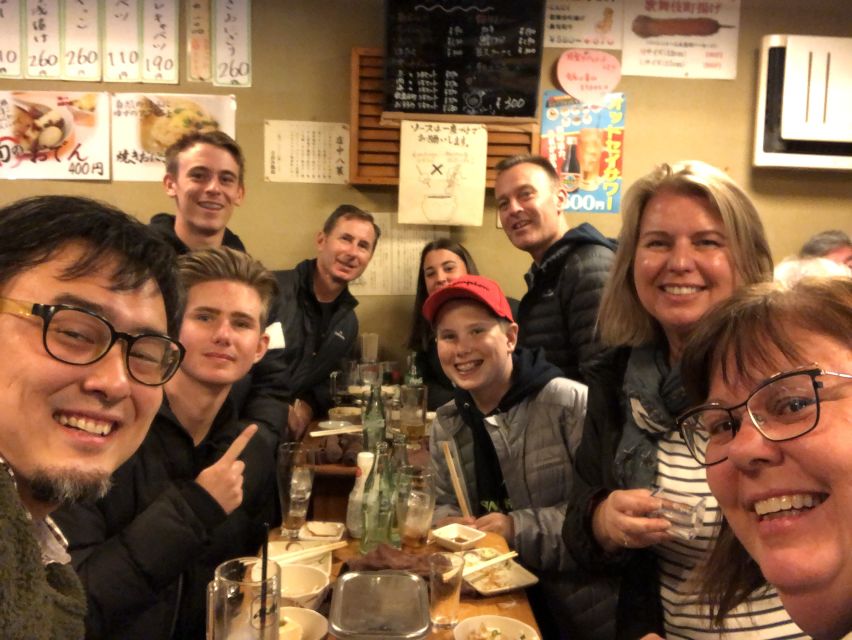
- Eight to 10 tastings: Food and drink are served across two or three local eateries.
- A private host: You get a one-to-one experience for your group, not a large food crawl.
- A questionnaire shapes the night: Your preferences, personality, and interests help match you with a host.
- Nakano is the usual meeting point: Hotel pickup can be arranged from central Tokyo hotels.
- Tokyo beyond the headline sights: Routes may include Nakano, Shibuya, Ueno, Ameyoko, or other districts, depending on your plan.
- A useful first-night choice: Several hosts have helped people understand local customs, transport, and food for the rest of their trip.
Why this food walk feels personal
Many Tokyo food tours follow a fixed script. This one works differently. After booking, you complete a short questionnaire about your tastes, interests, and preferred pace. The answers help City Unscripted assign a host with a similar outlook and begin planning your route.
That extra step matters. A group with one vegetarian, a young child, and adventurous adults needs a different evening from a couple seeking classic Japanese comfort food. The host can discuss those needs with you before meeting, then adjust again once the walk begins.
You might tell your host that you want ramen, neighborhood food, and a calm evening. You might instead ask for unfamiliar dishes and small bars. You can also simply say that you want to follow local life for three hours. The experience is designed to handle all three approaches.
The host is more than a person who points at a menu. Guides have helped with Japanese customs, local etiquette, train routes, and restaurant translation. Steven explained the regions and customs behind different dishes for one group. Mari helped a couple manage a dietary restriction. Amir even helped set up the rest of a Japan trip with practical transport advice.
That personal contact is the strongest reason to book. You are paying for food, but you are also paying for confidence. A local guide can make an unfamiliar doorway, menu, or ordering system feel manageable.
A few more Tokyo tours and experiences worth a look
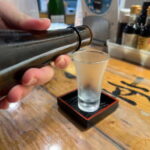

Starting in Nakano, or meeting at your hotel
The listed meeting point is JR Nakano Station, at 5 Chome Nakano in Nakano City. Central Tokyo hotel pickup can also be arranged, which is useful if you are still learning the city’s rail system or prefer not to navigate to the station.
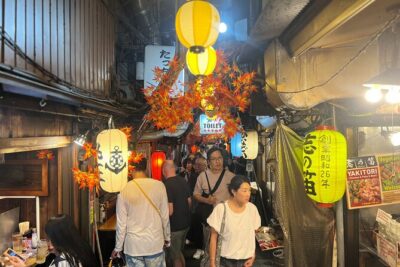
Nakano gives the experience a different opening from the neon-heavy parts of central Tokyo. The Sun Mall area has a retro shopping-street feel, with ramen steam, lanterns, and side streets that lead toward small food businesses. Your host may start there, or take you into a quieter alley for oden and sake.
Do not treat this as a guaranteed Nakano itinerary, though. The route is personalized, and past outings have also included Shibuya, Ueno’s Ameyoko Street, and the Tsukiji Market area. One group began with ramen at opening time and then continued through Tsukiji’s food stalls. Another spent an evening in Shibuya. The point is not to cover every major district. It is to spend your limited time in places that fit your interests.
For a first day in Tokyo, Nakano can be especially useful. Philip said his guide, Apy, helped him understand the city, its food, customs, and railway system right away. That kind of orientation can save you time later, particularly if Tokyo’s train stations still feel like underground cities.
Eight to 10 tastes across two or three stops
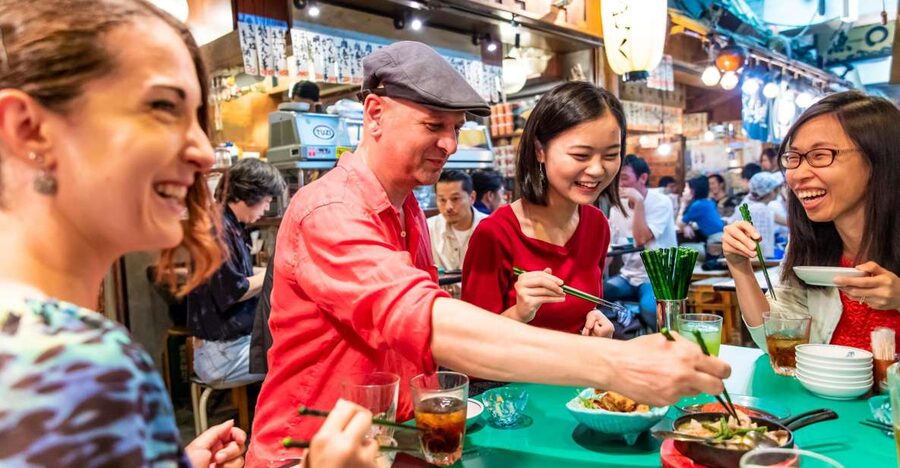
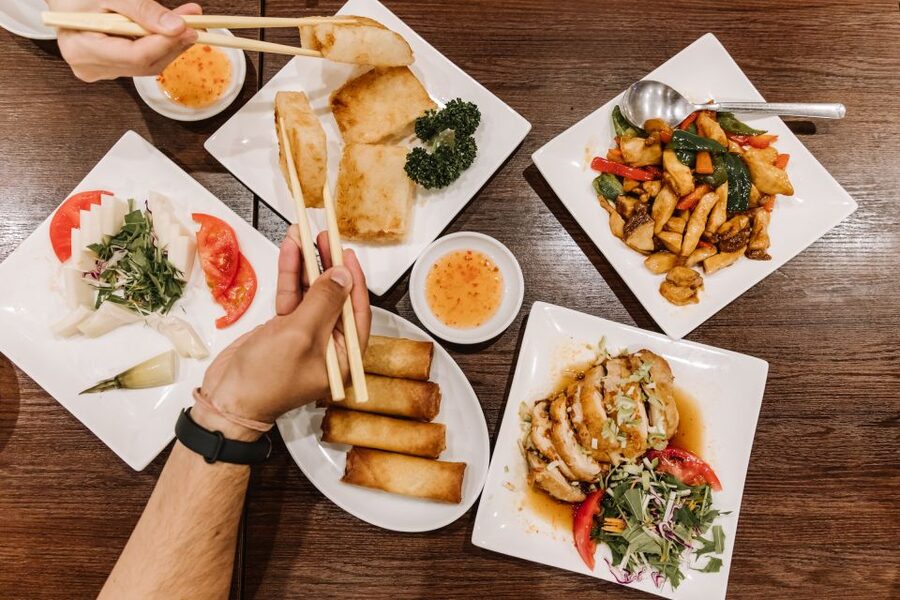
The food portion includes roughly eight to 10 local dishes and drink tastings at two or three eateries. That sounds modest until you consider how Japanese izakaya dining works. Small plates can arrive one after another, so you get a broad sample instead of one large meal.
Your route may include:
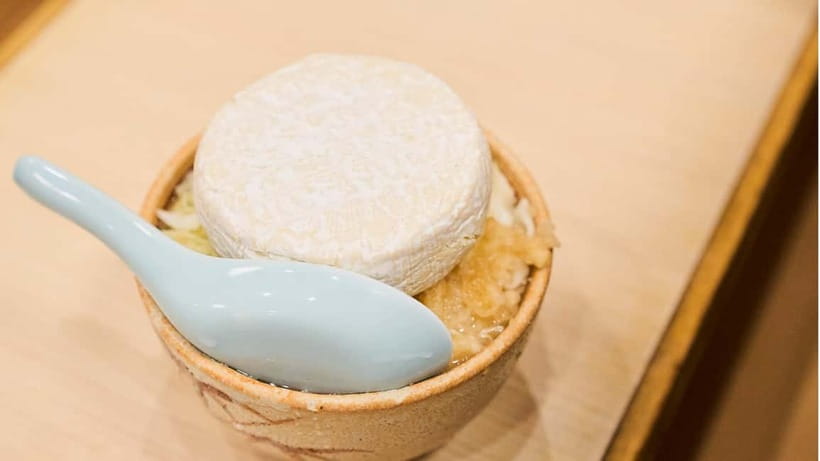
- Ramen or another noodle dish
- Oden, especially welcome on a cool evening
- Karaage with a crisp coating
- Grilled skewers
- Miso eggplant
- Other local specialties selected around your preferences
- Sake, plum wine, or another traditional drink
These are examples rather than a fixed menu. Your host may guide you toward familiar dishes first, then suggest something outside your usual order. Helen found that approach rewarding when her guide encouraged her to try food she would not normally choose. The value is in having someone judge the right level of challenge for you.
I would arrive hungry, but not starved. Eight to 10 tastings can add up quickly, and a private host may keep the evening moving when you would otherwise order too much at the first stop. You also need to budget for anything beyond the included food and drinks.
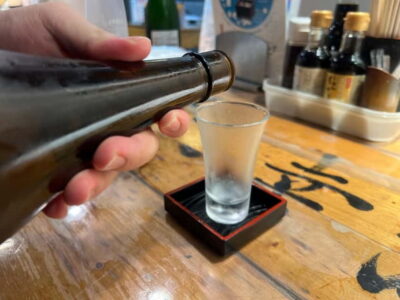
The inclusion of drinks is important. Sake or plum wine can be hard to choose when you do not know the labels, serving styles, or sweetness levels. A host can explain what you are drinking and help you decide how much you want. If you do not drink alcohol, state that clearly in the questionnaire so the route can be adjusted.
The izakaya experience, without the guesswork
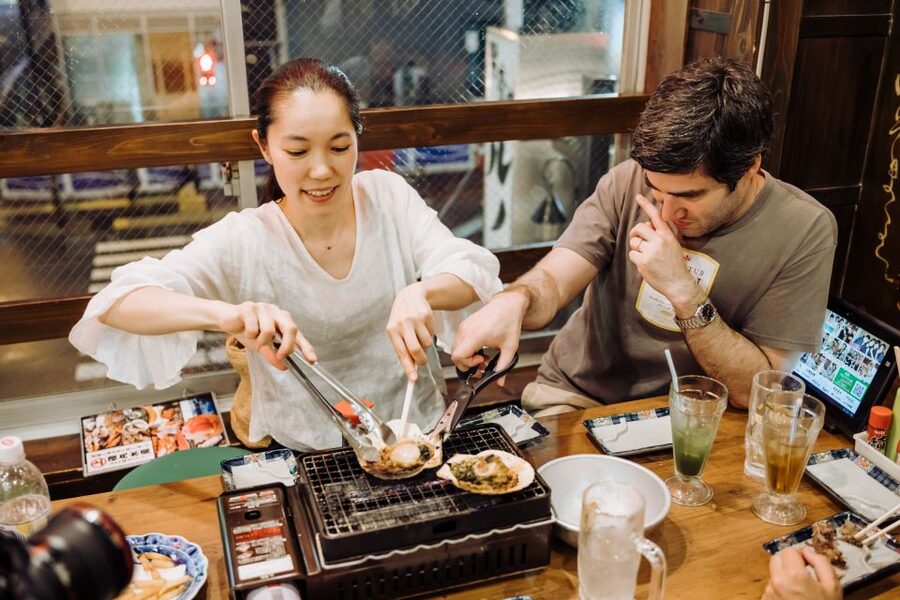
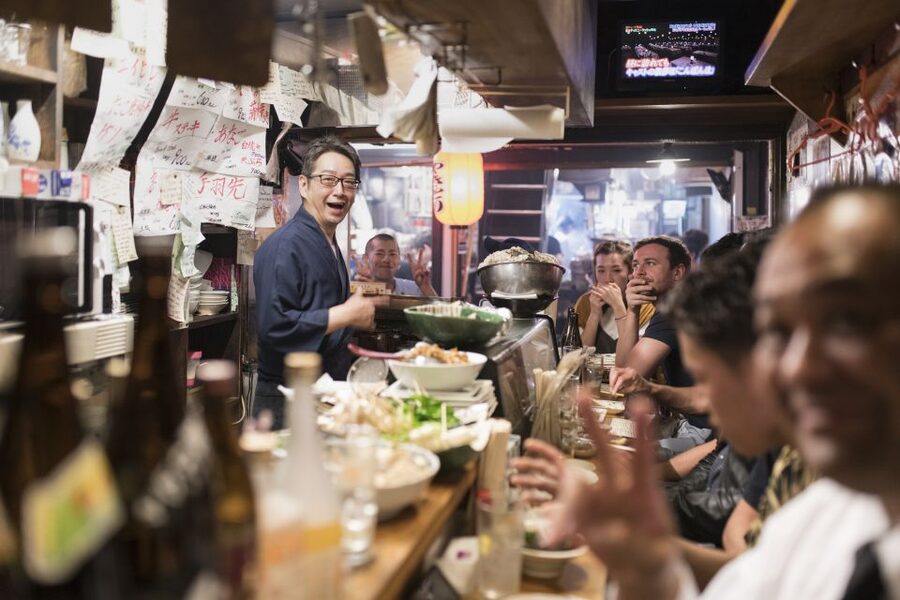
An izakaya is part restaurant, part neighborhood meeting place, and part evening hangout. You may sit near local diners, share several plates, and order food in a rhythm that is less formal than a standard restaurant meal.
That setting gives you a closer look at ordinary Tokyo dining. You are not just ticking off sushi and ramen. You are seeing how people use small restaurants for conversation, after-work meals, quick drinks, and shared plates.
The host may take you to an established izakaya or a yatai-style spot. Some places are known for fried chicken, others for skewers or drinks with a local twist. The contrast between stops is part of the fun. One place might be lively and social, while the next is a compact counter where the food gets most of the attention.
The tradeoff is that small places can be busy. Nancy waited briefly for ramen at an 11 a.m. opening, then found the dish worth the pause. A flexible schedule helps, but three hours is still a limited window. If you want a long, unhurried dinner at every stop, this is not the right format.
You should also expect the possibility of an informal ordering process. That is where the guide earns their keep. Megumi helped one group with translation, and several hosts have explained customs that are easy to miss when you are eating alone.
Food lessons with a human face
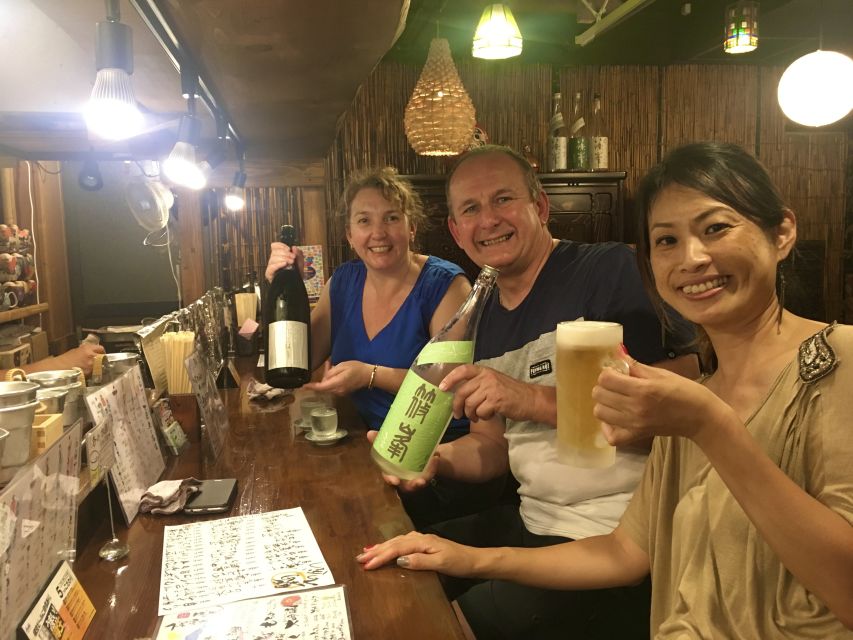
The best guides add information without turning dinner into a lecture. The experience works when the conversation moves naturally between food, Tokyo, and your own questions.
A good host might explain the origin of a dish, point out regional differences, or tell you why a particular restaurant matters locally. One guide explained where the foods came from. Another paired the meal with history and sightseeing. Sergio combined food stops with cultural information and a shrine visit, while Michael offered suggestions for vegetarian ramen to try the next day.
Those details have practical value. You leave with more than a full stomach. You may know how to find another ramen shop, how to approach a station, or how to recognize a dish you want to order again.
The guide match is not an exact science. Most of the named hosts received warm praise for their conversation, flexibility, and English. A 4-star experience in Ueno shows the possible variation: Susumu initially had incorrect information about who should pay for the food, and he offered less area-specific culture than expected. The payment issue was resolved with apologies, and he was helpful with train reservations afterward.
That is a fair warning. The guide is central to the experience, so the tone and depth can vary. If local history matters as much as eating, say so in your questionnaire and in your first message. If you mainly want company and help ordering, say that too.
A few more Tokyo tours and experiences worth a look

What the neighborhoods add
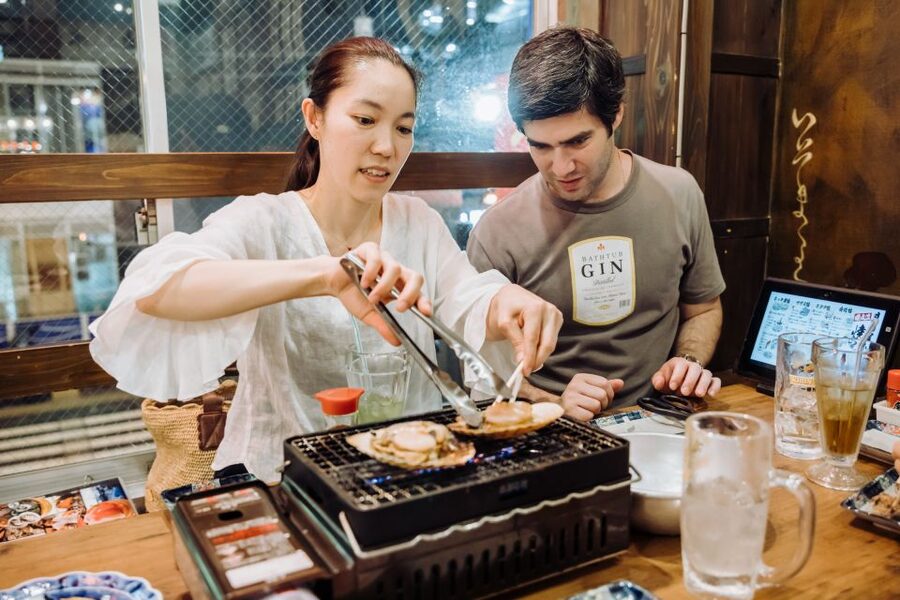
The food is only half the point. Tokyo changes block by block, and a private walking route lets you see a side of the city that a major sightseeing loop may miss.
Nakano’s Sun Mall offers a retro start, with a covered shopping street and food aromas spilling into the walkway. Side lanes can feel quieter and more local. Ueno’s Ameyoko Street brings a different energy, with food stalls and informal places to drink. Shibuya can make an evening feel more central and fast-moving, while the Tsukiji area offers many small food counters and market-style bites.
You will not necessarily see all of these places. That is important. The host builds the route around your preferences, location, and available time. I see that as a strength, but it also means the experience is harder to compare with a fixed food itinerary.
Some outings have included sights beyond food. One guide showed a group bonsai and cherry blossoms. Another added a shrine. These extras may appear when they fit the route and the season, but they are not guaranteed attractions.
The walking format also keeps the evening connected to the streets. Public transport or a local taxi may be used between areas, with the cost paid separately. Ask your host about the likely route and transfers before you set your budget.
Is $172 per person good value?
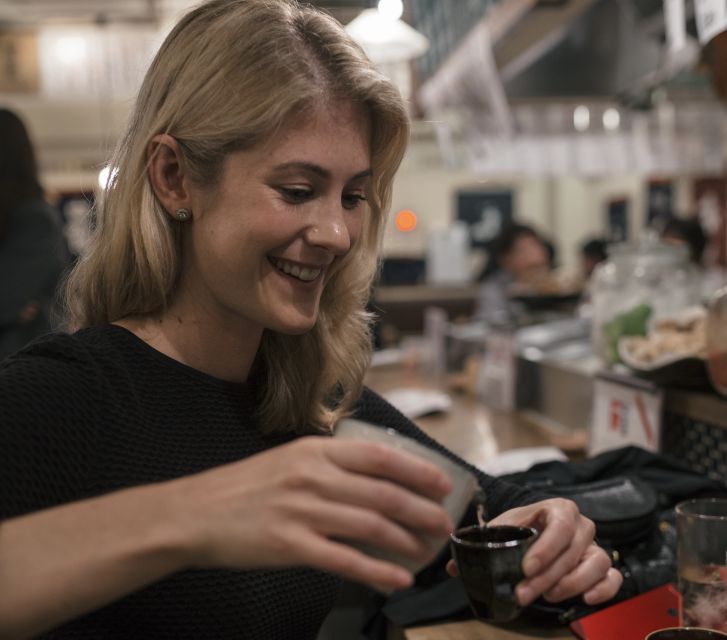
At $172 per person, this is not a cheap dinner. You can eat ramen, skewers, or market snacks for far less if you make every choice yourself.
The price makes more sense for a private group that wants guidance. You receive a personalized plan, a host for three hours, eight to 10 tastings, drink samples, translation help, and direct suggestions before the tour. You also avoid spending your first evening searching menus, guessing at etiquette, or taking a wrong train to a restaurant that is already full.
For two people, the cost buys a social experience as much as a meal. For a larger private group, the per-person price may feel more reasonable if everyone has different preferences. Families can benefit from the custom route, particularly if children or dietary restrictions are involved.
I would compare it with the cost of a good dinner plus a private local guide. If you only want maximum food volume, spend the money at restaurants. If you want to learn how to eat around Tokyo and find places you might not locate alone, the price is easier to defend.
Food, drinks, attraction tickets, and transport beyond the included tastings are not covered. Keep room in your budget for extra orders, train fares, or taxis.
Who should book this Tokyo food tour?
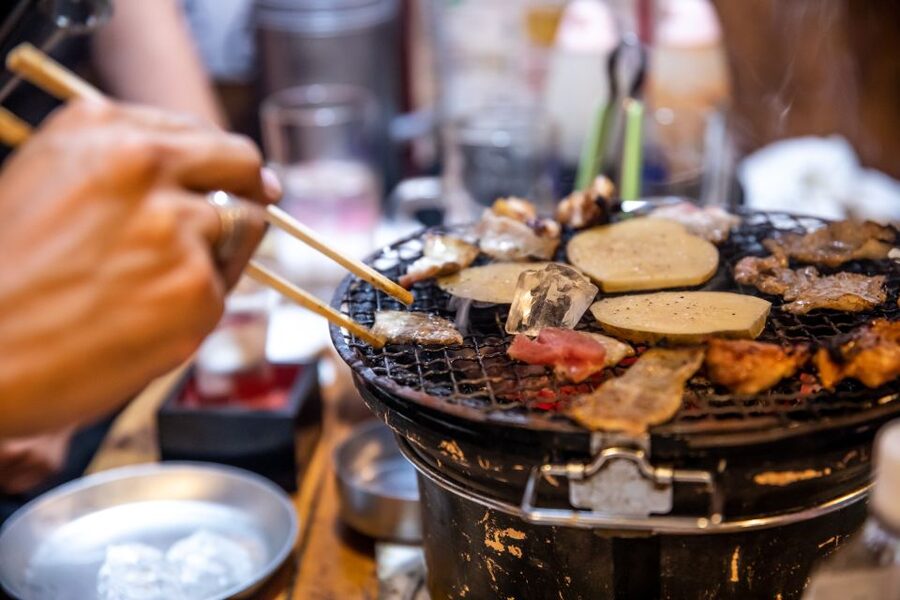
I would recommend it most strongly for:
- First-time visitors who want help getting oriented
- Couples seeking a relaxed private evening
- Families who need food choices adjusted to children
- People with dietary restrictions who want to explain them in advance
- Solo visitors who prefer a local companion at dinner
- Curious eaters who want to try unfamiliar dishes without ordering blind
- Anyone interested in neighborhood life more than a checklist of famous restaurants
It is less suitable if you want a fixed restaurant list, a formal cooking lesson, or a broad survey of Tokyo’s entire food scene. Three hours gives you a satisfying introduction, not a complete food education.
The walking format also deserves attention. You need to be comfortable moving through streets and possibly using public transport. The activity is wheelchair accessible, but the exact route and transfers should be discussed with your host before the day.
Timing, communication, and cancellation

Starting times vary, so check the available slot when you book. An evening departure suits the izakaya atmosphere, while a daytime route may work better for markets and ramen.
The questionnaire is not a minor formality. Use it to state favorite foods, dislikes, allergies, alcohol preferences, walking needs, children’s ages, and your interest in history or transport help. You can communicate directly with your host after booking, so ask for a rough plan and likely neighborhoods.
English and Japanese are available. Hotel pickup can be arranged from central Tokyo hotels, or you can meet at JR Nakano Station. Public transport and local taxis may be needed at extra cost.
You can cancel up to 24 hours ahead for a full refund, and the reserve-now, pay-later option keeps your plans flexible.
My verdict: book it for guidance, not just dinner
I would book this if I wanted a friendly introduction to Tokyo’s food culture and did not want to spend my first night guessing where to go. The strongest parts are the private format, the host matching, the range of small dishes, and the practical help with customs and trains.
Go in expecting a flexible evening, not a guaranteed food checklist. Tell your host exactly what you want, keep an open mind, and allow a little extra money for transport or another dish. If that sounds like your kind of night, $172 buys a useful start to Tokyo, with dinner attached.
FAQ
How long does the Tokyo private food tour last?
The experience lasts three hours.
How many dishes and drinks are included?
You receive tastings of approximately eight to 10 local dishes and drinks at two or three eateries.
Is this a private tour?
Yes. It is arranged for a private group rather than a shared group.
Which languages are available?
The tour is available with a live guide speaking English or Japanese.
Where does the tour meet?
The usual meeting point is JR Nakano Station, 5 Chome Nakano, Nakano City, Tokyo. Hotel pickup can be arranged from central Tokyo hotels.
Can the food be adjusted to my preferences?
Yes. You receive a questionnaire about your personality, interests, and food preferences, and you can communicate directly with your host to shape the plan.
Is transportation included?
This is primarily a walking experience. Public transport or local taxis may be used between stops, but those costs are not included.
Can I cancel the tour?
Yes. You can cancel up to 24 hours in advance for a full refund. You can also reserve now and pay later.
More Private Tours in Tokyo



More Food Experiences in Tokyo
More Tokyo Food Tours in Tokyo
More tours in Tokyo we've reviewed












Tokyo Food Tours, compared.
 ★ 5.0Tokyo: Shinjuku Food Tour (13 Dishes at 4 Local Eateries)From $86
 ★ 4.9Tokyo: Shinjuku Food Tour (13 Dishes and 4 Eateries)From $97
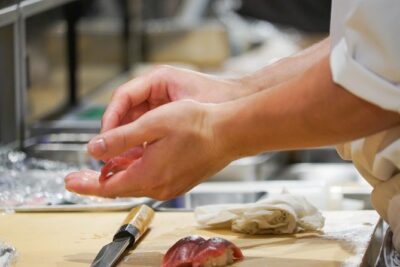 ★ 5.0Tokyo Night Foodie Tour in Shinjuku – Seasonal Sushi, Wagyu BeefFrom $111
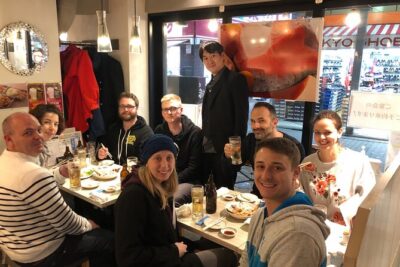 ★ 5.0Eat and Drink Like a Local: Tokyo Ueno Food Tour-Taverns&RamenFrom $95
 ★ 5.0Tokyo: Shibuya Food Tour (13 dishes and 4 Eateries)From $77
Tokyo: Shinjuku Food Tour – 15 Dishes, 3 Drinks, 4 EateriesFrom $723 hours
★ 5.0Tokyo: Shibuya Food Tour (13 dishes and 4 Eateries)From $77
Tokyo: Shinjuku Food Tour – 15 Dishes, 3 Drinks, 4 EateriesFrom $723 hours