Reviewed · MT FUJI DAY TRIPS
2-Days FUJI & Tokyo Retreat: A Private Tour
The smartest part of this private Tokyo and Mount Fuji tour is its easy two-day rhythm. You cover Tokyo’s big sights on day one, then head into Yamanashi for lakes, shrines, traditional houses, and Mount Fuji views on day two, all in an air-conditioned car. I like the freedom to shape the Tokyo day around your interests, and I like that petrol, tolls, parking, Wi-Fi, water, and snacks are handled for you.
In This Article
- Key points to know before booking
- A private two-day plan that saves time
- Day one begins at Senso-ji in Asakusa
- Tokyo Skytree brings the city into view
- Edo Castle history in the Imperial Palace East Gardens
- Tsukiji is the day’s best lunch opportunity
- Meiji Shrine offers a wooded break from the city
- Takeshita Street and Shibuya show modern Tokyo
- Day two heads toward Mount Fuji
- Oshino Hakkai connects water and Mount Fuji
- Kitaguchi Hongu Fuji Sengen Jinja brings you into the forest
- Kawaguchiko is the main scenic stop
- Iyashi no Sato offers traditional houses and local crafts
- Saiko closes the Fuji day quietly
- What the private format is really worth
- Who should choose this Tokyo and Fuji tour
- Should you book it?
- FAQ
- How long is the tour?
- Is this a private tour?
- Is pickup available?
- Is transportation included?
- Is Wi-Fi available?
- Are meals included?
- Is the Tokyo Skytree admission included?
- Can I bring a child?
The main trade-off is time. Seven Tokyo stops on day one and five Fuji-area stops on day two create a full schedule, so some visits will feel like introductions rather than long, quiet explorations. The $1,067 group price is also a serious outlay, though it becomes more reasonable when shared by up to four people.
Key points to know before booking
- Private car for up to four people: You avoid public transport changes, crowded trains, and the hassle of finding parking in Tokyo.
- Two very different days: Day one focuses on temples, markets, youth districts, and city icons. Day two shifts to lakes, forest shrines, springs, and Mount Fuji scenery.
- Flexible Tokyo planning: Meiji Shrine, Shibuya, and local places can be adjusted to suit your interests, while the listed route also covers the major sights.
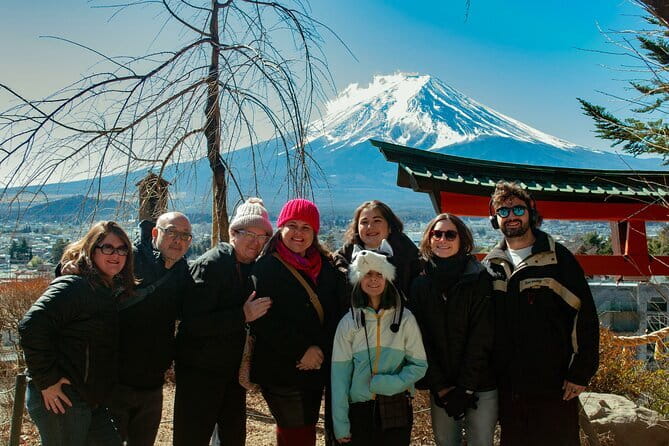
- Mount Fuji views are weather dependent: Oshino Hakkai, Kawaguchiko, and Saiko offer excellent viewing points, but the mountain may be hidden by cloud.
- Helpful family details: Wi-Fi, bottled water, snacks, and one child seat if required are included.
- Meals and Skytree tickets cost extra: Tsukiji is a natural lunch stop, but food is paid separately, and the Tokyo Skytree admission is not included.
A private two-day plan that saves time
This experience is designed for people who want to see a lot without turning every transfer into a small project. Your start time is 8:00 a.m., and pickup is offered. Since only your group participates, you can ask for personal recommendations and adjust the emphasis, especially on the Tokyo day.
That matters in Tokyo. The city’s major sights are spread across very different districts, and moving between Asakusa, Marunouchi, Tsukiji, Harajuku, and Shibuya takes planning. A private car will not remove traffic, but it does spare you from changing trains with bags, figuring out station exits, or deciding where to leave a tired child.
The service has also received praise for punctual driving, practical help, and quick responses to last-minute requests. Affan is named as a guide who made Tokyo easy to navigate, while Mian is praised for finding parking and arranging a good lunch suggestion. If one of them is assigned to your group, expect a driver-guide who can help with the day’s details, though the provider does not guarantee a particular person.
The cost is $1,067 per group of up to four. For one person, that is expensive. For four people, it works out to about $267 per person for two days of private transport and planning. Petrol, highway tolls, parking, Wi-Fi, snacks, bottled water, safety equipment, and one child seat are included. You still pay for meals and the Skytree ticket.
A few more Tokyo tours and experiences worth a look
Day one begins at Senso-ji in Asakusa
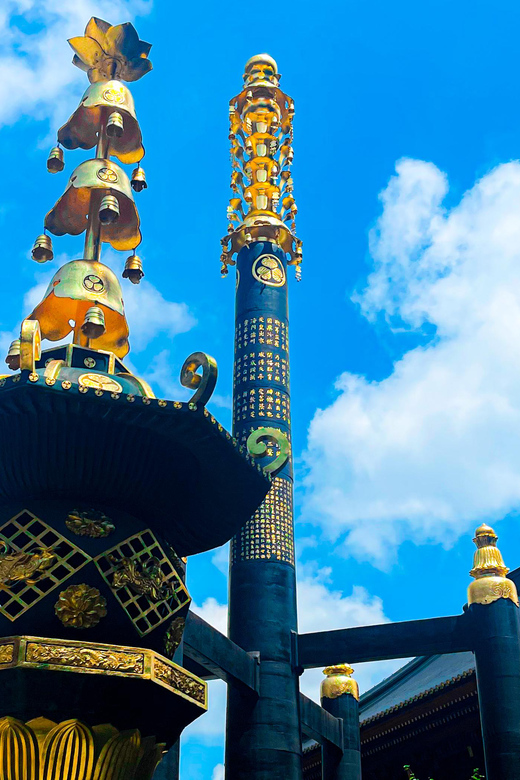
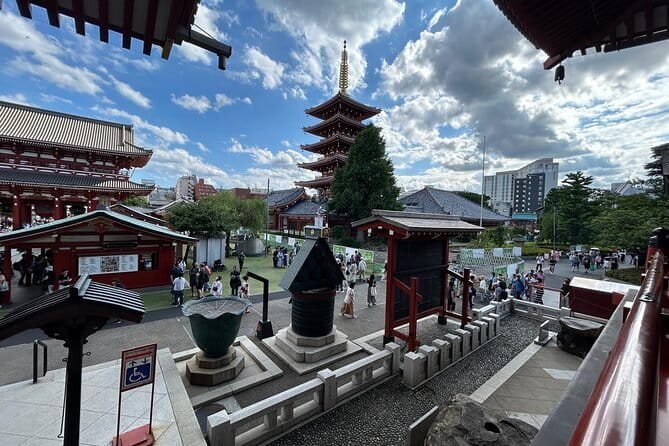
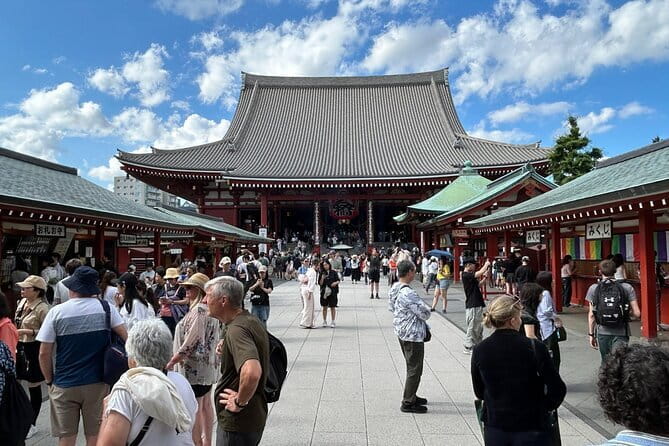
Senso-ji is a strong opening stop because it gives you an immediate sense of old Tokyo. The Buddhist temple is described as nearly 1,400 years old and remains the best-known landmark in Asakusa. You have about 50 minutes here, enough to see the temple grounds and take in the district’s traditional character.
Admission is free, which keeps this first visit simple. The short stop is useful if this is your first look at Tokyo, but you may want more time if you enjoy temple architecture, photography, or browsing around Asakusa. Tell your guide early if Senso-ji is a priority, since a packed day means every extra ten minutes must come from somewhere else.
Tokyo Skytree brings the city into view
Next comes Tokyo Skytree, the 634-meter tower that rises far above the city. The listed stop lasts about an hour, but the admission fee is not included. You will need to decide if the view is worth adding to the day’s cost.
I see Skytree as an optional splurge rather than an essential part of the tour. It gives you a broad look at Tokyo, but it can also take time away from street-level districts where you can eat, shop, and observe daily life. If you have never visited a major observation tower, it may be a highlight. If you already plan to visit another city viewpoint, use this hour elsewhere.
Edo Castle history in the Imperial Palace East Gardens
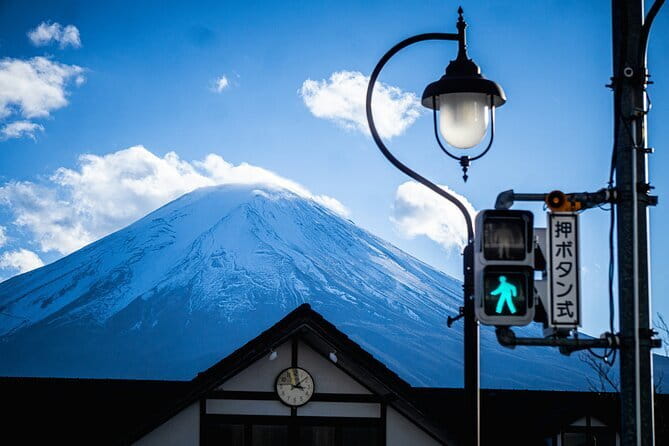
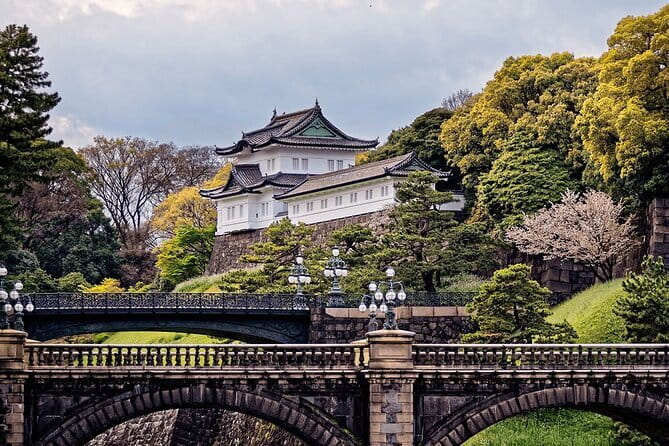
The East Gardens of the Imperial Palace occupy the former innermost defenses of Edo Castle. The visit lasts about 40 minutes and admission is free. This is a good pause between high-energy city districts, with open grounds and a direct connection to Tokyo’s castle-era past.
The gardens are best approached as a compact historical stop, not a long garden visit. Your guide can help explain what you are seeing, but the schedule gives you only a short window. Wear comfortable shoes, since a day with seven stops involves repeated walking and getting in and out of the car.
Tsukiji is the day’s best lunch opportunity
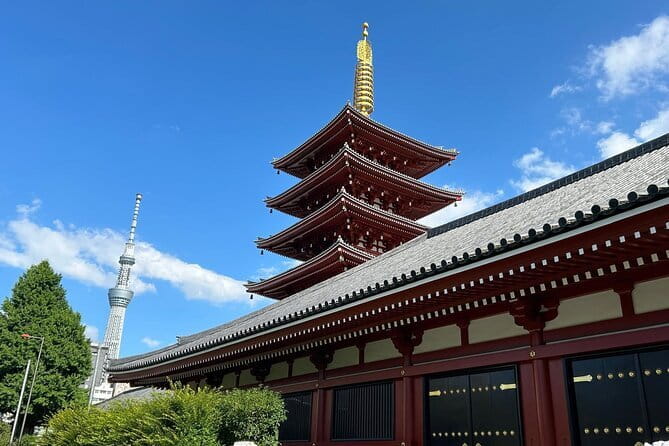
Tsukiji Outer Market is a practical place to eat because you can choose among street food stalls and restaurants serving raw and cooked seafood. Lunch is suggested here, but the bill is your responsibility. You can use the one-hour stop for food, browsing, or both.
I like this arrangement more than a fixed restaurant booking. You can choose what looks good and control your spending. The downside is that a one-hour market visit can pass quickly, especially if you are ordering food for several people. Tell the driver-guide about dietary needs before arriving, since no meal plan is included.
Tsukiji is also a welcome change from formal sightseeing. The market lets you sample a part of Tokyo’s food culture at your own pace, even if you choose cooked dishes rather than raw fish.
Other private tours in Tokyo


Meiji Shrine offers a wooded break from the city
Meiji Jingu Shrine is dedicated to the deified spirits of Emperor Meiji and Empress Shoken. Completed in 1920, it honors the emperor linked with Japan’s modern era. The approach through the grounds gives you a quieter setting than the commercial districts nearby.
You have about 45 minutes here. Yoyogi Park is listed as an optional addition, where you might see Japanese youth culture, cosplay, and street style. That optional stop is useful for anyone more interested in contemporary Tokyo than formal architecture, but it will make an already full day tighter.
Takeshita Street and Shibuya show modern Tokyo
Takeshita Street in Harajuku is a short, colorful stop focused on youth fashion, quirky accessories, and sweets. The 30-minute visit is enough for a quick walk and perhaps one of the area’s famous crepes. It is not enough for serious shopping, so keep your expectations modest.
The final listed stop is Shibuya Crossing, with another 30 minutes. This is Tokyo’s famous crossing and one of the city’s essential visual moments. You can watch the flow of people, take photographs, and get a quick taste of Shibuya’s scale.
The value here is the contrast. In one day, you move from a centuries-old temple to a tower, castle grounds, seafood stalls, a shrine, youth fashion, and one of the world’s best-known intersections. The drawback is that the day is more sampler than slow exploration. If you want extended shopping in Harajuku or a long meal in Tsukiji, ask for a revised plan.
Day two heads toward Mount Fuji
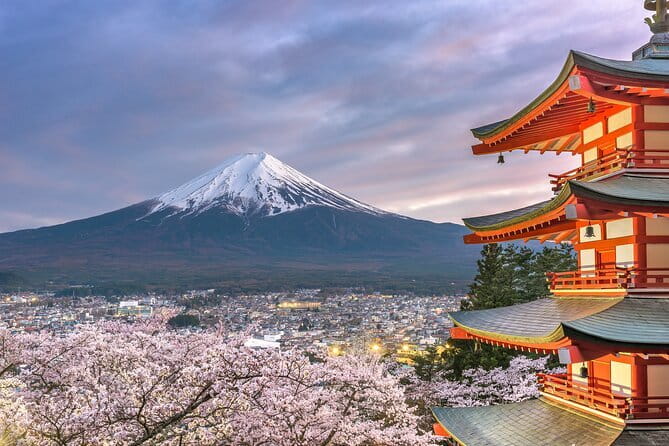
The second day changes pace. Instead of Tokyo neighborhoods, you spend the day around the Fuji Five Lakes area and nearby Yamanashi sights. The listed stops include Oshino Hakkai, Kitaguchi Hongu Fuji Sengen Jinja Shrine, Lake Kawaguchiko, Iyashi no Sato, and Saiko Lake.
This is where a private vehicle earns its keep. The sights are spread across the region, and having one car lets you carry on without arranging separate buses or local connections. You also have a better chance of adjusting the route if weather, traffic, or your group’s energy changes.
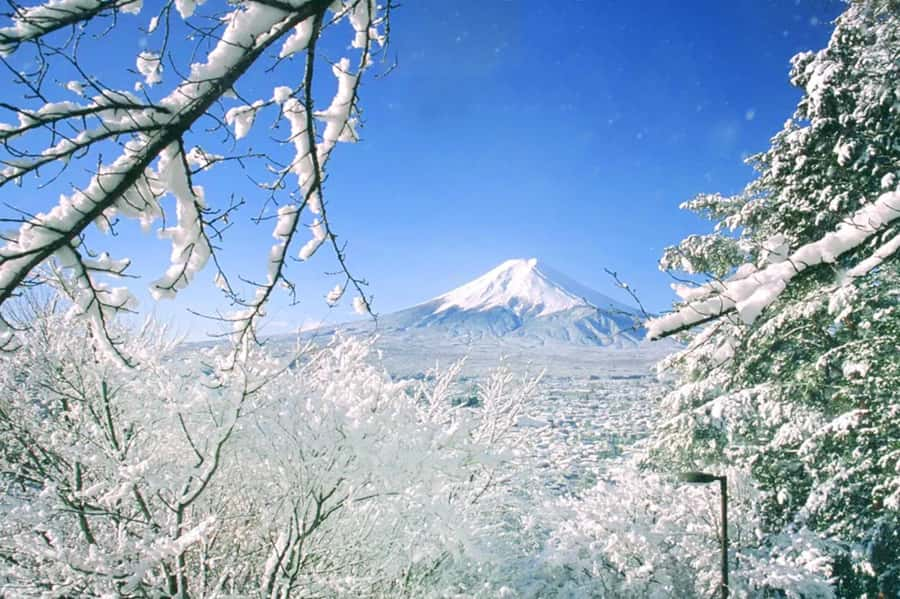
Mount Fuji itself is never guaranteed to appear clearly. The lakes and cultural sites still give you a worthwhile day, but you should not book this solely for one perfect mountain photograph.
Oshino Hakkai connects water and Mount Fuji
Oshino Hakkai is known for eight springs formed by water from Mount Fuji’s aquifer. The springs are a natural monument of Japan and part of the Mount Fuji World Heritage Site. You have about 50 minutes, enough to see the water, walk through the area, and take photographs.
This stop gives the Fuji day a clear natural focus. It is more than a viewpoint because the springs explain how the mountain’s snow and rain feed the surrounding region. The visit is free, and the compact timing makes it a practical first stop.
Kitaguchi Hongu Fuji Sengen Jinja brings you into the forest
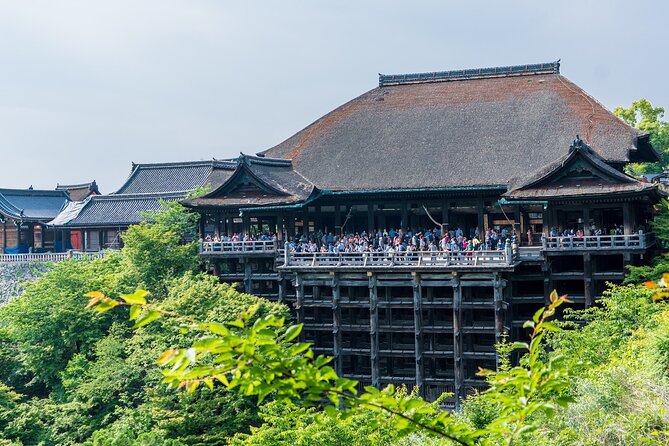
This shrine complex has wooden structures and stone lanterns lining paths through the forest. The planned visit lasts about 40 minutes. After Oshino Hakkai, it provides a more sheltered and spiritual setting.
I would pay attention to the approach, not just the buildings. The forest path and lanterns are part of the experience. Because the stop is short, you may not have time for a long wander, but it adds variety to a day otherwise built around water and mountain views.
Kawaguchiko is the main scenic stop
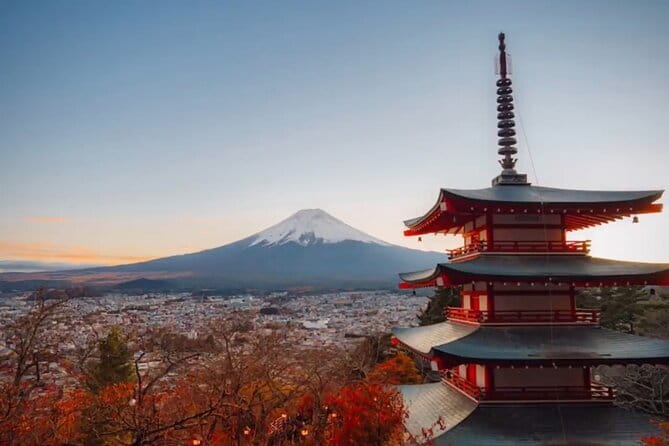
Lake Kawaguchiko is the most obvious place to hope for a clear Mount Fuji view. The lake has a promenade, photo opportunities, seasonal cherry blossoms, outdoor activities, museums, amusement parks, and hot spring resorts. The tour gives you about an hour and does not charge admission for the stop itself.
An hour is enough for a lakeside stroll and photographs, but not for the area’s many extra activities. If Fuji is visible, this may become the day’s star. If clouds cover the peak, the lake still gives you a pleasant setting, though the famous image will be missing.
Let your guide know if photography matters most to you. The private format makes it easier to spend your available time at a good viewpoint rather than treating every stop as equal.
Iyashi no Sato offers traditional houses and local crafts
Iyashi no Sato is an open-air museum with thatched-roof houses, crafts, local food, and views toward Mount Fuji. The stop lasts about 40 minutes. It offers a cultural counterpoint to the modern city sights from day one and the natural scenery around the lakes.
This is a good place to slow down and look at building methods, handmade goods, and village-style surroundings. The time is limited, so you will need to choose between browsing, eating, and taking photographs. Since meals are not included, any food here is also your own expense.
Saiko closes the Fuji day quietly
Saiko, also called Western Lake, is one of the Fuji Five Lakes. It is the fourth largest by surface area and the second deepest, reaching 71.1 meters. The planned hour gives you time for a lakeside look and a final set of mountain-area photographs.
Compared with Kawaguchiko, Saiko helps the day finish with a calmer tone. It is not presented as a ticketed attraction, so the stop remains straightforward. Again, clear views depend on the weather, but the lake itself gives the route a satisfying final pause.
What the private format is really worth
The strongest benefit is not luxury. It is control. You can ask for personalized recommendations, adjust emphasis, and avoid spending the day studying transit maps. Wi-Fi onboard is useful for checking messages and sharing photographs, while included parking and tolls make the price easier to understand.
For a family, the child seat can remove one more planning task. For a couple, the private setting gives you more room to set the pace. Solo visitors receive the same convenience, but the price is harder to justify unless saving time matters more than budget.
The group limit is four people. That keeps the car experience personal, but larger families or groups will need another arrangement. The service also includes safety and comfort provisions, bottled water, snacks, and air-conditioning, all useful on long sightseeing days.
Book at least a day ahead if plans change, since free cancellation applies only when you cancel at least 24 hours before the 8:00 a.m. start. Changes made inside that window are not accepted, and late cancellations are not refunded. Availability is limited during peak season, and the experience is commonly reserved well ahead, around 124 days in advance.
Who should choose this Tokyo and Fuji tour
I would recommend it most to:
- Families that value a child seat, private transport, and fewer train changes.
- Couples who want major Tokyo sights and Mount Fuji in only two days.
- First-time visitors who prefer a guide to handle routes, parking, and timing.
- Small groups of up to four who can share the cost.
- Solo visitors with limited time and a strong preference for comfort.
I would hesitate if you want long museum visits, independent shopping, nightlife, or a relaxed pace. The plan covers a great deal, but the short stops mean you must accept quick introductions. I would also avoid treating the tour as a guaranteed Mount Fuji photography day, since clouds can change the experience.
Should you book it?
Book this private tour if your priority is efficient sightseeing with personal transport. The route gives you a strong first look at Tokyo and a full day around Mount Fuji, while the included tolls, parking, Wi-Fi, snacks, and water prevent small costs from piling up.
Skip it if your budget is tight or you prefer to spend half a day in one neighborhood. At $1,067 for up to four people, the value improves sharply when the car is full. For a small group with limited time, the convenience can outweigh the price, especially if Affan or Mian is available to provide the punctual, practical service associated with this experience.
FAQ
How long is the tour?
The tour lasts approximately two days, with an 8:00 a.m. start time.
Is this a private tour?
Yes. Only your group participates, and the group can include up to four people.
Is pickup available?
Yes, pickup is offered.
Is transportation included?
Yes. A private, air-conditioned vehicle is provided, with petrol, highway tolls, and parking covered.
Is Wi-Fi available?
Yes. Wi-Fi is available onboard the vehicle.
Are meals included?
No. Meals are not included. Lunch at Tsukiji or food purchased elsewhere is paid for separately.
Is the Tokyo Skytree admission included?
No. The Tokyo Skytree stop is included in the schedule, but the admission ticket is not included in the price.
Can I bring a child?
Yes. One child seat can be provided if required.
More 2-Day Experiences in Tokyo
More Private Tours in Tokyo
More Mt Fuji Day Trips in Tokyo

More tours in Tokyo we've reviewed












Mt Fuji Day Trips, compared.
 ★ 5.0Mt Fuji and Hakone 1-Day Bus Tour Return by Bullet TrainFrom $163
 ★ 4.0Mt Fuji & Hakone Cruise, Drum Show Bullet Train 1 Day from TokyoFrom $149
 ★ 4.4Tokyo Mt Fuji 5th St & Hakone Cruise Bus Tour w/Bullet TrainFrom $15410 hours
 ★ 4.5From Tokyo: Mount Fuji Full-Day Sightseeing TripFrom $6810 hours
 ★ 4.7Tokyo: Mt. Fuji Tour, Hakone Ropeway, Owakudani, Lake AshiFrom $5410 hours
 ★ 4.4Tokyo:Mt.Fuji,Kawaguchiko Oishi Park,Arakurayama Sengen ParkFrom $5410 hours