Reviewed · SUMO EXPERIENCES
Tokyo: Sumo Morning Practice -Stable Visit Tour with a Guide
At this Tokyo sumo stable visit, you sit close enough to notice the wrestlers’ breathing, facial expressions, and the heavy thud of bodies meeting. This is real morning practice, not a staged show, so the room feels focused and intense.
In This Article
- Key points
- Inside Ikazuchi Sumo Stable Near Tokyo Skytree
- Meeting at Soramachi Hiroba
- What You See During Morning Practice
- Why the Stable Visit Feels Different From a Tournament
- The Photo Opportunity After Practice
- Stable Etiquette You Need to Take Seriously
- Is $90 a Fair Price?
- Who Should Book This Morning Experience?
- Timing, Cancellation, and Small Practical Details
- Should You Book the Ikazuchi Stable Visit?
- FAQ
- Where does the sumo stable visit take place?
- Where is the meeting point?
- How long does the activity last?
- Is the tour offered in English?
- Can I take photographs during the practice?
- Can children join the tour?
- Can I cancel for a refund?
I like the clear introduction to sumo rules and daily stable life, and I like that guide Ishida helps you find the stable and understand what you are seeing. The chance to take photos without flash and pose with wrestlers after practice adds a personal touch. The main drawback is that you must stay quiet, skip snacks, and leave children under 10 at home.
Key points
- Watch training at close range: See the wrestlers and apprentices practice from cushions inside a working sumo stable.
- Hear the coach’s forceful commands: The loud, sharp coaching reflects the serious work behind Japan’s national sport.
- Learn before the action begins: An English-speaking guide explains basic rules, sumo history, and life inside the stable.
- Meet wrestlers for photos: Non-flash photography is allowed, including a photo opportunity with the sumo wrestlers.
- Stay near Tokyo Skytree: The stable is close to one of Tokyo’s most recognizable sights, with the meeting point at Soramachi Hiroba.
- Plan for strict etiquette: No video, flash, food, or private conversation during practice, and children under 10 cannot join.
Inside Ikazuchi Sumo Stable Near Tokyo Skytree
Sumo is easy to recognize but not always easy to understand. At a major tournament, you see the polished final product: the ceremonial movements, the packed arena, and the short bursts of combat. At a stable, you see the work that comes first.
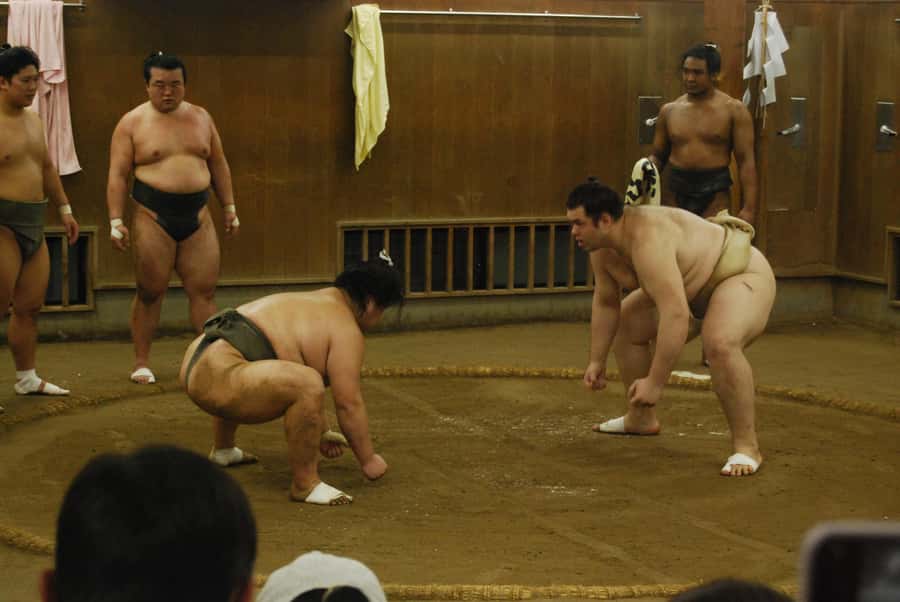
This two-hour visit takes you to Ikazuchi Sumo Stable near Tokyo Skytree. The wrestlers and their apprentices train in the morning as part of their regular effort to preserve and pass on sumo. You are not watching a theatrical performance arranged for tourists. You are watching a working practice session, which means the mood depends on concentration and discipline.
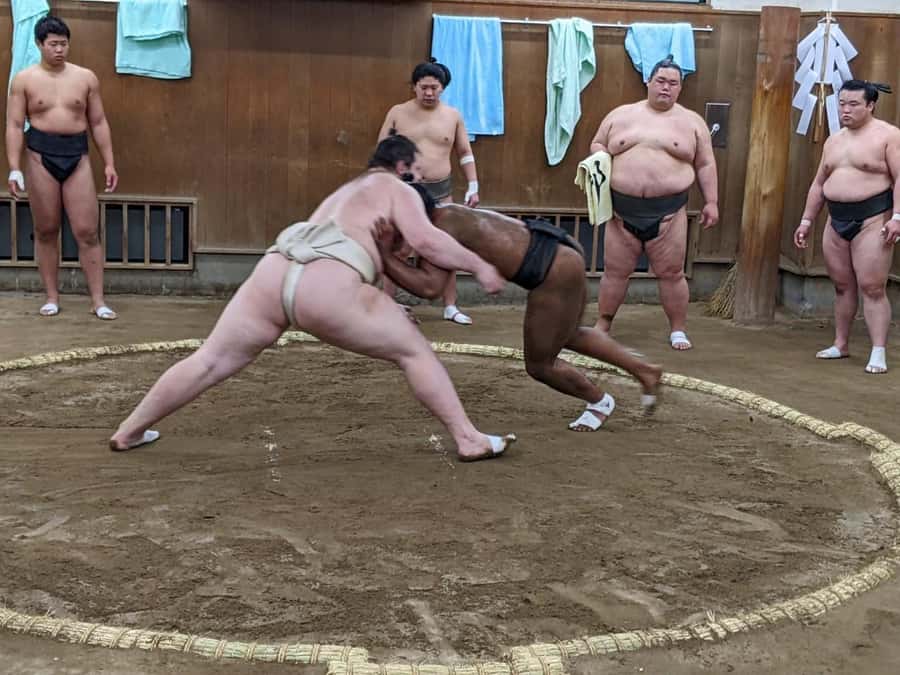
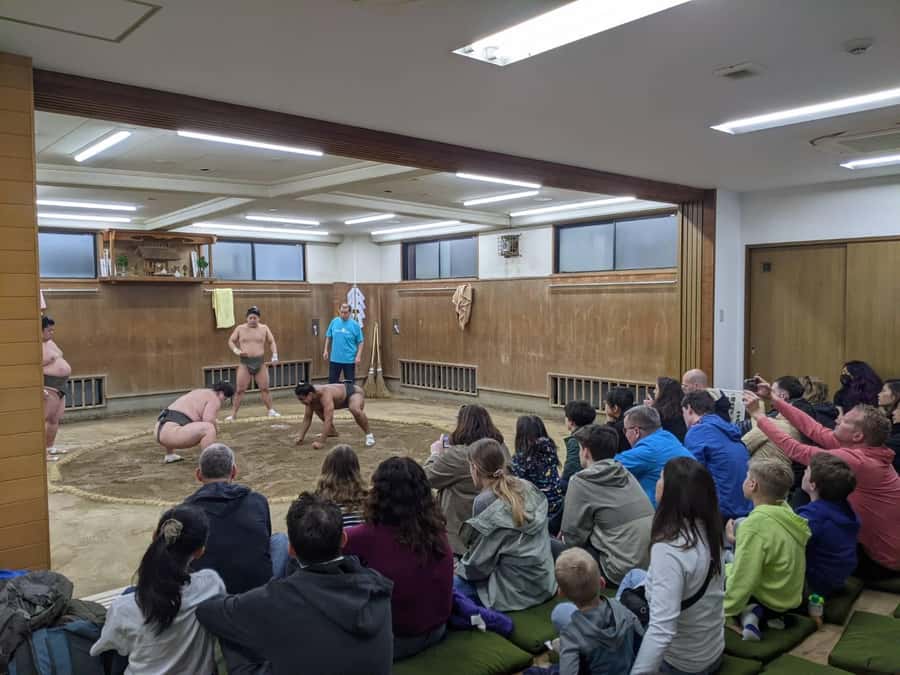
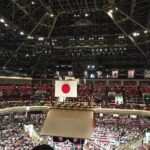
The setting gives you a closer view than the official bouts at the Kokugikan. From your place on cushions, you might notice a wrestler controlling his breathing after a clash, an apprentice waiting his turn, or a coach correcting a movement with a strong voice.
That closeness is the main reason to book this instead of relying only on a tournament. A match may last seconds. Morning practice lets you see the repeated effort behind those seconds.
A few more Tokyo tours and experiences worth a look
Meeting at Soramachi Hiroba
The meeting point is in front of the Memorial Statue at Soramachi Hiroba. This matters because a sumo stable is not presented like a public museum with a large sign and a ticket booth. You need to meet the guide at the stated point rather than expect to wander in on your own.
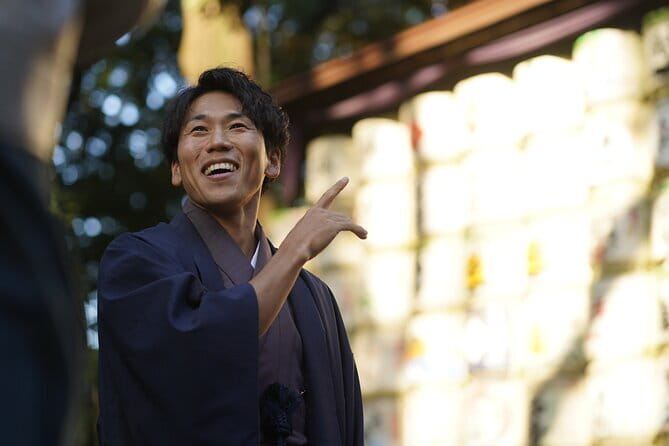
Guide Ishida has been especially helpful for this visit. The introduction covers basic rules, sumo history, and the life of a wrestler living at the stable. That explanation gives you a useful frame before the practice begins, especially if you know sumo mostly from television or have never watched a full match.
I like this guided start because the practice itself may look repetitive to an untrained eye. Once you understand what the wrestlers are working on, the pauses, collisions, commands, and turn-taking have more meaning.
The activity lasts two hours, and starting times vary, so check the available departure when you book. The price is $90 per person. That is not a bargain in the usual Tokyo sightseeing sense, but it pays for access to a place most people cannot enter on an ordinary morning, plus an English-speaking guide and a special brochure.
What You See During Morning Practice
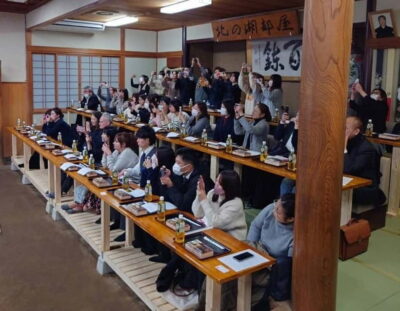
The practice begins with a quiet seriousness. You are close to the action, but you are not there to cheer or chat. The wrestlers and apprentices need to concentrate, and the instructions specifically ask you to avoid private conversation during the session.
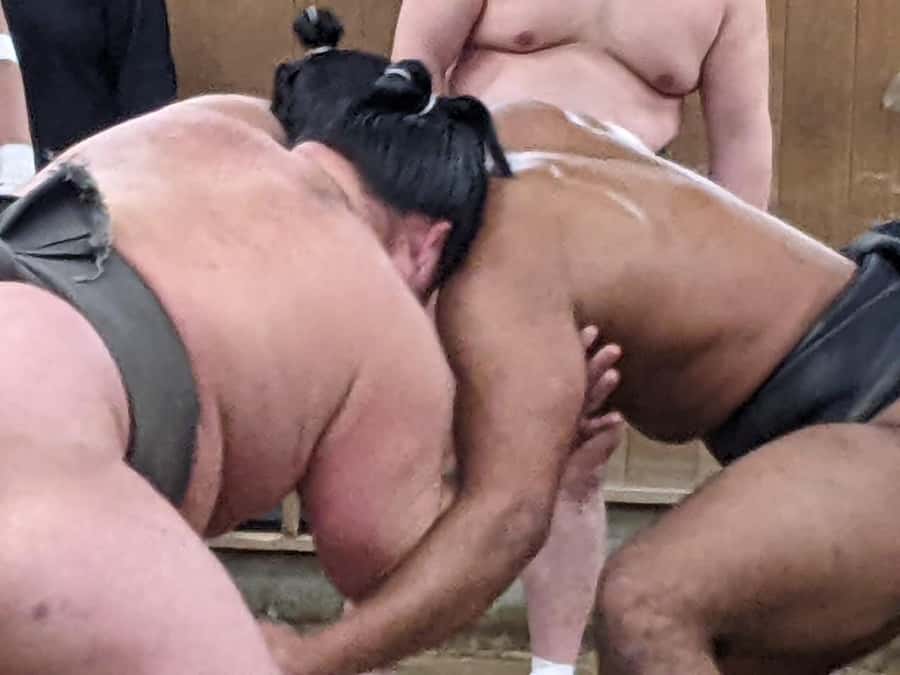
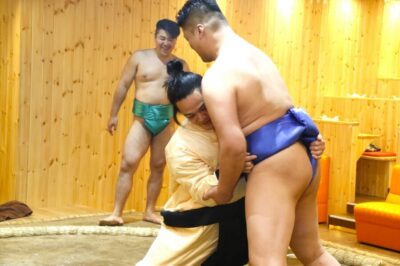
Expect physical sounds that do not come across fully at a tournament. Bodies collide with a hard impact. Feet and hands strike the floor. Breathing becomes audible. A coach’s voice can sound harsh at first, especially when shouted across the room.
That tone is part of the training environment. It may surprise you if you expect a calm demonstration, but the practice depends on trust between the coach and the wrestlers. The sharp commands are tied to correction and discipline, not showmanship.
You can watch facial expressions and body language from close range. A wrestler may look calm before a bout and exhausted afterward. Those small details help you understand why sumo requires more than size and strength.
The practice is also valuable because it shows apprentices and established wrestlers sharing the same demanding space. The stable protects sumo as a living sport, and the morning routine is part of how its skills and customs continue.
Your guide will help explain what is happening, but this is not a running commentary over every moment. The quiet rules are important. You should listen, observe, and let the training hold your attention.
Why the Stable Visit Feels Different From a Tournament
A tournament at the Kokugikan is the right choice if you want the full public spectacle of sumo. You get formal ceremonies, a large crowd, and official bouts with clear winners and losers.
The stable visit offers something else. You are closer to the wrestlers and see the repetition, correction, and physical strain that lead to competition. The experience is less polished and more intimate, though it also asks more from you as an observer.
There is no promise that every moment will be easy to follow. A professional bout has a clear structure. Practice may include repeated movements and stretches of waiting. For me, that is part of the appeal, but you should choose the tour only if you are willing to watch carefully rather than expect nonstop entertainment.
The guide’s explanation helps bridge that gap. You learn about the basic rules before observing the training, so you can connect the action to the sport. The special brochure also gives you something practical to refer to during the visit.
The Photo Opportunity After Practice
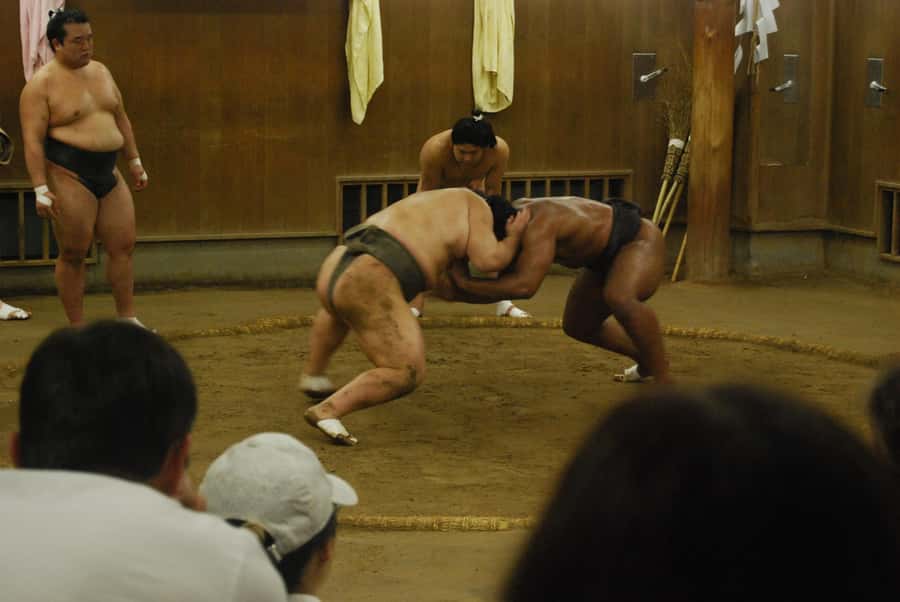
Photography is allowed inside the stable as long as you do not use a flash. Video recording is prohibited. You should keep your phone or camera ready but silent, and follow the guide’s instructions about when it is appropriate to take pictures.
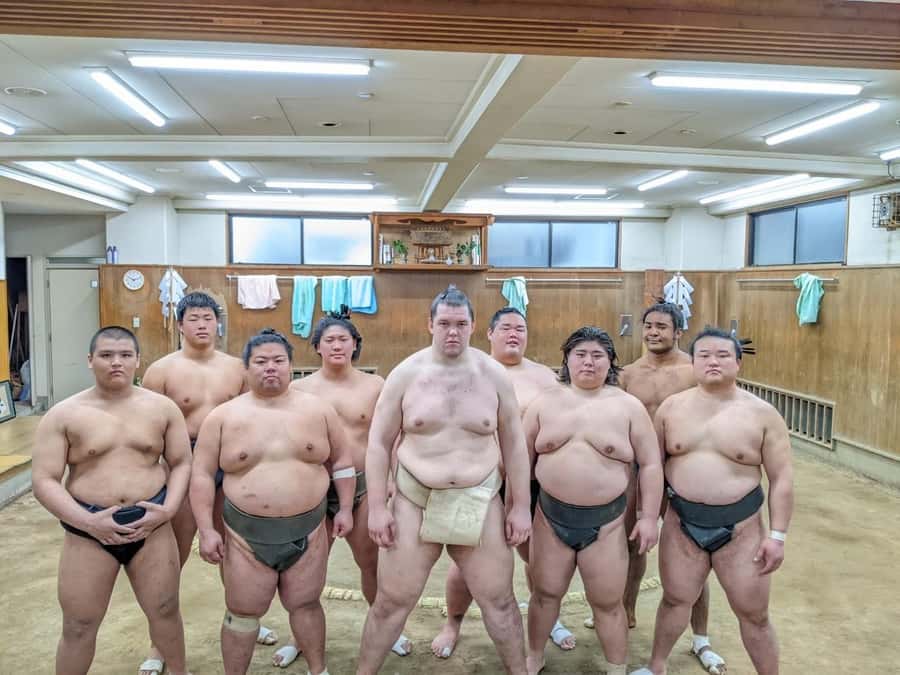
The opportunity to take photos with the sumo wrestlers is one of the strongest parts of the visit. It gives the morning a personal ending after a session that requires restraint and silence.
Do not treat this as a chance to interrupt the training. The photo opportunity comes after practice, and the stable’s rules still matter. Your best approach is to enjoy the training first and handle the camera only when permitted.
If you feel inclined to support the wrestlers after practice, you may leave a tip. This is presented as optional, not as a required extra charge. Carrying some Japanese yen could be useful if you decide to do so, but the supplied tour information does not specify an amount.
Other guided tours in Tokyo



Stable Etiquette You Need to Take Seriously
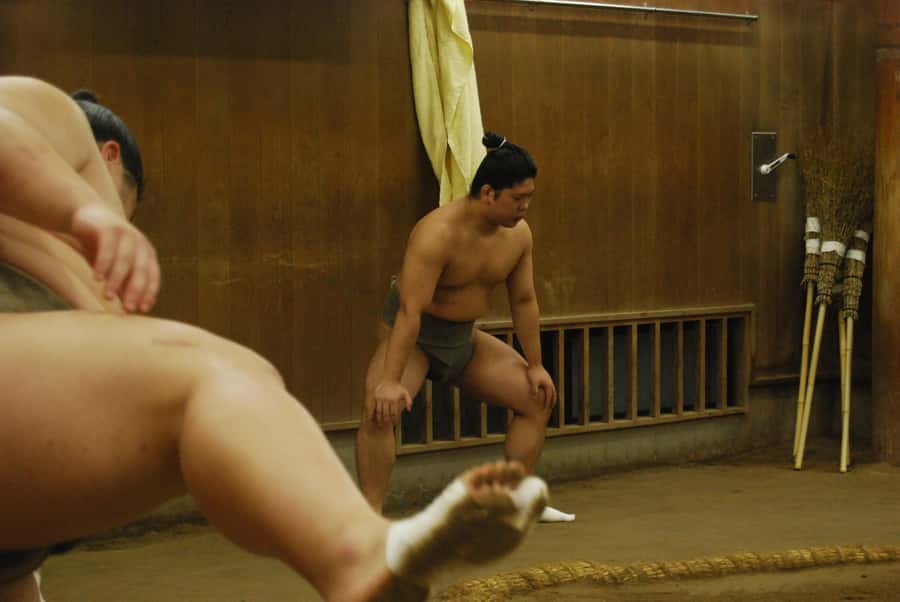
This is not a loud group activity. The wrestlers are working, and your behavior affects the room.
Keep these rules in mind:
- Do not use flash photography.
- Do not record video.
- Do not make noise or hold private conversations during practice.
- Do not bring snacks, bread, rice balls, or other food into the morning session.
- Bring drinks only in containers with lids.
- Wait until practice ends for the photo opportunity.
These restrictions are not minor fine print. They shape the experience. If you want to talk continuously with your companion, eat during the activity, or record every minute on your phone, this is probably not the right tour.
The quiet also makes the visit more meaningful. You hear the coach, the movement, and the impact of training instead of the sound of a sightseeing group. I would treat the stable as a place of work first and a photo stop second.
Is $90 a Fair Price?
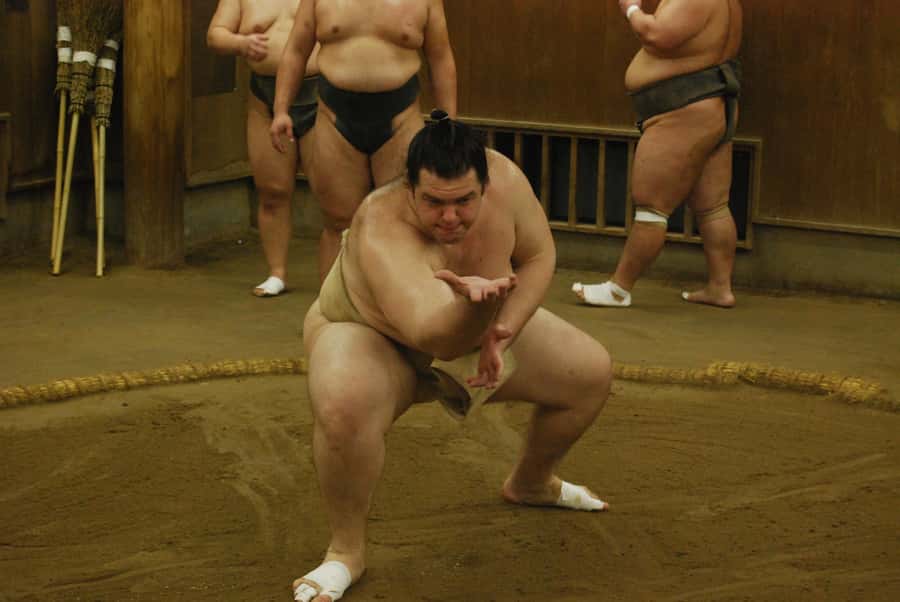
At $90 per person, this is a specialist experience rather than a low-cost attraction. You are paying for a two-hour visit to a working sumo stable, an English-speaking guide, the special brochure, interpretation of the practice, and the photo opportunity.
The value depends on your interest. If sumo is one of your main reasons for visiting Japan, the price is easier to justify because access to a stable is unusual, even for people living in Japan. The guide also saves you from trying to locate the stable and interpret the practice without context.
If you only want to see sumo once, a tournament ticket may give you more formal action for your money. However, a tournament does not provide the same close view of daily training or the same chance to observe the relationship between coaches, wrestlers, and apprentices.
I would call the cost fair for a focused cultural experience, especially for a first-time visitor who wants more than a quick photograph near Tokyo Skytree. It is less appealing if you are mainly looking for a general Tokyo sightseeing tour with many stops.
Who Should Book This Morning Experience?
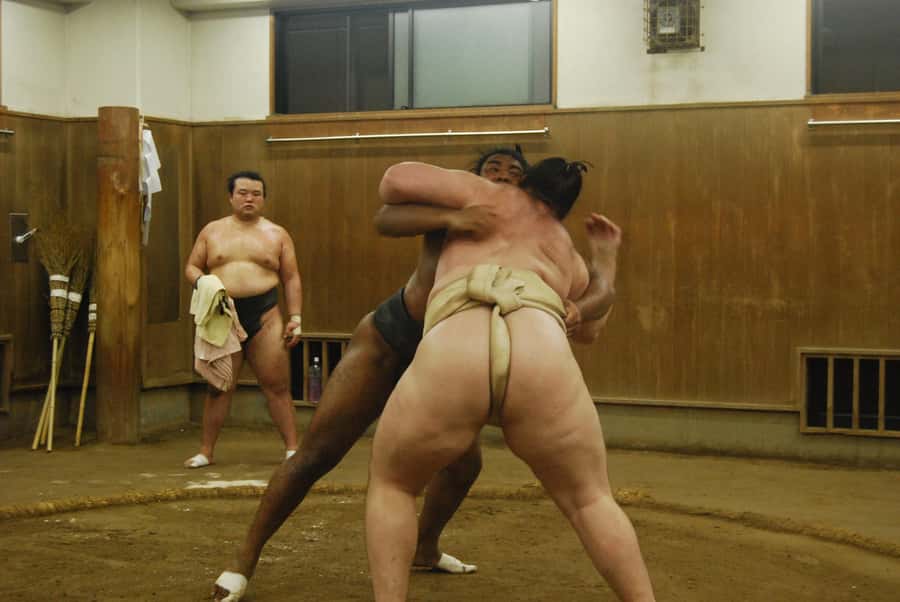
This tour suits you if you enjoy watching real work unfold. You do not need to be a sumo expert, since the guide explains the basic rules and gives context about wrestler life.
It is also a good fit for photographers who can work without flash and wait for the proper moment. The close distance gives you a chance to capture expressions and movement, but you cannot film and you must respect the quiet atmosphere.
I would recommend it to adults, couples, and older children who can sit quietly and follow instructions. Children under 10 are not allowed, so families with younger children need another plan.
The activity may also suit you if you have already attended a tournament and want a different view of sumo. Instead of returning to the same public spectacle, you see the morning discipline that supports it.
You may want to skip it if you dislike strict etiquette, cannot sit quietly for a training session, or need a highly active tour. There is no food during practice, so have breakfast before you arrive.
Timing, Cancellation, and Small Practical Details
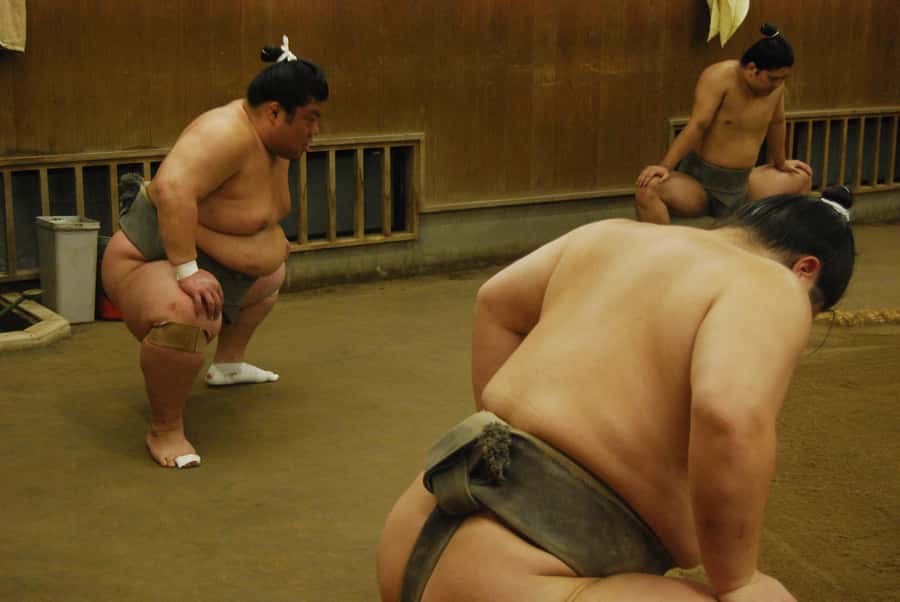
The duration is two hours, with starting times based on availability. Since morning practice is the focus, check the selected time carefully and arrive at the Memorial Statue of Soramachi Hiroba as instructed.
The tour is conducted in English. Guide Ishida has explained the rules and stable life in a friendly, clear way, though guide assignments can vary. The tour includes a special brochure, which is useful because sumo has its own terms and customs.
You can cancel up to 24 hours in advance for a full refund. A reserve-now, pay-later option is also available, which helps if you are arranging several Tokyo activities before your schedule is fixed.
The supplied information does not give a group size, exact seating arrangement beyond cushions, or specific transportation directions. Plan around the stated meeting point rather than assuming the stable will be easy to identify from the street.
Should You Book the Ikazuchi Stable Visit?
Book this tour if you want a close, respectful look at sumo before it reaches the tournament ring. The strongest reasons are the physical closeness, Ishida’s helpful introduction, the chance to learn about stable life, and the photo opportunity after practice.
Skip it if you want a loud public show, video footage, or a flexible morning with food and conversation. The rules are strict because the wrestlers are training, not performing for a crowd.
For most adults interested in Japanese culture, the visit offers a rare view of a sport that is both public and private. At $90, it is a considered purchase, but the access and personal guidance make it worthwhile for anyone who wants to understand the work behind sumo’s brief, powerful bouts.
FAQ
Where does the sumo stable visit take place?
The activity takes place at a sumo stable near Tokyo Skytree, specifically Ikazuchi Sumo Stable.
Where is the meeting point?
Meet in front of the Memorial Statue at Soramachi Hiroba.
How long does the activity last?
The sumo stable visit lasts two hours.
Is the tour offered in English?
Yes. An English-speaking live guide leads the activity.
Can I take photographs during the practice?
Yes, photographs without flash are allowed. Flash photography and video recording are prohibited.
Can children join the tour?
Children under 10 are not allowed to participate.
Can I cancel for a refund?
Yes. You can cancel up to 24 hours in advance for a full refund. A reserve-now, pay-later option is also available.
More Morning in Tokyo



More Guided Tours in Tokyo
More Sumo Experiences in Tokyo

More tours in Tokyo we've reviewed












Sumo Experiences, compared.
 ★ 4.8Tokyo: Sumo Show Experience with Chicken Hot Pot and a PhotoFrom $1032 hours
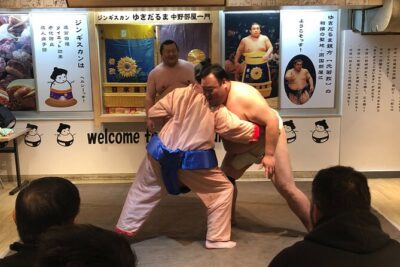
 ★ 4.8Tokyo: Sumo Show and Dining ExperienceFrom $7990 minutes - 2 hours
 ★ 5.0the SUMO showFrom $89
 ★ 5.0Tokyo Sumo Entertainment Show with Chicken Hot Pot and PhotoFrom $106
 ★ 4.6Tokyo: Sumo Tournament Tour with Chair Seat TicketsFrom $141
 ★ 5.0Tokyo Grand Sumo Tournament Viewing Tour with TicketsFrom $124