Reviewed · EVENING EXPERIENCES
Evening Hanami (Cherry Blossom) Experience with a Local
Tokyo’s cherry blossoms look different after sunset. Along the Meguro River, lanterns and fairy lights give the flowers a soft glow, while the nearby streets fill with small restaurants and shops. This three-hour evening walk starts at Nakameguro Station and ends in the same general area, so you can keep exploring afterward.
In This Article
- Key details before you book
- Why evening hanami in Nakameguro feels different
- Starting at Nakameguro Station
- Walking the Meguro River promenade
- Snacks, sweets, and a taste of local Tokyo
- Dinner at a seasonal izakaya
- What the guide adds, and where the risk lies
- Is $224 a fair price for three hours?
- Who will enjoy this evening most?
- Timing, weather, and useful planning notes
- Should you book the Nakameguro hanami walk?
- FAQ
- Where does the tour start?
- What time does the experience begin?
- How long does the tour last?
- Where does the tour finish?
- Is dinner included?
- Are extra food and drinks included?
- Is the experience suitable for children?
- Can I cancel for a full refund?
I like two things here: a local guide helps you handle the crowded, easy-to-miss river route, and dinner at an izakaya gives the evening more substance than a simple blossom stroll. The guide also explains hanami customs and introduces local snacks, so you get some cultural context with the photos.
The main caution is value. At $224 per person, this is a costly walk, and the experience depends heavily on the guide and the blossom timing. One poor account describes too much time spent standing in an alley and limited choice over the food, while another found guide Ray helpful even when the flowers were late.
Key details before you book
- Meet at Nakameguro Station at 4:30 pm: Find the guide in front of Segafredo at Nakameguro Ekimae Machikado Park.
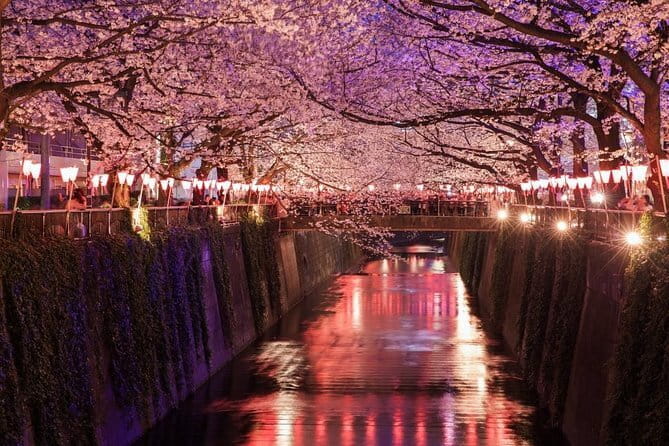
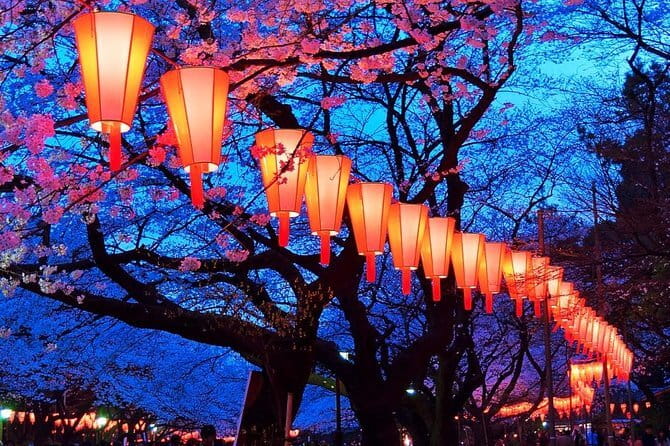
- Follow the Meguro River after dark: Lanterns and fairy lights create the evening hanami setting.
- Eat at an izakaya: Dinner includes seasonal dishes, with one drink included.
- Try local treats along the way: Snacks, sweets, and beverages are part of the walk.
- Expect a small group: The maximum is 10 people, which should make conversation and navigation easier.
- Plan for changing conditions: Restaurants, stops, and dates can change because of weather, holidays, schedules, or low enrollment.
Why evening hanami in Nakameguro feels different
Nakameguro is one of Tokyo’s best-known cherry blossom districts, and the Meguro River gives the walk a clear visual focus. The canal-side promenade is lined with restaurants, shops, lights, and seasonal activity. At night, the flowers are not presented as a quiet garden scene. You see them as part of a Tokyo neighborhood that is still eating, shopping, and meeting friends.
The 4:30 pm start is well chosen for an evening experience. You begin with enough daylight to find the meeting point and get oriented, then move into the lit-up portion of the walk as the afternoon fades. Exact sunset conditions will depend on the date, and the flowers may not be at their best, but the timing gives the tour a natural change in mood.
I like that the walk does not treat hanami as only a photo stop. Your guide explains customs and local history, then connects those ideas to food and neighborhood life. That matters in Tokyo, where a quick look at the blossoms can otherwise feel detached from the customs that make the season important.
There is also a practical benefit. Meguro River is easy to reach by public transportation, but a popular blossom area can still feel confusing when crowds gather around narrow streets and restaurant entrances. A guide gives you a fixed meeting point and keeps the evening moving.
Other evening experiences in Tokyo


Starting at Nakameguro Station
The meeting point is in front of Segafredo at Nakameguro Station, near Nakameguro Ekimae Machikado Park. The listed address is Japan, 〒153-0051 Tokyo, Meguro City, Kamimeguro, 3-chōme−4−3, 小金井ビル.
Arrive with enough time to locate the café and guide. The start time is 4:30 pm, and the experience is mobile-ticket based, so keep your booking details easy to open on your phone. The supplied information does not specify a hotel pickup unless you choose an available pickup option, so you should make your own way to Nakameguro.
This station meeting point is useful for a first evening in the area. You begin close to the river and do not spend part of the paid time riding across Tokyo. The end point is also in Nakameguro, giving you a convenient place to continue dinner, shopping, or the trip back to your hotel.
The opening five minutes at the park are mainly for meeting and getting started. Do not expect a long sightseeing stop here. The real experience begins once the group moves toward the river.
Walking the Meguro River promenade
The central part of the experience is a guided walk along the canal and through the surrounding restaurant and shopping streets. You will see the cherry trees, lighting, and seasonal displays, but the exact view depends on the date and weather.
This is where the guide’s role matters most. A local can point out the customs behind hanami, explain how the district developed, and help you understand what you are seeing beyond a row of pink branches. The guide also handles the route, which is useful when the area is crowded or when restaurants have changed their arrangements.
The experience is described as family-friendly and suitable for most people. Still, it is a three-hour walking activity, so comfortable shoes are sensible. Children must be accompanied by an adult. The group size is capped at 10, a good limit for a moving city walk, though the actual number in your group may vary.
Blossom timing is the biggest uncertainty. The season is short, and the flowers may be opening, fading, or not yet in bloom. One account found the tour worthwhile despite the late blossoms because guide Ray explained Japanese culture and customs, including how to toast in Japanese, then located a few blooming trees for photographs.
That is a useful clue about the tour’s real strength. If you need guaranteed peak bloom photos, no walking tour can promise that. If you want an informed evening in the neighborhood, the guide can still give the outing purpose when nature does not cooperate.
Snacks, sweets, and a taste of local Tokyo
Food is built into the walk rather than added as an afterthought. You will try local snacks and sweets, and the experience includes a drink. These small tastings help break up the walking and give you a chance to ask about familiar Japanese ingredients or customs.
The information does not name each snack, so you should not book this expecting a fixed tasting menu. Seasonal availability, holidays, and restaurant schedules can change the stops. The guide may substitute items when needed.
That flexibility is normal for a food walk, but it also explains one possible disappointment. One negative account objected to not being able to choose the food. If you are selective about dishes, ask the provider in advance about current options and dietary needs rather than assuming you can order freely at every stop.
Pescetarian and gluten-free requests are supported, according to the supplied details. It is still wise to mention your needs when booking and again at the meeting point. The information does not promise support for every allergy or restriction, so you should confirm anything serious before paying.
The included drink is part of the package, but extra food and drinks cost more. The minimum drinking age is 21. You can purchase additional items at your own expense, which gives you some freedom if dinner or the included tastings do not quite satisfy you.
Dinner at a seasonal izakaya
The evening ends with dinner at an izakaya featuring seasonal dishes. This is the part that most clearly separates the experience from simply walking beside the river with a camera.
An izakaya is a Japanese restaurant built around shared food and drinks, so the meal should help you see how casual evening dining works in Japan. You are not just being directed to a restaurant and left alone. The guide leads the group, explains the setting, and includes dinner in the evening plan.
The exact dishes are not listed, and you should not expect to select every course. Restaurant schedules and seasonal menus can force substitutions. One drink is included, while extra drinks or food are not.
At $224, dinner is important to the value calculation. If you would happily pay for a guided neighborhood walk, cultural explanation, tastings, and a seasonal meal, the package may make sense. If your main goal is to see the blossoms, you can visit the Meguro River independently and spend far less.
I would also consider your appetite and dining style. The experience is designed for people who like a set social meal and are open to seasonal dishes. It is less suitable if you want a private table, complete control over every order, or a fast dinner before another reservation.
What the guide adds, and where the risk lies
The strongest accounts focus on the guide rather than the flowers alone. One describes a particularly good guide and calls the evening the best tour of the trip. Another names Ray and credits him with explaining culture, customs, and the proper Japanese toast.
Those details point to the tour’s best feature: human interpretation. A guide can make a late-blooming season useful by shifting attention to the neighborhood, food, and traditions. You may also get help finding a few trees that are in better condition for photographs.
But the same dependence creates the main risk. The lowest account describes a poor guide, too much time standing in an alley, and no meaningful choice over the food. That is not a minor complaint at this price.
The overall score of 3.6 from 10 ratings reflects that unevenness. I would not treat the tour as a guaranteed polished production. Think of it as a small-group local evening whose quality will be shaped by the guide, restaurant arrangements, group pace, and blossom conditions.
For that reason, I would arrive ready to participate. Ask questions, tell the guide about your food needs, and say clearly if you would like time for photos. You cannot control the weather or peak bloom, but clear communication can improve the evening.
Is $224 a fair price for three hours?
The price is $224 per person, which places this well above the cost of an independent visit to Nakameguro. You pay for more than transportation: an English-speaking guide, local snacks and sweets, one drink, sightseeing and shopping time, and dinner at an izakaya.
That package can be useful if you are visiting Tokyo for a short time and want one organized evening with food included. It also suits you if you are nervous about ordering in an unfamiliar restaurant or want cultural explanations without planning each stop yourself.
The price is harder to justify for independent-minded visitors. Meguro River is accessible by public transportation, and you can walk the area, take photos, browse shops, and choose your own dinner. You will have more control and probably spend less.
I would compare this with the cost of a good dinner in Tokyo plus the time you would spend researching the neighborhood. The tour gives you convenience and company, but not private guiding. With a maximum of 10 people, it is intimate compared with a large bus tour, though it is still a shared experience.
The included meal and drink should also be viewed as part of the price, not a bonus that guarantees a bargain. Menus can change, and the food choice may be limited. Book it for the guide and the planned cultural evening first, with the blossoms and meal as important parts of the package.
Who will enjoy this evening most?
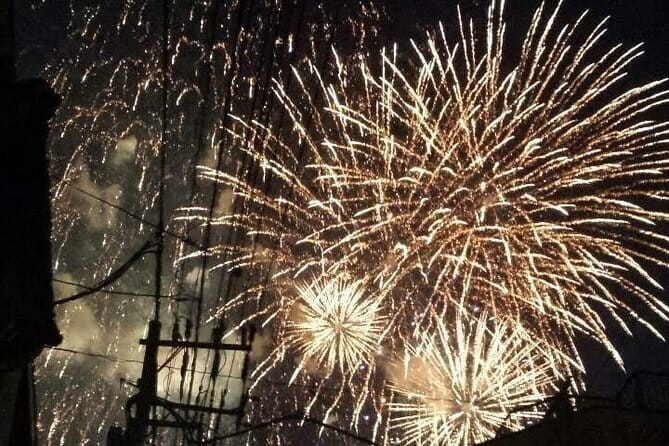
I would recommend it most strongly to first-time Tokyo visitors who want a gentle introduction to Nakameguro. You get a fixed meeting point, a local route, food, and an explanation of hanami without having to build the evening yourself.
It also suits couples, families with older children, and solo visitors who prefer company. Solo participants are asked to email the provider, and children need adult supervision. The small maximum group can make it easier to talk with the guide and ask questions.
Food-curious visitors should find plenty to enjoy, especially if they like seasonal dishes and casual Japanese restaurants. Pescetarian and gluten-free options are supported, but you should communicate those needs before the tour.
I would hesitate if you are mainly chasing peak cherry blossom photography. Bloom dates can disappoint, and the lighting may make some trees harder to photograph. A self-guided visit gives you more time and freedom to wait for the best angles.
I would also hesitate if you dislike fixed meals or group pacing. You may not choose every dish, and the walk can change because of restaurant schedules, public holidays, weather, or other conditions.
Timing, weather, and useful planning notes
The experience starts at 4:30 pm and lasts about three hours. It requires good weather. If poor weather cancels the outing, you are offered another date or a full refund. The same applies if the minimum number of participants is not reached, with the choice of another date, another experience, or a refund.
Free cancellation is available up to 24 hours before the start time. Cancel later than that and the payment is not refunded. Changes made inside that 24-hour window are not accepted, and the cut-off follows Tokyo local time.
Confirmation arrives when you book. The tour is near public transportation, but transportation costs are not included. Hotel pickup and drop-off are also excluded unless you select an available option.
Children must be with an adult, and a copy of passport information is required for children aged 10 and above. The activity is family-friendly, but the walking time and evening meal still make it sensible to consider your child’s stamina and food preferences.
Should you book the Nakameguro hanami walk?
Book this experience if you want a planned evening that combines Meguro River blossoms, local snacks, cultural explanation, and izakaya dinner. It is especially useful when you value a guide’s help more than the freedom of exploring alone.
Do not book it simply because you assume the flowers will be at peak bloom or because you want complete control over dinner. The $224 cost is high, and the mixed feedback shows that the guide can make or break the experience.
My practical call: choose it for convenience, conversation, and local context, then accept some flexibility in the route and food. If your priority is saving money, choosing your own dishes, or photographing blossoms at your own pace, visit Nakameguro independently instead.
FAQ
Where does the tour start?
It starts at Nakameguro Station, in front of Segafredo near Nakameguro Ekimae Machikado Park. The listed address is Japan, 〒153-0051 Tokyo, Meguro City, Kamimeguro, 3-chōme−4−3, 小金井ビル.
What time does the experience begin?
The start time is 4:30 pm.
How long does the tour last?
The experience lasts approximately three hours.
Where does the tour finish?
It ends in the Naka-meguro area of Meguro City, Tokyo.
Is dinner included?
Yes. Dinner at an izakaya is included, along with local snacks, sweets, and one drink.
Are extra food and drinks included?
No. Additional drinks and food can be purchased at your own expense. The minimum drinking age is 21.
Is the experience suitable for children?
Yes, it is described as family-friendly, but children must be accompanied by an adult. A copy of passport information is required for children aged 10 and above.
Can I cancel for a full refund?
Yes, if you cancel at least 24 hours before the experience start time. Late cancellations and changes are not accepted for a refund. Weather or minimum-participant cancellations offer another date or a full refund.
More Evening Experiences in Tokyo


More tours in Tokyo we've reviewed












Evening Experiences, compared.
 ★ 5.0Tokyo Night Foodie Tour in Shinjuku – Seasonal Sushi, Wagyu BeefFrom $111
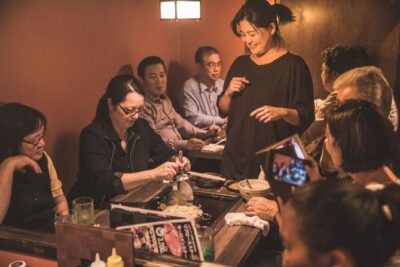 ★ 4.5Tokyo After 5: Authentic Japanese Food & Drink Night TourFrom $122
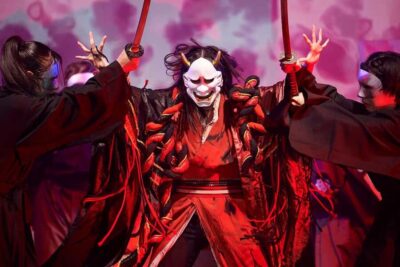 ★ 4.6Tokyo: Legend Samurai Entertainment Night in Kanda ShrineFrom $44
 ★ 4.5The Dark Side of Tokyo – Night Walking Tour Shinjuku KabukichoFrom $25
 ★ 4.8Tokyo: Night Foodie Tour in ShinjukuFrom $164
 ★ 5.0Tokyo: Daikoku JDM Car Meet & Night Car Culture TourFrom $99