Reviewed · IMPERIAL PALACE & SHOGUN TOURS
Tokyo’s Imperial Palace & Nihonbashi Tour
Tokyo’s Imperial Palace and Nihonbashi tour pairs two very different sides of Tokyo: the quiet stone walls and gardens of former Edo Castle, followed by old commercial streets where Japanese food, paper, knives, and local drinks are still sold. The strongest part is Nihonbashi’s traditional shops, where dashi, nori, washi, and sake become hands-on clues to daily Japanese life.
In This Article
- Key points at a glance
- Two Tokyo stories in four hours
- Walking through the Imperial Palace East Gardens
- From palace walls to Nihonbashi streets
- Dashi at Ninben, a taste of Japanese cooking
- Nori at Yamamoto Noriten
- Japanese knives at Kiya
- Making washi at Ozu Washi
- Toyama’s regional sake and final stop
- Guide quality and language support
- Is $101.72 a fair price?
- Who should book this walk?
- Should you book Tokyo’s Imperial Palace and Nihonbashi Tour?
- FAQ
- How long does the tour last?
- Where does the tour begin?
- Where does the tour end?
- Does the tour enter the Imperial Palace?
- Is admission to the East Gardens included?
- Are food and drinks included?
- Is transportation included?
- Can I cancel for a refund?
I like the chance to see the East Gardens with a guide who can explain the Tokugawa shoguns and palace grounds, rather than simply wandering past clipped trees and stonework. I also like the practical finish: dashi tasting and sake sampling, plus a stop at Ozu Washi that gives you something more memorable than a standard city walk.
The catch is simple: this is a walking tour, not a tour inside the Imperial Palace itself. The East Gardens are open to the public at no charge, some advertised shop activities can change, and rain or heat can make the four hours feel long.
Key points at a glance

- The East Gardens are the historical heart of the tour: Walk through Otemon Gate and see the remains of Edo Castle, once home to the Tokugawa shoguns.
- Nihonbashi adds real local flavor: Visit long-running shops selling dashi, nori, Japanese knives, washi paper, and regional goods.
- Food and drink are part of the lesson: You receive a dashi sample and a Japanese sake set, with sake tasting at the Toyama prefectural shop.
- Guides can make or break the experience: Guides such as Mari, Michi, Yoshi, Toyo, Eriko, Kishy, Andy Watanabe, Yama-san, and Kudo-san have been singled out for warmth and clear explanations, but English ability may vary.
- Plan for plenty of walking: The tour lasts about four hours and includes the palace grounds, Nihonbashi streets, and a subway transfer.
- The advertised activities are not guaranteed in full: Shop closures, weather, and scheduling can mean a shortened visit or a simpler stop than expected.
Two Tokyo stories in four hours

This tour works because it connects the Imperial Palace area with Nihonbashi instead of treating them as separate sightseeing errands. You begin with Japan’s political and military past, then move into a district shaped by trade, food, crafts, and urban commerce.
The meeting point is Tokyo Station, at 1 Chome-9 Marunouchi. From there, the group walks toward the palace along an avenue lined with ginkgo trees. The route gives you a quick sense of Tokyo’s scale: major office buildings and traffic are close by, yet the palace grounds soon offer open space, trees, walls, and broad paths.
The group can include up to 28 people. That is not a private walk, so you should expect a social pace and occasional pauses while everyone gathers. The tour is offered in the morning or afternoon, which is useful if you are fitting it around a museum, shopping, or another Tokyo reservation.
A few more Tokyo tours and experiences worth a look

Walking through the Imperial Palace East Gardens
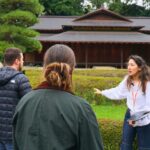
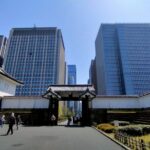
The first palace stop is brief, about 15 minutes, and focuses on the outer grounds. You will see the formal setting around the Imperial Palace, with cherry and pine trees and the broad grounds enclosed by walls.
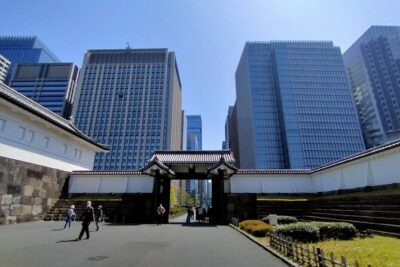
The main visit lasts about an hour in the East Gardens. You enter through Otemon Gate, once the main entrance to Edo Castle. This is where the guide’s storytelling matters most. Without context, the gardens can look like a pleasant public park with old stone foundations. With an explanation of the shoguns, castle defenses, and the change from Edo to modern Tokyo, the stones become evidence of a vanished seat of power.
The East Gardens are free to enter, and the tour does not include an interior visit to the Imperial Palace. That distinction matters. The experience is best described as an outdoor visit to the palace grounds and Edo Castle ruins, not a palace tour.
The gardens are carefully maintained, with seasonal planting that can change the mood of the walk. A spring visit may bring cherry blossoms or azaleas, while other times of year offer different colors and textures. One spring group found the mix of late cherry blossoms and azaleas especially striking.
You will walk on paths through a large area, often stopping for photos and short explanations. A number of people found the pace comfortable, and guides have adjusted the route for heat, rain, or physical limits. Still, this is not a sit-down history talk. Wear shoes you can use for several hours and bring water in warm weather.
From palace walls to Nihonbashi streets

After the gardens, the tour travels to Nihonbashi, generally using Tokyo’s subway. The change is part of the experience. You move from the spacious palace grounds into the busy underground network and then emerge in one of Tokyo’s long-established commercial areas.
Nihonbashi has been tied to Japan’s national highway network since the early seventeenth century. That old role helps explain why shops serving food, crafts, household tools, and regional products took root here and stayed in business for generations.
This section feels less like sightseeing from a distance and more like an introduction to working Japanese traditions. You enter stores that still sell items used in cooking and daily life. Some shops are primarily retail spaces, so the quality of the stop depends on how well the guide explains what you are seeing.
Dashi at Ninben, a taste of Japanese cooking

Ninben Nihombashi Main Store is a dashi specialist. Dashi is a basic Japanese soup stock used in noodle soups, hot pots, sauces, and many other dishes. The stop lasts about 20 minutes and includes a sample.
This is a small tasting, not a full meal, but it offers useful context. Dashi can be easy to overlook when you eat Japanese food because it often forms the background flavor rather than appearing as a separate dish. Seeing it treated as a serious ingredient helps you understand why Japanese cooking can taste light yet full.
Ninben has a long business history, and the tour presents the shop as part of Nihonbashi’s tradition of specialist food merchants. There is one important warning: the dashi store may be closed or unavailable on the day of the tour. If that happens, the stop can be changed or lost, so do not book this experience solely for the dashi tasting.
Nori at Yamamoto Noriten

Yamamoto Noriten Honten has been in business since 1849 and specializes in nori, the seaweed used in sushi, rice balls, and many Japanese dishes. You can see different types of nori and, when the visit runs as planned, watch staff roast it.
This is a good stop for anyone interested in how familiar Japanese foods are made and sold. Nori is more varied than the single packaged sheet you may know from restaurants. The shop gives you a chance to compare products and see how a specialist presents an everyday ingredient.
Keep your expectations measured. The roasting demonstration is part of the stated plan, but it may not always happen. At times, the stop is mainly a visit to a shop with packaged seaweed for sale. The guide’s explanation can turn that into a useful cultural stop, but the retail setting limits how much demonstration you should expect.


Japanese knives at Kiya

Kiya Nihombashi Main Branch dates to 1792 and carries a broad range of kitchen tools. You may see traditional Japanese knives alongside more modern European-style utensils.
For cooks, this can be one of the most tempting stops. The store offers a close look at the different shapes and uses of Japanese kitchen knives, and it is a practical place to ask questions before buying one. The stop lasts about 20 minutes, so it is more of an introduction than a full knife workshop.
The advertised description can suggest a sharpening demonstration or a chance to try sharpening. That is not guaranteed. In some versions of the visit, you mainly enter the shop, browse, and receive an opportunity to purchase a knife. If you are not interested in shopping, the guide’s background on Japanese cooking tools becomes the main value.
Making washi at Ozu Washi

Ozu Washi is the longest single stop in Nihonbashi, with about an hour set aside for traditional Japanese paper. You will see washi paper and stationery, learn about the craft, and, when arranged and available, make a sheet yourself.
This is likely the most distinctive part of the tour. Paper can seem like a simple souvenir until you learn how much attention goes into its fibers, texture, weight, and use. The shop connects craft with ordinary life through notebooks, stationery, writing materials, and decorative paper.
There is a scheduling point you should know before booking. The paper-making activity may require advance booking and an extra fee, and it can fill up. If your group cannot join the hands-on session, you may instead see a film, browse the shop, and hear an explanation of washi. That still offers cultural value, but it is not the same as making paper yourself.
The hour here also gives the tour a welcome change of pace. After walking through the palace grounds and city streets, you have time to focus on one craft rather than rushing through another storefront.
Toyama’s regional sake and final stop

The tour finishes at the Toyama Prefecture Antenna Shop. These regional stores sell goods from a particular prefecture, allowing Tokyo shoppers to sample food and products from elsewhere in Japan.
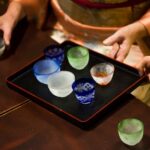
Toyama is a coastal prefecture on the Sea of Japan, and the shop carries items from that area. The included Japanese sake set is the final tasting, and the visit is designed as a relaxed end to the tour. You may sample three sakes, depending on how the tasting is arranged.
This is not a dedicated brewery visit or a formal sake class. You should expect a store-based tasting with some explanation, rather than a long presentation about fermentation and production. Still, it is a pleasant way to end, especially if you want to try several styles without committing to a full bottle.
The tour ends in Nihonbashi, not back at Tokyo Station. The nearest stations are Nihombashi Station, served by the Toei Asakusa, Metro Ginza, and Metro Tozai lines, and Mitsukoshimae Station, served by the Metro Ginza and Metro Hanzomon lines. That makes it easy to continue shopping or head elsewhere in Tokyo.
Guide quality and language support
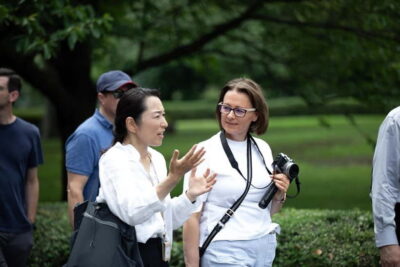
The tour includes a nationally accredited guide-interpreter, and the best guides add real value. Mari has been praised for answering many questions and keeping the visit enjoyable in heavy rain. Michi, Yoshi, Toyo, Eriko, Kishy, Andy Watanabe, Yama-san, and Kudo-san have also been praised for history, humor, kindness, pacing, and practical help.
Several guides have taken time to ask what you want from the tour. That can make a difference in a mixed group, since one person may care about castle history while another wants knives, paper, food, or shopping advice.
English ability is not perfectly consistent. One poor experience involved a guide who could barely speak English, and the group missed several planned elements without a clear explanation. If clear English instruction is essential to you, this is the main risk to weigh against the generally positive guide feedback.
Weather also affects the guide’s work. Heavy rain and strong wind have occurred, and hot September conditions led one guide to shorten the route for comfort. The tour requires good weather, so a cancellation may result in a different date or a full refund.
Is $101.72 a fair price?
At $101.72 per person, this is not a cheap way to see the East Gardens. You can enter the gardens independently for free, and you can visit Nihonbashi’s shops without joining a group.
The price makes more sense if you value a structured cultural introduction. You receive a guide, a dashi sample, a sake set, access to the East Gardens, a planned route through several old businesses, and help with the subway transfer. You also avoid having to research which shops connect to cooking, paper, regional products, and local history.
The value drops if you mainly want palace access or guaranteed workshops. There is no interior palace visit, and some stops may be shortened, closed, or limited to browsing. A group of up to 28 can also feel less personal than the smaller outings described by some participants.
Group discounts are available, which may improve the price for families or larger parties. Free cancellation is allowed up to 24 hours before the start time. The activity can also be canceled if the minimum number is not reached or if weather is poor.
Who should book this walk?
I would choose this tour for a first or early day in Tokyo if you want history, food culture, crafts, and a little shopping in one half-day. It is especially useful if you prefer a guide to explain what you are looking at and help you navigate Tokyo’s transport system.
It suits curious shoppers, cooks, paper lovers, families with older children, and anyone who wants more than famous viewpoints and department stores. The sake tasting and old specialist shops give the day a distinctly Japanese focus.
I would hesitate if you dislike walking, need a guaranteed hands-on activity, or expect to enter the Imperial Palace. The same applies if you want a detailed sake seminar, a full knife lesson, or a long demonstration at every shop.
Should you book Tokyo’s Imperial Palace and Nihonbashi Tour?
Book it if you see the palace gardens as the opening chapter, not the whole attraction. The real strength is the combination: Edo Castle ruins in the morning, then dashi, nori, knives, washi, regional goods, and sake in Nihonbashi.
Go in with realistic expectations. You are touring the East Gardens, not the palace interior. Shop activities can change, English delivery depends on the guide, and the route involves a lot of walking. With those limits understood, the tour offers a useful and enjoyable introduction to Tokyo’s past and its everyday traditions.
FAQ
How long does the tour last?
The tour lasts approximately four hours.
Where does the tour begin?
It begins at Tokyo Station, at 1 Chome-9 Marunouchi, Chiyoda City, Tokyo 100-0005, Japan.
Where does the tour end?
It ends in the Nihonbashi area of Tokyo. Nihombashi Station and Mitsukoshimae Station are the nearest stations.
Does the tour enter the Imperial Palace?
The tour visits the Imperial Palace outer grounds and the East Gardens, including the Edo Castle ruins. It does not provide an interior tour of the Imperial Palace.
Is admission to the East Gardens included?
Yes. Entrance to the East Gardens of the Imperial Palace is included, and the admission ticket is free.
Are food and drinks included?
A sample of dashi soup stock and a Japanese sake set are included. Other food and beverages are not included.
Is transportation included?
Transportation to the meeting point is not included. The tour includes a short journey to Nihonbashi, including a subway ride according to the described route.
Can I cancel for a refund?
You can cancel at least 24 hours before the start time for a full refund. Changes or cancellations made less than 24 hours before the start time are not accepted for a refund.
More Imperial Palace & Shogun Tours in Tokyo


More tours in Tokyo we've reviewed




Imperial Palace & Shogun Tours, compared.
 ★ 4.9Tokyo: Imperial Palace Japanese History Walking TourFrom $32
 ★ 4.9Tokyo: Imperial Palace and Shogun Walking TourFrom $162 hours
 ★ 5.0Imperial Palace East Garden and Edo Castle Walking Tour in TokyoFrom $25
 ★ 4.8Tokyo: Imperial Palace East Gardens Walking TourFrom $192h 30m
 ★ 4.5Tokyo: Imperial Palace, Sensō-ji Temple, & Tokyo Tower TourFrom $404 hours
 ★ 5.0Tokyo Castle, Imperial Palace, Shogun & Garden Walking TourFrom $31