Reviewed · KAMAKURA & ENOSHIMA DAY TRIPS
Private Kamakura plus Yokohama Tour – English Speaking Driver
Kamakura gives you Japan’s old spiritual heart, while Yokohama brings harbor views, Chinatown, and modern city life. This private day trip links both without making you puzzle over train changes or cram your day around public schedules. The Great Buddha and Hōkoku-ji’s bamboo garden are the standouts.
In This Article
- Key points to know before booking
- Why Kamakura and Yokohama work well together
- Hōkoku-ji bamboo garden sets the mood
- Hasedera brings temple art and hillside views
- The Great Buddha is Kamakura’s essential stop
- Tsurugaoka Hachimangu connects shrine and city
- Komachidori is your best lunch and shopping window
- Yokohama Chinatown changes the pace
- Sankeien Garden offers the day’s calmest pause
- Minatomirai depends on the clock
- What the driver service does well
- Timing, tickets, and practical value
- Who should book this private day trip
- Should you book the Kamakura and Yokohama tour?
- FAQ
- How long does the private Kamakura and Yokohama tour last?
- How many people can join the tour?
- Is hotel pickup available?
- Is this a guided tour?
- Are entrance tickets included?
- Which stops have no stated admission fee?
- Is Minatomirai guaranteed?
- Can the itinerary be changed?
- What is the cancellation policy?
I like the door-to-door pickup and the freedom to adjust the day. Drivers such as Irfan and Mac have been praised for courteous service, clear communication, and helpful extras, including lunch suggestions and links about each stop. I also like that a private vehicle can handle the tricky roads around Kamakura with less stress.
The main catch is important: this is a chauffeur service, not a standard guided tour. Your driver may explain sights and share useful information, but a dedicated guide costs extra. If you want detailed temple history at every stop, budget for that addition or bring your own background notes.
Key points to know before booking

- Eight stops across two cities: You visit Kamakura’s major temples and shopping street, then continue to Yokohama Chinatown, Sankeien Garden, and possibly Minatomirai.
- Private vehicle for up to five: The $650 price covers the group, so it offers better value when divided among several people.
- Pickup at 8:00 a.m.: Hotel or other-location pickup in Tokyo makes the long day easier to manage.
- Admissions cost extra: Temple and garden entry tickets are not included, while Komachidori, Chinatown, and Minatomirai have no stated admission charge.
- Flexible, but time matters: The full schedule takes about 10 hours including driving, and Minatomirai is visited only if time permits.
- Driver rather than guide: English communication is provided, but a professional guide can be arranged for an additional fee.
Why Kamakura and Yokohama work well together

I like this pairing because the two cities show very different sides of the Tokyo region. Kamakura is a former political and religious center, with wooded temple grounds, shrine paths, and a slower rhythm. Yokohama is more urban, with an international past, waterfront districts, and a large Chinatown.
The distance between the cities is manageable, but the day still includes a lot of driving and walking. A private car matters most when you are traveling as a family, carrying bags, or trying to fit several sites into one day. You can leave Tokyo at 8:00 a.m., reach the first Kamakura stop near opening time, and avoid spending part of the morning finding platforms and connections.
At $650 per group of up to five, the price is not cheap for one person. Split five ways, however, it becomes much more reasonable for a full private vehicle, pickup, and a roughly 10-hour outing. A couple will pay more per head, but may still value the privacy and flexibility.
A few more Tokyo tours and experiences worth a look
Hōkoku-ji bamboo garden sets the mood
Hōkoku-ji, often called the Bamboo Temple, is a good first stop because it gives you a quiet introduction to Kamakura. The temple belongs to the Rinzai school of Zen Buddhism and is known for its compact bamboo garden.
The scheduled visit is one hour. That gives you time to walk through the bamboo, see the temple grounds, and pause instead of treating the place as a quick photo stop. The setting is more contained than a huge temple complex, which makes it a pleasant opening visit after the drive from Tokyo.
Tea tickets are an especially useful tip here. If your timing allows, you can sit with tea in the bamboo setting. The admission ticket is not included, so plan to pay separately for entry and any tea option you choose.
Hōkoku-ji can feel very still, but the peaceful atmosphere depends partly on timing. Starting early is a smart move. The driver’s ability to get you there close to opening time can help you enjoy the garden before the day becomes more crowded.
Hasedera brings temple art and hillside views

Hase-dera, also called Hase-Kannon, is scheduled for 45 minutes. The temple is famous for its large wooden statue of Kannon, the Buddhist figure associated with compassion.
This stop gives the day a different texture from Hōkoku-ji. Instead of focusing mainly on bamboo, you are looking at a major religious image and a larger temple setting. The grounds have an uphill character, so you should expect some walking and steps.
Forty-five minutes is enough for a focused visit, but it is not generous if you want to inspect every corner. Keep an eye on the clock. The private format lets you spend more time here if another stop is shortened, but the driver still has to get you through the remaining Kamakura and Yokohama visits.
Admission is separate. I would keep small spending money available for all paid sites rather than assume the tour price covers the gates.
The Great Buddha is Kamakura’s essential stop

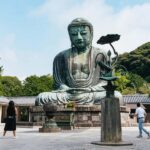
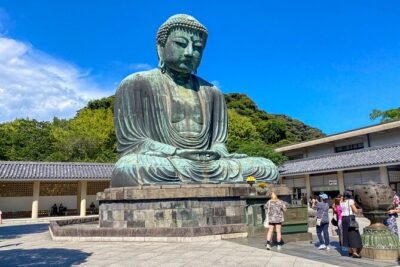
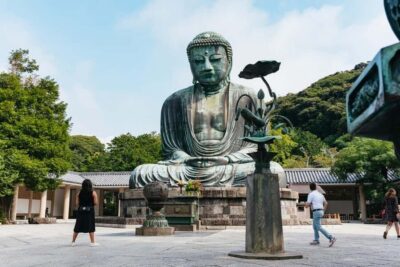
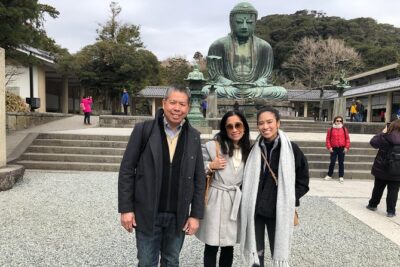
Kōtoku-in houses Kamakura’s famous Great Buddha, or Daibutsu. The visit is planned for 30 minutes, and that is usually enough to see the statue, take photos, and walk around the immediate grounds.
The bronze Buddha is the visual centerpiece of the Kamakura portion. Even if you know little about Japanese Buddhist art, its scale makes an impression. The short stop also works well in a packed day because you do not need a long guided walk to understand why the statue matters.
The temple charges admission separately. The schedule does not promise a long explanation from the driver, so read a little about the Daibutsu beforehand if historical context is important to you. Your driver may provide links or explain the sights, as some drivers have done, but the service does not automatically include a dedicated guide.
Tsurugaoka Hachimangu connects shrine and city

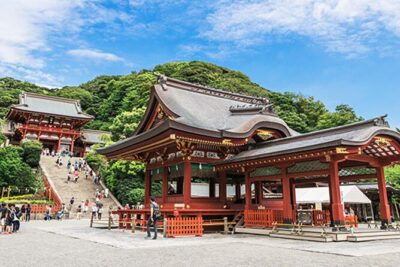
Tsurugaoka Hachimangu is allotted one hour. This is Kamakura’s major Shinto shrine and an important cultural center, with festivals and two museums associated with the site.
The grounds include two ponds linked symbolically with the Taira and Minamoto clans. That detail gives you a useful glimpse into Kamakura’s political past without requiring a long lecture. The shrine also helps balance the Buddhist temples earlier in the day. You see that Kamakura is not simply a collection of old buildings, but a place where Buddhist and Shinto traditions sit side by side.
One hour lets you walk the main approach and take in the ponds and shrine grounds. Museum visits could require more time, so do not assume you can see every indoor display while keeping the rest of the schedule intact. Admission information is listed separately from the tour price.
Other private tours in Tokyo


Komachidori is your best lunch and shopping window

Komachidori is a busy pedestrian street lined with clothing shops, souvenirs, sweets, and eateries. The planned 90 minutes is the longest single Kamakura stop, making it the natural place for lunch and a bit of browsing.
I like having this flexible middle section after several temples. You can stop for Japanese sweets, look for gifts, or choose a meal without being tied to a fixed restaurant. Drivers may suggest places to eat, but the final choice is yours.
Keep your expectations realistic. Komachidori is commercial and busy, not a quiet historic lane. That is part of its appeal, especially if you want snacks and souvenirs, but it may feel less intimate than the temple grounds.
The street has no stated admission charge. You will still want to budget for food and shopping. If your family has different interests, this is also a useful place to split up briefly while staying within the agreed meeting time.
Yokohama Chinatown changes the pace

After Kamakura, the tour moves to Yokohama Chinatown for about one hour. The district is roughly 160 years old and has a population of about 3,000 to 4,000, with many of its Chinese residents originally connected to Guangzhou.
This is not another temple visit. You get a taste of Yokohama’s international character through restaurants, shops, and Chinese cultural influence. An hour is enough for a walk and a meal or snack, though it is not enough for a slow survey of the whole district.
Chinatown has no stated admission fee, but food and purchases are extra. If lunch was already handled in Komachidori, you can use this stop for a lighter bite. If you prefer Chinese food, the timing may work better as your main meal.
The stop is also a good reason to choose this tour over a Kamakura-only excursion. You see two very different places in one day, though that variety comes at the cost of a fast pace.
Sankeien Garden offers the day’s calmest pause

Sankeien Garden is a traditional Japanese-style garden in Yokohama’s Naka Ward. It opened in 1906 and was designed and built by Tomitaro Hara, a silk trader who used the name Sankei Hara.
The planned visit is one hour. After the movement of Chinatown, the garden offers a quieter change of pace. You can walk among traditional Japanese-style spaces and enjoy the setting without the commercial activity of the previous stop.
Admission is not included. Since the garden is outside the main central Yokohama waterfront area, the private vehicle is particularly useful here. You do not need to work out a separate route between Chinatown, Sankeien, and the final city stop.
One hour is enough for a meaningful visit, but gardens reward unhurried walking. If your earlier Kamakura stops run long, ask your driver how much time remains before deciding how thoroughly to explore.
Minatomirai depends on the clock
Minatomirai is listed as a possible final stop if time permits, with about 30 minutes planned. It is Yokohama’s modern waterfront district, known for high-rise views, shopping at Yokohama Landmark Tower and Plaza, and family attractions.
This stop provides a sharp contrast with Kamakura’s temples and gardens. You may get skyline views, a quick waterfront walk, or a look at the shopping district. The short duration means you should think of it as a brief orientation, not a full Yokohama sightseeing session.
Because the visit is conditional, do not book this tour solely for Minatomirai. Traffic, temple timing, lunch, and the long route all affect the final schedule. If this district is your priority, tell the driver early and be ready to shorten another stop.
What the driver service does well
The strongest part of this experience is the private transport. You receive pickup from your Tokyo hotel or another agreed location, travel in a comfortable private vehicle, and return after a full day out. For a group of five, the cost can make practical sense.
Driver quality matters greatly on a route like this. Irfan has been praised for polite answers, good timing, and accommodating a change so a son could visit the Gundam Factory. He also added a special garden stop for one family when time allowed. Mac has been praised for clear communication, comfort, and explaining sights beyond basic chauffeur duties.
Those examples show the benefit of booking a private service, but they do not guarantee the same driver or the same extra stops. Ask in advance what level of commentary you want. The stated service is not a guided tour, and a professional guide is available only for an added charge.
One serious caution should not be ignored. A complaint described a driver allegedly offering cash-paid extras without company knowledge and behaving poorly. That is not consistent with the positive service reports, but it is a reminder to confirm any added cost directly with Sluzeb Tours and request receipts or written confirmation.
Timing, tickets, and practical value
The day starts at 8:00 a.m. and lasts about 10 hours including commuting time. The schedule is ambitious: four Kamakura sights, a shopping street, and three Yokohama areas. You should expect a full day rather than a relaxed outing.
Temple and garden admissions are not included at Hōkoku-ji, Hasedera, Kōtoku-in, Tsurugaoka Hachimangu, and Sankeien Garden. Komachidori, Chinatown, and Minatomirai have no stated admission charge, though meals, tea, shopping, and other personal costs remain yours.
Pickup and a mobile ticket make the day simple to arrange. Confirmation is provided at booking, and the tour is near public transportation, though you will mainly rely on the private vehicle during the excursion.
Groups larger than five can be accommodated at an additional cost. Most people can participate, but the walking at temples and gardens means you should consider your own comfort with steps and extended time on your feet.
Free cancellation is available up to 24 hours before the start time for a full refund. Within 24 hours, changes and cancellations are not accepted for a refund. The experience requires good weather, and poor weather may lead to a different date or a full refund.
Who should book this private day trip
I would recommend it most to families, small groups, and first-time visitors who want to cover both Kamakura and Yokohama in one day. It is also useful if you dislike changing trains or want pickup and drop-off at your Tokyo accommodation.
You should book it if privacy, comfort, and route flexibility matter more to you than detailed guiding. The ability to adjust the schedule helped one family add a Gundam Factory visit, and another family received an extra garden stop. Those kinds of changes are a real advantage when the driver is willing and time allows.
I would hesitate if your main goal is deep temple interpretation. Since the base service is not guided, you may spend much of the day looking at important places without hearing much context. Add a guide if available, or prepare your own notes and links.
Should you book the Kamakura and Yokohama tour?
Book it if you want a broad, efficient day outside Tokyo with a private car, hotel pickup, and the freedom to travel at your group’s pace. The best moments are likely to be Hōkoku-ji’s bamboo garden, the Great Buddha, Tsurugaoka Hachimangu, and the contrast between Sankeien and Chinatown.
Think twice if you want a slow day or a fully narrated cultural tour. At $650, the value improves sharply with four or five people, while couples may prefer public transport and a guide-focused experience. Confirm the driver, any planned extras, admission costs, and your preferred stops before setting out.
FAQ
How long does the private Kamakura and Yokohama tour last?
The tour lasts approximately 10 hours, including commuting time. The scheduled start time is 8:00 a.m.
How many people can join the tour?
The listed price covers a private group of up to five people. A larger group can be accommodated at an additional cost.
Is hotel pickup available?
Yes. Pickup is offered from your Tokyo hotel or another location.
Is this a guided tour?
No. The standard service is a private tour with an English-speaking driver, not a fully guided tour. A guide can be arranged for an additional fee.
Are entrance tickets included?
No. Admission tickets for Hōkoku-ji, Hasedera Temple, Kōtoku-in, Tsurugaoka Hachimangu Shrine, and Sankeien Garden are not included.
Which stops have no stated admission fee?
Komachidori, Yokohama Chinatown, and Minatomirai have no stated admission charge. Food, shopping, tea, and other personal expenses are separate.
Is Minatomirai guaranteed?
No. Minatomirai is visited if time permits and is planned for about 30 minutes.
Can the itinerary be changed?
The tour is described as customizable, and changes have been accommodated when time allows. Confirm requested changes with the driver or provider before the day begins.
What is the cancellation policy?
You can cancel at least 24 hours before the local start time for a full refund. Cancellations or changes made within 24 hours are not refunded, and poor weather may result in a different date or a full refund.
More Private Drivers in Tokyo

More Private Tours in Tokyo
More Kamakura & Enoshima Day Trips in Tokyo


More tours in Tokyo we've reviewed












Kamakura & Enoshima Day Trips, compared.
 ★ 4.5Tokyo: Kamakura & Enoshima Day Trip including Temple TicketsFrom $589 hours - 570 minutes
 ★ 5.0Mount Fuji, Kamakura, Big Buddha, & Lake Ashi Day TripFrom $109
 ★ 4.7Tokyo: Mt Fuji, Kamakura, Lake Ashi & Big Buddha Guided TourFrom $50
 ★ 4.5From Tokyo: Kamakura & Enoshima 1-Day Bus TourFrom $66
 ★ 4.9Tokyo:Sea of Mount Fuji, Hakone Ropeway, Ōwakudani, EnoshimaFrom $5010 hours
 ★ 5.0Kamakura 8 hr Private Walking Tour with Licensed Guide from TokyoFrom $201