Reviewed · SUMO EXPERIENCES
Tokyo Ryogoku Sumo Morning Practice + Photo Shoot with Wrestlers
Tokyo’s sumo wrestlers do not perform a staged show for visitors. They train. That is the appeal of this two-hour morning visit in Ryogoku, where you may sit only a few feet from athletes as they stretch, practice drills, and clash in full-contact bouts.
In This Article
- Key points to know
- Why Morning Practice Is More Revealing Than a Tournament
- Meeting at JR Ryogoku Station at 8:00 a.m.
- The Five-to-Thirty-Minute Walk to a Sumo Stable
- Sitting Close to the Action on the Tatami Floor
- The Photo Opportunity After Training
- A Short Look at Ryogoku and Ryogoku Kokugikan
- What $98.16 Buys You
- Who Will Get the Most From This Visit
- Practical Rules That Matter on the Day
- Should You Book the Ryogoku Sumo Morning Practice?
- FAQ
- Where does the sumo practice tour meet?
- Which Ryogoku station should I use?
- What time does the tour begin?
- How long does the experience last?
- How far is the sumo stable from the station?
- Can children join the tour?
- Will I be able to take photos with the wrestlers?
- Do I need to sit on the floor?
- What happens if the stable cancels the practice?
I like the close access and the chance to see sumo as daily work rather than a tournament spectacle. I also like the local guide’s role: guides such as Mayu, Masao, Ayaka, and Yumiko have helped explain the rules, rankings, stable life, and details that are easy to miss. The main drawback is simple: you may sit quietly on the floor for more than an hour, and the experience depends on the stable’s schedule and rules.
Key points to know
- Real training, not a tourist performance: Watch wrestlers follow their normal morning routine, including warmups, drills, and practice bouts.
- Tatami-floor seating: Most stables provide no chairs, so you may sit on the floor for 60 to 90 minutes or longer.
- Photos are not guaranteed: The stable decides if photography and posed pictures are allowed that day.
- Meet at the correct station: Use the JR Ryogoku Station East Exit, not the Ryogoku Oedo Line Station.
- Small groups of up to seven: A small group helps the guide explain what you are seeing, though several groups may share a stable.
- Strict timing matters: Arrive early. More than 15 minutes late can mean no entry, refund, or rescheduling.
Why Morning Practice Is More Revealing Than a Tournament
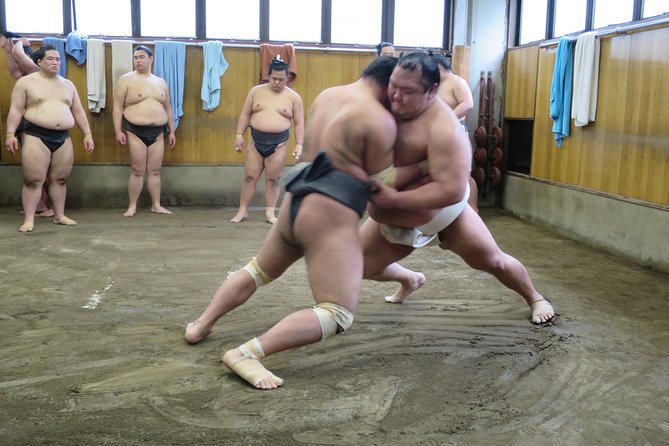
A sumo tournament gives you ceremony, crowds, formal bouts, and the excitement of competition. Morning practice gives you the work behind it. You see repetition, fatigue, discipline, and the quiet hierarchy of the stable.
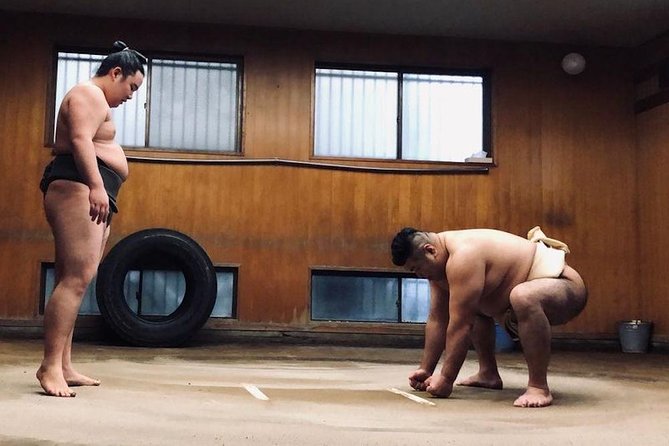
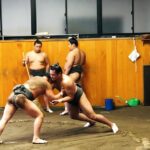
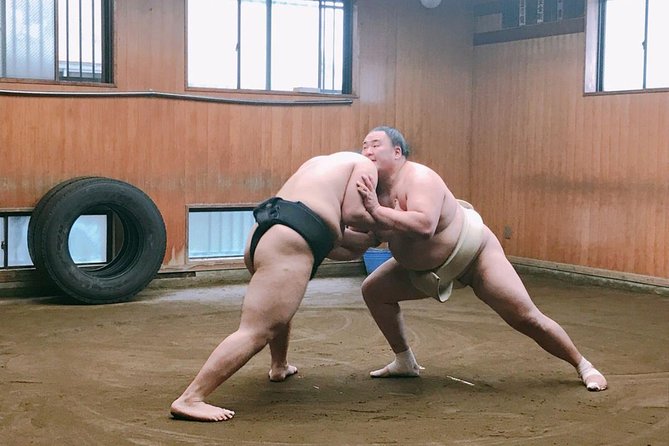
The session can include basic exercises and warmups, but it may also progress to forceful practice matches. These are not choreographed demonstrations. The wrestlers are preparing for real competition, and the physical effort can be startling when viewed from close range.
This setting also shows details that a seat in Ryogoku Kokugikan cannot. You may notice how wrestlers wait their turn, how senior athletes command attention, and how carefully the room is kept. The sport’s physical side is obvious, but so are its rules of conduct and respect.
You should not expect a running commentary during the practice. Silence is part of the arrangement. Speaking, moving around, or taking photos may be forbidden because the stable is a working training space, not a theater.
That quiet can feel restrictive at first. I think it is also what makes the visit feel genuine. You are being allowed into someone else’s workplace, and the best way to show respect is to watch carefully and let the training speak for itself.
A few more Tokyo tours and experiences worth a look
Meeting at JR Ryogoku Station at 8:00 a.m.
The meeting point is beneath the JR Ryogoku Station East Exit, near Re.Ra.Ku Ryōgoku Ekimae at 1-chōme 3-5 Yokoami, Sumida City. Your guide should be holding a red or orange MagicalTrip board.
This detail matters because Ryogoku has two stations. Do not go to Ryogoku Station on the Oedo Line. The tour specifically meets at the JR station’s East Exit, and a wrong-station start can quickly turn into a missed tour.
Arrive before 8:00 a.m. The operator asks you to be at the meeting point about 10 minutes before the tour begins, and the group cannot wait long. If you are more than 15 minutes late, you may be refused entry with no refund or alternate date.
The early start is practical. Sumo training takes place in the morning, and the schedule can change based on tournaments, the wrestlers’ condition, or the stable’s own plans. It also means you will be in Ryogoku before the area fills with the day’s activity.
Your guide gives an introduction before the walk. The quality of this part can shape the whole visit. The best guides, including Masao, Mayu, Ayaka, and Yumiko on different departures, have explained what to watch for and helped connect the training to sumo’s rules and way of life.
One useful improvement would be a clear rundown before leaving the station. Make sure you understand if the group will visit another nearby sight after practice or return directly to the station. That avoids confusion when the group starts walking again.
The Five-to-Thirty-Minute Walk to a Sumo Stable
From the station, the guide walks with you to one of the stables available that morning. The walk takes about five to 30 minutes, depending on the stable.
That variable time is worth noting. You are not booking a fixed building with a guaranteed address. The operator works with stables whose schedules and available spaces can change. You may be close to the station, or you may walk farther through Ryogoku, the district most associated with sumo.
The walk provides time for questions. A good guide can explain the basic structure of the sport, how stables operate, how wrestlers are ranked, and what the morning routine means. Some guides have also pointed out nearby cultural places, including Ekōin Temple, which one departure visited after the practice.
Do not expect a long sightseeing tour on the way. The walk is mainly a transfer and briefing. Its value comes from preparing you to understand the room you are about to enter.
Once you reach the stable, follow the guide closely. Only the tatami areas are open to visitors. Other parts of the building are off-limits, and the stable can refuse entry to anyone who ignores its rules.
Sitting Close to the Action on the Tatami Floor
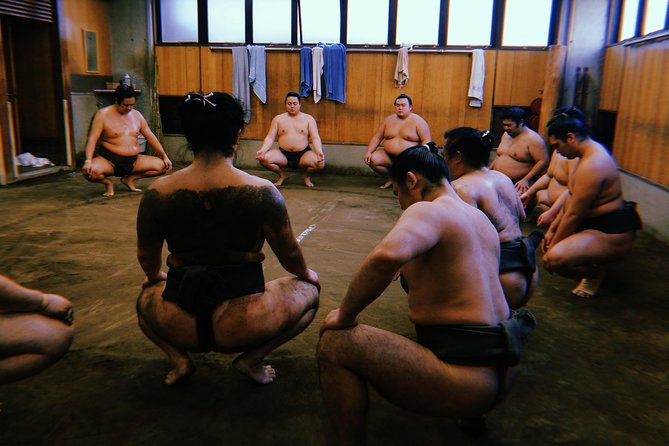
The practice itself generally lasts about one hour and 30 minutes, though it can be shorter or longer. Some sessions have lasted around two hours, so do not schedule an important appointment immediately afterward.
You will likely sit on the floor. Most stables do not offer chairs, and you may be seated on tatami mats for the entire practice. This is the most important comfort issue on the tour. If sitting on the floor is difficult for you, the experience may be tiring even if you are fascinated by the training.
Seating is first come, first served. Several tour groups may use the same stable, and a late-arriving group can end up two or three rows behind the front. You might still have a clear view, but the closest positions go to those who arrive on time and follow the seating order.
The payoff is proximity. From the floor, the wrestlers feel much larger and more powerful than they do from a tournament seat. You can watch them prepare, repeat movements, and work through bouts at close range.
The practice may include:
- General stretching and warmup exercises
- Repeated sumo drills
- Technique work
- Practice bouts between wrestlers
- Short periods of waiting and observation
The session is not necessarily a neatly packaged show. It may begin before your group arrives, and you may join partway through an ongoing practice. That is normal for a working stable, but it can disappoint anyone expecting a full morning program from the first exercise to the last.
Photography rules vary. Some stables allow photos during practice, while others require you to keep your camera away until the session ends. The stable decides, not the guide, so do not assume that the advertised photo opportunity guarantees pictures inside the training room.
Masks, posture, silence, and movement may also be controlled by the stable. Follow the guide’s instructions even if you notice other people behaving differently. One past departure had confusion when independent visitors appeared to follow looser rules. The safest approach is to treat the stable’s instructions for your group as binding.
You may not be allowed to use the toilet during practice. Go before the tour starts, and bring water, especially in Tokyo’s hot and humid summer. A hat is useful outdoors, but you may need to remove it inside.
The Photo Opportunity After Training
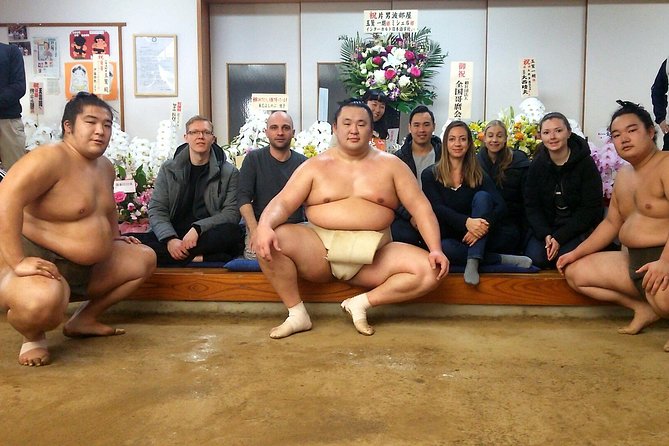
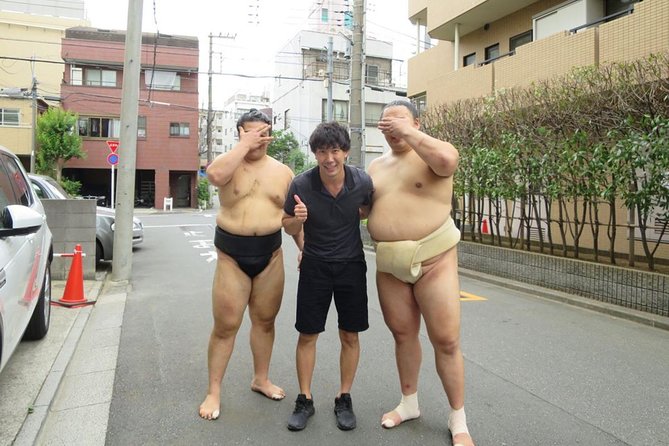
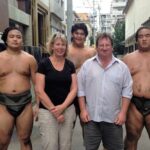
The tour includes photos, but the exact form depends on the stable and the wrestlers. You may be allowed to take pictures of the athletes, and you may have the chance to pose with them after practice. You may also be told to wait until training ends before taking out your camera.
This uncertainty is not a flaw in the guide’s planning. The stable has the final say. A wrestler may be willing to pose one morning and unavailable the next, or the room may need to clear quickly after an unusually long practice.
When photos are allowed, the moment can be a pleasant personal finish to a serious session. You have just watched the athletes work, so a quick picture feels connected to the experience rather than tacked on as a souvenir stop.
Keep your expectations modest. Do not book this tour only for a guaranteed wrestler photo. Book it for the training, and treat the picture as a possible extra.
A few more Tokyo tours and experiences worth a look


A Short Look at Ryogoku and Ryogoku Kokugikan
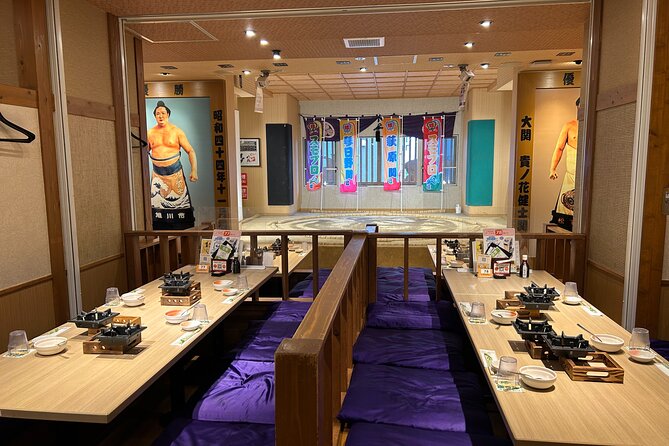
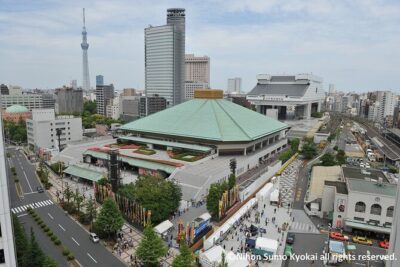
After practice, the guide takes you around Ryogoku, the district known as Tokyo’s sumo town. The planned stop at Ryogoku Kokugikan lasts about 10 minutes and does not require an admission ticket.
This is a brief orientation rather than a full museum visit or tournament experience. The guide may explain the area’s connection to sumo and point out the arena, but you should not expect entry to the building or a long tour of its exhibits.
That short stop helps place the stable in context. Ryogoku is not an arbitrary Tokyo neighborhood. The area’s restaurants, statues, shops, and public identity are closely tied to sumo, and walking near the Kokugikan gives the morning a sense of place.
The guide then walks you back to the original meeting point. The activity ends there, usually after about two hours, though an extended practice can push the finish later.
What $98.16 Buys You
At $98.16 per person, this is not a cheap way to spend a morning. The price pays for access arranged through a local operator, a guide, and a small-group visit to a stable that is difficult to approach without help.
The value depends on what you want. If you are already interested in sumo, the chance to watch authentic practice from nearby can justify the cost. You are paying for access and interpretation, not for a long list of included stops.
If you simply want to see large athletes in action, a tournament or sumo-related attraction may suit you better. The tour does not include lunch, a full museum visit, or another major activity. It is focused almost entirely on the stable.
The guide makes the price easier to justify. Without explanation, you may see people pushing, stretching, and colliding without understanding the rank, rules, or purpose of each exercise. Guides such as Masao and Yumiko have been praised for explaining the sport before and during the visit, sometimes writing notes to clarify what the group is watching.
That said, guide quality can vary. Some departures have felt lightly explained, with much of the time spent sitting silently. If you want a detailed lesson in sumo’s origins, training system, business structure, and stable life, ask questions before entering and during the permitted discussion periods.
Who Will Get the Most From This Visit
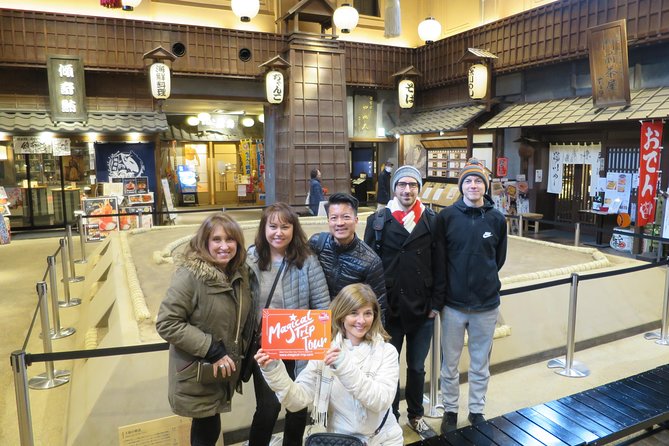
I would choose this experience for a first-time sumo fan who cannot attend one of Japan’s six official tournaments. It offers a close look at preparation and may reveal more about the athletes’ discipline than a single tournament bout.
It also suits people who enjoy cultural access more than polished entertainment. The rules are firm because the wrestlers are working. You will need to be quiet, punctual, and comfortable with an uncertain schedule.
Sports fans will appreciate the repetition and physical detail. Even if you do not know the rules, the guide can help you notice technique, hierarchy, and the difference between warmups and serious practice bouts.
This is less suitable for young children. Only people aged 12 and over may enter the stable, and children under 12 will be denied entry without a refund.
It may also be a poor match if you need a chair, require easy toilet access, dislike early mornings, or want a fully scripted tour. The practice can run long, photography may be refused, and the stable may cancel or request a date change at short notice.
The group size is limited to seven, though a large total attendance can be split between different groups and stables. That keeps your own guide’s group small, but it does not guarantee a private room or front-row position.
Practical Rules That Matter on the Day
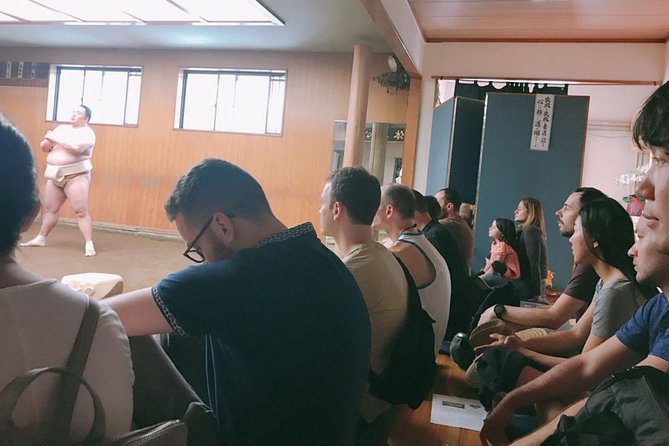
Treat this as a working-site visit, not a standard attraction. Wear clothing that lets you sit comfortably on the floor, arrive early, and use the toilet before meeting the guide.
Keep your phone quiet and wait for permission before taking photos. Do not enter areas marked off-limits, and do not speak during the practice if the stable has prohibited conversation.
Summer heat and humidity can be serious. Carry water and wear a hat for the walk, especially if the stable is farther from the station.
The operator offers free cancellation up to 24 hours before the start time. Changes or cancellations inside that 24-hour window are not refunded. The stable can also cancel or alter the visit if practice is suddenly called off or the schedule changes. In that case, you should receive a full refund, and you are not charged a separate entrance fee for the practice.
The activity is also listed as weather-dependent. If poor weather causes cancellation, you are offered another date or a full refund.
Should You Book the Ryogoku Sumo Morning Practice?
I would book it if you want to see sumo at close range and can accept strict etiquette, floor seating, and an uncertain practice schedule. The most valuable part is the unscripted training, not the short neighborhood walk or the possible photo.
Arrive early for the best seating, use the toilet beforehand, and plan extra time after the scheduled finish. Choose this over a tournament if you want to understand the daily work behind sumo. Skip it if you need comfort, guaranteed photos, or a polished presentation from start to finish.
For the right visitor, this is a rare look at athletes doing the hard, repetitive work that makes the public spectacle possible. At $98.16, it asks a fair amount, but the access is unusual and the experience can be memorable for reasons that have little to do with showmanship.
FAQ
Where does the sumo practice tour meet?
Meet at Re.Ra.Ku Ryōgoku Ekimae beneath the JR Ryogoku Station East Exit in Yokoami, Sumida City.
Which Ryogoku station should I use?
Use JR Ryogoku Station. Do not go to Ryogoku Station on the Oedo Line.
What time does the tour begin?
The tour begins at 8:00 a.m. You should arrive at the meeting point about 10 minutes early.
How long does the experience last?
The scheduled duration is about two hours. Sumo practice may run longer than expected, sometimes lasting around two hours by itself.
How far is the sumo stable from the station?
The walk takes about five to 30 minutes, depending on which stable is available that day.
Can children join the tour?
Only people aged 12 and over may enter the sumo stable. Children under 12 cannot participate.
Will I be able to take photos with the wrestlers?
Possibly, but photos and posed pictures depend on the stable’s rules and the wrestlers’ availability. Photography is not guaranteed.
Do I need to sit on the floor?
Yes, you may need to sit on tatami flooring because most stables do not provide chairs.
What happens if the stable cancels the practice?
The stable may cancel or change the schedule at short notice. If the operator cancels because practice is unavailable or poor weather affects the activity, you should be offered another date or a full refund.
More Morning in Tokyo
More Sumo Experiences in Tokyo

More tours in Tokyo we've reviewed












Sumo Experiences, compared.
 ★ 4.8Tokyo: Sumo Show Experience with Chicken Hot Pot and a PhotoFrom $1032 hours
 ★ 4.8Tokyo: Sumo Show and Dining ExperienceFrom $7990 minutes - 2 hours
 ★ 5.0the SUMO showFrom $89
 ★ 5.0Tokyo Sumo Entertainment Show with Chicken Hot Pot and PhotoFrom $106
 ★ 4.6Tokyo: Sumo Tournament Tour with Chair Seat TicketsFrom $141
 ★ 5.0Tokyo Grand Sumo Tournament Viewing Tour with TicketsFrom $124