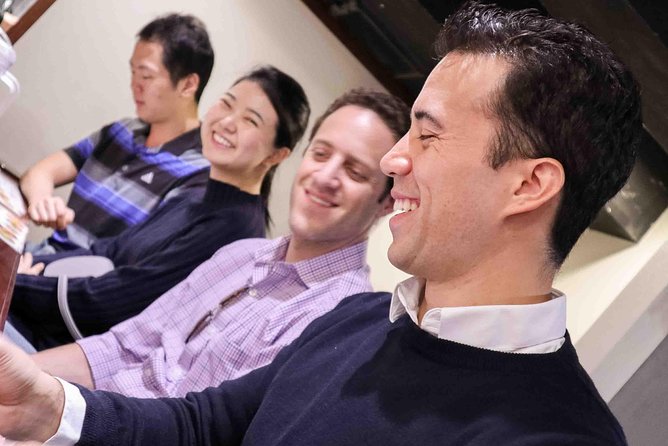
Reviewed · TOKYO FOOD TOURS
Ramen Tasting – Mini Bowl Ramen Tour
Tokyo’s first ramen tasting tour solves a common Japan problem: you want to try everything, but a full bowl at each shop is far too much. Here, you visit three ramen neighborhoods and taste up to six small bowls, from creamy pork broth to lighter soy-based styles and unusual regional flavors.
In This Article
- Key points to know before booking
- Why six small bowls work better than one big bowl
- Starting near Shibuya Crossing
- Three ramen shops, three different lessons
- The walking between bowls is part of the meal
- Guides who make the food easier to understand
- The price makes sense for some budgets
- Who should book this ramen walk?
- What to bring and how to prepare
- Should you book it?
- FAQ
- How long does the ramen tour last?
- How many ramen bowls are included?
- Is a beverage included?
- Where does the tour begin?
- Does the tour include transportation?
- How many people can join the tour?
- Do I need to be physically fit?
- Can I cancel for a refund?
I like the smart portion sizes and the way each stop has a different focus. I also like the guides, especially Sahori, Brian, Bunga, and Makayla, who bring the food, Tokyo history, and practical ordering advice to life.
The main catch is the price, $118.92 per person, and the amount of walking between shops. You should also arrive hungry. Six small bowls sound modest, but they add up quickly.
Key points to know before booking

- Six mini bowls make ramen sampling practical: You can taste several styles without committing to six full meals.
- Three neighborhoods add a Tokyo walk: The tour is not only about eating. You also move through local areas, beginning near Shibuya Crossing.
- Guide quality is a major strength: Sahori, Brian, Bunga, Makayla, Daisy, Julija, Manny, and Deep are among the guides praised for warmth, clear explanations, and enthusiasm.
- The shops offer real variety: Expect differences in broth, seasoning, toppings, and regional influence rather than six versions of the same bowl.
- The group is capped at 10 people: That keeps the format fairly personal and leaves room for questions.
- The tour suits ramen newcomers best: If you already have a firm list of favorite shops, you may prefer choosing full bowls on your own.
Why six small bowls work better than one big bowl
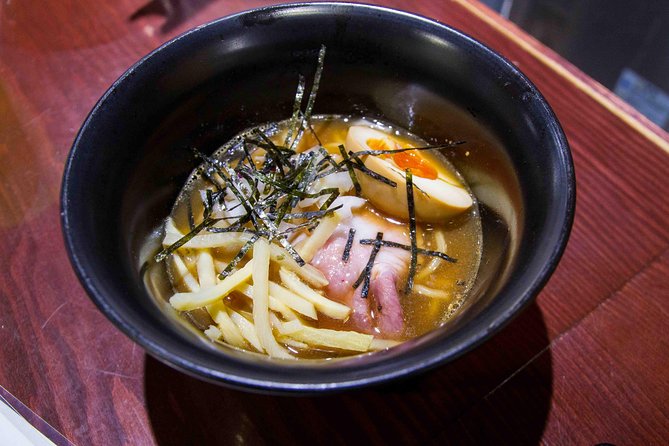
Ramen is not one dish. In Japan, the word covers a wide range of broths, noodles, seasonings, and toppings. A bowl may be light and soy-forward, thick with pork, hot with fish and spice, or built around a regional style you have never seen at home.
The problem is portion size. A full bowl can be a meal by itself, so independent tasting often means choosing one shop and wondering what you missed. This tour turns that problem into the central idea: you get two mini bowls at each of three shops, for six samples in all.
That format is the best reason to book. I like being able to try something outside my normal order without gambling on a huge serving. The small bowls let you compare rather than simply eat.
You will still need an appetite. Several people found the total amount surprisingly generous, even with the reduced portions. If you eat lightly, this may feel like three meals compressed into one afternoon or evening.
The exact tasting lineup can vary, but the experience is designed around contrast. One bowl may lean toward savory pork, another toward soy, and another toward spicy seafood or a less familiar local style. Your guide explains what you are tasting and helps you notice the differences instead of treating every bowl as just noodles and soup.
For couples, there is an extra wrinkle. Some pairs have been able to share bowls and sample as many as 12 varieties between them. That is not the same as receiving 12 personal mini bowls, so do not book expecting double the advertised meal. Still, sharing can make the tasting even more varied.
A few more Tokyo tours and experiences worth a look

Starting near Shibuya Crossing
The tour begins at Shibuya Crossing, the famous intersection where waves of people cross from several directions at once. The crossing itself takes only a moment, but it is a useful meeting point and an unmistakable way to begin a Tokyo food walk.
Shibuya is more than a photo stop. It gives you an immediate sense of Tokyo’s scale, energy, and compact urban planning. From there, the guide helps you get oriented before the ramen portion begins.
This is also where a practical issue matters. Shibuya Station is large, and finding the right meeting point can be confusing, especially after arriving on a long international flight. One guide, Bunga, was specifically praised for patiently helping a participant navigate the station. I would allow extra time and keep the meeting instructions open on your phone.
The tour is near public transportation, but transport to and from the attractions is not included. You will need to handle your own way to the starting point and your journey home after the final stop.
The crossing is listed as a very short stop, not a major sightseeing visit. Think of it as the launch point for the food walk, not as a separate Shibuya tour.
Three ramen shops, three different lessons
The heart of the experience is the visit to three award-winning ramen shops in Tokyo neighborhoods known for their noodle culture. At each restaurant, you taste two mini bowls. That repeated structure makes it easier to compare styles as you go.
The first stop usually helps set the vocabulary. Your guide can explain the basic building blocks of ramen, including broth, noodles, seasoning, and toppings. This is where you begin to understand why a bowl that looks simple can taste very different from the next one.
At the second shop, the contrast becomes clearer. A stronger pork broth may feel heavier and creamier than a delicate soy-based bowl. A spicy fish preparation can bring a sharper, more savory edge. Small servings matter here because you can try bold flavors without having to finish a full portion if they are not your favorites.
The third restaurant brings the tasting to a useful finish. By this point, you have enough examples to form your own preferences. You may discover that you prefer clear broth to pork broth, or that a regional style you would never have ordered turns out to be your favorite.
The shops are not presented as identical food halls. Each stop has its own specialty, setting, and style. That variety is what makes the route worthwhile. You are not simply eating more ramen. You are learning how broad the category can be.
There is one limitation. The supplied details do not identify the permanent names of the three shops or promise a fixed menu. That means you should book this for the guided tasting format, not for a particular bowl you saw online. The lineup can be treated as part of the tour’s changing food program.
The walking between bowls is part of the meal
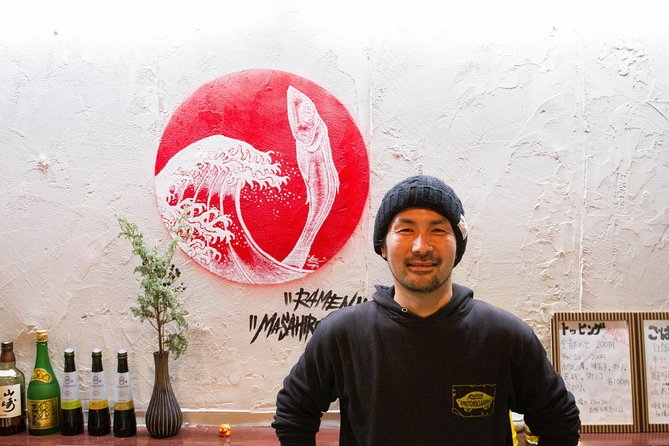
You will walk between the ramen stops, and the total tour lasts about three hours. The walking is described as manageable, but it is enough that you should wear comfortable shoes and expect a moderate level of physical activity.
I see this as a benefit. A short walk gives your stomach time to catch up, and it lets you experience more than the inside of a restaurant. One tasting included a stroll through a park, with cherry blossoms in bloom at the time. That kind of pause can make the meal feel less rushed.
The walking also connects different parts of Tokyo in a way a single restaurant visit cannot. You get small glimpses of changing neighborhoods, station areas, and local streets while moving from one flavor to the next.
Still, do not treat the tour as a sedentary lunch. The route has three food stops, station navigation, and walks between bowls. If you have limited mobility or dislike being on your feet, check the route details before booking. The activity asks for a moderate fitness level.
Guides who make the food easier to understand
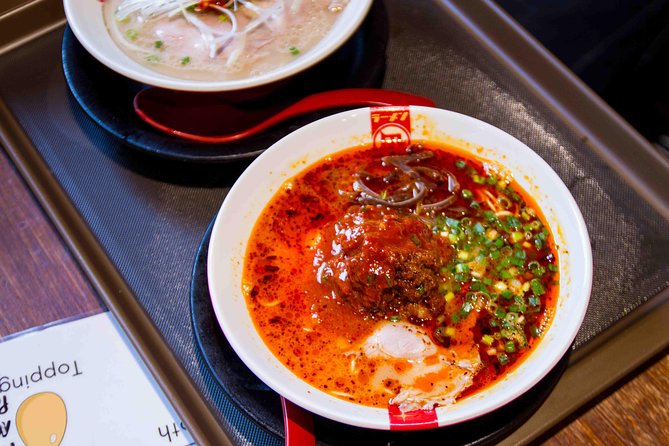
The guide can make or break a food tour, and this one gets repeated praise for its human side. Sahori is described as outgoing, friendly, and full of energy. She also answers questions about Tokyo beyond ramen, which is useful if this is your first visit.
Brian brings strong personal enthusiasm for ramen and explains differences between styles, ingredients, and neighborhoods. His approach suits anyone who wants more than a meal and enjoys learning how the dish developed.
Bunga is another name that comes up often. He has helped with station navigation, kept families engaged, and shared a broad range of ramen information. Families with teenagers may appreciate that the meal remains active and varied rather than turning into a long formal lecture.
Makayla is praised for being easy to spend time with and clear about the different ramen styles. Daisy is also described as friendly and well prepared, while Manny combines the food lesson with an entertaining walking experience. Julija and Deep have also led enjoyable tastings, with Deep handling dietary needs without trouble on one occasion.
Guide assignments can change, so you should not assume a particular person will lead your departure. The larger point is that the format gives the guide room to talk with you. The maximum group size is 10, and some departures may be much smaller. A small group is especially helpful when you want to ask about ingredients, ordering customs, or Tokyo neighborhoods.
The history lesson is not filler. Ramen began as a Japanese adaptation of Chinese-style noodles and developed into many local forms. Your guide connects that past to the dish’s future, including how shops keep experimenting with ingredients and presentation. You also learn how to eat ramen in a local setting, including the relaxed approach to slurping and the way diners handle a fast-moving noodle shop.






The price makes sense for some budgets
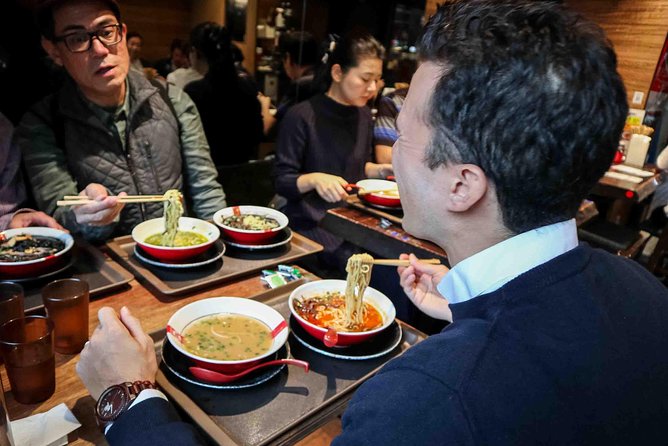
At $118.92 per person, this is not a cheap lunch. You are paying far more than the cost of ordering one bowl at an ordinary ramen shop.
The value comes from the package. The price includes six mini bowls, a beverage, a local guide, and the structure of visiting three different restaurants. It also saves you the work of researching shops, sorting out ordering systems, and deciding how to taste several styles without wasting food.
I think the price works best for a first visit to Tokyo, especially if ramen is high on your list but you do not know where to start. It also makes sense for people who value explanations and local context as much as the meal.
The calculation is less favorable if you are a seasoned ramen fan who already knows the styles you like and has a short list of favorite shops. In that case, the same money could buy several full bowls across separate meals, though you would lose the guide and organized comparison.
A drink is included. The standard details specify one beverage, while some participants received two drinks, including alcoholic or non-alcoholic options. I would plan around one included beverage unless your booking details say otherwise.
Who should book this ramen walk?
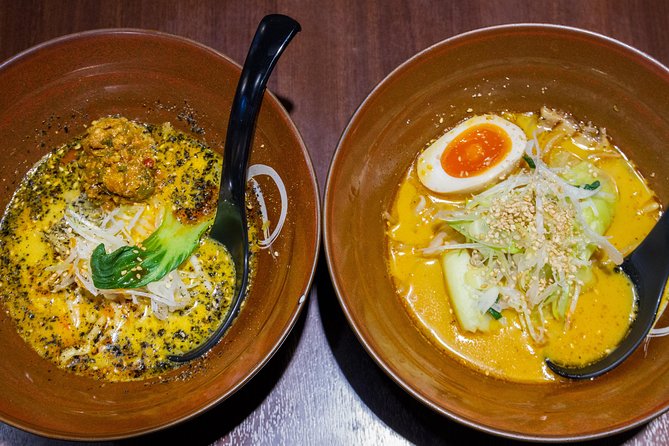
This tour is a strong match for first-time visitors, curious eaters, and anyone who wants a clear introduction to Japanese ramen. The mini bowls remove the pressure of making one perfect choice, and the guide gives you a framework for ordering on your own later.
It also works well for families and pairs. Teens can enjoy the food variety, while couples can share bowls and compare notes. If you are traveling alone, the small group cap and guide-led format provide company without requiring you to organize a group meal.
Ramen enthusiasts can enjoy it too, particularly if they want regional styles or shops they might not find alone. The value depends on your expectations. This is a guided tasting and neighborhood walk, not a hunt for one giant bowl or a private chef experience.
People with dietary restrictions should take care. One departure handled dietary requirements without difficulty, but the general information does not spell out every substitution or ingredient list. Contact the operator before booking if your needs are strict.
The tour is also a good early-trip activity. You learn the basic differences between ramen styles, then use that knowledge during the rest of your time in Japan. It can save you from ordering the same familiar bowl every night.
What to bring and how to prepare
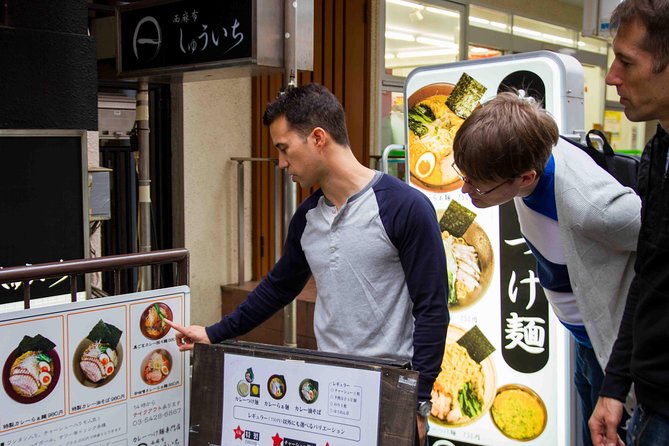
Come hungry, but do not skip breakfast or lunch if your tour is later in the day. The goal is to enjoy six samples, not arrive so starved that you eat too quickly at the first shop.
Wear walking shoes. The route takes about three hours and includes movement between restaurants and public transportation areas. Bring a charged phone for the mobile ticket and meeting details.
Give yourself time to reach Shibuya Crossing. The station is easy to recognize from the outside but can be confusing underground. Since transportation is not included, plan your route to the start and your return from the final stop.
Keep an open mind about texture and broth. The tour is designed to show contrast, so not every bowl will match your usual order. That is useful information, not a flaw. Finding out what you do not like is part of learning how to choose ramen well.
Should you book it?
Book this tour if you want to taste widely, learn the basics, and let a local guide handle the restaurant choices. The six mini bowls are the clever part, and the combination of food, neighborhood walking, and ramen history gives you more than a standard meal.
Skip it if you want the lowest-cost ramen possible, dislike walking, or already have a detailed list of shops to visit. At $118.92, the tour asks you to value guidance and variety.
For most first-time ramen explorers, I think the price is defensible. You get a focused introduction, a manageable way to compare six styles, and a better chance of finding the kind of ramen you will seek out again.
FAQ
How long does the ramen tour last?
The experience lasts approximately three hours.
How many ramen bowls are included?
The package includes six mini bowls of ramen, with two small bowls served at each of three restaurants.
Is a beverage included?
Yes. The included meal lists one beverage. Some departures have included two drinks, including alcoholic or non-alcoholic options, but you should confirm the details for your booking.
Where does the tour begin?
The itinerary begins at Shibuya Crossing in Tokyo.
Does the tour include transportation?
No. Transportation to and from the attractions is not included. The route is near public transportation.
How many people can join the tour?
The maximum group size is 10 people.
Do I need to be physically fit?
You should have a moderate level of physical fitness because the tour includes walking between the ramen shops.
Can I cancel for a refund?
You can cancel at least 24 hours before the experience start time for a full refund. Cancellations or changes made less than 24 hours before the start time are not accepted for a refund.
More Tokyo Food Tours in Tokyo


More tours in Tokyo we've reviewed












Tokyo Food Tours, compared.
 ★ 5.0Tokyo: Shinjuku Food Tour (13 Dishes at 4 Local Eateries)From $86
 ★ 4.9Tokyo: Shinjuku Food Tour (13 Dishes and 4 Eateries)From $97
 ★ 5.0Tokyo Night Foodie Tour in Shinjuku – Seasonal Sushi, Wagyu BeefFrom $111
 ★ 5.0Eat and Drink Like a Local: Tokyo Ueno Food Tour-Taverns&RamenFrom $95
 ★ 5.0Tokyo: Shibuya Food Tour (13 dishes and 4 Eateries)From $77
Tokyo: Shinjuku Food Tour – 15 Dishes, 3 Drinks, 4 EateriesFrom $723 hours
★ 5.0Tokyo: Shibuya Food Tour (13 dishes and 4 Eateries)From $77
Tokyo: Shinjuku Food Tour – 15 Dishes, 3 Drinks, 4 EateriesFrom $723 hours