Reviewed · ASAKUSA TOURS
Tokyo: Making a Lantern Workshop in Asakusa with a Craftsman
A paper lantern workshop in a century-old Tokyo atelier gives you something most sightseeing stops cannot: time with a working craftsman and a souvenir you make yourself. You will handle bamboo, washi paper, glue, brushes, and traditional tools while learning why chochin lanterns matter in Japanese culture.
In This Article
- Key details at a glance
- Why a chochin workshop is worth two hours
- Entering the old Sumida City atelier
- Learning from the lantern master
- Making and decorating your own chochin
- A personal souvenir instead of a standard purchase
- What makes the guides helpful
- Planning the correct Tokyo meeting point
- Who will enjoy this most
- Accessibility and practical comfort
- FAQ
- How long does the Tokyo lantern workshop last?
- How much does the experience cost?
- Where is the regular workshop held?
- When does the meeting point change?
- Where is the special sumo-period venue?
- What materials are included?
- Can I take my lantern home?
- Is English available?
- Can children join?
- What should I bring?
- Should you book this lantern workshop?
I like the personal setting, where the master and English-speaking guide can give you patient help, and I like the finished lantern, which is more meaningful than a shop-bought trinket. The main consideration is location: the meeting point changes during the January, May, and September 2026 Grand Sumo Tournament periods, so check your booking date carefully.
Key details at a glance
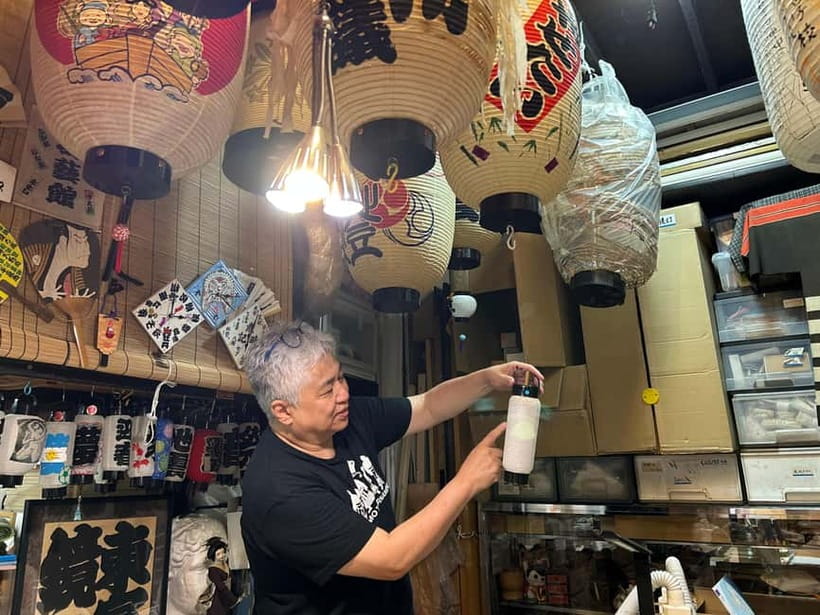
- A real working atelier: Visit a more than 100-year-old family workshop in Sumida City, near Tokyo Skytree.
- Hands-on craft: Use bamboo, washi paper, glue, brushes, and traditional methods to build and decorate your own chochin.
- Helpful language support: Japanese and English are available, with guides including Rinka, Noriko, and David Park on some sessions.
- A practical souvenir: Your completed lantern is packaged for taking home, and professionally made lanterns may also be available to buy.
- Good for mixed ages: The activity welcomes children aged 6 and older, families, couples, solo visitors, and creative adults.
- Two possible venues: The regular workshop is in Yokokawa, while sessions during official sumo tournaments move to the Ryogoku Kokugikan area.
Why a chochin workshop is worth two hours
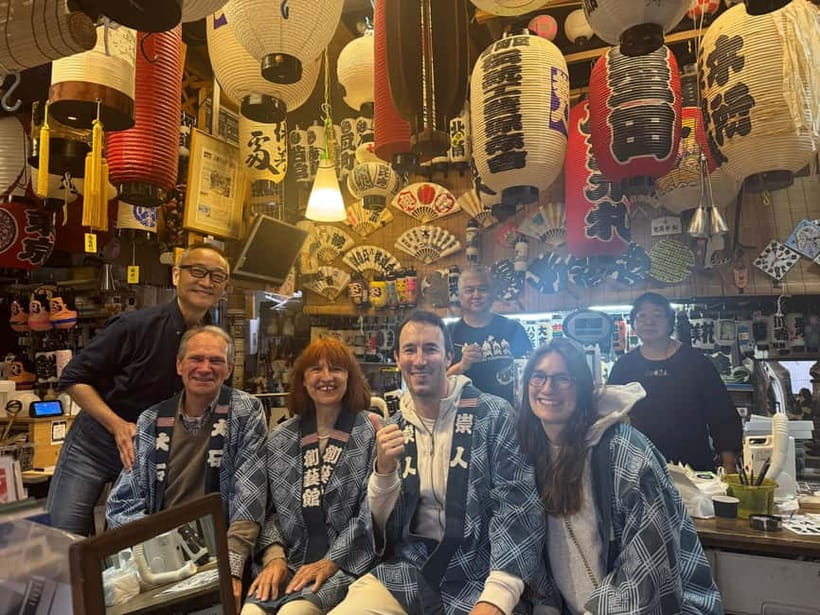
Tokyo offers plenty of polished attractions, but a craft workshop slows the city down in a useful way. For two hours, you are not simply looking at Japanese design behind glass. You are learning how an object is formed, decorated, and finished by hand.
Chochin are traditional Japanese lanterns made with a frame and paper covering. The workshop focuses on the making process, but it also introduces the origins and meaning of the craft. That context matters. Once you have wrestled with paper, glue, lettering, and careful decoration, you see the skill in finished lanterns with new respect.
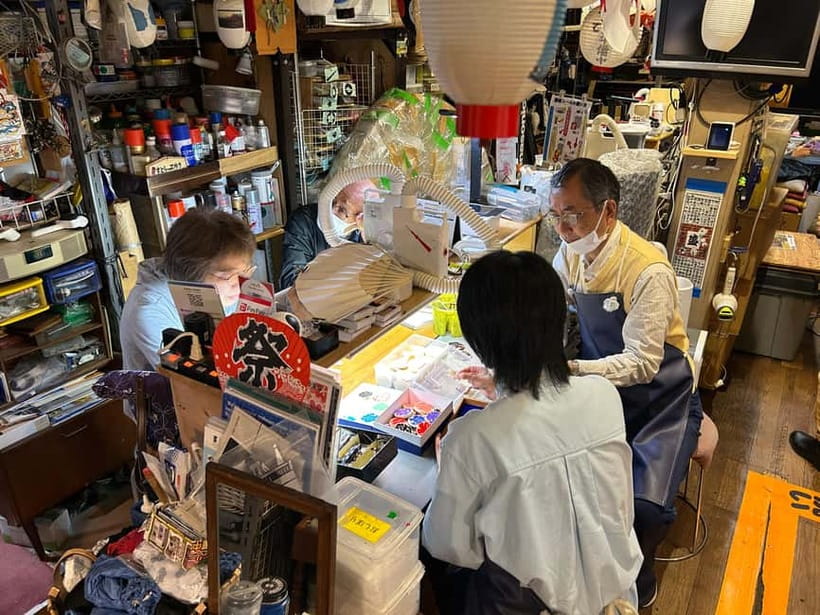
The setting adds to the appeal. The regular venue is described as a traditional atelier filled with colorful lanterns in different shapes and sizes. Photos are welcome, so you can record the room as well as your own work. This is a visual experience, but it is also tactile and creative.
I would not choose this activity if you want a fast sightseeing stop with a famous view. You need to concentrate, follow instructions, and spend most of the two hours at the worktable. For many people, that is the point.
A few more Tokyo tours and experiences worth a look



Entering the old Sumida City atelier
Outside the official sumo periods, the workshop takes place at 2-10-8 Yokokawa, Sumida City, Tokyo, postal code 130-0003. The area is near Tokyo Skytree and Oshiage Station, making this a sensible choice for a half-day in northeastern Tokyo.
The atelier is more than 100 years old and functions as a family business. You can expect a warm, close setting rather than a large craft school. Lanterns hang around the room, giving you examples of the shapes, colors, and finishing styles used in the trade.
That small scale is one of the strongest parts of the experience. The master craftsman can focus on your work, while an English-speaking guide helps explain instructions and conversation. Depending on the session, your guide may be Rinka, Noriko, or David Park. Their role is useful because the workshop is not just about copying steps. You can ask about the craft, the neighborhood, and life in Tokyo.
One participant who arrived early was accommodated without trouble, but I would still aim to arrive at the stated meeting time. The address is in a regular Tokyo neighborhood, not a large attraction with an obvious ticket entrance, so allow time to check your route.
Learning from the lantern master
The session begins with an introduction to chochin lanterns and their place in Japanese culture. You will learn about the craft before starting your own piece, which prevents the activity from feeling like a generic painting class.
The master or assistant then explains how to work with the materials. Bamboo forms part of the traditional structure, while washi paper provides the lantern’s familiar surface. Glue and brushes are included, along with the supplies needed for decoration.
No previous craft experience is required. The instructions are designed for beginners, and English support is available. You should still expect some careful work. The finished object may look simple, but shaping paper and adding decorative elements takes patience.
Calligraphy can take longer than you might expect. If you plan to add Japanese characters or detailed writing, the two-hour duration gives you useful breathing room. Do not rush the lettering simply to finish early. The decoration is what turns the lantern from a basic object into a personal keepsake.
The teaching style is one of the reasons this works for families and solo visitors alike. You can get practical help without needing to know Japanese, and the guides can help you communicate with the master. If you arrive alone, the format gives you a clear activity to focus on rather than leaving you on the edge of a group.
Making and decorating your own chochin
The main task is straightforward in concept: use the supplied materials and traditional methods to create a lantern of your own. The exact design choices may depend on the workshop session, but the finished piece is handmade by you rather than selected from a shelf.
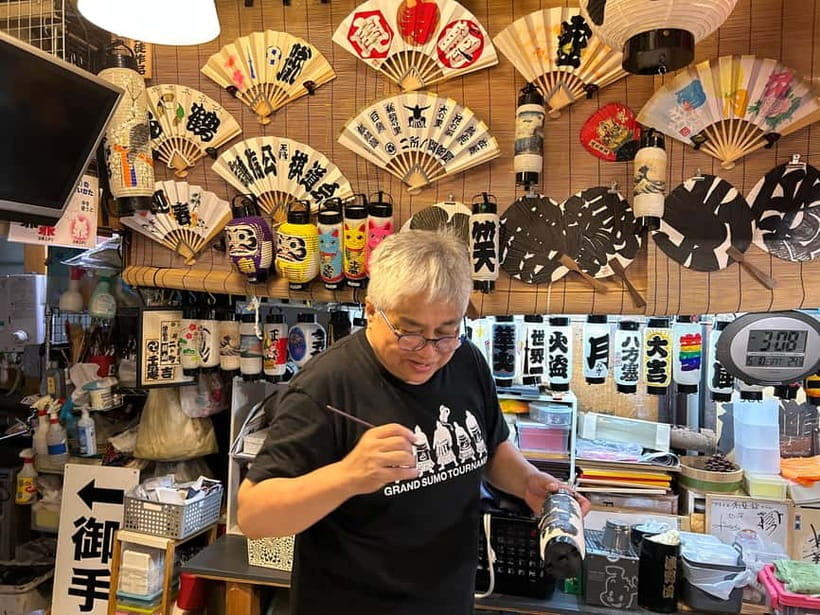
You may work with colorful paper and add your own decoration. The studio itself provides plenty of inspiration, since finished lanterns are displayed throughout the room. Photos are allowed, so you can take pictures while working and at the end.
Ink or paint may be involved, so wear clothes that can handle a small mark. This is a practical point worth taking seriously, especially if you are visiting Tokyo with a limited wardrobe. You will not need to bring craft supplies, since bamboo, washi paper, glue, and brushes are included.
The activity is suitable for children from age 6, but younger children cannot join. Families should think about attention span, since the work can involve detailed decoration rather than constant movement. Older children may enjoy having a useful object to display at home, while adults may appreciate the quiet concentration after a full day of sightseeing.
The finished lantern is carefully packaged for the journey home. That makes the souvenir easier to manage than a fragile ceramic piece or a large traditional artwork. You still need to protect it in your luggage, but the packaging is a helpful touch.
A personal souvenir instead of a standard purchase
At $96 per person, this is not a bargain activity in the usual sense. You are paying more than the cost of buying a small paper lantern in a Tokyo shop. The value comes from the setting, instruction, materials, cultural explanation, and time with an artisan.
I think the price makes the most sense if you want an activity rather than a quick purchase. You receive a lantern, but you also leave with a better understanding of the work behind it. The hands-on process gives the object a story, and that story is usually what keeps a souvenir from becoming clutter.
You may also have the option to buy a professionally made lantern at the atelier. This is useful if your own work is more personal than polished, or if you want a second lantern as a gift. Treat the purchase as optional, since the completed workshop piece is already included.
The value is strongest for people who care about Japanese craft, design, and local traditions. It is less convincing for someone who only wants the lowest-cost souvenir or who prefers a packed sightseeing schedule.
A few more Tokyo tours and experiences worth a look





What makes the guides helpful
The activity is offered in Japanese and English, with a live guide or interpreter. That support changes the feel of the workshop. You can follow the practical steps, but you can also ask questions about the history of lantern-making and the area around the studio.
Rinka has helped participants with both the workshop and wider Tokyo suggestions. Noriko has been praised for explaining the process and helping communication with the master. David Park has also served as a translator during sessions with Master Oyakata and Co-master Uehala.
Guide assignments may vary, so do not book expecting one particular person unless your confirmation specifically says so. The important point is that English assistance is part of the experience, not something you must arrange separately.
The guides also help the activity feel comfortable for solo visitors. You are not expected to arrive with a large group or already know what to do. The structure gives you a shared task, and the atmosphere is intended to be welcoming rather than formal.
Planning the correct Tokyo meeting point
The meeting point depends on your date. During most of 2026, use the regular Sumida City atelier at 2-10-8 Yokokawa. The regular venue applies from January 3 to January 10, January 26 to May 9, May 25 to September 12, and September 28, 2026 to January 9, 2027.
During the official Grand Sumo Tournament periods, the workshop moves to the Ryogoku Kokugikan area at 1-3-20 Yokoami, Sumida City, postal code 130-0015. The affected dates in 2026 are:
- January 11 to January 25
- May 10 to May 24
- September 13 to September 27
This change is important because the regular atelier and the special venue offer different surroundings. The sumo-period setting may not have the same traditional workshop atmosphere or arrangement of lanterns.
Check the address shown for your booking before setting out. Do not assume that every date meets near Tokyo Skytree. If you are combining the workshop with sightseeing, plan around the correct venue rather than relying on the general location.
Transportation is not included, and neither are food or drinks. You should also bring a passport or other identification. Pets, alcohol, and drugs are not allowed.
Who will enjoy this most
This is a strong choice for families with children aged 6 and older, especially if you want an activity that feels tied to Japan rather than a standard indoor attraction. The hands-on work gives children a clear goal, while the cultural background gives adults something to think about.
Couples can treat it as a relaxed creative date. The lanterns also make a shared trip souvenir, with each person able to choose different decoration. Solo visitors should consider it too. The guide support and step-by-step format make it easy to participate without feeling out of place.
Creative adults will get the most from the session if they enjoy lettering, painting, paper work, or traditional design. You do not need talent, but you should be willing to work slowly and accept that handmade means personal rather than perfect.
This may not suit children under 6, people who dislike seated craft work, or anyone looking for a major Tokyo landmark experience. The workshop is culturally specific, but it does not replace a temple visit, museum, or sumo match.
Accessibility and practical comfort
The activity is listed as wheelchair accessible. Since the workshop takes place at two different venues depending on the date, check the details for your booking if you have specific mobility needs.
The two-hour length is well judged. It is long enough for an introduction, construction, decoration, and finishing without taking an entire day from your Tokyo plans. It also leaves room for careful calligraphy, which can be the slowest part.
Wear clothes you do not mind getting stained by ink or paint. Bring your identification, but leave pets and prohibited substances at home. All workshop materials are supplied, so you do not need to pack anything special for the craft itself.
Free cancellation is available up to 24 hours before the activity for a full refund, and you can reserve now and pay later. Those terms are useful when Tokyo plans are still changing, though you should still check your confirmed time and venue before the day.
FAQ
How long does the Tokyo lantern workshop last?
The workshop lasts two hours.
How much does the experience cost?
The listed price is $96 per person.
Where is the regular workshop held?
The regular workshop is at 2-10-8 Yokokawa, Sumida City, Tokyo, postal code 130-0003.
When does the meeting point change?
The meeting point changes during the official Grand Sumo Tournament periods in January, May, and September 2026.
Where is the special sumo-period venue?
The special venue is in the Ryogoku Kokugikan area at 1-3-20 Yokoami, Sumida City, Tokyo, postal code 130-0015.
What materials are included?
Bamboo, washi paper, glue, and brushes are included, along with the other materials needed for the workshop.
Can I take my lantern home?
Yes. Your completed handmade lantern is included and can be taken home. It is packaged for transport.
Is English available?
Yes. The activity offers Japanese and English, with an English-speaking guide or interpreter.
Can children join?
Children aged 6 and older can participate. Children under 6 are not permitted.
What should I bring?
Bring a passport or other identification. Wear clothes you do not mind getting stained, since ink or paint may be used.
Should you book this lantern workshop?
Book it if you want a slower, more personal Tokyo experience and like the idea of taking home something you made yourself. The old atelier, patient instruction, English support, and careful packaging make this more than a simple craft class.
I would especially recommend it for families, solo visitors, couples, and anyone who has already seen the major sights and wants a closer look at Japanese workmanship. At $96, the cost is justified by the artisan setting and instruction, not just the lantern itself.
Skip it if you want a cheap souvenir, a short photo stop, or a highly active tour. Also check the date-specific meeting point before paying, since the venue moves during the three 2026 sumo tournaments. If you are happy to spend two focused hours making, decorating, and learning, this is a thoughtful way to carry a small piece of Tokyo home.
More Workshops & Classes in Tokyo
More Asakusa Tours in Tokyo


More tours in Tokyo we've reviewed












Asakusa Tours, compared.
 ★ 4.8Tokyo: Japanese Dance Cabaret Theater Asakusa-Kaguwa TicketFrom $492 hours
 ★ 4.7Tokyo: Meiji Shrine, Asakusa, Skytree Bus Tour and CruiseFrom $12210 hours
 ★ 4.9Tokyo: Roll and Authentic Sushi Making Class in AsakusaFrom $581h 40m
 ★ 4.8Tokyo: Asakusa Walking Tour with Sensoji Temple VisitFrom $222 hours
 ★ 5.0Tokyo Asakusa Rickshaw TourFrom $42
 ★ 4.5Tokyo Panoramic 1 Day: Meiji Shrine, Asakusa, Odaiba and SKYTREE®From $85