Reviewed · TSUKIJI MARKET TOURS
Private Tsukiji Market Visit and Cooking Class in Junko’s Home
Tsukiji is best understood through the food that ends up on a local table. This private experience pairs a walk through the outer market with a cooking lesson in Junko’s small Tokyo apartment, where you prepare three or four seasonal dishes and sit down to eat them together.
In This Article
- Key points to know before booking
- Why this Tokyo food experience feels different
- Tsukiji outer market: shopping where Tokyo eats
- From market goods to a meal in Junko’s home
- Lunch is part of the lesson
- What Junko adds to the experience
- Nearby Tokyo sights and how to plan your day
- Is $104 a fair price?
- The important limits to understand
- Who should book Junko’s cooking class?
- Should you book this Tokyo food experience?
- FAQ
- How long does the experience last?
- Where does the market tour begin?
- Where does the cooking-only option begin?
- Does the tour visit the original inner Tsukiji fish market?
- What can I see at Tsukiji’s outer market?
- What dishes might I learn to cook?
- Is lunch included?
- Is this a private activity?
- Can I share dietary restrictions or allergies?
- Is hotel pickup included?
- Can children join the Tsukiji market experience?
- What is the cancellation policy?
I like the personal shopping lesson, especially the chance to see seafood, produce, knives, and ceramics through a local cook’s eyes. I also like the patient, hands-on format: Junko demonstrates each step, then helps you prepare the meal yourself. The main consideration is that this is a home-based class, not a polished cooking studio, and the market visit covers Tsukiji’s outer market rather than the former inner fish market.
Key points to know before booking
- Junko leads both parts of the experience: She takes you through the outer market, then teaches the cooking class in her own home.
- The food changes with the season: Possible dishes include teriyaki chicken, eggplant with dengaku miso, tamagoyaki, and miso soup made with homemade miso.
- You eat what you cook: The class ends with lunch shared with Junko, rather than a demonstration followed by a quick exit.
- Tsukiji means the outer market today: You will see food stalls, shops, seafood displays, knives, ceramics, and Namiyoke Shrine. The former inner fish market moved to Toyosu.
- This is a truly private activity: Only your group takes part, so the pace and cooking help are more personal than in a large class.
- Plan around a modest home setting: The apartment is small and simple, which adds intimacy but may not suit anyone expecting a spacious commercial kitchen.
Why this Tokyo food experience feels different
Many Tokyo food activities keep you at a restaurant table. This one shows you the steps before the meal, from looking at ingredients to preparing them and eating them with the person who taught you.
That matters in Japan, where season, freshness, balance, and presentation all shape a meal. Junko’s stated aim is to help you understand the spirit of Japanese cooking, with attention to enjoying the present moment and the ingredients available at that time of year. You are not simply handed a plate of sushi or ramen. You get a clearer sense of how a home-style Japanese meal comes together.
The experience lasts about three and a half hours. The market portion takes place first if you select that option, followed by travel to Junko’s home and about an hour and a half of cooking. Lunch comes at the end.
Because this is private, you can ask questions as you go. You can also tell Junko about allergies, dietary restrictions, or cooking preferences when booking. The menu may change with the season, so you should think of the listed dishes as examples rather than a fixed promise.
A few more Tokyo tours and experiences worth a look
Tsukiji outer market: shopping where Tokyo eats
The meeting point for the market option is at 4-chōme-8-4 Tsukiji in Chuo City. From there, Junko introduces you to Tsukiji’s outer market, the area that remains active after the former inner market moved to Toyosu.
That distinction is important. You will not be touring the old wholesale fish market, and you should not book this expecting to watch the famous tuna auctions. Instead, the outer market offers a look at the shops and food trade around Tsukiji, including vegetables, fruit, seafood, cooking knives, and ceramics.
Junko also takes you to a facility that imitates the former Tsukiji Market and includes a seafood section. It is not the original inner market, but it gives you a way to see and discuss the type of seafood trade that made Tsukiji famous.
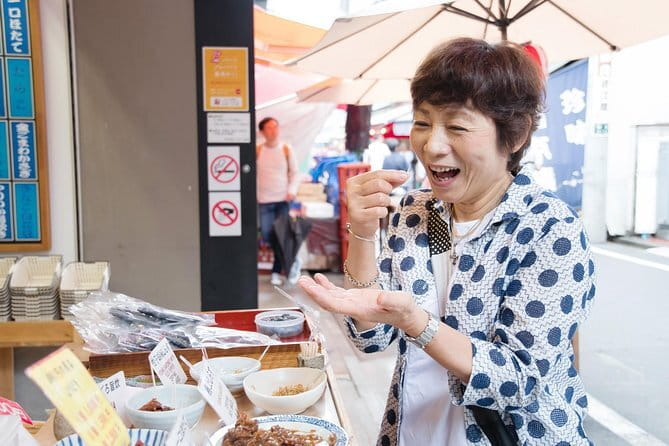
The seafood displays can be especially useful if you do not know Japanese fish names or cuts. Junko can explain what you are looking at and how those ingredients might be used at home. The experience can also include choosing fresh fish or shrimp for the meal, giving the shopping walk a clear purpose instead of making it just a visual tour.
One of the more meaningful stops is Namiyoke Shrine, the guardian deity of Tsukiji Market. It adds a small cultural layer to the food visit. You are not only looking at ingredients as merchandise. You are seeing a place with traditions, working relationships, and religious customs tied to the market.
The outer market is a practical place to visit early in a Tokyo trip. A local guide can help you get your bearings and point out details that are easy to miss when you walk alone. Just keep your expectations realistic: this is a guided introduction to the outer market, not an all-day food crawl.
From market goods to a meal in Junko’s home
After the market, you travel with Junko by subway or bus to her home. Hotel pickup and drop-off are not included, but the movement between the market and the apartment is part of the experience.
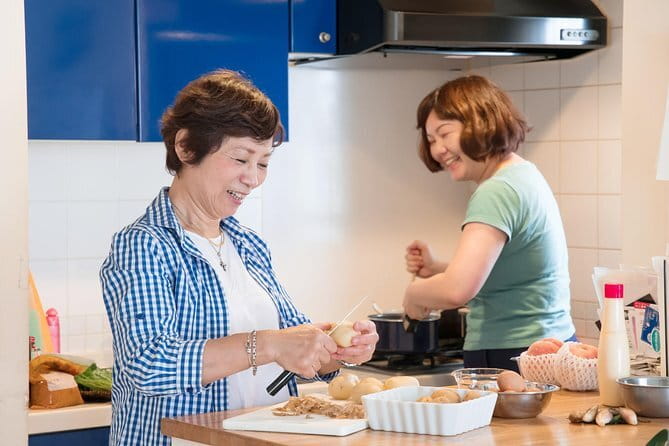
The cooking class takes place in a small, simple apartment. That setting is worth considering before you book. You will not have the space or equipment of a professional cooking school, but you will see how Japanese food can be prepared in an ordinary home kitchen.
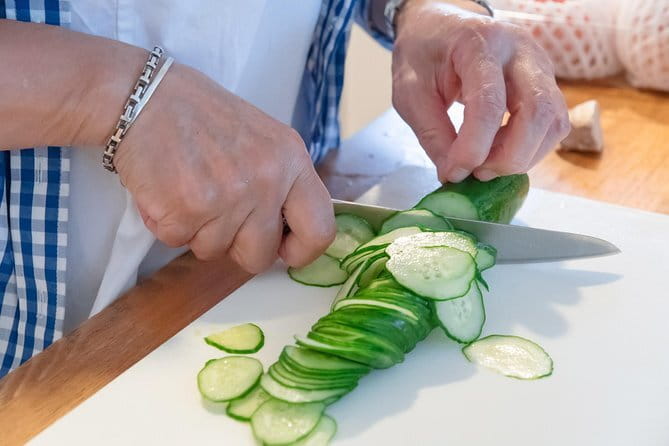
Junko demonstrates the dishes, then guides you through the work. The format is suited to people who want to participate, not just watch. You might chop, mix, season, shape, or cook ingredients under her direction, depending on the menu that day.
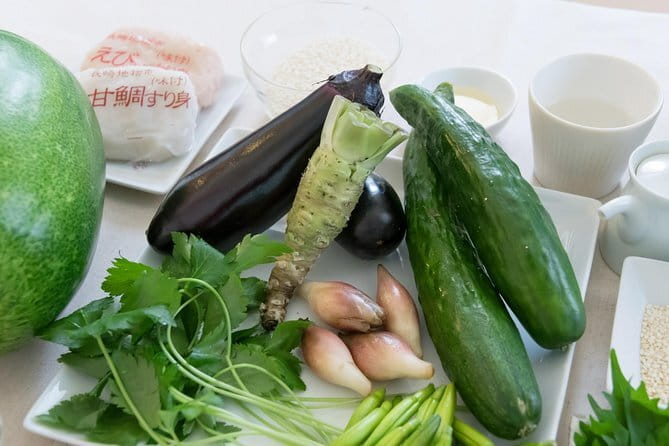
The class covers three or four savory Japanese dishes. Possible recipes include:
- Teriyaki chicken
- Eggplant with dengaku miso
- Tamagoyaki, the rolled Japanese omelet
- Miso soup prepared with homemade miso
These choices give you a useful spread of Japanese home cooking. Teriyaki introduces a sweet and savory glaze. Dengaku miso shows how a simple vegetable can become a substantial side dish. Tamagoyaki requires attention to technique, since the egg is built in layers. Miso soup offers a basic element of many Japanese meals and gives you a taste of Junko’s homemade miso.
The class lasts about 1.5 hours. That is long enough to learn several dishes without turning the activity into a full-day kitchen project. If you have limited time in Tokyo, this makes the experience easier to fit between sightseeing plans.
Lunch is part of the lesson
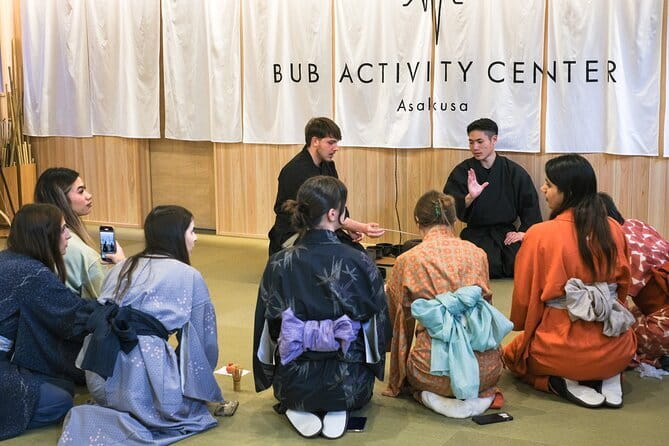
The best part of the format is that the meal comes after the work. You sit down with Junko and eat the food you helped prepare.
That shared lunch gives the experience a natural finish. You can see how the separate dishes work together as a Japanese meal, rather than tasting each recipe in isolation. It also leaves room for questions about ingredients, home cooking, and local food customs.
The menu is not fixed. Seasonal produce and the market’s available seafood may shape what you cook. One meal might include chicken and vegetables, while another could include fish or shrimp selected during the market visit. You should contact the provider with allergies or dietary needs at booking, rather than waiting until the day of the class.
A private lunch in a local home will not offer the privacy of a restaurant table. You are spending time in Junko’s personal space, and the apartment is described as small and simple. For many people, that is exactly the appeal. For others, especially anyone seeking a formal kitchen or a large dining room, it may feel basic.
What Junko adds to the experience
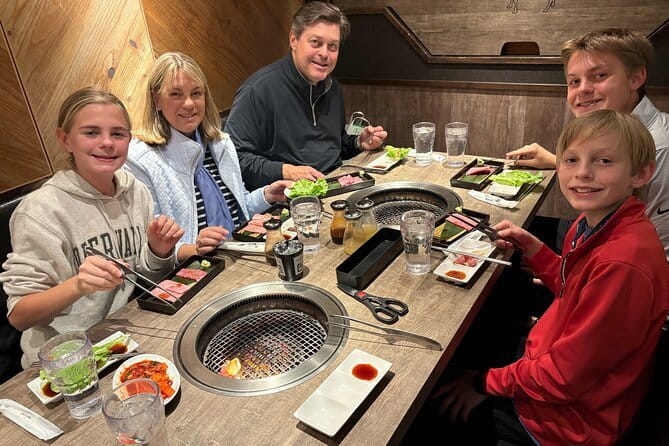
The guide makes a major difference here. Junko is described as fun-loving and patient, with a strong ability to teach. The cooking is not presented as a test, and you do not need to arrive with advanced kitchen skills.
Her role also connects the market walk to the food on your plate. She can point out fish and produce, discuss how they are used, and then show you practical preparation at home. That link is more useful than a market tour followed by an unrelated restaurant meal.
You can expect personalized attention because the activity is private. If you need a step repeated, want to ask about a knife, or have questions about a particular ingredient, the format allows for it. A large group class often moves on quickly. Here, Junko can spend more time with your party.
The two existing options should be read carefully. The full experience includes the Tsukiji outer-market visit and the home cooking class. The cooking-only option skips the market, and you meet Junko outside the ticket gate of Tsukishima Station on the Toei Oedo Line.
Other cooking classes in Tokyo
Nearby Tokyo sights and how to plan your day
The home is close to several well-known Tokyo areas, including Ginza and the Imperial Palace. That makes the activity easy to combine with central Tokyo sightseeing, although the experience itself ends back at the meeting point stated for the booking.
The route information also names teamLab Planets TOKYO and Hama Rikyu Gardens. These are useful points to know when arranging your day, but you should confirm exactly what is included before assuming admission or a guided visit to either attraction. The cooking activity does not list entrance tickets as an inclusion.
Hama Rikyu Gardens can pair naturally with a food-focused morning because it offers a quieter change of pace near central Tokyo. Ginza is also close enough to continue shopping or dining after the activity. TeamLab Planets requires its own planning, so do not count on fitting it in unless your start time, travel time, and admission arrangements line up.
The activity does not include hotel transportation. You should allow time to reach the start point at Tsukiji, and you should be prepared to use public transportation between the market and Junko’s home.
Is $104 a fair price?
At $104 per person, this is not the cheapest way to eat in Tokyo. You could buy a fine lunch for less, and a short market stroll costs nothing beyond your own transportation and purchases.
The value comes from the combination of services. You receive a private market introduction, a private cooking lesson, local food guidance, and lunch. You also get the attention of one host rather than sharing a class with a large group.
The price makes the most sense if you want practical skills and conversation. You are paying for context: what to look for at the market, how Japanese dishes are prepared, and how the finished meal fits together. If your main goal is simply to taste seafood, a restaurant or food walk may suit you better.
For couples, families with older children, or small groups of friends, the private format can be good value because the cost buys the whole group a more relaxed lesson. Children under 10 are not suitable for the Tsukiji market experience, so families should check the option and age limits closely.
The important limits to understand
The biggest limitation is the market name. Tsukiji remains a famous food district, but the inner wholesale market closed and moved to Toyosu. This experience takes place in the outer market and includes an imitation facility with a seafood section.
The second limitation is the home setting. Junko’s apartment is small and simple. You should choose this if you want a personal, everyday view of Japanese cooking, not if you want a glossy studio with many workstations.
The menu is also flexible rather than guaranteed. The listed dishes are examples, and seasonal ingredients may change the class. That is a benefit if you like food tied to the time of year, but a drawback if you have your heart set on one particular recipe.
Finally, the market option is not suitable for children under 10. Most people can participate, and service animals are allowed, but you should share food restrictions and preferences at the time of booking.
Who should book Junko’s cooking class?
I would choose this for someone who wants a human connection to Tokyo food. It suits you if you enjoy asking questions, handling ingredients, and sitting down for a meal after learning how it was made.
It is especially useful early in a Tokyo visit. The Tsukiji walk gives you an introduction to local food shopping, while the class explains several dishes you may see elsewhere during your trip. The nearby Ginza and Imperial Palace areas also make the location practical for a day in central Tokyo.
I would skip it if you want a large commercial kitchen, a fixed menu, or a tour centered on the former inner fish market. I would also think twice if you prefer to keep your Tokyo sightseeing completely independent of a host’s home.
Should you book this Tokyo food experience?
Book it if the idea of visiting Tsukiji with a local cook, selecting or discussing ingredients, and preparing a seasonal meal in a private home sounds better than simply eating at another restaurant. Junko’s patient teaching and the chance to share lunch make this more personal than a standard demonstration.
Choose the market and cooking option for the fullest experience. Select cooking only if you have already seen Tsukiji or want to focus on food preparation. At $104, the experience earns its price through private attention, lunch, and the connection between shopping and cooking. Just remember that the market is Tsukiji’s outer district, the apartment is modest, and the menu can change.
FAQ
How long does the experience last?
The activity lasts approximately 3 hours and 30 minutes. The cooking class itself takes about 1.5 hours.
Where does the market tour begin?
The market option begins at 4-chōme-8-4 Tsukiji, Chuo City, Tokyo 104-0045, Japan.
Where does the cooking-only option begin?
For the cooking-only option, meet Junko outside the ticket gate of Tsukishima Station on the Toei Oedo Line.
Does the tour visit the original inner Tsukiji fish market?
No. The experience covers Tsukiji’s outer market. The former inner fish market closed and moved to Toyosu.
What can I see at Tsukiji’s outer market?
Junko can show you Japanese vegetables, fruit, seafood, knives, ceramics, and a facility that imitates Tsukiji Market with a seafood section. The visit also includes Namiyoke Shrine, the market’s guardian shrine.
What dishes might I learn to cook?
Possible dishes include teriyaki chicken, eggplant with dengaku miso, tamagoyaki, and miso soup made with homemade miso. The menu can change by season.
Is lunch included?
Yes. After cooking, you sit down with Junko and share the meal you helped prepare.
Is this a private activity?
Yes. Only your group participates in the activity.
Can I share dietary restrictions or allergies?
Yes. You should advise the provider about allergies, dietary restrictions, and cooking preferences when booking.
Is hotel pickup included?
No. Hotel pickup and drop-off are not included. The activity is near public transportation.
Can children join the Tsukiji market experience?
The Tsukiji market experience is not suitable for children under 10. Most other participants can take part, subject to the activity conditions.
What is the cancellation policy?
You can cancel at least 24 hours before the start time for a full refund. Cancellations or changes made less than 24 hours before the start time are not accepted for a refund.
More Private Tours in Tokyo



More Cooking Classes in Tokyo
More Tsukiji Market Tours in Tokyo
More tours in Tokyo we've reviewed












Tsukiji Market Tours, compared.
 ★ 5.0Tokyo Tsukiji Fish Market Food and Culture Walking TourFrom $99
 ★ 5.0Tokyo: Tsukiji Fish Market Food and Walking tourFrom $30
 ★ 4.9Tokyo: Tsukiji Fish Market Guided Walking TourFrom $222 hours
 ★ 5.0Tokyo Sushi Making Class in Tsukiji with Professional ChefFrom $49
 ★ 5.0Tsukiji Fish Market Guided Tour and Sushi Making with Pro ChefFrom $104
★ 4.7Tokyo: Tsukiji Fish Market Food and Culture Walking TourFrom $963 hours