
Reviewed · GO-KARTS
Tokyo Go-Kart City Tour (90 Minutes) | Extended Guided Experience
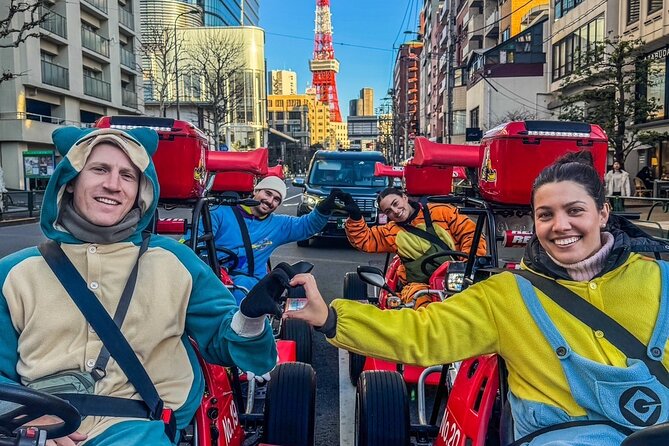
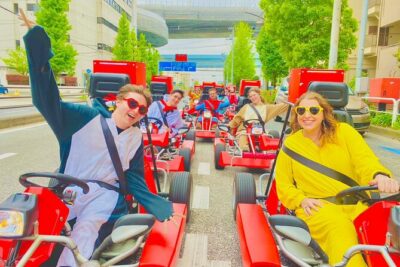
Tokyo is usually explored by train, on foot, or from the back seat of a taxi. This tour gives you a stranger, louder, and far more memorable view: you drive a go-kart through the city streets, following a guide from Tokyo Tower to Shibuya Crossing. Costumes add a playful touch, and the route covers several famous districts in one outing.
In This Article
- Key points to know before you book
- What this Tokyo go-kart tour is really like
- Starting near Shinagawa City
- Tokyo Tower gives the tour an immediate landmark
- Roppongi adds a sharper city feel
- Omotesando brings architecture and style
- Harajuku keeps the route youthful
- Shibuya Crossing is the grand finale
- The guide matters more than the map
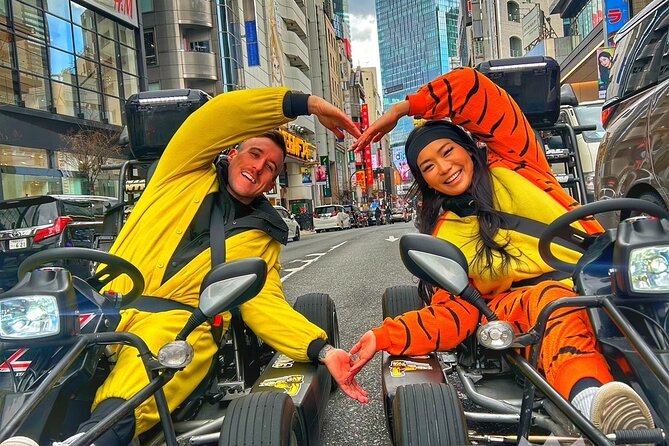
- Costumes and photos add real value
- The driving permit rule is the deal breaker
- Weather and timing require a little care
- Who will enjoy this most
- Should you book the Tokyo go-kart tour?
- FAQ
- How long does the Tokyo go-kart tour last?
- What places are included on the route?
- Where does the tour start and finish?
- What driving documents are accepted?
- Is an International Driving Permit issued online accepted?
- Are costumes included?
- Are photos included?
- Are action cameras included?
- What happens if the weather is poor?
I like two things right away. First, the guide handles the route, so you can focus on traffic, landmarks, and the odd feeling of driving a tiny kart through one of the world’s biggest cities. Second, the included photo shoots give you a record of the experience without requiring you to manage a camera while driving. Guides including Daniel and Udu have been singled out for making the outing feel well organized and fun.
The main consideration is the paperwork. You must bring the correct driving permit, and Japan accepts only the 1949 Geneva Convention format for an International Driving Permit. The operator cannot refund you if you arrive with the wrong document, so check this before booking.
Key points to know before you book
- The route links five major Tokyo sights: Tokyo Tower, Roppongi, Omotesando, Harajuku Station, and Shibuya Crossing.
- The tour lasts about 80 to 90 minutes: The listed sightseeing stops are about 15 minutes each, with the rest of the time used for driving and moving between districts.
- Costumes and photos are included: You can choose from available costumes and take part in photo sessions during the outing.
- A guide leads the group: English and Japanese-speaking support is provided, which removes the need to navigate Tokyo yourself.
- Your driving document matters: Only a Japanese license, a SOFA Driving License for US Forces Japan, or a valid 1949 Geneva Act International Driving Permit is accepted.
- The group can reach 16 people: This is not a private ride, so you should expect to travel as part of a larger convoy.
What this Tokyo go-kart tour is really like
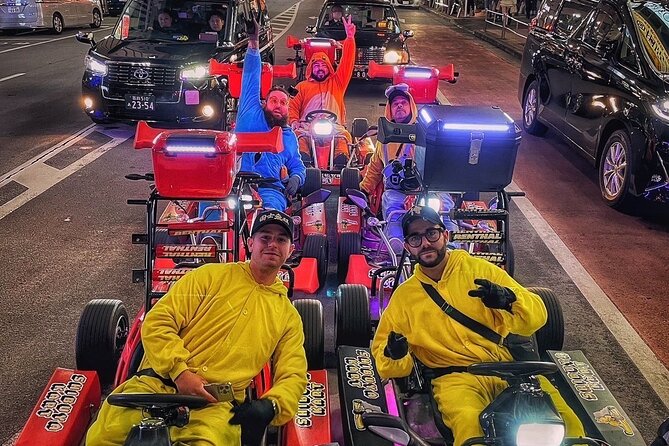
This is not a sightseeing bus with a quick photo stop. You are the driver, seated in a small go-kart and moving through Tokyo streets behind a guide. That changes the feel of the city. You are not simply looking at Tokyo from a window. You are watching traffic, keeping pace, and taking in the streets at ground level.
The route is designed for variety. You pass the unmistakable Tokyo Tower, enter the polished streets around Roppongi and Omotesando, move through the Harajuku area, and finish with the spectacle of Shibuya Crossing. It is a lot of Tokyo in a short time, but that is the point.
You should allow roughly one hour and 20 minutes to one hour and 30 minutes. The experience starts and finishes at the same meeting point in Shinagawa City, at Hiratsuka 1-chōme 21-8, near public transportation. The tour has a maximum of 16 participants, which gives the guide a group to manage but keeps the outing smaller than a large bus excursion.
A few more Tokyo tours and experiences worth a look
Starting near Shinagawa City
The meeting point is in Shinagawa City rather than beside Tokyo Tower or Shibuya Crossing. That matters when you plan your day. You need to reach the starting address before the tour, then return there at the end, so do not schedule a train, dinner reservation, or airport transfer too tightly afterward.
Once you arrive, the practical checks come first. Your driving documents must be inspected, and the operator conducts alcohol checks before the driving portion. Arrive sober and prepared. If the permit issue is unclear, contact the operator before the day of the tour through the supplied WhatsApp number, +81 80 1287 9361.
The costume choice comes before the ride. The available outfits are part of the price, and they help turn an ordinary city drive into a photo-friendly event. You should think of the costume as optional fun rather than a required part of the sightseeing. The main attraction remains the drive itself.
Tokyo Tower gives the tour an immediate landmark
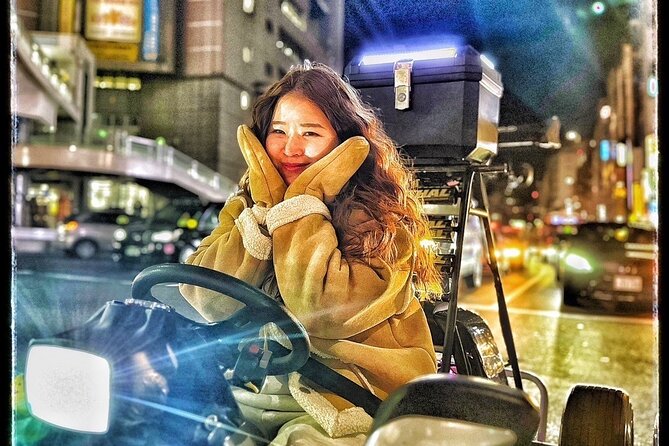
The first major stop is Tokyo Tower. It is a useful opening sight because the tower is easy to recognize and gives you an instant sense that this is not an ordinary city drive.
The listed time here is about 15 minutes. That is enough for a photo session and a look at the tower, but not enough for a full visit inside the attraction. Admission to Tokyo Tower is not included, and the stop is treated as an exterior sightseeing point rather than a separate tower visit.
This is also where the costume and photo elements begin to make sense. A go-kart beside Tokyo Tower, especially with a group dressed for the occasion, creates a very different picture from the usual tower snapshot. The operator includes photo shooting, so you do not need to buy an action camera simply to have some record of the outing.
Roppongi adds a sharper city feel
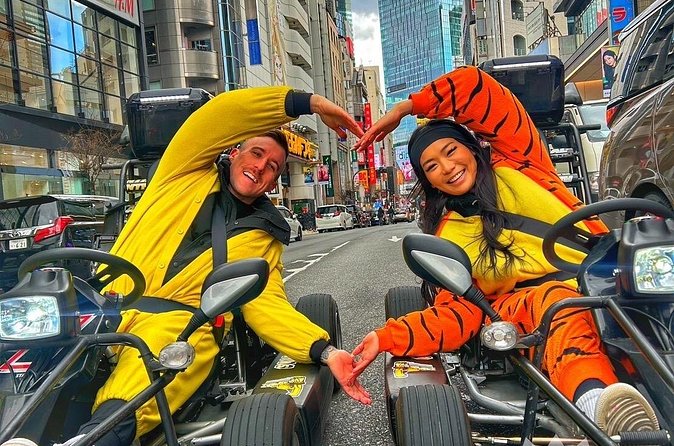
From Tokyo Tower, the route continues into Roppongi. This district is known for its mix of modern city life and cultural attractions, and it gives the drive a change of mood after the tower stop.
You are still on a guided route, not free to choose your own streets. That is a benefit in a city as complicated as Tokyo. The guide keeps the group moving and handles the navigation while you concentrate on driving and staying with the convoy.
The planned stop is about 15 minutes. You should not expect a long neighborhood walk or time for museums, galleries, or a meal. Roppongi works here as part of a moving city portrait. You see how the district fits into the larger route, then continue toward Omotesando.
Omotesando brings architecture and style
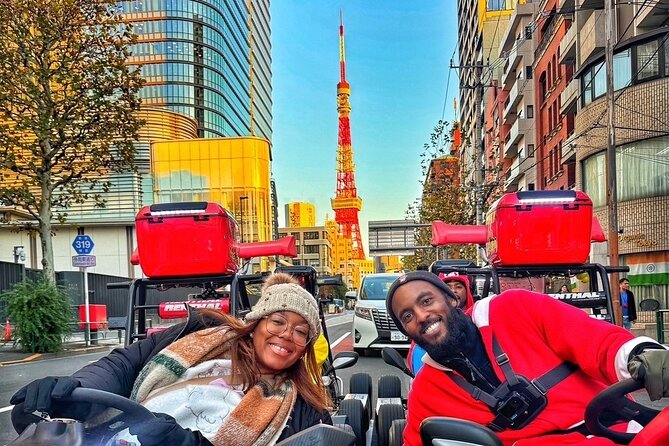
Omotesando is one of the most visually distinctive parts of the route. The broad, fashionable avenue is lined with major shops and striking modern architecture. From a go-kart, you see the street at a low, open level, rather than through a vehicle window or from a sidewalk crowded with pedestrians.
The tour allows about 15 minutes at this stop. As with the other locations, that time is best understood as a photo and sightseeing pause, not an in-depth visit. If Omotesando is high on your Tokyo list for shopping or architecture, plan a separate return visit when you can walk at your own pace.
I like this stop because it gives the route some visual range. Tokyo Tower supplies the landmark, Roppongi supplies the city energy, and Omotesando supplies the polished boulevard. The tour is strongest when you treat these places as snapshots linked by the drive.
Other guided tours in Tokyo

Harajuku keeps the route youthful
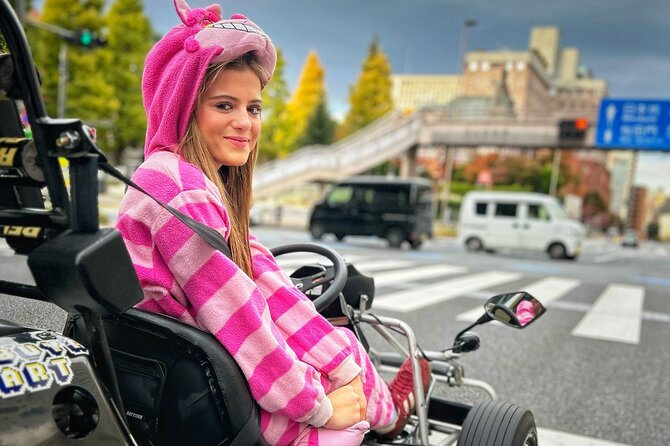
The Harajuku stop is listed at Harajuku Station and lasts about 15 minutes. Harajuku is one of Tokyo’s best-known areas for youth fashion and street culture, so it adds a more playful note to the route.
The information provided does not promise a specific shopping street, café visit, or walking tour. You should therefore expect a short stop around the station area, followed by the next driving segment. If you want time for Takeshita Street or nearby shrines, you will need another part of your itinerary.
Harajuku is still a smart inclusion. It prevents the route from becoming only a parade of business districts and major roads. With costumes already part of the experience, the setting fits the lighthearted mood particularly well.
Shibuya Crossing is the grand finale
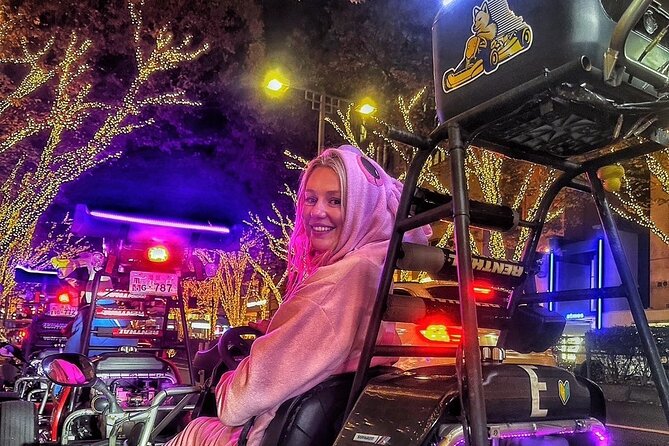
The final major stop is Shibuya Crossing, probably the sight most likely to make this experience feel unlike anything else on your Tokyo schedule. The crossing is famous for the waves of pedestrians moving in several directions at once, and approaching it in a go-kart gives you a front-row view of one of the city’s most recognizable scenes.
The wording of the route presents this as a go-kart experience at Shibuya Crossing. You should follow the guide’s instructions closely and never assume that you can drive or stop wherever you like. Traffic conditions and local rules control how the group moves through the area.
The stop is planned for about 15 minutes. That is enough for the guide to position the group for photos and let you take in the setting, but it is not a full Shibuya visit. You finish the sightseeing portion here, then return to the Shinagawa meeting point.
The guide matters more than the map
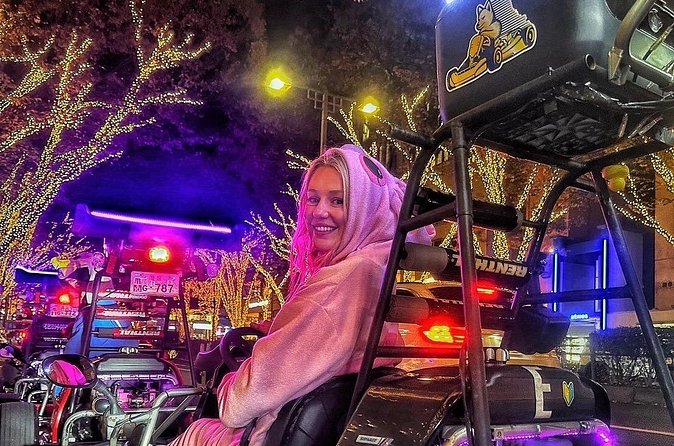
A route through Tokyo can become stressful when you are responsible for every turn. Here, an English or Japanese-speaking guide leads the group, which is one of the tour’s most useful features.
You still need to drive carefully and follow instructions. The guide does not remove your responsibility behind the wheel. What the guide does provide is structure: a planned route, a group pace, and help with the photo stops.
Daniel and Udu are names connected with the guiding team. If one of them leads your outing, you can expect the guide to be a visible part of the experience rather than someone who simply checks you in and disappears. The strongest praise attached to this tour centers on staff who look after the group and keep the outing enjoyable.
The maximum group size is 16. That is small enough to retain the feeling of a special activity, but large enough that the convoy may not feel intimate. If you prefer a private experience, the supplied details do not indicate that a private option is included.
Costumes and photos add real value
At $117.58 per person, this is not a cheap way to move around Tokyo. You are paying for the go-kart experience, a guide, insurance provided by the operator, costumes, and photo shooting, not simply for transportation between landmarks.
The value depends on what you want. If you only want to see Tokyo Tower, Harajuku, and Shibuya, trains and walking will cost much less and give you more time at each place. If you want a memorable activity that combines several districts with a playful photo session, the price is easier to justify.
The included photography is useful because taking your own pictures while driving is not practical. An action camera costs an additional ¥4,000 per person, while an Insta360 costs ¥8,000 per person. Those add-ons may appeal to you if you want moving footage, but they are not needed for the included photo sessions.
Food and drinks are not included. Since the tour lasts less than two hours, that is not a serious drawback, but you should eat before or after if you need more than a quick outing.
The driving permit rule is the deal breaker
This is the detail you must settle before paying. Every driver needs one of the following:
- A valid 1949 Geneva Act International Driving Permit
- A SOFA Driving License for US Forces Japan
- A Japanese Driver’s License
Japan does not accept every type of International Driving Permit. The accepted permit must follow the 1949 Geneva Convention format. It should be a booklet and should show 1949 Geneva, or the date September 19, 1949, on the cover.
An online document is not enough. The supplied information specifically warns that there are no authorized agents issuing the correct 1949 Geneva Act permit over the Internet. You need the proper booklet from the authorized issuing agency in your country, often a major roadside service organization.
This rule is stricter than many visitors expect. You can lose the entire payment if you arrive without the correct document, because the operator does not offer a refund when you cannot participate for international license reasons. Check this before you reserve your date, not the night before.
The operator also checks for alcohol before the driving tour. If you are found to be intoxicated, you may not be allowed to participate. That is a sensible safety rule, but it means this should not be treated as a drinking-day activity.
Weather and timing require a little care
The tour requires good weather. If poor weather causes a cancellation, you will be offered another date or a full refund. You can also cancel for a full refund if you do so at least 24 hours before the start time.
Within 24 hours, cancellations and changes are not accepted for a refund. This is especially important in Tokyo, where weather can shift and your plans may change. Book when you are reasonably sure you can attend, and keep the day flexible enough to handle a weather-related change.
The experience is booked, on average, 19 days ahead. That suggests you should not leave a preferred weekend or evening time until the last minute. The mobile ticket makes entry simple, but it does not solve the more important issue of having the correct driving permit.
Who will enjoy this most
I would recommend this for you if you want an active Tokyo experience rather than a standard sightseeing circuit. It suits couples, friends, and families with eligible drivers who enjoy novelty, costumes, photos, and the mild thrill of driving through a major city.
It is also a good choice for a return visit to Tokyo. You may already know the main sights, but seeing them from a go-kart changes the pace and point of view. The tour packs several well-known districts into one compact outing.
You should think twice if you dislike driving in traffic, want long visits at each attraction, or prefer quiet cultural sightseeing. The route is fast and structured. You will see many places, but you will not have time to explore each one in depth.
It is also unsuitable if you cannot obtain the accepted driving document. This is not a minor technicality. Without it, you cannot drive, and the operator may not refund your booking.
Should you book the Tokyo go-kart tour?
Book it if the idea of driving past Tokyo Tower, Roppongi, Omotesando, Harajuku, and Shibuya Crossing sounds more exciting than simply photographing them. The included costumes, photo sessions, insurance, and guide make the $117.58 price reasonable for a special activity, though not for basic sightseeing.
Before you commit, confirm your 1949 Geneva Act International Driving Permit, check the forecast, and allow time to reach the Shinagawa meeting point. If those pieces are in place, this is a compact, high-energy way to add a very different story to your Tokyo visit.
FAQ
How long does the Tokyo go-kart tour last?
The experience lasts approximately 1 hour 20 minutes to 1 hour 30 minutes.
What places are included on the route?
The route includes Tokyo Tower, Roppongi, Omotesando, Harajuku Station, and Shibuya Crossing.
Where does the tour start and finish?
It starts at Japan, 142-0051 Tokyo, Shinagawa City, Hiratsuka, 1-chōme 21-8, at Matsuei Togoshi Mansion. It ends back at the same meeting point.
What driving documents are accepted?
You must have a valid 1949 Geneva Act International Driving Permit, a SOFA Driving License for US Forces Japan, or a Japanese Driver’s License.
Is an International Driving Permit issued online accepted?
No. The accepted permit must be the correct 1949 Geneva Act booklet format. The permit should show 1949 Geneva or September 19, 1949, on its cover.
Are costumes included?
Yes. Various costumes are included in the tour price.
Are photos included?
Yes. Photo shooting during the tour is included.
Are action cameras included?
No. An action camera costs ¥4,000 per person, and an Insta360 costs ¥8,000 per person.
What happens if the weather is poor?
If the operator cancels because of poor weather, you will be offered a different date or a full refund. You can cancel at least 24 hours before the start time for a full refund.
More City Tours in Tokyo


More Guided Tours in Tokyo
More Go-Kart Tours in Tokyo

More tours in Tokyo we've reviewed



Go-Karts, compared.
 ★ 5.0Flagship 2-Hours Official Street Go-Kart Tour – Tokyo Bay ShopFrom $642 hours to 2 hours 30 minutes (approx.)
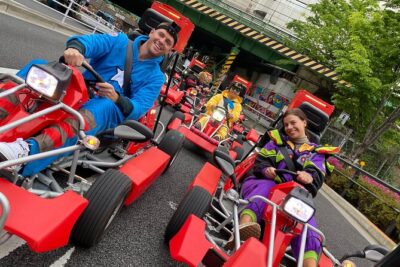 ★ 5.0Official Street Go-Kart in ShibuyaFrom $76
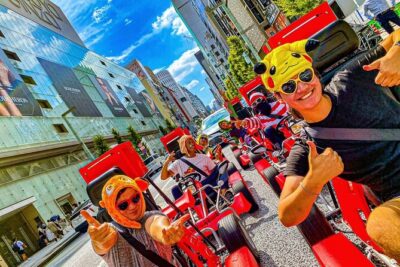 ★ 5.0Official Street Go-Kart Tour – AkihabaraFrom $61
 ★ 5.0Tokyo Go Kart: Asakusa, Skytree, and Akihabara **IDP MUST**From $99
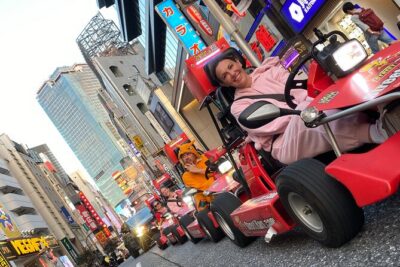 ★ 5.0Shibuya Official Street Go-Kart in Shibuya AnnexFrom $69
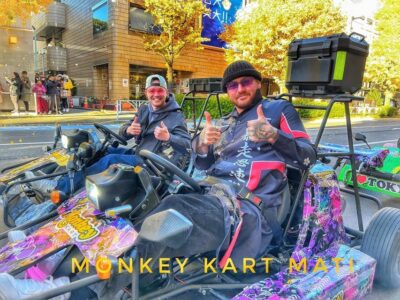 ★ 4.6Tokyo: Asakusa and Skytree Go-Kart Tour and Photo ShootFrom $67


![[Self-Drive] Tokyo & Daikoku Custom Car Driving Tour - Choosing between the ER34 Skyline and JZA80 Supra](https://tokyoezine.com/wp-content/uploads/2026/08/self-drive-tokyo-daikoku-custom-car-driving-tour.jpg)