Reviewed · SHIBUYA TOURS
Easy Japanese Speaking Experience and Meet Locals in Shibuya
Shibuya is famous for giant crossings and late-night energy, but this experience gives you a better reason to stay after dark: a real conversation with local Japanese speakers. At Jinnan Cafe, staff place you in small mixed groups, hand out topic cards, and rotate the seating so you meet several people instead of spending the whole evening with one table.
In This Article
- Key points to know before you book
- Why this Shibuya language exchange works
- Arriving at Jinnan Cafe in Shibuya
- How the two-hour conversation is organized
- The included drink and cafe atmosphere
- What you can realistically learn
- The social side for solo visitors
- Is $53 a fair price?
- Who should book this experience?
- Practical ways to get more from the evening
- Should you book the Shibuya language exchange?
- FAQ
- Where does the Japanese speaking experience take place?
- When is the event held?
- Is a drink included?
- Do I need to speak Japanese well to participate?
- How many people are in each conversation group?
- Can I cancel my booking?
I like the friendly structure and the included drink. You do not need fluent Japanese, and you are not left to invent conversation from scratch. I also like that the format works for solo visitors. You can practice useful phrases, help someone with English, and possibly leave with new friends.
The main drawback is that this is a language exchange, not a private Japanese lesson. Conversation quality depends on the people in your group, and the 15-minute changes may feel a little quick if you have finally found a good rhythm.
Key points to know before you book
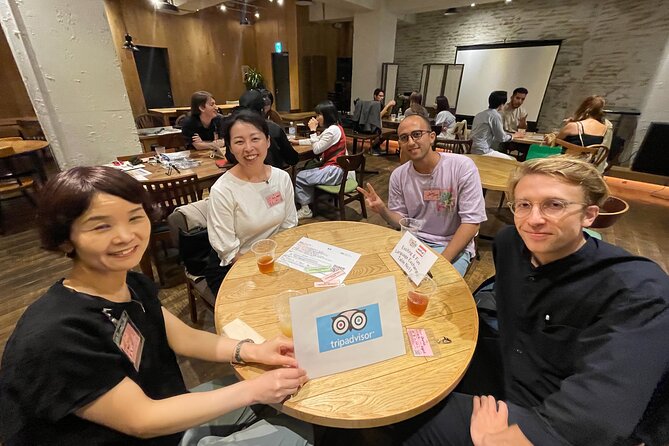
- Small groups of three or four: Each group mixes Japanese and international participants, making it easier to speak than at a large open meetup.
- Topic cards reduce awkward pauses: You get prompts to keep the conversation moving, even if your Japanese is basic.
- Seat changes give you several chances to talk: Staff rotate participants more than two or three times during the evening.
- One drink is included: Choose one soft drink or alcoholic drink after ordering on the first floor.
- Tuesday evening timing: The event runs from 7:30 to 9:30 PM, a useful fit after a day in Tokyo.
- A social event, not a formal class: You practice spoken Japanese in a relaxed setting, but there is no promise of individual correction or a set lesson plan.
Why this Shibuya language exchange works
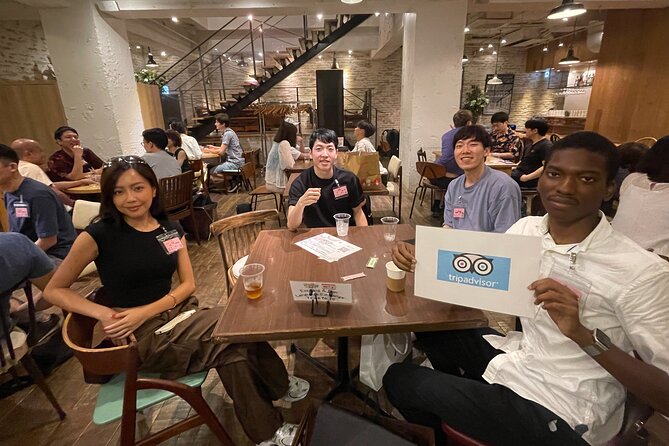
Many Japanese language experiences ask you to sit through a lesson before you get a chance to speak. This one takes the opposite approach. You arrive, get a drink, join a small group, and start talking.
That matters if your main problem is hesitation. You may know how to say basic phrases but freeze when someone answers quickly. A relaxed conversation gives you a place to test what you know without the pressure of a classroom or an exam.
The event also serves two groups at once. You can practice Japanese with local participants, while Japanese speakers and other international participants can practice English with you. That shared purpose helps keep the mood friendly. You are not expected to perform perfect Japanese, and you are not merely watching a demonstration.
I especially like the fact that staff prepare topic cards. A language exchange can go flat when everyone waits for someone else to speak. Prompts give you an opening and help move the discussion beyond names, jobs, and where you are from.
A few more Tokyo tours and experiences worth a look


Arriving at Jinnan Cafe in Shibuya
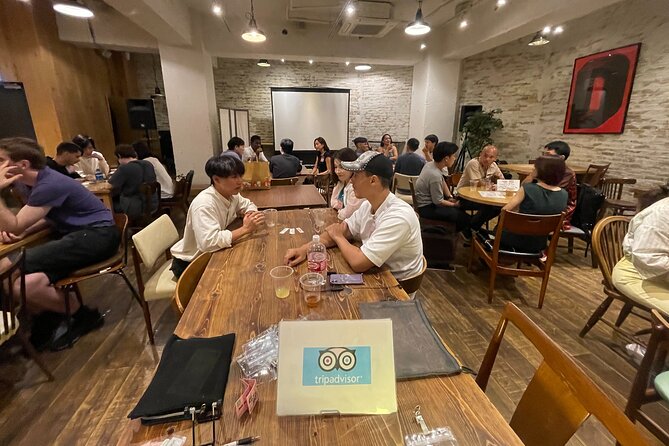
The meeting location is Jinnan Cafe. You first order your included drink on the first floor, then check in at the reception on the B1 floor. That two-step arrival is worth noting because you will want to allow enough time to find the right floor and complete check-in before the conversation begins.
The event runs on Tuesdays from 7:30 to 9:30 PM. Shibuya is well connected by public transportation, and the location is described as being near public transport, but the supplied details do not give a particular station exit or walking time. Check the current meeting instructions after booking rather than relying on a map pin alone.
The evening is capped at 20 participants. That is small enough for staff to manage seat changes and conversation groups, but large enough to give the event a mix of ages, backgrounds, and language levels. Groups usually contain three or four people, including Japanese and foreign participants.
The cafe setting is part of the appeal. You get a drink in hand, a table to work around, and a less formal setting than a schoolroom. The tradeoff is that cafe events can have a social feel rather than a quiet study atmosphere. If you need detailed grammar explanations, this will not replace a private tutor.
How the two-hour conversation is organized
Staff prepare the seats and topic cards before the event begins. You are placed into a small group and given a chance to introduce yourself and start talking. The prompts are there to help, not to force every conversation into a strict script.
The event includes a schedule of 15-minute English conversation. The available information does not spell out every part of the language rotation, but the format is designed to give Japanese and English practice a fair share of the evening. That balance is important if you are attending as an English speaker and want to contribute rather than simply ask locals for help.
Staff change seats during the event, giving you the chance to speak with several people more than two or three times. This is one of the strongest practical features. If your first group is quiet, too advanced, or not a good personal match, the next round gives you a fresh start.
The rotations can also make the evening feel active. You do not need to carry one conversation for two hours, and you can meet more people in a short time. On the other hand, a 15-minute interval may end just as a topic becomes interesting. Think of the event as a series of short conversation chances rather than one long dinner with new friends.
The included drink and cafe atmosphere
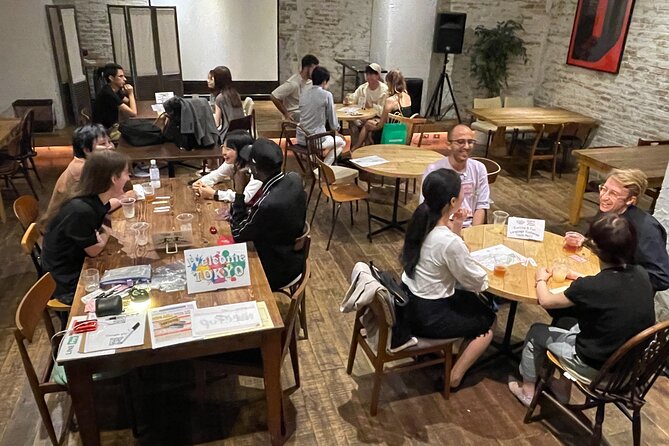
One soft drink or alcoholic drink is included in the $53 price. You order it on the first floor before checking in downstairs. Snacks are not included, so you should not book this as a meal.
The drink has a useful social role. Holding a coffee, soft drink, or alcoholic drink gives your hands something to do during first introductions, and a simple order can become an easy starting point for conversation. The atmosphere is described as cozy, warm, lively, and friendly, with staff helping keep things moving.
If you choose alcohol, remember that the central purpose is speaking practice. One drink is included, not an open bar, and you will get more from the evening if you can follow the conversation and make the most of each rotation.
The cafe setting may suit you better than a noisy bar if you want to focus on words. Still, sound levels and group energy can vary. A full Tuesday session may feel social and loud, while a quieter session may give you more time to speak.
What you can realistically learn
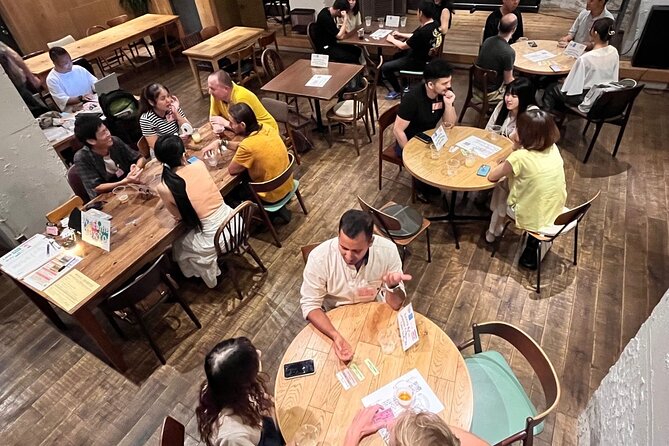
You can pick up useful Japanese terms and practice spoken Japanese in real time. The value comes from trying language you already know, hearing natural replies, and finding out which phrases help you keep a conversation going.
You should not expect a formal syllabus. There is no stated promise of grammar instruction, pronunciation correction, written exercises, or a lesson tailored to your ability. You may receive corrections during conversation, but that depends on the people at your table.
That is not a flaw if your goal is confidence. Speaking with a local can show you where your textbook Japanese feels stiff or incomplete. You can also ask for travel tips and advice about Japan, which gives your practice a useful purpose.
Come with a few simple subjects ready. You might prepare questions about food, neighborhoods, transport, hobbies, or favorite places in Japan. Topic cards will help, but having your own questions means you can keep talking when a prompt does not fit your interests.
You can also use the exchange in both directions. If you speak English, offer clear help rather than taking over. A good language exchange gives both people time to speak, ask questions, and correct small mistakes without turning the table into a lesson.


The social side for solo visitors
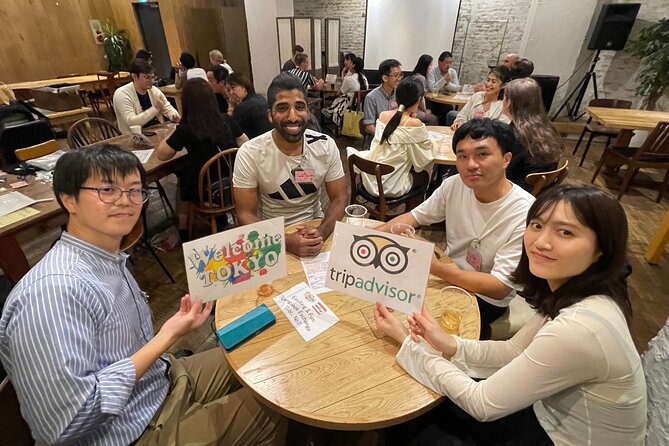
This is a strong choice if you are visiting Tokyo alone and have an open evening. The group format gives you an immediate reason to talk to people, and the seat changes prevent you from being stuck at the edge of the room.
The experience has also worked well for people who want to make friends. You may meet local residents, international participants, and other people staying in Tokyo for different reasons. The social connection is not guaranteed, but the format gives it a fair chance.
Several useful details point to an event that is easy to join without a companion. Staff organize groups, prepare seats, provide prompts, and manage the rotations. You do not need to arrive with a Japanese-speaking friend to get started.
Still, your experience will depend partly on the mix of attendees that night. Some people may be shy, some may want more English practice, and some may already speak advanced Japanese. The maximum group size of 20 keeps the room manageable, but it cannot guarantee a perfect language match.
Is $53 a fair price?
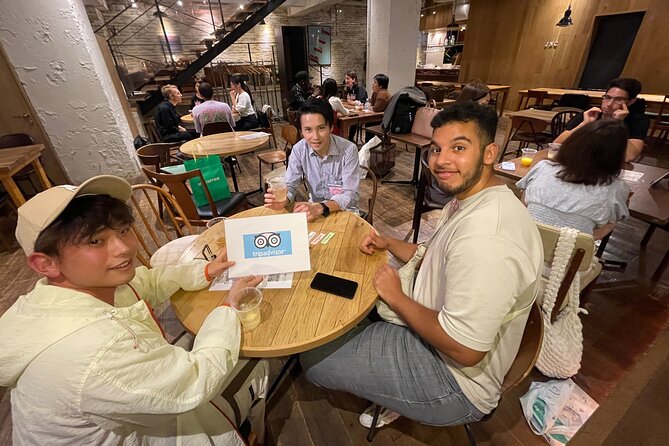
At $53 per person, this is not the cheapest way to find a Japanese conversation partner. Free language meetups, cafes, and online exchanges may cost less. The price makes more sense when you count the organization behind the evening: a reserved venue, staff check-in, prepared topic cards, small groups, several seat changes, and one included drink.
You are paying for a structured opportunity, not just a beverage. If you have tried to attend an informal meetup and found yourself standing alone or speaking only with the person you arrived with, the staff-led format may be worth the extra cost.
The value is weaker if you want intensive teaching. Two hours is enough for repeated conversation, but not enough for a full language course. You also pay for the social setting, so the experience is best judged by how much speaking practice and connection you want in one evening.
The included drink helps, but snacks are not provided. Eat beforehand if you expect to be hungry, especially since the event runs through the dinner hour.
Who should book this experience?
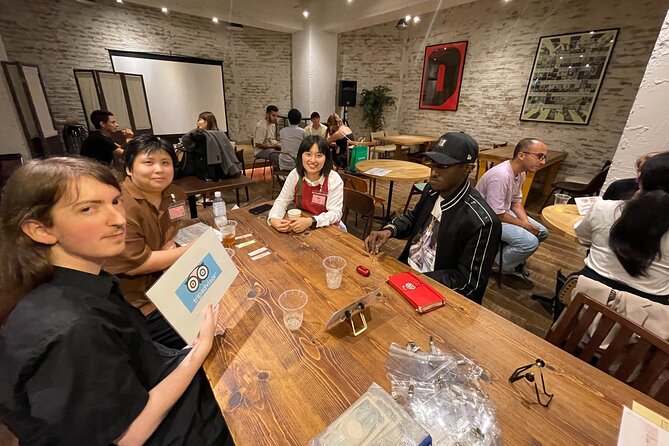
I would choose this for beginners who want to speak without classroom pressure, intermediate Japanese learners who need more real conversation, and solo visitors looking for an easy social activity in Tokyo.
It also suits anyone who wants local suggestions for a Japan trip. The conversation may lead to practical ideas about places to visit, foods to try, or everyday language, though the event is not advertised as a dedicated sightseeing consultation.
You may want something else if you need a teacher to correct every sentence, a private conversation partner, or a quiet one-on-one setting. You should also skip it if you dislike changing groups or if you want to spend the evening sightseeing instead of talking.
Most people can participate, and the event has a maximum of 20 attendees. The booking confirmation arrives at the time of booking, and free cancellation is available until at least 24 hours before the local start time. Cancellations or changes inside that window are not refunded or accepted.
Practical ways to get more from the evening
Arrive ready to speak, not just listen. Write down a few Japanese questions before you go, even if they are simple. You can ask about favorite foods, weekend activities, Tokyo neighborhoods, or useful phrases for your trip.
Be honest about your level at the start. Saying that you are a beginner can help the group choose simpler words and a comfortable pace. If you are more advanced, give others room to speak and use the time to ask about natural expressions.
Use the topic card when the table goes quiet, but do not feel tied to it. The best conversations often move from a basic prompt into a story, a recommendation, or a question about daily life.
Take advantage of every seat change. A short conversation can still teach you a phrase or introduce you to someone you would not have met otherwise. If one group is not a match, do not judge the whole evening by that first round.
Should you book the Shibuya language exchange?
Book it if you want a friendly, organized way to practice Japanese and meet people during a Tuesday evening in Tokyo. The small groups, topic cards, drink, and repeated seat changes solve the hardest part of language exchanges: getting started and finding enough people to speak with.
At $53, it is best value for someone who wants social practice rather than formal instruction. Go with realistic expectations, prepare a few questions, and eat before arriving. If you do that, this can turn a spare evening in Shibuya into useful Japanese practice and a handful of new connections.
FAQ
Where does the Japanese speaking experience take place?
It takes place at Jinnan Cafe in Shibuya, Tokyo. You order your drink on the first floor and check in at the reception on the B1 floor.
When is the event held?
The event is scheduled on Tuesdays from 7:30 PM to 9:30 PM. The experience lasts about two hours.
Is a drink included?
Yes. One soft drink or alcoholic drink is included. Snacks are not included.
Do I need to speak Japanese well to participate?
No. The experience is open to people who are interested in practicing Japanese, including those who cannot yet speak Japanese. Topic cards and small groups help start conversations.
How many people are in each conversation group?
Staff place attendees in groups of about three or four people, with a mix of Japanese and international participants. The total event capacity is 20 people.
Can I cancel my booking?
You can cancel for a full refund if you cancel at least 24 hours before the experience start time. Cancellations or changes made less than 24 hours before the start are not accepted or refunded.
More Shibuya Tours in Tokyo

More tours in Tokyo we've reviewed












Shibuya Tours, compared.
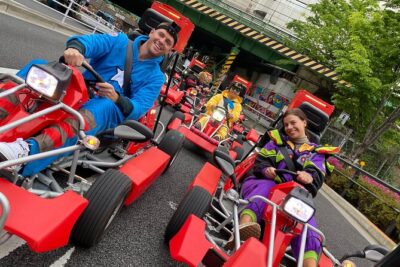 ★ 5.0Official Street Go-Kart in ShibuyaFrom $76
 ★ 5.0Shibuya Meltdown Nightlife Tour: All-You-Can-Drink Bar HoppingFrom $106
 ★ 4.9Tokyo: Street Kart Experience in ShibuyaFrom $99
 ★ 5.0Shibuya Official Street Go-Kart in Shibuya AnnexFrom $69
 ★ 5.0Tokyo: Shibuya Food Tour (13 dishes and 4 Eateries)From $77
 ★ 5.0Best of Shibuya Food TourFrom $217