Reviewed · TSUKIJI MARKET TOURS
Tokyo: Guided Walking Tour of Tsukiji Market with Lunch
Tsukiji is best understood with your appetite switched on and your eyes open. This 165-minute walk takes you from the Indian-inspired exterior of Tsukiji Hongwanji Temple into the narrow streets of the Outer Market, where stallholders sell seafood, meat, tea, cookware, and prepared food. You get nine tastings along the way, not just a guided look at the shops.
In This Article
- Key points at a glance
- Starting at Tsukiji Hongwanji Temple
- Entering the Tsukiji Outer Market
- Nine tastings, from dashi to dessert
- Grilled seafood and beef skewers
- Japanese omelette
- Tuna sushi and filled rice balls
- Fish paste skewers, tea, dashi, and dessert
- Food, faith, and the working market
- Why the small group matters
- Is $113 a fair price?
- Who should book this Tsukiji walk?
- Booking, timing, and practical details
- Should you book it?
- FAQ
- Where does the Tsukiji Market tour meet?
- How long does the activity last?
- What food is included?
- Is the tour conducted in English?
- How many people are in the group?
- Can I cancel the booking?
I like the small group, limited to 10 people, because a guide can keep you together without turning the market into a parade. I also like the cultural angle: you learn how Japanese food connects with Buddhist practice, local customs, and the work of expert wholesalers. The main caution is value. At $113 per person, this is worth it mainly for the guidance and access to a range of samples, not for a lavish meal.
Key points at a glance

- Nine tastings in one walk: Try tuna sushi, a Japanese omelette, grilled seafood or beef, rice balls, fish paste skewers, dessert, tea, dashi, and a drink.
- Starts at a striking temple: Meet outside Tsukiji Hongwanji, about 50 meters from Tsukiji Station’s Hibiya Line Exit A1.
- Small group of up to 10: The format is easier for questions and market navigation than a large coach-style tour.
- English-speaking local guidance: Guides such as Hide, Tomoko, Yumiko, and Sachiko have helped visitors understand the market’s food and customs.
- A real market, not just a food crawl: You pass working wholesalers, stalls, restaurants, and specialty shops while observing trade in progress.
- Good planning flexibility: You can cancel up to 24 hours before the start for a full refund and reserve without paying immediately.
Starting at Tsukiji Hongwanji Temple

The meeting point is in front of Tsukiji Hongwanji Temple, one of the most useful landmarks in the area. From Tsukiji Station on the Hibiya Line, take Exit A1, turn left, and walk about 50 meters to the temple entrance.
The temple’s exterior is an unusual opening scene for a food tour. Its design has ancient Indian-inspired Buddhist features, so it does not look like the wooden temple many first-time visitors expect in Tokyo. The tour begins with the building viewed from outside, giving your guide a natural place to explain the connection between religion, daily customs, and Japanese cuisine.
That context matters. Food in Japan is not simply fuel or a collection of attractive dishes. Ritual, seasonality, gratitude, presentation, and the use of basic ingredients all shape how people eat. You will not get a full religious lecture, but this short introduction helps the later market stops feel less random.
The tour does not list an interior temple visit, so plan on seeing the architecture from the exterior. If you want to explore the temple inside, treat that as separate time before or after the walk.
A few more Tokyo tours and experiences worth a look

Entering the Tsukiji Outer Market
From the temple, your guide leads you into Tsukiji Outer Market. The former inner wholesale market moved to Toyosu, but the Outer Market remains a major food district with shops, restaurants, counters, and specialist sellers. It is still a working commercial area, not a museum arranged for sightseeing.
That distinction is important. You will see unusual products and market workers carrying out their daily business. You may need to pause, move aside, and follow your guide closely as people work around you. The point is not only to eat. It is to watch how a Japanese food market operates.
A guide is particularly useful here because the streets can feel confusing at first. Signs may be small, products may be unfamiliar, and the best stalls are not always obvious to someone walking alone. Hide, one of the guides praised for his food suggestions, helped visitors choose what to try. Tomoko was also able to queue for food while her group looked around, a practical touch that reduces standing time and keeps the walk organized.
You should still expect a compact route. One person found the area covered to be fairly small and felt the guide had extra time to fill. That is a fair criticism if you expect a long city walk. This activity concentrates on a limited market district, so its value comes from interpretation and tasting rather than distance.
Nine tastings, from dashi to dessert

The food is served as a series of samples during the walk. Together, the nine tastings are designed to show several sides of Japanese street food and market cooking.
The listed tastings include:
- Grilled seafood or beef skewers, possibly including wagyu
- Japanese-style omelette
- Tuna sushi
- Fried fish paste skewers
- Filled rice balls
- Dessert
- A drink
- Japanese tea
- Dashi soup stock
This is a generous range in terms of variety, but it is not a sit-down lunch with nine full portions. You should think of it as a tasting walk that can replace a light meal, not a major feast. The exact items may depend on what is available during the visit, so do not expect a fixed restaurant menu.
Grilled seafood and beef skewers
Skewers are a natural market food because they are easy to carry and eat while walking. The tour may include grilled seafood or beef, with wagyu listed among the possible specialties. This gives you a chance to compare the clean, direct flavor of grilled food with the more prepared dishes later in the route.
One caution comes from the mixed food assessment. A past participant found some grilled fish greasy and did not feel the meal matched the price. That does not mean every group receives the same experience, but it does set realistic expectations. Market food can be hot, quick, and satisfying without being polished restaurant cooking.
Japanese omelette
Japanese-style omelette is a good example of a simple food that can be easy to overlook. It is prepared differently from a standard Western omelette and is often associated with the careful knife work and specialist stalls found in food markets.
Here, the value is partly educational. Your guide can explain what makes the texture and preparation distinct, rather than handing you an anonymous bite. If you already know Japanese food well, this may be a familiar taste. If you are new to it, it is a useful introduction.
Other walking tours we've reviewed in Tokyo



Tuna sushi and filled rice balls
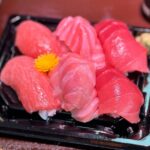
Tuna sushi is one of the obvious Tsukiji foods, but the experience may not match the high-end sushi counter you picture when you hear the word Tsukiji. The sample is part of a tasting route, and one participant described the tuna sushi as average.
The filled rice ball may be a tuna mayonnaise version. That is worth noting because it is more casual than the delicate slices of fish often associated with sushi. If you expect premium omakase-style seafood, you may be disappointed. If you see it as a quick look at everyday Japanese prepared food, the tasting makes more sense.
Fish paste skewers, tea, dashi, and dessert
Fried fish paste skewers show how seafood is used beyond raw fish and grilled fillets. Dashi, the stock used in many Japanese dishes, offers a small but useful lesson in the base flavors behind soups, sauces, and simmered foods.
The tea sample adds another everyday element, while dessert gives the route a sweet finish. A drink is also included. One participant described the dessert as a strawberry item, but the precise dessert can vary, so I would not book this expecting a particular sweet.
The strongest part of the food program is the range. You sample ingredients and techniques rather than eating the same kind of fish at several stalls. The weaker part is consistency. Some bites may be memorable, while others may feel ordinary for the price.
Food, faith, and the working market

The tour’s best idea is the connection between food and Japanese culture. At Tsukiji, your guide can point out more than what is tasty. You learn why certain ingredients matter, how food is presented, and how religious customs influence eating practices.
That makes the experience more useful than a simple list of stalls. Tomoko, for example, explained the market’s history and culture in a way that helped a returning visitor see the district differently. Yumiko and Sachiko were also praised for guiding a group through the market and explaining the area’s past.
The word history needs some care here. This is not a formal museum presentation with dates and displays. It is an on-the-ground explanation tied to the streets, shops, products, and temple you are seeing. I prefer that format because the information has a clear connection to the place in front of you.
You also get a look at the human side of the market. The workers are not performers, and the shops are not arranged purely for sightseeing. Your guide’s job is to help you observe without getting in the way. Keep your hands close, follow instructions, and be aware that narrow lanes can be active workspaces.
Why the small group matters
With no more than 10 participants, the group is small enough for a guide to answer questions and keep the tastings organized. That matters in a market where you may need to stand near a particular stall, wait briefly for food, or move aside for workers.
A small group also makes the cultural explanations more personal. You can ask why a dish is prepared in a certain way or how a product fits into local eating habits. Guides Hide and Tomoko have received especially warm praise for making the walk relaxed and helping people choose food without fuss.
The format is not flawless. One tour included a guide and an assistant, and the group still felt the route was short and somewhat stretched to fill the 165 minutes. The fixed duration can be useful if you want an unhurried introduction, but it may feel slow if you already know Tsukiji.
Language is another factor. The tour is offered in English, but one participant sensed a language barrier at the beginning. That issue may depend on the guide and the group, yet it is sensible to ask for clarification if you do not understand the meeting instructions or the food explanation.
Is $113 a fair price?
At $113 per person, this is a high price for a street-food walk. The food alone is unlikely to justify the full cost, especially if several samples are small or ordinary. You are paying for the guide, market navigation, cultural explanation, and the convenience of trying nine items without planning the route yourself.
I would compare it with the cost of exploring Tsukiji independently. You can walk through the Outer Market on your own and buy food stall by stall. That approach offers more control and may cost less, but you will need to decide what to eat, understand what you are ordering, manage queues, and work out which products are worth your time.
The tour makes better financial sense for a first visit, families, and anyone who feels unsure in a crowded food district. It is also useful if you want a structured introduction in English. If you already know Tsukiji or care most about exceptional sushi, spend the same money at a carefully chosen meal instead.
The current score is 4.4 out of 5 from 24 ratings, which fits the overall picture: strong guide-led experiences, with more mixed reactions to the food and price. In plain terms, the people who connected with their guide tended to get more from the tour than those judging it mainly as a meal.
Who should book this Tsukiji walk?

I would recommend it to first-time visitors who want an easy entry into Tokyo’s food culture. The guide helps you make sense of the market, and the nine tastings reduce the risk of choosing something you do not recognize.
Families may also like the structure. Henrik described the tour as a special experience for his whole family, and a small group is easier to manage than a large organized outing. The mix of food, temple architecture, and market work gives children and adults several things to notice.
Food-focused visitors should book with the right expectations. You will sample tuna sushi, skewers, omelette, rice balls, dashi, tea, and dessert, but this is not a premium sushi tour. The food is varied and practical, not guaranteed to be outstanding at every stop.
People using wheelchairs can book because the activity is listed as wheelchair accessible. You should still be prepared for an active market setting with narrow commercial streets and people working nearby, though no additional route details are provided.
Wear comfortable shoes. The walk lasts 165 minutes, and you will be on your feet while moving between shops and tasting stops. The meeting point is easy to reach from Tsukiji Station, which makes this a convenient morning or afternoon addition to a Tokyo itinerary.
Booking, timing, and practical details
The experience lasts 2 hours and 45 minutes. Starting times vary, so check availability for the date you want. The tour is conducted in English with a live guide.
You meet outside Tsukiji Hongwanji Temple, not inside the market. From the Hibiya Line station, Exit A1 is the correct exit, and the temple entrance is about 50 meters away. Arrive with enough time to find the gate, since starting in the wrong part of the market could make the first meeting difficult.
The booking terms are traveler-friendly. You can reserve now and pay later, and cancellation is free up to 24 hours before the start for a full refund. These terms help if your Tokyo schedule depends on weather, train plans, or a changing food itinerary.
Should you book it?
Book this tour if you want a guided introduction to Tsukiji, enjoy trying many small portions, and value cultural explanation as much as the food itself. The best guides turn a confusing market into a readable place, and names such as Hide, Tomoko, Yumiko, and Sachiko are associated with friendly, well-organized walks.
Skip it if your main goal is a large or luxurious lunch, or if you already know the Outer Market well. At $113, the tasting portions need to be only one part of the value. Go for the guide, the temple connection, the market access, and the chance to sample broadly. Treat the meal as a useful bonus, not the whole reason to book.
FAQ
Where does the Tsukiji Market tour meet?
Meet in front of Tsukiji Hongwanji Temple. From Tsukiji Station on the Hibiya Line, take Exit A1, turn left, and walk about 50 meters to the temple entrance.
How long does the activity last?
The guided walk lasts 165 minutes, or 2 hours and 45 minutes.
What food is included?
The tour includes nine local tastings: grilled seafood or beef skewers, a Japanese-style omelette, tuna sushi, fried fish paste skewers, filled rice balls, dessert, a drink, Japanese tea, and dashi soup stock.
Is the tour conducted in English?
Yes. It includes a live English-speaking guide.
How many people are in the group?
The tour is a small-group activity limited to 10 participants.
Can I cancel the booking?
Yes. You can cancel up to 24 hours in advance for a full refund. You can also reserve now and pay later.
More Guided Tours in Tokyo


More Walking Tours in Tokyo
More Tsukiji Market Tours in Tokyo
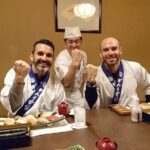
More tours in Tokyo we've reviewed












Tsukiji Market Tours, compared.
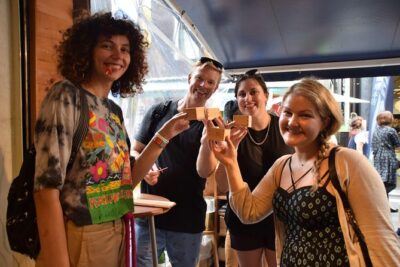 ★ 5.0Tokyo Tsukiji Fish Market Food and Culture Walking TourFrom $99
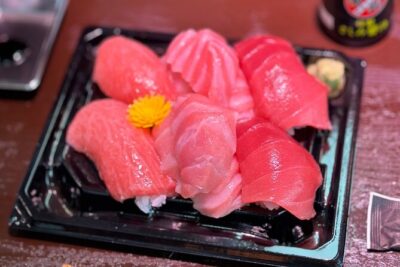 ★ 5.0Tokyo: Tsukiji Fish Market Food and Walking tourFrom $30
 ★ 4.9Tokyo: Tsukiji Fish Market Guided Walking TourFrom $222 hours
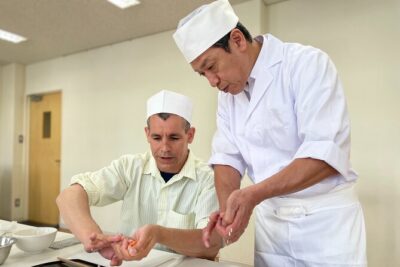 ★ 5.0Tokyo Sushi Making Class in Tsukiji with Professional ChefFrom $49
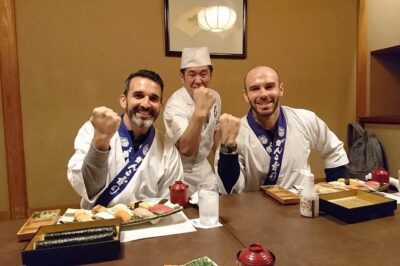 ★ 5.0Tsukiji Fish Market Guided Tour and Sushi Making with Pro ChefFrom $104
★ 4.7Tokyo: Tsukiji Fish Market Food and Culture Walking TourFrom $963 hours
★ 5.0Tsukiji Fish Market Guided Tour and Sushi Making with Pro ChefFrom $104
★ 4.7Tokyo: Tsukiji Fish Market Food and Culture Walking TourFrom $963 hours