Reviewed · GO-KARTS
Official Japan Go-Kart Through Shibuya / Shinjuku (IDP Required)
Tokyo sightseeing usually means trains, station stairs, and sidewalks packed with people. This two-hour go-kart ride offers a very different view: you drive through Shinjuku, Harajuku, and Shibuya at street level, then pause at traffic lights while crowds stream across Shibuya Scramble.
In This Article
- Key points at a glance
- What this Tokyo kart ride is really like
- Starting from JAPANKART in Shinjuku
- The license rules can make or break your booking
- Shinjuku Gyoen, the first calm view
- Omotesando and Harajuku at street level
- Shibuya Scramble is the main event
- Yoyogi Park and the Meiji Jingu area
- Shinjuku’s skyline, government building, and Kabukicho
- Safety, traffic, and the first ten minutes
- Is $125.53 a fair price?
- Who should book this experience?
- Booking, cancellation, and final advice
- FAQ
- How long does the JapanKart Shibuya and Shinjuku experience last?
- Where does the tour start and finish?
- What driving documents do I need?
- Are 1968 Vienna Convention International Driving Permits accepted?
- Are there exceptions to the standard IDP requirement?
- What happens if bad weather cancels the tour?
I like the small group of up to 10 and the guide-led route, which removes the worry of navigating Tokyo traffic alone. I also like the mix of famous sights and ordinary city streets, plus the chance to cross Shibuya Crossing more than once. The big consideration is paperwork: arrive without the correct license documents and you can be refused with no refund.
Key points at a glance
- Drive through Shibuya Scramble: Watch the crossing from the road and experience it from inside the flow of Tokyo traffic.
- Expect real street driving: This is not a closed kart track. You drive on public roads, with traffic, signals, lane changes, and city fumes.
- Safety support is built into the ride: Guides lead and follow the group, with additional support described by participants.
- Bring the right documents: You need your home-country license, passport, and a valid 1949 Geneva Convention International Driving Permit, unless a special license exception applies.
- See seven Tokyo districts and landmarks: The route passes Shinjuku Gyoen, Omotesando, Harajuku, Shibuya, Yoyogi Park, the Tokyo Metropolitan Government Building, and Kabukicho.
- Night departures can add atmosphere: City lights make the ride especially appealing after dark, though weather still controls whether the tour runs.
What this Tokyo kart ride is really like
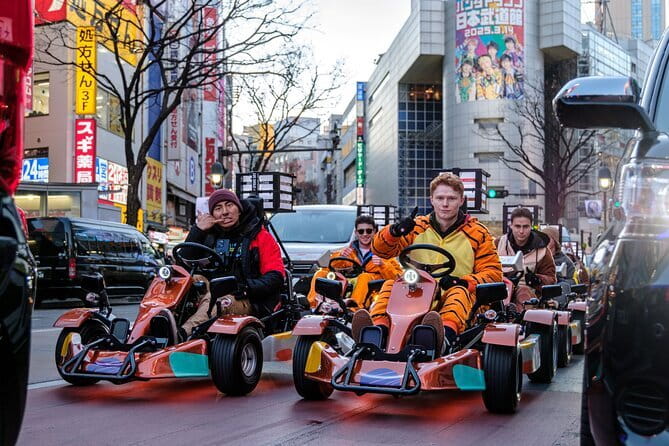
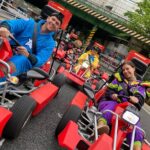
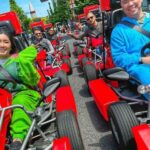
The important thing to understand is that this is a guided road tour, not a go-karting session in a parking lot. You sit low in a small kart and follow the group through Tokyo streets, so the appeal comes from the unusual view, the attention from people on the sidewalks, and the thrill of driving in a major city.
The total activity lasts about two hours. The actual time behind the wheel can be more than an hour, depending on traffic and the pace of the group. The rest includes check-in, preparation, instructions, and stops at signals or along the route.
You should expect an initial adjustment period. The first few minutes can feel tense because you are learning the kart while sharing the road with traffic. Once you understand the controls and settle into the guide’s pace, the ride becomes easier. The guides give clear instructions before departure, and the group is led through the route rather than left to find its own way.
The group limit of 10 matters. Ten karts are still a noticeable line on the road, but it is small enough for the guide team to keep everyone together. Several accounts describe a lead vehicle, a rear support vehicle, and sometimes a motorcycle helping the group change lanes and stay on course. The exact support arrangement can vary, but the experience is designed around close supervision.
A few more Tokyo tours and experiences worth a look
Starting from JAPANKART in Shinjuku
The meeting point is JAPANKART Shinjuku Branch at 5-chome 11-23, 3rd floor, Shinjuku City, Tokyo 160-0022. The experience ends at the same place, which makes planning simpler than a one-way activity.
Arrive 15 minutes before your booking time. This is not a suggestion to ignore. You need time to show your documents, complete the pre-ride process, and watch the instructional video sent in your confirmation email.
The location is near public transportation, but the address can be difficult for a taxi or rideshare driver to locate. Give yourself extra time if you are using Uber or a taxi, and keep the exact address ready. A late arrival can be a serious problem, especially since the activity requires the whole group to leave together.
Before the ride, staff explain how to operate the kart and how to follow the group. You may be offered costume pieces or a branded top for the ride. Costumes are part of the playful look, but Tokyo can be warm, and some people prefer to wear only the provided JapanKart top.
Wear practical clothes. Long skirts, high heels, and sandals are not allowed. Closed, comfortable shoes and clothing that lets you sit and operate the kart easily are the sensible choice.
The license rules can make or break your booking
This is the most important practical point. You must have:
- Your original driver’s license from your home country
- Your passport
- An International Driving Permit issued under the 1949 Geneva Convention
The permit must be an official booklet. A paper printout or A4 sheet is not accepted. Japan does not accept International Driving Permits issued under the 1968 Vienna Convention for this activity.
Your IDP must also come from an approved issuer in your country. Common examples include AAA or AATA in the United States, AAA in Australia, AA or RAC in the United Kingdom, and CAA in Canada.
There are special rules for licenses issued in Switzerland, Germany, France, Taiwan, Belgium, and Monaco. If your license comes from one of those places, you need your own license plus a Japanese translation issued by the Japan Automobile Federation, also known as JAF. You do not use the standard IDP route for those licenses.
Do not assume that an online IDP service is valid. The activity provider specifically places the responsibility on you to bring the correct documents. If your paperwork is wrong, your payment will not be refunded. Check the rules before leaving your home country, not on the morning of the ride.
Alcohol consumption before the tour is prohibited. This is a driving activity on public roads, so take that rule seriously.
Shinjuku Gyoen, the first calm view
The route passes Shinjuku Gyoen National Garden, one of Tokyo’s best-known parks. It is especially popular during cherry blossom season, when the garden’s broad lawns and planted trees draw large crowds.
You do not stop for a long garden visit, so treat this as a passing view rather than a substitute for entering the park. That is still useful. From a kart, you see the park as part of the city’s changing rhythm: dense buildings, broad roads, and then a large green space opening beside them.
If cherry blossoms are your main reason for visiting Shinjuku Gyoen, plan a separate visit. The kart route gives you a quick look, not the time needed for a proper walk.
Omotesando and Harajuku at street level
Next, the ride passes through Omotesando, the polished shopping avenue known for designer stores, architecture, and expensive cars. Driving here gives you a closer look at the street scene than a train ride ever can. You are out in the open, moving at the same pace as the traffic, with shopfronts and passing cars close by.
Harajuku brings a different mood. It is associated with youth fashion, colorful styles, and the creative edge of Tokyo. You will not have time to browse Takeshita Street or stop at individual shops, but the kart route gives you a quick sweep through the area.
This part of the tour is best for people who enjoy Tokyo as a visual show. You see the contrast between high-end Omotesando and the more playful fashion culture around Harajuku without spending the afternoon walking between them.
The tradeoff is noise and traffic. You are sightseeing from a moving vehicle, not quietly examining storefronts. If you want shopping time, schedule it before or after the ride.
A few more Tokyo tours and experiences worth a look

Shibuya Scramble is the main event
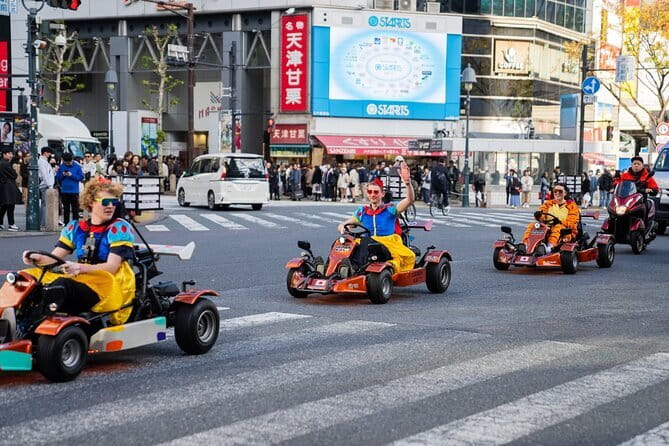
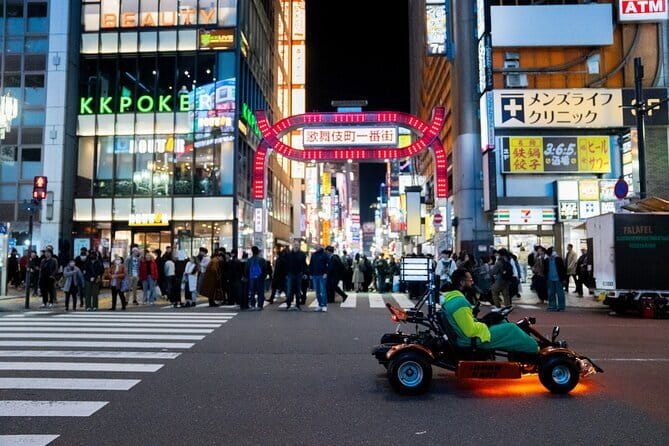
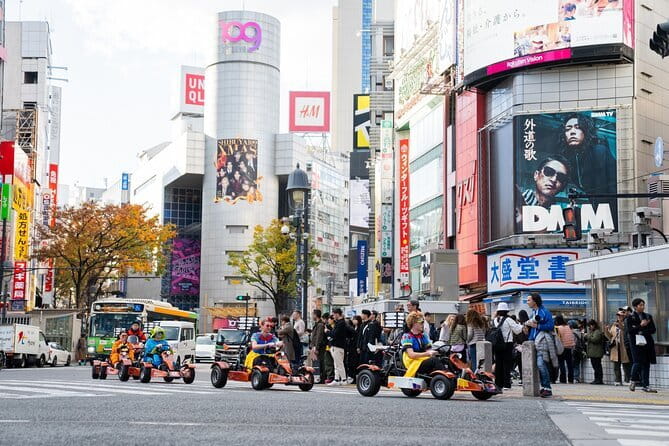
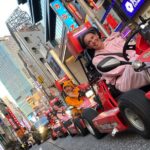
Shibuya Crossing is the moment most people picture when they book this activity. At the traffic lights, you can watch thousands of pedestrians cross the famous scramble from the low seat of your kart. The route may take you across the crossing twice, giving you more than one chance to enjoy the scene.
This is a clever way to experience Shibuya. From the pavement, you watch the crossing as a spectacle. From the kart, you become part of the spectacle, with people looking, waving, and taking photographs. Several participants describe feeling briefly like a celebrity, especially when wearing a costume or matching top.
That attention is part of the fun, but it will not suit everyone. If you dislike being photographed or noticed, the public nature of this activity may feel uncomfortable. You also need to stay focused on the road and the guide, rather than treating the crossing as a photo stop.
The ride does not replace a visit to Shibuya’s viewpoints or pedestrian areas. It offers a moving, street-level perspective that you cannot get from the famous observation decks.
Yoyogi Park and the Meiji Jingu area
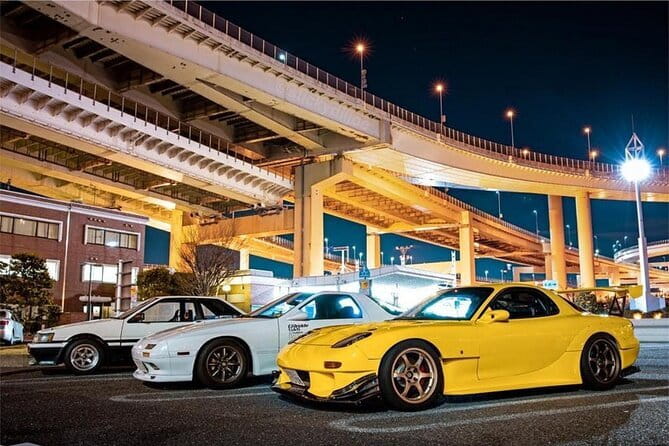
The route passes Yoyogi Park, a large open park in Shibuya with lawns, ponds, and wooded sections. It sits beside Meiji Jingu, one of Tokyo’s best-known shrines.
Again, this is a pass-by rather than a walking visit. You get a sense of how much open space exists near the center of Tokyo, but you do not have time to wander through the park or visit the shrine grounds during the ride.
I like this section because it breaks up the commercial streets. After the bright signs and dense traffic of Shibuya and Harajuku, Yoyogi Park gives the route a quieter edge. If Meiji Jingu is important to your plans, return separately when you can walk at a respectful pace.
Shinjuku’s skyline, government building, and Kabukicho
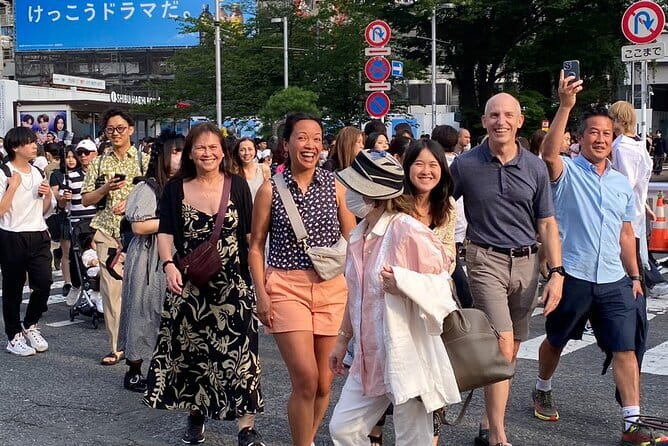
The Tokyo Metropolitan Government Building is another major landmark along the route. Its free observation decks are popular for broad views across Tokyo and beyond, though this tour does not take you inside. From the street, you see the building as part of Shinjuku’s tall skyline.
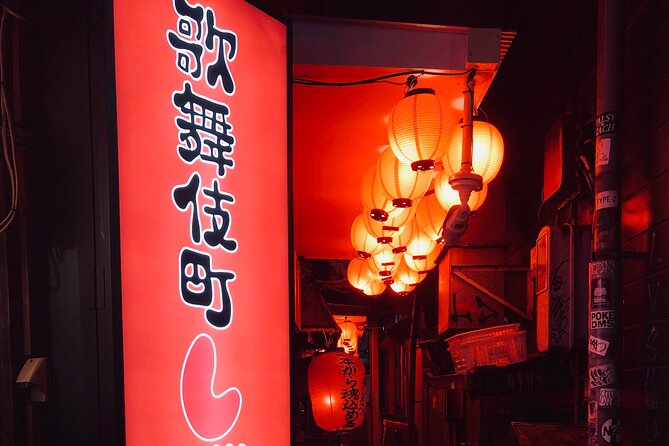
The route also passes Kabukicho, Shinjuku’s famous entertainment district. The area is known for restaurants, nightclubs, host and hostess clubs, shops, and love hotels. It is particularly striking after dark, when illuminated signs and busy streets give the district its distinctive look.
Seeing Kabukicho from a kart is brief and surface-level, but that is appropriate for this kind of tour. You get the visual impact without committing to a night out there. Keep in mind that Kabukicho is an adult entertainment district, so it may not appeal to every family or group.
The return to Shinjuku completes a loop through several of Tokyo’s most recognizable areas. You cover ground quickly, but the experience is not a substitute for exploring each neighborhood on foot.
Safety, traffic, and the first ten minutes
The safety setup is one of the strongest reasons to choose a guided ride instead of trying to navigate Tokyo roads on your own. The lead guide sets the pace, while a rear vehicle helps keep the line together. A motorcycle may also help the group stay on route and manage lane changes.
Instructions are given before departure, and the group makes safe stops to check that everyone is keeping up. Staff members are described as patient and clear, including English-speaking guides such as Marge, Leo, Kenny, and Alice on one documented outing.
Still, this is not risk-free entertainment. You are in traffic. You are low to the ground. You must pay attention to signals, other vehicles, the guide, and your own kart. A few people feel nervous at first, particularly when leaving the shop and entering the main streets.
The most useful attitude is to treat it as a road tour with a playful vehicle. Do not expect the speed or competition of a kart track. You are there to follow safely, enjoy the city, and keep your attention on driving.
One practical comfort point is storage. The lead vehicle may carry bags, and some rides offer a phone harness for filming. Staff also take group and individual photos at points along the route, with digital sharing possible afterward. Ask staff about the current photo process rather than assuming every ride includes the same package.
Tokyo traffic can also mean vehicle fumes. One person specifically recommends wearing a mask because the low kart position puts you close to exhaust. That is a sensible option, especially if you are sensitive to fumes.
Is $125.53 a fair price?
At $125.53 per person, this is an expensive way to see places that can be reached by train or on foot. The price makes more sense if you value the activity itself: the kart, the guide team, road support, the unusual route, and the novelty of crossing Shibuya Scramble from behind the wheel.
You are also paying for time efficiency. In about two hours, you pass through several districts that could take most of a day to connect on foot. The ride gives you a broad first look, which can help you decide where to return later.
The value is weaker if you mainly want detailed sightseeing, museum time, shopping, or long photo stops. The landmarks are viewed from the road, and the route can change pace with traffic and group conditions.
For a special occasion, a first Tokyo visit, or a group that wants one memorable activity, the cost may feel reasonable. For budget-conscious visitors, it is a splurge rather than an essential sightseeing ticket.
Who should book this experience?
I would recommend it most to confident drivers who enjoy unusual city activities and do not mind public attention. It is also a good fit for friends, couples, and families with eligible adult drivers who want something more active than a standard bus tour.
You should think twice if you are uncomfortable driving in traffic, dislike sitting low to the road, or want a relaxed photography experience. The ride demands attention, and your view changes constantly.
It is also a poor choice if you cannot obtain the correct IDP. The documents are not a minor formality. They determine if you can participate.
Night departures are especially appealing if you want Tokyo’s signs and entertainment districts lit up around you. Daytime rides may make parks and street details easier to see. In either case, the activity requires good weather. If bad weather cancels the tour, you can receive a full refund or reschedule if space is available.
Booking, cancellation, and final advice
You can cancel for a full refund up to 24 hours before the local start time. Cancellations or changes within 24 hours are not refunded or accepted. Mechanical availability can also require the operator to adjust bookings when capacity is reached.
I would book this JapanKart ride if you have verified your documents, arrive early, and want a playful way to connect Shinjuku and Shibuya. I would skip it if you are looking for deep cultural interpretation or a quiet tour of Tokyo’s landmarks.
The best reason to go is not simply seeing Shibuya Crossing. It is the combination of driving yourself, following a professional route team, passing through several famous districts, and becoming part of the city scene for a couple of hours. Bring the paperwork, wear sensible shoes, expect traffic, and treat the first ten minutes as your warm-up. After that, the ride should feel far more natural.
FAQ
How long does the JapanKart Shibuya and Shinjuku experience last?
The activity lasts approximately two hours. The actual driving portion can last more than an hour, with the remaining time used for check-in, instructions, preparation, and route stops.
Where does the tour start and finish?
It starts and ends at JAPANKART Shinjuku Branch, Japan, 160-0022 Tokyo, Shinjuku City, Shinjuku, 5-chome 11-23, 3rd floor.
What driving documents do I need?
You need your home-country driver’s license, passport, and an International Driving Permit issued under the 1949 Geneva Convention. The IDP must be an official booklet, not a paper or A4 printout.
Are 1968 Vienna Convention International Driving Permits accepted?
No. International Driving Permits issued under the 1968 Vienna Convention are not accepted in Japan for this activity.
Are there exceptions to the standard IDP requirement?
Yes. License holders from Switzerland, Germany, France, Taiwan, Belgium, and Monaco need their own driver’s license and a Japanese translation issued by the Japan Automobile Federation.
What happens if bad weather cancels the tour?
You can receive a full refund, or you may reschedule for another date if availability allows.
More Go-Kart Tours in Tokyo

More Shibuya Tours in Tokyo
More Shinjuku Tours in Tokyo

More tours in Tokyo we've reviewed












Go-Karts, compared.
 ★ 5.0Flagship 2-Hours Official Street Go-Kart Tour – Tokyo Bay ShopFrom $642 hours to 2 hours 30 minutes (approx.)
 ★ 5.0Official Street Go-Kart in ShibuyaFrom $76
 ★ 5.0Official Street Go-Kart Tour – AkihabaraFrom $61
 ★ 5.0Tokyo Go Kart: Asakusa, Skytree, and Akihabara **IDP MUST**From $99
 ★ 5.0Shibuya Official Street Go-Kart in Shibuya AnnexFrom $69
 ★ 4.6Tokyo: Asakusa and Skytree Go-Kart Tour and Photo ShootFrom $67