Reviewed · SUMO EXPERIENCES
Sumo Wrestling Tournament A-Class Seats & ExpertGuide | Tokyo MAY
The best part of this four-hour outing is its timing. You arrive before the serious bouts begin, watch the tournament build toward the nakabi ceremony around 3:40 pm, then stay for the strongest wrestlers and most important matches from about 4 to 6 pm. You get a panoramic second-floor A-Class seat, not a cramped kneeling place on the floor.
In This Article
- Key points about this Tokyo sumo afternoon
- Why the 2 pm start works so well
- Inside Ryogoku Kokugikan before the top bouts
- The guide turns a confusing sport into a readable one
- The 3:40 nakabi ceremony marks the afternoon’s turning point
- From 4 to 6 pm, sumo becomes prime-time sport
- What the $190 price really buys you
- Who should book this sumo experience
- Practical details that can shape your day
- The atmosphere is serious, social, and easy to follow
- Should you book the May tournament tour?
- FAQ
- Where does the tour begin?
- Where does the tour end?
- What type of seats are included?
- When are the main sumo matches?
- Are snacks included?
- What happens if I need to cancel?
I like two things here. First, the guide stays with you and explains the rankings, rituals, and rules as the action unfolds. Yuki, Atsushi, Yoko, and Jhon have all been praised for making sumo clear and fun, especially for first-timers. Second, the group is limited to five people, so you can ask real questions instead of listening to a speech and being sent on your own.
The main consideration is the seating promise. A-Class means a good chair with a broad view, but it does not mean ringside, and you cannot choose the exact seat. If you want to see every expression on a wrestler’s face, this may disappoint. If you want comfort, context, and the full tournament atmosphere, it is a strong choice.
Key points about this Tokyo sumo afternoon
- The best action runs from about 3:40 to 6 pm: Arrive at 2 pm, then stay for the ceremony and top bouts when Japanese television begins broadcasting.
- Second-floor A-Class chairs offer comfort: You can eat and drink at your seat, and you do not need to kneel in seiza.
- Your guide remains beside you: Ask about wrestler rankings, match rules, rituals, and traditions as they happen.
- The group is capped at five people: This gives the outing a personal feel and makes questions easy.
- The $190 price includes useful extras: Your A-Class ticket, professional guide, original sumo guidebook, and tour photos are included.
- Exact seating is not selectable: You receive A-Class seating, but you cannot request a particular chair or guarantee a ringside view.
Why the 2 pm start works so well
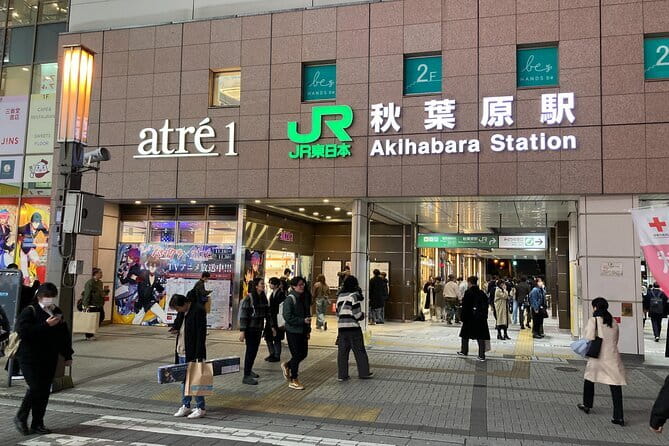
Sumo tournaments run through the day, but the quality and drama rise as afternoon turns toward evening. This tour meets at 2 pm outside the West Exit of JR Ryogoku Station, in front of the NewDays convenience store. That location is practical: Ryogoku Station is close to the arena, and the station is served by the JR Sobu Line.
Your guide will be waiting there. The meeting point is outside the ticket gates, at NewDays Ryogoku No. 8 on the first floor. Take a moment to find the correct exit before the meeting time, since a large station can make even a simple rendezvous needlessly stressful.
The schedule gives you a useful introduction to the tournament rather than dropping you into the final matches cold. You enter the arena with the guide, get settled in the A-Class section, and then have time to look around. Once you reach your seat, you are free to move around, so the afternoon is not a rigid march from one instruction to the next.
That early portion matters if you know little about sumo. You can use it to learn how bouts are organized and to get familiar with the arena before the loudest and most crowded part of the action. The guidebook adds another layer, giving you something concrete to consult during the matches.
A few more Tokyo tours and experiences worth a look
Inside Ryogoku Kokugikan before the top bouts
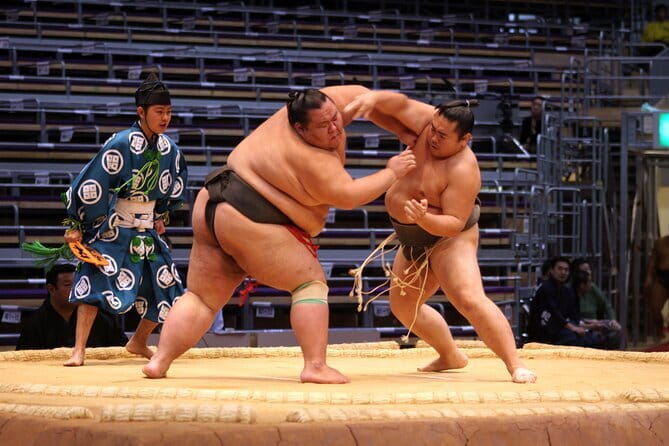
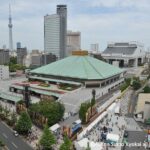
Ryogoku Kokugikan is the natural setting for a Tokyo sumo day. The experience centers on watching the tournament itself, not a stage version or a short demonstration. You sit inside the National Sumo Arena while wrestlers compete through the regular tournament program.
The A-Class seats are chairs on the second floor. That detail is more important than it sounds. Sumo spectators in other sections may sit on floor cushions, while these seats let you lean back and watch without putting pressure on your knees and ankles. If you are tall, older, tired from sightseeing, or simply prefer a chair, this is a sensible upgrade.
The tradeoff is distance. From the second floor, you see the full dohyo and the surrounding arena in one broad view. You may lose some of the close-up impact that comes with lower seats. One person who enjoyed the day still would have preferred ringside seating, so set your expectations correctly: this is premium comfort and a wide view, not the closest possible perspective.
Eating and drinking at your seat are allowed. The tour does not include snacks, so plan to buy anything you want before entering or at the venue. Do not read the mention of drinks and snacks as a promise that refreshments are supplied. The useful fact is that you are permitted to enjoy food and drink while watching.
Re-entry is possible once during the day, but you should tell the guide if you need to leave. That gives you some flexibility if you want to step outside, use nearby facilities, or get food. Still, the strongest matches are time-specific, so leaving around the main bouts means missing the reason many people book this outing.
The guide turns a confusing sport into a readable one
Sumo can look simple at first: two wrestlers, one ring, one quick collision. The rules and traditions are not simple. Wrestler rankings, ceremonial movements, pre-match preparation, winning techniques, and stable affiliations all shape what you are watching.
This is where the guide earns the fee. You are not just handed a ticket and left to decode the action from a distance. Your guide sits with you and answers questions during the afternoon. Several guides have led this experience, including Yuki, Atsushi, Yoko, and Jhon, and the strongest pattern in the feedback is their ability to explain sumo in clear English while keeping the group involved.
Yuki is praised for answering questions clearly and bringing passion to the sport. Atsushi is noted for explaining traditions, rituals, and wrestler rankings in a way that was easy to follow. Yoko helped first-time watchers understand the matches as they happened, while Jhon brought a lively, enthusiastic style.
Guide assignments can vary, so you should not book on the assumption that one named person is guaranteed. The practical point is that the format gives you a guide at your side, not a remote escort who disappears after handing over the ticket.
I especially like this arrangement for couples or families with mixed interest levels. The sumo fan can ask about rankings and techniques, while the newcomer gets the basic rules without having to study beforehand. Since the group is limited to five, a question that might be lost in a large tour can usually become part of the conversation.
The 3:40 nakabi ceremony marks the afternoon’s turning point
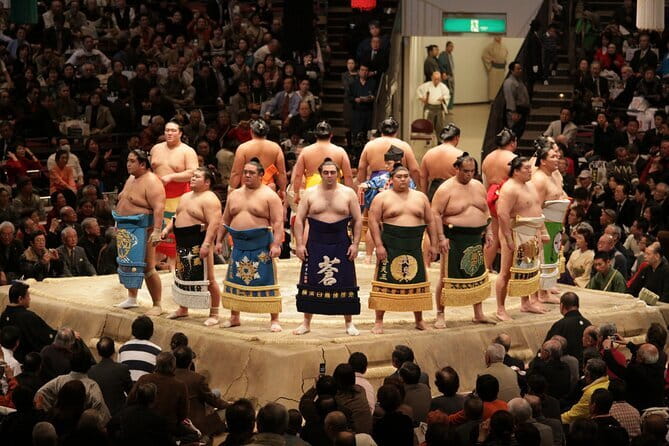
Around 3:40 pm, the tournament reaches the nakabi, a ceremony held before bouts involving particularly strong wrestlers. This is the moment when the afternoon begins to feel more formal and more important.
You watch it from your assigned A-Class seats. The ceremony gives you a chance to see the ritual side of sumo, not just the pushing and throwing. Your guide can explain what is happening and why this point in the program matters, which is useful because the ceremony may otherwise seem like a series of movements without a clear purpose.
The timing also makes the tour efficient. You do not pay for hours of waiting around after the main event has finished. You arrive in time to understand the setting, remain through the ceremony, and then stay for the portion of the tournament most likely to feel intense.
If your main goal is the very biggest stars, do not arrive late. The 2 pm meeting is not merely an administrative detail. It ensures you are in place before the schedule reaches its key section.
From 4 to 6 pm, sumo becomes prime-time sport
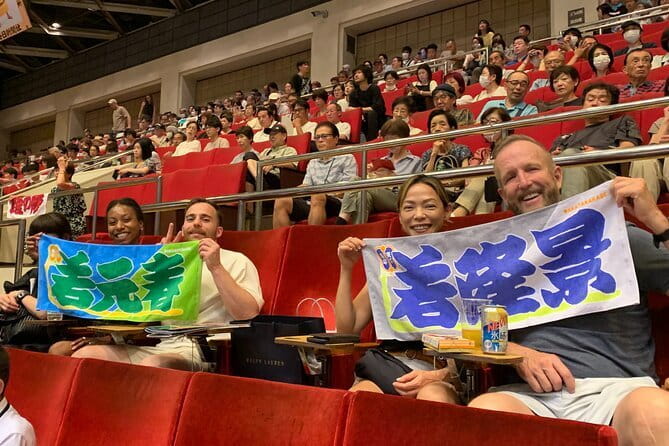
The main attraction begins around 4 pm and continues until about 6 pm. This is when particularly strong wrestlers begin their matches, and Japanese television broadcasts start as well.
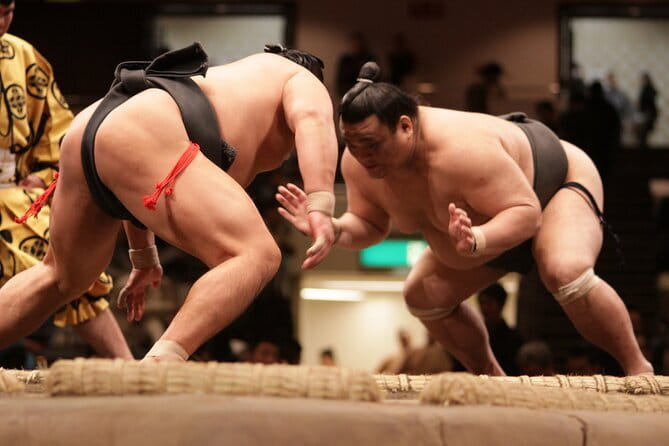
You will see a shift in energy as the top division bouts arrive. The stakes feel higher, the ceremonies become more familiar, and the guide’s explanations become easier to connect with what is happening in the ring. A short bout can contain a surprising amount of preparation and tension before the actual clash.
The matches themselves may be quick. That is part of the appeal, but it can surprise anyone expecting long rounds. Much of the drama is in the buildup: the wrestlers enter, prepare, face one another, and wait for the decisive moment. From your second-floor seat, you can follow both the individual bout and the larger flow of the tournament.
The broad view is useful here. You can watch the ring, the officials, the crowd, and the repeated rhythm of the program. A ringside view would give you more physical detail, but the A-Class position helps you understand how the whole event works.
The tour ends after the final match at about 6 pm. There is no return ride because the start and end are both at Ryogoku Kokugikan. That is convenient if you want dinner in Ryogoku or plan to continue elsewhere in Tokyo by train.
A few more Tokyo tours and experiences worth a look


What the $190 price really buys you
At $190 per person, this is not a bargain ticket for casual sightseeing. It is a premium way to attend a tournament day, and the value depends on what you need.
The price includes:
- A-Class admission
- A professional guide
- An original sumo guidebook
- Tour photos
It does not include snacks or private transportation. You make your own way to JR Ryogoku Station, and the tour ends at the arena. Since the venue is near public transportation, that arrangement is straightforward, but you should factor local train costs and food into your budget.
If you already understand sumo and only want the cheapest available seat, you can likely find less expensive ways to attend. You would also need to arrange your own ticket and learn the tournament structure yourself.
For a first visit, the calculation is different. Your fee combines the ticket with real-time interpretation, a small group, guidebook material, and photos. The guide can save you from spending much of the afternoon wondering which division is competing or why the ceremonies matter. That support is the core of the value.
The small-group format also matters. A private activity for only your group, with a maximum of five people, gives you more personal attention than a large bus tour. It does not make the seats ringside, but it does make the ticket easier to use well.
Who should book this sumo experience
I would recommend this outing if you fit one or more of these descriptions:
- You are attending sumo for the first time.
- You want cultural context as well as sport.
- You prefer a chair to floor seating.
- You like asking questions during an event.
- You are visiting Tokyo during the May tournament and want the main bouts.
- You want a small group rather than a large organized crowd.
It is particularly good for people who might otherwise find sumo hard to follow. The guide’s explanations can turn a series of short bouts into a story about rankings, ritual, and competition.
It also suits a pair or a small family group. Some parties end up with only two people, creating an even more personal afternoon. The private format means you can focus on the questions that matter to you.
I would hesitate if your dream is a ringside seat. A-Class seating is comfortable and offers a panoramic view, but the exact location cannot be chosen. The one clear criticism of the experience is also the most useful warning: A-Class does not mean the closest section in the building.
Practical details that can shape your day
The activity lasts about four hours, from the 2 pm meeting to the end of the final bout around 6 pm. You should reserve well ahead if your dates are fixed, since this experience is booked an average of 68 days in advance. That is especially relevant for a specific May tournament date.
Confirmation arrives at booking. The meeting point is near public transportation, and most people can participate. No special private transfer is included, so use the JR Sobu Line connection to reach Ryogoku Station and make sure you are at the West Exit before 2 pm.
The exact seating area cannot be specified. You know you will have an A-Class chair on the second floor, but you should not expect to select a row or ask for ringside. If you need to leave the arena, tell the guide because one re-entry is allowed during the day.
Free cancellation is available until 24 hours before the local start time. Cancellations or changes made inside that window are not accepted for a refund.
The atmosphere is serious, social, and easy to follow
This is more than watching two large athletes collide. Sumo combines formal ceremony with sudden physical force, and the contrast is what makes the afternoon memorable.
The guide helps you notice details you might otherwise miss. You can ask about the wrestlers’ rankings, why certain rituals occur, how a match is won, and which competitors are considered important. The guidebook gives you a written reference, while the photos provide a record of the day.
The experience also has a social side without requiring you to join a large crowd. A group of up to five people can discuss what just happened, compare reactions, and ask follow-up questions. The format is friendly, but it does not turn the tournament into a staged entertainment product. The actual competition remains the focus.
I like that balance. You get help understanding the sport, but you still spend most of the time watching the ring. The guide is there to make the experience clearer, not to compete with it.
Should you book the May tournament tour?
Book it if you want the strongest afternoon matches, a comfortable seat, and an English-speaking guide who can explain the customs as they happen. The combination of A-Class admission, a maximum group of five, guidebook, and photos makes the $190 easier to justify for a first-time visit.
Skip it if you only want the lowest ticket price or if ringside proximity matters more than comfort and context. A-Class seating is on the second floor, and the exact chair cannot be selected.
For most visitors with limited time in Tokyo, I would choose this over attending alone without preparation. Meet at 2 pm, bring money for your own snacks, keep the 3:40 ceremony and 4 to 6 pm bouts in mind, and treat the guide as the key part of the experience. That approach gives you a better chance of leaving Ryogoku with an understanding of why sumo matters, not just a few quick memories of wrestlers entering the ring.
FAQ
Where does the tour begin?
Meet at 2 pm in front of the NewDays convenience store at the West Exit of JR Ryogoku Station on the JR Sobu Line. The address is 1-3-20 Yokoami, Sumida City, Tokyo.
Where does the tour end?
The tour ends at Ryogoku Kokugikan National Sumo Arena after the final match, around 6 pm. No private transportation is provided.
What type of seats are included?
You receive A-Class chair seats on the arena’s second floor. They offer a broad view of the full area, and you can eat and drink at your seat. The exact seating position cannot be selected.
When are the main sumo matches?
The ceremony known as the nakabi begins around 3:40 pm. The most important matches run from about 4 pm until 6 pm, when Japanese television broadcasts begin.
Are snacks included?
No. Snacks are not included in the price, although eating and drinking at your seat is allowed.
What happens if I need to cancel?
You can receive a full refund if you cancel at least 24 hours before the experience start time. Cancellations or changes made less than 24 hours in advance are not accepted for a refund.
More Workshops & Classes in Tokyo
More Sumo Experiences in Tokyo

More tours in Tokyo we've reviewed




Sumo Experiences, compared.
 ★ 4.8Tokyo: Sumo Show Experience with Chicken Hot Pot and a PhotoFrom $1032 hours
 ★ 4.8Tokyo: Sumo Show and Dining ExperienceFrom $7990 minutes - 2 hours
 ★ 5.0the SUMO showFrom $89
 ★ 5.0Tokyo Sumo Entertainment Show with Chicken Hot Pot and PhotoFrom $106
 ★ 4.6Tokyo: Sumo Tournament Tour with Chair Seat TicketsFrom $141
 ★ 5.0Tokyo Grand Sumo Tournament Viewing Tour with TicketsFrom $124