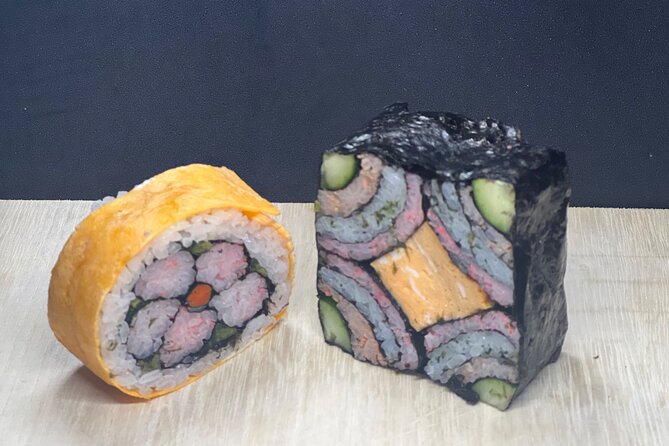
Reviewed · SUSHI MAKING CLASSES
Special sushi rolls only available in Japan Making Experience
The fun here is not standard maki sushi. You build decorative rolls that reveal a picture when sliced, from flowers and cats to Mount Fuji, Minions, Santa, or other character designs. Yumi leads you through each layer, so even first-time sushi makers can produce something far more striking than a crooked rice cylinder.
In This Article
- Key points to know before booking
- What makes this sushi class different
- Meeting Yumi near Shinkashiwa
- Requesting a Tokyo kitchen near Asakusa or Skytree
- The first stage: mixing colored sushi rice
- Cutting seaweed and building the design
- Rolling, slicing, and the picture reveal
- Packing your sushi and taking a break
- Private instruction and group size
- The guide: Yumi’s patient, hands-on teaching
- Is $40.97 a good value?
- Who should book this experience?
- Booking, mobile tickets, and cancellation
- My verdict: a creative class with one important location question
- FAQ
- How long does the sushi-making experience last?
- How much does the experience cost?
- Where does the activity start?
- Does the activity finish at the meeting point?
- Can I take the sushi home?
- Is the class private?
- Can I take the class in Tokyo?
I like the private format, which gives you room to ask questions without holding up a class. I also like the take-home finish: after roughly two hours of mixing rice, cutting seaweed, rolling, and slicing, you pack your sushi in containers rather than rushing to eat it all on the spot. The main consideration is location. The standard meeting point is in Shinkashiwa, Kashiwa, Chiba, not central Tokyo, and a Tokyo kitchen costs extra.
Key points to know before booking
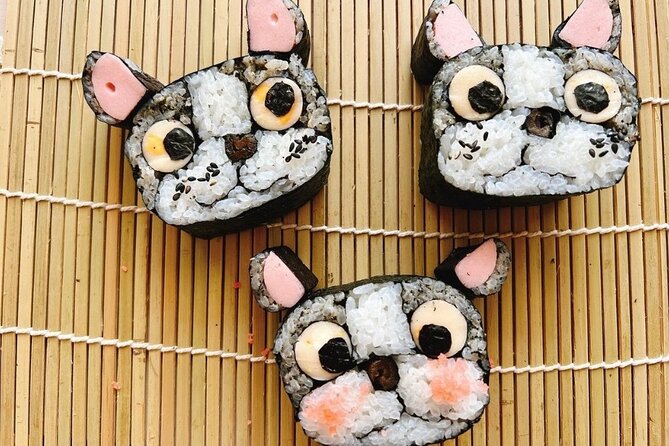
- Picture sushi, not ordinary maki: Choose designs such as flowers, animals, Mount Fuji scenes, Minions, or Santa.
- Yumi teaches step by step: The instruction suits beginners and includes help with colored rice, seaweed, decoration, and rolling.
- Private means personal attention: Only your group participates, making it easy to ask questions or work at a comfortable pace.
- The standard location is outside central Tokyo: Meet at Shinkashiwa Clinic in Kashiwa, Chiba.
- Tokyo sessions can be arranged: Kitchens near Asakusa or Tokyo Skytree may be rented for an additional fee if requested.
- You leave with edible souvenirs: Takeout containers are provided, followed by coffee, tea, and snacks.
What makes this sushi class different
Many sushi classes focus on technique, knife work, or the polished appearance of nigiri. This one takes a more playful route. You make decorative maki sushi, where the internal arrangement of rice and seaweed forms an image after the roll is cut.
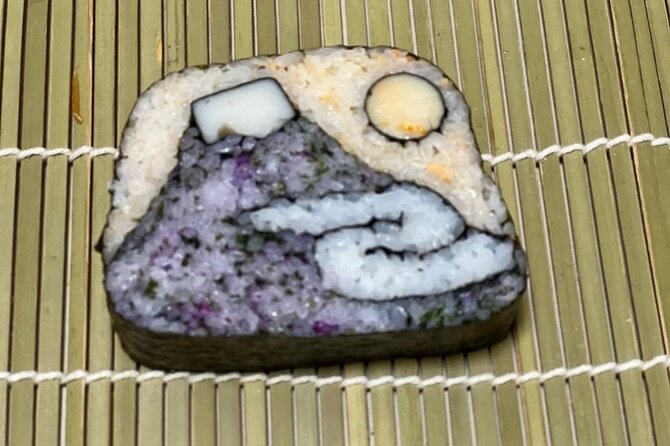
That reveal is the best part. Before slicing, the roll can look like a tightly wrapped bundle of ingredients. Cut it into four pieces, and the pattern appears. A flower, animal, character, or seasonal figure takes shape through careful placement rather than artistic drawing.
You do not need previous sushi-making experience. The process is broken into manageable jobs: mix rice with ingredients to create different colors, cut the seaweed, place the rice and decorative parts, roll everything together, then slice the finished piece.
I would choose this class for the sense of achievement. You are not simply watching an instructor prepare food. You are assembling something that depends on order and proportion, then seeing the result yourself.
A few more Tokyo tours and experiences worth a look
Meeting Yumi near Shinkashiwa
The regular starting point is Shinkashiwa Clinic, at 1-chōme-4-5 Shinkashiwa, Kashiwa, Chiba 277-0084. The activity finishes at the same meeting point.
That address matters if you are planning from central Tokyo. The experience is marketed for a Tokyo visit, but the standard venue is in Kashiwa, outside the city center. You should check the route and allow enough time to reach Shinkashiwa before booking, especially if your day already includes major Tokyo sights.
The activity is near public transportation, which helps, but the provided information does not give a travel time from central Tokyo or detailed train directions. I would treat the location as an important planning choice, not a minor footnote.
For a small booking, you may be taken to Yumi’s parents’ house after meeting up. Larger groups go to a communal kitchen. That means the setting can vary with group size, but the teaching remains private for your party.
Requesting a Tokyo kitchen near Asakusa or Skytree
If Shinkashiwa feels too far, you can request a kitchen in Tokyo. The suggested areas are near Asakusa and Tokyo Skytree, though the kitchen rental carries an additional fee.
Put your preferred location in the special request when booking. Do not assume that a central Tokyo venue is included in the advertised price. The regular price is $40.97 per person, while the Tokyo kitchen arrangement adds a separate cost.
This option could make a big difference to your day. Asakusa and Skytree are popular sightseeing areas, so a class there may fit more neatly around temple visits, riverside walks, or city views. Still, the exact kitchen, added price, and final meeting details are not specified, so ask for confirmation before you commit to the plan.
The first stage: mixing colored sushi rice
The class begins with rice and ingredients. You mix them to create colored rice, which becomes the main visual material inside the roll.
This is where the class differs from a basic home sushi lesson. The rice is not only a filling or a base. Its color and placement help form the final picture. You need to pay attention to how much rice goes into each section, since the internal arrangement affects the pattern you see after slicing.
All ingredients are provided by the instructor. That is useful for a short holiday activity because you do not need to shop for sushi rice, seaweed, coloring ingredients, or decorative pieces beforehand.
The activity information does not specify every ingredient or list possible dietary adaptations. If you have food restrictions, ask before booking rather than expecting substitutions on the day.
Cutting seaweed and building the design
Next, you cut the seaweed and arrange the colored rice and other decorative parts. This is the most precise part of the class. The design must be built in layers, and each piece has a job inside the finished roll.
Yumi guides you through the process step by step. That personal instruction is especially useful here, since a picture roll can look complicated when you first see it. A private class lets you stop and ask about placement instead of quietly copying a large group.
The design choices give the experience a family-friendly feel. You might select an animal, a flower, Mount Fuji, a Minion, or another character. Seasonal ideas are possible too. One class made a Santa roll, showing how the activity can work well around a holiday theme.
The supplied information does not promise every design at every session. I would treat the examples as a menu of possible ideas, then confirm your preferred subject in advance if a particular animal or character matters to you.





Rolling, slicing, and the picture reveal
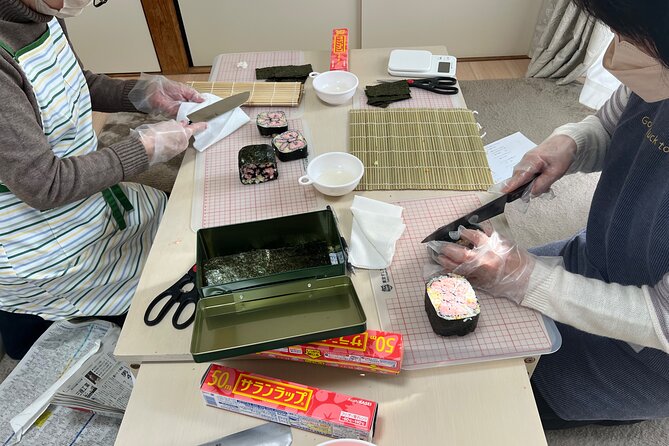
Once the pieces are arranged, you roll the sushi into one larger cylinder. This takes care, but the instructor helps you bring the sections together.
The final step is slicing the roll into four pieces. This is the moment when the design becomes clear. You see the image you created in cross-section, with the colored rice and seaweed forming the pattern.
The result is highly photogenic, but the appeal is not only visual. The slicing shows you how the earlier steps fit together. If the pattern works, you can trace it back to the way you measured, placed, and rolled each component.
You might not produce a perfect design on your first try. That is part of the charm, and Yumi’s patient instruction helps keep the activity light rather than stressful. The strongest part of the experience is the chance to make something memorable without needing professional cooking skills.
Packing your sushi and taking a break
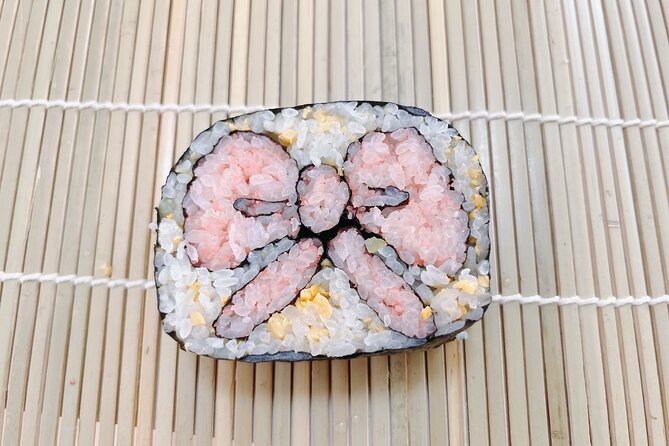
After slicing, you wrap the sushi and place it in takeout containers. You can take your finished rolls with you, which gives the class a practical ending and makes the food part of your Tokyo day.
The take-home format also helps if you are traveling with children or have eaten recently. You do not have to finish every piece immediately, though you should follow the instructor’s advice about handling and eating the sushi.
The final portion includes coffee, tea, and snacks. It gives you time to relax after the hands-on work and look at the finished rolls before returning to the pickup point.
The total activity lasts about two hours. That is long enough for a real project but short enough to fit into a larger day, provided you account for the trip to Kashiwa or arrange a Tokyo kitchen.
Private instruction and group size
This is a private activity, so only your group takes part. That setup is one of its clearest advantages.
In a public class, you may need to match the pace of other participants. Here, you can ask questions along the way and receive direct help with the rice, seaweed, and rolling. The format also suits families, couples, and small groups who want to share one project.
The group size affects the venue. Small parties may go to Yumi’s parents’ house, while larger parties use a communal kitchen. The exact atmosphere will depend on your booking, but the private arrangement keeps the class focused on your party.
The published feedback points to Yumi and her friends being especially patient with two young daughters. Another family class included a son, husband, and parent, with Santa sushi as the chosen design. I would take that as a useful sign for families who want an activity that is creative without requiring a long attention span.
The guide: Yumi’s patient, hands-on teaching
Yumi is the named instructor associated with the class. Her role is central because decorative sushi is easier to understand when someone shows you the sequence in person.
The strongest praise centers on her patience and experience. One first-time group was surprised by how attractive its rolls looked after following her guidance. Another family found the instruction accommodating for young children.
That does not mean every roll will look like a professional display piece. Your result depends on careful placement and rolling, and small mistakes can change the picture. Still, one-to-one help gives you a much better chance than trying to work from a printed recipe alone.
You can also ask questions during the process. That makes the class useful for building general cooking confidence, not just making one novelty roll.
Is $40.97 a good value?
At $40.97 per person, the class is priced above a casual meal but includes more than food. You receive about two hours of instruction, all ingredients, a private session, takeout containers, and coffee, tea, and snacks.
I see the value in the activity rather than the amount of sushi alone. You are paying for a guided project, the chance to make a design available in Japan, and a souvenir you prepare yourself.
The price works best for you if you enjoy hands-on activities and want something beyond another restaurant meal. It may feel less worthwhile if you mainly want to eat sushi or if you have limited time in Tokyo and do not want to travel to Kashiwa.
Remember that a Tokyo kitchen near Asakusa or Skytree costs extra. The $40.97 price should not be treated as the full cost of a central Tokyo session.
Who should book this experience?
I would recommend it most strongly to families, first-time sushi makers, couples, and small private groups. Children can take part in choosing a design and arranging colorful pieces, while adults get a structured activity with a clear result.
It also suits anyone who likes food photography. The finished rolls are built to reveal shapes and characters, so slicing creates a natural photo moment.
You should think twice if you want a traditional sushi apprenticeship. This is not presented as a lesson in fish preparation, professional knife skills, or restaurant-style nigiri. It is a creative maki class built around decorative patterns.
The class also requires practical planning. If your schedule is packed with central Tokyo sightseeing, the Kashiwa meeting point may make the day awkward. Requesting a Tokyo kitchen can solve that problem, but you need to arrange it and pay the added rental fee.
Booking, mobile tickets, and cancellation
Confirmation is provided at booking, and the experience uses a mobile ticket. You can cancel for a full refund up to 24 hours before the start time.
Cancellations made less than 24 hours before the start are not refunded, and changes inside that same 24-hour window are not accepted. The cut-off follows local time, so check the start time carefully before making last-minute plans.
I would also add any Tokyo location request when you book. The earlier you make that request, the easier it should be to clarify the venue and extra cost before your class.
My verdict: a creative class with one important location question
I would book this sushi class if you want to make something personal, colorful, and a little unusual. The private teaching, patient guidance from Yumi, child-friendly pace, and take-home containers give the $40.97 price a fair amount of substance.
My biggest caution is the standard location. Shinkashiwa in Kashiwa, Chiba is not the same as central Tokyo, so check your route before paying. If you prefer to stay near Asakusa or Tokyo Skytree, request a rented kitchen and confirm the added fee.
Choose a design in advance if you have a favorite animal, character, or seasonal theme. Go with reasonable expectations, follow the steps carefully, and you should leave with both a meal and a story about how you made it.
FAQ
How long does the sushi-making experience last?
The activity lasts approximately two hours.
How much does the experience cost?
The listed price is $40.97 per person.
Where does the activity start?
The standard meeting point is Shinkashiwa Clinic, 1-chōme-4-5 Shinkashiwa, Kashiwa, Chiba 277-0084, Japan.
Does the activity finish at the meeting point?
Yes. The activity ends back at the starting meeting point.
Can I take the sushi home?
Yes. Takeout containers are provided so you can wrap and take away the sushi you make.
Is the class private?
Yes. Only your group participates in the private activity.
Can I take the class in Tokyo?
Yes, you can request a rented kitchen in areas such as Asakusa or near Tokyo Skytree. The kitchen rental costs extra, and you should include your preferred location in a special request.
More Sushi Making Classes in Tokyo
More tours in Tokyo we've reviewed












Sushi Making Classes, compared.
 ★ 5.0Sushi Making Tokyo Roll and Authentic Japanese Sushi ClassFrom $59
 ★ 4.9Tokyo: Roll and Authentic Sushi Making Class in AsakusaFrom $581h 40m
 ★ 4.9Tokyo: Sushi Making Class in a Happi Coat near a Famous SpotFrom $421h 30m
 ★ 5.0Sushi Making Tokyo! Popular Maki Sushi & Japanese Sushi(+Recipe!)From $63
 ★ 5.0Tokyo Sushi Making Class in Tsukiji with Professional ChefFrom $49
 ★ 5.0Tokyo Night Foodie Tour in Shinjuku – Seasonal Sushi, Wagyu BeefFrom $111